Mind Cinema Teacher Guide The Sound and Sight Stage
Lesson 1: Visual & Auditory Imagery Guide
Teacher Resource
Serial No. MC-L1-TR
Instructional Objective
Students will be able to identify specific words and phrases that trigger visual and auditory mental imagery. They will practice citing textual evidence and explaining the "mental clip" it generates in their minds.
Key Vocabulary
• Imagery
• Mental Movie
• Visual Detail
• Auditory Detail
• Textual Evidence
The Hook: The Soundscape Challenge
Estimated Time: 10 Minutes
Ask students to clear their desks and close their eyes.
Play a complex soundscape (e.g., a busy train station in the rain, a distant thunderstorm in a forest, or a crowded carnival).
Ask: "Where are you? What do you see around you based ONLY on what you hear?"
Have students share their "mental snapshots."
Transition: "Just like that soundscape, authors use words to act as the soundtrack and the camera lens for our brains."
The "Director's Cut" Strategy
Explain that visualization isn't just "seeing a picture." It's like being a film director.
Visual (Sight)
"The neon sign flickered, casting a sickly green glow over the cracked pavement."
Auditory (Sound)
"A low, metallic thrum vibrated through the floorboards, followed by a sharp, rhythmic tapping."
Discussion Prompts
? "What specific word made that image 'click' in your mind?"
? "Is your mental movie in color or black and white? Why do you think that is?"
? "If we muted the sound, what would we lose from this scene?"
Sample Practice Text (For Modeling)
"The heavy iron gates groaned as they swung open, revealing a courtyard choked with waist-high weeds. Above, the sky was the color of a bruised plum, dark and swirling with thick, charcoal clouds. Every few seconds, a jagged flash of lightning ripped across the horizon, followed by a growl of thunder that seemed to shake the very stones beneath my feet."
SIGHT: iron gates, choked weeds, bruised plum sky, charcoal clouds, lightning
SOUND: groaned, growl of thunder
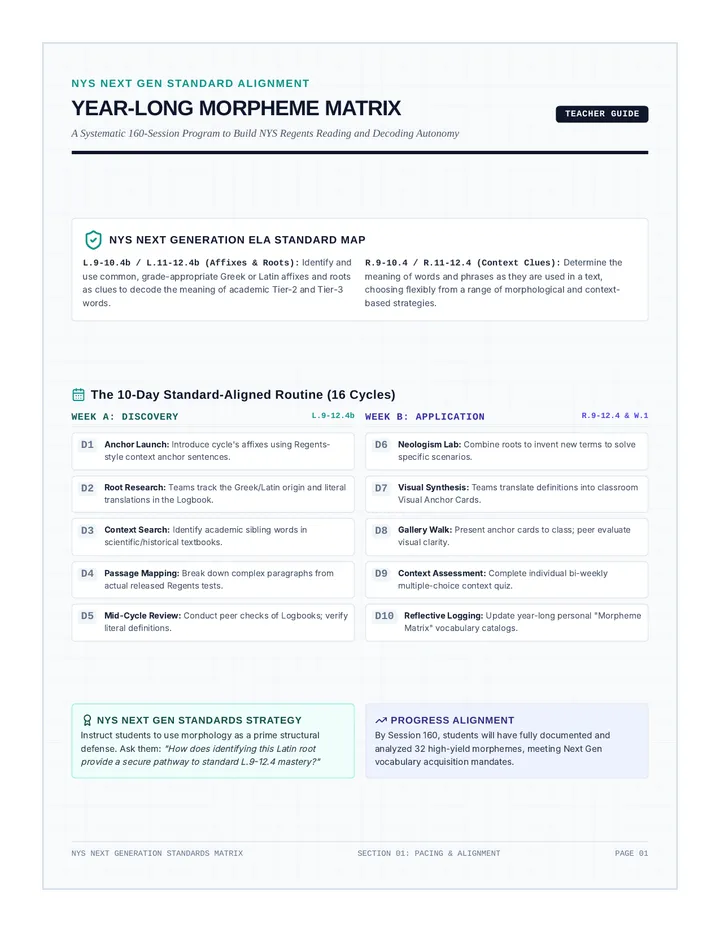
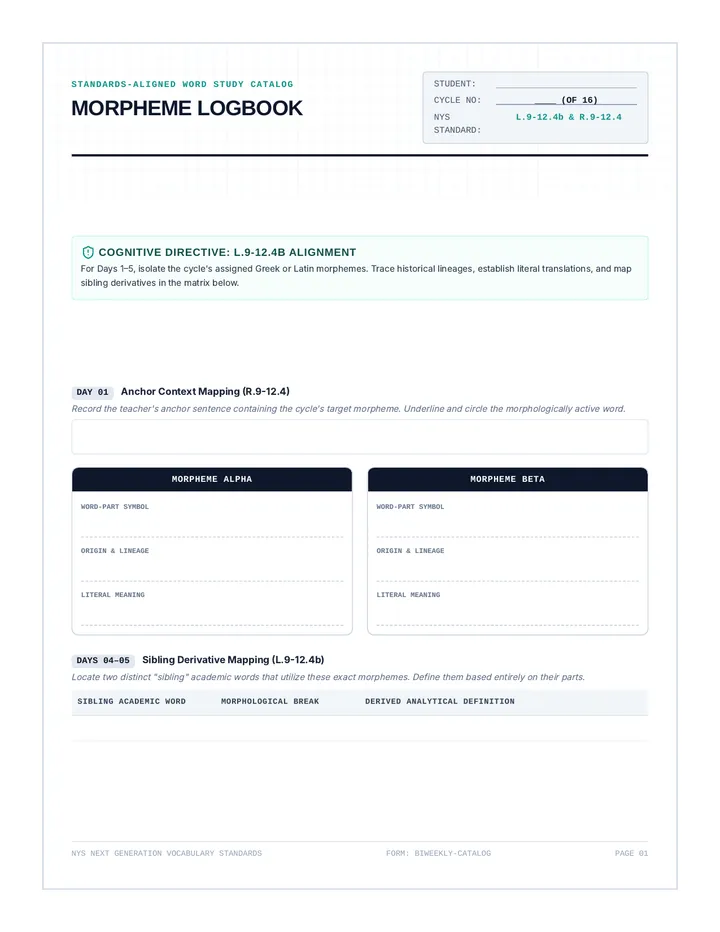
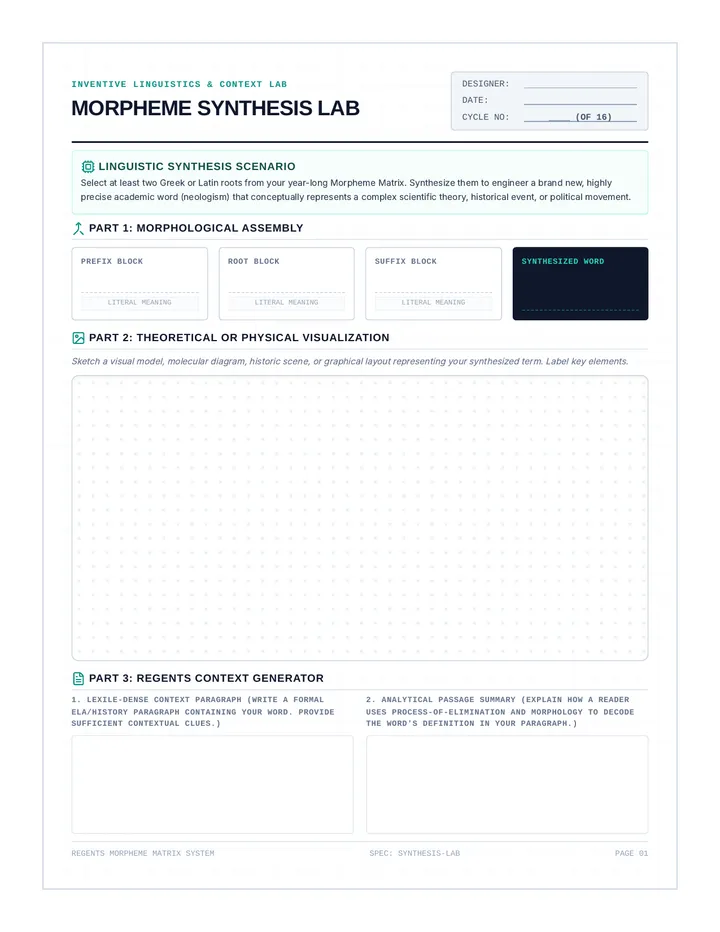
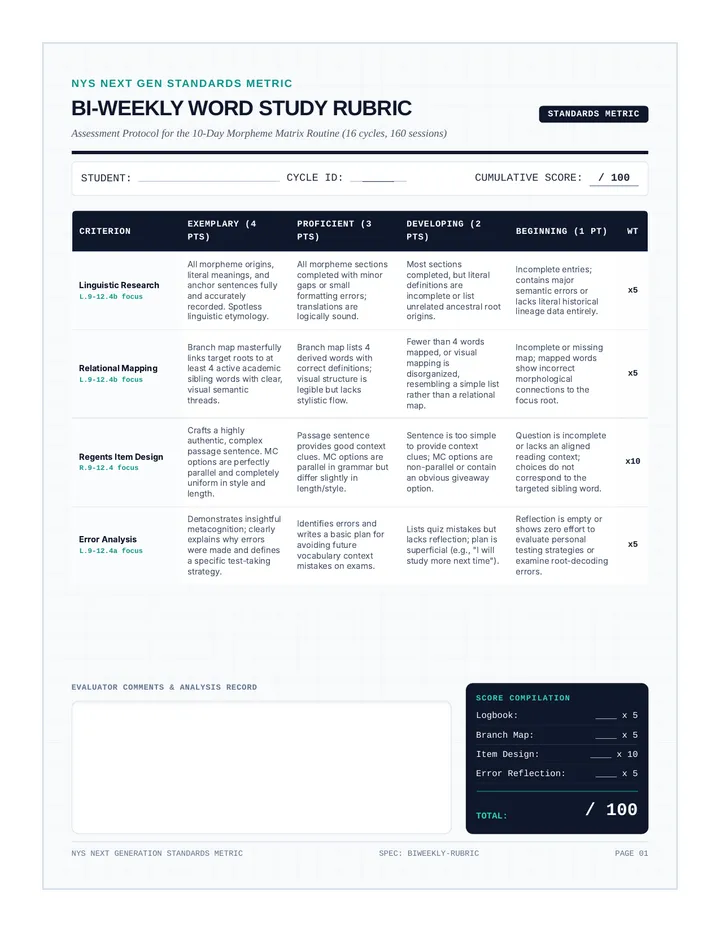
Mind Cinema Worksheet Mind Cinema: Sight & Sound
Worksheet 1.1 // Visual & Auditory Isolation
NAME: ____________________
DATE: ____________________
Director's Instructions:
Read the descriptive passage below. Your job is to act as the Director . Identify the specific words (evidence) that help you "see" the scene or "hear" the sound, and then describe the exact mental image that forms in your Mind Cinema.
The Script
"The old amusement park stood silent, a skeleton of twisted steel against the orange glow of the setting sun. A single rusted chain on the swing set clinked rhythmically against its pole, a sharp ping-ping-ping that echoed through the empty plaza. From somewhere near the funhouse, the dry scratching of dead leaves skittered across the concrete, sounding like a hundred tiny footsteps."
Textual Evidence (The Lines)
Mental Snapshot (My Mind Cinema)
Director's Reflection:
Which of your five senses (Sight or Sound) felt strongest in this passage? Explain why.
L1 Visualization Worksheet Page 01 of 01
Mind Cinema Slides Mind Cinema
The Sound and Sight Stage
Lesson 1: Visualization While Reading
The Hook: Eyes Closed
Listen closely to the soundscape. Try to build the world in your head.
Where is this taking place?
What is the weather like?
Are there people? What are they doing?
Audio Playing...
What is Visualization?
Step 1: The Text
Your eyes see the words on the page.
Step 2: The Cinema
Your brain converts those words into a Mental Movie.
Sight
"What the camera sees."
• Colors & Lighting
• Shapes & Sizes
• Distance & Movement
Sound
"What the microphone picks up."
• Volume & Pitch
• Rhythm & Pace
• Echoes & Background Noise
Guided Practice
THE SCRIPT
"The heavy iron gates groaned as they swung open, revealing a sky the color of a bruised plum."
Visual Evidence
Iron gates, bruised plum sky
Auditory Evidence
Groaned, swung open
Beyond the Screen Teacher Guide Beyond the Screen
Lesson 2: Tactile, Olfactory, & Gustatory Details
Teacher Resource
Serial No. MC-L2-TR
Instructional Objective
Students will expand their visualization skills to include texture (tactile), smell (olfactory), and taste (gustatory). They will use a color-coding system to annotate complex descriptive passages and explain how these "secondary" senses deepen the mental image.
Senses & Colors
• TACTILE (Pink)
• OLFACTORY (Green)
• GUSTATORY (Orange)
The Hook: The Blind Bag Challenge
Estimated Time: 15 Minutes
Prepare 3 opaque bags containing objects with distinct textures (e.g., cold slime, rough sandpaper, velvet fabric).
Have student volunteers reach in (without looking) and describe only the feel of the object.
The class must brainstorm adjectives based on the volunteer's description.
Ask: "If an author just said 'the shirt felt weird,' would you know what it felt like? Why do we need specific sensory words?"
Color-Coding the Mind
Explain that high-level readers "highlight" sensory details in their brains automatically. We are going to make that process visible.
Tactile: Grit, slimy, velvet, scorching, jagged.
Olfactory: Pine, rot, metallic, sweet, sulfur.
Gustatory: Bitter, salty, copper, honeyed.
Layering the Image
Visualization is a cumulative process. Each sense adds a new layer.
Passage A: "The cake was on the table." (Flat)
Passage B: "The warm, sticky (Tactile) cake sat on the table, smelling of burnt sugar (Olfactory) and tasting of bitter cocoa (Gustatory)." (Deep)
Modeling Annotation
"The air in the cellar was thick with the smell of damp earth and rotting potatoes. As I reached for the wall, my fingers touched something slick and cold, like the skin of a fish. I couldn't help but swallow, the metallic tang of fear coating my tongue."
Beyond the Screen Worksheet Sensory Color-Coding
Worksheet 2.1 // Tactile, Olfactory, & Gustatory
NAME: ____________________
DATE: ____________________
Tactile (Feel/Touch)
HIGHLIGHT IN PINK
Olfactory (Smell)
HIGHLIGHT IN GREEN
Gustatory (Taste)
HIGHLIGHT IN ORANGE/YELLOW
Scenario A: The Kitchen
"I stepped into the bakery, and the scent of warm cinnamon and yeast wrapped around me like a blanket. I picked up a roll; it was crusty and jagged on the outside, but pillowy and soft as I tore it open. The first bite was explosively sweet , followed by the sharp, spicy kick of ginger."
Scenario B: The Forest Floor
"The forest floor was spongy and damp , soaking into my boots with every step. The air was heavy with the smell of pine needles and wet moss . I reached out to steady myself, but the tree trunk was slimy with a layer of translucent goo . A bitter, chalky dust rose from the bark and coated the back of my throat."
Tactile Details
Olfactory Details
Gustatory Details
Visualization Sequence // Lesson 2
Color Keys: P / G / A Page 01 of 01
Beyond the Screen Slides Beyond the Screen
The Secondary Senses
Touch
Smell
Taste
The Hook: Mystery Bags
Describe what you feel...
Is it jagged or smooth?
Is it cold or warm?
Does it feel wet, dry, or sticky?
"Authors use these words to make you feel like you are physically touching the scene."
Olfactory
The Sense of Smell
"The kitchen smelled like pine sol and stale cigarette smoke."
Why does this matter?
Smell is the sense most tied to memory. It anchors your reader in the location.
Fragrant / Floral
Pungent / Rotting
Acrid / Metallic
Gustatory
"The water had a brackish, salty tang that clung to the back of his throat."
Taste is often used to show a character's internal state (the "bitter taste" of defeat).
Your Annotation Mission
Pink
Tactile
Texture, temp, and weight.
Green
Olfactory
Scents, odors, and aromas.
Orange
Gustatory
Flavors and physical sensations of taste.
Building the Set Teacher Guide Building the Set
Lesson 3: Spatial Reasoning & Static Settings
Teacher Resource
Serial No. MC-L3-TR
Instructional Objective
Students will synthesize multiple sensory details to construct a physical "map" of a static setting. The lesson focuses on identifying prepositions and spatial markers (e.g., adjacent to, beneath, centered) to place objects accurately within their mental cinema.
The Hook: The Description Detective
1. Read a "Police Report" description of a room to the class (see sample below).
2. Students must draw a quick "overhead blueprint" of where everything is located.
3. Reveal the "Actual Photo" (a pre-selected image matching the description). Students check for accuracy.
Sample Police Report
"Upon entering, a heavy oak desk was centered against the back wall. Directly to the left of the desk sat a tipped-over trash can. A single red lamp was perched on the right corner of the desk, its cord trailing behind toward a wall outlet near the floor."
The Spatial Map
Visualization isn't just "items"; it's "placement."
Keywords to Monitor:
POSITION
Above, Below, Centered, Corner, Edge, Adjacent.
DISTANCE
Far, Near, Looming, Receding, Foreground, Backdrop.
ORIENTATION
Left, Right, Facing, Tilted, Parallel.
SCALE
Vast, Tiny, Massive, Narrow, Cramped.
Support Strategies (SpecEd)
Manipulatives: Use physical blocks or figurines to "act out" the setting before drawing.
Scaffolded Grids: Provide a grid with one item already placed as an anchor point.
Chunking: Read the description one sentence at a time, allowing students to place one object before moving to the next.
Building the Set Worksheet Setting Blueprint
Worksheet 3.1 // Spatial Reconstruction
NAME: ____________________
DATE: ____________________
The Scene Description
"The interrogation room was small and suffocating. A single metal table was bolted to the center of the floor . On the table sat a tape recorder, positioned precisely on the left side . Two chairs faced each other; the one on the right was overturned on its back. In the far upper corner of the back wall , a small, barred window allowed a thin sliver of moonlight to fall across the table's scratched surface ."
Drawing Area: Overhead View (Blueprint)
Spatial Clues
List the words that told you WHERE to put things.
Object Checklist
[ ] Metal Table
[ ] Tape Recorder
[ ] Chair (Upright)
[ ] Chair (Overturned)
[ ] Window
Director's Accuracy Check:
Compare your blueprint to the text. Did you place the tape recorder on the correct side of the table? How do you know?
L3 Spatial Mapping Activity Scales: 1 Grid = 1 Mental Foot
Building the Set Slides Building the Set
Mapping the Mental Setting
Placement is Power
Visualization isn't just a list of objects.
It is a spatial relationship.
"If you don't know WHERE it is, you can't walk through the scene."
Above
Below
Beside
Centered
The Preposition Radar
Direction
Left, Right, Facing, Towards, Away from.
Vertical
Under, Atop, Beneath, Over, Suspended.
Proximity
Near, Adjacent, Far, Looming, Distant.
Watch for words that tell you WHERE things sit!
Guided Blueprint
"The small desk sat in the far right corner. A stack of books was piled atop the desk, while a single chair sat directly in front of it."
Draw it on your worksheet!
Avoid "Setting Drift"
X Setting Drift
Adding objects that aren't in the text or forgetting where you put the first item.
O Anchor Points
Find one big item (like a desk) and build everything around it.
Casting the Lead Teacher Guide Casting the Lead
Lesson 4: Character Visualization & Inferencing
Teacher Resource
Serial No. MC-L4-TR
Instructional Objective
Students will apply visualization strategies to the human form, focusing on physical descriptions (height, clothing, features) and body language cues (posture, facial expressions). They will practice "casting" characters based on textual evidence, moving away from generic assumptions.
The Hook: The Casting Call Debate
1. Present a character description from a popular (but perhaps not yet filmed) book.
2. Show 3 photos of different actors/people who share some traits with the description.
3. Students must debate which actor is the "Best Fit" using direct evidence.
Key Rule:
"You can't just say 'He looks cool.' You have to say 'He fits because the book says the character has a jagged scar on his jaw, and this actor has a strong jawline.'"
Layer 1: The Sketch
Physical Build (Tall, wiry, stocky)
Facial Features (Pointed nose, bushy brows)
Clothing (Tattered cloak, polished boots)
Layer 2: The Motion
Posture (Slumped, rigid, leaning)
Facial Expression (Sneer, wide-eyed, tight-lipped)
Mannerisms (Twitching, pacing, tapping)
Teacher Tip: Combatting "Generic Visualization"
Many students default to a generic "hero" or "villain" look. When a student describes a character, push for specificity:
Student: "He looks mean."
Push: "What part of his face is making him look mean? Is it his eyes? His mouth? Is he scowling?"
Casting the Lead Worksheet Character Profile
Worksheet 4.1 // Visualizing the Lead
NAME: ____________________
DATE: ____________________
The Character Script
"Arthur stood nearly seven feet tall, but he walked with a timid, rounded slouch that made him seem much smaller. His hair was a shock of messy, straw-colored curls that constantly fell into his eyes. He wore a suit that was clearly three sizes too big ; the sleeves were rolled up in thick, clumsy bunches at his elbows. As he spoke, his lower lip trembled , and he kept his hands shoved deep into his pockets as if hiding something."
Sketch Pad: Arthur
Physical Traits (The "Look")
Identify specific height, hair, or clothing details.
Body Language (The "Feel")
How does the character move or stand?
Director's Inference:
Based on Arthur's body language (slouch, trembling lip, hidden hands), how do you think he is feeling in this scene? Use evidence to explain.
L4 Character Visualization Worksheet Page 01 of 01
Casting the Lead SlidesArray Casting the Lead
Visualizing Character & Emotion
The Character Camera
When visualizing a character, we don't just see a Face.
We see a Person in Motion.
Question:
"How does this person stand when they are nervous versus when they are confident?"
Focus Areas:
Physical Appearance
Body Language
Facial Expression
What they look like
The Costume & Makeup
• Tall or Short?
• Messy or Clean hair?
• Fancy or Ragged clothes?
• Any scars or marks?
How they feel
The Performance
• Shoulders slumped?
• Eyes darting around?
• Hands trembling?
• A constant scowl?
Casting Call: The Script
"He was a giant of a man, but he walked with a rounded slouch as if trying to hide. He kept his hands shoved deep in his pockets."
Actor A
Stands tall and smiles
Is this a fit?
Actor B
Slumped and looks down
Best Match!
Actor C
Aggressive and loud
Is this a fit?
The Premiere Reveal Teacher Guide The Premiere Reveal
Lesson 5: Cumulative Assessment & Reflection
Teacher Resource
Serial No. MC-L5-TR
Instructional Objective
Students will synthesize all visualization strategies (all five senses, spatial mapping, and character traits) to create a comprehensive "Sensory Map" of a new, complex passage. They will then reflect on their internal process, identifying which strategies were most effective for their personal comprehension.
Assessment Components
1. Annotation: Use the color-coding system (P/G/A) and underline S/S clues.
2. The Map: An overhead sketch of the setting with characters placed correctly.
3. The Profile: A character breakdown based on physical and body language clues.
4. The Premiere: A written reflection on their Mind Cinema process.
The "Sketch Artist" Hook
To start the assessment day:
Student A reads a descriptive passage to Student B.
Student B acts as a "Police Sketch Artist," drawing ONLY what they hear.
They compare the drawing to the original text.
Transition: "Now, you're the artist for your own brain."
Recommended Assessment Passage (included in Worksheet)
"The lighthouse keeper's room was a circular stone chamber, smelling of salt and ancient oil. In the center, a narrow wooden bed was neatly made, its quilt feeling like rough, sun-dried wool. To the left, a heavy telescope sat on a tripod, aimed out a single narrow window. Silas, the keeper, sat slumped on a stool by the window, his calloused hands gripping a cold mug of coffee. He looked out at the churning grey sea, his shoulders twitching as a low whistle of wind snuck through the door."
Mastery Checklist
SENSORY ACCURACY
Includes at least 3 different senses correctly identified.
SPATIAL ACCURACY
Objects and characters are placed according to prepositions.
REFLECTION
Explains HOW visualization helped them understand the text.
The Premiere Reveal AssessmentArray Mind Cinema: The Premiere
Final Assessment // Visualization Mastery
NAME: ____________________
DATE: ____________________
STEP 01
The Final Script
"The lighthouse keeper's room was a circular stone chamber, smelling of salt and ancient oil . In the center , a narrow wooden bed was neatly made, its quilt feeling like rough, sun-dried wool . To the left , a heavy telescope sat on a tripod, aimed out a single narrow window. Silas, the keeper, sat slumped on a stool by the window, his calloused hands gripping a cold mug of coffee . He looked out at the churning grey sea, his shoulders twitching as a low whistle of wind snuck through the door."
Annotate: Pink = Tactile Green = Olfactory Orange = Gustatory Circle = Sound
STEP 02
Setting Blueprint
Draw the room from an overhead view. Place Silas, the bed, and the telescope.
Silas: Profile
Physical:
Behavior:
Atmosphere: Senses
Sound:
Smell/Feel:
STEP 03
Director's Commentary
How did identifying the non-visual senses (smell, feel, sound) help you understand Silas's world better than just seeing a picture would? Explain your process.
L5 Visualization Final Assessment Page 01 of 01
The Premiere Reveal SlidesArrayArrayArray THE PREMIERE
Visualization Showcase
Today's Mission
You are now a Master Director.
Your job is to take a brand new script and build the Entire World in your Mind Cinema.
Mastery Checklist:
Identify all 5 Senses
Map the Spatial Layout
Capture Character Traits
Explain your Process
The Final Script
"The lighthouse keeper's room was a circular stone chamber, smelling of salt and ancient oil. Silas sat slumped on a stool by the window, his calloused hands gripping a cold mug of coffee."
Olfactory
Salt & Ancient Oil
Spatial
Circular, Centered
Character
Slumped, Calloused
Director's Commentary
"How did your Mind Cinema help you feel what Silas was feeling?"
Credits
Master Director
[Your Name Here]
"Reading is seeing what others cannot."