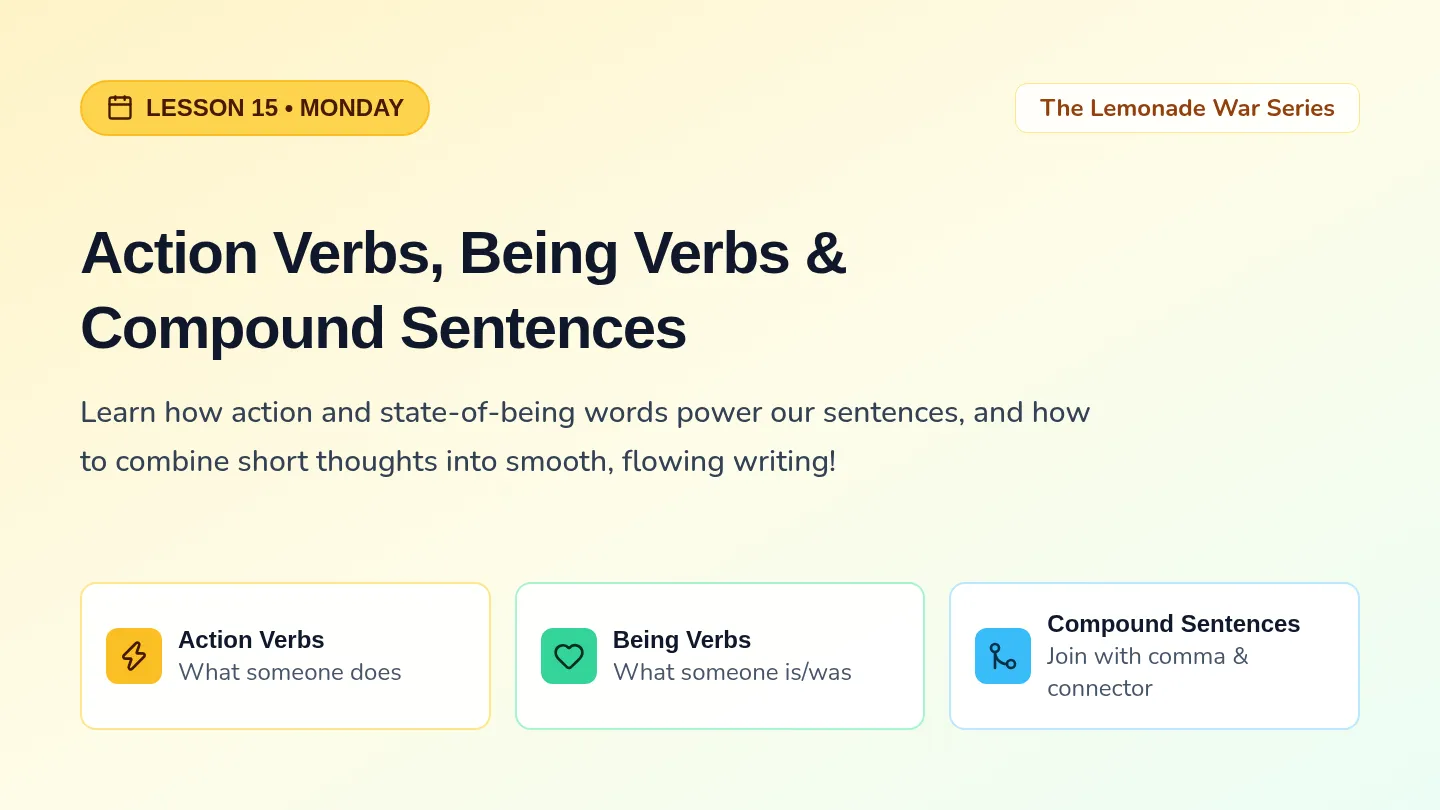
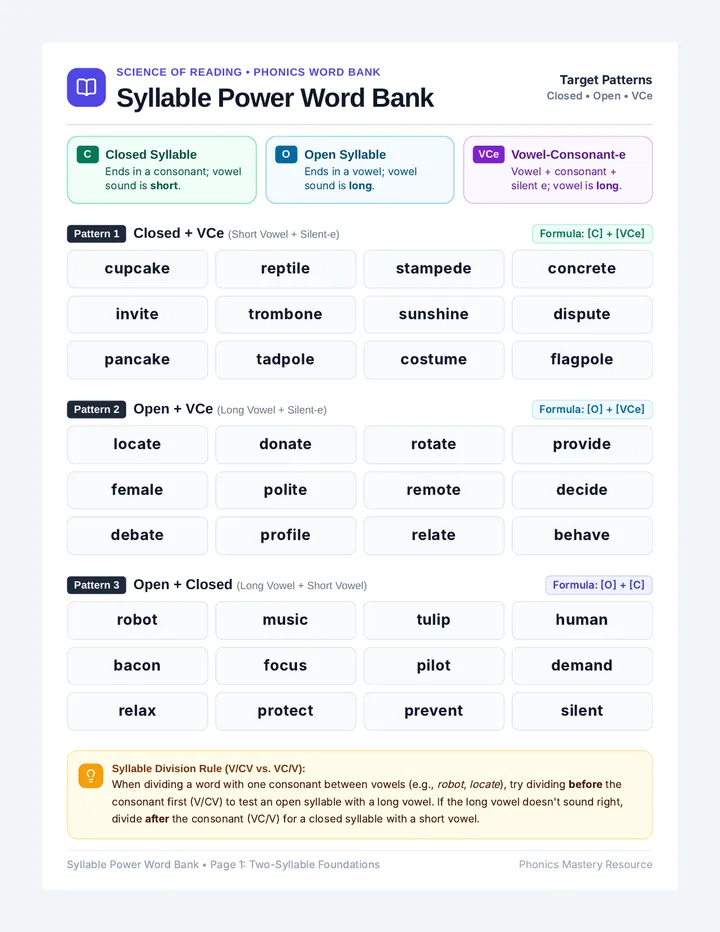
Suffix Sleuths SlidesSuffix Sleuths The Case of -able and -ible CASE ID: 5TH-SUFF-2026 The Mission Briefing 1 Identify the shared meaning of the suffixes -able and -ible. 2 Use context clues to solve the mystery of unknown words in a text. 3 Master the art of Word Building by adding the correct suffix to base words. The Common Thread -able Both suffixes mean: "Can be done" or "Worthy of" -ible Example: Dependable = Can be depended on. Example: Visible = Can be seen. Evidence File: -able THE MOST COMMON VARIATION The "Whole Word" Rule Usually, -able is added to a complete base word. Wash + able Washable Enjoy + able Enjoyable Adapt + able Adaptable Comfort + able Comfortable Evidence File: -ible THE TRICKY LATIN VARIATION The "Root" Rule Usually, -ible is added to roots that are not standalone words. Aud + ible Audible (can be heard) Vis + ible Visible (can be seen) Ed + ible Edible (can be eaten) Terr + ible Terrible (causing terror) Detective Challenge: Context Clues "The handwriting on the old map was so faint that it was barely legible. We had to use a magnifying glass to read the clues." Solve the Case: What does legible mean based on the clues? A. High quality B. Able to be read C. Hidden from sight Building the Evidence How would you turn these actions into descriptors? Base Word: BREAK Breakable Base Word: BELIEVE Believable Sleuth Tip! If the word ends in "e", drop the "e" before adding -able. value → valuable Ready for the Field? Time to put your detective skills to the test. Grab your evidence sheets and start sorting! Sorting Activity Case Worksheet
Word Detective Sorting ActivityWord Detective Sorting Activity Mission: Sort the evidence tags into the correct files. Evidence Pack #42 Detective Instructions Cut out the large Category Headers and place them on your desk. Cut out the Evidence Word Tags on the following pages. Analyze each word. Does it use the suffix -able or -ible? Sort the words under the correct header. Hint: Look for complete base words vs. roots! -able -ABLE Case: Complete Words -ible -IBLE Case: Latin Roots Place your sorted cards here for inspection by a Lead Investigator. washable TAG: 001-A enjoyable TAG: 002-A portable TAG: 003-A dependable TAG: 004-A laughable TAG: 005-A readable TAG: 006-A breakable TAG: 007-A renewable TAG: 008-A Wash + able MATCH: 001-A Port + able MATCH: 003-A visible TAG: 001-B audible TAG: 002-B edible TAG: 003-B flexible TAG: 004-B sensible TAG: 005-B terrible TAG: 006-B incredible TAG: 007-B possible TAG: 008-B Vis + ible MATCH: 001-B Aud + ible MATCH: 002-B
Clue Hunter WorksheetClue Hunter Worksheet SUBJECT: SUFFIX INVESTIGATION // CASE: 5TH-SUFF-A AGENT NAME: ____________________________ DATE: ___________________________________ Investigator's Goal: Use context clues to identify word meanings and build new evidence using the suffixes -able and -ible. 1 Context Clue Investigation Read each sentence below. Use the underlined context clues to help you determine which word belongs in the blank. Circle the correct choice. 1. The ancient scroll was so old and worn that the words were no longer ___________. laughable visible legible 2. The suspect's story was too strange to be true; it simply wasn't ___________. believable valuable terrible 3. The new backpack is tough enough to survive being dropped and tossed around; it is very ___________. audible flexible durable 4. The secret message was whispered so quietly that it was barely ___________ to the team. audible possible washable 2 Evidence Lab: Word Building Add the correct suffix (-able or -ible) to each base word or root. Remember to drop the "e" if necessary! ENJOY → VIS → ADORE → FLEX → RELY → ED → BREAK → SENS → 3 The Master Case Complete the mission report by choosing words from the box below. You may need to use some words more than once! comfortable terrible possible valuable credible The detective entered the room. It wasn't very ______________________, as there was only one hard wooden chair to sit on. He noticed a ______________________ smell coming from the kitchen, like something had been rotting for weeks. On the table, he found a ______________________ golden watch that belonged to the missing person. He checked every ______________________ hiding spot, but the room was empty. "It's not ______________________ that they vanished into thin air," he muttered. He needed a ______________________ witness to tell him what really happened. END OF CASE FILE // CONFIDENTIAL // 2026-SUFF-DETECTIVE
Case Closed Teacher GuideCase Closed Teacher Guide Teacher Resource Answer Keys & Instructional Support for "Suffix Sleuths Investigation" Detective Log Answer Key Mission Briefing: "Can be done" or "Worthy of" -able Rule: Complete base word (Examples: washable, enjoyable, dependable) -ible Rule: Roots/Standalone roots (Examples: visible, audible, terrible) Silent Witness Rule: Drop the "e" (Example: valuable) Field Test: Feasible = Able to be done / possible. Clues = "didn't have enough supplies". Sorting Activity Answer Key -ABLE • Washable • Enjoyable • Portable • Dependable • Laughable • Readable • Breakable • Renewable -IBLE • Visible • Audible • Edible • Flexible • Sensible • Terrible • Incredible • Possible Worksheet Answer Key Part 1: Context Clues 1. legible 2. believable 3. durable 4. audible Part 2: Word Building enjoyable visible adorable flexible reliable edible breakable sensible Part 3: Master Case Paragraph 1. comfortable / 2. terrible / 3. valuable / 4. possible / 5. possible (or credible) / 6. credible Detective Training Tips The "Complete Word" Test: Cover the suffix. If a complete English word remains (e.g., wash), use -able. If not (e.g., vis), use -ible. Exceptions: Remind students that words like flexible and sensible are tricky because the root is very close to a word, but technically they follow the Latin root rule.
Mission Launch Lesson PlanMission Launch Lesson Plan Introductory Guided Instruction Duration 45-60 MIN Learning Objective Students will be able to distinguish between the suffixes -able and -ible by identifying base words vs. roots and using context clues to define unknown words. Required Evidence (Materials) Suffix Sleuths Slides Detective Log (Guided Notes) Sorting Activity Cards Magnifying glass (optional hook) The Hook: The Vanishing Word "Class, I received a mysterious letter this morning, but parts of it are missing! Some suffixes have vanished, leaving only 'roots' and 'base words'. I need a team of linguistic sleuths to help me rebuild the evidence." LETTER PREP: Write "This mission is possible but only if the team is dependable" on the board, but leave -ible and -able blank. Mission Procedure 1 Direct Instruction (15 min) Use the Suffix Sleuths Slides. While presenting, students complete the first page of their Detective Log. Focus: Emphasize that -able is the 'friendly' suffix that usually attaches to whole words students already know. Focus: Point out that -ible is the 'secret agent' suffix that often hides behind Latin roots that aren't words on their own. 2 Guided Investigation: Word Building (10 min) Move to the second part of the Detective Log. Model how to check for a base word. "If I have the word 'Break', I ask: Is 'Break' a word on its own? Yes! So I'm 90% sure it needs -able. If I have 'Vis', is that a word? No. It needs -ible." 3 Hands-On Evidence Sorting (15 min) Distribute the Word Detective Sorting Activity. Students work in pairs to categorize the 'Evidence Tags'. Circulate and ask students: "How did you know 'audible' went in the root file? What was the base?" 4 Mission Debrief (5 min) Review the sorting activity. Have students share one "trick" they learned to tell the difference between the two suffixes. NEXT STEP: Hand out the Clue Hunter Worksheet for independent practice. Sleuth Support (Differentiation) FOR STRUGGLING DETECTIVES: Provide a 'Base Word' cheat sheet showing common complete words versus common Latin roots (vis, aud, terr, ed). FOR ADVANCED DETECTIVES: Challenge them to find the Latin meaning of the roots (e.g., 'aud' means hear, 'vis' means see).
Detective Log Guided NotesDetective's Log CASE: -ABLE VS -IBLE // AGENT ID: ___________ TOP SECRET EYES ONLY The Mission Briefing Both suffixes mean __________________________________________________ or _________________________________________________________________ Evidence File: -ABLE Rule #1: Add this suffix to a: Evidence Examples: Wash + able = ________________ Enjoy + able = ________________ Rely + able = ________________ Evidence File: -IBLE Rule #2: Add this suffix to a: Evidence Examples: Vis + ible = ________________ Aud + ible = ________________ Terr + ible = ________________ The Silent Witness Rule If the word ends in "e", you must _______________________________________ before adding the suffix. Example: value → ________________________ The Field Test 1. Use your magnifying glass (context clues) to define this word: "The mission was barely feasible because we didn't have enough supplies." I think feasible means: Clues I used: ___________________________________________________________ 2. Build the Evidence: Add the correct suffix to these words. Whole Words REASON + _____ → COMFORT + _____ → Latin Roots ED + _____ → FLEX + _____ → Final Mission Log Entry Write one sentence using an -able word and one sentence using an -ible word to prove you are a Master Sleuth! REF: MISSION-LAUNCH-NOTES-2026 PAGINATION: 02/02
Robinson Success Model ParagraphModel Informative Paragraph G5:M3:U1: Week 2, Day 1 — Writing Practice Teacher Model Prompt 1: Personal Qualities How did Jackie Robinson’s personal qualities lead to his success in breaking the color barrier in baseball? What, in the text, makes you think so? Introduction Evidence & Details Conclusion Changing society requires individuals with strong character to face difficult obstacles. Jackie Robinson was a pioneer whose personal qualities of self-control and determination led to his success in breaking the color barrier in Major League Baseball. One major factor in Jackie’s success was his remarkable self-control. For example, when Branch Rickey asked if he could "control his temper against verbal and even physical attacks," Robinson agreed to a nonviolent approach for the sake of racial equality (Promises to Keep, 29). This clearly shows that his ability to remain calm under pressure was essential. Another example of his strength is how he "stood firm even when his opinion wasn’t popular" (Promises to Keep, 7). Because of this determination, he was able to challenge an unjust system. By relying on his inner strength and self-discipline, Robinson successfully broke the color barrier. His character proved that specific personal qualities like these can lead to lasting success and change the course of history for everyone. Introductory Sentences • Introduces the topic (changing society) • Gives context (Jackie Robinson/MLB) • Explicitly names factors (self-control and determination) Evidence & Details • Relevant facts from text • Direct quotations with page numbers • Explanations of how details fit the focus Concluding Sentence • Restates the focus statement • Answers "so what?" (lasting change) Applying the Challenge Frame "Changing society requires individuals with character. Jackie Robinson was a pioneer. One factor in Jackie’s success was his self-control and determination. For example, he used a nonviolent approach. This clearly shows his character was strong. This led to breaking the color barrier. Another example of his strength is staying in the game until the end. Because of this, he challenged an unjust system. Without this, society might not have changed."
Hero Speech SlidesGrammar Hero Training Supercharge Your Sentences Level 5 Class A Mission Objectives Grammar Power: "I can describe the functions of conjunctions, prepositions, and interjections." Pacing & Detail Power: "I can expand and reduce sentences to control the speed of my story." The Sentence Squad Functions Conjunction THE FUNCTION: Joins ideas together to show relationships like addition (and) or contrast (but). Interjection THE FUNCTION: Expresses a sudden emotional reaction or surprise. Preposition THE FUNCTION: Introduces info about where, when, or how something happens. Conjunction Close-Up Why use a conjunction? "I was tired, but I finished my hero training." The Function Analysis: The conjunction but is used to show a contrast between being tired and finishing the job. Interjection Analysis OUCH! "Ouch! That robot pinched my arm." Why this interjection? It expresses a sudden reaction to physical pain. Punctuation Check: Always use an exclamation point or comma after your reactor! Super-Expansion Mode Original Sentence: "The city was dark." Expanded with Details: "The gloomy city was pitch-black as a cold wind whistled through the empty, cracked streets." 1 Use Concrete Words (Specific names of things). 2 Add Sensory Details (Sight, Sound, Smell, Touch). The Pacing Power: Speed It Up! Problem: Too Slow! "He walked to the door. He opened it slowly. He looked inside. He saw a cat. He smiled at it." Solution: Combine & Reduce! "After walking to the door and peering inside, he smiled at the small cat he found." Combine sentences to speed up time when the action isn't important to the plot! Assessment Ready You've mastered functions, expansion, and pacing. Your training manual has the final exercises before the official End of Unit Assessment!
Power Parts WorksheetHero Academy Field Manual Mission: Total Sentence Mastery AGENT ID: _________________ DATE: ____________________ Targets: I can describe grammar functions, expand details, and control narrative pacing. Task 1: Identify the Squad Read each sentence. Underline the specified word and label it (C), (I), or (P). "Gasp! The invisible jet is right there." ___ "The shield fell under the heavy table." ___ "She is brave yet she feels nervous." ___ "He trained before the sun came up." ___ Task 2: Case Study (Function Analysis) The secret agent crept through the dark tunnel, and he finally reached the control room before the alarm sounded. 1. The word through is a(n): Conj. Prep. Interj. 2. What is the function of through? a. Intro where the agent moved b. Intro when the agent moved 3. Circle the one conjunction in the box above. Why has it been used? (What is its function?) Task 3: Power-Up Paragraph for since Yikes! but atop Hooray! "The hero stood __________ the tall building, scanning for trouble. __________ he saw a giant shadow moving! He wanted to jump, __________ his cape was tangled. He had been training __________ he was a young boy. He untangled his cape __________ he knew the city needed him. __________, the villain was captured!" Task 4: Reaction Time “________________, the villain's giant robot is approaching the city gates!” Add an appropriate interjection. Why did you choose it? What is its function? Task 5: Super-Expansion Mode Expand these with concrete words and sensory details. 5. The ocean was cold. 6. The cake was sweet. Task 6: Pacing Power (Speed It Up) Combine these sentences to speed up the story pacing. "She went to the library. She looked at the shelves for a while. She found a thick blue book. She checked it out at the desk. She walked home slowly. She sat on her porch to read." Task 7: Creative Mission Excited Interjection Sentence: Conjunction (so/but) Sentence: Combined Field Manual // VERSION: UNIFIED // MISSION: READY
Hero HQ Teacher GuideHero HQ Teacher Guide Assessment Prep Edition Unified Mission Objectives • Describe functions of conjunctions, prepositions, and interjections. • Expand and reduce sentences to control narrative pacing. Mission Answer Key Task 1: Identify Gasp! (I) | under (P) | yet (C) | before (P) Task 2: Case Study 1. (b) Preposition | 2. (a) Intro where agent moved. 3. and: Circle this conjunction. It joins two thoughts to show addition (moving and reaching). Task 3: Power-Up Paragraph atop, Yikes!, but, since, for, Hooray! Task 4: Reaction Time Interj: (e.g., Oh no! / Look out!) - expresses alarm or urgency. Function: To show a sudden emotional reaction to a giant threat. Task 6: Pacing Power Example: "After arriving at the library and finding a thick blue book, she checked it out and walked home to read on her porch." Tasks 5 & 7: Style & Creative Expansion: Look for sensory details (icy/churning ocean, moist/velvety chocolate cake). Creative Sentences: Ensure correct squad member and emotional context. Teacher Strategy Checklist EXPAND Ensure students use concrete nouns and sensory adjectives to slow down important narrative beats. REDUCE Ensure students use conjunctions and prepositional phrases to speed up transitions.
Interjection Practice WorksheetInterjection Spark Station Specialized Training: Reactor Unit HERO NAME: ___________________ DATE: ________________________ What is an Interjection? An interjection is a short word or phrase used to express sudden feeling or emotion. They usually stand alone at the beginning of a sentence! Part 1: Spot the Spark Circle the interjection in each sentence below. 1. "Ouch! That jagged rock is sharp." 2. "Wow, the view from this height is incredible." 3. "Hey! Come back here with my cape!" 4. "Phew, I'm glad that mission is finally over." Part 2: Emotion Matching Match the interjection to the emotion it usually describes. Hurray! Pain Oops! Surprise Eek! Mistake Yikes! Fear Ouch! Excitement Part 3: Reactor Control Choose an interjection to complete each heroic sentence. Don't forget the punctuation! (! or ,) I didn't mean to knock over that building! That robot is ten stories tall! We finally stopped the lava flow. Part 4: Creative Burst Look at the image description and write a super sentence with a powerful interjection. Scene: A hero finds a treasure chest. Scene: A hero realizes they are out of super-fuel. Hero Training Module: Interjections // Target: Emotional Accuracy
Conjunction Practice WorksheetConjunction Connection Specialized Training: Linker Unit HERO NAME: ___________________ DATE: ________________________ What is a Conjunction? Conjunctions are words that connect words, phrases, or whole sentences. Think of them as the glue that holds ideas together! Part 1: The FANBOYS Code Write the full word for each letter of the acronym. F A N B O Y S Part 2: Choosing the Link Circle the conjunction that best completes each hero's thought. "I wanted to use my super-speed, ___________ I was too tired from the last mission." and but so "The villain escaped, ___________ the hero chased him across the rooftops." so for or "Would you rather have the power of flight, ___________ the power to disappear?" and but or Part 3: Sentence Welders Combine the two short sentences into one compound sentence using a conjunction. Don't forget the comma! 1. The sun went down. The hero started his patrol. 2. It was raining hard. We stayed in the secret base. Hero Training Module: Conjunctions // Target: Structural Integrity
Preposition Practice WorksheetPreposition Radar Specialized Training: Navigator Unit HERO NAME: ___________________ DATE: ________________________ What is a Preposition? Prepositions show the relationship between a noun and another part of the sentence. They often tell us WHERE or WHEN something is happening! Part 1: Signal Search Circle the preposition in each sentence. Hint: Look for words that show location or time! 1. The cat sat under the porch. 2. We will launch the jet at noon. 3. The hero flew above the clouds. 4. I found my mask behind the sofa. 5. Read the manual during the flight. 6. Run toward the signal! Part 2: Navigator Categories Sort these prepositions into the correct radar category. inside after between before on until PLACE (Location) TIME (When) Part 3: Map the Mission Complete the mission instructions by choosing a preposition from the box. You can use a word more than once! across through into beside around "To reach the villain's lair, you must first swim __________ the icy lake. Once you reach the other side, creep __________ the dense forest without being seen. When you find the giant boulders, walk __________ them until you see the hidden cave. Step bravely __________ the dark entrance and wait __________ the large stalagmite." Hero Training Module: Prepositions // Target: Navigational Accuracy