Lenny.com
Explore
Create
ActivitiesNewMathEnglish Language ArtsScience & EngineeringSocial StudiesGlobal LanguagesHealth & Physical EducationSpecial EducationCounseling & Life SkillsArts & CreativityESL
Lenny.com
Lenny.com
Explore
Create
ActivitiesNewMathEnglish Language ArtsScience & EngineeringSocial StudiesGlobal LanguagesHealth & Physical EducationSpecial EducationCounseling & Life SkillsArts & CreativityESL
Lenny.com
Lenny.com

Solutions

Lenny for EducatorsLenny for SchoolsLenny for Districts

Product

ExploreSign inCreateSupportAbout

Resources

Getting startedMTSS Acceleration Program

© 2026 Lenny Learning Inc.

TermsPrivacyAccessibility
LinkedInInstagramX
Lenny
English Language ArtsPhonics & Reading FoundationsLetter IdentificationLearn Letters A-ZLowercase and Uppercase LettersConsonants and VowelsLetter-Sound AssociationsLetter-Sound Associations: LowercaseLetter-Sound Associations: UppercaseBeginning and Ending SoundsRhymingBlending And SegmentingShort VowelsShort Vowel SoundsConsonant BlendsConsonant DigraphsBlends, Digraphs, and TrigraphsDigraphs, Blends, and Silent LettersLong Vowel SoundsLong Vowel PatternsShort and Long VowelsShort and Long Vowel PatternsSilent EVowel SoundsVowel TeamsR-Controlled VowelsDiphthongs: Oi, Oy, Ou, OwVariant VowelsVariant, Diphthong, And R Vowel PatternsSoft G And CSight WordsIrregular WordsWord RecognitionSyllablesSyllable TypesTwo-Syllable WordsMultisyllabic WordsPhoneme ManipulationDecodable TextsVocabularyAction WordsQuestion WordsNouns and AdjectivesClassify WordsCompound WordsSynonyms and AntonymsHomophonesHomophones and HomonymsShades of MeaningContext CluesPrefixes and SuffixesGreek and Latin RootsAnalogiesIdioms and AdagesForeign Words and ExpressionsWord Choice and UsageReference SkillsReading ComprehensionRead-Along Literary TextsRead-Along Informational TextsReality vs. FictionStory ElementsCharacterSequenceMain IdeaCause And EffectCompare And ContrastReading StrategiesText StructureAuthor's PurposeAuthor's Purpose And ToneAuthor's PerspectivePoint Of ViewThemeInference And ThemeInference And AnalysisPoetry ElementsLiterary DevicesAnalyzing LiteratureAnalyzing Informational TextsComparing TextsAudience, Purpose, And ToneBusiness DocumentsNovel StudyNonfiction Book StudyGrammar & MechanicsSentencesNounsVerbsAdjectivesPronounsCapitalizationPunctuationContractionsConjunctionsPrepositionsArticlesAdjectives And AdverbsVerb TypesVerb TensePronouns And AntecedentsPronoun TypesSubject-Verb AgreementDirect And Indirect ObjectsSentences, Fragments, And Run-OnsPhrases And ClausesCommasSemicolons, Colons, And CommasDashes, Hyphens, And EllipsesSpellingAbbreviationsFormattingVerb Tense And MoodMisplaced ModifiersWritingDescriptive DetailsCreative WritingOpinion WritingTopic SentencesOrganizing WritingLinking WordsSentence VarietyIntroductions And ConclusionsPersuasive And Opinion WritingExpository WritingPersuasive StrategiesDeveloping And Supporting ArgumentsTopic Sentences And Thesis StatementsSummarizingResearch SkillsEditing And RevisingActive And Passive Voice=Writing Clearly And ConciselyDebate & Public SpeakingPublic Speaking BasicsPersuasive TechniquesClaims and EvidenceTypes of ArgumentsReasoning TypesLogical FallaciesTopic ResearchOrganizing EvidenceDebate Speech OrganizationAttacking and Defending ArgumentsClash and EngagementImpact CalculusQuestioning and Cross-ExaminationCritical ThinkingInformal LogicFormal LogicInductive Reasoning

Robin Hood Reading Passage

A 122-word reading passage about Robin Hood emphasizing his legendary adventures alongside the ongoing debate of whether he was real or a myth. It features proper nouns and multiple regular verbs in past, present, and future tenses.

LHLucy Hellerman

Robin Hood Reading Passage

A 122-word reading passage about Robin Hood emphasizing his legendary adventures alongside the ongoing debate of whether he was real or a myth. It features proper nouns and multiple regular verbs in past, present, and future tenses.

LHLucy Hellerman

You might also like

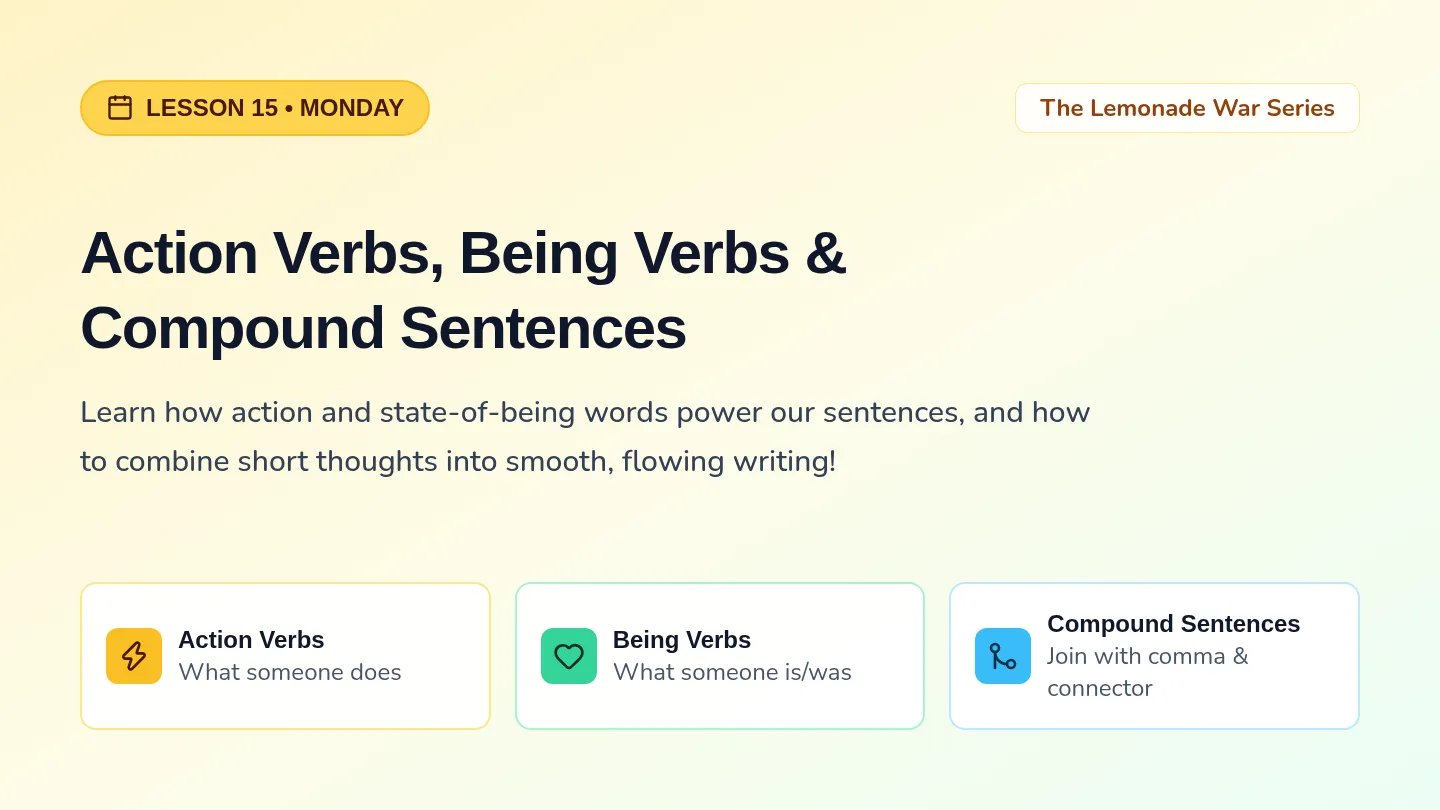
Lemonade Verbs Slides

Reading Writing Workshop

An engaging elementary English Language Arts unit connecting grammar mechanics, mentor texts, vocabulary, and sensory descriptive writing.

B

Bhoovaragavaswamym

8
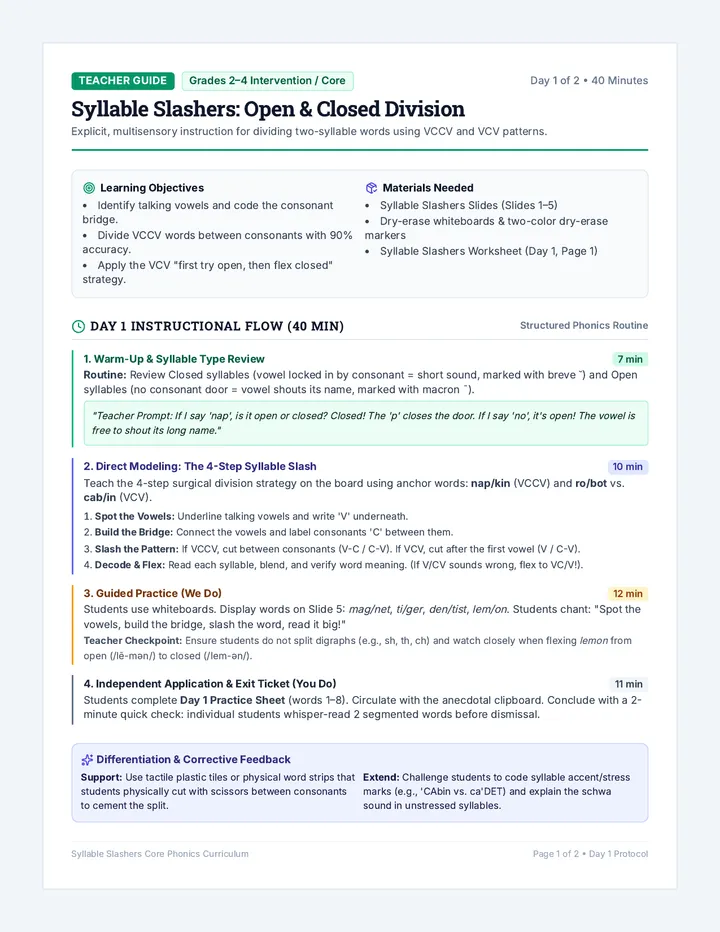
Syllable Slashers Lesson Plan

Syllable Slashers

A comprehensive two-day explicit phonics lesson focused on dividing and decoding two-syllable words featuring open, closed, and magic e syllables. Students learn and apply systematic syllable division routines (VCCV, VCV, and V-Ce) through multisensory coding, oral blending, decodable text practice, and diagnostic progress monitoring.

S

sandra.nii

5
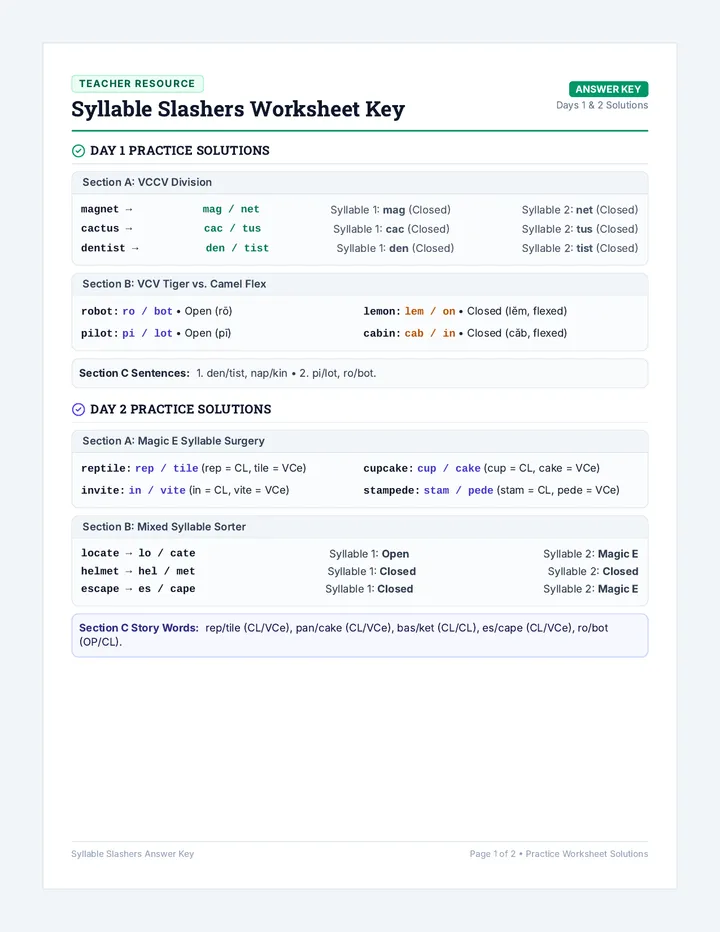
Syllable Slashers Answer Key

Syllable Slashers Answer Key

A comprehensive two-page teacher reference document providing complete answer keys, syllable coding solutions, and scoring annotations for both the two-day practice worksheet and the progress monitoring assessment.

S

sandra.nii

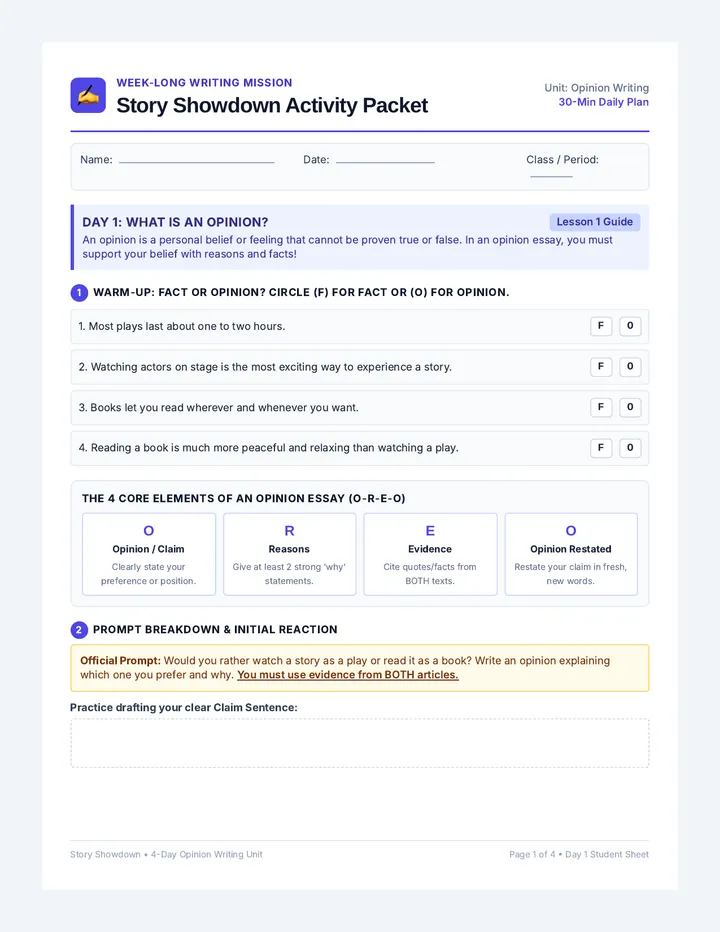
Story Showdown Activity Packet

Story Showdown

A four-day opinion writing unit guiding students through forming claims, analyzing paired texts, and crafting evidence-based essays comparing theatrical plays and books.

SM

Samantha McBath

6
Autumn Voices Activity Sheet

Autumn Voices Studio

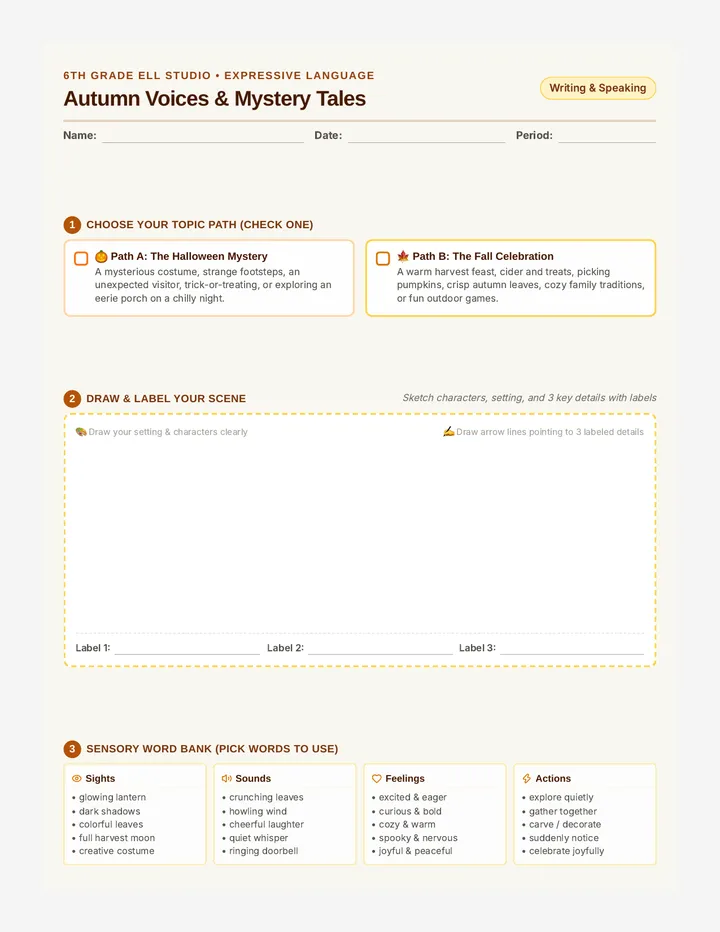
A seasonal writing and speaking workshop for 6th grade English language learners on the day before Halloween, featuring inclusive storytelling pathways, multimodal drawing scaffolds, and structured peer conversation protocols.

SM

Shalini Mitchell

2
Syllable Slashers Assessment

Syllable Slashers Assessment

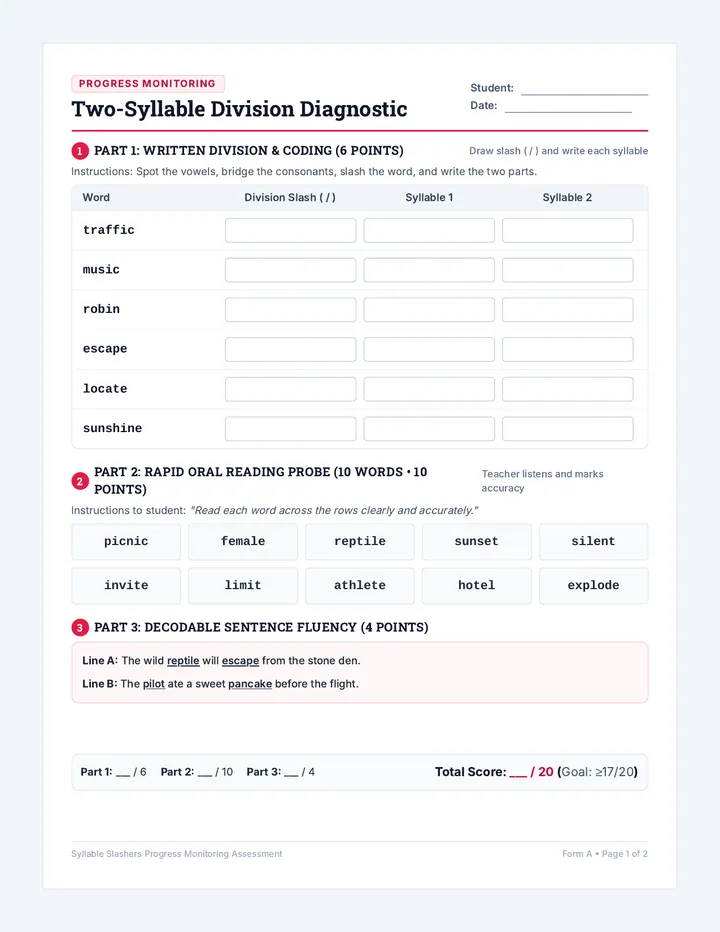
A two-page progress monitoring assessment and diagnostic tracking tool. Includes a student-facing division and oral reading assessment, paired with a teacher diagnostic scoring matrix, error pattern analysis, and intervention action pathways.

S

sandra.nii

Echo Champ Tracker Phase 1

Echo Champs Unit

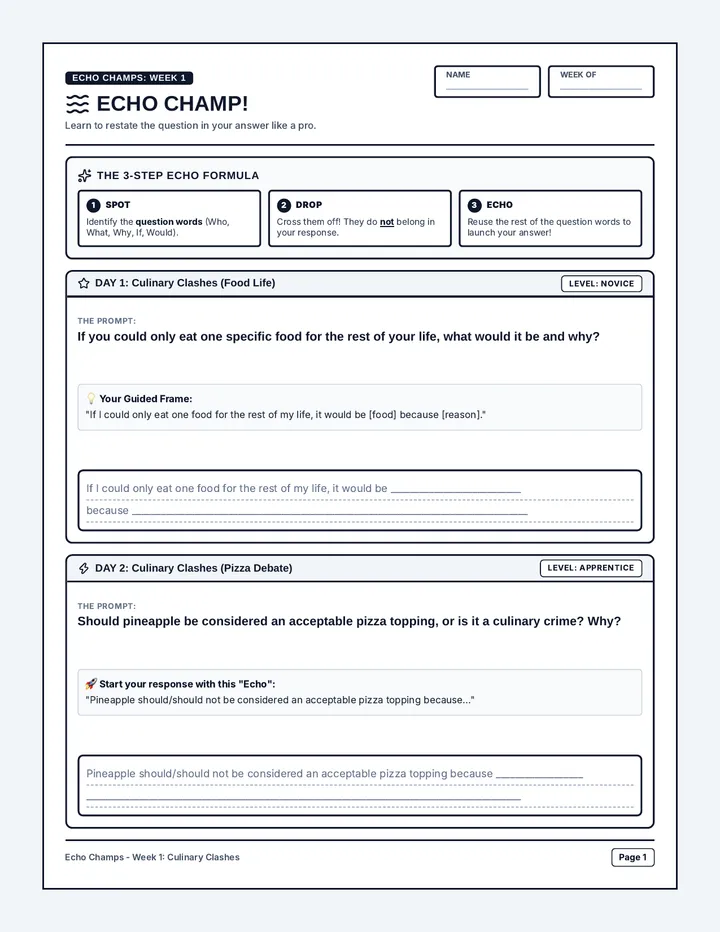
A comprehensive twelve-week scaffolded daily bell ringer sequence designed to help students master restating the question, featuring an initial six-week core sequence and a dedicated six-week Tier 2 intervention for students requiring additional practice.

CP

Camryn Pope

12
Mystery Locker Journal Prompt

Mystery Locker Writing

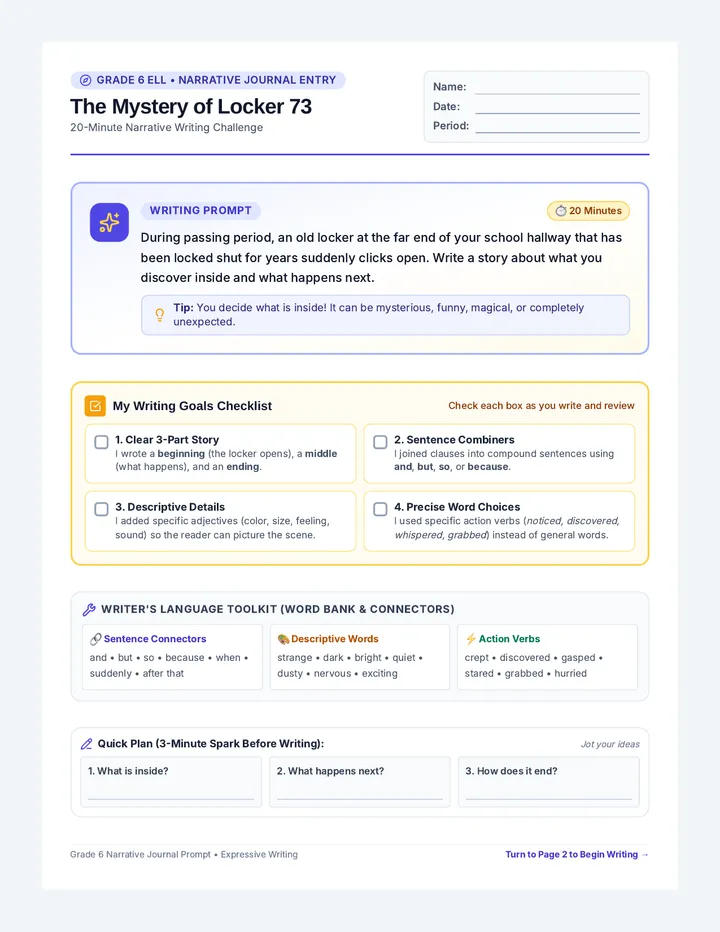
A narrative writing lesson for sixth-grade English Language Learners centered around an open-ended mystery locker prompt, featuring scaffolding tools and annotated student writing exemplars.

SM

Shalini Mitchell

2
Syllable Slashers Worksheet

Syllable Slashers Worksheet

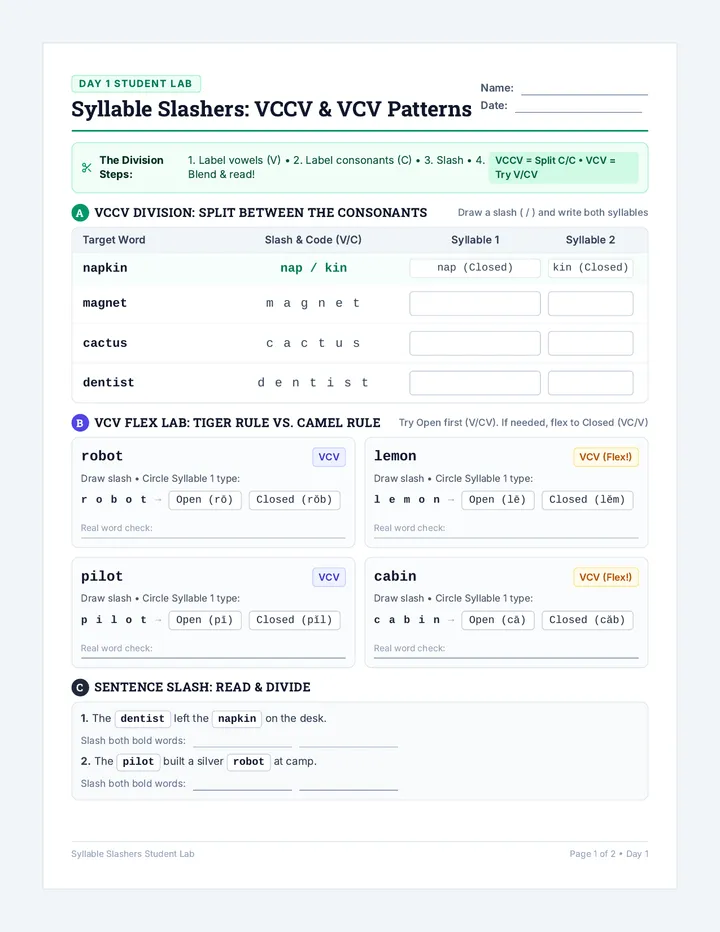
A two-page student practice packet for Days 1 and 2. Features multisensory coding lines for VCCV and VCV division, magic e identification drills, mixed pattern sorting, and decodable sentence reading with generous handwriting space.

S

sandra.nii

Paragraph Sleuths Slides

Text Detectives

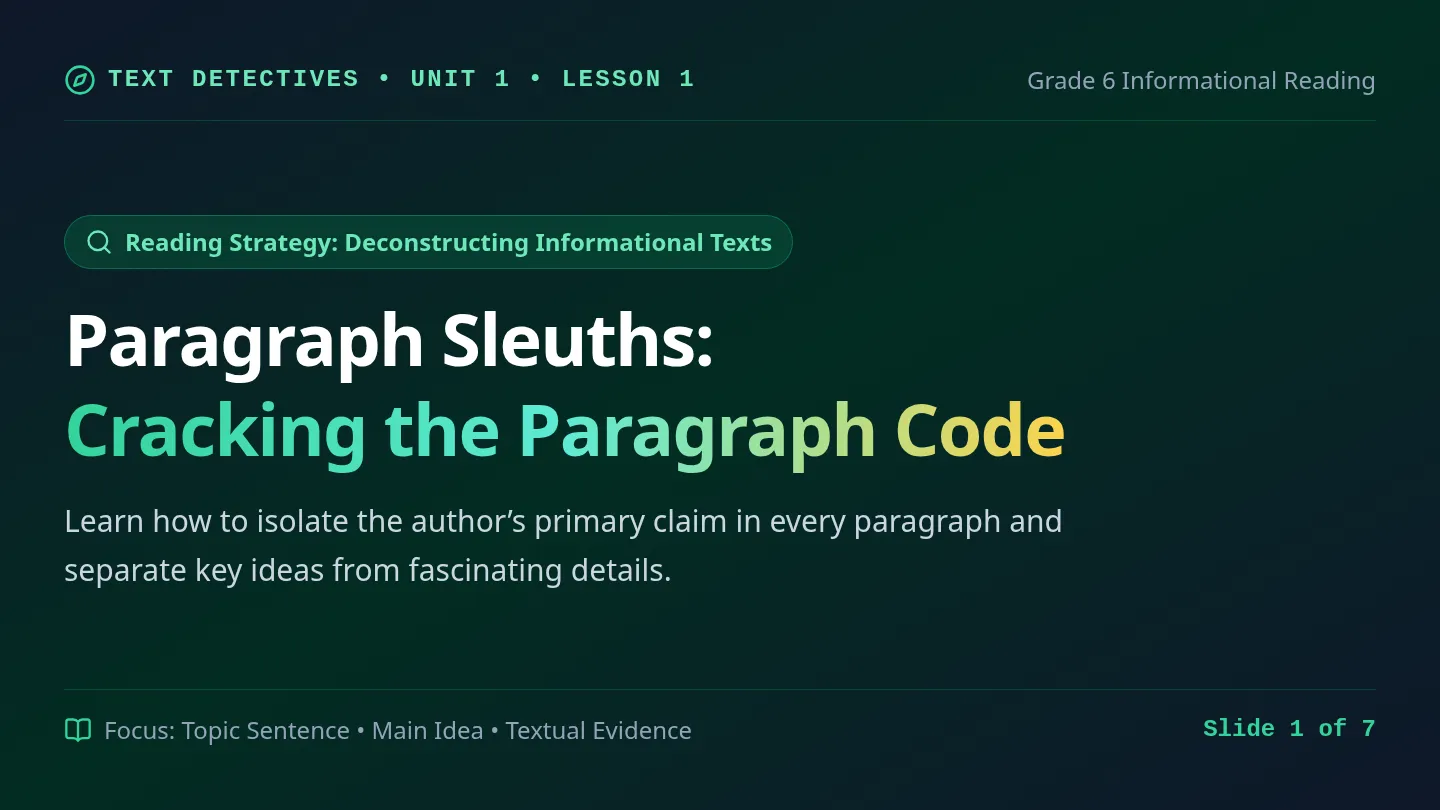
A comprehensive two-part 6th-grade informational reading comprehension unit centered on analyzing multi-paragraph nonfiction texts. Students identify paragraph-level main ideas, evaluate textual supporting evidence, and synthesize overall central ideas.

SS

Shannalee Stephenson

6
Punto de Vista Tarea

Perspective Detectives

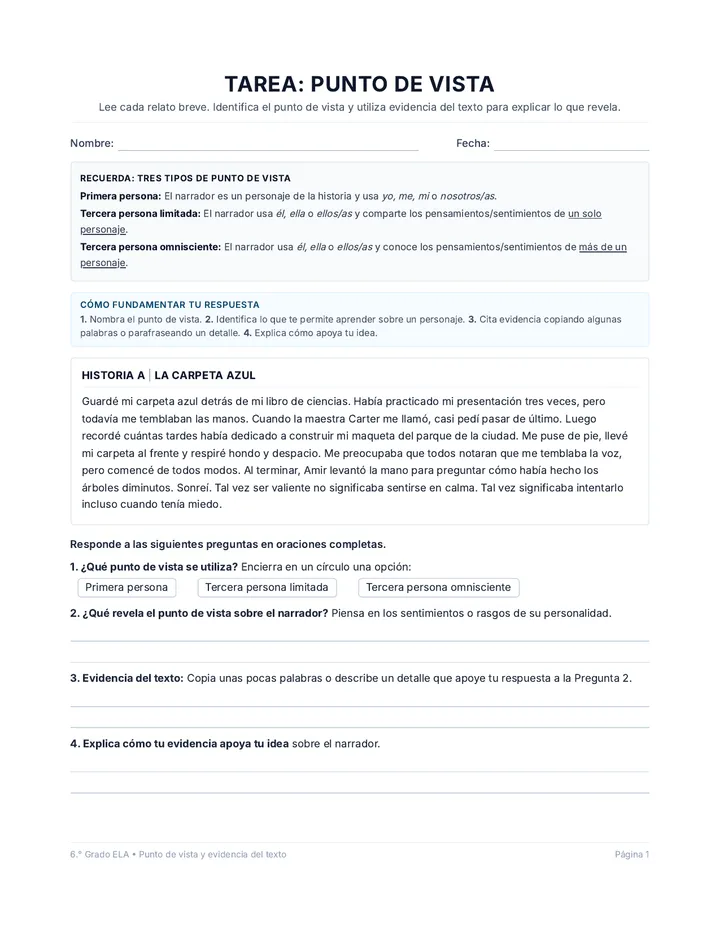
A focused lesson analyzing narrative points of view—first person, third-person limited, and third-person omniscient—through textual evidence and character insight across diverse short stories.

N

nlewis

4
Syllable Slashers Slides

Syllable Slashers Slides

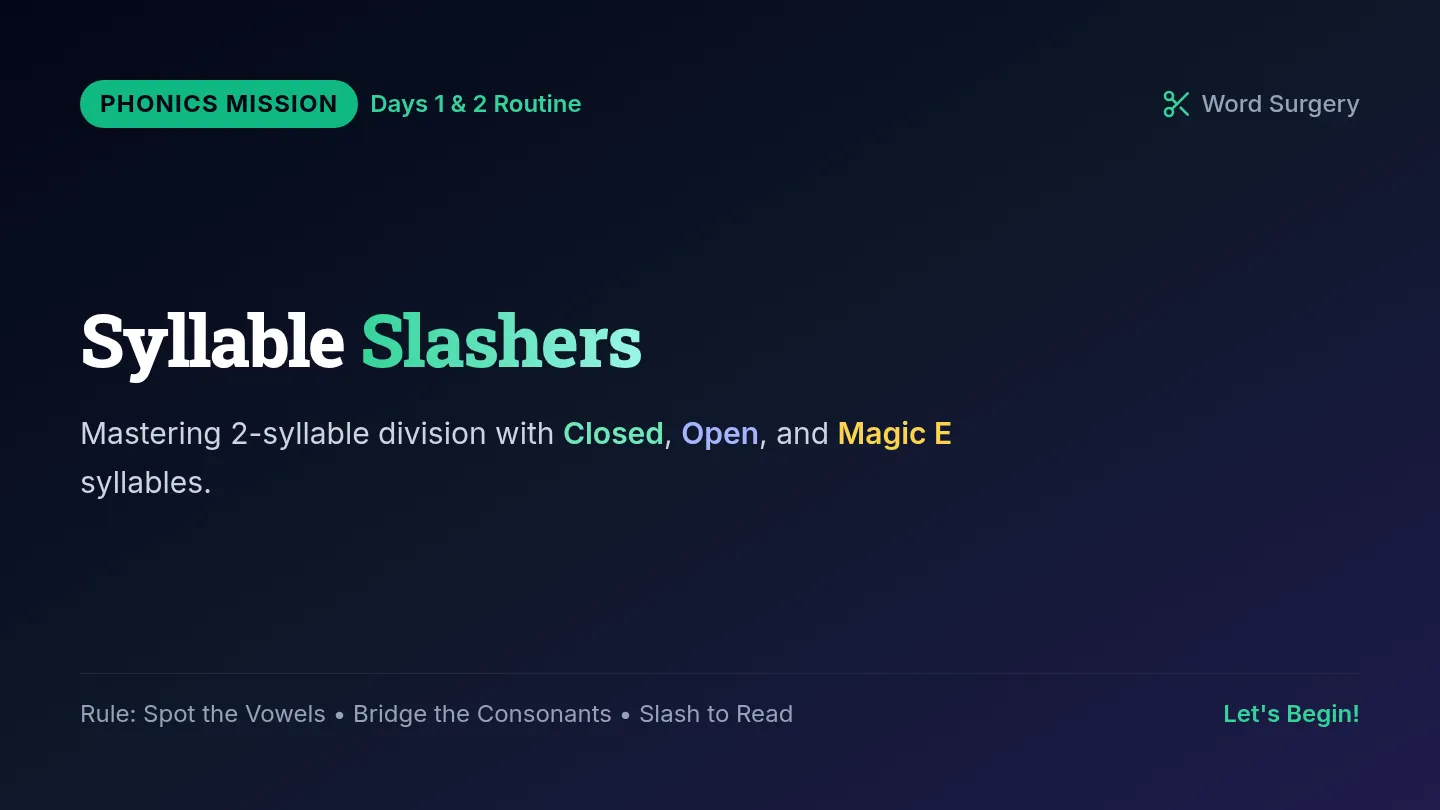
An interactive 8-slide presentation for direct phonics instruction and guided syllable division. Covers the three syllable types, VCCV division rules, VCV flex strategies, and multisyllabic magic e patterns with bold visual models.

S

sandra.nii