Lenny.com
Explore
Create
ActivitiesNewMathEnglish Language ArtsScience & EngineeringSocial StudiesGlobal LanguagesHealth & Physical EducationSpecial EducationCounseling & Life SkillsArts & CreativityESL
Lenny.com
Lenny.com
Explore
Create
ActivitiesNewMathEnglish Language ArtsScience & EngineeringSocial StudiesGlobal LanguagesHealth & Physical EducationSpecial EducationCounseling & Life SkillsArts & CreativityESL
Lenny.com
Lenny.com

Solutions

Lenny for EducatorsLenny for SchoolsLenny for Districts

Product

ExploreSign inCreateSupportAbout

Resources

Getting startedMTSS Acceleration Program

© 2026 Lenny Learning Inc.

TermsPrivacyAccessibility
LinkedInInstagramX
Lenny
English Language ArtsPhonics & Reading FoundationsLetter IdentificationLearn Letters A-ZLowercase and Uppercase LettersConsonants and VowelsLetter-Sound AssociationsLetter-Sound Associations: LowercaseLetter-Sound Associations: UppercaseBeginning and Ending SoundsRhymingBlending And SegmentingShort VowelsShort Vowel SoundsConsonant BlendsConsonant DigraphsBlends, Digraphs, and TrigraphsDigraphs, Blends, and Silent LettersLong Vowel SoundsLong Vowel PatternsShort and Long VowelsShort and Long Vowel PatternsSilent EVowel SoundsVowel TeamsR-Controlled VowelsDiphthongs: Oi, Oy, Ou, OwVariant VowelsVariant, Diphthong, And R Vowel PatternsSoft G And CSight WordsIrregular WordsWord RecognitionSyllablesSyllable TypesTwo-Syllable WordsMultisyllabic WordsPhoneme ManipulationDecodable TextsVocabularyAction WordsQuestion WordsNouns and AdjectivesClassify WordsCompound WordsSynonyms and AntonymsHomophonesHomophones and HomonymsShades of MeaningContext CluesPrefixes and SuffixesGreek and Latin RootsAnalogiesIdioms and AdagesForeign Words and ExpressionsWord Choice and UsageReference SkillsReading ComprehensionRead-Along Literary TextsRead-Along Informational TextsReality vs. FictionStory ElementsCharacterSequenceMain IdeaCause And EffectCompare And ContrastReading StrategiesText StructureAuthor's PurposeAuthor's Purpose And ToneAuthor's PerspectivePoint Of ViewThemeInference And ThemeInference And AnalysisPoetry ElementsLiterary DevicesAnalyzing LiteratureAnalyzing Informational TextsComparing TextsAudience, Purpose, And ToneBusiness DocumentsNovel StudyNonfiction Book StudyGrammar & MechanicsSentencesNounsVerbsAdjectivesPronounsCapitalizationPunctuationContractionsConjunctionsPrepositionsArticlesAdjectives And AdverbsVerb TypesVerb TensePronouns And AntecedentsPronoun TypesSubject-Verb AgreementDirect And Indirect ObjectsSentences, Fragments, And Run-OnsPhrases And ClausesCommasSemicolons, Colons, And CommasDashes, Hyphens, And EllipsesSpellingAbbreviationsFormattingVerb Tense And MoodMisplaced ModifiersWritingDescriptive DetailsCreative WritingOpinion WritingTopic SentencesOrganizing WritingLinking WordsSentence VarietyIntroductions And ConclusionsPersuasive And Opinion WritingExpository WritingPersuasive StrategiesDeveloping And Supporting ArgumentsTopic Sentences And Thesis StatementsSummarizingResearch SkillsEditing And RevisingActive And Passive Voice=Writing Clearly And ConciselyDebate & Public SpeakingPublic Speaking BasicsPersuasive TechniquesClaims and EvidenceTypes of ArgumentsReasoning TypesLogical FallaciesTopic ResearchOrganizing EvidenceDebate Speech OrganizationAttacking and Defending ArgumentsClash and EngagementImpact CalculusQuestioning and Cross-ExaminationCritical ThinkingInformal LogicFormal LogicInductive Reasoning

Text Detectives

A comprehensive two-part 6th-grade informational reading comprehension unit centered on analyzing multi-paragraph nonfiction texts. Students identify paragraph-level main ideas, evaluate textual supporting evidence, and synthesize overall central ideas.

SSShannalee Stephenson
Paragraph Sleuths

Students deconstruct the anatomy of individual paragraphs within a four-paragraph informational text to isolate key claims, separate main ideas from interesting supporting details, and annotate textual evidence.

Central Idea Architects

Students synthesize paragraph-level findings to determine the overarching central idea across a four-paragraph text and draft text-based constructed responses supported by direct textual evidence.

Text Detectives

A comprehensive two-part 6th-grade informational reading comprehension unit centered on analyzing multi-paragraph nonfiction texts. Students identify paragraph-level main ideas, evaluate textual supporting evidence, and synthesize overall central ideas.

SSShannalee Stephenson

¶ 4

Despite its resilience, this subterranean network faces unprecedented threats that jeopardize the future of global woodlands. Heavy industrial logging, chemical pesticides, and soil compaction destroy the delicate fungal filaments, severing the vital connections that keep forests thriving. When these fungal bonds break, isolated trees become far more vulnerable to severe drought, insect blights, and extreme heat waves. Ecologists emphasize that protecting this underground architecture is essential not just for saving trees, but for preserving the world's most critical carbon sinks against accelerating climate change.

Station 2: Emergency Defense & Threats

Paragraph 3: Defense & Warnings

A. Main Idea (Tabletop) of Paragraph 3:

B. Textual Supporting Detail (Leg) citing the defense mechanism:

Paragraph 4: Ecosystem Threats

A. Main Idea (Tabletop) of Paragraph 4:

B. Textual Supporting Detail (Leg) naming human activities that sever connections:

Part 3: Claim or Supporting Leg? Label: MAIN IDEA or SUPPORTING DETAIL

1. Neighboring trees produce toxic tannins within hours of receiving chemical alarm signals.

2. The underground fungal network protects entire forest ecosystems by operating an early-warning defense system.

3. Human industrial logging and chemical pollution threaten the stability of the underground web.

4. Fungi supply minerals and moisture in exchange for carbon-rich tree sugars.

Unit: Text Detectives • Lesson 1 Investigation Complete • RI.6.1, RI.6.2 Page 2 of 2

Station 1 Exemplar Responses (Paragraphs 1 & 2)

Paragraph 1 Main Idea (Tabletop):

Forest trees are connected underground through a vast network of microscopic fungal threads that share resources and messages. (Accept paraphrases emphasizing underground fungal connection).

Exemplar Supporting Detail (Leg):

"Trees are linked underground by millions of microscopic fungal threads known as mycorrhizal mycelium" OR connects root tips of oaks, pines, and birches across square miles.

Paragraph 2 Main Idea (Tabletop):

The fungal network enables mutual resource trading and cooperation between trees and fungi to ensure ecosystem survival. (Must include mutual trading/cooperation).

Exemplar Supporting Detail (Leg):

Mature "mother trees" pump life-saving sugars to struggling young seedlings in deep shade OR fungi absorb minerals/phosphorus/moisture in exchange for tree canopy sugars.

Station 2 Exemplar Responses (Paragraphs 3 & 4)

Paragraph 3 Main Idea (Tabletop):

The underground fungal network serves as an active emergency warning system that helps the forest defend against pests and disease.

Exemplar Supporting Detail (Leg):

Wounded trees send chemical alarm signals, prompting neighboring trees to produce toxic tannins and insect repellents within hours.

Paragraph 4 Main Idea (Tabletop):

Human activities threaten to destroy this delicate underground network, which endangers forest resilience and global climate stability.

Exemplar Supporting Detail (Leg):

Logging, chemical pesticides, and soil compaction sever fungal threads, leaving trees vulnerable to drought, insects, and heat waves.

Part 3 Sorting Lab Official Answer Key

1. Neighboring trees produce toxic tannins... → SUPPORTING DETAIL

2. Fungal network operates an early warning system... → MAIN IDEA

3. Human logging and pollution threaten the web... → MAIN IDEA

4. Fungi supply minerals in exchange for sugars... → SUPPORTING DETAIL

Tiered Differentiation Protocols

Support / Scaffolding: Provide sentence frames: "In this paragraph, the author's main point is that ______ because ______." Pre-highlight the first sentence of Paragraphs 1 & 3 to guide attention.

Extension / Challenge: Ask students to rewrite one supporting detail into their own informational sentence and evaluate how the text would weaken if Paragraph 4 were removed.

Text Detectives • Lesson 1 Facilitation Guide Answer Key Complete • RI.6.1, RI.6.2 Page 2 of 2

A

Answer

Directly state your synthesized central idea claim.

"...forests cooperate to survive."

C

Cite

Quote exact words from two different paragraphs.

"In paragraph 2, the text states..."

E

Explain

Explain how each quote proves the central idea.

"This proves that..."

S

Sum It Up

Wrap up your response with a concluding insight.

"In conclusion, trees..."

Citing evidence without explaining is like showing a clue without solving the mystery RI.6.1 Standard


Evidence Quality

Evaluating Textual Evidence: Strong vs. Weak

Slide 5 of 6

Weak / Ineffective Evidence

Student Writes:

"Trees share stuff because the article says trees talk and there are roots everywhere."

  • No quotation marks or exact text
  • No paragraph citation or specific data
  • Vague phrasing ("share stuff")

Verdict: Unsubstantiated Opinion (Score: 1/4)

Strong / Effective Evidence

Student Writes:

"According to Paragraph 2, 'mature mother trees use this underground highway to pump life-saving sugars to struggling young seedlings in deep shade.'"

  • Identifies exact paragraph origin
  • Accurately quotes the author's precise words
  • Directly proves community cooperation

Verdict: Rigorous Textual Proof (Score: 4/4)

Rule: Always use quotation marks and state which paragraph your evidence is from! Grade 6 Benchmark


Final Studio

Architect Mission: Constructed Response

Slide 6 of 6

Constructed Response Prompt:

"Analyze how the author develops the central idea that forest trees rely on cooperation rather than competition. Cite at least two pieces of textual evidence from different paragraphs to defend your claim."

Step 1: Synthesize

Complete the synthesis matrix on Page 1 of your worksheet.

Step 2: Draft

Use the R.A.C.E.S. organizer on Page 2 with two direct quotes.

Step 3: Self-Check

Verify your work with the Detective Quality Checklist.

Aim for a 4 on the ELA Rubric! Slide 6 of 6

[S] Concluding Synthesis Sentence: Summarize big-picture impact

Architect's Self-Assessment Quality Checklist Check off each item before submitting

Restated prompt and clearly answered central idea

Included quotation marks around exact textual words

Cited evidence from two distinct paragraphs

Explained how each quote proves tree cooperation

Unit: Text Detectives • Lesson 2 Performance Assessment Complete • RI.6.1, RI.6.2 Page 2 of 2

Distractor Analysis: • Choice A is a supporting detail from Paragraph 2 explaining fungal photosynthesis limitations. • Choice C is a specific supporting detail from Paragraph 3 describing aphid attacks. • Choice D is a supporting detail from Paragraph 4 citing human logging activities.

Score 4 Exemplar Student Response (Annotated)

R.A.C.E.S. MODEL

[R & A] In the informational text "The Forest's Hidden Web," the author demonstrates that forest trees rely on cooperation rather than competition by showing how organisms share life-saving food and mount unified defenses through a subterranean fungal network.

[C & E 1] First, in Paragraph 2, the text reveals that mature "mother trees" use fungal threads "to pump life-saving sugars to struggling young seedlings growing in deep shade." This textual evidence proves cooperation because stronger adult trees sacrifice valuable nutrients to nurture weaker neighbors rather than competing with them for survival.

[C & E 2] Furthermore, in Paragraph 3, the author explains that when pests attack a tree, the host sends alarm signals so neighboring trees can "mount a coordinated defense to protect the forest canopy" by producing chemical repellents before pests arrive. This demonstrates that trees act as an allied community to safeguard the whole forest.

[S] In conclusion, through underground nutrient exchanges and shared predator defense broadcasts, the forest proves that survival depends on collective teamwork rather than individual rivalry.

Unit Summative Debrief Prompts (Socratic Circle)

  • "Why is it impossible to understand the author's true central idea by reading only the first paragraph?"
  • "How did distinguishing between 'tabletops' and 'legs' help you eliminate distractor choices on the multiple-choice assessment?"
  • "When reading scientific articles in the future, what strategy will you use to make sure you don't confuse an exciting statistic with the central message?"

Text Detectives • Lesson 2 Facilitation Guide Unit Assessment Complete • RI.6.1, RI.6.2, W.6.9 Page 2 of 2
You might also like

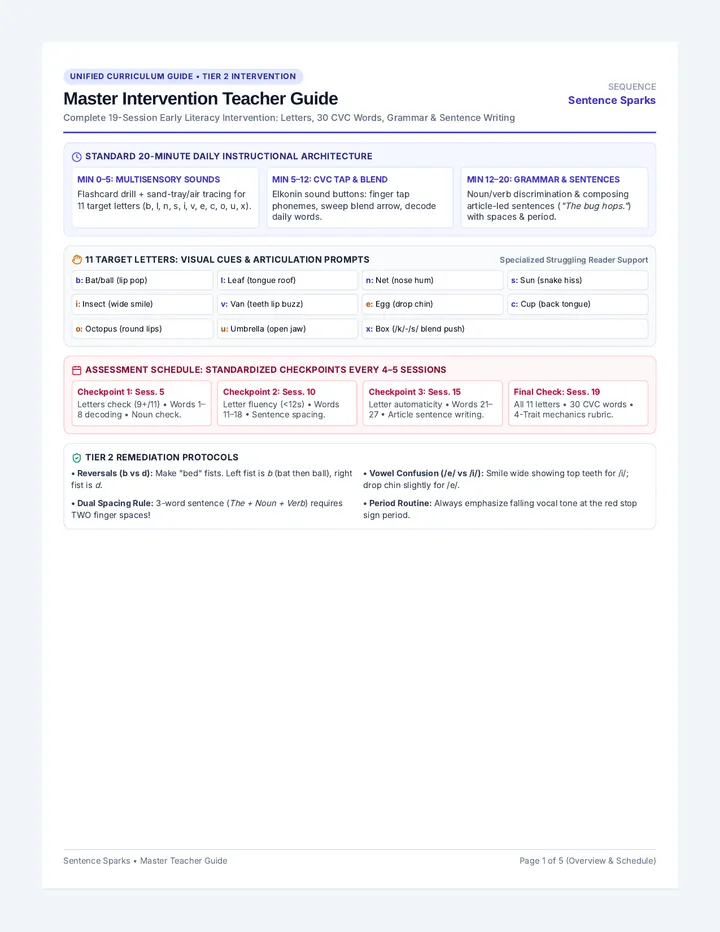
Sound Foundations Teacher Guide

Sentence Sparks

A comprehensive 19-session tier-2 early literacy intervention sequence systematically targeting letter-sound mastery for 11 critical letters, blending 30 CVC words, identifying nouns and verbs, and composing simple sentences with spacing and punctuation.

K

kurtzm

9
Sentence Builders Teacher Guide

Sentence Builders

Covers Sessions 13 to 19 of the intervention, consolidating all 30 CVC words, mastering letter-sound fluency, and guiding students to compose, space, and punctuate simple noun-and-verb sentences.

K

kurtzm

3
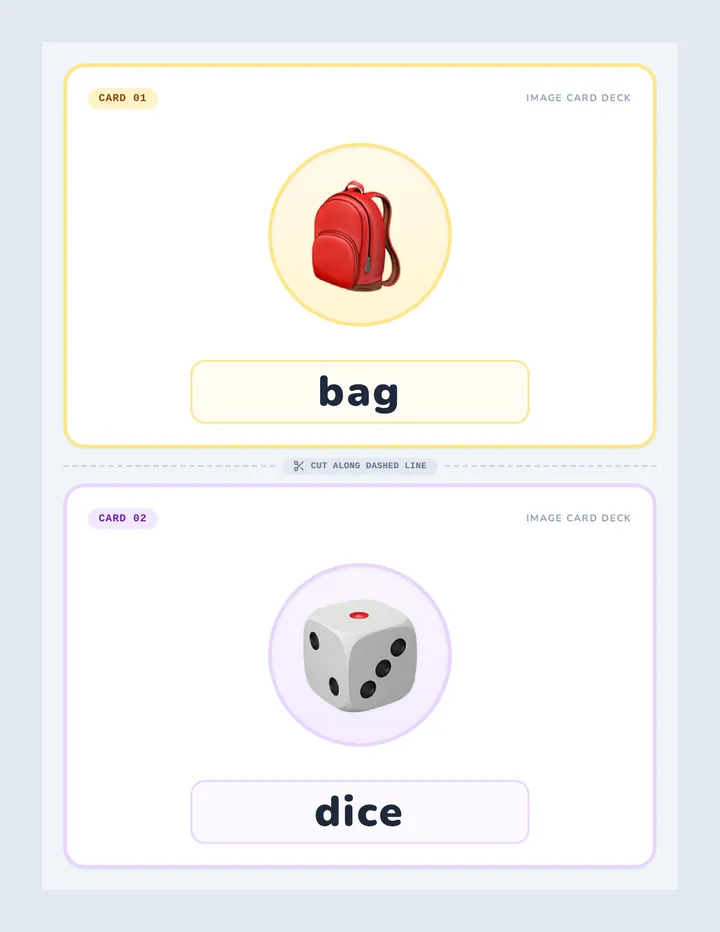
Big Picture Word Flashcards

Big Picture Word Flashcards

A vibrant set of 13 large printable picture cards featuring clear, engaging visuals and prominent word labels for whole-class display, phonics practice, and vocabulary building. Each card includes a dedicated illustration badge and bold lowercase word plaque, with an included deck checklist and activity guide.

A

ANDREA.BOYLE

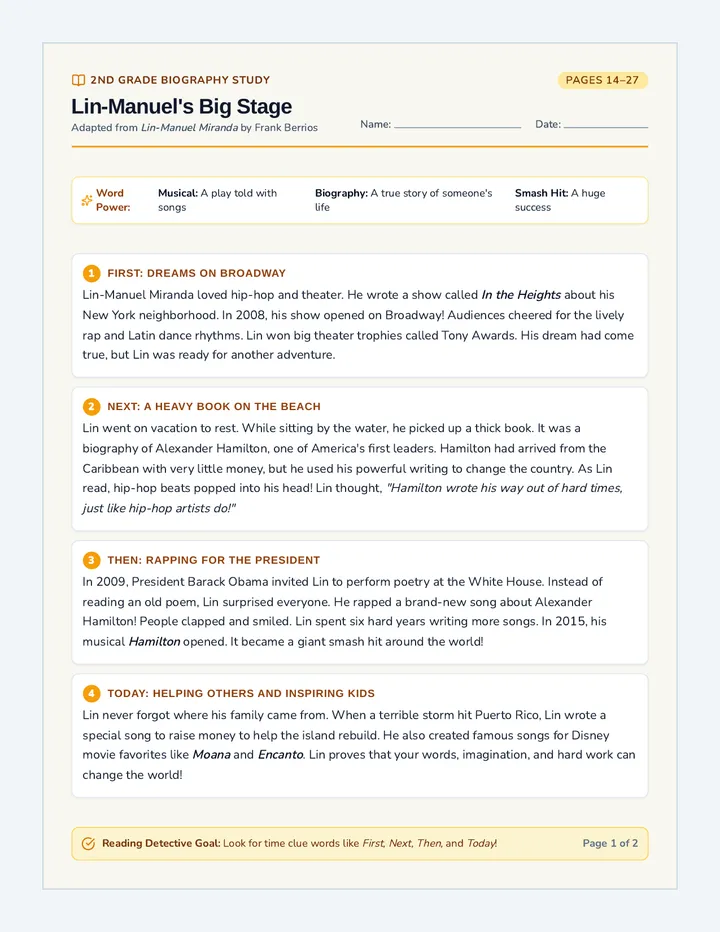
Broadway Beat Worksheet

Lin Manuel Spotlight

A 2nd-grade English Language Arts biography sequence exploring the life, musicals, creative process, and community impact of Lin-Manuel Miranda from Frank Berrios's text. Students analyze chronological text organization, central main ideas, and character inferences.

A

awarner1

6
Words Actions Teacher Guide

Words and Actions

Covers Sessions 7 to 12 of the intervention, advancing blending through CVC words 11 to 20, contrasting naming nouns with action verbs, and practicing two-word sentence pairings with finger spaces.

K

kurtzm

3
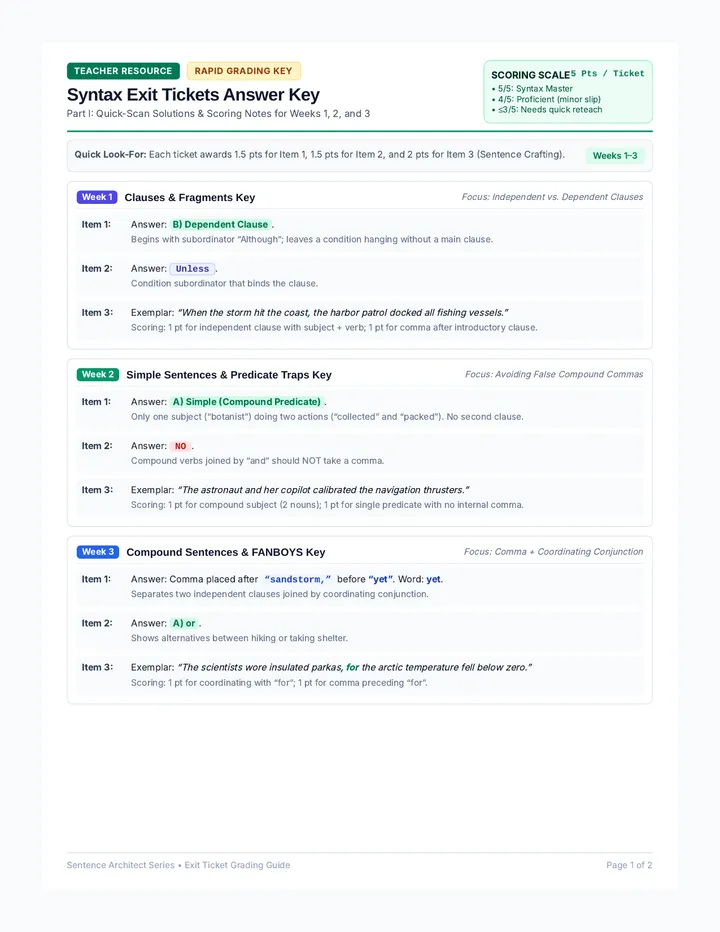
Syntax Exit Tickets Answer Key

Syntax Exit Tickets Answer Key

A complete two-page teacher answer key and quick-grading rubric for the six-week syntax exit ticket collection and lesson checkpoints. Features exact answers, clause annotations, common error flags, and score criteria for grades 5–8 educators.

Lenny Avatar
Lenny
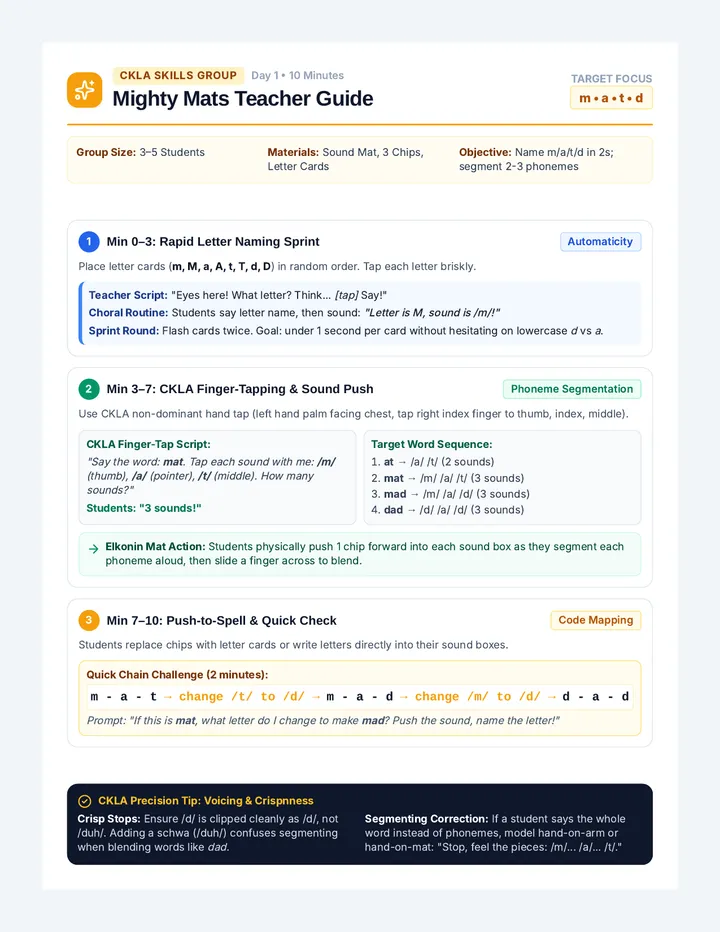
Mighty Mats Teacher Guide

Sound Sparks Kindergarten

A five-day targeted Kindergarten small-group intervention sequence aligned with CKLA Skills. Each 10-minute daily session sharpens rapid letter naming and phoneme segmentation through explicit finger-tapping, Elkonin sound boxes, and word chaining.

S

seoleary

10
Sound Foundations Teacher Guide

Sound and Blend Foundations

Covers Sessions 1 to 6 of the intervention, building rapid tactile recognition of target letters b, l, n, s, i, v, e, c, o, u, x, tapping and blending the first 10 CVC words, and introducing nouns as naming words.

K

kurtzm

3
Weekly Syntax Exit Tickets

Weekly Syntax Exit Tickets

A six-week spiraled exit ticket collection for grades 5–8 grammar and syntax instruction. Each printable page provides two identical half-sheet tickets with clean cut lines, systematically progressing from clause dissection and simple sentences to compound sentences, complex comma rules, and cumulative synthesis.

Lenny Avatar
Lenny
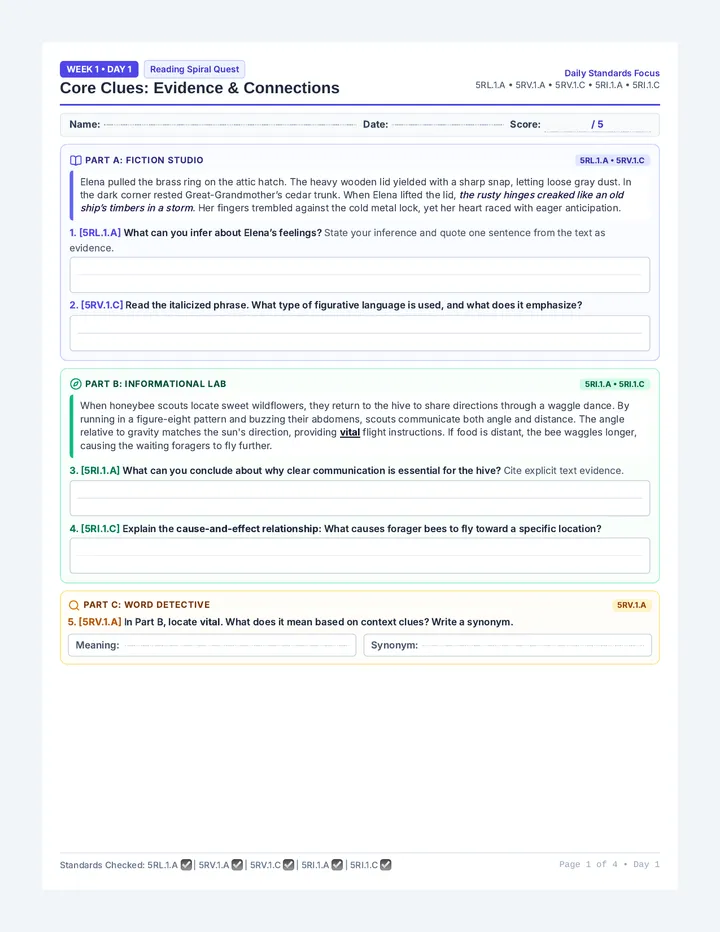
Core Clues Homework Packet

Reading Spiral Quest

A twelve-day, three-week daily reading comprehension and vocabulary homework spiral systematically covering Missouri ELA standards 5RV.1.A, 5RL.1.A, 5RV.1.C, 5RI.1.A, and 5RI.1.C. Each daily task builds critical thinking through paired literary and informational excerpts, targeted evidence-based questions, and rigorous word study.

TG

Tolisha Goldston

6
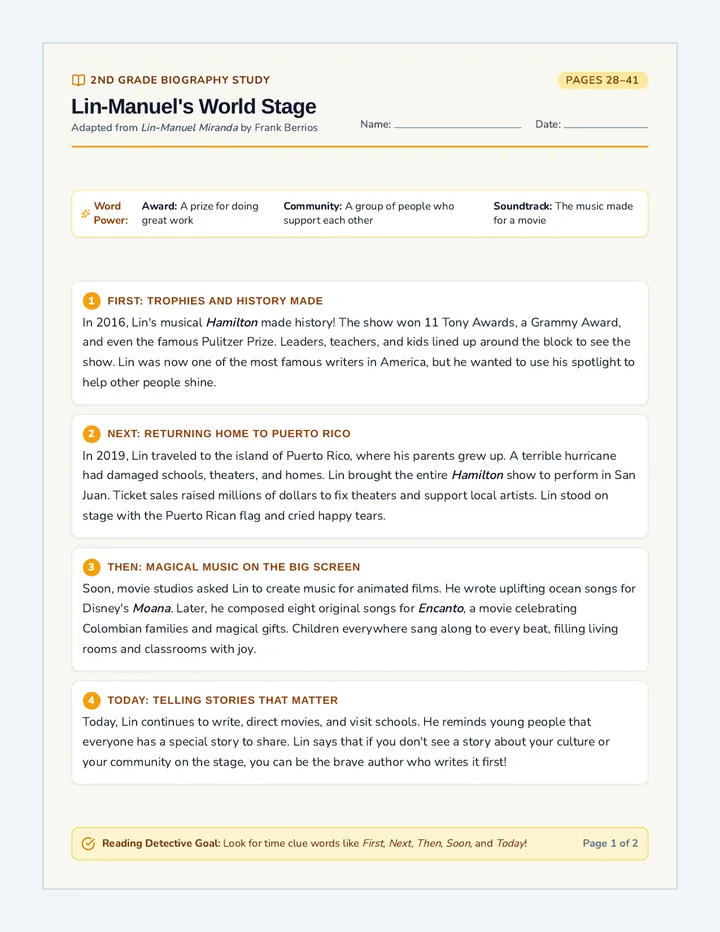
World Stage Worksheet

World Stage Wonders

A 2nd-grade English Language Arts lesson examining pages 28–41 of Frank Berrios's Lin-Manuel Miranda biography. Students explore Hamilton's awards, relief work in Puerto Rico, movie soundtracks, and how authorial chronological structure builds the central message.

A

awarner1

3
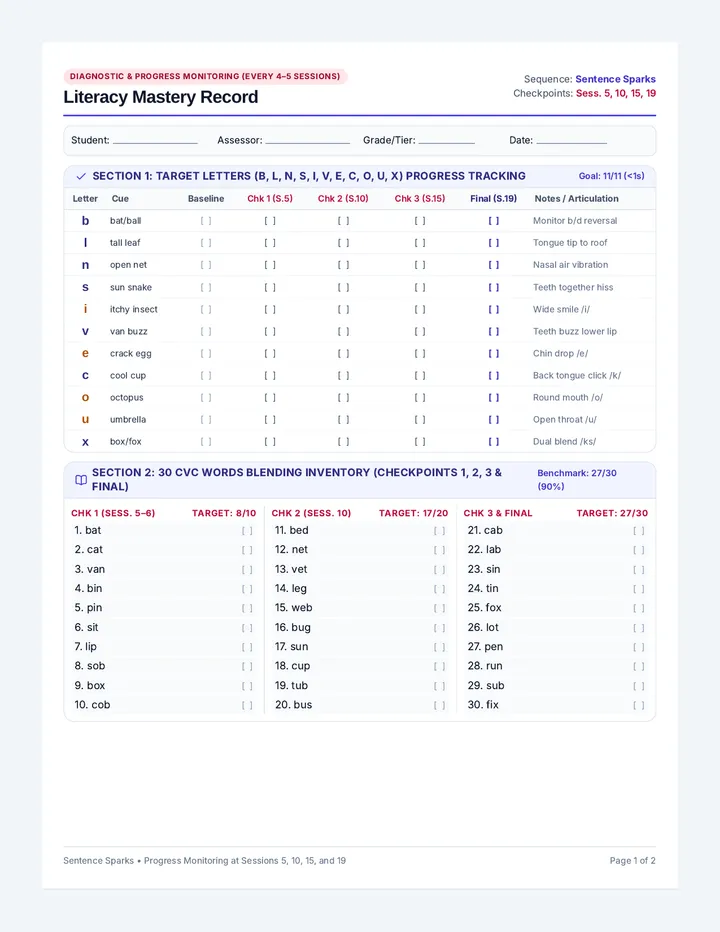
Sentence Mastery Assessment Record

Sentence Mastery Assessment Record

A formal 2-page progress monitoring tracker and assessment protocol evaluating letter-sound recognition for the 11 target letters, blending of all 30 CVC words, noun/verb mastery, and sentence mechanics.

K

kurtzm