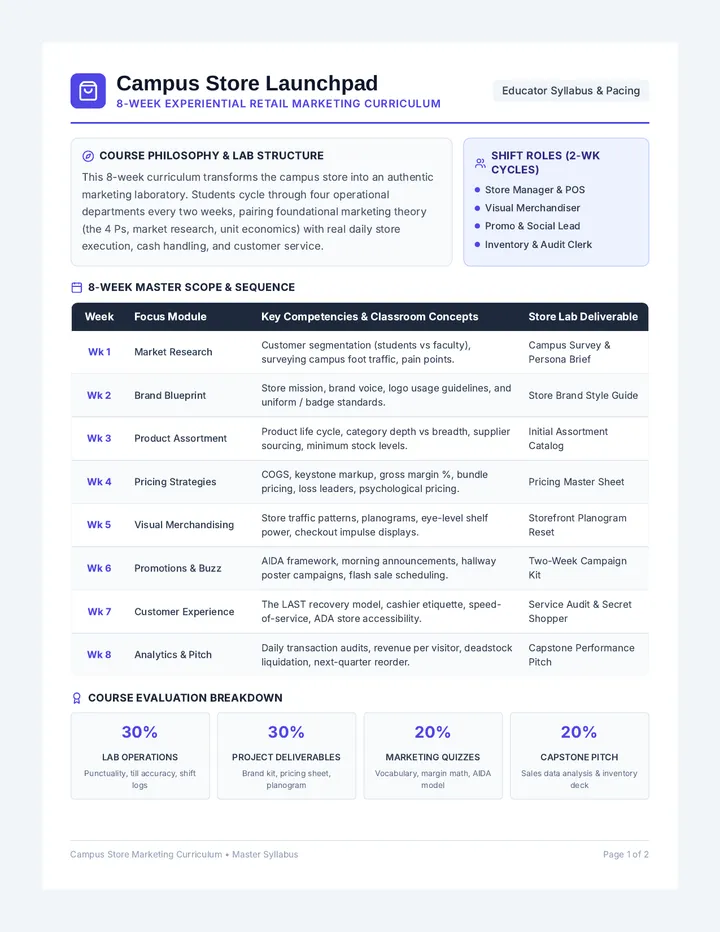
Modern Era Station Slides Modern Era
Masters
The 1970s — 2000s Station Rotation
#TEKS-10
#TEKS-11
The Mission
The Challenge
Over the next 4 days, you will travel through time. You are tasked with analyzing the major political, social, and economic shifts that shaped the modern world.
The Goal
Complete your History Passport at each station. Use evidence to explain how leadership, conflict, and innovation changed America.
Station Rules
1 You have 25 minutes per station.
2 Read all instructions on the station card first.
3 Stay with your group and focus on the resources.
4 Return all manipulatives and files before rotating.
The 10 Stations
Rotation Route
01
Ping-Pong Diplomacy
Nixon & China
02
Desert Sands
Middle East Crisis
03
Reaganomics
Domestic & Econ
04
The Moral Center
Conservatism
05
The Unseen Wars
Drugs & AIDS
06
Wall Crumbling
Cold War End
07
Third Wheels
1992 & 2000 Elections
08
9/11 Shift
Terrorism Response
09
Global Village
21st Century Econ
10
Modern Views
Immigration & Health
Time Remaining 25:00
STATION IN PROGRESS
Eyes on your primary sources. Minds on history.
Modern History Passport Worksheet HISTORY PASSPORT
Era: 1970 - 2000s | Student Exploration Journal
Name
Date
01
Ping-Pong Diplomacy
Analyze Nixon's visit to China. How did this change the "Détente" policy?
Impact on the Cold War:
02
Desert Sands
Middle East Quagmire: List the outcome of one conflict/event analyzed.
Camp David: ___________
Iran Hostage: ___________
03
Reaganomics
Identify the 4 pillars of Reaganomics and explain "Peace Through Strength."
04
The Moral Center
Heritage Foundation & Moral Majority. Why did conservatism surge in the 80s?
05
The Unseen Wars
War on Drugs & AIDS Epidemic. What were the social consequences?
06
Walls Crumbling
Cold War End vs. Persian Gulf War. What was the US role in a new world order?
07
Third Wheels
Impact of Ross Perot (1992) and Ralph Nader (2000). How did they change the outcome?
08
9/11 Shift
Events of 9/11 and the Global War on Terror. How did US foreign policy change?
09
Global Village
Multinational Corps & 21st Century Economy. List 2 tech impacts.
10
Modern Views
Pick Health Care, Immigration, or Education. Describe 2 different viewpoints.
Station Resources Part One STATION 01
Ping-Pong Diplomacy
Materials:
Primary Source: Nixon Speech
World Map
The Reader: Normalizing Relations
In 1972, President Richard Nixon stunned the world by traveling to Beijing. Since 1949, the U.S. had refused to recognize the Communist government of China. Nixon's leadership was driven by Realpolitik —practical politics. By opening relations with China, he hoped to create a "triangular diplomacy" that would pressure the Soviet Union into better relations with the U.S.
This period was known as Détente —a French word meaning a relaxation of tensions. It led to the Strategic Arms Limitation Talks (SALT I) with the Soviets, proving that the Cold War didn't always have to be on the brink of nuclear war.
Primary Source Excerpt
"We must recognize that the People’s Republic of China is one-fourth of the world's population... We cannot afford to leave China forever outside the family of nations... There is no place on this small planet for a billion of its potentially most able people to live in angry isolation."
— Richard Nixon, 1971
Your Tasks
1 Locate China and the USSR on the provided map. Why was Nixon's move called "triangular diplomacy"?
2 On your Passport, define Détente in your own words.
3 Discuss: Why would Nixon (a known anti-communist) be the one to open the door to China?
STATION 02
Desert Sands
Event A: Camp David Accords (1978)
President Jimmy Carter invited the leaders of Egypt and Israel to Maryland. This historic peace treaty was the first time an Arab nation recognized the state of Israel.
RESULT: Egypt got the Sinai Peninsula back; Israel got peace with a neighbor.
Event B: Iran Hostage Crisis (1979)
Iranian revolutionaries stormed the U.S. embassy in Tehran, taking 52 Americans hostage for 444 days after the U.S. allowed the deposed Shah to enter for medical treatment.
RESULT: America felt weak; Carter lost the 1980 election to Reagan.
Event C: Lebanon & Iran-Contra (1980s)
Reagan sent Marines to Lebanon for peacekeeping, but 241 died in a barracks bombing (1983). Later, the Iran-Contra Affair was revealed: the U.S. sold weapons to Iran to fund anti-communist "Contras" in Nicaragua, bypassing Congress.
Task: The Timeline
Use the cards on the table to arrange these events in chronological order. How did U.S. involvement in the Middle East change from Carter to Reagan?
1. Support for Israel
Station Resources Part Two STATION 04
The Moral Center
The Conservative Resurgence
By 1980, many Americans felt the country had lost its way. Inflation was high, the Cold War was stalling, and social changes of the 60s/70s had upset traditional values. This led to a massive shift toward conservatism.
Organization A
The Heritage Foundation
A "think tank" that provided Reagan with a detailed 1,000-page policy guide. They pushed for free enterprise, limited government, and strong national defense.
Organization B
The Moral Majority
Founded by Jerry Falwell, this group of evangelical Christians mobilized millions of voters to support conservative candidates who shared their traditional family values.
Analysis Task
Read the 1980 Republican Platform snippet on the table. Identify three specific goals of the "New Right."
Discussion Question:
How did these groups change the role of religion in American politics? Was this a positive or negative shift in your opinion?
STATION 05
The Unseen Wars
Problem A: The War on Drugs
In the 1980s, the "crack-cocaine" epidemic devastated American cities. First Lady Nancy Reagan launched the "Just Say No" campaign. The government passed strict mandatory minimum sentencing laws, leading to a massive increase in the U.S. prison population.
"If you're offered drugs, you don't have to explain. You don't have to argue. Just say no." — Nancy Reagan
Problem B: The AIDS Epidemic
In 1981, a mysterious and deadly disease appeared: Acquired Immune Deficiency Syndrome (AIDS). Because it initially affected gay men and drug users, it was highly stigmatized. The government was slow to respond until thousands had died. Activist groups like ACT UP fought for research and visibility.
Data Detective
Look at the two charts on the station desk:
Chart 1: Incarceration rates (1980–2000). How did the War on Drugs impact these numbers?Chart 2: AIDS-related deaths per year. When did the numbers peak?
Record answers in Passport
STATION 06
Walls Crumbling
1989-1991: The End of the Cold War
Gorbachev’s reforms (Glasnost & Perestroika), Reagan’s pressure, and people power in Eastern Europe led to the fall of the Berlin Wall in 1989. By 1991, the Soviet Union collapsed, leaving the U.S. as the world’s only superpower.
1990-1991: The Persian Gulf War
Station Resources Part Three STATION 07
Third Wheels
The Spoiler Effect?
In U.S. history, third-party candidates rarely win, but they often change the outcome by taking votes away from major party candidates.
1992 Ross Perot
The Texas billionaire ran on a platform of fixing the national debt. He won 19% of the popular vote—the most for a third party since 1912. Many believe he took votes from George H.W. Bush, helping Bill Clinton win.
2000 Ralph Nader
Running for the Green Party, Nader won nearly 100,000 votes in Florida. Al Gore lost Florida (and the Presidency) to George W. Bush by only 537 votes.
The Math of Elections
Analyze the 1992 and 2000 Electoral College maps on the desk.
Scenario:
If Nader hadn't run in 2000, and 60% of his Florida voters had gone to Gore, who would have won the election? Show your work on the scratchpad.
STATION 08
The 9/11 Shift
September 11, 2001
Terrorists from Al-Qaeda hijacked four planes, striking the World Trade Center and the Pentagon. This event fundamentally changed American life.
Domestic Response
Creation of the Dept. of Homeland Security and the USA PATRIOT Act , which expanded government surveillance powers.
Foreign Response
The Global War on Terror began with the invasion of Afghanistan (to find Bin Laden) and later Iraq (on suspicion of WMDs).
"Today, our fellow citizens, our way of life, our very freedom came under attack in a series of deliberate and deadly terrorist acts... Terrorist attacks can shake the foundations of our biggest buildings, but they cannot touch the foundation of America."
Impact Discussion
How did 9/11 change how Americans view their own security vs. their civil liberties (privacy)?
Analyze the "TSA Security Checkpoint" photo. How does this represent a daily shift in life?
Define "War on Terror" in your Passport.
STATION 09
Global Village
21st Century Economy
The transition from a manufacturing economy to an information-based economy changed everything. Multinational corporations (like Apple, Amazon, and Walmart) began to dominate the global market.
Outsourcing
Companies move manufacturing to other countries for cheaper labor, lowering costs for consumers but losing U.S. factory jobs.
Tech Revolution
The internet and personal computers increased productivity and connected the world, leading to "Globalism."
Modern Era Teacher Guide Teacher Facilitation Guide
Modern Era Masters: 1970s - 2000s Station Rotation
Lesson Overview
Duration: 4 Class Periods (100 mins each)
TEKS Focus: 10(A-E) and 11(A-D)
Structure: 10 Stations (25 minutes each). Students rotate over the course of the week.
Recommended Pacing
Day 1: Intro (20m) + Stations 1-2 (50m) + Wrap (30m)Day 2: Stations 3-5 (75m) + Wrap (25m)Day 3: Stations 6-8 (75m) + Wrap (25m)Day 4: Stations 9-10 (50m) + Socratic Seminar/Synthesis (50m)
Setup Requirements
Printables Needed:
Station Signs/Readers: One set for each station table.History Passports: One per student.Manipulatives: Sort cards for Station 3 (Reaganomics) and Station 9 (Economy).
Digital/Hardware:
Slide Deck: For instructions and the 25m timers.QR Codes/Devices: Recommended for Stations 6 (Berlin Wall video) and 8 (Bush speech audio).
Station Answer Key & Key Takeaways
St 1: Nixon/China
Détente: Relaxation of tension. Triangular diplomacy: Using China to pressure the USSR.
St 2: Middle East
Key shift: From diplomatic peacemaking (Carter/Camp David) to military intervention and scandal (Reagan/Iran-Contra).
St 3: Reaganomics
4 Pillars: Tax cuts, deregulation, reduced domestic spending, money supply control. SDI: Aimed to bankrupt USSR.
St 4: Conservatism
Heritage Foundation (Policy) and Moral Majority (Voters/Religion) were the engines of the movement.
St 5: Social Issues
War on Drugs: Increased incarceration. AIDS: Slow gov response, high stigma, activist pressure.
St 6: Cold War/Gulf
End of Cold War = US as sole superpower. Gulf War = First test of US role in "New World Order."
St 7: Third Parties
Perot 1992: Helped Clinton by splitting GOP vote. Nader 2000: Helped Bush by taking Dem votes in FL.
St 8: 9/11
Shift from privacy to security (Patriot Act). Shift from Cold War to War on Terror.
Differentiation Tip
For advanced learners, ask them to identify one "Modern View" issue from Station 10 and trace its roots back to the 1980s Conservative Resurgence. For struggling learners, provide a "Word Bank" for the Passport summaries.