A game-based economics unit for 3rd graders exploring the shift from traditional employment to the gig economy, covering job types, technology's role, and financial literacy.
A comprehensive 5-lesson exploration of the West region of the United States, covering geography, climate, resources, culture, and states/capitals through reading passages and interactive activities.
A comprehensive 5-lesson unit exploring the unique geography, climate, natural resources, diverse cultures, and political boundaries of the Southwest region of the United States.
A comprehensive journey through the Midwest region, covering its geography, economy, and culture in bite-sized 20-minute sessions.
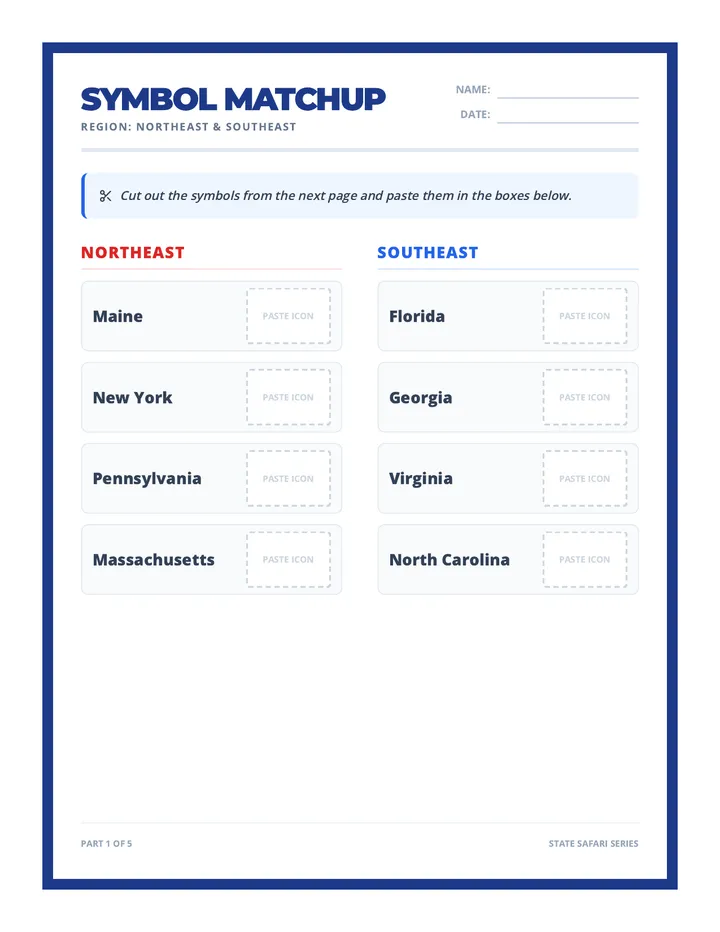
A 5-lesson unit exploring the geography, climate, resources, and culture of the Southeast United States, concluding with a states and capitals challenge.
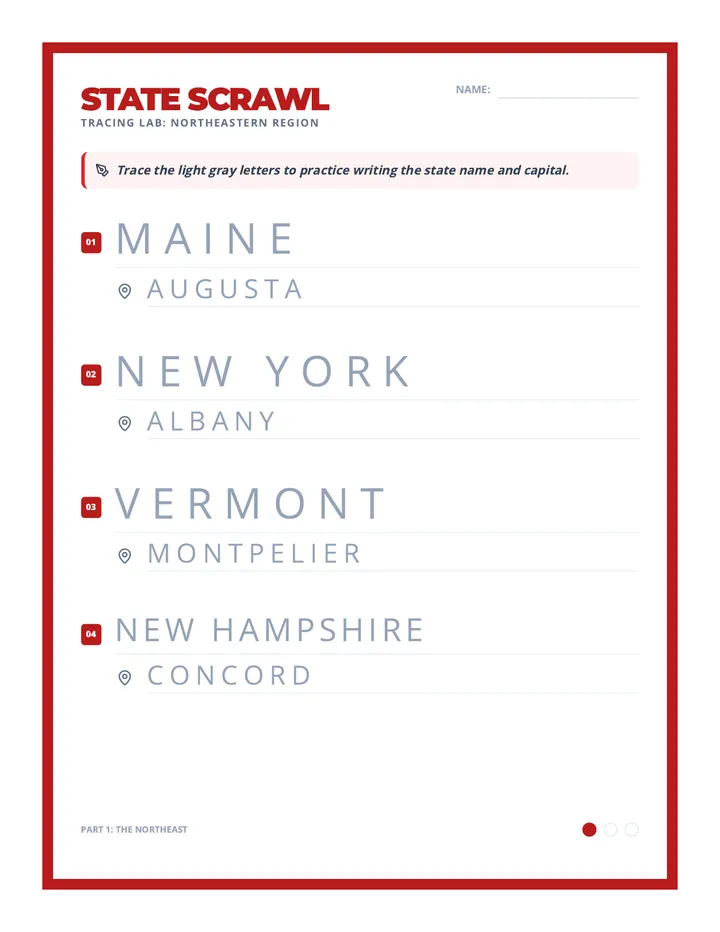
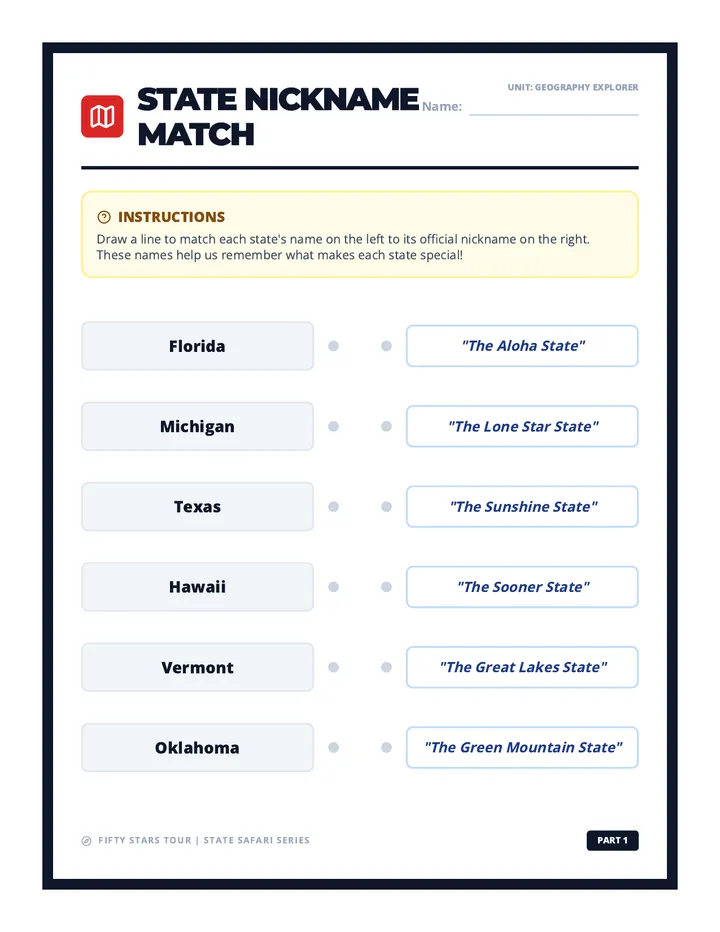
A 5-lesson sequence exploring the geography, climate, resources, culture, and states of the Northeast region of the United States. Students will engage with reading passages, comprehension activities, and a states-and-capitals matching game.
A journey into the world of medieval knights and castles, exploring the training, ethics, engineering, and symbolism of the Middle Ages. Students learn about the life of a knight, the construction of fortresses, and the code of chivalry through hands-on activities and historical analysis.
Students explore the evolution of money from the barter system to digital currency, identifying the three primary functions of money: medium of exchange, unit of account, and store of value. through hands-on simulations and creative workshops.
This 3rd-grade sequence explores Africa's natural resources, historical trade routes like the salt-gold trade, agricultural reliance on the Nile, and modern economic connections. Students engage in simulations and mapping activities to understand how resources drive human movement and community growth.
This sequence challenges stereotypes by exploring the diversity of cultures, languages, and settlement types across Africa's regions. Students compare rural village life with modern urban centers, recognizing that Africa is a continent of contrast and modernity through inquiry, case studies, and creative projects.
A 3rd-grade geography sequence exploring Africa's three major biomes—rainforest, savanna, and desert—and how human communities adapt their lifestyles, shelters, and clothing to these diverse environments.
A comprehensive 5-lesson unit for 3rd graders exploring Africa's geography, from global location and regional divisions to major waterways and iconic landforms, culminating in a creative cartography project.
This inquiry-based sequence explores how different societies choose their leaders through elections, inheritance, and appointments. Students compare local and global systems to understand the sources of political power.
Students explore the concept of constitutional frameworks by drafting a 'Classroom Constitution.' They learn how written rules prevent confusion, define rights and responsibilities, and limit the power of leaders, culminating in a formal ratification ceremony.
A 3rd Grade Social Studies unit exploring autocracy, oligarchy, and democracy through experiential simulations, helping students understand how decision-making structures impact community fairness and efficiency.
A comprehensive 3rd-grade sequence on navigating encyclopedias and digital databases to gather information, synthesize facts, and cite sources.
A project-based Social Studies sequence for 3rd graders exploring how culture, family, traditions, and language shape individual identity. Students act as 'Heritage Explorers,' culminating in a Culture Capsule museum exhibit.
This project-based sequence explores how social groups and communities influence individual identity. Students investigate the various 'circles' they belong to—family, school, clubs, and cultural groups—and analyze how these memberships shape their values and behaviors. The learning journey culminates in the creation of a 'Social Identity Map' that visualizes their connections.
Students navigate a simulated classroom economy to learn budgeting, opportunity cost, and the difference between needs and wants through games and real-world scenarios.
A 3rd-grade economics sequence that introduces students to investment, risk, resource allocation, and market principles through project-based learning. Students transition from being consumers to aspiring entrepreneurs who plan and pitch their own business investments.
A 3rd-grade sequence exploring the geography, governance, and daily life of Ancient Greece, specifically contrasting Athens and Sparta. Students learn how mountainous geography led to isolated city-states and investigate the origins of democracy and the Olympics.
A comprehensive 5-lesson unit for 3rd grade students exploring Ancient Greek culture through the lens of mythology, fables, and art. Students learn how ancient people used stories to explain the world and establish moral values, culminating in the creation of their own original myths.
Students act as junior historians to investigate the origins and meanings behind the United States' most recognizable symbols and landmarks. They explore the American Flag, the Statue of Liberty, the Great Seal, and D.C. landmarks before creating their own museum exhibit.
A geography sequence where 3rd-grade students explore the diverse physical landscapes of Oceania, from the vast Pacific Ocean to the Australian Outback and the volcanic peaks of New Zealand, culminating in an environmental design challenge.
A 5-lesson Social Studies sequence for 3rd graders exploring the core concepts of needs vs. wants, resource distribution, and economic inequality through interactive simulations and community-focused problem-solving.
A project-based exploration of how Native American history and culture were preserved through oral tradition, Winter Counts, wampum belts, and totem poles. Students create their own symbolic artifacts to understand history as a living, spoken, and artistic record.
This sequence explores the historical journey of Native peoples in North America, from the Columbian Exchange to modern-day resilience and contributions. It challenges the 'past tense' myth by highlighting the ongoing presence and vitality of Indigenous cultures today.
A 3rd-grade history sequence exploring the sophisticated governance, social structures, and trade networks of Indigenous peoples in North America before European contact, focusing on the Haudenosaunee Confederacy and continental trade systems.
Students explore the rich oral traditions and artistic expressions of Native American nations to understand how values and history were preserved without written language. The journey moves from analyzing storytelling to interpreting symbolism in artifacts like wampum and totem poles.
A 3rd-grade history sequence exploring how geography and natural resources shaped the diverse cultures of Indigenous peoples in North America, focusing on the Southwest, Plains, and Eastern Woodlands. Students investigate environmental adaptations in housing, food, and clothing through inquiry and design thinking.
Students examine the mechanics of historical social movements to understand how collective action drives legislative change. They explore tools like petitions, boycotts, and peaceful protests through case studies of the Women's Suffrage Movement, the Civil Rights Movement, and the United Farm Workers.
This 3rd-grade sequence explores the concepts of chronology and causation through the lens of human-environmental interactions. Students investigate how natural events trigger human responses and how human actions in turn impact the environment, culminating in an understanding of complex causal systems.
A 3rd-grade project-based sequence exploring chronology and causation through the lens of technological innovation. Students learn how inventions solve immediate problems but create long-term societal shifts and unintended consequences.
This inquiry-based sequence for 3rd grade explores the relationship between events through cause and effect. Using local community history as a lens, students learn to identify historical 'triggers' and map the chain reactions that shape their world today.
A 5-lesson sequence for 3rd graders to master chronological thinking. Students progress from ordering daily routines to constructing personal histories and using logic to sequence historical events, emphasizing that history is a linear story of cause and effect.
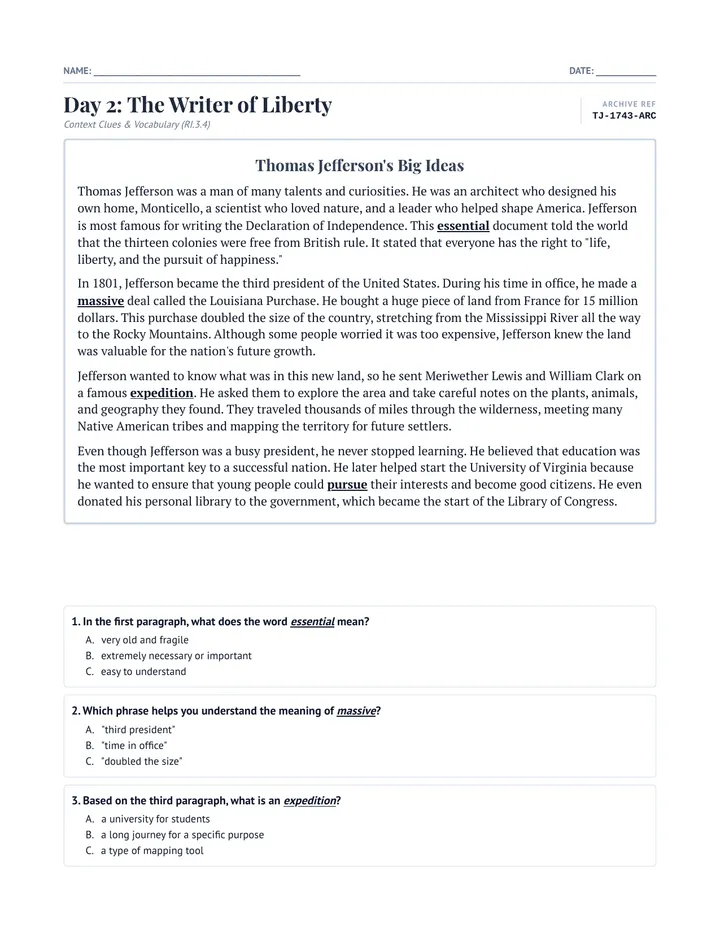
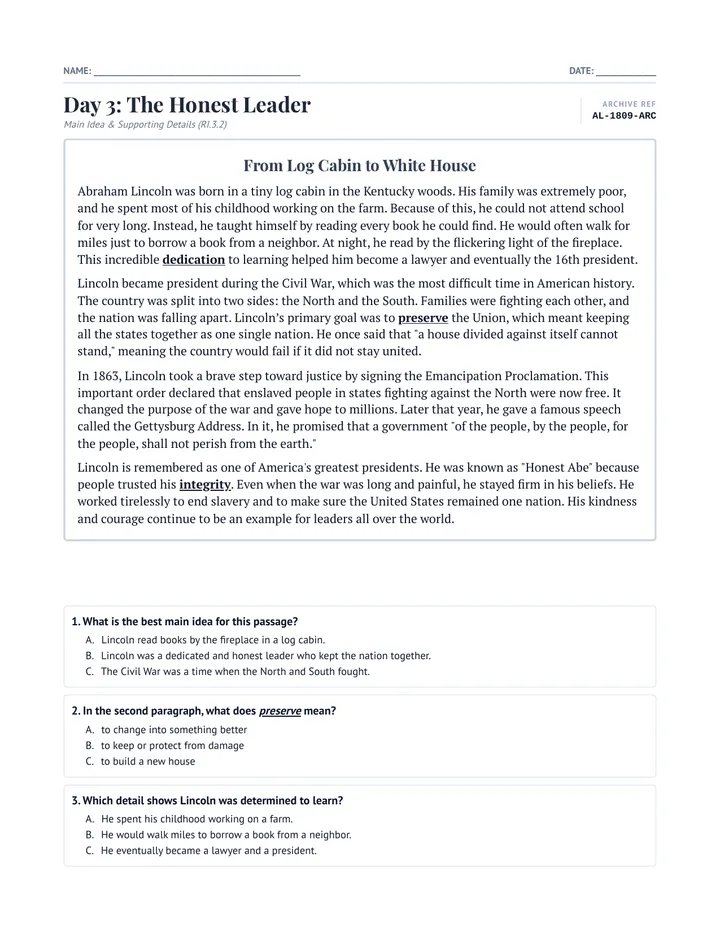
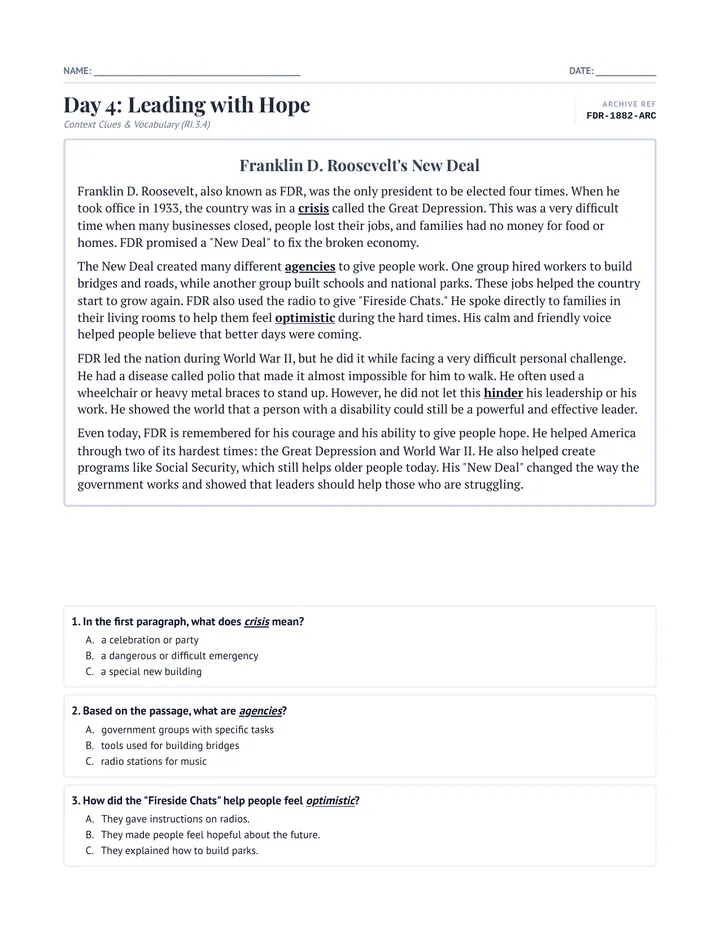
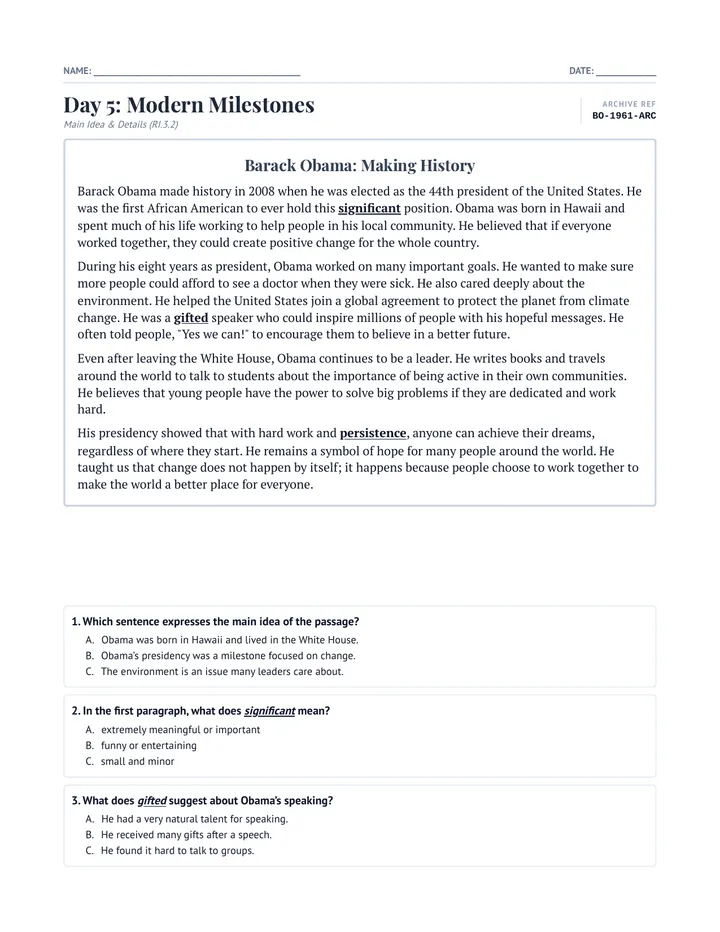
Students explore historical biographies to develop chronological thinking skills. They learn to identify key life events, categorize them by life stage, and sequence them to understand how people become leaders and changemakers.
An inquiry-based unit for 3rd graders to deconstruct media messages. Students learn to identify advertisements, analyze target audiences, recognize staging tricks, and decode emotional appeals, culminating in the creation of 'honest' advertisements.
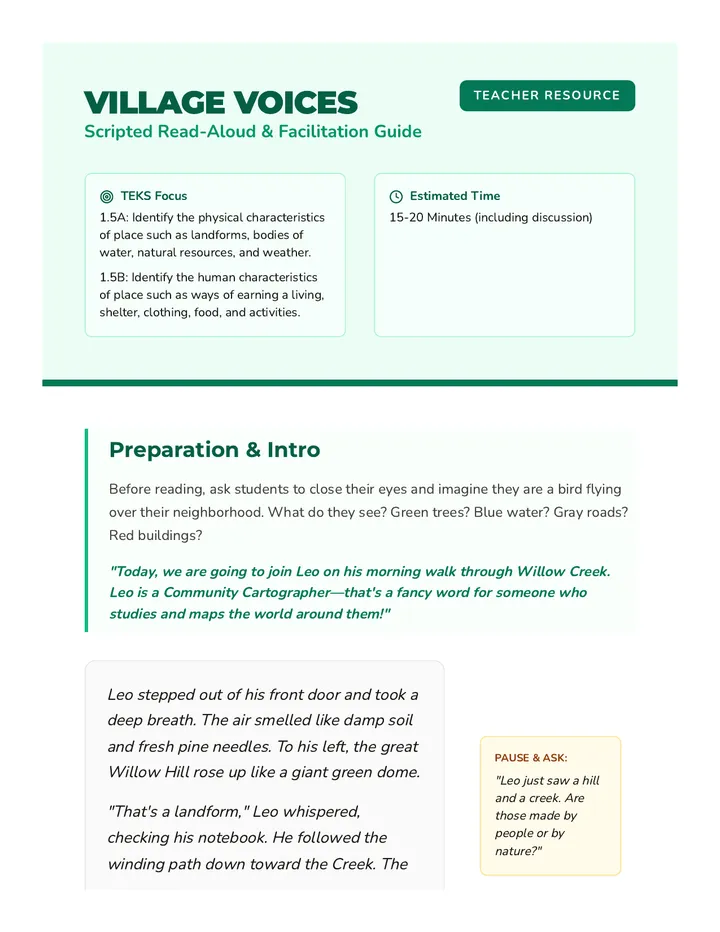
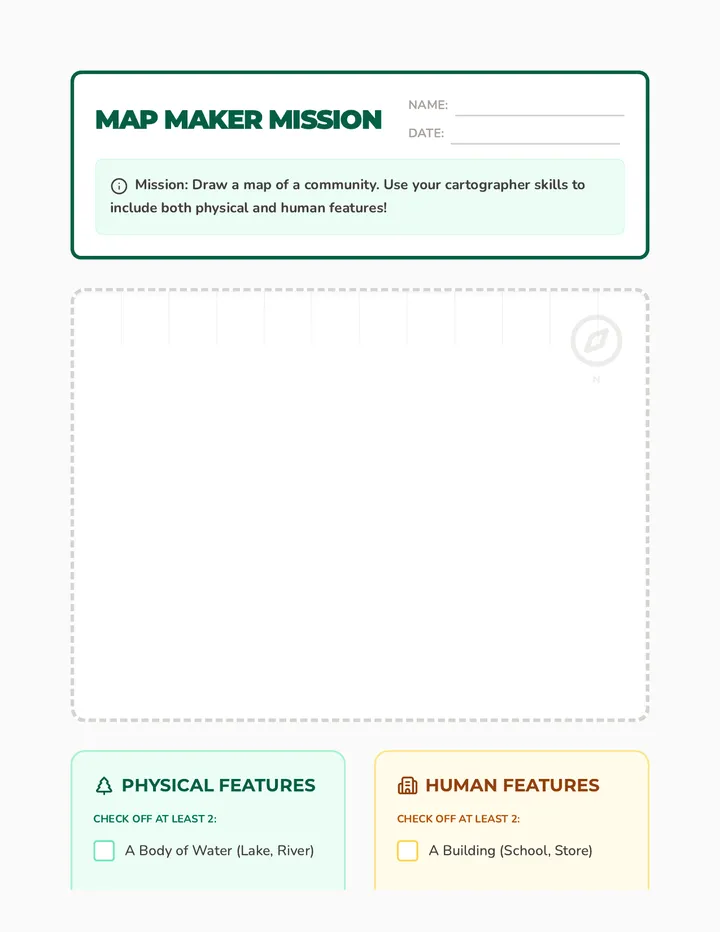
A 5-lesson sequence for 3rd grade students to master the fundamentals of map reading, spatial reasoning, and cardinal directions. Students progress from understanding bird's-eye perspective to creating their own accurate maps of familiar spaces.
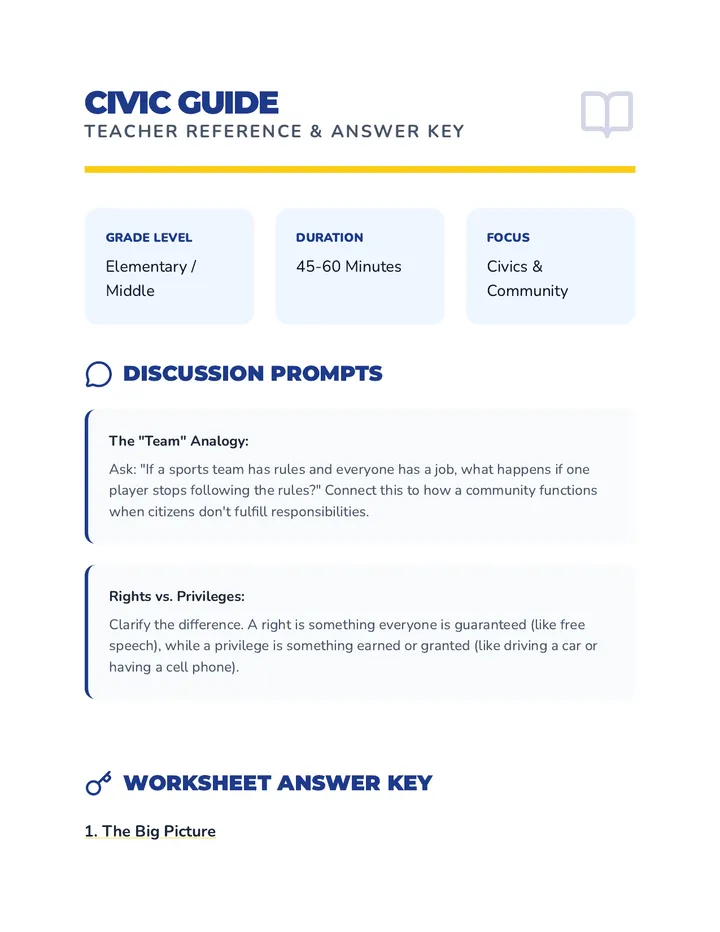
A 3rd-grade civics sequence focusing on the analytical skills of the judicial branch. Students act as 'Judicial Detectives' to learn about fact vs. opinion, evidence, impartiality, and making fair judgments based on rules.