A lesson sequence focusing on the sectional differences (economic, cultural, and political) that led to the American Civil War, featuring map analysis and a cause-and-effect chain activity.
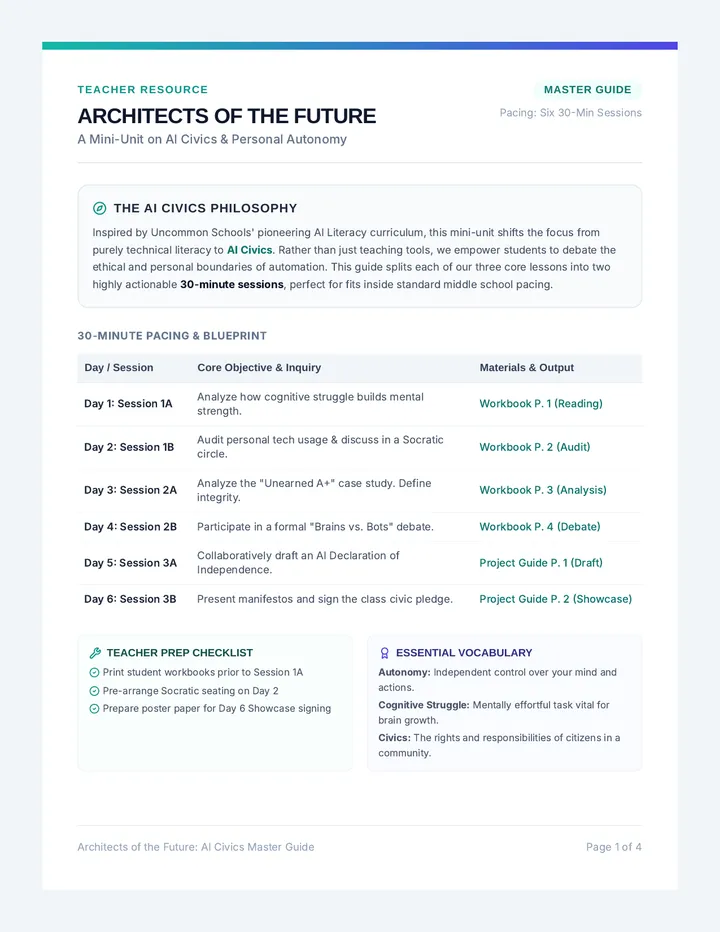
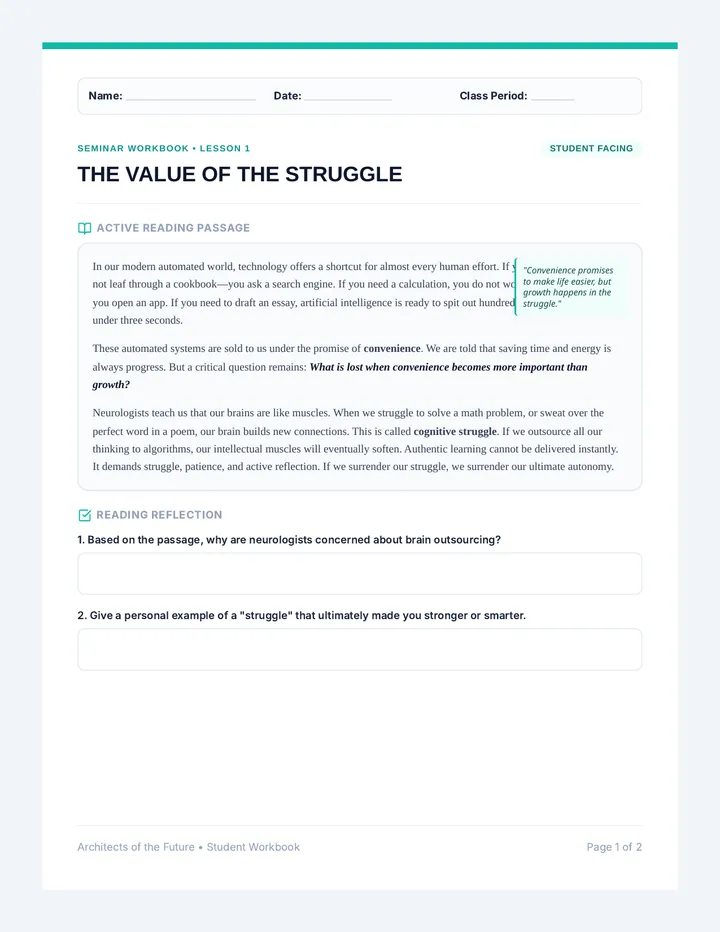
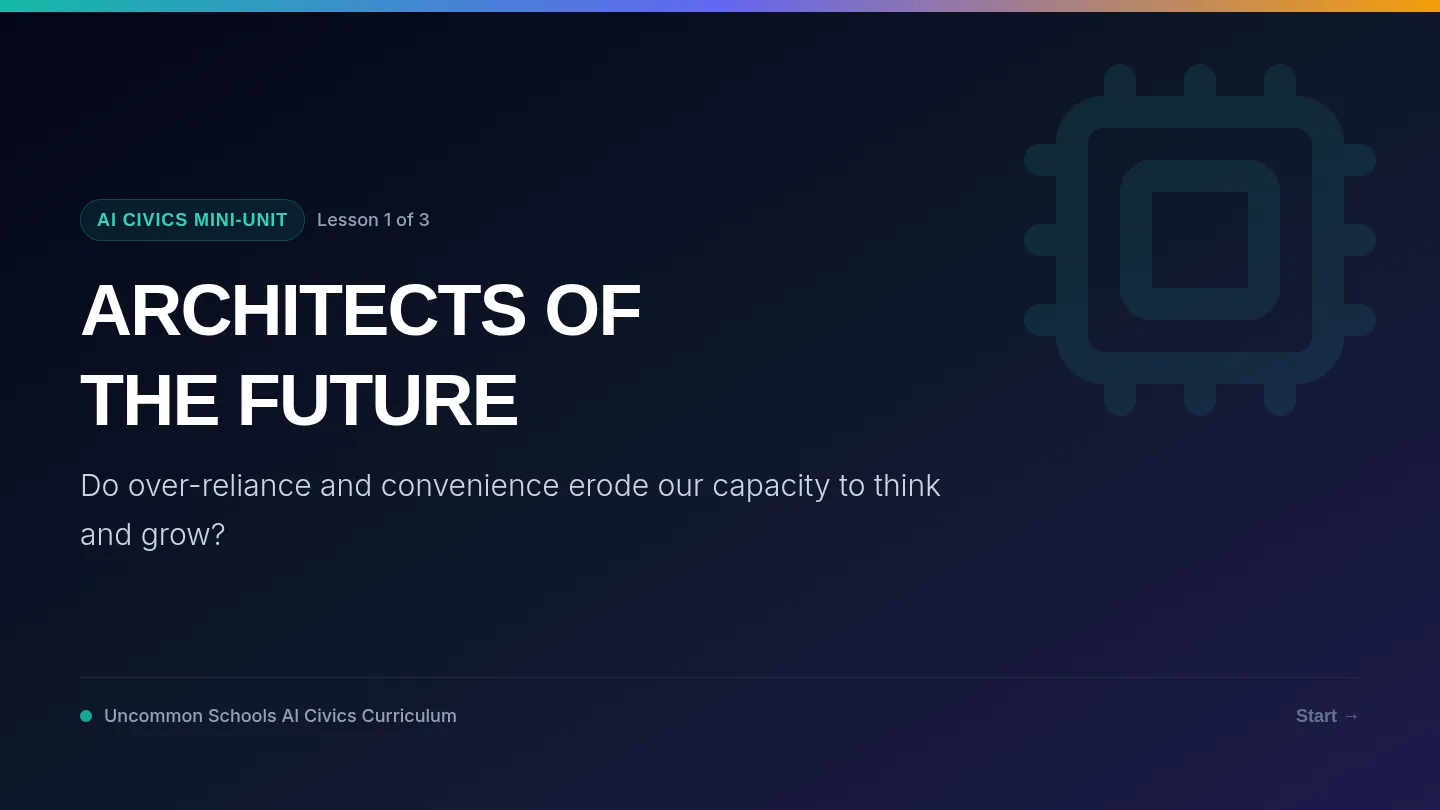
A middle school mini-unit on AI civics, empowering students to think critically about autonomy, convenience, and human potential. Inspired by Uncommon Schools' pioneering AI Literacy curriculum, students debate the role of technology and craft their own Civic Declarations.
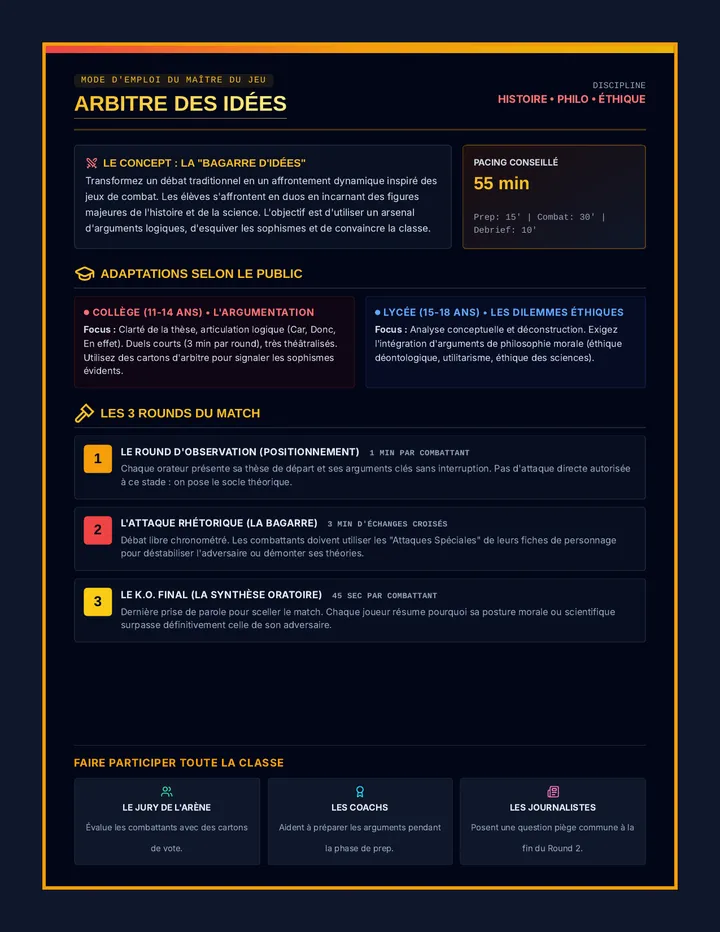
Une leçon immersive conçue comme un jeu de combat intellectuel ("Bagarre d'Idées") où les élèves incarnent des figures historiques et scientifiques. Cette leçon propose des joutes verbales et des débats philosophiques adaptés au collège (argumentation) et au lycée (dilemmes éthiques).
Diaporama pour la classe présentant l'activité de joutes verbales. Il introduit les règles de la "Bagarre d'Idées", les affrontements épiques Hobbes contre Rousseau et Curie contre Edison, ainsi que les stratégies pour emporter le combat rhétorique.
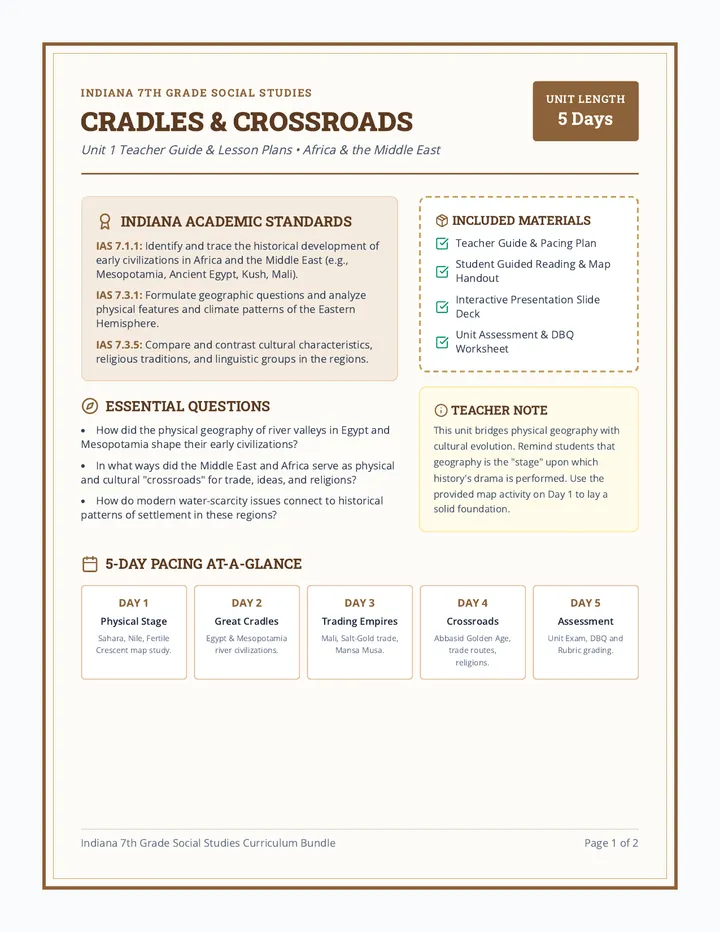
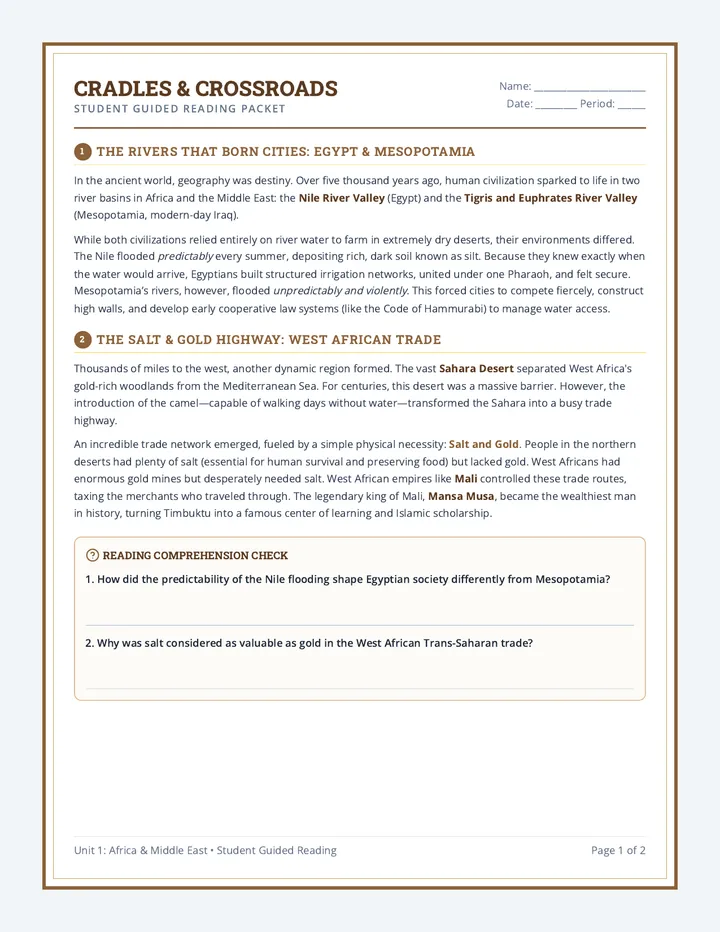
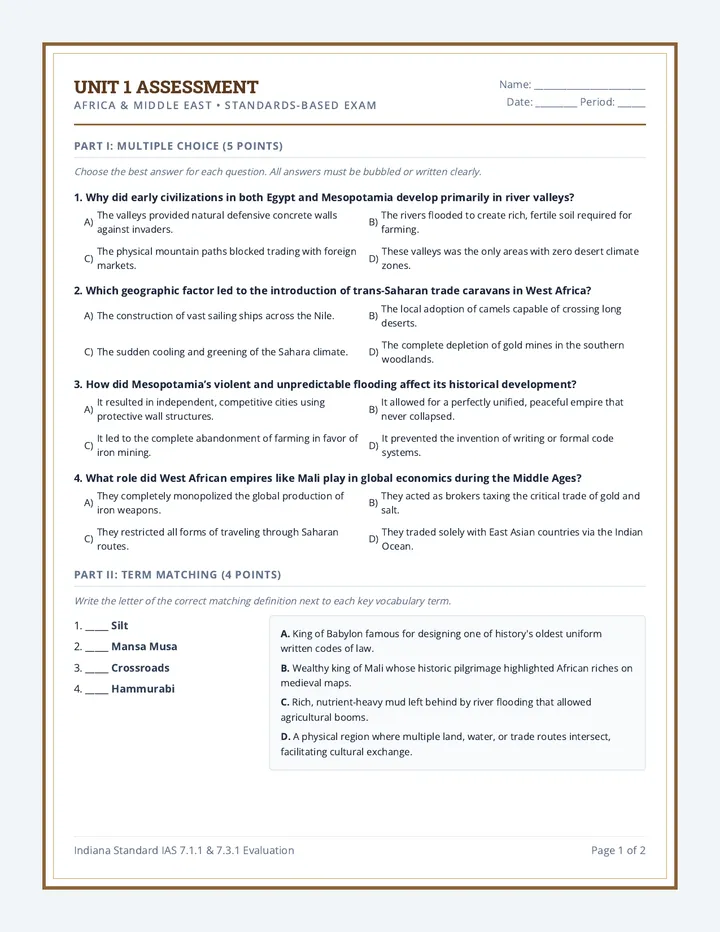
A comprehensive 7th-grade social studies curriculum sequence focused on the Eastern Hemisphere (Africa, Middle East, Asia, and the Pacific). This standards-aligned sequence includes detailed teacher lesson plans, student guided reading and worksheets, interactive presentation slides, and rigorous assessments with DBQs.
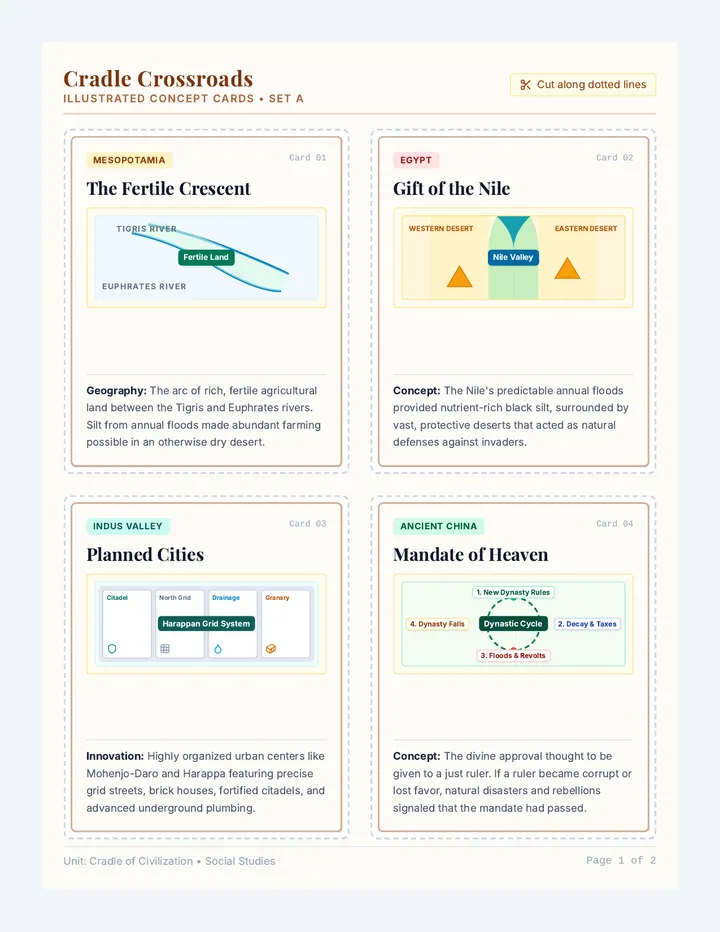
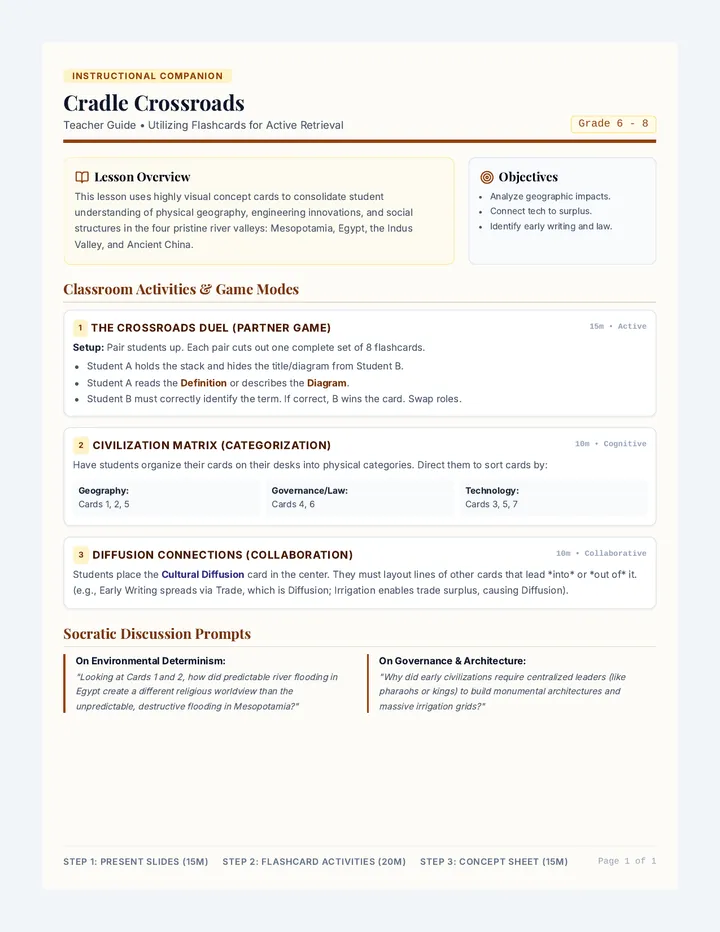
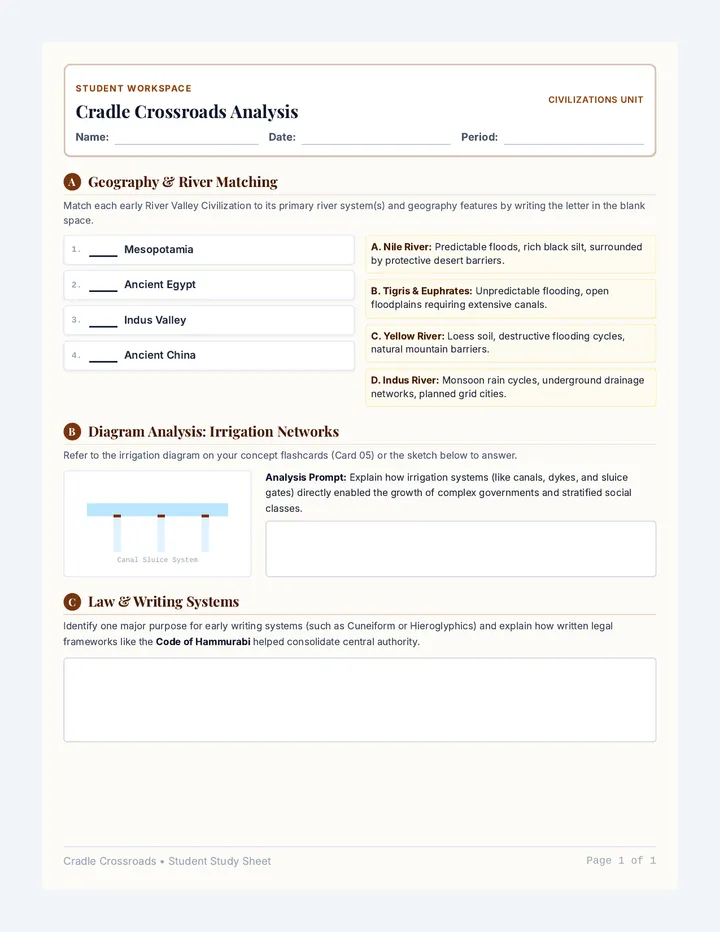
A lesson exploring the four major River Valley Civilizations (Mesopotamia, Ancient Egypt, Indus Valley, and Ancient China) through illustrated flashcards, active classroom games, and a conceptual study worksheet.
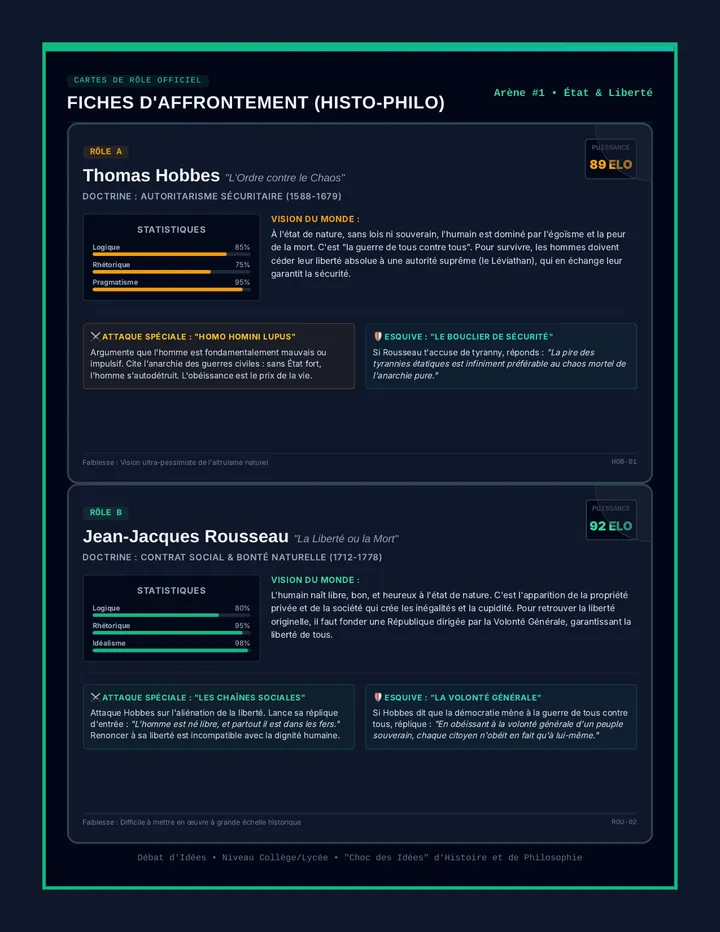
Fiches de jeu de rôle prêtes à imprimer sous forme de cartes de combat. Elles contiennent les biographies, statistiques, arguments clés (Attaques Spéciales) et parades rhétoriques de Thomas Hobbes, Jean-Jacques Rousseau, Marie Curie et Thomas Edison.
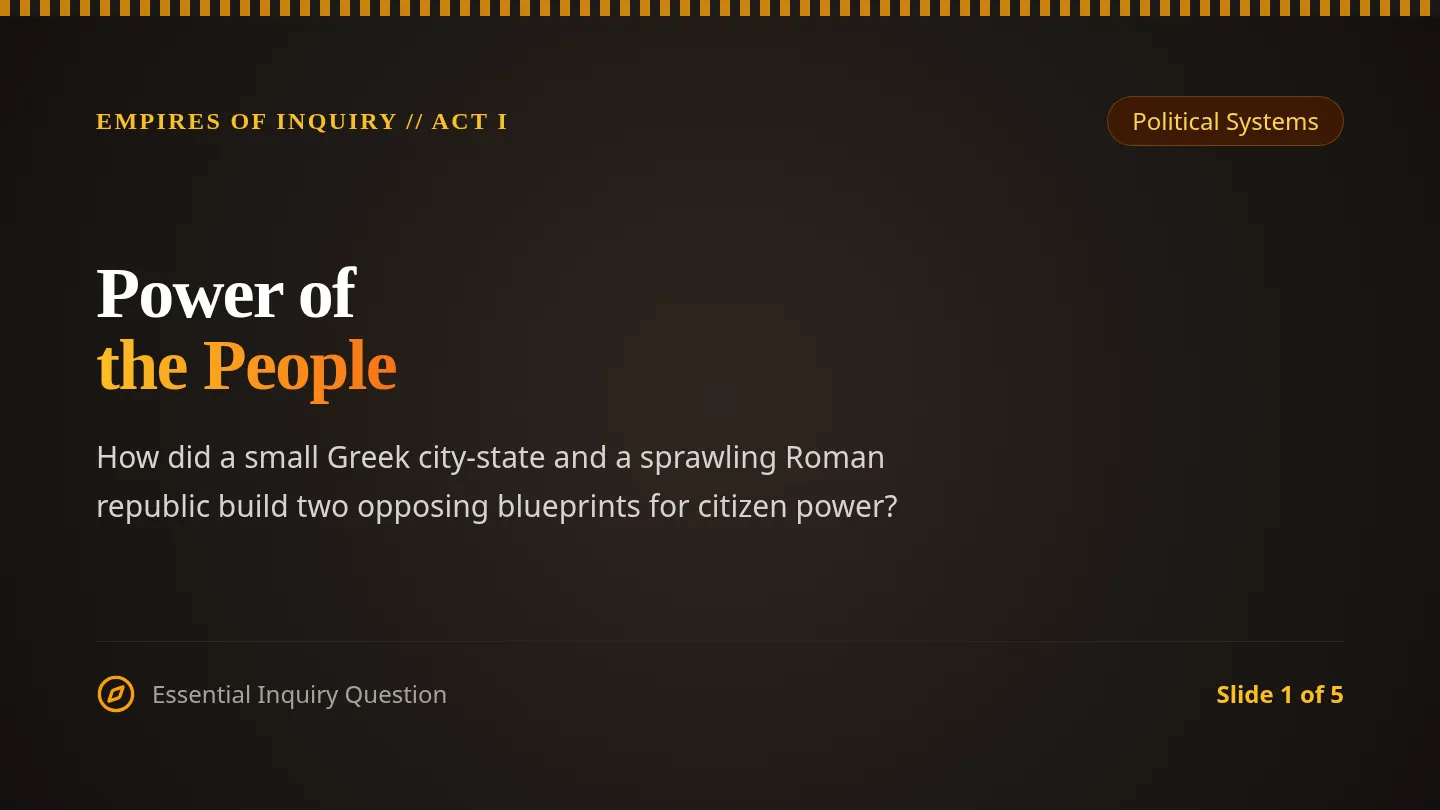
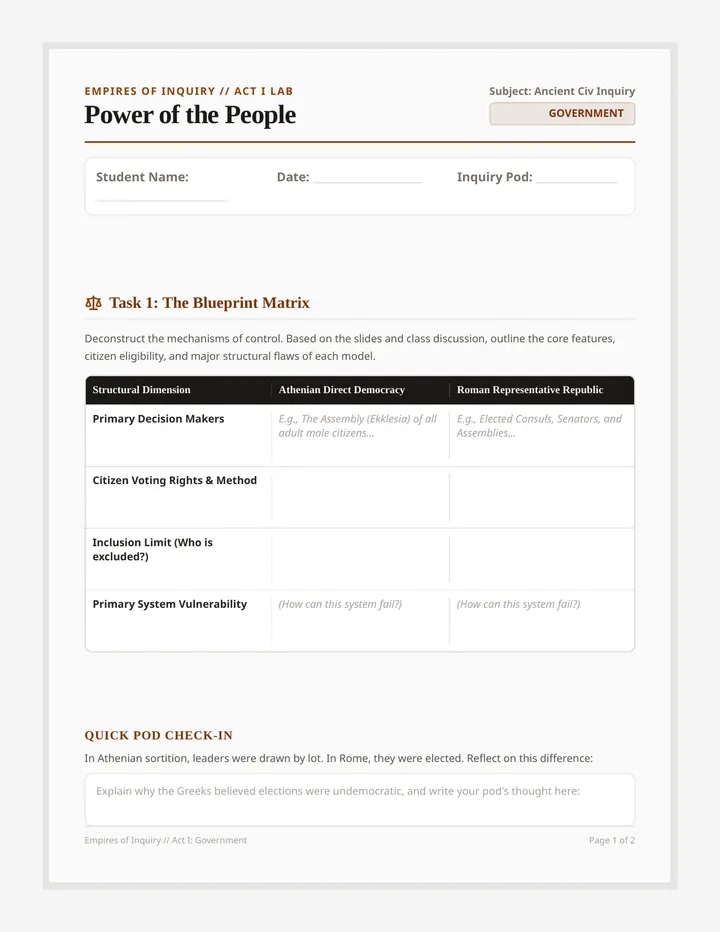
An inquiry-driven social studies sequence investigating Ancient Greece and Rome across four core pillars: government, philosophy, trade, and engineering. Students engage with primary sources, architectural achievements, and ethical dilemmas to construct arguments about classical legacies.
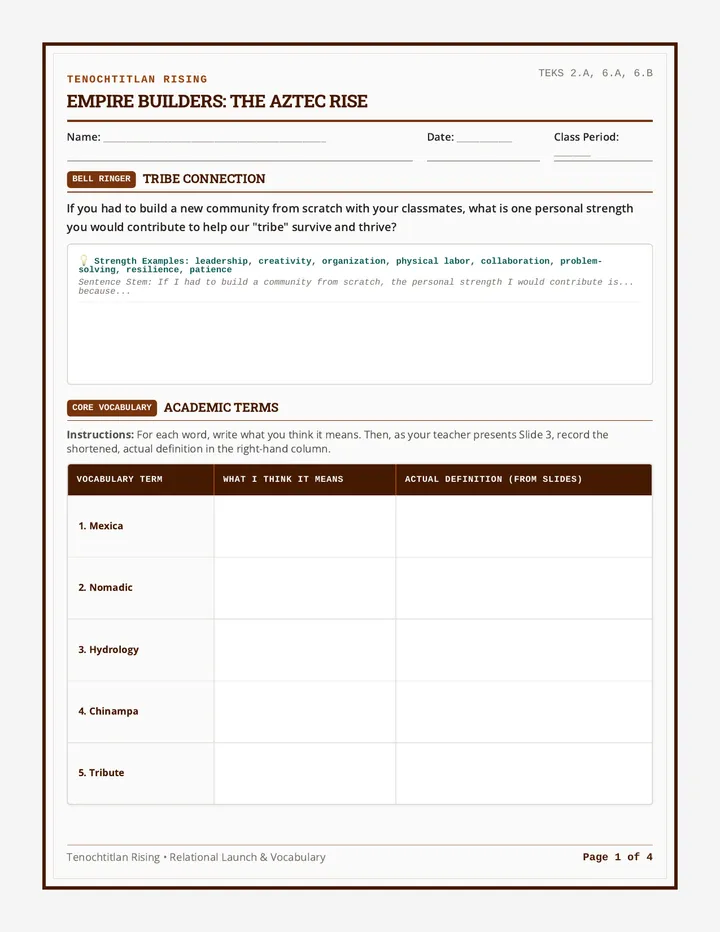
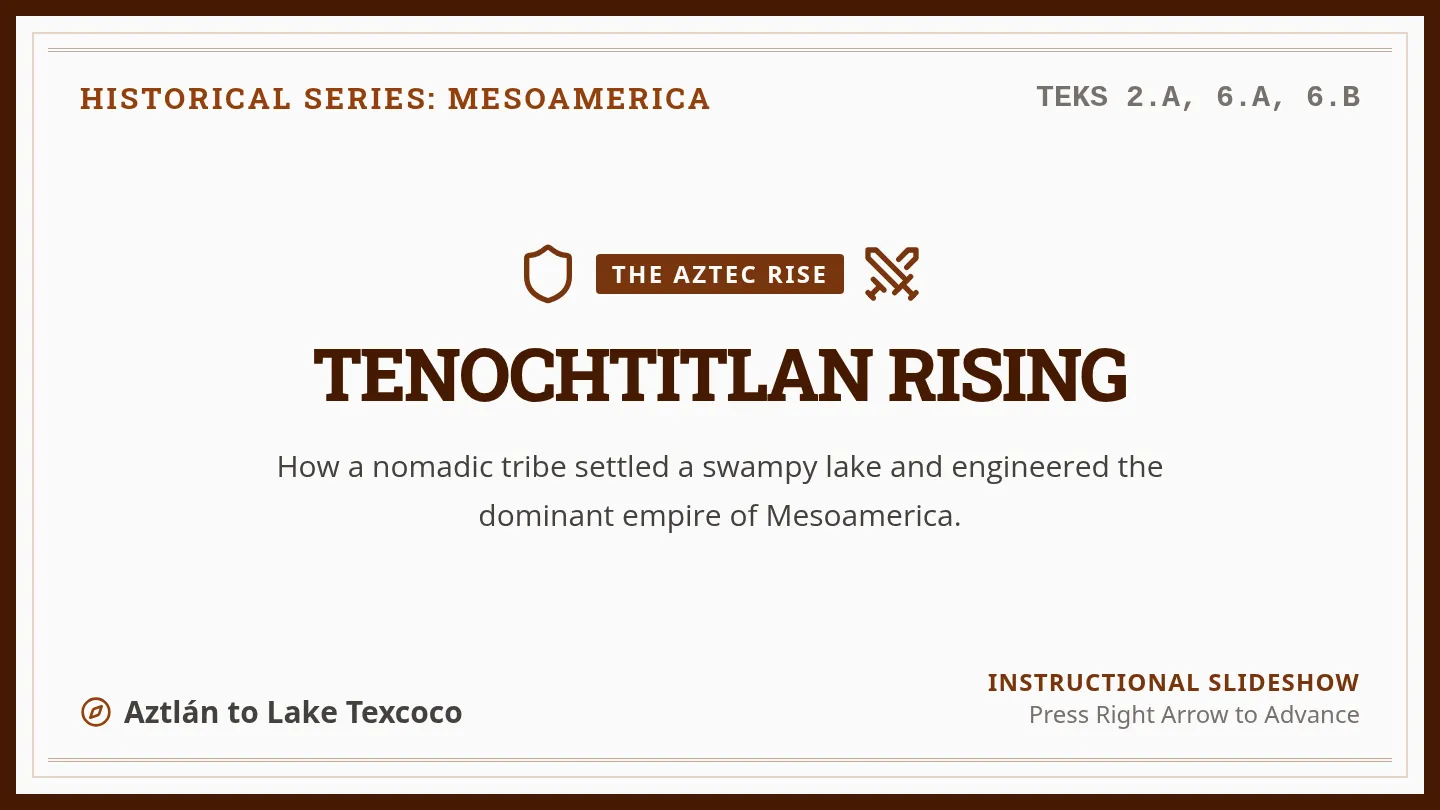
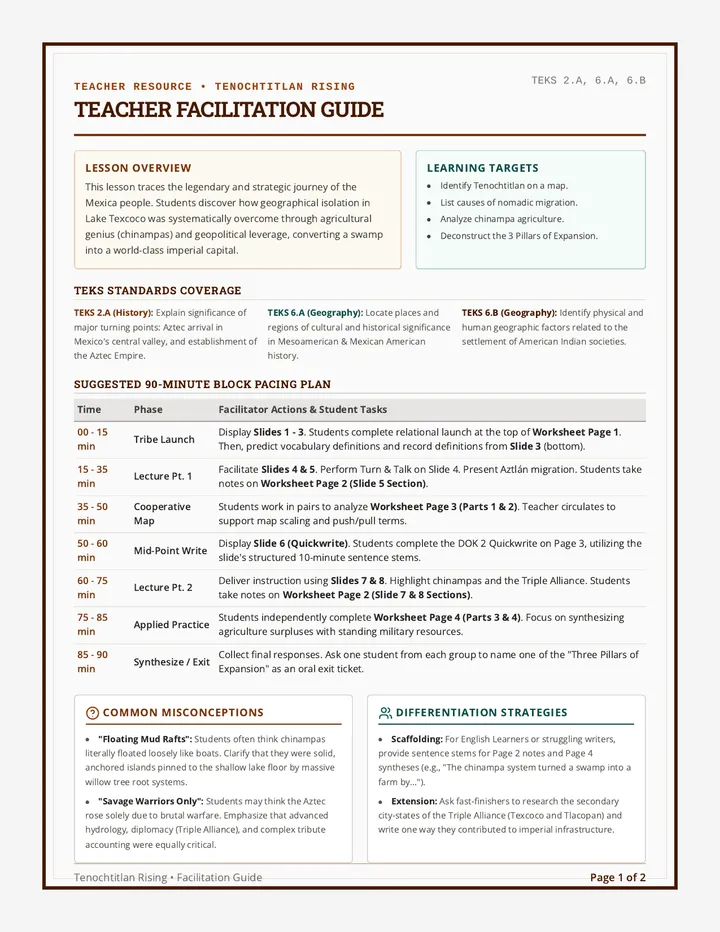
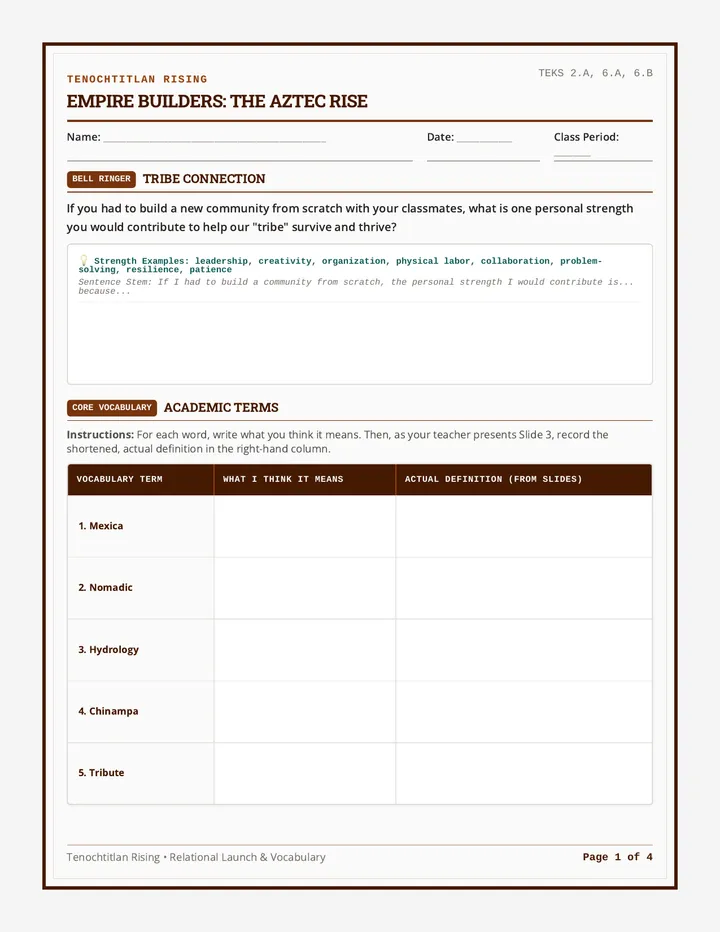
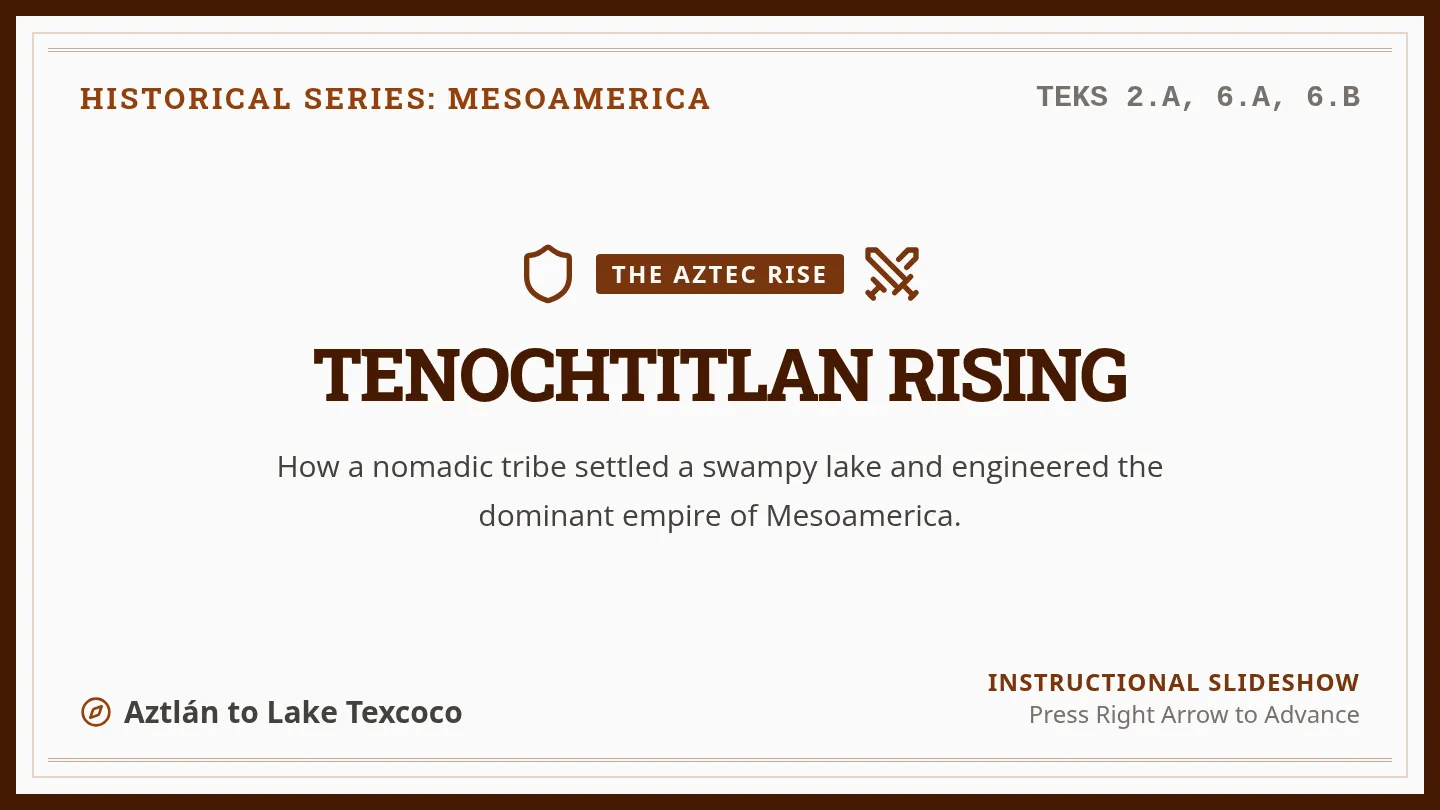
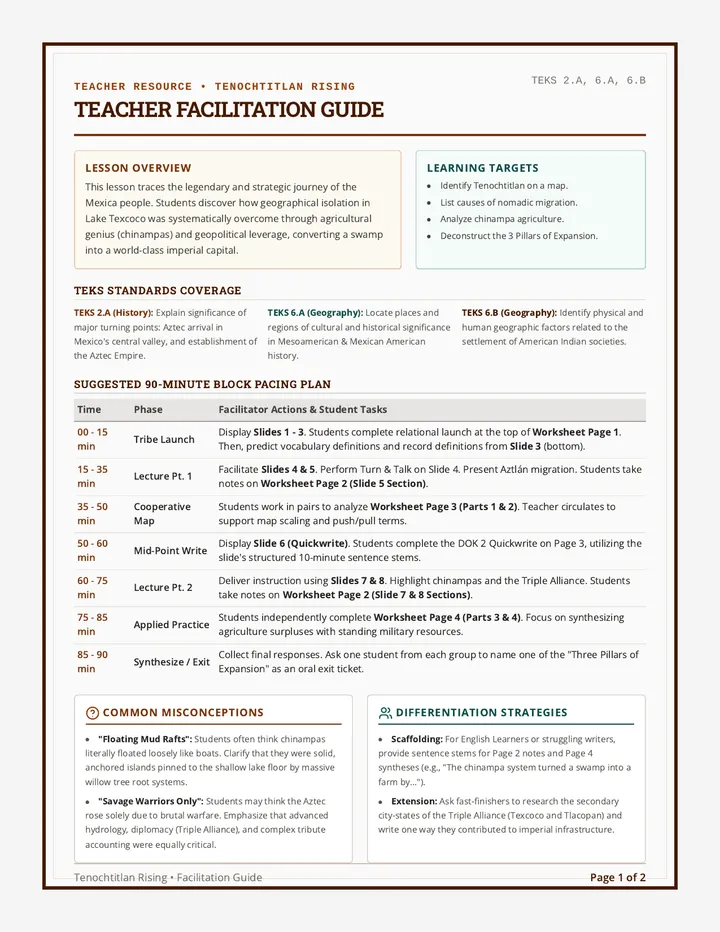
A comprehensive lesson exploring how the Mexica migrated from Aztlán, settled in the Valley of Mexico, and leveraged geography, agriculture, and military strategies to build the Aztec Empire. This lesson includes interactive presentation slides, a graphic organizer worksheet for student analysis, and a detailed teacher facilitation guide.