Mapping the Sahel Slides Mapping the Sahel
Geography, Gold, and the Great Desert
The Golden Dilemma
1 Pound of Gold
Beautiful, valuable, but you can't eat it or use it to stay alive.
1 Pound of Salt
Keeps your meat fresh and keeps your body hydrated in the heat.
Which one is worth more in the middle of the desert?
The Four Zones
Sahara Desert
Hot, dry, and sandy. Home to massive salt deposits but very little water.
The Sahel
The "shore" of the desert. Dry grasslands that separate the sand from the forest.
Savannah
Grassy plains with scattered trees. Good for farming and grazing animals.
Rainforest
Lush, wet, and dense. Hidden deep within are the Wangara gold mines.
Resource Locations
North: Salt
Taghaza (Sahara Desert)
Essential for survival. Mined from ancient dried-up sea beds.
South: Gold
Wangara (Forest/Savannah)
Luxury good for the rest of the world. Used to pay for salt and trade.
The Meeting Point
The Ghana Empire sat right in the middle—the Sahel . They didn't have the salt or the gold, but they controlled the space in between.
Sahel Surveyor Worksheet Sahel Surveyor
Geographic Prediction Activity
Name:
Date:
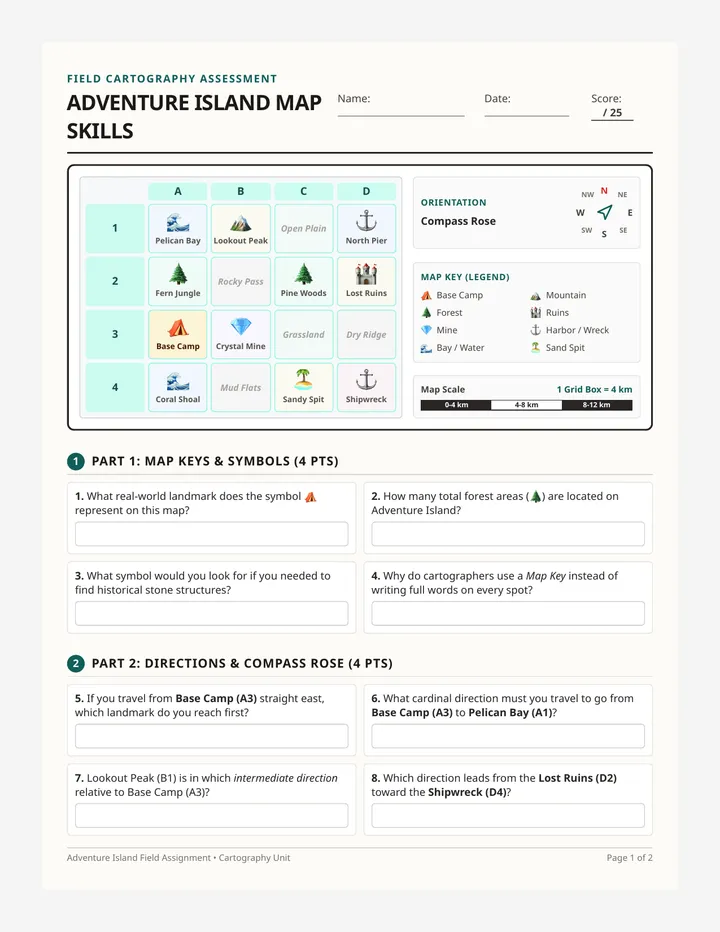
Part 1: Zoning West Africa
Based on the classroom map or slides, identify the four main climate zones of West Africa. In the boxes below, briefly describe the landscape and one key challenge for survival in that zone.
1. Sahara Desert
Landscape & Resources:
2. The Sahel
Landscape & Resources:
3. Savannah
Landscape & Resources:
4. Rainforest
Landscape & Resources:
Part 2: The Logic of Trade
"Imagine you are a miner in the Wangara region (South). You have plenty of gold, but the humid forest makes it impossible to preserve meat. You are a merchant in Taghaza (North). You live in a house made of salt blocks, but you cannot grow food in the sand."
1. Why is the Sahel (the middle zone) the most logical place for these two groups to meet? Use geography in your answer.
2. If you were the King of Ghana, living right in the middle of these trade routes, how would you use your location to gain power? (Think about what you could do as traders passed through your land).
3. Prediction: What animal do you think revolutionized trade across the Sahara Desert, allowing people to cross hundreds of miles of sand? Why?
Part 3: The Flow of Wealth
Draw a simple diagram showing the movement of Gold and Salt . Label the North , South , and the Ghana Empire in the middle.
Geography Guide Teacher Resource Teacher Guide
Lesson 1: Mapping the Sahel
Sands of Power
History: 6th Grade
Lesson Overview
This lesson establishes the geographical framework for the entire unit. Students will understand that the Ghana Empire's power was not based on owning gold or salt mines, but on its strategic location between the two. The "hook" focuses on the relative value of resources based on survival needs.
Key Essential Question
How does physical geography dictate the economic destiny of a region?
Pacing Guide
10m Hook & Discussion
15m Slide Instruction
20m Worksheet Activity
10m Synthesis Wrap-up
Instructional Moves
1
The Golden Dilemma (Hook)
Display the slide with gold vs. salt. Ask students: "If you're lost in the desert, which is more valuable?" Guide them toward the idea that scarcity and utility define value. In West Africa, salt was literally traded for gold at a 1:1 ratio at certain times.
2
The "Sandwich" Geography
Explain that Ghana is the "meat" in the sandwich. Traders from the North (Berbers) and miners from the South (Soninke/Wangara) HAD to pass through the Sahel. Ghana provided the security and the meeting place.
3
The Camel Revolution
Mention the introduction of the camel (roughly 300 CE) as the "Game Changer." Before camels, the Sahara was an impassable wall. After camels, it became a "sea" that could be sailed by caravans.
Worksheet Quick-Check
The Four Zones
Sahara: Salt deposits, extreme heat, no water.Sahel: Transition zone, sparse grass, strategic meeting point.Savannah: Farming, iron tools, grain production.Rainforest: Gold mines, heavy rain, tsetse fly (hazard).
Prediction Answers
Why Sahel? It's the midpoint. Neither group wants to travel all the way into the other's extreme environment (too hot or too wet).King's Power: Taxation! Charge a fee to enter and leave. Provide soldiers for safety in exchange for gold/salt.The Camel: Stores water, broad feet for sand, long eyelashes for storms. Silent Barter Simulation Slides Silent Barter
The Secret Trade of the Ghana Empire
The Trading Problem
You have something they want. They have something you need.
You don't speak the same language.
You don't want to show them where your secret mines are.
You need to trust the deal without talking.
Solution: Silent Barter
"The trade of the drum."
The Rules
01
Step 1: The Offer
North Africans leave Salt piles at the riverbank. They beat a Drum and leave.
02
Step 2: The Counter
Wangara Miners come and leave a pile of Gold next to the salt. They beat a Drum and leave.
03
Step 3: The Deal
If the Gold is enough, North Africans take it and leave. If not, they wait for more Gold!
Absolute Rule: NO SPEAKING!
Who Else is Watching?
The Ghana King's Guards
Every trader must pay a Tax to enter and leave the empire.
Why pay? Because the Ghana army protects you from thieves while you trade!
Silent Barter Ledger Worksheet Caravan Ledger
Silent Barter Trading Record
Name:
Role:
Circle: Merchant / Miner / Guard
Your Goal
You are on a mission to secure the best deal for your people. If you are a Merchant , you want as much gold as possible. If you are a Miner , you need salt to survive the season. If you are a Guard , you must ensure the Empire gets its fair share!
Transaction History
Round Items Offered Items Received Ghana Tax Paid Result (Deal/No Deal?) 1 2 3 4 5
Market Reflection
1. What was the hardest part about trading without speaking? How did you communicate "this is not enough gold" to your partner?
2. As a trader, how did you feel about the Ghana Guards taking a "tax" from your hard-earned gold or salt? Was it worth it? Why or why not?
3. Why do you think the Wangara miners wanted to keep the location of their gold mines a secret? (Think about supply and demand).
The Final Balance
Total Gold
Total Salt
Wealth Rank
(Did you survive?)
Ghana Governance Slides Empire of Gold
How Ghana Ruled the Roads
Inside the Court
"The king sits in a pavilion... around which stand ten horses in gold trappings. Behind him stand ten pages holding shields and swords decorated with gold..."
— Al-Bakri, 1067 CE
A Show of Power
Visual wealth to impress foreign visitors.
A huge army (200,000 soldiers!) kept the peace.
Religious tolerance: Muslim advisors worked for the Soninke King.
The "Nugget" Law
1. The Rule
All solid Gold Nuggets found in the empire belong to the King. The people keep only the Gold Dust .
2. The Reason
If there is too much gold in the market, the price drops. By keeping the nuggets, the King controls the supply!
Preventing Inflation
Ghana understood economics 1,000 years ago!
The Deal for Traders
Why pay the tax?
Safe Roads (No Bandits)
Fair Weights & Measures
Well-Maintained Wells
"A person could travel alone across the empire without fear of being robbed."
Tax = Security
Kingdom Ledger Worksheet The Kingdom Ledger
Analyzing the Flow of Power and Protection
Name:
Date:
Part 1: Eyewitness Account
"For every donkey-load of salt that enters the country, the King takes one gold dinar, and two when it leaves. For a load of copper the King takes five mitqals and for a load of general merchandise ten mitqals."
— Al-Bakri, 11th Century Historian
According to this text, what is the King's main source of income?
Why do you think the tax for salt *leaving* the country is higher than the tax for it *entering*?
Part 2: The Social Contract
Fill in the boxes to show the relationship between the Foreign Merchants and the King of Ghana . What does each side give, and what do they get?
Foreign Merchants
Berber Traders from the North
King of Ghana
Central Government
What Merchants Give:
What the King Gives:
Part 3: The Golden Problem
The King declared that all Gold Nuggets found in mines belonged to him, but people could keep Gold Dust . Why did he do this?
Option A: Greed
He just wanted all the biggest, shiniest pieces for his crown and palace.
Option B: Economics
He knew that if too much gold entered the market, the price of gold would drop (Inflation).
Which option do you think is more likely? Explain your reasoning.
Mansa Musa Slides The Golden Trail
Mansa Musa's 4,000-Mile Journey
A Journey Like No Other
In 1324, Mansa Musa began his Hajj (pilgrimage) to Mecca. He didn't go alone...
60,000
People in the caravan
80
Camels carrying gold
12,000
Enslaved people in silk
500
Gold staffs
Putting Mali on the Map
This journey was so legendary that European map-makers started drawing Mansa Musa on their world maps!
The Gold Crash
When Mansa Musa stopped in Cairo, Egypt , he gave away so much gold that something terrible happened...
Inflation!
Because gold was suddenly everywhere, it was no longer rare. Its value plummeted.
It took Cairo's economy 12 years to recover from Mansa Musa's visit!
Impact Scale
Before Visit
1 Gold Coin = 10 Loaves of Bread
After Visit
1 Gold Coin = 2 Loaves of Bread
More Than Just Money
What he brought back:
Scholars & Architects Islamic Literature New Mosque Designs
A Global Legacy
Mansa Musa turned Mali from a regional power into a global center for culture and learning.
Mansas Mile Worksheet Mansa's Mile
Mapping the Wealth of Mali
Name:
Location: Timbuktu to Mecca via Cairo
Part 1: The Caravan Logistics
Historians estimate that Mansa Musa's caravan was so large that it took hours for the entire line to pass a single point. Use the data from the slides to answer these questions:
1. If each camel carried 300 lbs of gold, and there were 80 camels, how many total pounds of gold did the caravan carry?
2. There were 60,000 people. If they walked in a line, 4 people wide, how long do you think the line would be?
Part 2: The Cairo Crisis
Definition: Inflation
When the value of money goes down because there is too much of it available, causing prices for goods (like food or clothes) to go up.
Scenario: Before Mansa Musa arrived in Cairo, a camel cost 5 gold coins. After he gave away massive amounts of gold, the price of a camel rose to 50 gold coins. Why did this happen?
Reflection: Was Mansa Musa's generosity a "good" thing or a "bad" thing for the people of Cairo? Explain your perspective.
Part 3: The Intellectual Import
Mansa Musa didn't just bring gold *out* of Mali; he brought experts *in*. In the boxes below, list three types of people he brought back from his journey and why they were important for building a great civilization.
Expert 1
Importance:
Expert 2
Importance:
Expert 3
Importance:
Timbuktu Slides Timbuktu
The City of 100,000 Manuscripts
The Ultimate Treasure
By the 1400s, Timbuktu was famous across the world. But it wasn't just gold they were selling...
"Salt comes from the north, gold from the south, and silver from the country of the white men, but the word of God and the treasures of wisdom are only to be found in Timbuktu."
— West African Proverb
Books > Metal
Books were the most expensive and valuable trade item in the city.
The University of Sankore
Global Hub
Students traveled from as far as Spain, Egypt, and Turkey to study here.
Advanced Subjects
Scholars studied Astronomy, Mathematics, Law, Chemistry, and Medicine.
Public Libraries
Families in Timbuktu had private libraries with thousands of books passed down for generations.
Did you know?
At its peak, the university had 25,000 students in a city of only 100,000 people. That's 1 in 4 residents!
The Art of the Book
Beautifully Crafted:
Ink made from coal or crushed minerals.
Paper made from imported Mediterranean reeds.
Covers made from stamped, dyed leather.
Complex calligraphy in Arabic script.
A Library at Risk
Today, these manuscripts are being saved from desert heat, insects, and conflict by modern librarians. They are a treasure for all of humanity.
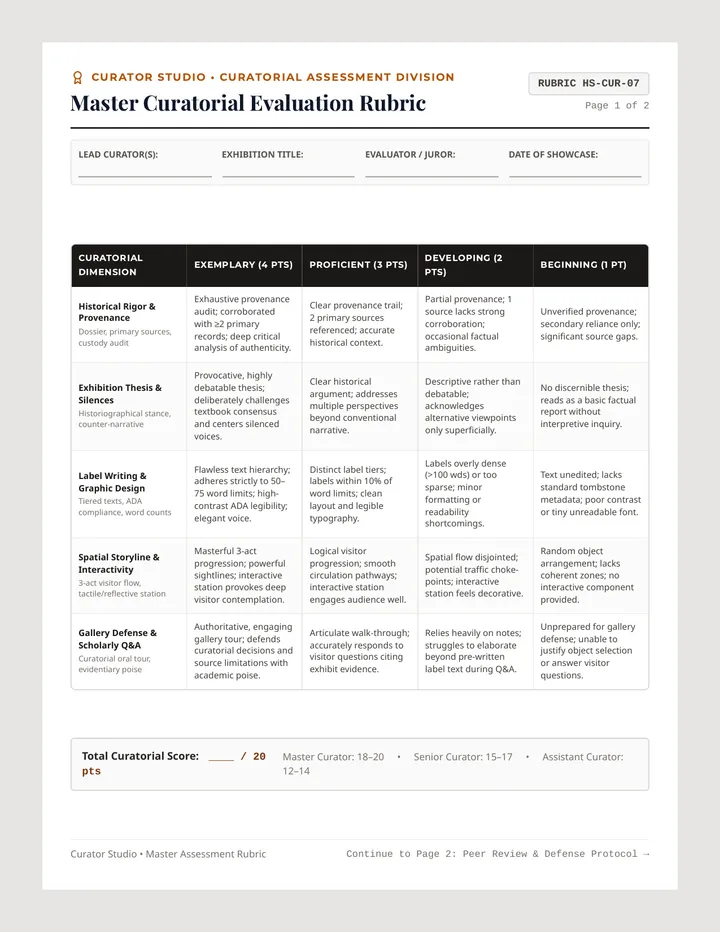
Timbuktu Curator Worksheet The Scholar's Exhibit
Curating the Treasures of Timbuktu
Curator: ___________________________ Date: ___________________________
You have been hired by the Museum of West African History to design an exhibit on the manuscripts of Timbuktu. Choose three subjects to feature in your display. For each subject, describe what a visitor would see in the manuscript and why it proves that Timbuktu was a global center of learning.
Exhibit Item #1
Subject: Example: The Movement of Planets (Astronomy)
Manuscript Description:
Why this is a "Treasure":
Exhibit Item #2
Subject:
Manuscript Description:
Why this is a "Treasure":
Exhibit Item #3
Subject:
Manuscript Description:
Why this is a "Treasure":
The Sands of Time
If the Ghana and Mali empires were never able to control the trade routes, do you think Timbuktu would have become such a great center of learning? Why or why not?