Assembly Line Slides Assembly Line Fever
The Industrial Revolution in Action
MASS PRODUCTION
SPEED & EFFICIENCY
SPECIALIZATION
How Things Were Made
1 The Craft Method
One person builds the entire product from start to finish.
Takes a long time; requires high skill.
Expensive to buy because it's hard to make.
2 The Assembly Line
Each person does one small task over and over.
Extremely fast; product moves to the worker.
Cheap to buy because many can be made quickly.
Henry Ford
The Model T Revolution
In 1913, Henry Ford installed the first moving assembly line for the mass production of an entire automobile. His goal? To build a car so affordable that regular families could own one.
12.5 hrs
Time to build car (Before)
93 mins
Time to build car (After)
The Model T
"Any color as long as it's black."
Factory Simulation
Craftsman vs. Assembly Line
Round 1: Individual
You are the master builder! You will fold, decorate, and "sell" your paper airplanes by yourself.
Round 2: The Line
You are a specialist. You have ONE job (folding the nose, folding the wings, adding the logo).
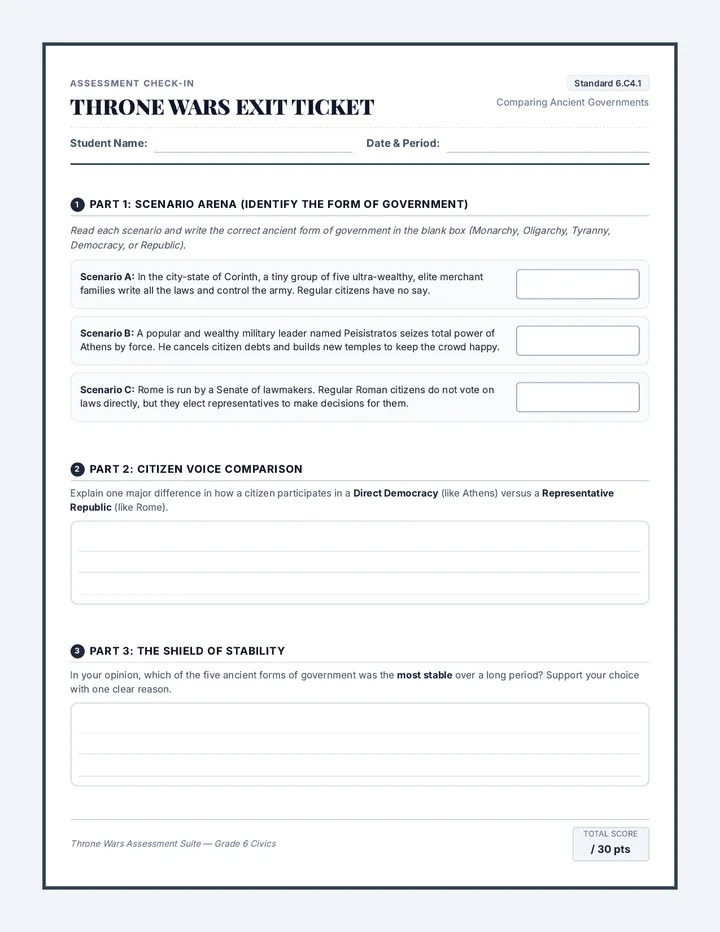
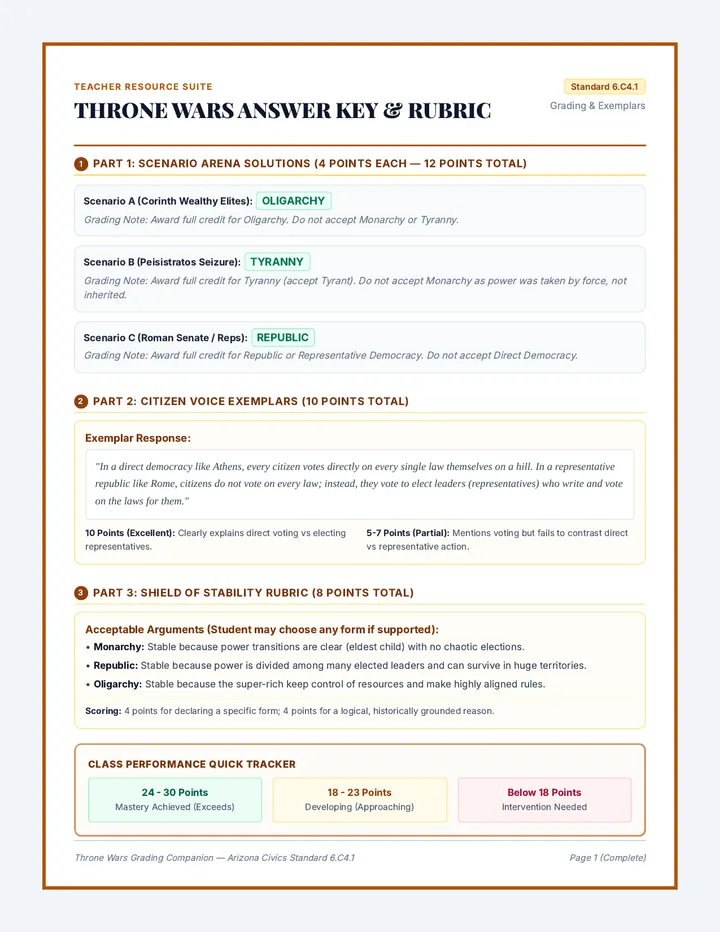
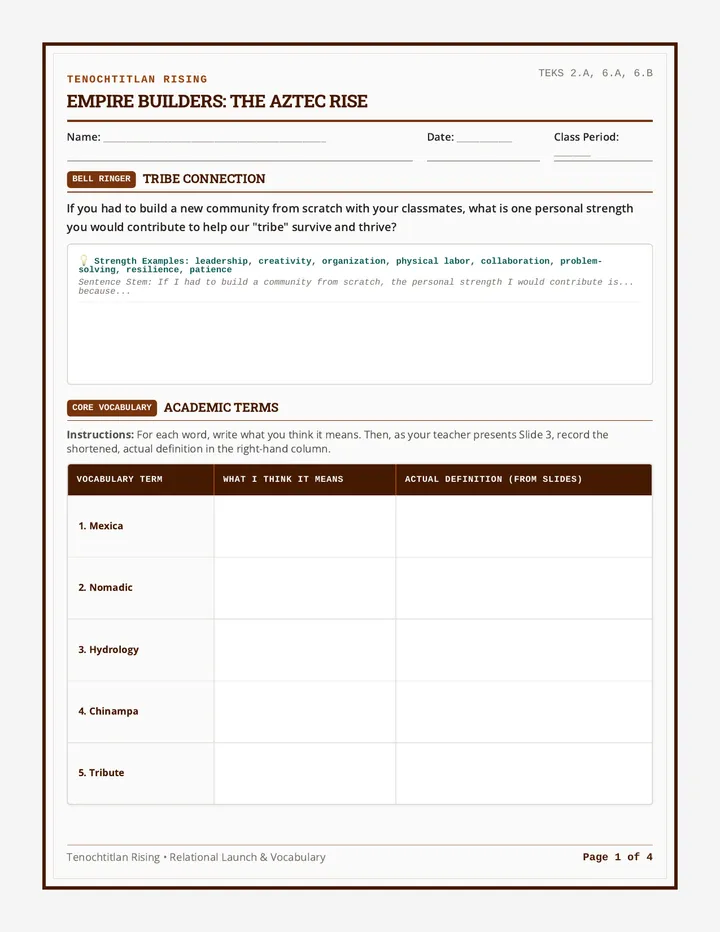
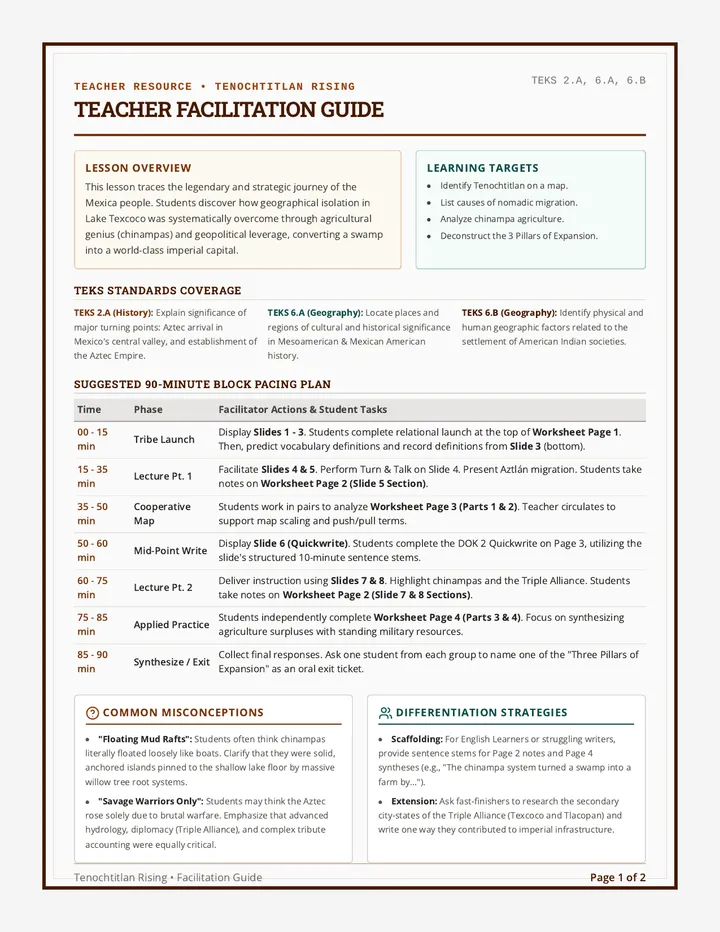
Production Lab Worksheet Production Lab Report
Case Study: The Assembly Line
Name:
Date:
The Big Question
Which method will produce the most paper airplanes in 5 minutes? Which method will have the best quality?
I predict that the _________________ method will be faster because...
Production Log
Production Method Total Units Built Defects (Mistakes) Usable Products Round 1: Individual Craft Round 2: Assembly Line
Factory Floor Reflection
1. How did you feel during the Individual Craft round versus the Assembly Line round? (Excited? Bored? Stressed?)
2. Efficiency Analysis: Why was the assembly line (likely) faster than working alone?
3. The Trade-Off: What is one disadvantage of making everything on an assembly line? (Think about the workers or the product). Simulation Facilitation Guide Teacher Resource
Simulation Facilitation Guide
Lesson 1: Assembly Line Fever
Duration
45-60 Minutes
Grouping
Individual then Teams (5-6)
Materials
Paper, Crayons, Timer
1 The Setup
Each student needs a stack of paper (at least 10 sheets) and one blue or black marker. For the "Assembly Line" portion, you will group students into teams of 6.
2 Round 1: The Master Craftsman (5 mins)
Students work individually to produce as many paper airplanes as possible.
Rule: Each plane must be folded, have a specific logo drawn on the wing, and be "tested" (flown 2 feet).
Teacher acts as the Quality Inspector—reject any planes that are messy or incomplete.
3 Round 2: The Moving Line (5 mins)
Group students into teams. Assign specific roles to each person in the line:
Worker 1: The Primary Folder
Does the first center fold only.
Worker 2: The Nose Expert
Folds the front corners down.
Worker 3: The Wing Commander
Folds the wings down.
Worker 4: The Logo Artist
Draws the "Model T" logo on one wing.
Important: The paper MUST be passed from person to person. No one can start their step until the previous person is finished.
4 Discussion Questions
"Which method made you feel more proud of your work? Why?"
Expected: Individual pride is higher, but production is lower.
"If you were a factory owner, which method would you choose?"
Expected: Assembly line (more products = more profit).
"If you were a worker, which method would you choose?"
Expected: Debatable—craftsmanship is more interesting; assembly line is repetitive but perhaps 'easier'.
Automobile Impact Slides Model T Transformation
How the Car Re-Mapped America
The Power of Choice
Before cars, you lived within walking or horse distance of your job and the grocery store.
The Model T gave people "geographical freedom"—the ability to travel 20-30 miles in an hour.
This led to the birth of the Suburbs : residential areas outside of city centers.
1908
Car = Luxury
1925
Car = Necessity
The Price Drop
$825
$260
The Ripple Effect
Infrastructure
Paved roads replace dirt paths. Bridges are built. Traffic lights are invented!
New Businesses
Gas stations, roadside diners, and "Motor Hotels" (Motels) appear everywhere.
The Weekend
Families start taking vacations to national parks and beaches for the first time.
Map Detective Worksheet Map Detective
Case: The Growing City
Agent Name
STAGE 1: Visual Evidence
FIG. A
Typical City: 1900
DENSE CORE
Homes & shops packed together.
FIG. B
Typical City: 1928
SPRAWLING SUBURBS
Observation:
Look at Figure B. Why were people able to live so much further away from the city center in 1928 than in 1900?
STAGE 2: Economic Ripple Effect
When millions of people started driving, they needed new things along the way. Match the CAR PROBLEM to the BUSINESS SOLUTION .
1
My car is out of gasoline.
2
We are hungry on our road trip.
3
It is getting dark and we are tired.
The Roadside Diner
The "Motor Hotel" (Motel)
The Service Station
Summary Verdict
How did the affordable car change the shape of American life? Use the word SUBURBS in your answer.
Sunday Drive Journal The Sunday Drive
A Journey in a Model T
NAME: _________________________
DATE: _________________________
The Scenario
The year is 1925. Your family just bought a brand new Ford Model T for $290. Before this, the furthest you had ever traveled was 5 miles by horse and buggy.
Today, your father says, "Pack a lunch! We're driving to the lake 30 miles away just because we can!"
Journal Entry: July 12, 1925
Write about your first long-distance trip. What do you see? How does the wind feel? What new businesses do you pass on the road?
Snapshots from the Road
Draw one thing your family saw today that didn't exist when your grandparents were kids.
LOC: HIGHWAY 66 FILM: KODAK PANCHROMATIC
Radio Revolution Slides Radio Revolution
The First Mass Media
A National Voice
Before the radio, news traveled by train and newspaper. It took days or weeks.
Simultaneous Experience
For the first time, people in California and New York heard the same news at the exact same moment .
Unified Culture
Everyone listened to the same jazz music, the same comedy shows, and the same sports games.
1920s Statistics
1920: Stations in USA
1
1923: Stations in USA
500+
Radio's Greatest Hits
News
Election results, weather reports, and world events delivered live.
Sports
Play-by-play baseball games. Families gathered to "watch" with their ears.
Music
The "Jazz Age" began. Live bands broadcast from big city hotels.
Serials
Fictional stories (dramas and comedies) that kept people coming back every week.
On The Air Guide On The Air
Radio Listening Guide
Station ID: W-EDU-1920
Listener Name:
Date:
Instructions:
As we listen to clips from 1920s broadcasts, pay close attention to the sounds, the speed of the speaking, and the topics. Use your imagination to "see" the story through your ears.
CLIP 1
The Live News Report
What is the main event being reported?
How does the reporter's voice sound? (Fast, exciting, calm?)
CLIP 2
Radio Serial: "Mystery Hour"
What sound effects do you hear? (Doors slamming, footsteps, rain?)
Without video, how did the actors help you understand what was happening?
The Big Idea
1. Imagine a whole nation listening to the same baseball game at the same time. How does this help create a "unified national culture"?
2. Comparison: How is listening to the radio different from reading a newspaper? Which one feels more personal? Why? Radio Discussion Guide Teacher Resource Teacher Resource
Radio Clip Discussion Guide
Lesson 3: Radio Revolution
Facilitation Notes
This guide provides context and discussion prompts for the audio clips students will analyze in the On The Air Guide . You can search for these clips on historical archives (like the Library of Congress or YouTube) or read the scripts provided below to simulate the experience.
Clip 1: 1920 Election Night
KDKA PITTSBURGH
Context: The first commercial radio broadcast in history.
What to listen for:
Static and "crackling" sounds of early technology.
The formal, rhythmic tone of the announcer.
The sense of urgency in delivering "live" results.
Discussion Prompt:
"Imagine you are hearing the President's name announced at the exact same moment as someone 500 miles away. How does that change your feeling of being part of a 'united' country?"
Clip 2: A Radio "Serial"
DRAMA / MYSTERY
Context: Fictional storytelling before television existed.
What to listen for:
Foley sounds (wind, door creaks, horse hooves).
Voice acting—actors using different accents or volumes to show movement.
Discussion Prompt:
"How is this different from watching a movie? Does your brain have to work harder when you only have sound?"
The "Water Cooler" Effect
Explain to students that radio created the first "shared experiences." The next morning at school or work, everyone would be talking about the same show or the same game. This is the birth of modern American pop culture.
Credit Consumerism Slides Buy Now, Pay Later
The Rise of Consumer Credit
INSTALLMENT PLANS
CONSUMERISM
PROSPERITY
Possess It Now!
In the 1920s, a massive change happened in how Americans thought about money.
The Old Way (Pre-1920s)
"Save up all your money until you can afford to buy it in cash."
The New Way (1920s)
"Buy it today on an Installment Plan . Pay a little each month."
"Don't Wait for Happiness!"
By 1925, over 75% of cars and 80% of radios were bought on credit.
8/10 Radios
3/4 Cars
The Warning Signs
Debt Traps
If a worker lost their job, they couldn't make their payments. The bank would take back (repossess) everything they "bought".
Overproduction
Factories kept making things faster than people could actually afford to buy them, even with credit.
Credit Calculator Worksheet The Installment Plan
Financial Literacy Lab
Borrower:
What is an Installment Plan?
Instead of paying the full price of an item today, you make a small "Down Payment" and then pay a fixed amount every month until the item is paid off.
The Catch: Sometimes you end up paying more in the end because of interest or fees!
ITEM: Zenith Radio
Scenario 1: The Modern Radio
A new Zenith Radio costs $50.00 in cash.
Or, you can pay $5.00 down and $5.00 a month for 10 months.
A) Calculate the total cost of the installment plan:
$5 (Down) + ($5 x 10 months) =
B) Compare:
Is this the same price as cash, or more expensive?
ITEM: Model T Ford
Scenario 2: The Family Car
The Model T costs $290.00 .
You pay $50.00 today . You must pay $20.00 a month for 14 months.
Step 1: How much will you pay in monthly installments total?
$20 x 14 =
Step 2: Add the down payment. What is the GRAND TOTAL price of the car?
$50 + (Answer from Step 1) =
Analysis: How much EXTRA did you pay for the car by using credit instead of cash? ($Total - $290)
The Borrower's Dilemma
Imagine your family's income is $100 a month. You already owe $20 for the car and $5 for the radio. If your father loses his job, what happens to your family's things?
Ad Detective Worksheet Ad Detective
The Art of Persuasion
Assignment No.
1920-A
"In the 1920s, advertising became a multi-billion dollar industry. Companies didn't just sell products; they sold dreams, status, and the idea that you could 'buy now and pay later'. Your job is to decode the messages behind the ads."
1
Technique: The "Keeping Up" Factor
Many ads suggested that your neighbors were judging you based on what you owned. If they had a new vacuum or car, you needed one too.
QUESTION: Why would this make someone buy a product even if they didn't have the cash for it?
2
Technique: Scientific Modernity
Ads often used words like "New!" "Scientific!" and "Modern!" to make older items seem useless.
TASK: List three modern 1920s inventions that advertisers used to persuade people to upgrade their homes.
Design Your Own Ad
You are an ad agent in 1927. Your client is selling a washing machine . Write a slogan that uses the "Buy Now, Pay Later" message to persuade a busy family.
Slogan Text Area
"Possession is happiness—why wait?"
Economic Shift Slides The Bubble Pops
Forecasting the Economic Shift
Warning Signs Ahead
Too Much of a Good Thing?
Overproduction
Factories made goods faster than people could buy them. Soon, warehouses were full of unsold products.
Under-Consumption
Most people had already used their credit to buy what they needed. They couldn't afford to buy any more.
When supply > demand, prices drop and jobs are lost.
"Buying on the Margin"
People didn't just buy cars on credit—they bought Stocks (ownership in companies) on credit too!
Pay 10% of the stock price now.
Borrow 90% from the broker.
If the price drops, you still owe the full 90%!
October 1929
The Great Crash
Warning Signs Organizer Economic Forecast
Connecting the Boom to the Bust
Forecaster:
The Chain Reaction
Cause: Mass Production
Factories use the assembly line to build goods (cars, radios) faster than ever before.
Immediate Effect:
Cause: Installment Plans
Companies allow people to buy goods immediately using credit and paying monthly.
Immediate Effect:
The Crash: Overproduction
Factories have more goods than customers can buy. People are in too much debt to buy more.
The Final Result:
The Warning Sign
If you were a financial advisor in 1928, what is one "warning sign" you would have told families to watch out for to avoid economic trouble? Why?
Roaring Economy Review Quiz Roaring Economy Review
Unit Assessment: The 1920s Boom
Student:
Score:
Part 1: Key Concepts
1. Which manufacturing process did Henry Ford use to make cars affordable for the average family?
Individual Craftsmanship
The Assembly Line
Hand-weaving
Steam-powered printing
2. The growth of suburbs in the 1920s was primarily caused by the popularity of which invention?
The Radio
The Model T Automobile
The Television
The Telephone
3. What was the first "mass media" that unified American culture in the 1920s?
The Internet
The Telegraph
The Radio
The Pony Express
Part 2: Money Matters
Define the following terms:
INSTALLMENT PLAN:
OVERPRODUCTION:
True or False?
"Buying on the margin" meant using credit to buy stocks.
T
F
Most families in 1925 bought radios with cash only.
T
F
Part 3: Critical Thinking
Explain the "Ripple Effect" of the automobile. What were two new businesses created because people started driving more?
How did the combination of overproduction and installment plan debt lead to the end of the Roaring Twenties?