Texas First Peoples Slides
Texas History & Geography • Grade 4
The Lone Star State
First Peoples of Texas
Discover the four major cultural regions, diverse tribal ways of life, and enduring traditions that helped shape Texas.
🌲
Southeastern
Piney Woods Farmers
🦬
Plains
Buffalo Hunters
🛶
Gulf Coast
Nomadic Fishers
🏜️
Puebloan
Adobe City Builders
Geographic Connection
Four Regions, Four Ways of Life
The climate, plants, and animals in each region shaped how tribes lived.
🌲
Southeastern
Caddo & Wichita
East Texas forests with rich soil and abundant rain.
🏡 Grass Lodges
🦬
Plains
Comanche & Apache
Wide open grasslands stretching across north & central Texas.
⛺ Hide Tipis
🌊
Gulf Coast
Karankawa & Coahuiltecan
Warm bays, sandy beaches, and dry southern scrubland.
🛖 Reed Wickiups
🏜️
Puebloan
Jumano & Tigua
West Texas mountains and river valleys near the Rio Grande.
🧱 Adobe Houses
Big Question: How did geography decide whether a tribe moved or stayed in one place?
Southeastern Culture
The Caddo: Forest Farmers & Builders
The Piney Woods of East Texas provided rich farmland and sturdy timber.
🌾
Beehive Houses
The Caddo built round houses up to 50 feet tall using pine poles and woven tall grasses. Multiple families lived together inside.
Permanent Villages
🌽
Master Farmers
They planted corn, beans, squash, and sunflowers. They stored extra crops in granaries and crafted decorated clay pottery.
Thriving Agriculture
🤝
Origin of "Texas"
The Caddo greeted friends with the word "Taysha" (meaning friend or ally). Spanish explorers wrote it as "Tejas"!
State Motto: Friendship
Key Takeaway: Plentiful rain and fertile soil allowed the Caddo to build permanent, organized communities.
Plains Culture
The Comanche & Apache: Lords of the Plains
The vast flat grasslands created a fast-moving, nomadic way of life.
🦬
The Buffalo Lifeway
Plains tribes used every part of the bison: meat for food, thick hides for warm robes and shelter, and bones for needles and tools.
Zero Waste Resources
⛺
Tipis on the Move
Cone-shaped tipis made from wooden poles and buffalo hides could be packed up quickly to follow seasonal buffalo migrations.
Nomadic Mobility
🐎
Expert Riders
After acquiring horses, the Comanche became legendary equestrians who hunted bison across great distances with tremendous speed.
Supreme Horsemanship
Key Takeaway: The buffalo provided shelter, tools, and food for life on the dry, open grasslands.
Gulf Coast Culture
Karankawa & Coahuiltecan: Coastal Navigators
Living along bays, beaches, and dry southern brushland required sharp survival skills.
🛶
Dugout Canoes
The Karankawa carved large tree trunks into dugout canoes. They navigated coastal bays, speared fish, and gathered oysters and clams.
Seafood Harvest
🌵
Resourceful Foragers
Coahuiltecans lived in dry scrubland. They gathered prickly pear cactus fruit, mesquite beans, and hunted deer, javelina, and small game.
Desert Adaptations
🛖
Simple Wickiups
Both groups used flexible young tree saplings bent into dome frames, covered with woven reed mats or hides that could be moved quickly.
Seasonal Migration
Key Takeaway: Gulf tribes moved between coastal bays and inland areas to find seasonal foods.
Puebloan Culture
The Jumano & Tigua: Desert Architects
The dry mountains and river valleys inspired clever engineering and farming.
🧱
Adobe Pueblos
They built permanent multi-story buildings using sun-dried mud bricks called adobe. The thick walls insulated rooms against desert heat.
Desert Architecture
💧
River Irrigation
With very little rain, farmers dug canals and ditches from the Rio Grande to bring fresh water directly to crops of corn, beans, and cotton.
Engineered Watering
💎
Active Traders
The Jumano traveled wide distances to trade turquoise jewelry, copper, buffalo hides, and woven cotton blankets with other native nations.
Trade Networks
Key Takeaway: Clever irrigation from the Rio Grande turned a dry desert into a thriving farming community.
Cultural Comparison
Comparing Texas Cultural Regions
Review how homes, foods, and lifestyles matched the local environment.
Region & Tribes
Home Style
Main Foods
Way of Life
🌲
Southeastern
Caddo & Wichita
Cone Grass Lodges
Corn, Squash, Deer
Permanent Farmers
🦬
Plains
Comanche & Apache
Buffalo-Hide Tipis
Buffalo & Berries
Nomadic Hunters
🛶
Gulf Coast
Karankawa & Coahuiltecan
Portable Wickiups
Fish, Oysters, Cactus
Nomadic Foragers
🏜️
Puebloan
Jumano & Tigua
Multi-Story Adobe
Irrigated Corn, Beans
Permanent Pueblos
Memory Clue: Farmers built permanent homes; hunters followed the herds in movable shelters!
Living Legacy
Enduring Heritage & Texas Today
Native language, culture, and sovereign tribal nations continue to enrich Texas.
🏷️
Names We Speak
Our state name Texas comes from Caddo Taysha. Cities like Waco and Nacogdoches honor tribal heritage.
Place Names
🍲
Foods & Traditions
Native farmers gifted staple foods we eat today: corn, pumpkin, native Texas pecans, beans, and outdoor pit cooking traditions.
Agricultural Gifts
🏛️
Sovereign Nations
Three federally recognized tribes hold reservations in Texas today: Ysleta del Sur Pueblo, Alabama-Coushatta, and Kickapoo.
Living Communities
Class Discussion:
Which region's environment would have been the most challenging to live in, and why?
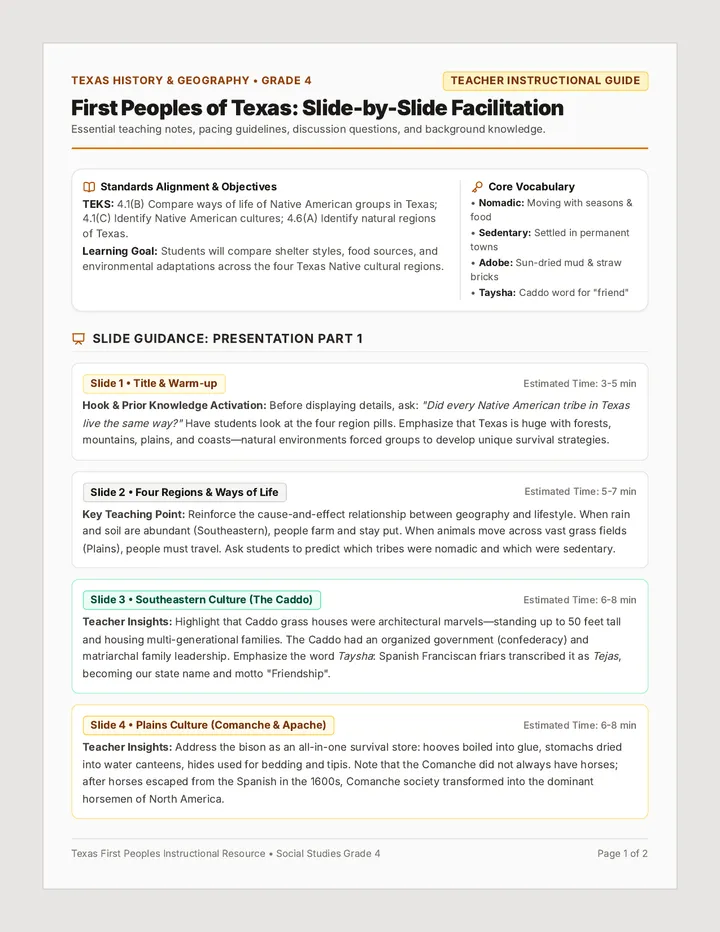
Texas First Peoples Teacher Guide
Texas History & Geography • Grade 4 Teacher Instructional Guide
First Peoples of Texas: Slide-by-Slide Facilitation
Essential teaching notes, pacing guidelines, discussion questions, and background knowledge.
Standards Alignment & Objectives
TEKS: 4.1(B) Compare ways of life of Native American groups in Texas; 4.1(C) Identify Native American cultures; 4.6(A) Identify natural regions of Texas.
Learning Goal: Students will compare shelter styles, food sources, and environmental adaptations across the four Texas Native cultural regions.
Core Vocabulary
- • Nomadic: Moving with seasons & food
- • Sedentary: Settled in permanent towns
- • Adobe: Sun-dried mud & straw bricks
- • Taysha: Caddo word for "friend"
Slide Guidance: Presentation Part 1
Slide 1 • Title & Warm-up Estimated Time: 3-5 min
Hook & Prior Knowledge Activation: Before displaying details, ask: "Did every Native American tribe in Texas live the same way?" Have students look at the four region pills. Emphasize that Texas is huge with forests, mountains, plains, and coasts—natural environments forced groups to develop unique survival strategies.
Slide 2 • Four Regions & Ways of Life Estimated Time: 5-7 min
Key Teaching Point: Reinforce the cause-and-effect relationship between geography and lifestyle. When rain and soil are abundant (Southeastern), people farm and stay put. When animals move across vast grass fields (Plains), people must travel. Ask students to predict which tribes were nomadic and which were sedentary.
Slide 3 • Southeastern Culture (The Caddo) Estimated Time: 6-8 min
Teacher Insights: Highlight that Caddo grass houses were architectural marvels—standing up to 50 feet tall and housing multi-generational families. The Caddo had an organized government (confederacy) and matriarchal family leadership. Emphasize the word Taysha: Spanish Franciscan friars transcribed it as Tejas, becoming our state name and motto "Friendship".
Slide 4 • Plains Culture (Comanche & Apache) Estimated Time: 6-8 min
Teacher Insights: Address the bison as an all-in-one survival store: hooves boiled into glue, stomachs dried into water canteens, hides used for bedding and tipis. Note that the Comanche did not always have horses; after horses escaped from the Spanish in the 1600s, Comanche society transformed into the dominant horsemen of North America.