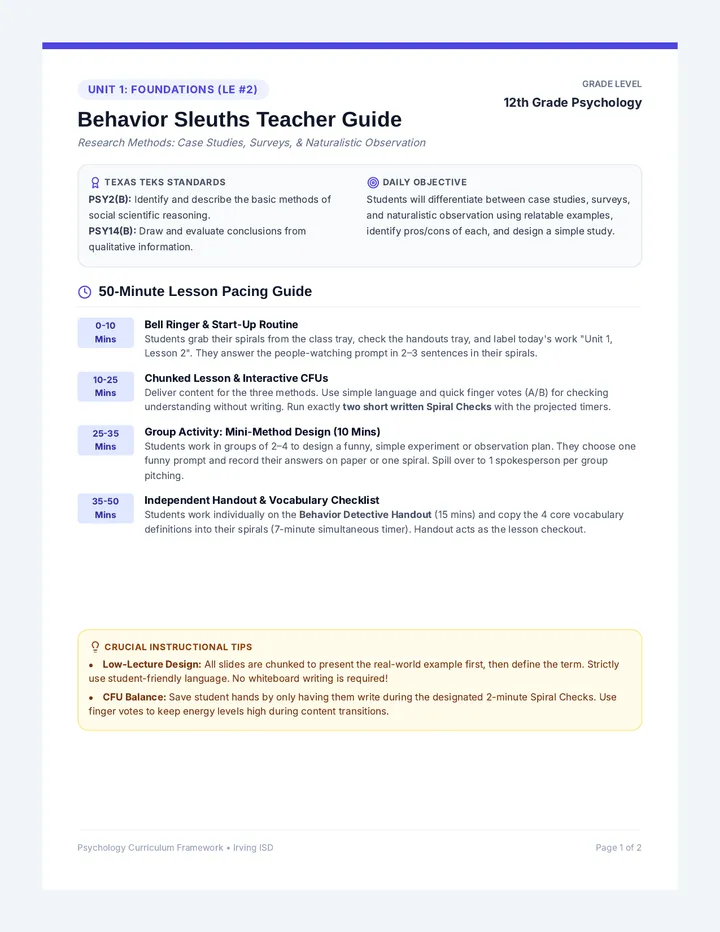
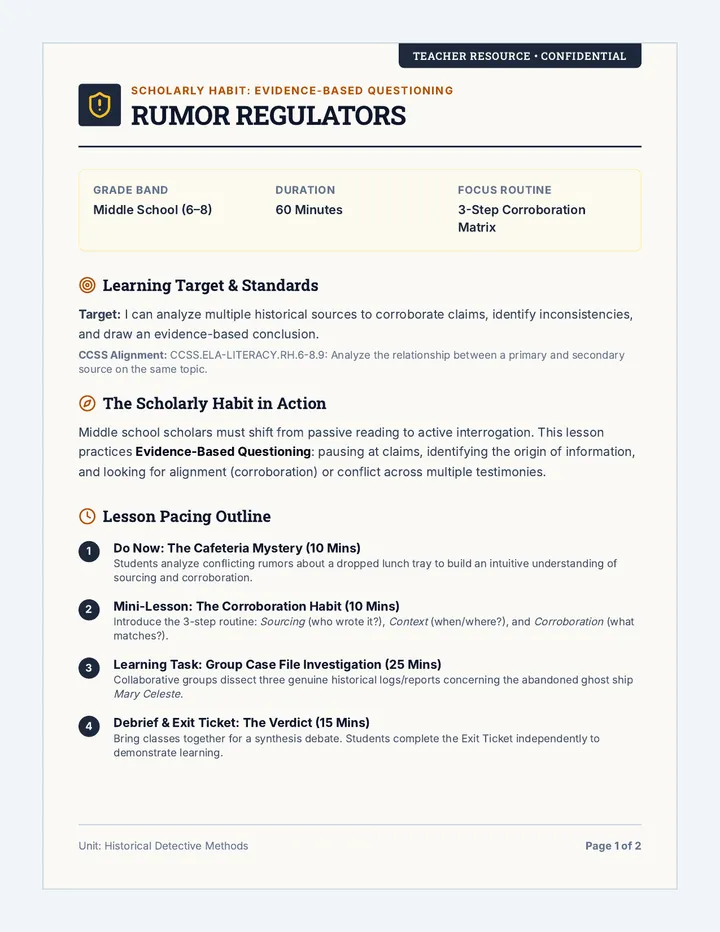
A highly interactive lesson focusing on consumer protections, distinguishing between sales puffery and binding express warranties, and navigating state UDAP versus federal FTC enforcement through debates and Socratic seminars.
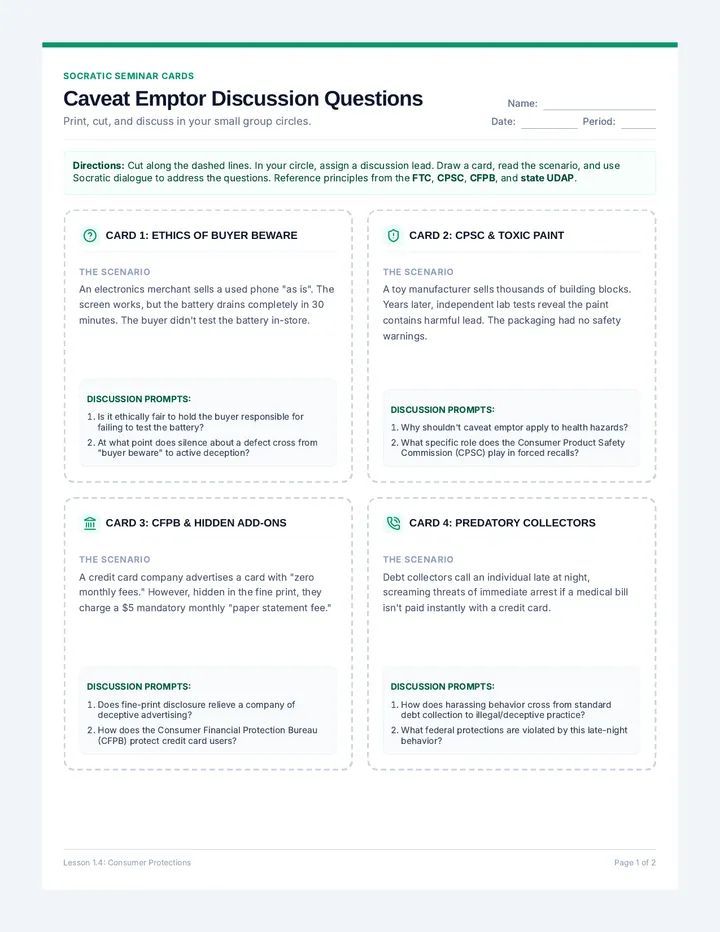
While selling "as is" protects merchants from standard wear, active concealment of severe, non-obvious battery failure crosses into common-law fraud. Under state UDAP, merchants must disclose major latent safety/performance defects.
Card 2 Key: CPSC & Toxic Paint
Caveat emptor fails when defects are chemical and invisible. The Consumer Product Safety Commission (CPSC) holds administrative authority to enforce mandatory testing and national recalls to protect public safety.
Card 3 Key: CFPB & Hidden Add-Ons
Fine print disclosures do not cure deceptive headline advertising. The Consumer Financial Protection Bureau (CFPB) prohibits UDAAP (Unfair, Deceptive, or Abusive Acts and Practices) regarding add-on statement fees.
Card 4 Key: Predatory Debt Collectors
Harassing tactics violate the federal Fair Debt Collection Practices Act (FDCPA). The law strictly prohibits debt collectors from calling before 8:00 AM or after 9:00 PM local time and using deceptive threats of arrest.
Debate Case Studies Answer Key
Case 1 (The Magic Mattress): "Sleep like a cloud" is subjective puffery. However, "Guaranteed to align your spine perfectly within 30 nights" crosses into an express warranty. Remedy: If the consumer gets back pain, they can claim a breach under state UDAP/warranty laws for a full refund.
Case 2 (The Mileage Miracle): "Drastically slashes gas bills" is subjective puffery. However, "Boosts fuel efficiency by 25% or your money back" is an express written warranty. Remedy: Consumer can seek a refund under statutory/express warranty rules if performance fails.
Case 3 (The Bulletproof Backpack): "Tougher than a military tank" is puffery. But "Guaranteed to stop a 9mm round" is an express warranty. Since failure threatens life, the CPSC can force a safety recall. Consumers can sue for statutory triple damages under state UDAP if sold with knowledge of defect.
Jurisdiction Quick Fact
Remind students that the Federal Trade Commission (FTC) handles national deceptive trade issues representing the general public, whereas state UDAP laws allow individual private lawsuits to recover actual cash damages, attorney fees, and treble damages.
Lesson 1.4: Consumer Protections Page 2 of 2
Argue that "tougher than a tank" and "ultimate armor" are standard hyperbole, not an assurance of combat grade protection.
Marketplace Faceoff Socratic Debate Prep
Where Do We Take Our Claim?
Enforcement depends on scope and jurisdiction.
Federal FTC Action
Deals with widespread, nationwide deceptive marketing campaigns.
Protects public interest as a whole.
Hands out massive administrative fines.
Does NOT represent individual private lawsuits.
State UDAP Civil Action
Deals with individual transactions, warranties, and deceptive sales.
Allows you to sue the merchant directly.
Can recover actual damages & lawyer fees.
Treble damages: Triple payouts for willful deception.
Marketplace Faceoff Federal vs. State Enforcement
Ready for the Showdown?
As you prepare your arguments, ensure you hit all three criteria to secure maximum points on your debate rubric:
1 Define the "Reasonable Consumer" standard clearly.
2 Identify specific factual assertions vs. subjective exaggerations.
3 Explicitly defend your chosen remedy (FTC or State UDAP civil suits).