Lenny.com
Explore
Create
ActivitiesNewMathEnglish Language ArtsScience & EngineeringSocial StudiesGlobal LanguagesHealth & Physical EducationSpecial EducationCounseling & Life SkillsArts & CreativityESL
Lenny.com
Lenny.com
Explore
Create
ActivitiesNewMathEnglish Language ArtsScience & EngineeringSocial StudiesGlobal LanguagesHealth & Physical EducationSpecial EducationCounseling & Life SkillsArts & CreativityESL
Lenny.com
Lenny.com

Solutions

Lenny for EducatorsLenny for SchoolsLenny for Districts

Product

ExploreSign inCreateSupportAbout

Resources

Getting startedMTSS Acceleration Program

© 2026 Lenny Learning Inc.

TermsPrivacyAccessibility
LinkedInInstagramX
Lenny
Social StudiesSocial Studies PracticesLocation WordsMapsOrder EventsChronology and CausationEvaluating SourcesHistorical ThinkingGeography, Humans, & the EnvironmentAmerican Symbols and LandmarksCitiesStatesState CapitalsRegions of the United StatesGeographic SkillsPhysical GeographyHuman GeographyRegional GeographyGeography of AfricaGeography of AsiaGeography of EuropeGeography of OceaniaGeography of the AmericasSociety and Environment of EuropeSociety and Environment of AsiaSociety and Environment of The AmericasSociety and Environment of the Middle EastSociety and Environment of AfricaHistoryPrehistoryComparing Ancient River CivilizationsAncient MesopotamiaAncient Egypt and KushAncient South AsiaEarly ChinaGreeceRome and the Byzantine EmpireAncient World HistoryNative Peoples of North AmericaNative Peoples of Mesoamerica and South AmericaAfrican EmpiresMedieval AsiaMedieval EuropeThe Silk RoadMedieval HistoryIslamic EmpiresWorld ReligionsRenaissance PeriodAge of ExplorationThe Thirteen ColoniesThe American RevolutionUS History Early RepublicFounding of the United StatesUS History AntebellumUS Civil WarReconstruction PeriodThe Gilded AgeUS ImperialismWorld ImperialismWorld War IUS History 1920sGreat DepressionWorld War IIThe Cold WarUS History 1950-60sUS History 1960s-70sWorld History 20th CenturyContemporary US HistoryContemporary World HistoryHolidaysCivics and GovernmentCitizenshipGovernment FoundationsThe ConstitutionUS ConstitutionExecutive BranchLegislative BranchJudicial BranchState and LocalPolitical ParticipationPublic PolicyPolitical SystemsPower and AuthoritySocial MovementsDefining DevianceTheories of DevianceCrime and Criminal JusticeEconomicsBasic Economic PrinciplesSupply and DemandWhat is MoneyEconomic FundamentalsMicroeconomicsMacroeconomicsBanking and FinanceEconomic SystemsGlobal EconomicsCorporations and PowerThe Changing WorkplaceUnemployment and LaborClass and InequalitySocial MobilityGlobal InequalityPsychologyHistory of PsychologyPsychology as a ScienceBrain and Nervous SystemNeuroscience and BehaviorGenetics and BehaviorSleep and ConsciousnessSensory ProcessesPerceptual OrganizationClassical ConditioningOperant ConditioningObservational LearningCognitive LearningMemory ProcessesThinking and Problem SolvingLanguage and CognitionTheories of MotivationStress and CopingPrenatal and Infant DevelopmentChildhood DevelopmentAdolescent DevelopmentAdulthood and AgingSelf and IdentitySocial CognitionSocial InfluenceAttraction and RelationshipsGroup BehaviorPrejudice and DiscriminationAnxiety and Mood DisordersClinical PsychologyForensic PsychologyPhilosophy & EthicsIntroduction to PhilosophyMajor Philosophers & IdeasMind and Body ProblemFree Will vs DeterminismEthics & MoralityReligion & PhilosophyPolitical Philosophy

Market Price Mechanics

A rigorous economics lesson examining how market equilibrium, operational costs, and industry competitive structures interact to determine the prices of goods and services.

MKMarlyce Kemp

Market Price Mechanics

A rigorous economics lesson examining how market equilibrium, operational costs, and industry competitive structures interact to determine the prices of goods and services.

MKMarlyce Kemp

Option A: Pass Cost to Price

Option B: Absorb Cost Increase

Page 1 of 2 • Continue to Market Structures & Pricing Power on Page 2

Part 3 & 4

Market Structures & Real-World Pricing Power

Student ID / Name:

3 Part 3: Market Structure Matrix (20 Pts)

Classify & Evaluate Pricing Leverage

Classify each real-world business into its market structure (Perfect Comp., Monopolistic Comp., Oligopoly, or Monopoly) and state its pricing power (Price Taker or Price Maker).

Industry / FirmMarket StructureTaker or Maker?Why? (Barriers & Substitutes)
Midwest Corn Farm
Sells grade-A yellow corn
Downtown Coffee Shop
Artisan lattes & atmosphere
Commercial Airlines
Major carriers on JFK to LAX
Municipal Water Utility
Exclusive tap water pipeline

4 Part 4: Real-World Case Study: The "Patent Cliff" (20 Pts)

Pharmaceutical Pricing Dynamics

Background: When PharmaCorp developed "CardioFix", a life-saving heart medication, the government granted a 20-year patent. During the patent window, PharmaCorp priced CardioFix at $350 per month, despite manufacturing costs of just $8 per bottle. When the patent expired, eight generic drug manufacturers entered the market, and the price plummeted to $18 per month within 18 months.

4a. How did the market structure change when the patent expired?

4b. Why was PharmaCorp unable to keep the price at $350 once generic competitors entered?

5 Part 5: Executive Synthesis (10 Pts)

Synthesize how costs, supply & demand, and market structures interact to form a final price:

Complete the prompt: "Production costs set the price floor, consumer demand sets the price ceiling, and market structure determines..."

End of Price Detective Worksheet • Submit to instructor for review.

Correction: Students frequently conflate price (what the customer pays) with cost (what the firm spends to produce it). Remind students: Price − Cost = Profit Margin.

Misconception 2: "Monopolies can charge infinity"

Correction: Even a pure monopoly is bound by the downward-sloping demand curve. If insulin or electricity is priced beyond consumer capacity, volume drops or regulators intervene.

Pricing Playbook • Page 1 of 2 • Turn over for Facilitation & Differentiation

Facilitation

Socratic Inquiry & Differentiation Strategy

Teacher Guide • Section II

Socratic Inquiry Prompts by Concept

On Supply & Demand Equilibrium:

"If movie theater tickets are consistently sold out on Friday nights with long lines outside, is the price above, below, or at equilibrium? What economic force encourages theaters to raise prices or implement surge pricing?"

On Operating Costs & Margins:

"Suppose your local pizza parlor’s rent jumps 40%. Can the owner simply increase the price of a slice by 40% tomorrow without losing customers to the pizzeria down the block? Why does market structure limit how easily costs are passed on?"

On Market Structure & Pricing Power:

"Why doesn’t an Iowa corn farmer spend $50,000 on a Super Bowl commercial advertising their yellow dent corn, while Nike spends hundreds of millions on shoe campaigns? How does product differentiation alter pricing power?"

Targeted Differentiation Pathways

Tier 1 Striving Learners & ELL Support

  • Visual Cost Formula Anchor: Provide the formula strip: (Total Rent ÷ Quantity) + Material = Unit Cost directly on desk cards.
  • Analogy Scaffold: Use the "Cafeteria Cookie vs. Custom Birthday Cake" analogy to clarify price takers vs. price makers.
  • Paired Calculation: Partner striving students with peer tutors for the Part 2 ledger math.

Tier 2 Advanced & AP Micro Extensions

  • Price Elasticity of Demand (\(E_d\)): Have students calculate elasticity coefficients (\(\% \Delta Q / \% \Delta P\)) using the bike share table.
  • Algorithmic & Dynamic Pricing: Challenge students to research Uber surge algorithms or airline ticket pricing systems.
  • Antitrust Case Study: Ask students to evaluate whether big tech app store fee cuts constitute monopolistic price fixing.

Quick Assessment Rubric (100 Point Scale)

ComponentProficient (Full Pts)Emerging (Partial Pts)
Part 1: Equilibrium Table (35 pts)Accurately identifies $6.00/700 rides; correctly labels shortage/surplus dynamic.Confuses shortage with surplus direction or calculation error in equilibrium.
Part 2: Cost Ledger (35 pts)Correctly calculates $0.80 fixed/unit, $2.20 total unit cost, $3.52 retail price.Omits fixed overhead or miscalculates 60% markup calculation.
Parts 3-5: Structures & Synthesis (30 pts)Accurately categorizes all 4 firms; synthesizes patent cliff impact and pricing equation.Incorrect structure classification or vague explanation of pricing leverage.

Pricing Playbook Teacher Guide • Ready for classroom implementation

Cost Shock Trade-Off Model Answers:

Option A (Pass cost to price): New price = $3.92 (or $4.16 with full markup). Trade-off: Protects profit margin per unit, but risks losing price-sensitive customers to nearby bakeries, reducing total sales volume.

Option B (Absorb cost hike): Maintain $3.52 price. Trade-off: Protects customer loyalty and foot traffic, but profit drops from $1.32 to $0.92 per bagel (30% reduction in net business income).

Price Detective Answer Key • Page 1 of 2 • Turn over for Market Structures & Case Study

Answer Key

Market Structures & Case Solutions

Page 2 Master Rubric

Part 3: Market Structure Matrix Solutions (20 Pts)

5 pts per industry row

IndustryStructureTaker / MakerKey Economic Rationale
Midwest Corn FarmPerfect CompetitionPrice TakerCommodity crop; identical product; thousands of sellers; zero individual pricing power.
Downtown Coffee ShopMonopolistic Comp.Slight Price MakerDifferentiates through roast quality, atmosphere, and branding, but limited by nearby competitors.
Commercial AirlinesOligopolyInterdependent MakerHigh barriers (aircraft capital, airport slots); 3-4 legacy carriers engage in mutual price matching.
Municipal Water UtilityNatural MonopolyPrice Maker (Regulated)Single pipeline network; massive infrastructure barrier; no viable substitutes for household tap water.

Part 4: Real-World Case Study Solutions: "The Patent Cliff" (20 Pts)

10 pts each question

4a. Structural Shift (10 pts):

Model Answer: The market shifted from a legal monopoly (protected by exclusive patent rights and high barriers to entry) into a highly competitive market (approaching perfect competition among generic drug manufacturers). The expiration of the patent removed the legal barrier, allowing multiple identical bioequivalent formulations to enter.

4b. Pricing Collapse Explanation (10 pts):

Model Answer: With 8 identical generic alternatives available, consumers, health insurers, and pharmacies will not pay $350 for the brand-name version when identical active ingredients cost $18. PharmaCorp transformed from a price maker with a downward-sloping demand curve to a price taker facing nearly elastic demand. They must match the market price near marginal cost or exit.

Part 5: Executive Synthesis Exemplar (10 Pts)

Exemplar Student Response:

"Production costs set the price floor (below which a firm incurs losses and shuts down), consumer demand sets the price ceiling (the maximum willingness to pay before sales drop to zero), and market structure determines how close to that ceiling or floor the final price lands—with fierce competition driving prices down near the cost floor, and monopoly power allowing firms to push prices up toward the consumer ceiling."

Pricing Playbook Answer Key • Confidential Educational Document

You might also like

Business Blueprint Slides

Market Makers

A hands-on introductory curriculum that equips students with foundational business acumen and marketing savvy through practical entrepreneurial challenges, financial basics, and campaign design.

D

despinoza

9
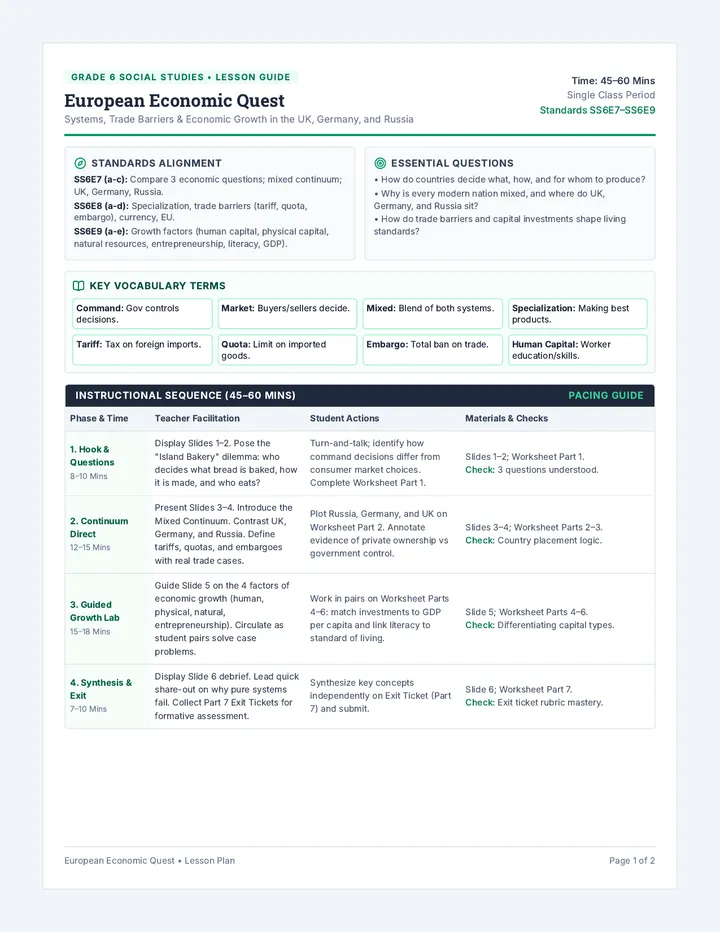
European Economy Lesson Plan

European Economic Quest

A comprehensive 45-60 minute sixth-grade lesson exploring European economic systems, voluntary trade barriers, and factors driving economic growth across the United Kingdom, Germany, and Russia. Students analyze the three fundamental economic questions, plot nations on the economic continuum, evaluate trade policies, and connect investments in capital to gross domestic product.

Lenny Avatar
Lenny
4
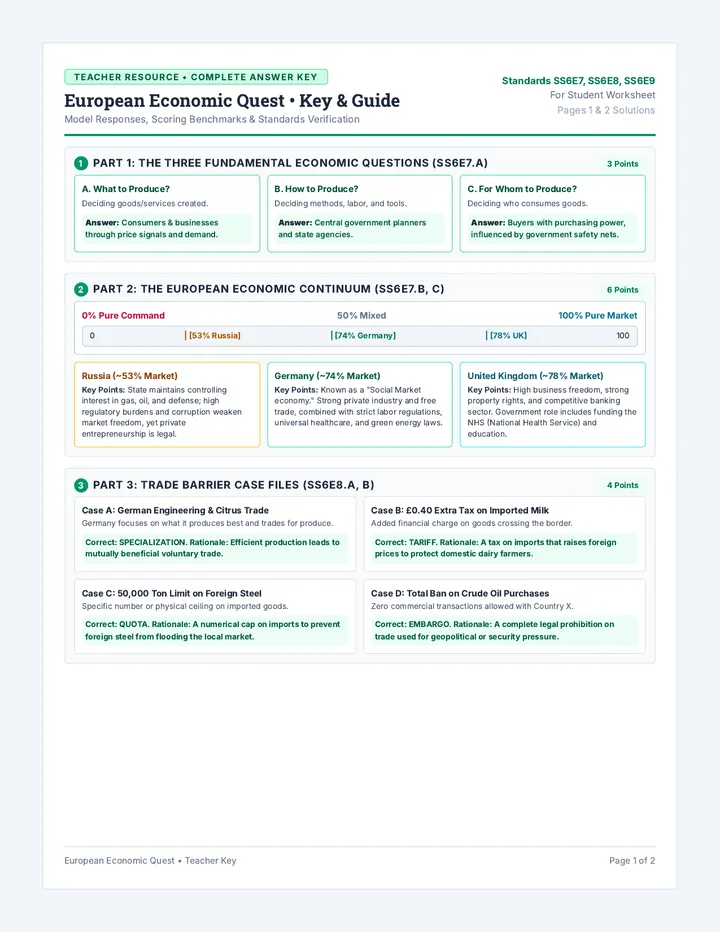
Economy Teacher Key

Economy Teacher Key

A comprehensive 2-page teacher answer key, scoring guide, and model response rubric for the European Economic Quest student investigation worksheet.

Lenny Avatar
Lenny
Hemisphere Hunt Slides

Continent Quest

A 4th-grade geography sequence introducing students to North America through map navigation, regional comparisons, and landform exploration. Students investigate hemisphere locations, the three major nations, and iconic geographic features across the continent.

E

ehdunn

9
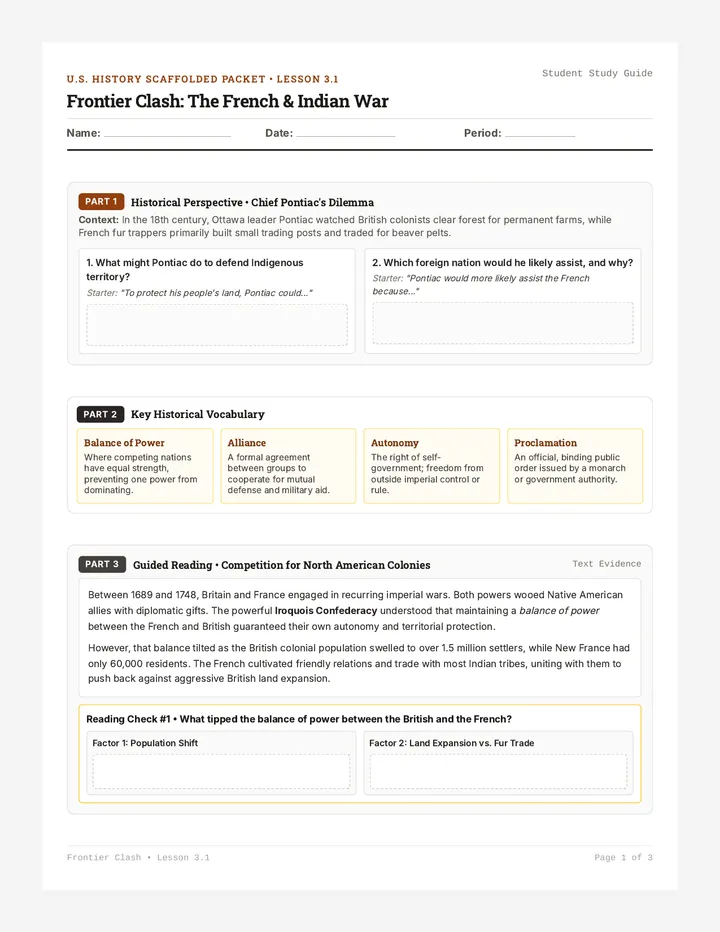
Frontier Clash Scaffolded Worksheet

Frontier Clash

A scaffolded high school history lesson examining the causes, major turning points, and aftermath of the French and Indian War. Students analyze geopolitical rivalries, Native American alliances, Pontiac's Rebellion, and the seeds of colonial tension that followed the Treaty of Paris.

SH

Stacey Hersch

2
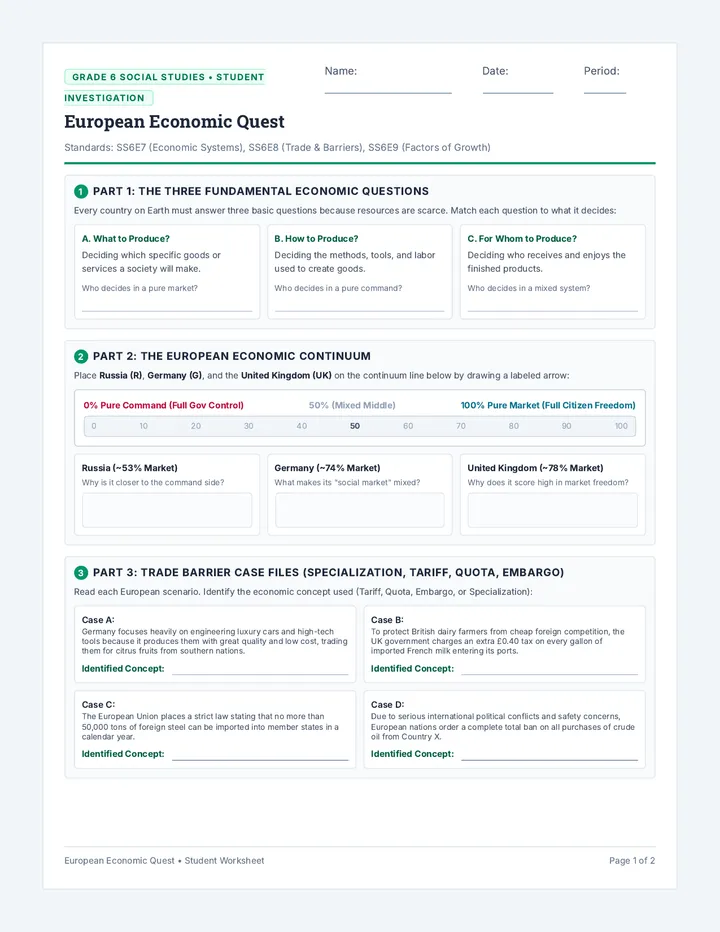
Economy Investigation Worksheet

Economy Investigation Worksheet

A 2-page print-ready student investigation worksheet and guided notes covering the three economic questions, continuum placement of the UK, Germany, and Russia, trade barrier scenario analysis, and factors of GDP growth.

Lenny Avatar
Lenny
Camera Tricks Slides

Pixel Sleuths

A 3-part media literacy unit for middle school students on analyzing visual media, spotting manipulated photos, and verifying online sources using lateral reading.

Lenny Avatar
Lenny
9
Gilded Titans Essay Packet

Gilded Age Titans

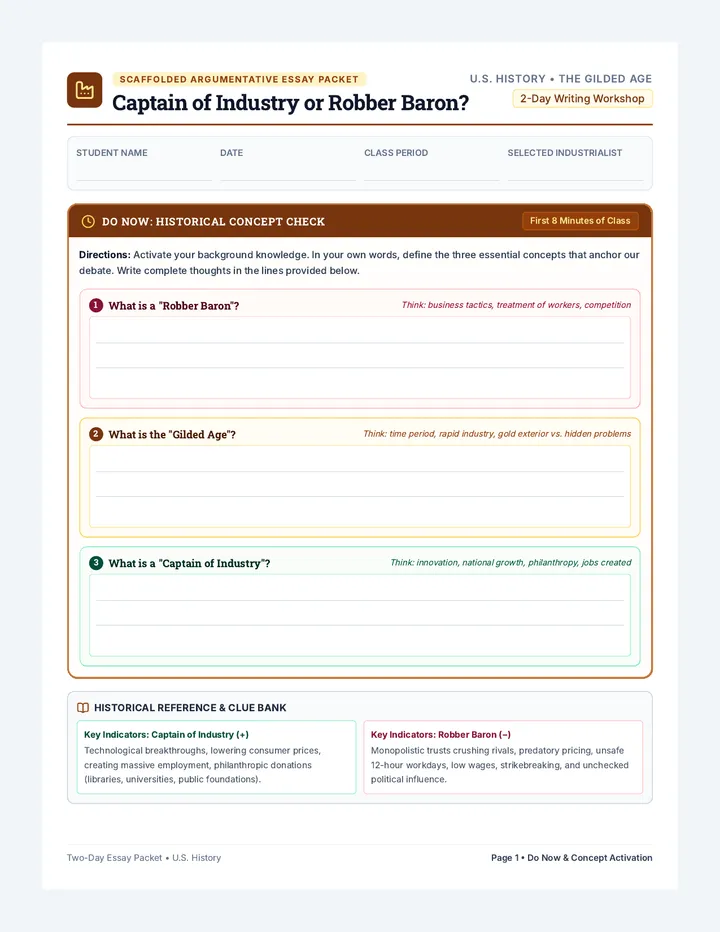
A history lesson exploring whether Gilded Age magnates were Captains of Industry or Robber Barons through debate, scaffolded drafting, and formal essay writing.

JM

Justin Montalvo

2
European Economy Slides

European Economy Slides

An engaging 6-slide visual presentation for Grade 6 social studies comparing economic systems on the mixed continuum, illustrating trade barriers and currency exchange in Europe, and examining the four factors of economic growth across the UK, Germany, and Russia.

Lenny Avatar
Lenny
Store Master Syllabus Guide

Campus Store Launchpad

An eight-week experiential introduction to marketing centered around operating and scaling a campus retail store. Students master brand positioning, assortment strategy, pricing mechanics, visual merchandising, and sales analytics through authentic store management.

D

despinoza

8
Brand Blueprint Slides

Brand Identity Blueprint

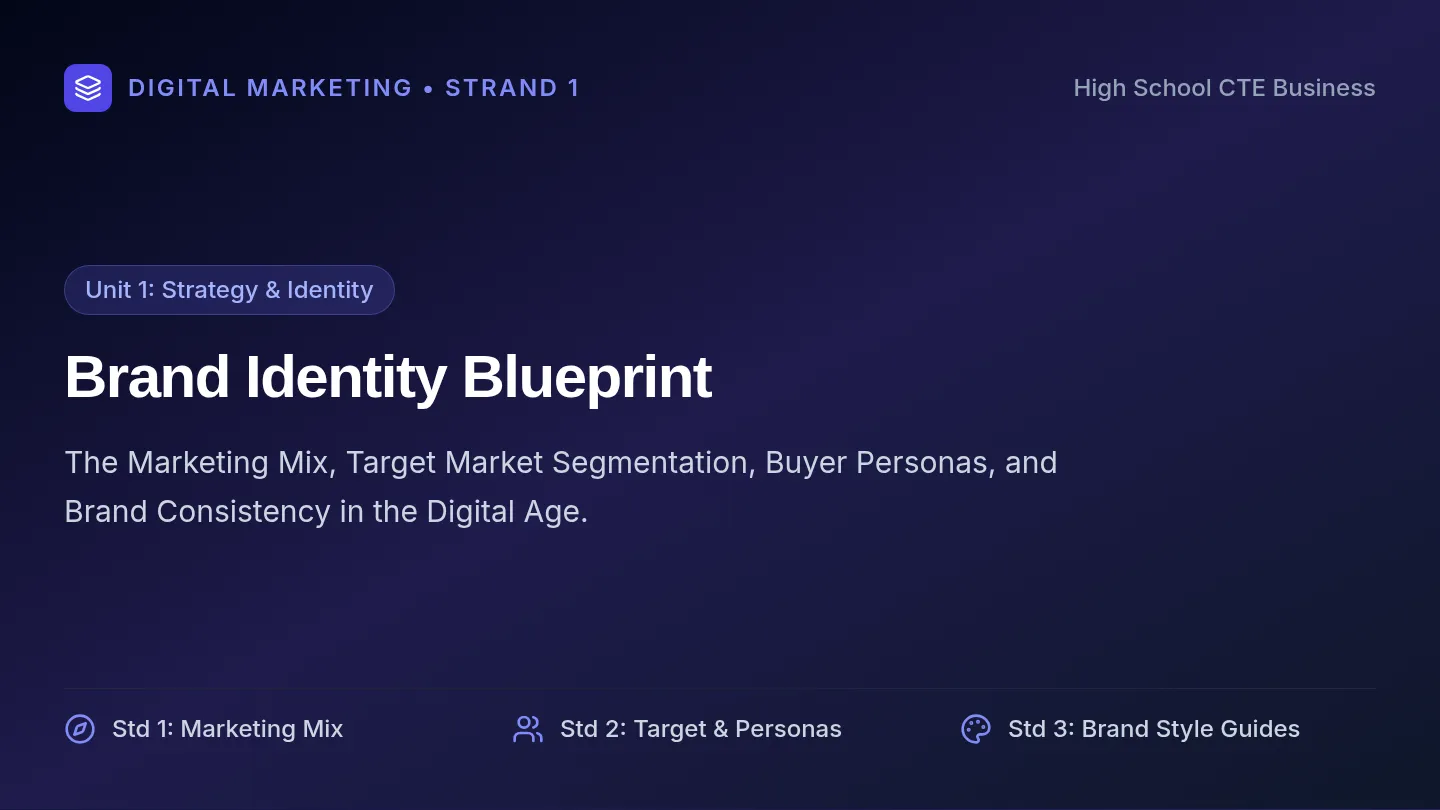
A comprehensive high school unit covering Utah Digital Marketing Strand 1: the marketing mix, market segmentation, buyer personas, branding identity, and style guides.

M

Mike.Hale

7
European Economy Lesson Plan

European Economy Lesson Plan

A comprehensive teacher lesson plan and facilitation guide for a 45-60 minute 6th-grade social studies lesson on European economic systems, trade barriers, and factors of economic growth. It includes standards alignment, pacing, scaffolding, discussion stems, and common misconceptions.

Lenny Avatar
Lenny