Lenny.com
Explore
Create
ActivitiesNewMathEnglish Language ArtsScience & EngineeringSocial StudiesGlobal LanguagesHealth & Physical EducationSpecial EducationCounseling & Life SkillsArts & CreativityESL
Lenny.com
Lenny.com
Explore
Create
ActivitiesNewMathEnglish Language ArtsScience & EngineeringSocial StudiesGlobal LanguagesHealth & Physical EducationSpecial EducationCounseling & Life SkillsArts & CreativityESL
Lenny.com
Lenny.com

Solutions

Lenny for EducatorsLenny for SchoolsLenny for Districts

Product

ExploreSign inCreateSupportAbout

Resources

Getting startedMTSS Acceleration Program

© 2026 Lenny Learning Inc.

TermsPrivacyAccessibility
LinkedInInstagramX
Lenny
Social StudiesSocial Studies PracticesLocation WordsMapsOrder EventsChronology and CausationEvaluating SourcesHistorical ThinkingGeography, Humans, & the EnvironmentAmerican Symbols and LandmarksCitiesStatesState CapitalsRegions of the United StatesGeographic SkillsPhysical GeographyHuman GeographyRegional GeographyGeography of AfricaGeography of AsiaGeography of EuropeGeography of OceaniaGeography of the AmericasSociety and Environment of EuropeSociety and Environment of AsiaSociety and Environment of The AmericasSociety and Environment of the Middle EastSociety and Environment of AfricaHistoryPrehistoryComparing Ancient River CivilizationsAncient MesopotamiaAncient Egypt and KushAncient South AsiaEarly ChinaGreeceRome and the Byzantine EmpireAncient World HistoryNative Peoples of North AmericaNative Peoples of Mesoamerica and South AmericaAfrican EmpiresMedieval AsiaMedieval EuropeThe Silk RoadMedieval HistoryIslamic EmpiresWorld ReligionsRenaissance PeriodAge of ExplorationThe Thirteen ColoniesThe American RevolutionUS History Early RepublicFounding of the United StatesUS History AntebellumUS Civil WarReconstruction PeriodThe Gilded AgeUS ImperialismWorld ImperialismWorld War IUS History 1920sGreat DepressionWorld War IIThe Cold WarUS History 1950-60sUS History 1960s-70sWorld History 20th CenturyContemporary US HistoryContemporary World HistoryHolidaysCivics and GovernmentCitizenshipGovernment FoundationsThe ConstitutionUS ConstitutionExecutive BranchLegislative BranchJudicial BranchState and LocalPolitical ParticipationPublic PolicyPolitical SystemsPower and AuthoritySocial MovementsDefining DevianceTheories of DevianceCrime and Criminal JusticeEconomicsBasic Economic PrinciplesSupply and DemandWhat is MoneyEconomic FundamentalsMicroeconomicsMacroeconomicsBanking and FinanceEconomic SystemsGlobal EconomicsCorporations and PowerThe Changing WorkplaceUnemployment and LaborClass and InequalitySocial MobilityGlobal InequalityPsychologyHistory of PsychologyPsychology as a ScienceBrain and Nervous SystemNeuroscience and BehaviorGenetics and BehaviorSleep and ConsciousnessSensory ProcessesPerceptual OrganizationClassical ConditioningOperant ConditioningObservational LearningCognitive LearningMemory ProcessesThinking and Problem SolvingLanguage and CognitionTheories of MotivationStress and CopingPrenatal and Infant DevelopmentChildhood DevelopmentAdolescent DevelopmentAdulthood and AgingSelf and IdentitySocial CognitionSocial InfluenceAttraction and RelationshipsGroup BehaviorPrejudice and DiscriminationAnxiety and Mood DisordersClinical PsychologyForensic PsychologyPhilosophy & EthicsIntroduction to PhilosophyMajor Philosophers & IdeasMind and Body ProblemFree Will vs DeterminismEthics & MoralityReligion & PhilosophyPolitical Philosophy

Gem State Journey

A colorful history lesson introducing 2nd and 3rd graders to Idaho's exciting past, from Native American tribes and Lewis and Clark to the Oregon Trail, the Gold Rush, and becoming the 43rd state. Students engage through an illustrated slide deck, an accessible reading booklet, a fill-in-the-blanks worksheet, and teacher facilitation resources.

ARAlexander Rhea

🥾 Walking the Trail Children and adults walked 15 to 20 miles each day through thick basalt dust. You can still see their deep wagon ruts pressed into Idaho rock today!

Chapter 4

Gold Rush Fever! (1860)

Shiny Discovery

In 1860, prospector E.D. Pierce discovered gold in northern Idaho. Soon, fortune hunters from around the world rushed in with iron pans and picks. "Boomtowns" sprang up in weeks with wooden hotels, general stores, and blacksmith shops.

🪙

So many people moved into the area that President Abraham Lincoln signed an official document creating the Idaho Territory in 1863!

Chapter 5

State Number 43! (July 3, 1890)

July 3, 1890

On July 3, 1890, Idaho officially became the 43rd state of the United States. Idaho is nicknamed "The Gem State" because rich minerals and gemstones—especially the rare purple Star Garnet—shine in its earth.

🏛️ Capital Boise

💎 Gem Star Garnet

🥔 Famous For Russet Potato

🌲 Tree White Pine

Gem State Journey • Student Reader Page 2 of 2 Now grab your pencil for the Explorer Worksheet! ➔

TRUE FALSE

Gem State Journey • Worksheet Page 2 of 2 ⭐ Great job, Junior Historian! ⭐

4.

5. July 3, 1890: 43rd state

6. capital city: Boise

Activity 2: Picture Match Key

  • • A. Covered Wagon: Pulled by oxen 2,000 miles to reach the West.
  • • B. Spotted Appaloosa: Fast, intelligent horse bred by the Nez Perce.
  • • C. Gold Pan: Swirled in rivers to find shiny metal flakes.
  • • D. Star Garnet: Rare purple jewel buried in Idaho hills.

Activity 5: True / False Key

1. 43rd state on July 3, 1890 ➔ TRUE

2. Pioneers crossed in airplanes ➔ FALSE (Traveled by wagon/foot)

3. Nicknamed "The Gem State" ➔ TRUE

Activity 3 & 4 Evaluation Guide

Wagon Packing: Accept any logical explanation (e.g., "Flour to make bread so we don't starve", "Ax to chop firewood and fix wagon wheels", "Quilt to stay warm in freezing mountain nights").

Stamp Design: Assess effort and historical connection (symbols like potatoes, mountains, river salmon, gems, horses, or wagons).

Differentiation & Support Strategies

For Developing Readers / ELL: Provide a highlighted word bank. Pair with a reading buddy for choral reading of the Gem State Reader. Focus on the picture-matching activity first.

For Advanced Learners / Early Finishers: Have students write a 3-sentence diary entry from the viewpoint of a pioneer child seeing Shoshone Falls or panning for gold in Idaho.

Gem State Journey • Teacher Facilitation Guide Page 2 of 2 ⭐ Prepared for 2nd & 3rd Grade Classroom Success ⭐
You might also like

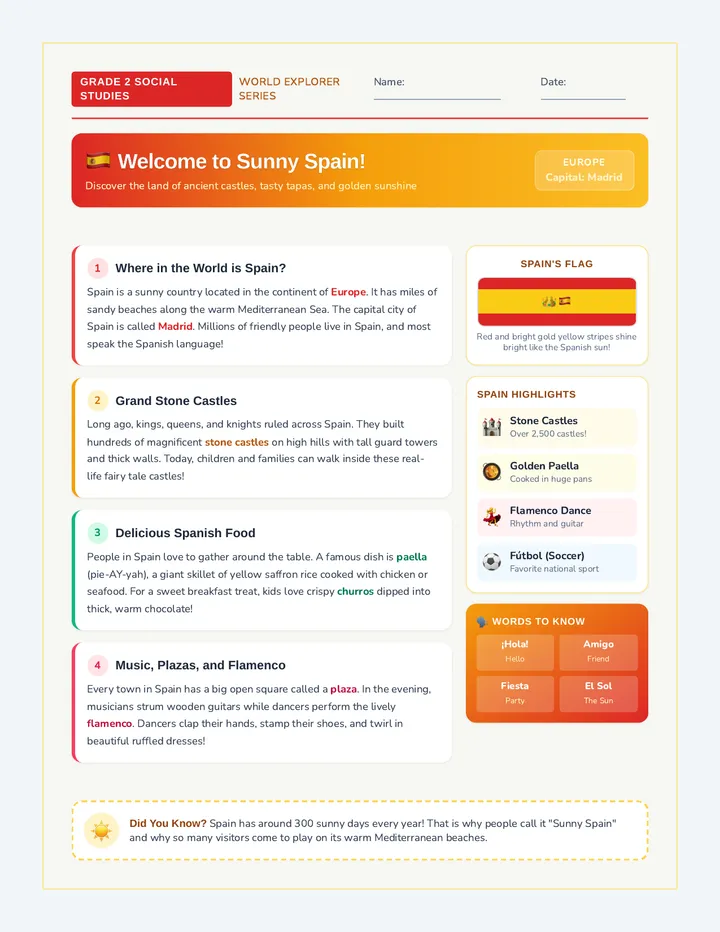
Sunny Spain Reading Passage

Spain Adventures

A rich 2nd-grade social studies and reading unit exploring the geography, culture, foods, and daily life of Spain through non-fiction reading, an engaging fiction story about Spanish children, comprehension practice, guided art, and vocabulary puzzles.

C

Claudia.Seidle

7
Constitution Blueprint Reading Worksheet

Living Blueprint

A 6th-grade civics lesson introducing the structure, checks and balances, and modern application of the U.S. Constitution through close reading and text-based analysis.

L

Laura.Deaton

2
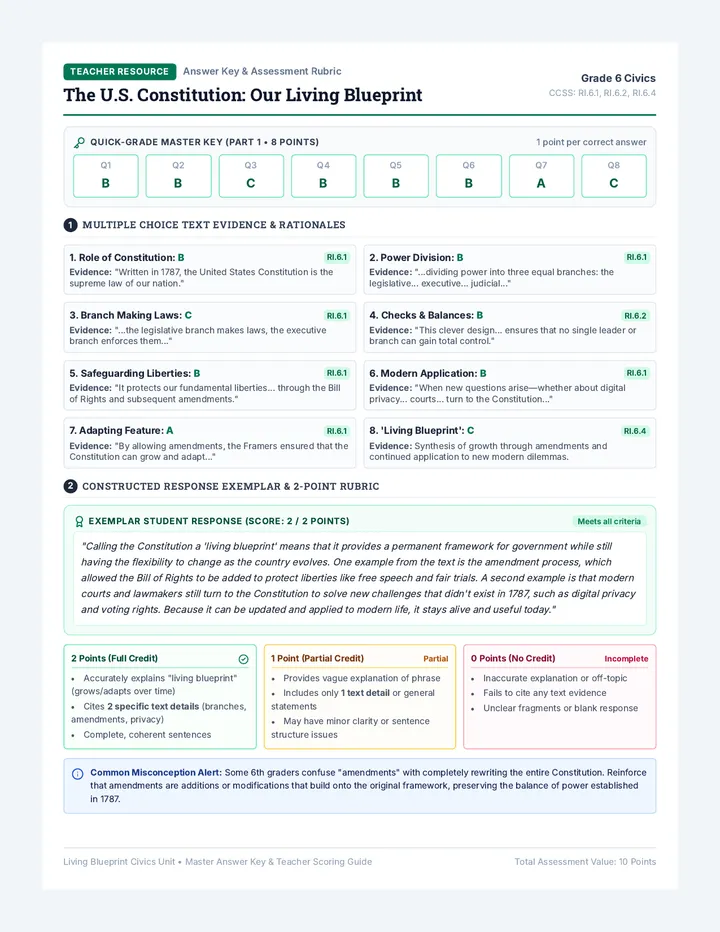
Constitution Blueprint Answer Key

Constitution Blueprint Answer Key

A teacher answer key and scoring guide for the Constitution Blueprint reading worksheet, featuring a quick-grade key, text-evidence rationales for all eight multiple-choice items, an exemplar constructed response, and a 2-point scoring rubric.

L

Laura.Deaton

Business Blueprint Slides

Market Makers

A hands-on introductory curriculum that equips students with foundational business acumen and marketing savvy through practical entrepreneurial challenges, financial basics, and campaign design.

D

despinoza

9
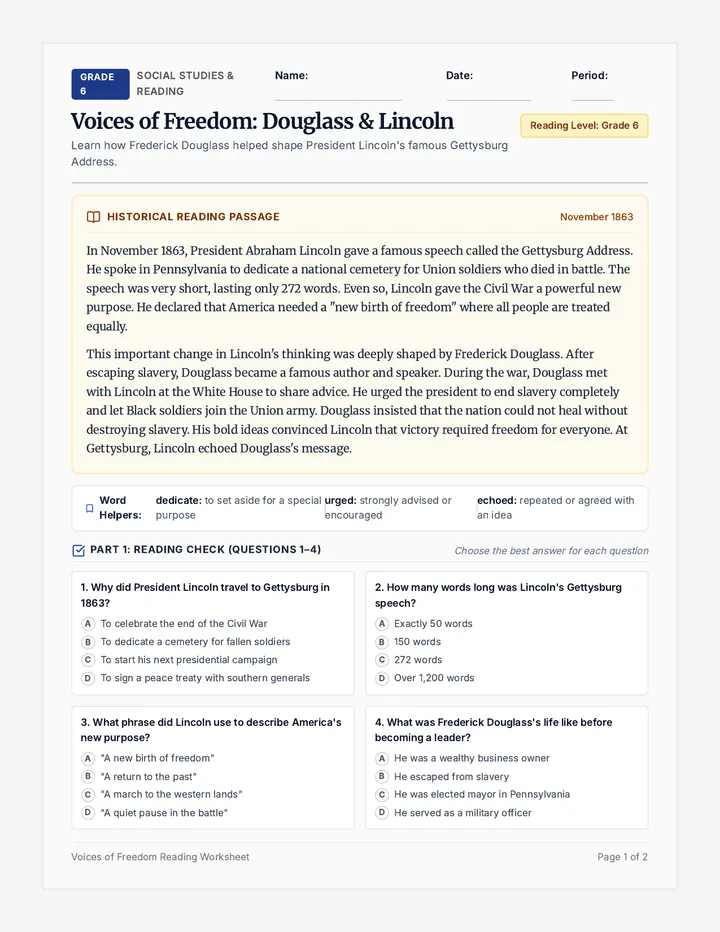
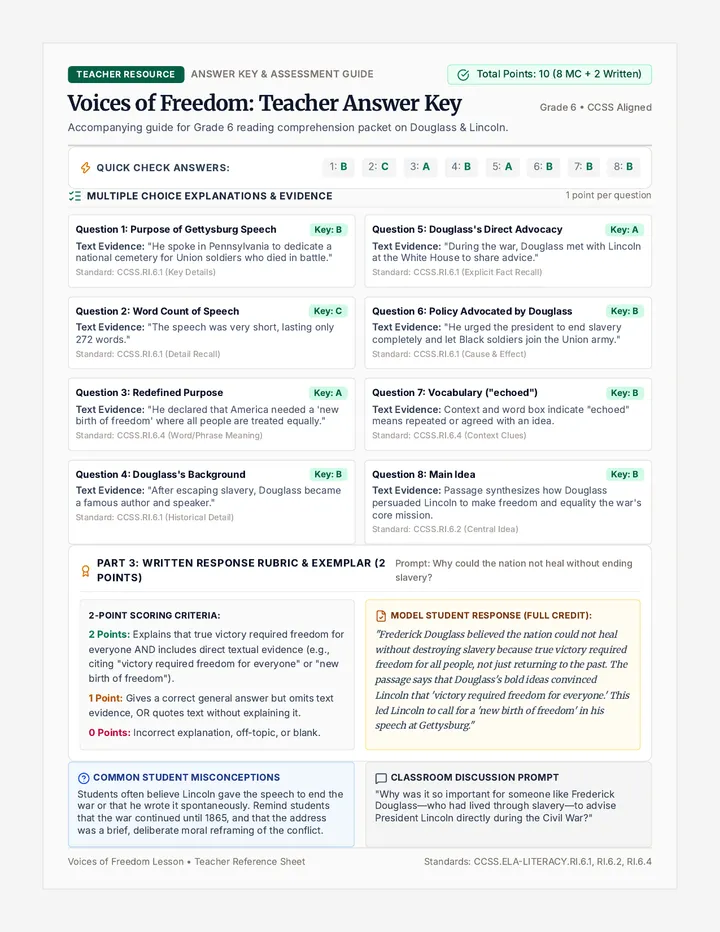
Gettysburg Voices Reading Worksheet

Voices of Freedom

A 6th-grade historical reading and comprehension lesson exploring how Frederick Douglass influenced Abraham Lincoln's Gettysburg Address and the moral reframing of the Civil War.

L

Laura.Deaton

2
Constitution Blueprint Reading Worksheet

Constitution Blueprint Reading Worksheet

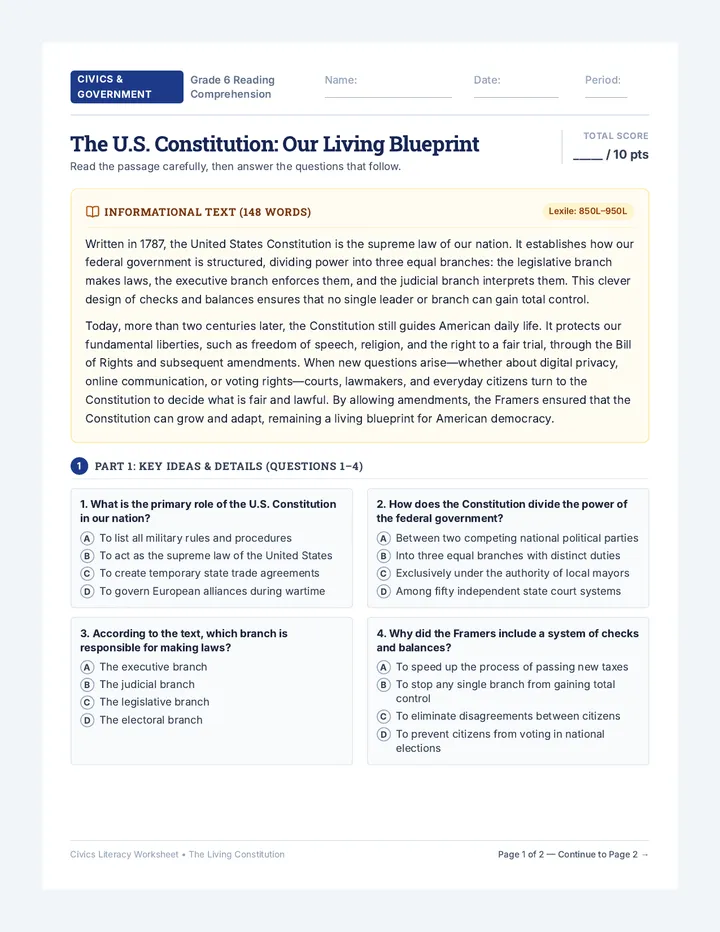
A 6th-grade reading comprehension worksheet featuring a 148-word passage on the U.S. Constitution's structure and modern application. Includes eight multiple-choice questions and a scaffolded constructed written response with a student self-check checklist.

L

Laura.Deaton

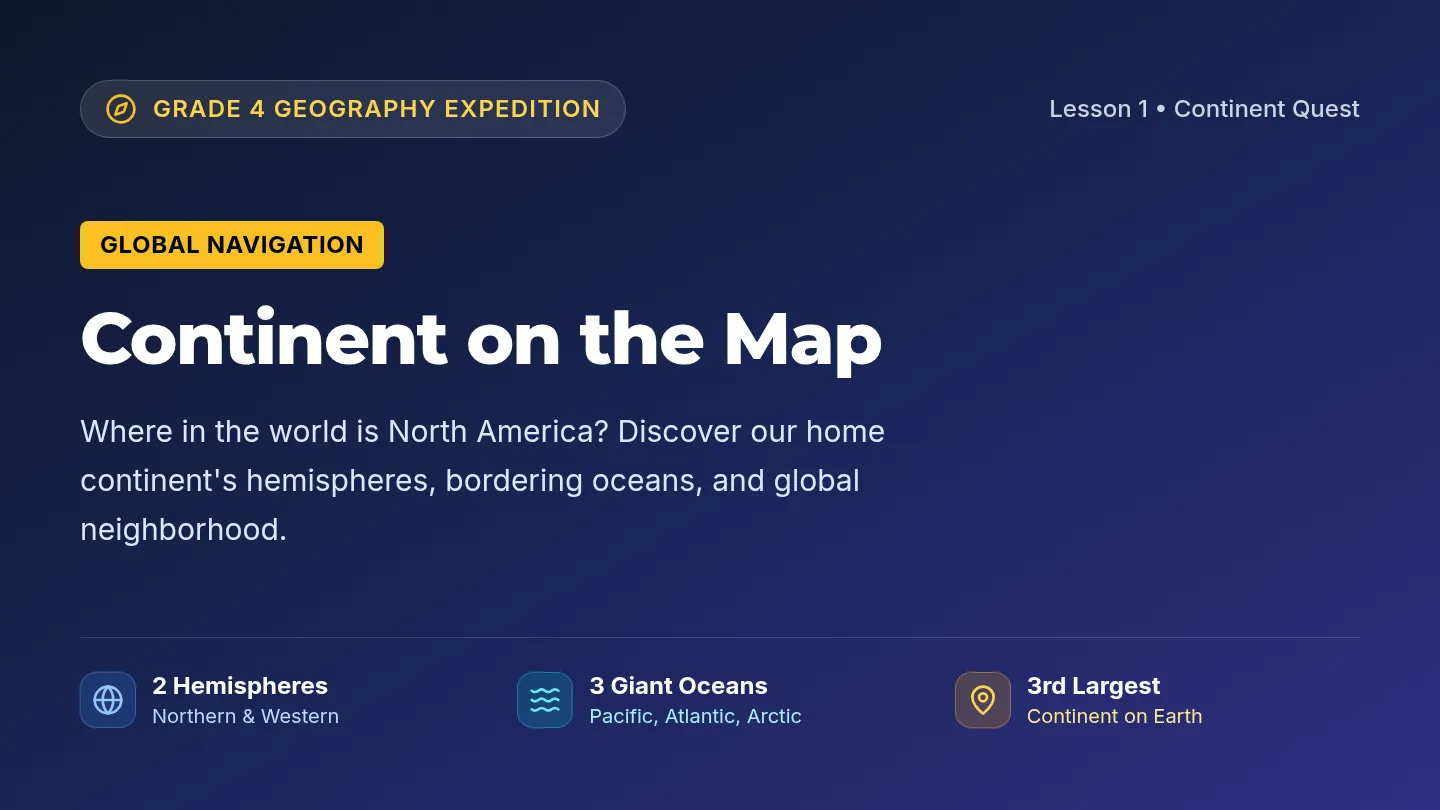
Hemisphere Hunt Slides

Continent Quest

A 4th-grade geography sequence introducing students to North America through map navigation, regional comparisons, and landform exploration. Students investigate hemisphere locations, the three major nations, and iconic geographic features across the continent.

E

ehdunn

9
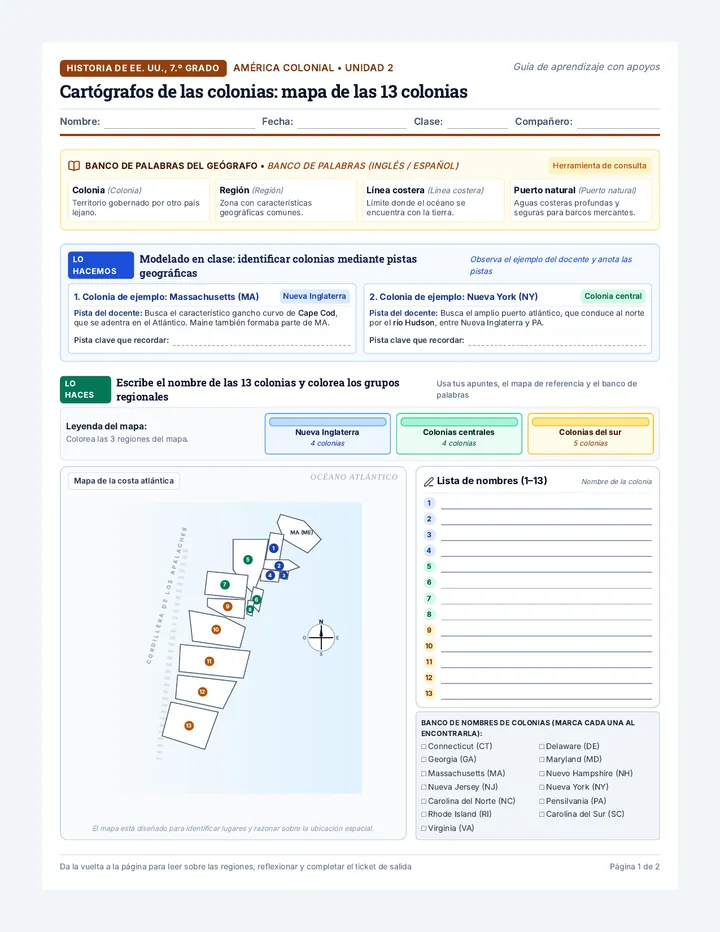
Colony Cartographers Scaffolded Worksheet

Colony Cartographers

A 7th-grade social studies lesson on the geography, regional divisions, and economies of the Thirteen American Colonies featuring map modeling, hands-on labeling, a regional reading passage, and formative checks.

AN

Austin Nowak

2
Gettysburg Voices Answer Key

Gettysburg Voices Answer Key

A comprehensive teacher answer key and scoring guide providing correct responses, textual citations, a 2-point written response rubric, and teaching notes for the 6th grade Gettysburg reading worksheet.

L

Laura.Deaton

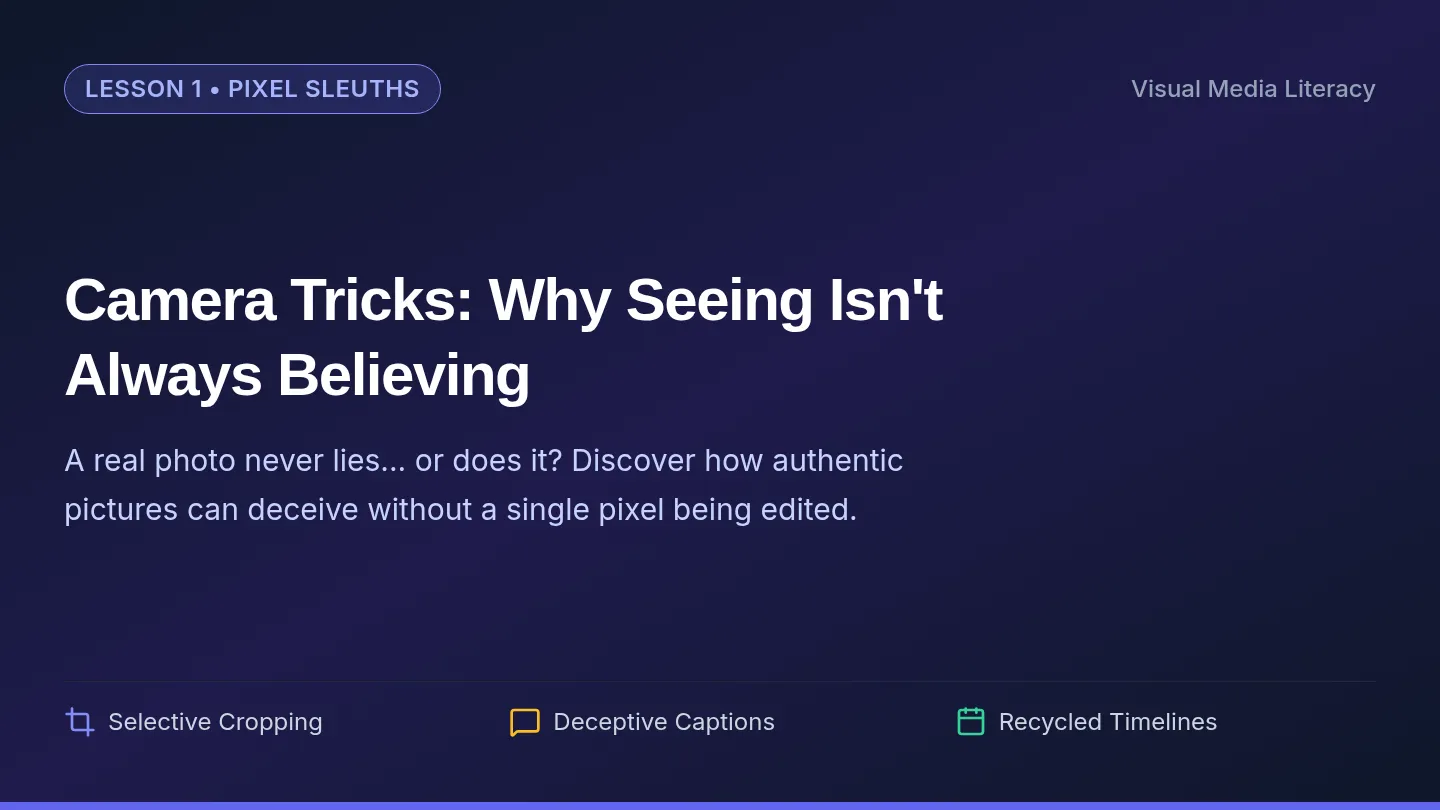
Camera Tricks Slides

Pixel Sleuths

A 3-part media literacy unit for middle school students on analyzing visual media, spotting manipulated photos, and verifying online sources using lateral reading.

Lenny Avatar
Lenny
9
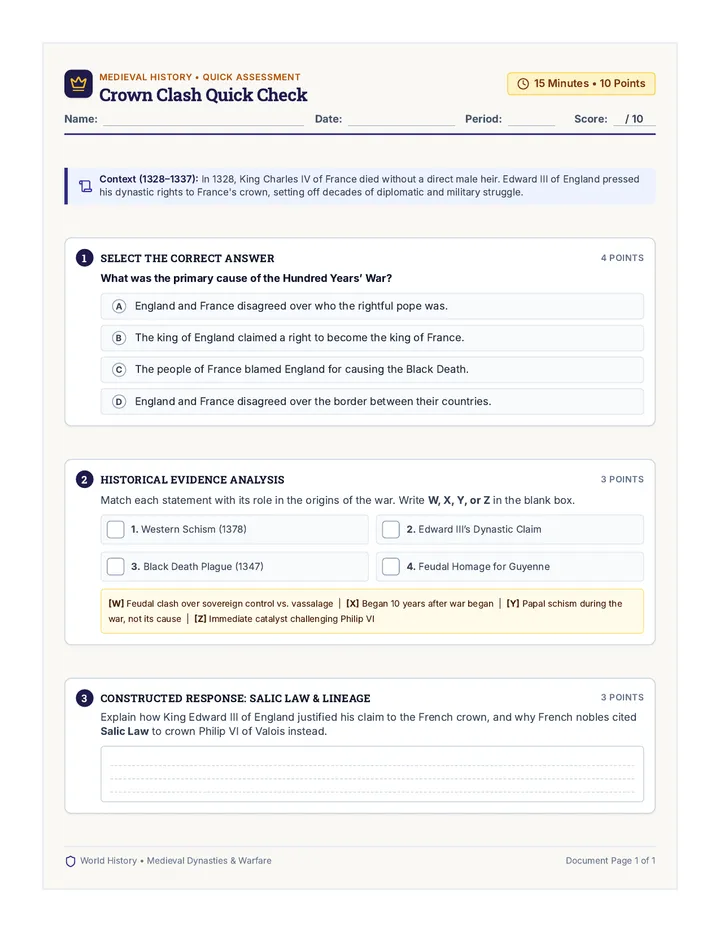
Crown Clash Quick Check

Crown Clash

A targeted secondary history lesson examining the dynastic and feudal origins of the Hundred Years' War (1337–1453). Students analyze the primary catalyst—Edward III's claim to the French throne—alongside contributing geopolitical tensions including Salic Law and vassalage in Gascony.

Lenny Avatar
Lenny
2
Gettysburg Voices Reading Worksheet

Gettysburg Voices Reading Worksheet

A two-page 6th grade reading comprehension packet featuring an accessible 146-word passage on the Gettysburg Address and Frederick Douglass, followed by eight multiple-choice questions, vocabulary support, and a text-evidence writing prompt.

L

Laura.Deaton