Lenny.com
Explore
Create
ActivitiesNewMathEnglish Language ArtsScience & EngineeringSocial StudiesGlobal LanguagesHealth & Physical EducationSpecial EducationCounseling & Life SkillsArts & CreativityESL
Lenny.com
Lenny.com
Explore
Create
ActivitiesNewMathEnglish Language ArtsScience & EngineeringSocial StudiesGlobal LanguagesHealth & Physical EducationSpecial EducationCounseling & Life SkillsArts & CreativityESL
Lenny.com
Lenny.com

Solutions

Lenny for EducatorsLenny for SchoolsLenny for Districts

Product

ExploreSign inCreateSupportAbout

Resources

Getting startedMTSS Acceleration Program

© 2026 Lenny Learning Inc.

TermsPrivacyAccessibility
LinkedInInstagramX
Lenny
Social StudiesSocial Studies PracticesLocation WordsMapsOrder EventsChronology and CausationEvaluating SourcesHistorical ThinkingGeography, Humans, & the EnvironmentAmerican Symbols and LandmarksCitiesStatesState CapitalsRegions of the United StatesGeographic SkillsPhysical GeographyHuman GeographyRegional GeographyGeography of AfricaGeography of AsiaGeography of EuropeGeography of OceaniaGeography of the AmericasSociety and Environment of EuropeSociety and Environment of AsiaSociety and Environment of The AmericasSociety and Environment of the Middle EastSociety and Environment of AfricaHistoryPrehistoryComparing Ancient River CivilizationsAncient MesopotamiaAncient Egypt and KushAncient South AsiaEarly ChinaGreeceRome and the Byzantine EmpireAncient World HistoryNative Peoples of North AmericaNative Peoples of Mesoamerica and South AmericaAfrican EmpiresMedieval AsiaMedieval EuropeThe Silk RoadMedieval HistoryIslamic EmpiresWorld ReligionsRenaissance PeriodAge of ExplorationThe Thirteen ColoniesThe American RevolutionUS History Early RepublicFounding of the United StatesUS History AntebellumUS Civil WarReconstruction PeriodThe Gilded AgeUS ImperialismWorld ImperialismWorld War IUS History 1920sGreat DepressionWorld War IIThe Cold WarUS History 1950-60sUS History 1960s-70sWorld History 20th CenturyContemporary US HistoryContemporary World HistoryHolidaysCivics and GovernmentCitizenshipGovernment FoundationsThe ConstitutionUS ConstitutionExecutive BranchLegislative BranchJudicial BranchState and LocalPolitical ParticipationPublic PolicyPolitical SystemsPower and AuthoritySocial MovementsDefining DevianceTheories of DevianceCrime and Criminal JusticeEconomicsBasic Economic PrinciplesSupply and DemandWhat is MoneyEconomic FundamentalsMicroeconomicsMacroeconomicsBanking and FinanceEconomic SystemsGlobal EconomicsCorporations and PowerThe Changing WorkplaceUnemployment and LaborClass and InequalitySocial MobilityGlobal InequalityPsychologyHistory of PsychologyPsychology as a ScienceBrain and Nervous SystemNeuroscience and BehaviorGenetics and BehaviorSleep and ConsciousnessSensory ProcessesPerceptual OrganizationClassical ConditioningOperant ConditioningObservational LearningCognitive LearningMemory ProcessesThinking and Problem SolvingLanguage and CognitionTheories of MotivationStress and CopingPrenatal and Infant DevelopmentChildhood DevelopmentAdolescent DevelopmentAdulthood and AgingSelf and IdentitySocial CognitionSocial InfluenceAttraction and RelationshipsGroup BehaviorPrejudice and DiscriminationAnxiety and Mood DisordersClinical PsychologyForensic PsychologyPhilosophy & EthicsIntroduction to PhilosophyMajor Philosophers & IdeasMind and Body ProblemFree Will vs DeterminismEthics & MoralityReligion & PhilosophyPolitical Philosophy

Founding Documents Showdown

A comparative study of the Articles of Confederation and the U.S. Constitution, featuring comprehensive English and Spanish teacher answer keys and primary source analysis guides.

Founding Documents Showdown

A comparative study of the Articles of Confederation and the U.S. Constitution, featuring comprehensive English and Spanish teacher answer keys and primary source analysis guides.

• Artículos de la Confederación (Unicameral / 1 cámara):

Evidencia exacta (Artículo V, ln. 5–6 y 10–11): «...para reunirse en una cámara del Congreso...» y «...cada estado tendrá un voto.»

• Constitución (Bicameral / 2 cámaras):

Evidencia exacta (Artículo I):
- Sec. I, ln. 2–4: «...un Congreso de los Estados Unidos, que estará compuesto por un Senado y una Cámara de Representantes.»
- Sec. II, ln. 7–8: «...según su respectivo Número...» (por población en la Cámara).
- Sec. III, ln. 19–24: «...dos Senadores de cada Estado... y cada Senador tendrá un voto» (Senado).

7. ¿Cuáles son las ventajas de una estructura bicameral en comparación con una unicameral?

1. Gran Compromiso (Equilibrio de estados): Los estados poblados tienen voz proporcional en la Cámara de Representantes, mientras los estados pequeños tienen voto igual en el Senado (2 senadores por estado).

2. Frenos y contrapesos legislativos: Ambas cámaras deben revisar y aprobar el mismo proyecto de ley, impidiendo leyes impulsivas.

Poder Ejecutivo y Judicial (Citas y Evidencias)

8. Según la línea 1 del artículo II fracción I, ¿qué facultades le otorga la Constitución al Presidente? ¿Qué implica?

Art. II Sec. I, ln. 1

Evidencia textual exacta (Art. II, Sec. I, ln. 1): «El Poder Ejecutivo recaerá en un Presidente de los Estados Unidos de América.»

Implicación: Le otorga la dirección del poder ejecutivo (y en Sec. II ln. 4–7: «Comandante en Jefe» y celebrar tratados). Implica una sola persona al frente para hacer cumplir las leyes con firmeza y rapidez.

9. Los Artículos no establecen poder ejecutivo y dieron esos poderes al Congreso. ¿Sugiere derechos de los estados o poder federal? ¿Por qué?

Respuesta: Sugiere Derechos de los estados. ¿Por qué?: Temían una monarquía similar al Rey Jorge III. Por eso dispersaron el poder entre los delegados estatales del Congreso en vez de crear una figura ejecutiva individual.

10. ¿Dónde reside el poder judicial?

Art. III, ln. 1

Evidencia (Art. III, ln. 1):
«...recaerá en una sola corte suprema...»

Reside en una sola Corte Suprema nacional.

11. Ventajas de una sola Corte Suprema:

Ventajas: Resuelve desacuerdos entre estados de forma neutral y asegura que las leyes nacionales tengan el mismo sentido en todos los estados.

Guía de Análisis • Evidencias y Líneas Textuales Exactas Página 2 de 3

Sistemas de Impuestos y Matriz Comparativa Maestra

Citas textuales idénticas del Artículo VIII y Artículo I

Página 3 • Clave Oficial

Preguntas de Análisis sobre Impuestos (Citas y Líneas)

12. ¿En qué se diferencia el sistema de recaudación de impuestos según los Artículos frente a la Constitución?

• Artículos de la Confederación (Recaudan los estados, no el Congreso):

Evidencia exacta (Artículo VIII, ln. 12–15): «Los impuestos para pagar esa proporción serán establecidos y recaudados por la autoridad y dirección de las legislaturas de los distintos estados...»

• Constitución (Poder directo del Congreso federal):

Evidencia exacta (Artículo I - Sección VIII, ln. 1–2): «El Congreso tendrá poder para establecer y recaudar impuestos...»

13. ¿Qué sistema trata a los estados igual?

ln. 7–8

Documento: La Constitución.

Evidencia exacta (Art. I - Sec. VIII, ln. 7–8):
«...pero todos los derechos [impuestos]... e impuestos especiales [impuestos sobre bienes] serán uniformes en todo Estados Unidos.»

14. ¿Qué sistema hace que unos valgan más?

ln. 4–6

Documento: Los Artículos.

Evidencia exacta (Art. VIII, ln. 4–6):
«...en proporción al valor de todas las tierras dentro de cada estado...»

Matriz Comparativa Maestra (Citas y Líneas de Referencia)

TemaArtículos de la Confederación (1781)Constitución de EE. UU. (1787)
Soberanía«Cada estado conserva su soberanía...» (Art. II, ln. 3)«...formar una Unión más perfecta...» (Preámbulo, ln. 2)
CongresoUnicameral: «...cada estado tendrá un voto.» (Art. V, ln. 11)Bicameral: Cámara (población) + Senado (2 votos por estado)
Poder EjecutivoSin Presidente; poderes asignados al Congreso«...recaerá en un Presidente...» (Art. II, Sec. I, ln. 1)
Poder JudicialSin tribunales federales; solo cortes estatales«...recaerá en una sola corte suprema...» (Art. III, ln. 1)
ImpuestosRecaudados por legislaturas estatales (Art. VIII, ln. 13)«El Congreso tendrá poder para... recaudar impuestos» (Art. I)

Guía de Análisis • Evidencias y Líneas Textuales Exactas Página 3 de 3
You might also like

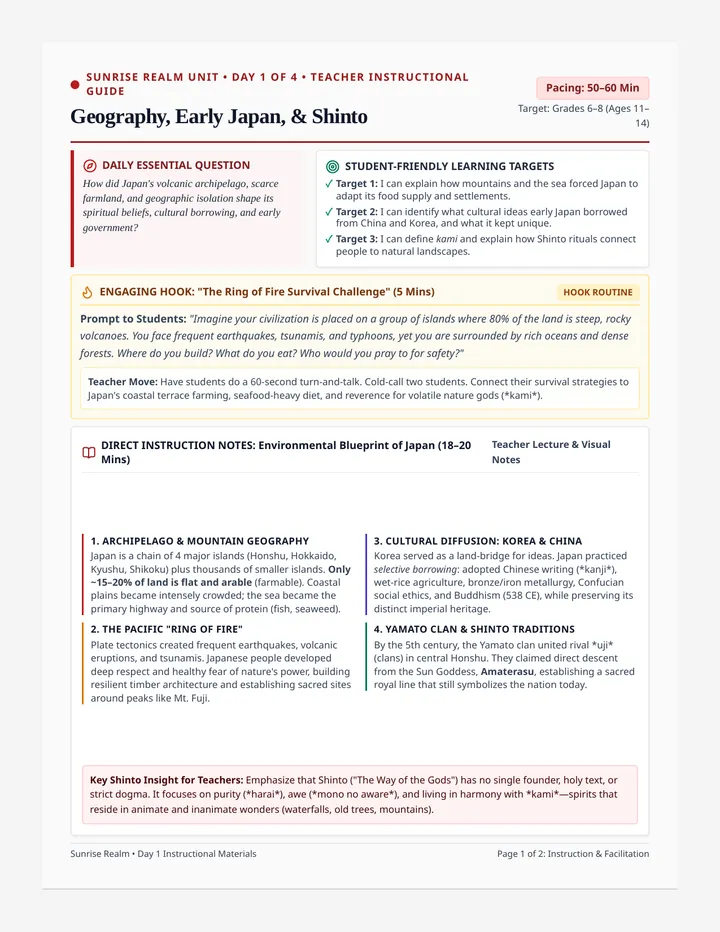
Island Realm Teacher Guide

Sunrise Realm

A comprehensive 4-day middle school social studies unit exploring Ancient and Medieval Japan from geography and Shinto through the Heian Golden Age, feudal samurai society, and the Mongol invasions to Tokugawa isolation.

DB

Danielle Burham

10
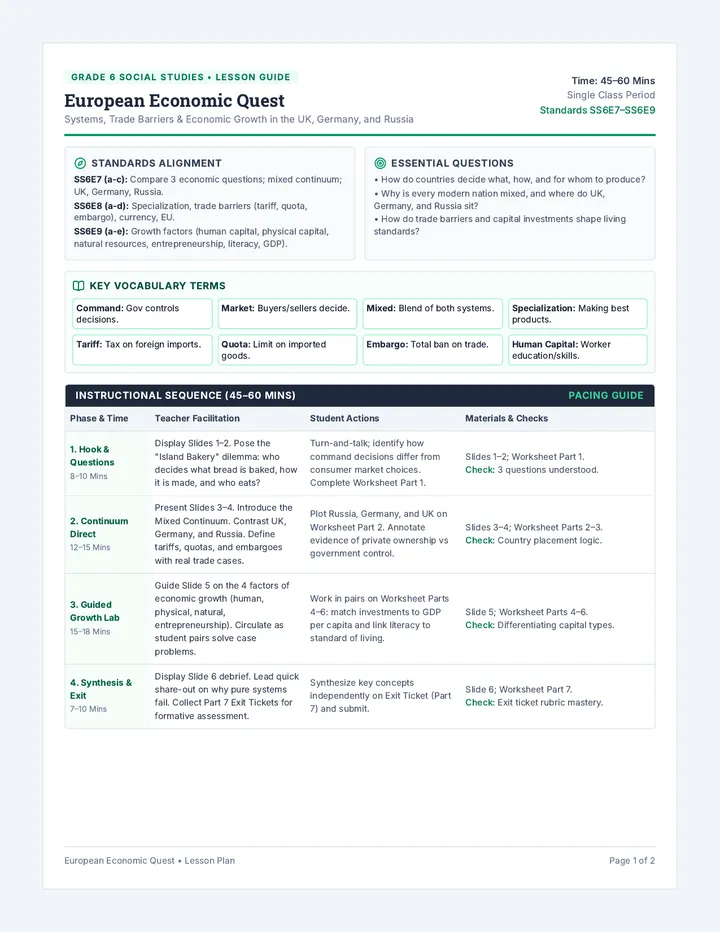
European Economy Lesson Plan

European Economic Quest

A comprehensive 45-60 minute sixth-grade lesson exploring European economic systems, voluntary trade barriers, and factors driving economic growth across the United Kingdom, Germany, and Russia. Students analyze the three fundamental economic questions, plot nations on the economic continuum, evaluate trade policies, and connect investments in capital to gross domestic product.

Lenny Avatar
Lenny
4
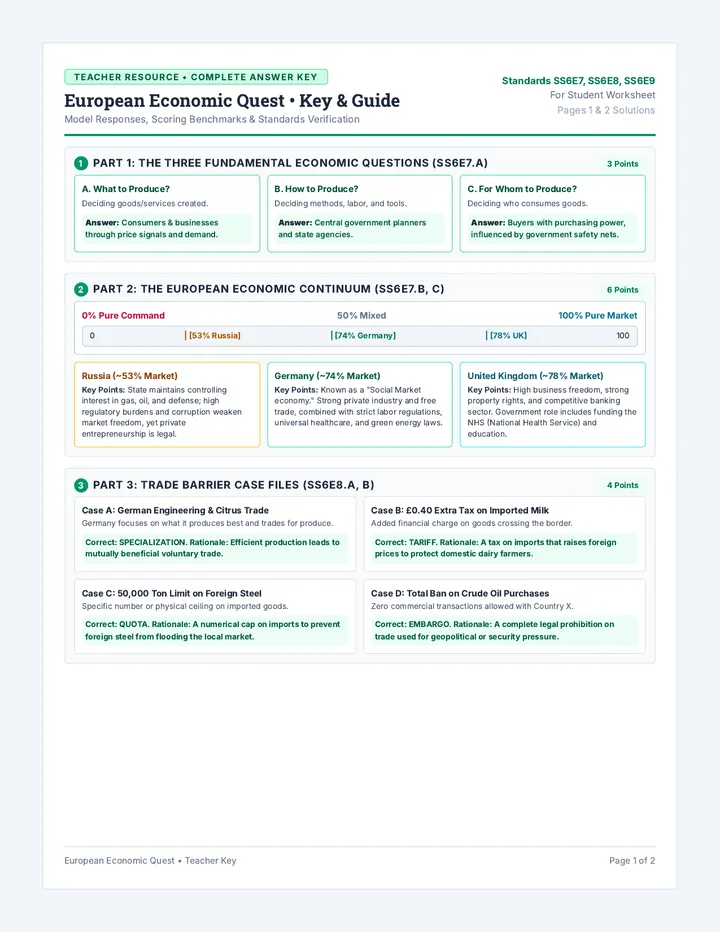
Economy Teacher Key

Economy Teacher Key

A comprehensive 2-page teacher answer key, scoring guide, and model response rubric for the European Economic Quest student investigation worksheet.

Lenny Avatar
Lenny
Business Blueprint Slides

Market Makers

A hands-on introductory curriculum that equips students with foundational business acumen and marketing savvy through practical entrepreneurial challenges, financial basics, and campaign design.

D

despinoza

9
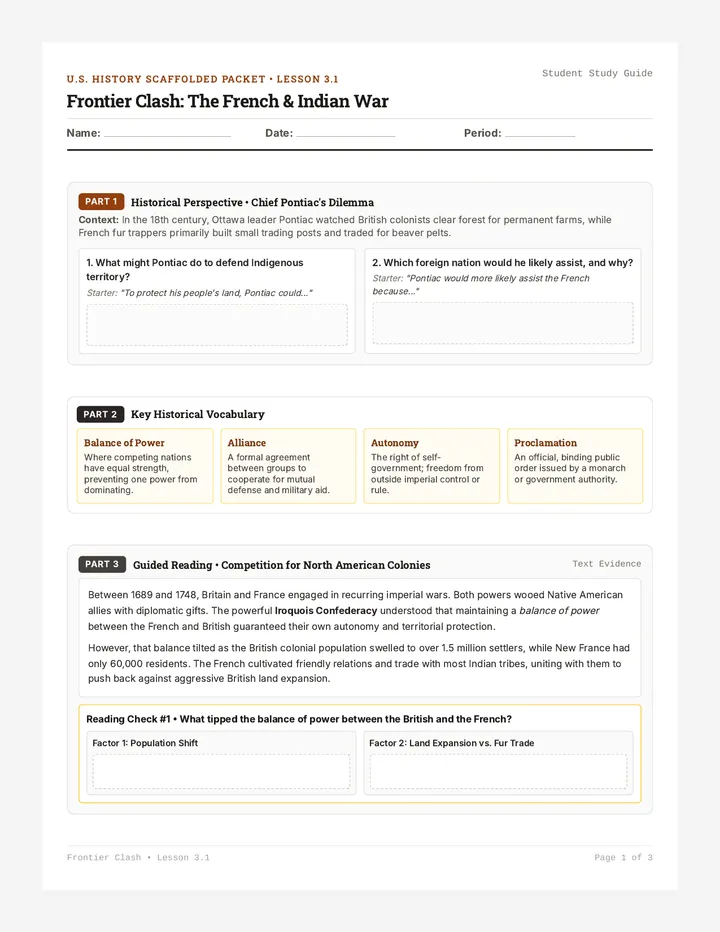
Frontier Clash Scaffolded Worksheet

Frontier Clash

A scaffolded high school history lesson examining the causes, major turning points, and aftermath of the French and Indian War. Students analyze geopolitical rivalries, Native American alliances, Pontiac's Rebellion, and the seeds of colonial tension that followed the Treaty of Paris.

SH

Stacey Hersch

2
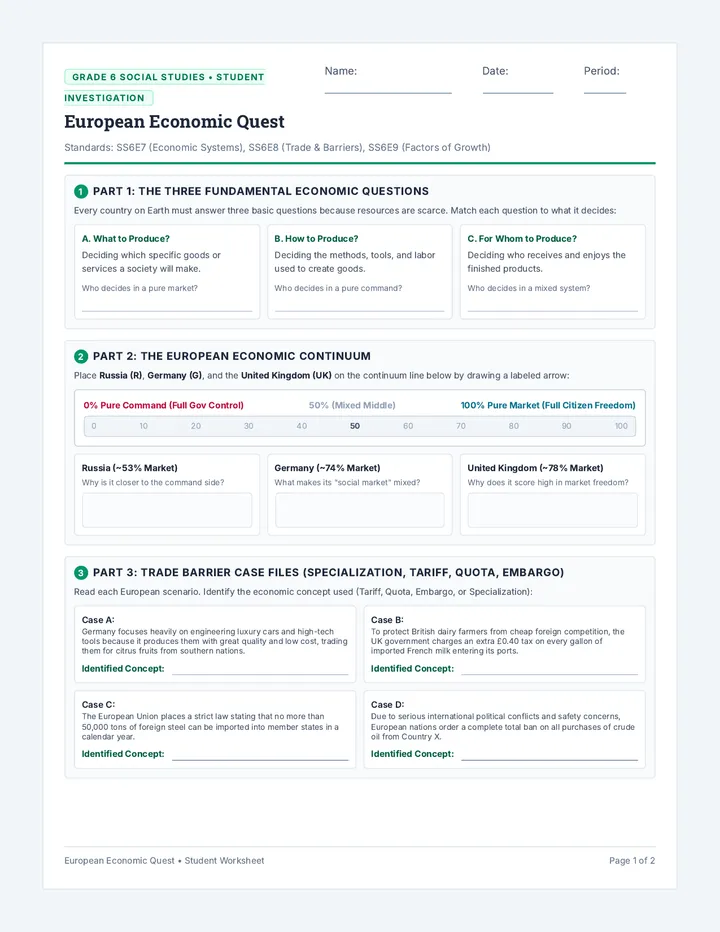
Economy Investigation Worksheet

Economy Investigation Worksheet

A 2-page print-ready student investigation worksheet and guided notes covering the three economic questions, continuum placement of the UK, Germany, and Russia, trade barrier scenario analysis, and factors of GDP growth.

Lenny Avatar
Lenny
Hemisphere Hunt Slides

Continent Quest

A 4th-grade geography sequence introducing students to North America through map navigation, regional comparisons, and landform exploration. Students investigate hemisphere locations, the three major nations, and iconic geographic features across the continent.

E

ehdunn

9
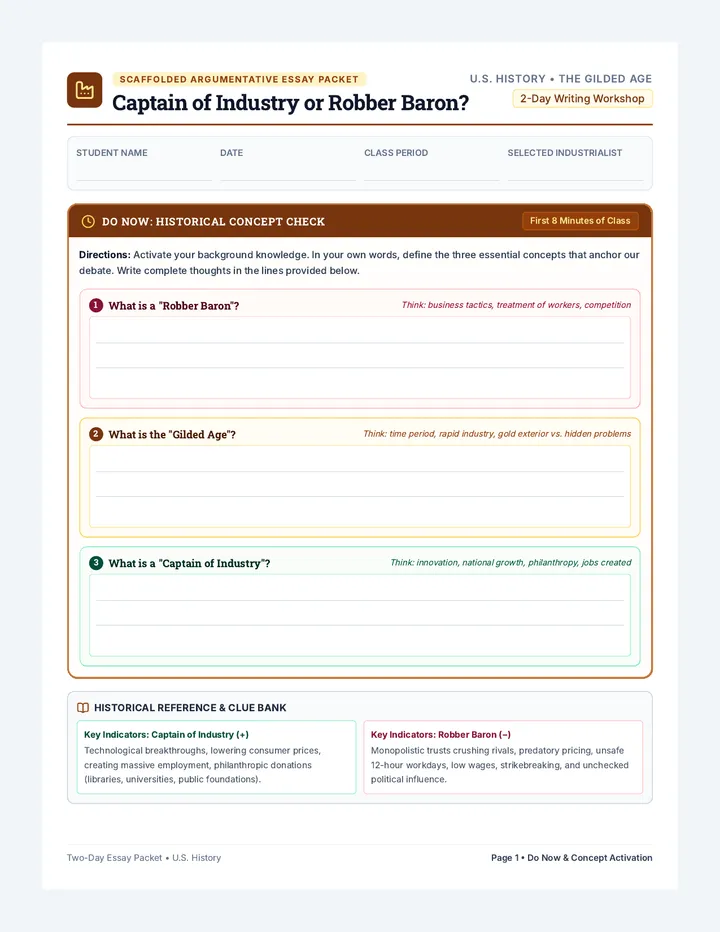
Gilded Titans Essay Packet

Gilded Age Titans

A history lesson exploring whether Gilded Age magnates were Captains of Industry or Robber Barons through debate, scaffolded drafting, and formal essay writing.

JM

Justin Montalvo

2
European Economy Slides

European Economy Slides

An engaging 6-slide visual presentation for Grade 6 social studies comparing economic systems on the mixed continuum, illustrating trade barriers and currency exchange in Europe, and examining the four factors of economic growth across the UK, Germany, and Russia.

Lenny Avatar
Lenny
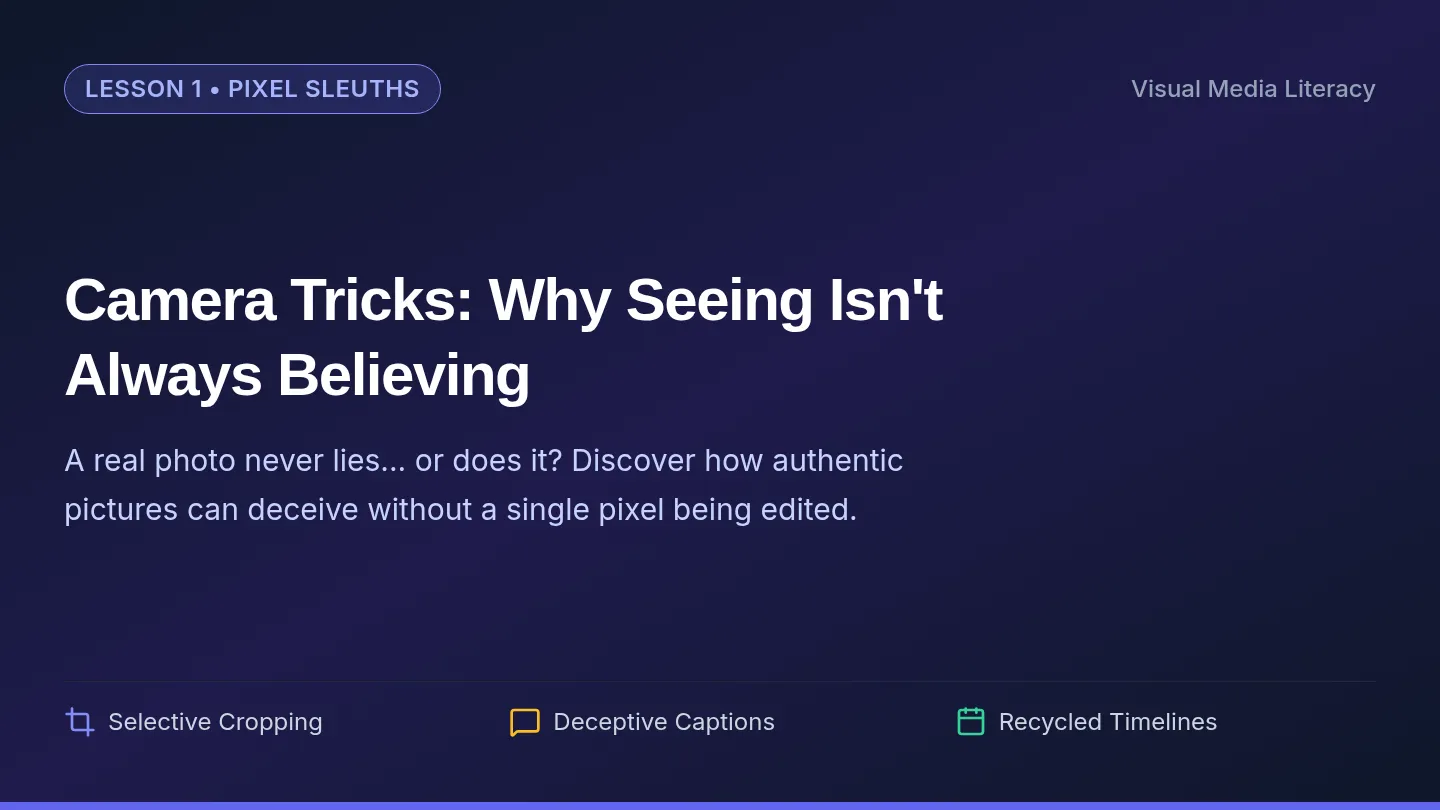
Camera Tricks Slides

Pixel Sleuths

A 3-part media literacy unit for middle school students on analyzing visual media, spotting manipulated photos, and verifying online sources using lateral reading.

Lenny Avatar
Lenny
9
Brand Blueprint Slides

Brand Identity Blueprint

A comprehensive high school unit covering Utah Digital Marketing Strand 1: the marketing mix, market segmentation, buyer personas, branding identity, and style guides.

M

Mike.Hale

7
European Economy Lesson Plan

European Economy Lesson Plan

A comprehensive teacher lesson plan and facilitation guide for a 45-60 minute 6th-grade social studies lesson on European economic systems, trade barriers, and factors of economic growth. It includes standards alignment, pacing, scaffolding, discussion stems, and common misconceptions.

Lenny Avatar
Lenny