Survival Program Teacher Guide Community Survival Programs
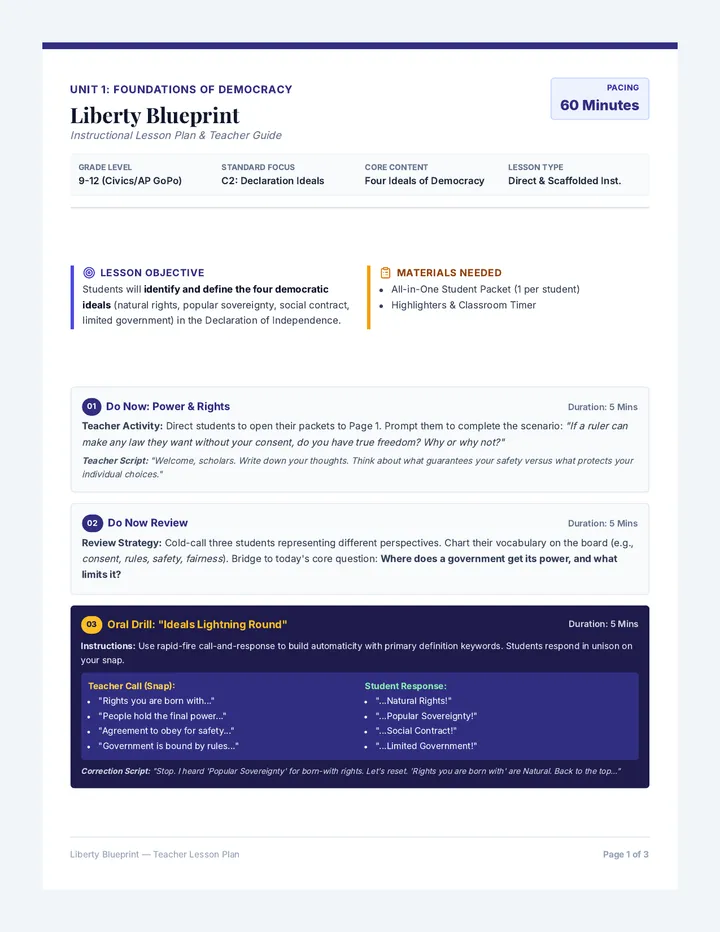
Teacher Facilitation Guide
Grades 11-12
Subject: Black American History / Civics
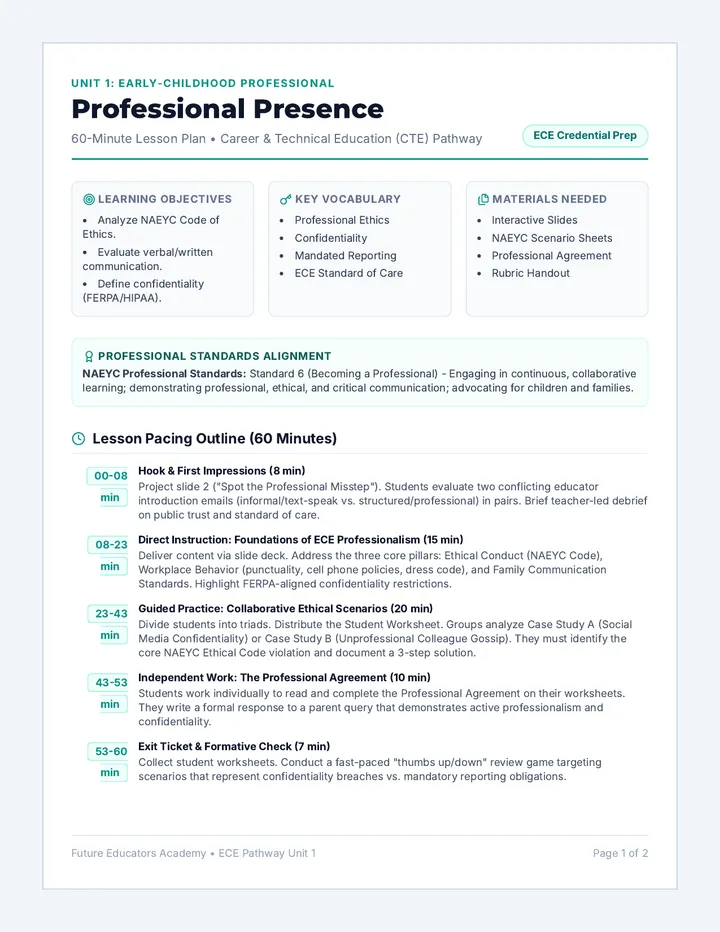
Learning Objective
Students will examine the concept of "Community Survival Programs" and mutual aid as practiced by the Black Panther Party, and apply these principles to design a contemporary service project.
Pacing & Sequence
5 Min
Warm-up: The Breakfast Question
Discussion: Where does your breakfast come from? Who ensures you are fed?
10 Min
Viewing: Community Programs
Watch "Crash Course Black American History #39" (5:27-6:30).
20 Min
Main Activity: Service Learning Design
Students identify a community need and blueprint a "Survival Program."
10 Min
Reflection: The "Dangerous" Meal
Discussing the political implications of radical community care.
Key Terminology
Mutual Aid Voluntary reciprocal exchange of resources and services for mutual benefit. "Solidarity, not charity."Survival Programs Black Panther Party programs (like Free Breakfast) designed to provide for the community's immediate needs while organizing for systemic change.COINTELPRO The FBI's covert operation that surveilled and disrupted political organizations like the BPP.
Teacher Background: The Political Breakfast
It is often surprising to students that the FBI, under J. Edgar Hoover, viewed the Free Breakfast Program as the "greatest threat to internal security." The BPP served as many as 20,000 meals a week. This "threat" wasn't violent; it was ideological. By feeding children, the BPP demonstrated that the government was failing and that a radical alternative could succeed where the state was absent.
Discussion Prompts
Warm-Up Prompt
"Think about school breakfast today. Why does it exist? Is it a gift from the government, or a hard-won victory?"
Reflection Prompt
"Why might a government fear an organization that provides free healthcare and food outside of official channels?"
Implementation Tips
Group Dynamics: For the Main Activity, keep groups small (3-4 students) to ensure everyone contributes to the logistics of the "Blueprint."Video Cue: The specific segment is 5:27-6:30 . This focuses on the transition from the Ten-Point Program to tangible community action.Extension: Encourage students to look for local "Community Fridges" or "Little Free Libraries" as modern examples of the BPP's legacy.
Material Checklist
Survival Program Slides
Includes warm-up, video link, and project instructions.
Survival Program Blueprint (Worksheet)
Designated workspace for the service learning activity.
Project Rubric
Assessment tool for the design activity.
Survival Program Slides Community
Survival Programs
Mutual Aid & The Black Panther Party
History & Civics
The Breakfast Question
Where did you get your breakfast this morning?
Who paid for it, and how did it reach your plate?
Consider the systems that ensure (or fail to ensure) that every person starts their day with a meal.
The Black Panther Party
01
Founded in 1966 by Huey P. Newton and Bobby Seale in Oakland, CA.
02
Known for armed self-defense, but their primary focus was Community Survival.
03
Addressed "Internal Colonialism" through direct community care.
"We want land, bread, housing, education, clothing, justice, peace, and people's community control of modern technology."
Viewing: Community Programs
5:27 — 6:30
Embedded media
Solidarity, Not Charity.
What is Mutual Aid?
A voluntary exchange of resources and services for mutual benefit. It is based on the idea that everyone has something to give and everyone has needs.
Survival vs. Change
Programs meet immediate needs so people can survive long enough to fight for systemic change.
Survival Programs in Action
Free Breakfast
Fed as many as 20,000 children weekly. Inspired the federal school breakfast program.
Health Clinics
Established 13 clinics offering free screening for sickle cell anemia and basic care.
Liberation Schools
Education that focused on Black history and political consciousness.
Blueprint for Survival
In your groups, you will design a modern Survival Program for our community.
Identify a specific community need.
Draft a "Survival Program" name.
List required resources.
Identify potential obstacles.
Explain how it helps people survive.
The "Dangerous" Meal
J. Edgar Hoover declared the Free Breakfast Program "the greatest threat to internal security."
Why is feeding children "dangerous"?
Survival Program Blueprint Worksheet Blueprint for
Survival
MISSION: COMMUNITY CARE
STRATEGY: MUTUAL AID
Group Operatives
Date
01
Target Community & Critical Need
Identify a specific neighborhood or group and a survival need (e.g., food insecurity, lack of medical supplies, literacy, digital access).
02
Program Designation (Title)
Give your program a name that reflects its mission.
03
Logistical Requirements
Personnel & Volunteers
Essential Supplies
Base of Operations (Location)
Funding / Resource Acquisition
04
Mutual Aid Framework
Charity is top-down (giving to the poor). Mutual aid is horizontal (neighbors helping neighbors). How does your program encourage participants to also contribute back to the community?
05
Anticipated Obstacles
History shows that government agencies (like Hoover's FBI) often view community independence as a threat. What external or internal obstacles might you face?
External (State/Law/Competition)
Internal (Burnout/Logistics/Trust)
The Call to Action
Write a 2-sentence manifesto statement that you would post on a community flyer to explain why this program is necessary for your people's survival.
Survival Program Rubric Blueprint for Survival
Assessment Rubric
Total Score
/ 20
Program Name
Group Members
Criteria Distinguished (4) Proficient (3) Basic (2) Needs Improvement (1) Community Need & Analysis Clearly identifies a specific, urgent community need with high-quality justification and local context. Identifies a clear community need with some justification. Identifies a general need but lacks specific community context. Need is vague or not clearly connected to community survival. Logistical Planning Thorough list of resources, personnel, and location. Plan is highly feasible and practical. Lists most necessary resources and a location. Plan is generally feasible. Lists some resources but lacks detail on personnel or location. Resources and logistics are underdeveloped or unrealistic. Mutual Aid Framework Deep understanding of "solidarity, not charity." Clear path for reciprocal community participation. Demonstrates understanding of mutual aid. Includes some reciprocal elements. Program resembles a traditional charity model more than mutual aid. Fails to distinguish between mutual aid and charity. Obstacle Analysis Sophisticated analysis of both internal and external (political/state) threats. Identifies potential obstacles, including at least one external political factor. Identifies basic logistical obstacles (money/time) only. Fails to identify significant obstacles to the program. Manifesto / Communication Manifesto is powerful, concise, and clearly communicates the urgency of survival. Manifesto is clear and effectively describes the program’s mission. Manifesto is descriptive but lacks a compelling call to action. Manifesto is incomplete or fails to communicate the program's purpose.
Critical Feedback & Next Steps