Lenny.com
Explore
Create
ActivitiesNewMathEnglish Language ArtsScience & EngineeringSocial StudiesGlobal LanguagesHealth & Physical EducationSpecial EducationCounseling & Life SkillsArts & CreativityESL
Lenny.com
Lenny.com
Explore
Create
ActivitiesNewMathEnglish Language ArtsScience & EngineeringSocial StudiesGlobal LanguagesHealth & Physical EducationSpecial EducationCounseling & Life SkillsArts & CreativityESL
Lenny.com
Lenny.com

Solutions

Lenny for EducatorsLenny for SchoolsLenny for Districts

Product

ExploreSign inCreateSupportAbout

Resources

Getting startedMTSS Acceleration Program

Newsletters

School Funding Newsletter

© 2026 Lenny Learning Inc.

TermsPrivacyAccessibility
LinkedInInstagramX
Lenny
Social StudiesSocial Studies PracticesLocation WordsMapsOrder EventsChronology and CausationEvaluating SourcesHistorical ThinkingGeography, Humans, & the EnvironmentAmerican Symbols and LandmarksCitiesStatesState CapitalsRegions of the United StatesGeographic SkillsPhysical GeographyHuman GeographyRegional GeographyGeography of AfricaGeography of AsiaGeography of EuropeGeography of OceaniaGeography of the AmericasSociety and Environment of EuropeSociety and Environment of AsiaSociety and Environment of The AmericasSociety and Environment of the Middle EastSociety and Environment of AfricaHistoryPrehistoryComparing Ancient River CivilizationsAncient MesopotamiaAncient Egypt and KushAncient South AsiaEarly ChinaGreeceRome and the Byzantine EmpireAncient World HistoryNative Peoples of North AmericaNative Peoples of Mesoamerica and South AmericaAfrican EmpiresMedieval AsiaMedieval EuropeThe Silk RoadMedieval HistoryIslamic EmpiresWorld ReligionsRenaissance PeriodAge of ExplorationThe Thirteen ColoniesThe American RevolutionUS History Early RepublicFounding of the United StatesUS History AntebellumUS Civil WarReconstruction PeriodThe Gilded AgeUS ImperialismWorld ImperialismWorld War IUS History 1920sGreat DepressionWorld War IIThe Cold WarUS History 1950-60sUS History 1960s-70sWorld History 20th CenturyContemporary US HistoryContemporary World HistoryHolidaysCivics and GovernmentCitizenshipGovernment FoundationsThe ConstitutionUS ConstitutionExecutive BranchLegislative BranchJudicial BranchState and LocalPolitical ParticipationPublic PolicyPolitical SystemsPower and AuthoritySocial MovementsDefining DevianceTheories of DevianceCrime and Criminal JusticeEconomicsBasic Economic PrinciplesSupply and DemandWhat is MoneyEconomic FundamentalsMicroeconomicsMacroeconomicsBanking and FinanceEconomic SystemsGlobal EconomicsCorporations and PowerThe Changing WorkplaceUnemployment and LaborClass and InequalitySocial MobilityGlobal InequalityPsychologyHistory of PsychologyPsychology as a ScienceBrain and Nervous SystemNeuroscience and BehaviorGenetics and BehaviorSleep and ConsciousnessSensory ProcessesPerceptual OrganizationClassical ConditioningOperant ConditioningObservational LearningCognitive LearningMemory ProcessesThinking and Problem SolvingLanguage and CognitionTheories of MotivationStress and CopingPrenatal and Infant DevelopmentChildhood DevelopmentAdolescent DevelopmentAdulthood and AgingSelf and IdentitySocial CognitionSocial InfluenceAttraction and RelationshipsGroup BehaviorPrejudice and DiscriminationAnxiety and Mood DisordersClinical PsychologyForensic PsychologyPhilosophy & EthicsIntroduction to PhilosophyMajor Philosophers & IdeasMind and Body ProblemFree Will vs DeterminismEthics & MoralityReligion & PhilosophyPolitical Philosophy

River Dynasties

An Ancient Civilizations assessment package examining early Chinese river dynasties along the Huang He and Chang Jiang. Covers key geographic challenges, Shang and Zhou cultural and political developments, the Mandate of Heaven, and technological advancements.

Eebakke

River Dynasties

An Ancient Civilizations assessment package examining early Chinese river dynasties along the Huang He and Chang Jiang. Covers key geographic challenges, Shang and Zhou cultural and political developments, the Mandate of Heaven, and technological advancements.

Eebakke

Sentence Starter: Complete the sentence below.

The Huang He was helpful because it provided ,

but it was called "China's Sorrow" because its floods .

2. How were women treated in ancient Chinese families, and how could they improve their status?

Sentence Starter: Complete the sentence below.

Women were expected to obey men, but could improve their family status by

.

3. What do the 118-foot walls and Lady Hao's tomb show about Shang rulers?

Sentence Starter: Complete the sentence below.

These huge walls and rich tombs show that Shang rulers had the power to

.

4. Why did ancient Chinese families show deep respect to their ancestors?

Sentence Starter: Complete the sentence below.

Families respected ancestors because they believed ancestor spirits could bring

.

5. Name two new inventions from the Zhou Dynasty that helped farming or trade.

Sentence Starter: Complete the sentence below.

Two major Zhou innovations were and

, which helped by .

6. What happened during the "time of the warring states"?

Sentence Starter: Complete the sentence below.

During the warring states period, local lords ,

which replaced order and respect with .

River Dynasties in China • Modified Assessment Turn page for Section 3 (Guided Paragraph) → Page 2 of 3

Section 3: Guided Paragraph Response

Student Name:

Section 3: Guided Paragraph

1 Prompt • 12 Points

Prompt: Explain how the Mandate of Heaven and the dynastic cycle worked in ancient China.

Directions: Complete the guided paragraph frame below by filling in the blanks. Use the Word Bank to help you complete each sentence.

Paragraph Word Bank: gods / heaven • fair and just • floods or famines • peasant revolts • overthrown • dynastic cycle • peace and order

  1. In ancient China, the Mandate of Heaven meant that a ruler received the divine right to rule from the .

  2. To keep heaven's approval, the king had to rule in a way that was .

  3. If a ruler became wicked, corrupt, or foolish, heaven sent warning signs such as .

  4. These disasters proved that the ruler lost the Mandate, which justified the people in .

  5. When a new dynasty took over and restored peace, this recurring historical pattern was known as the .

Student Checklist:

All 5 sentences completed

Used words from Word Bank

Checked capitalization & spelling

River Dynasties in China • Modified Assessment Total Assessment Points: 60 Page 3 of 3
Scoring Guidelines (per 5-pt item): 5 pts: Thorough answer with 2+ accurate historical facts and clear causal explanation. 3–4 pts: Accurate response missing one supporting detail or explanation. 1–2 pts: Incomplete, vague, or partially inaccurate. 0 pts: Blank or incorrect.

1. Huang He as Vital Resource vs. "China's Sorrow"

Acceptable Response: The Huang He was essential because its annual floodwaters deposited loess (fertile yellow silt) that allowed early farmers to grow surplus crops on the North China Plain. However, it was nicknamed "China's Sorrow" because its devastating, unpredictable floods frequently devoured whole farming villages and caused catastrophic death and famine (p. 50).

2. Role of Women and Status Improvement

Acceptable Response: Women were treated as social inferiors within the patriarchal family structure. They were expected to obey their fathers, husbands, and later their own adult sons, and entered arranged marriages between ages 13 and 16. A woman's only recognized avenue to elevate her social status within her husband's household was by bearing sons for the family lineage (p. 52).

3. Anyang Walls & Lady Hao's Tomb

Acceptable Response: The massive 118-foot-wide earthen walls required an estimated 10,000 workers over 12 years to build, proving that Shang kings possessed tremendous authority to organize and mobilize forced labor armies for defense. Lady Hao's tomb, filled with 460 bronzes, 750 jade objects, cowry currency, sacrificed servants/dogs, and military battle records, demonstrates royal wealth, specialized metallurgy, and active female aristocratic military leadership (pp. 52–53).

4. Ancestral Spirits & Religious Sacrifices

Acceptable Response: Ancestral spirits were not regarded as all-powerful deities, but rather as influential spiritual neighbors who had the power to bring either good fortune or severe disaster to living family descendants. Families made ongoing sacrifices and paid profound respect to honor their ancestors and ensure continued family prosperity and divine favor (pp. 52–53).

5. Zhou Innovations & Economic/Agricultural Impact

Acceptable Response: Students must identify two of the following: (1) Cast iron / Blast furnaces: created durable tools (sickles, spades) that increased food production and supported cities, plus strong weapons (swords, dagger-axes). (2) Coined bronze money: standardized currency that greatly stimulated internal commerce and market trade. (3) Roads and canals: dramatically improved regional trade, troop movements, and food distribution (p. 55).

6. Weakening Feudalism, "Warring States," & Cultural Impact

Acceptable Response: Over time, local lords residing in walled cities grew wealthier and militarily independent of the Zhou king. When nomads sacked the capital in 771 B.C., royal power collapsed, and rival lords declared themselves independent kings, fighting constantly for land. This prolonged warfare caused traditional cultural values—love of order, harmony, and respect for established authority—to collapse into chaos, arrogance, and violence (p. 55).

River Dynasties in China • Assessment Key Turn page for Section 3 (Paragraph Rubric & Exemplars) → Page 2 of 3

Section 3: Paragraph Rubric & Exemplar Responses 12 Total Points

Analytic Scoring Rubric (12 Points)

CriteriaExemplary (4 pts)Proficient (3 pts)Emerging / Below (1–2 pts)
Claim & PurposeClear, sophisticated thesis connecting Mandate of Heaven, divine will, and dynastic transitions.States a basic claim that kings need divine approval to remain in power.Weak or missing claim; does not identify the political-religious connection.
Historical Evidence & AnalysisAccurately details just ruling requirements, 2+ warning signs (floods, riots, invasions), and rebellion justification.Mentions that bad rulers lose power and gives 1 sign of heaven's displeasure.Factual inaccuracies; lacks concrete historical evidence from the dynastic cycle.
Organization & Conventions5–7 fluent sentences, robust transitions, precise vocabulary (dynastic cycle, mandate, virtue).4–5 sentences; generally clear structure with few grammatical errors.Under 4 sentences or fragmented notes; substantial grammatical interference.

Standard Quiz Exemplar Model Paragraph (Score: 12/12):

In ancient China, the Mandate of Heaven established a powerful link between religious belief and political legitimacy by asserting that royal authority came directly from divine approval. To maintain the Mandate, a ruler was required to govern with wisdom, justice, and moral virtue, ensuring the welfare of the people. When a king became corrupt, tyrannical, or neglected his duties, heaven signaled its displeasure through catastrophic events such as disastrous floods, famines, peasant revolts, and foreign invasions. These calamities served as unmistakable proof that ancestral spirits and heaven had withdrawn their divine favor from the dynasty. Consequently, this belief system provided a moral and religious justification for rival noble families to lead rebellions, overthrow the corrupt monarch, and establish a new dynasty. Once peace, order, and prosperity were restored, the new ruling family claimed the Mandate of Heaven, thus perpetuating the endless dynastic cycle that defined Chinese civilization.

Modified Quiz Fill-In Answer Key:

  1. Divine right: gods / heaven
  2. How to rule: fair, just, and virtuous (or wise and caring)
  3. Warning signs: floods, famines, peasant revolts, or invasions
  4. Rebellion right: rebelling, overthrowing the ruler, or replacing the dynasty
  5. Recurring pattern: dynastic cycle

River Dynasties in China • Assessment Key Total Assessment Points: 60 Page 3 of 3
You might also like

Sparks Pacing Guide

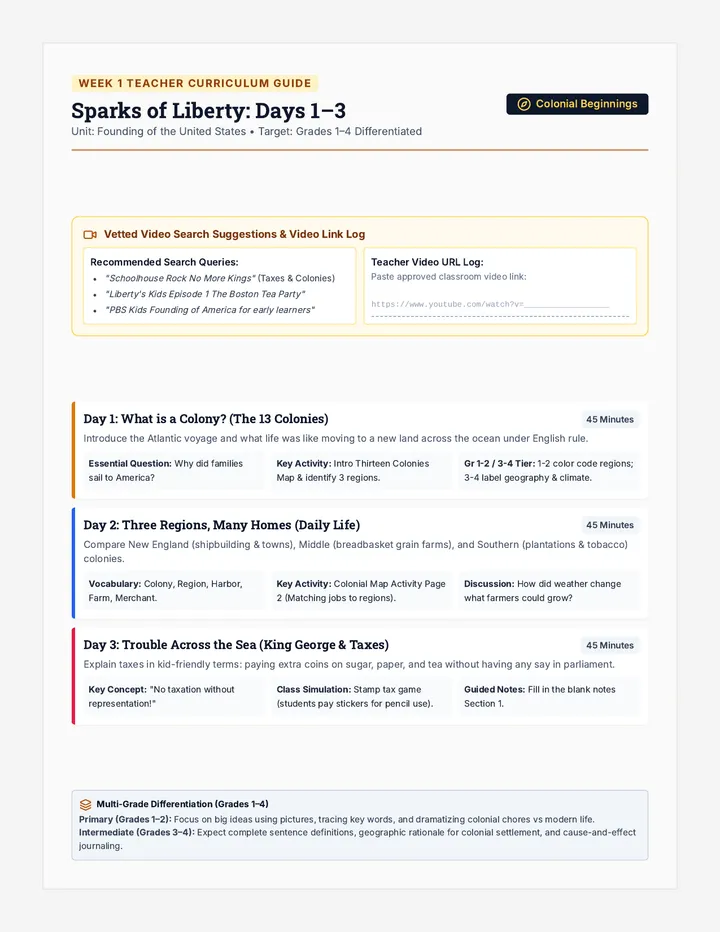
Founding Freedom

A two-week, comprehensive elementary history unit exploring the birth of the United States for 1st through 4th grade learners. Students discover the thirteen colonies, the causes of the revolution, the Declaration of Independence, the Constitution, and enduring American symbols through interactive maps, guided notes, vocabulary cards, and vetted media guides.

AR

Alexander Rhea

8
Veterans Day Salute Slides

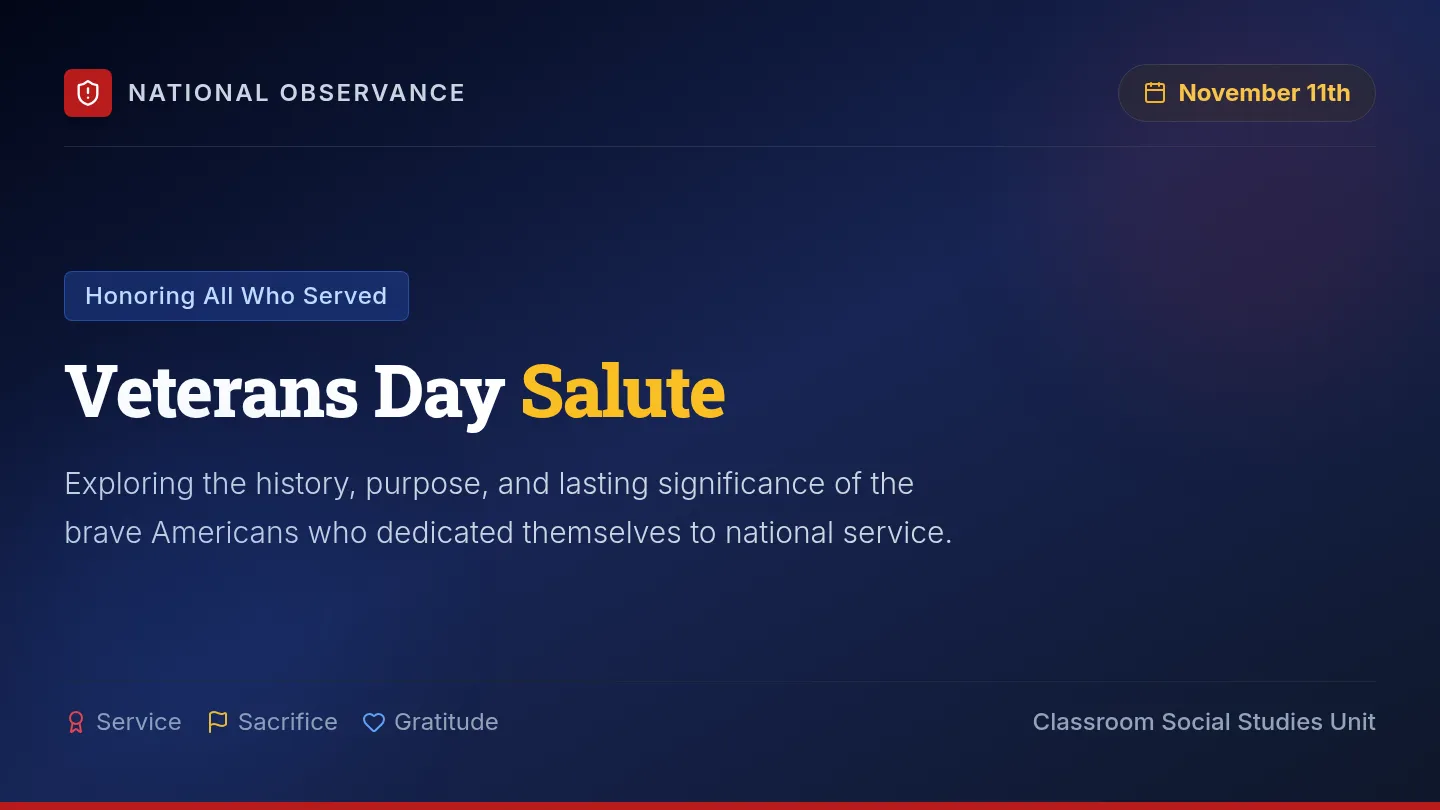
Veterans Day Salute

A comprehensive lesson exploring the significance, history, and traditions of Veterans Day, honoring the men and women who have served in the United States Armed Forces.

NK

Navdeep Kaur

3
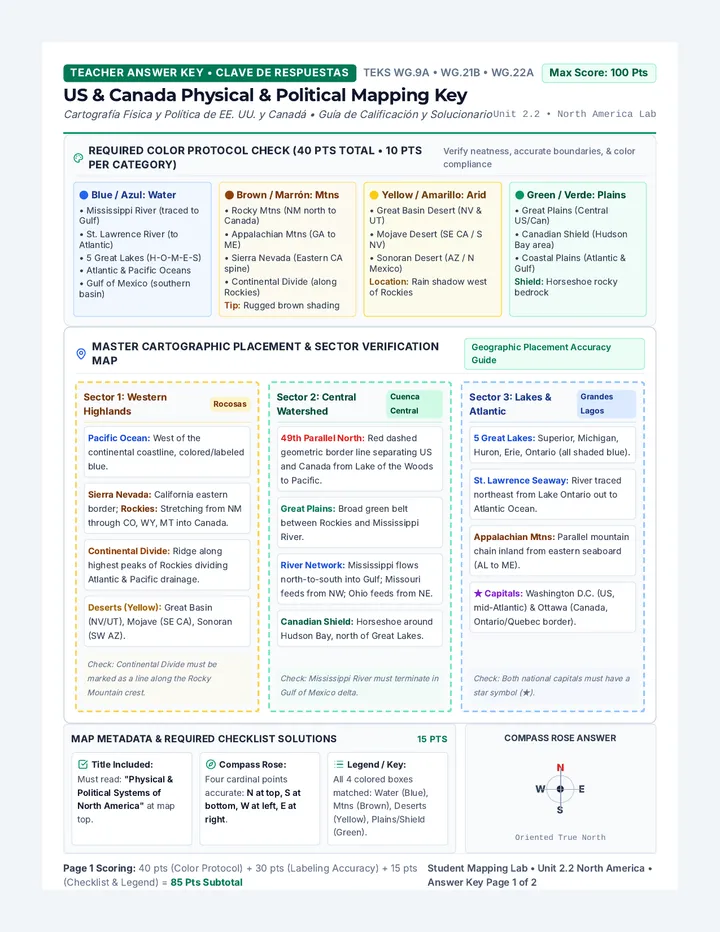
Mapping America Answer Key

Mapping America Answer Key

A comprehensive, bilingual teacher answer key and scoring guide for the US & Canada Physical & Political Mapping lab, featuring visual cartographic verification keys, matching answers with geographical justifications, model reflection responses in English and Spanish, and an analytical rubric.

JD

Jaiden Dawn Kennedy

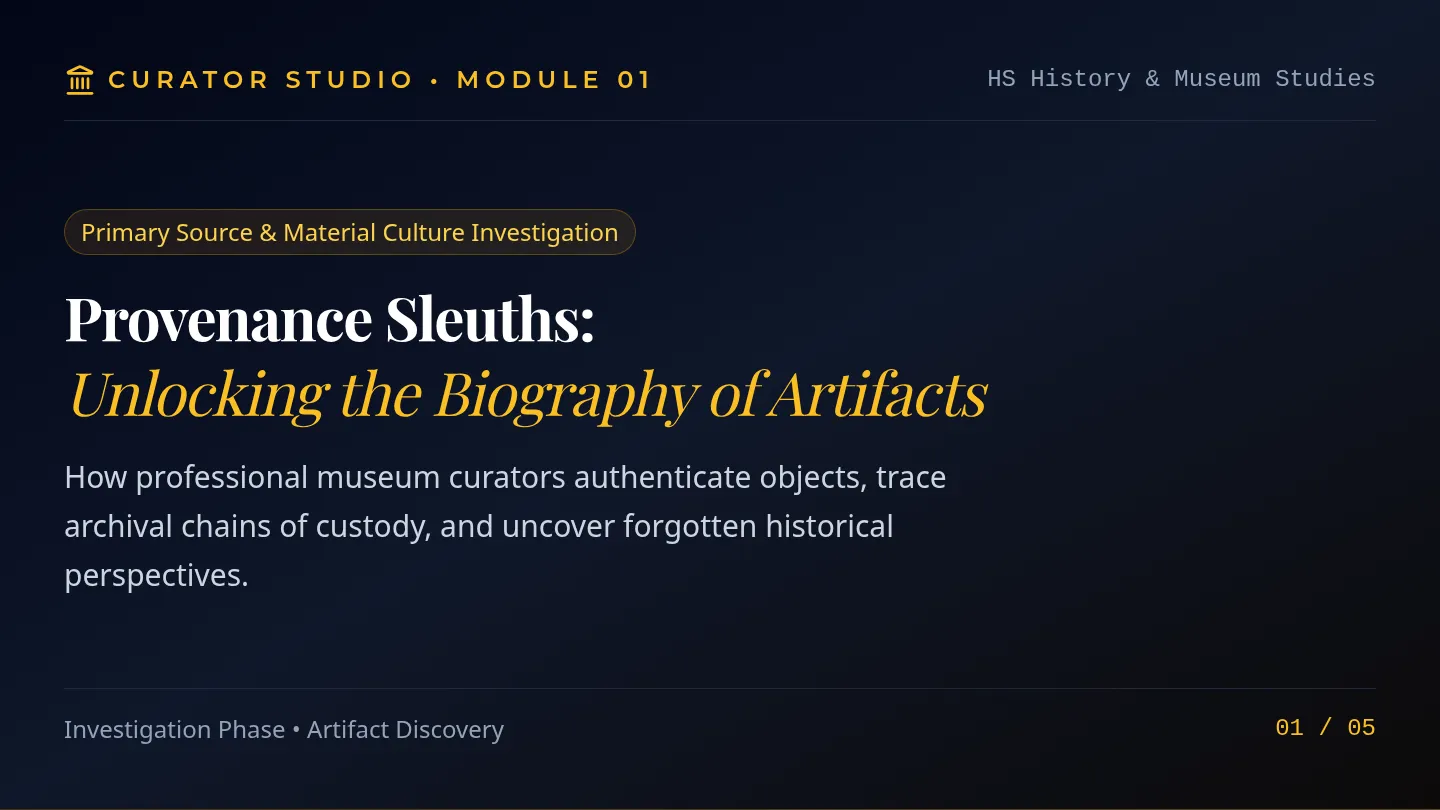
Provenance Sleuths Slides

Curator Studio

A comprehensive project sequence guiding high school students through professional museum curation, artifact evaluation, historical storytelling, and polished exhibit design.

MK

Ms. Kathryn Greene

6
Conformity Lab Case File

Wave Conformity Lab

A 20-minute pre-reading lesson for The Wave exploring the psychological mechanisms of conformity, peer influence, and authority before opening Chapter 1.

SR

Savanna Robertson-Boerner

2
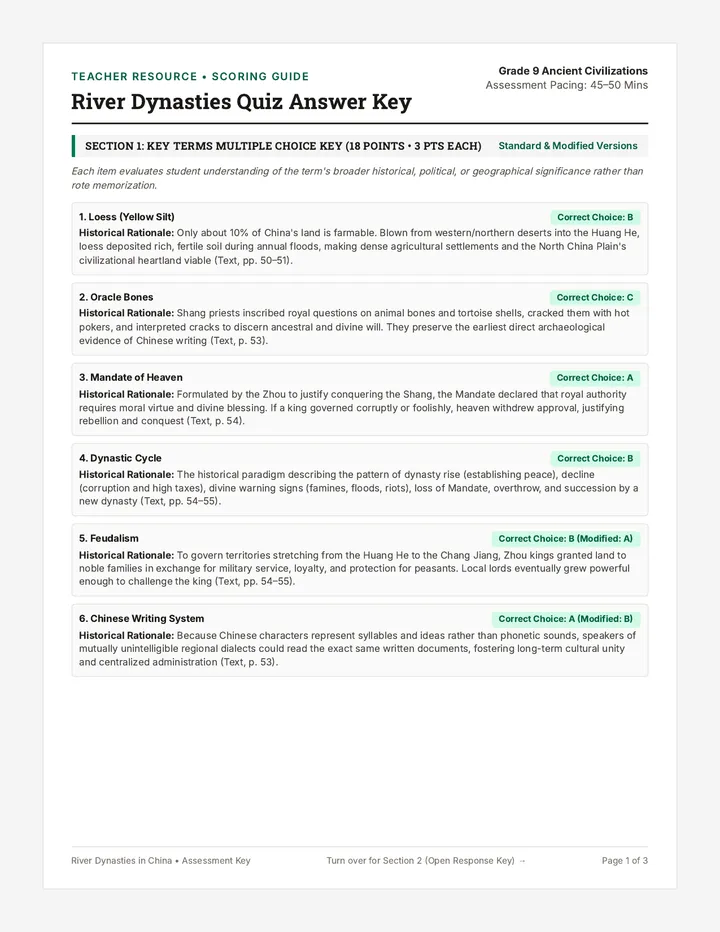
River Dynasties Answer Key

River Dynasties Answer Key

A comprehensive teacher answer key and scoring guide for the River Dynasties assessments. Includes multiple-choice answer keys with historical rationales, detailed open-response exemplar answers with scoring criteria, a 12-point analytic rubric, and paragraph exemplars for both standard and modified versions.

E

ebakke

Business Blueprint Slides

Market Makers

A hands-on introductory curriculum that equips students with foundational business acumen and marketing savvy through practical entrepreneurial challenges, financial basics, and campaign design.

D

despinoza

9
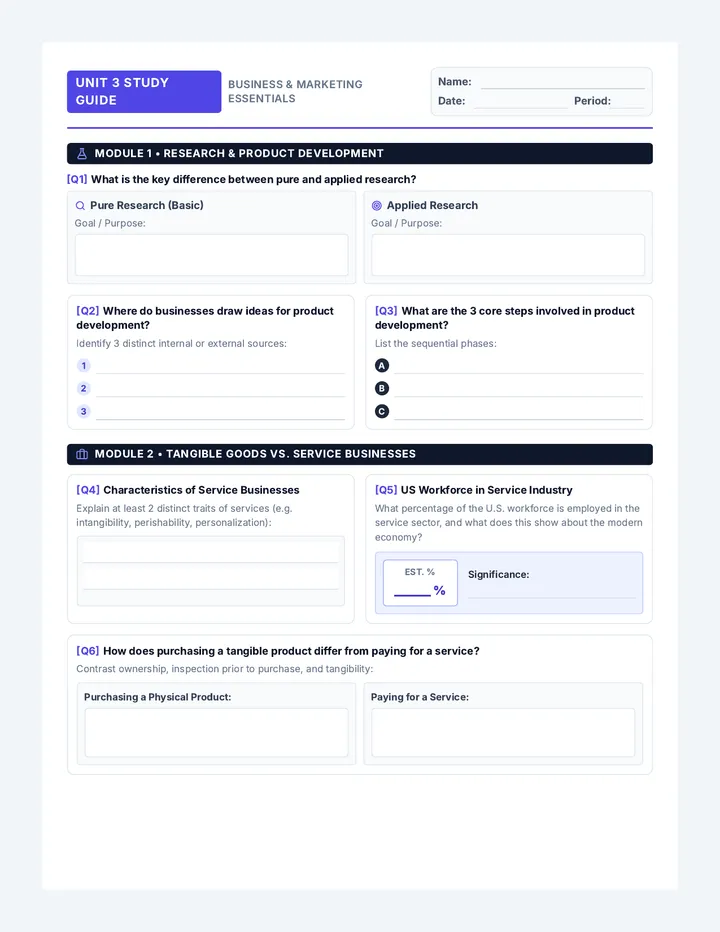
Unit 3 Exam Review Worksheet

Product to Market

A comprehensive review unit covering product research, manufacturing, branding, economic utility, distribution channels, and logistics for business and marketing essentials.

L

Landry.Stahl

2
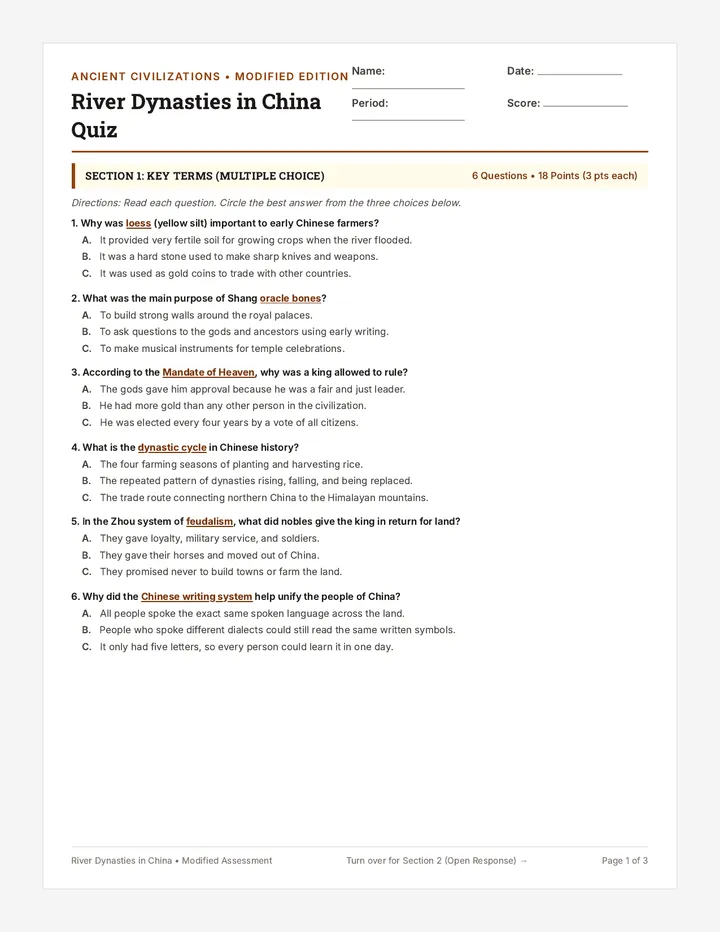
River Dynasties Modified Quiz

River Dynasties Modified Quiz

A differentiated three-section assessment on early Chinese river dynasties adapted for students with significantly lower comprehension skills. Features simplified multiple-choice questions with three options, scaffolded open-response questions with sentence frames and word banks, and a guided paragraph completion frame.

E

ebakke

Hemisphere Hunt Slides

Continent Quest

A 4th-grade geography sequence introducing students to North America through map navigation, regional comparisons, and landform exploration. Students investigate hemisphere locations, the three major nations, and iconic geographic features across the continent.

E

ehdunn

9
Mill Voices Investigation Slides

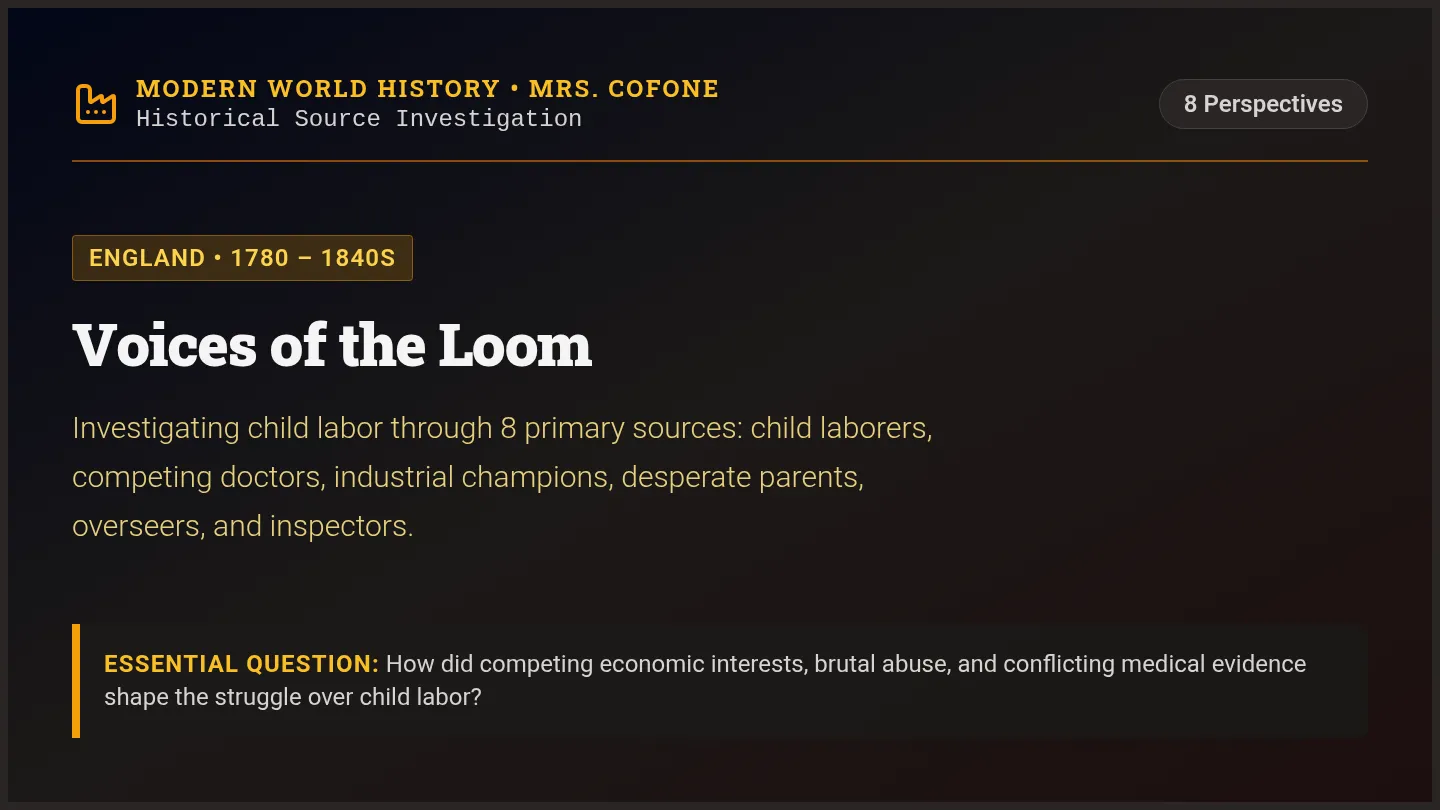
Voices of the Loom

A 40-minute interactive 8th-grade history lesson exploring child labor in England during the Industrial Revolution through primary sources, UDL scaffolds, and collaborative source analysis.

C

ccofone

4
Camera Tricks Slides

Pixel Sleuths

A 3-part media literacy unit for middle school students on analyzing visual media, spotting manipulated photos, and verifying online sources using lateral reading.

Lenny Avatar
Lenny
9