Caravan Crossroads Lesson Plan Afro-Eurasian Trade Networks • Grade 6–8
Caravan Crossroads Lesson Plan
Duration: 60 Mins
Silk Road & Trans-Saharan Networks
Focus Topic
Cross-regional trade routes, commodity exchange, oasis cities, and cultural diffusion across Eurasia and North Africa.
Target Outcomes
Compare routes, evaluate the value of salt vs. gold and silk vs. paper, and analyze how religions and innovations spread.
Included Materials
Lesson slides, 12 print task cards, student recording sheet, and complete teacher answer/discussion key.
Learning Objectives
Identify geographic anchors and trading hubs (e.g., Chang'an, Dunhuang, Taghaza, Timbuktu).Analyze primary commodities traded (silk, porcelain, spices, rock salt, gold bullion, camel caravans).Explain how non-material goods (Buddhism, Islam, technologies) diffused across continents.
Curriculum Connections
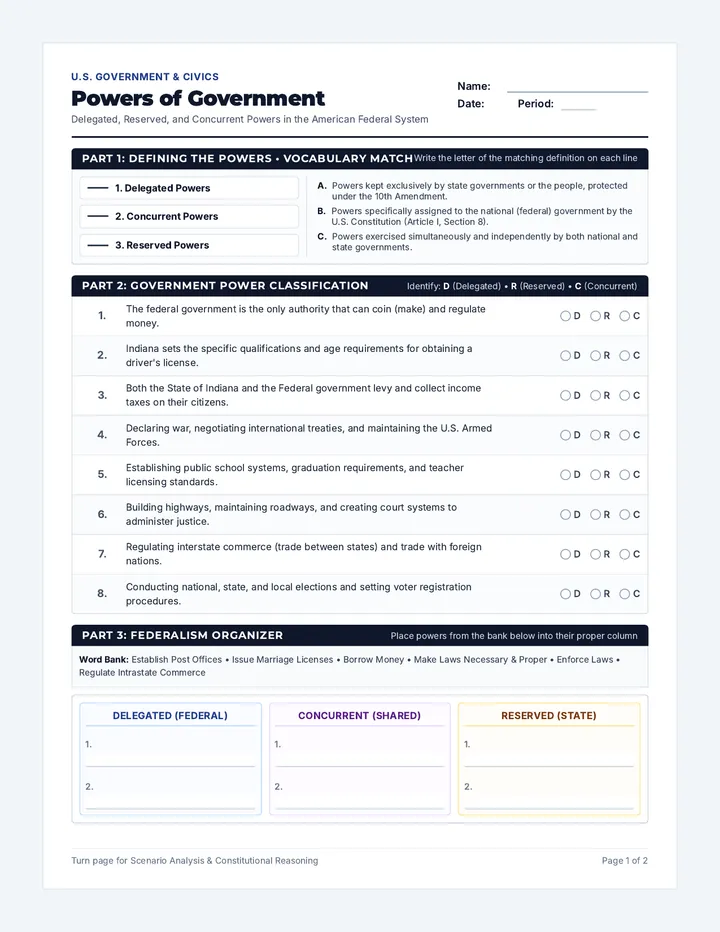
C3 Framework D2.His.1.6-8: Analyze connections among events and developments across broad historical eras.C3 Framework D2.Geo.6.6-8: Explain how changes in transportation and communication influence spatial trade networks.
Key Academic Vocabulary
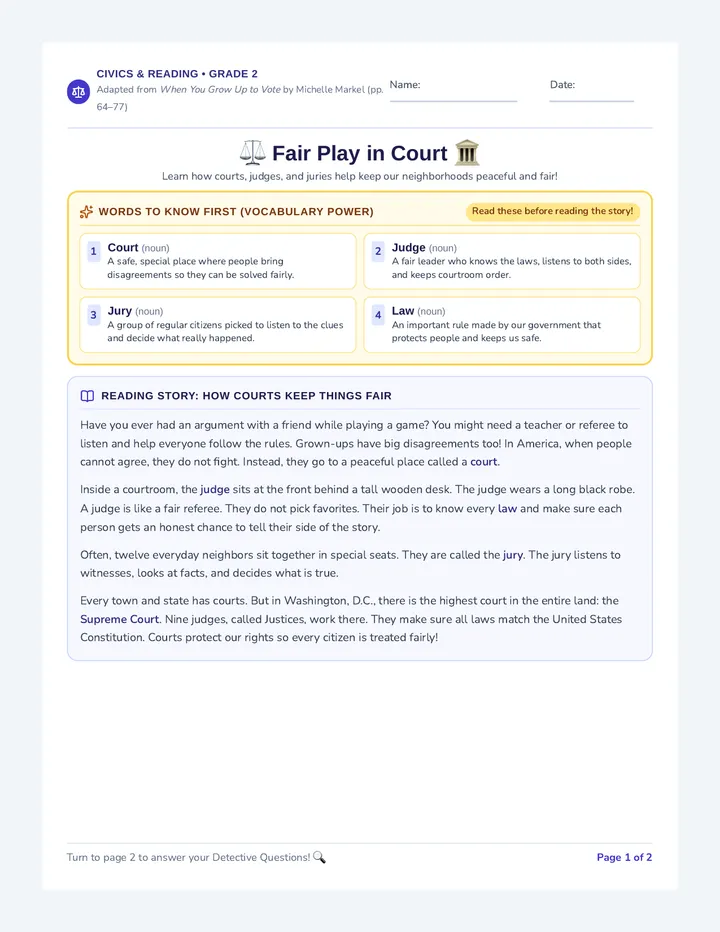
Caravanserai: Roadside inn for weary merchants, beasts, and goods.
Cultural Diffusion: Spread of beliefs, tech, and customs between cultures.
Silent Barter: Salt-gold trade method without direct spoken contact.
Commodity: Raw material or agricultural product bought and sold.
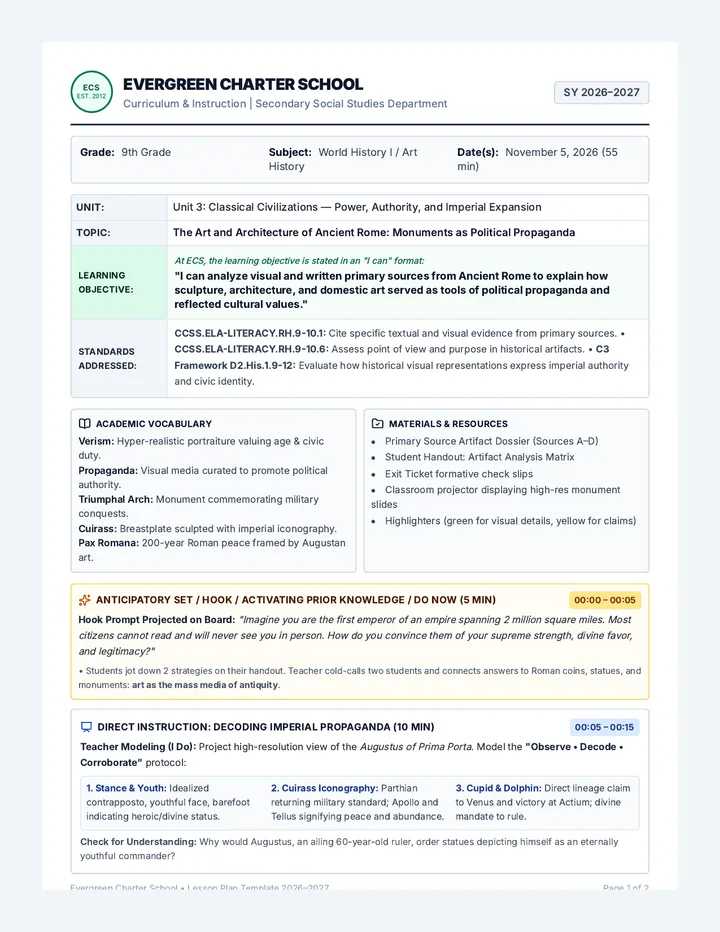
Instructional Flow: Opening & Direct Instruction
10 Mins Phase 1
Hook: The Survival Auction (Salt vs. Gold)
Prompt students: "You are crossing 1,000 miles of arid desert on foot. Would you trade 5 pounds of solid gold for 5 pounds of rock salt?" Guide discussion on how scarcity and physical necessity dictate economic value in ancient ecosystems.
15 Mins Phase 2
Interactive Slide Briefing & Dual-Route Contrast
Present the Caravan Crossroads slide deck. Compare the continental overland paths of the Silk Road (oasis hops, Pamir Mountains, silk/spices/paper) against the Trans-Saharan camel convoys (Taghaza salt mines, Wangara goldfields, Timbuktu manuscript centers). Introduce caravanserai safety networks.
Caravan Crossroads • Ancient Trade Route Bundle Page 1 of 2
Instructional Flow: Stations, Debrief & Differentiation
Part II: Student Investigation
20 Mins Phase 3
Active Station Investigation: 12 Caravan Task Cards
Organize classroom into 6 station pods (or scatter 12 cards around the room for a gallery walk). Students work in pairs with their Caravan Log Recording Sheet . Each card features historical snippets, artifact prompts, or route choices requiring evidence-based analysis.
Station Logistics: Set timer for 3 minutes per card pod or allow self-paced rotation. Emphasize tracking evidence for both the Silk Road (Cards 1–6) and Trans-Saharan routes (Cards 7–12).
10 Mins Phase 4
Whole-Class Synthesis & Trade Simulation Debrief
Debrief the big question: "Which trade route left a greater imprint on world history, or were they equal engines of change?" Review key card debates: why disease traveled alongside silk, how Islam bridged Saharan merchant bonds, and why middle-men inflated luxury prices.
5 Mins Phase 5
Exit Ticket & Synthesis Reflection
Students complete the bottom reflection on their Caravan Log: "Explain one unintended consequence of ancient trade routes that shaped the modern world." Collect logs for formative assessment.
Universal Scaffolding & ELL
Visual Pairings: Task cards include bold icon motifs and geographic keywords to assist emerging readers.Sentence Starters: Provide stems: "Salt was considered equal to gold because..." and "The Silk Road wasn't just a single road because..." Strategic Pairing: Pair language learners with strong reading partners for collaborative decoding.
Advanced Extension
Traveler Journals: Have early finishers write a 3-entry merchant diary as either a Sogdian trader on the Pamir pass or a Berbers camel driver entering Walata.Modern Parallels: Challenge students to compare the ancient Silk Road to today's Belt and Road Initiative (BRI) or modern digital cloud networks.
Formative Evaluation Criteria
Criterion
Mastery (3 pts)
Developing (1-2 pts)
Route Geography & Goods
Accurately identifies commodities, hazards, and hubs across both regions with specific details.
Lists basic items (silk, gold) but confuses geographic regions or stops.
Cultural Diffusion
Clearly explains how beliefs, technologies, or diseases traveled along trade paths.
Mentions religions or inventions without explaining the transmission mechanism.
Synthesis & Reasoning
Provides thoughtful analysis of economic trade-offs (e.g., salt utility vs. gold prestige).
Provides superficial or purely speculative answers without historical backing.
Caravan Crossroads • Ancient Trade Route Bundle Page 2 of 2
Caravan Crossroads Slides World History Exploration
Afro-Eurasian Commerce
Silk Road & Trans-Saharan Networks
Caravan Crossroads: Connecting Ancient Worlds
How desert caravans, oasis cities, and daring merchants moved luxuries, life-saving minerals, and revolutionary ideas across continents.
Overland Networks • Luxury & Scarcity
Grade 6–8 Interactive Investigation
The Silk Road: Arteries of Eurasia
East Asia to Mediterranean
Not One Road
A vast web of shifting overland routes crossing the Pamir Mountains, the deadly Taklamakan Desert, and Central Asian grasslands.
Key Hubs: Chang'an & Samarkand
Prized Luxuries
Chinese silk was worth its weight in gold in Rome. Caravans moved porcelain, jade, cinnamon, fine glassware, and paper scrolls.
High Value, Lightweight Goods
Caravanserais
Fortified roadside inns built every day's journey (20 miles) where traders, guards, and two-humped camels ate, rested, and bartered.
Sanctuary from Bandits
Traders rarely traveled the entire route; goods were relayed through merchant middle-men. Route 1 of 2
Trans-Saharan Routes: The Gold-Salt Axis
North Africa across the Sahara to West Africa
Salt from the North
In the scorching Sahara, miners cut 200-pound slabs of rock salt in Taghaza. In West Africa, salt preserved food and sustained human life.
Essential for Physical Survival
Gold from the South
Forest mines in Ghana and Mali yielded legendary gold dust. West African rulers minted royal prestige and powered Mediterranean coinage.
Silent Barter System
Ships of the Desert
The dromedary camel revolutionized trans-desert trade. Caravans of up to 10,000 camels trekked two months across dunes between oases.
Centers: Timbuktu & Gao
Equal Weight Trade: At peak shortages, 1 pound of gold was traded for 1 pound of rock salt. Route 2 of 2
More Than Goods: Cultural Diffusion
Unintended Transformations
Faith & Belief Systems
World Religions On the Move
Buddhism: Carried from India across the Silk Road into China, Korea, and Japan via monk pilgrims.Islam: Spread along Trans-Saharan trade routes into West African kingdoms, inspiring universities in Timbuktu.
Technology & Consequences
Inventions & Pathogens
Technologies: Papermaking, gunpowder, compasses, and Arabic numerals swept west across trade hubs.Pandemics: The same caravans carrying luxury silk unwittingly ferried the Black Death (plague) across continents.
When merchants trade goods, they inevitably trade culture, ideas, and microbiology. Diffusion Dynamics
Your Mission: Caravan Quest Investigation
Station Directions
1
Explore Stations
Rotate through the 12 Caravan Task Cards placed around the room or at your group pod.
Cards 1–6: Silk Road
2
Analyze Evidence
Read primary clues, evaluate merchant dilemmas, compare map stops, and solve trade calculations.
Cards 7–12: Sahara
3
Record & Synthesize
Complete your Caravan Log Recording Sheet with complete thoughts. Prepare for the final debrief.
Final Exit Challenge
Pro Tip: Look closely at both the economic benefits and the physical hardships of ancient travel!
Ready? Let's Begin.
Caravan Quest Task Cards Caravan Quest • Task Cards: Set I (Cards 1–4)
Cut along outer borders • Silk Road Network
CARD 1
Silk Road • Production Secrets
The Mystery of Sericulture
For over a thousand years, the Chinese imperial court decreed that anyone caught smuggling silkworm eggs out of China would be executed. Silk fabric became so prized in Rome that Roman senators complained Roman gold reserves were being drained just to clothe wealthy citizens in translucent silk robes.
Quest Challenge:
1. Why was keeping sericulture a state secret economically vital to China?2. Why were lightweight luxury goods ideal for Silk Road traders compared to heavy goods like timber or iron?
Theme: Commodity Value Chang'an to Rome
CARD 2
Silk Road • Desert Geography
The Taklamakan: Sea of Death
The name "Taklamakan" translates roughly to "Go in and you will never come out." To bypass this blistering desert of shifting sand dunes, traders had to hug northern or southern oasis chains like Dunhuang, Turpan, and Kashgar, where mountain glacier melt supplied freshwater.
Quest Challenge:
1. How did extreme physical geography dictate the exact path of the Silk Road?2. What made oasis towns like Dunhuang become thriving cultural and economic hubs rather than just rest stops?
Theme: Geographic Barriers Taklamakan Basin
CARD 3
Silk Road • Relay Economics
The Middleman Price Relay
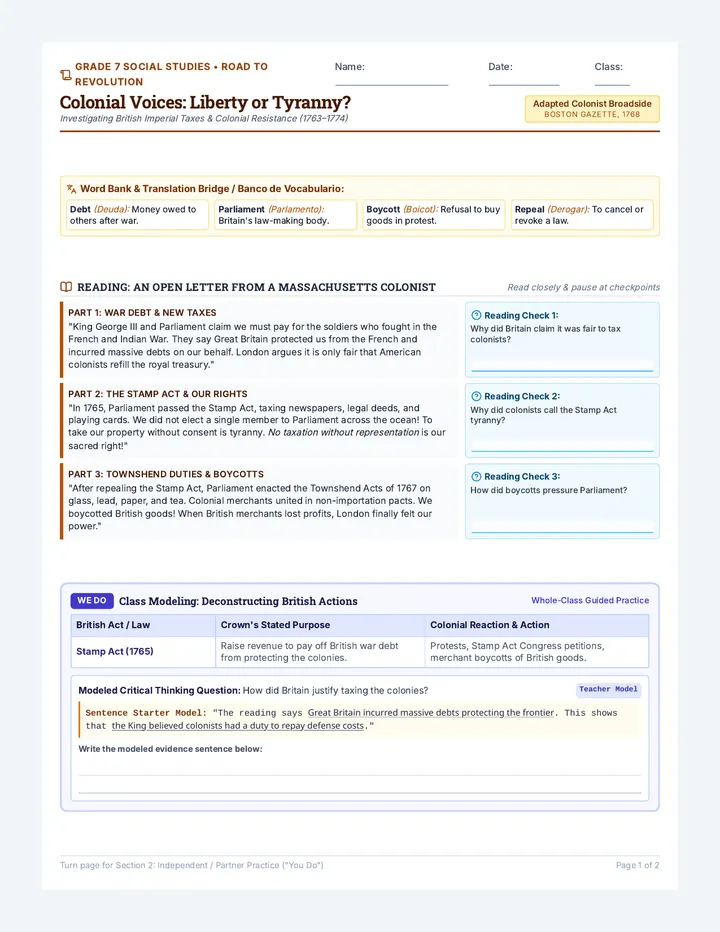
Hardly any single merchant journeyed the full 4,000 miles from China to Rome. Instead, Sogdian, Persian, and Arab traders operated in relay segments. A bolt of silk purchased for 1 piece of silver in Chang'an might pass through 8 middlemen, selling for over 100 silver coins by the time it reached Antioch or Rome.
Quest Challenge:
1. List two reasons why prices multiplied exponentially across each relay stage.2. What were the advantages of relay trade compared to one merchant traveling the entire distance?
Theme: Supply & Demand Central Asian Middlemen
CARD 4
Silk Road • Infrastructure
Life Inside a Caravanserai
Spaced roughly one day's camel march apart (about 20 miles), fortified roadside stations called caravanserais offered merchants high stone walls against bandits, stable stalls for camels, communal hearths, and shared wells. Here, travelers swapped gossip, currencies, translation guides, and tales from distant lands.
Quest Challenge:
1. Why were caravanserais critical for sustaining overland trade routes across hostile territory?2. How did caravanserais accidentally foster cultural exchange in addition to commercial trade?
Theme: Trade Infrastructure Persian & Silk Roads
Caravan Quest Task Cards • Afro-Eurasian Trade Routes Page 1 of 3
Caravan Quest • Task Cards: Set II (Cards 5–8)
Cut along outer borders • Silk Road & Sahara
CARD 5
Silk Road • Cultural Diffusion
Monks & Manuscripts: Buddhism
Buddhist monks traveled alongside merchant caravans from northern India through the Khyber Pass into Central Asia and China. At Dunhuang's Mogao Caves, hollowed out of sandstone cliffs, thousands of painted Buddhist murals and hand-copied sutras in multiple languages document this spiritual diffusion.
Quest Challenge:
1. Why were religious ideas able to travel so effectively along trade routes?2. How did merchants benefit from having monks and monasteries established along dangerous desert routes?
Theme: Religious Diffusion India to China & Japan
CARD 6
Silk Road • Unintended Cargo
Plagues, Paper, and Powder
Along with porcelain and cinnamon, trade routes transported transformative technologies—and deadly biology. Chinese papermaking reached the Arab world after the 751 CE Battle of Talas, revolutionizing record-keeping. Gunpowder spread westward. Tragically, the 1340s Black Death also rode caravan routes, decimating cities across Asia and Europe.
Quest Challenge:
1. How did the spread of papermaking alter European and Islamic scholarship?2. Explain why global connectivity through trade networks can become a double-edged sword during disease outbreaks.
Theme: Technology & Disease Afro-Eurasia
CARD 7
Trans-Saharan • Vital Minerals
Taghaza: The City Built of Salt
In the remote desert settlement of Taghaza, workers cut large rectangular blocks of salt directly from ancient dried lake beds. Houses and mosques in Taghaza were literally constructed out of salt slabs, roofed with camel skins. Salt was loaded onto camels to be carried south, where human bodies lose vital electrolytes in tropical heat.
Quest Challenge:
1. Why was salt considered more valuable than gold in certain West African regions?2. List two survival functions that salt provided to humans and livestock in hot climates.
Theme: Survival Commodities Sahara Desert to Sahel
CARD 8
Trans-Saharan • Royal Wealth
The Goldfields of Wangara
Deep in the forested river basins of West Africa lay Wangara, source of legendary gold dust. The Emperors of Ghana and later Mali kept the exact locations of these mines a fiercely guarded state secret. By decree, only gold dust could circulate among citizens; all solid gold nuggets belonged strictly to the king.
Quest Challenge:
1. Why did the King of Ghana forbid ordinary people from owning gold nuggets?2. How did controlling the gold supply prevent inflation and preserve the king's supreme authority?
Theme: Economic Control Ghana & Mali Empires
Caravan Quest Task Cards • Afro-Eurasian Trade Routes Page 2 of 3
Caravan Quest • Task Cards: Set III (Cards 9–12)
Cut along outer borders • Trans-Saharan & Synthesis
CARD 9
Trans-Saharan • Trade Methods
The Silent Barter System
Northern salt merchants laid their slabs in neat rows along the riverbanks, beat a loud drum, and retreated miles away. Wangara gold miners then approached by boat, inspected the salt, left an amount of gold dust beside the slabs, and withdrew. If both sides were satisfied, goods were taken; if not, the dance continued without a single word spoken.
Quest Challenge:
1. What were two major benefits of silent barter for groups that spoke completely different languages?2. How did this system protect the secret geographic location of the Wangara gold mines?
Theme: Cross-Cultural Negotiation Niger River Basin
CARD 10
Trans-Saharan • Biological Innovation
The Dromedary: Ship of the Desert
Before the introduction of the Arabian camel (dromedary) around 300 CE, crossing the 1,500 miles of Saharan sands was nearly impossible. Camels can travel up to 10 days without water, carry 400 pounds on their backs, drink 30 gallons of water in minutes, and feature broad foot pads that prevent sinking into loose sand dunes.
Quest Challenge:
1. Explain why the introduction of the camel revolutionized African trade while horses and oxen failed.2. What biological adaptation allowed camels to survive weeks between sparse desert oases?
Theme: Transportation Tech Sahara Crossing
CARD 11
Trans-Saharan • Intellectual Hubs
Timbuktu: City of 25,000 Scholars
Situated where the Sahara meets the Niger River, Timbuktu became more than an exchange market for gold and salt. Under the Mali and Songhai Empires, Sankore University flourished with over 25,000 students studying astronomy, medicine, law, and Islamic theology. Traveler Leo Africanus wrote that handwritten books sold for higher profits than any other commodity.
Quest Challenge:
1. How did commercial wealth from gold and salt create the foundation for world-renowned scholarship in Timbuktu?2. What role did the spread of Islam play in uniting diverse merchants across the Sahara?
Theme: Intellectual Diffusion Mali & Songhai Empires
CARD 12
Cross-Route Analysis • Synthesis
Route Clash: Silk Road vs. Sahara
Both the Silk Road and the Trans-Saharan routes connected distant civilizations across brutal, unforgiving terrain. Both relied on pack animals, oasis relay points, and merchant networks. Yet one network was driven primarily by high-end luxuries (silk, porcelain, jade) while the other was anchored by a life-or-death survival commodity (rock salt).
Quest Challenge:
1. Compare one major similarity and one major difference between the Silk Road and Trans-Saharan routes.2. In your judgment, which route had the more profound impact on daily survival versus cultural luxury? Explain.
Theme: Comparative Synthesis Global Afro-Eurasia
Caravan Quest Task Cards • Afro-Eurasian Trade Routes Page 3 of 3
Caravan Log Recording Sheet Afro-Eurasian Trade Networks • Student Investigation Log
Caravan Log: Merchant's Field Notebook
Part I: Silk Road
Name: ___________________________
Date: _______________
Period: _________
Caravan Partner: ___________________
Instructions: Visit each station card. Read the scenario and clues carefully, then record your evidence-based findings in the corresponding log boxes below.
Card 1: Mystery of Sericulture SILK ROAD
1. Why was sericulture a guarded secret? 2. Why luxury goods over heavy raw materials?
Card 2: Taklamakan Desert SILK ROAD
1. How geography shaped route paths? 2. Why oasis towns became cultural hubs?
Card 3: Middleman Relay SILK ROAD
1. Why did prices multiply at each stop? 2. Advantages of relay trade?
Card 4: Caravanserai Life SILK ROAD
1. Why were caravanserais critical? 2. How did they foster accidental cultural exchange?
Card 5: Monks & Manuscripts SILK ROAD
1. Why religions traveled along trade routes? 2. Mutual benefit of monks and traders?
Card 6: Plagues & Inventions SILK ROAD
1. Impact of papermaking on knowledge? 2. Why connectivity is a double-edged sword?
Caravan Crossroads • Student Recording Log Page 1 of 2
Afro-Eurasian Trade Networks • Student Investigation Log
Part II: Trans-Saharan Routes & Cross-Route Synthesis
Cards 7–12
Card 7: Taghaza Salt Mines SAHARA
1. Why salt rivaled gold? 2. Two biological survival functions?
Card 8: Wangara Goldfields SAHARA
1. Why gold nuggets were restricted? 2. How monopoly prevented inflation?
Card 9: Silent Barter System SAHARA
1. Benefits of silent barter? 2. How it protected secret mine locations?
Card 10: Ship of the Desert SAHARA
1. Why camels succeeded over horses? 2. Key biological adaptations?
Card 11: Scholars of Timbuktu SAHARA
1. How trade wealth fueled universities? 2. Role of Islam uniting traders?
Card 12: Route Clash Synthesis SYNTHESIS
1. Major similarity vs. difference? 2. Survival vs. luxury impact?
Final Caravan Debrief: Enduring Historical Impact
Exit Ticket
Synthesize your findings: "Trade routes were never solely about exchanging goods; they transformed human societies." Choose either the Silk Road or Trans-Saharan network and explain how one non-material exchange (religion, idea, technology, or disease) left a lasting legacy that endures today.
Caravan Crossroads • Student Recording Log Page 2 of 2
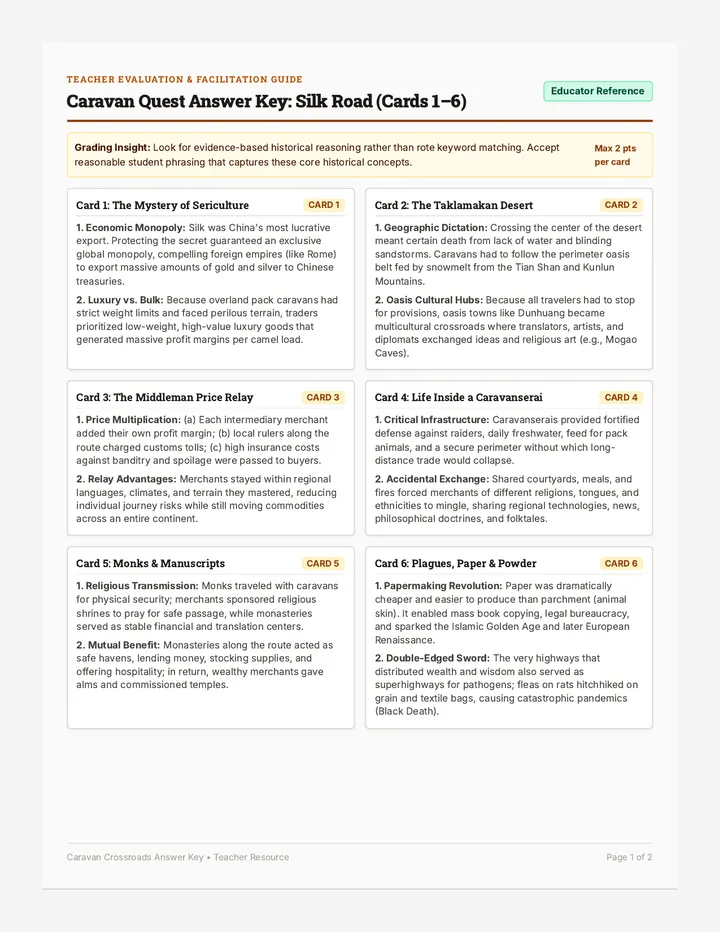
Caravan Quest Answer Key Teacher Evaluation & Facilitation Guide
Caravan Quest Answer Key: Silk Road (Cards 1–6)
Educator Reference
Grading Insight: Look for evidence-based historical reasoning rather than rote keyword matching. Accept reasonable student phrasing that captures these core historical concepts. Max 2 pts per card
Card 1: The Mystery of Sericulture
CARD 1
1. Economic Monopoly: Silk was China's most lucrative export. Protecting the secret guaranteed an exclusive global monopoly, compelling foreign empires (like Rome) to export massive amounts of gold and silver to Chinese treasuries.
2. Luxury vs. Bulk: Because overland pack caravans had strict weight limits and faced perilous terrain, traders prioritized low-weight, high-value luxury goods that generated massive profit margins per camel load.
Card 2: The Taklamakan Desert
CARD 2
1. Geographic Dictation: Crossing the center of the desert meant certain death from lack of water and blinding sandstorms. Caravans had to follow the perimeter oasis belt fed by snowmelt from the Tian Shan and Kunlun Mountains.
2. Oasis Cultural Hubs: Because all travelers had to stop for provisions, oasis towns like Dunhuang became multicultural crossroads where translators, artists, and diplomats exchanged ideas and religious art (e.g., Mogao Caves).
Card 3: The Middleman Price Relay
CARD 3
1. Price Multiplication: (a) Each intermediary merchant added their own profit margin; (b) local rulers along the route charged customs tolls; (c) high insurance costs against banditry and spoilage were passed to buyers.
2. Relay Advantages: Merchants stayed within regional languages, climates, and terrain they mastered, reducing individual journey risks while still moving commodities across an entire continent.
Card 4: Life Inside a Caravanserai
CARD 4
1. Critical Infrastructure: Caravanserais provided fortified defense against raiders, daily freshwater, feed for pack animals, and a secure perimeter without which long-distance trade would collapse.
2. Accidental Exchange: Shared courtyards, meals, and fires forced merchants of different religions, tongues, and ethnicities to mingle, sharing regional technologies, news, philosophical doctrines, and folktales.
Card 5: Monks & Manuscripts
CARD 5
1. Religious Transmission: Monks traveled with caravans for physical security; merchants sponsored religious shrines to pray for safe passage, while monasteries served as stable financial and translation centers.
2. Mutual Benefit: Monasteries along the route acted as safe havens, lending money, stocking supplies, and offering hospitality; in return, wealthy merchants gave alms and commissioned temples.
Card 6: Plagues, Paper & Powder
CARD 6
1. Papermaking Revolution: Paper was dramatically cheaper and easier to produce than parchment (animal skin). It enabled mass book copying, legal bureaucracy, and sparked the Islamic Golden Age and later European Renaissance.
2. Double-Edged Sword: The very highways that distributed wealth and wisdom also served as superhighways for pathogens; fleas on rats hitchhiked on grain and textile bags, causing catastrophic pandemics (Black Death).
Caravan Crossroads Answer Key • Teacher Resource Page 1 of 2
Teacher Evaluation & Facilitation Guide
Caravan Quest Answer Key: Sahara & Synthesis (Cards 7–12)
Cards 7–12
Card 7: Taghaza Salt Mines
CARD 7
1. Value Parity: In tropical West Africa, gold was plentiful in riverbeds, but dietary salt was virtually nonexistent. Humans cannot live without salt, making it an existential survival commodity.
2. Biological Functions: (a) Regulates hydration, nerve impulses, and muscle function in extreme heat; (b) preserves meat and fish without refrigeration.
Card 8: Wangara Goldfields
CARD 8
1. Royal Nugget Ban: Restricting solid nuggets to the king prevented the nobility or general public from amassing personal wealth to rival or overthrow the monarch.
2. Preventing Inflation: If all gold entered general circulation, gold would lose its scarcity value. Controlling the supply maintained high purchasing power and global market value.
Card 9: Silent Barter System
CARD 9
1. Benefits: Avoided linguistic misunderstandings, prevented armed conflict between suspicious strangers, and established mutual trust through predictable custom.
2. Geographic Secrecy: Wangara miners never revealed where their mines were located; northern merchants never saw them mine, protecting their homeland from conquest.
Card 10: Ship of the Desert
CARD 10
1. Camel Superiority: Horses and oxen require daily water and sinking hooves get stuck in soft dunes. Camels possess wide leathery pads, closing nostrils against sand, and efficient kidneys.
2. Water Retention: Camels do not store water in their humps (they store fat energy); their biological water conservation allows them to endure 10 days of heavy trek without water.
Card 11: Scholars of Timbuktu
CARD 11
1. Commerce to Scholarship: Huge tax revenues from gold and salt funded university endowments (Sankore), paid royal stipends for scholars, and purchased rare manuscripts from Cairo and Baghdad.
2. Unifying Power of Islam: Shared Islamic faith and Arabic literacy provided a universal legal code (sharia), contract trust, and common language across thousands of miles of desert.
Card 12: Route Clash Synthesis
CARD 12
1. Similarities & Differences: Both crossed harsh deserts via oasis stops and camel relays. Difference: Silk Road linked agrarian Eurasia through luxury arts; Trans-Saharan joined North and West Africa through mineral survival barter.
2. Evaluative Stance: Accept either Silk Road (global tech transfer, silk prestige) or Sahara (essential survival, rise of major West African empires), provided students justify with clear evidence.
Exit Ticket Model Response:
"While the Silk Road traded costly fabrics, its most lasting legacy was the transmission of papermaking from China to the Islamic world and Europe. Paper drastically reduced the cost of recording information compared to parchment, allowing scientific discoveries, religious texts, and legal records to spread to ordinary citizens, ultimately laying the foundation for modern global education and literacy."
Common Student Misconceptions to Address:
Misconception: The Silk Road was a single paved highway. (Correction: It was a shifting web of overland and maritime trails.) Misconception: Salt was cheap and useless compared to gold. (Correction: In the Sahel, salt was literally life-saving and equal in weight value to gold.) Misconception: Single merchants walked from Rome to China. (Correction: Relay trade with regional middlemen was the standard.)
Caravan Crossroads Answer Key • Teacher Resource Page 2 of 2