Lenny.com
Explore
Create
ActivitiesNewMathEnglish Language ArtsScience & EngineeringSocial StudiesGlobal LanguagesHealth & Physical EducationSpecial EducationCounseling & Life SkillsArts & CreativityESL
Lenny.com
Lenny.com
Explore
Create
ActivitiesNewMathEnglish Language ArtsScience & EngineeringSocial StudiesGlobal LanguagesHealth & Physical EducationSpecial EducationCounseling & Life SkillsArts & CreativityESL
Lenny.com
Social StudiesSocial Studies PracticesLocation WordsMapsOrder EventsChronology and CausationEvaluating SourcesHistorical ThinkingGeography, Humans, & the EnvironmentAmerican Symbols and LandmarksCitiesStatesState CapitalsRegions of the United StatesGeographic SkillsPhysical GeographyHuman GeographyRegional GeographyGeography of AfricaGeography of AsiaGeography of EuropeGeography of OceaniaGeography of the AmericasSociety and Environment of EuropeSociety and Environment of AsiaSociety and Environment of The AmericasSociety and Environment of the Middle EastSociety and Environment of AfricaHistoryPrehistoryComparing Ancient River CivilizationsAncient MesopotamiaAncient Egypt and KushAncient South AsiaEarly ChinaGreeceRome and the Byzantine EmpireAncient World HistoryNative Peoples of North AmericaNative Peoples of Mesoamerica and South AmericaAfrican EmpiresMedieval AsiaMedieval EuropeThe Silk RoadMedieval HistoryIslamic EmpiresWorld ReligionsRenaissance PeriodAge of ExplorationThe Thirteen ColoniesThe American RevolutionUS History Early RepublicFounding of the United StatesUS History AntebellumUS Civil WarReconstruction PeriodThe Gilded AgeUS ImperialismWorld ImperialismWorld War IUS History 1920sGreat DepressionWorld War IIThe Cold WarUS History 1950-60sUS History 1960s-70sWorld History 20th CenturyContemporary US HistoryContemporary World HistoryHolidaysCivics and GovernmentCitizenshipGovernment FoundationsThe ConstitutionUS ConstitutionExecutive BranchLegislative BranchJudicial BranchState and LocalPolitical ParticipationPublic PolicyPolitical SystemsPower and AuthoritySocial MovementsDefining DevianceTheories of DevianceCrime and Criminal JusticeEconomicsBasic Economic PrinciplesSupply and DemandWhat is MoneyEconomic FundamentalsMicroeconomicsMacroeconomicsBanking and FinanceEconomic SystemsGlobal EconomicsCorporations and PowerThe Changing WorkplaceUnemployment and LaborClass and InequalitySocial MobilityGlobal InequalityPsychologyHistory of PsychologyPsychology as a ScienceBrain and Nervous SystemNeuroscience and BehaviorGenetics and BehaviorSleep and ConsciousnessSensory ProcessesPerceptual OrganizationClassical ConditioningOperant ConditioningObservational LearningCognitive LearningMemory ProcessesThinking and Problem SolvingLanguage and CognitionTheories of MotivationStress and CopingPrenatal and Infant DevelopmentChildhood DevelopmentAdolescent DevelopmentAdulthood and AgingSelf and IdentitySocial CognitionSocial InfluenceAttraction and RelationshipsGroup BehaviorPrejudice and DiscriminationAnxiety and Mood DisordersClinical PsychologyForensic PsychologyPhilosophy & EthicsIntroduction to PhilosophyMajor Philosophers & IdeasMind and Body ProblemFree Will vs DeterminismEthics & MoralityReligion & PhilosophyPolitical Philosophy

Supply and Demand

Fundamental market interactions between product availability and consumer desire. Analyzes price determination through equilibrium and explores factors causing shifts in supply and demand curves.

Lenny.com

Solutions

Lenny for EducatorsLenny for SchoolsLenny for Districts

Product

ExploreSign inCreateSupportAbout

Resources

Getting startedMTSS Acceleration Program

Newsletters

School Funding Newsletter

© 2026 Lenny Learning Inc.

TermsPrivacyAccessibility
LinkedInInstagramX
Lenny

Videos

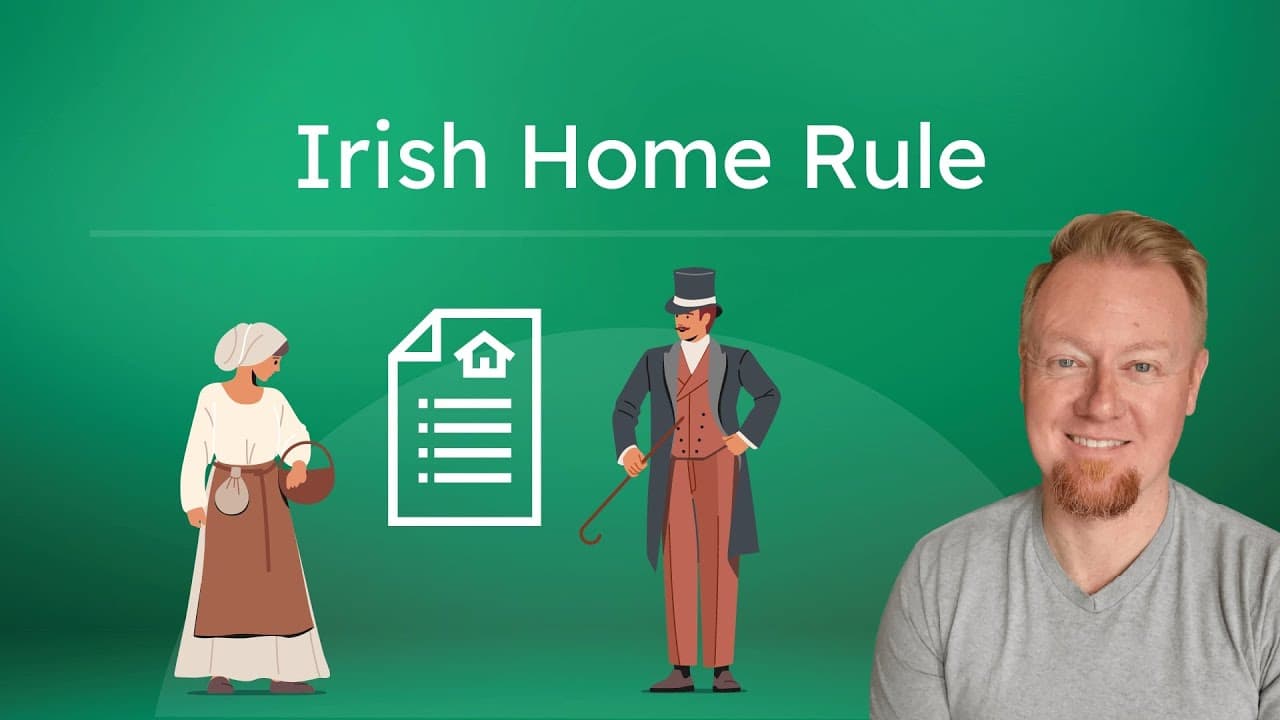
Fighting for the Emerald Isle: The Story of Irish Home Rule

Fighting for the Emerald Isle: The Story of Irish Home Rule

This educational video provides a comprehensive overview of Ireland's long struggle for independence from British rule, tracing the historical relationship between the two nations from the 12th century to the modern day. It explores the origins of the cultural and religious divide between the Catholic Irish population and Protestant English settlers, detailing key events such as the Anglo-Norman invasion, Oliver Cromwell's conquest, and the implementation of the Penal Laws.

Miacademy & MiaPrep Learning ChannelMiacademy & MiaPrep Learning Channel

10mins 32s

Causes of the American Revolution: Taxes, Tea, and Common Sense

Causes of the American Revolution: Taxes, Tea, and Common Sense

In this engaging installment of Crash Course US History, John Green explores the complex origins of the American Revolution, carefully distinguishing between the political revolution and the military War for Independence. The video traces the timeline of escalating tensions between Great Britain and the colonies following the Seven Years' War, explaining how British debt led to a series of unpopular taxes—the Sugar Act, Stamp Act, and Townshend Acts—and how the colonists' response evolved from disorganized grumbling to coordinated boycotts and unified political action. Key themes include the concept of "taxation without representation," the economic motivations behind colonial protests, and the philosophical shift from seeking rights as Englishmen to demanding natural rights as human beings. Green highlights crucial events like the Boston Massacre, the Boston Tea Party, and the convening of the Continental Congress, while also spotlighting influential figures like Thomas Paine, whose pamphlet "Common Sense" played a pivotal role in shifting public opinion toward independence. For educators, this video serves as an excellent overview of the causal chain leading to 1776. It moves beyond simple dates and battles to examine the ideological and economic drivers of the conflict. The content is ideal for analyzing cause-and-effect relationships in history, understanding the power of propaganda and political writing, and discussing the difference between legislative disputes and revolutionary change. The fast-paced narration is supported by animations and primary source analysis, making it a high-yield resource for secondary social studies classrooms.

CrashCourseCrashCourse

12mins 19s

How the Federal Reserve Steers the Economy

How the Federal Reserve Steers the Economy

This informative video uses an extended analogy of a car to explain the complex functions of the Federal Reserve and its role in the United States economy. It demystifies how the "Fed" acts as the central bank, regulating the money supply and clearing financial transactions to keep the economic "engine" running smoothly. The narration breaks down how the Federal Reserve monitors economic health through key indicators like inflation, GDP, and unemployment data. The core of the video focuses on Monetary Policy, detailing the three specific tools the Federal Reserve uses to steer the economy: reserve requirements, the discount rate, and open market operations. Through clear visual flowcharts, the video demonstrates the cause-and-effect relationship between these tools and the broader economy, explaining how the Fed decides whether to "hit the gas" (stimulate growth) or "pump the brakes" (slow down inflation). Ideally suited for high school economics and civics curricula, this video transforms abstract financial concepts into concrete, relatable examples. Teachers can use it to scaffold lessons on government intervention, financial literacy, and macroeconomics. It provides a solid foundation for understanding how central banking decisions impact everyday life, from interest rates on car loans to the price of goods at the store.

Miacademy & MiaPrep Learning ChannelMiacademy & MiaPrep Learning Channel

12mins 29s

How Ancient Trade Routes Connected the World

How Ancient Trade Routes Connected the World

This video explores the concept of global interconnectedness long before the advent of the internet or modern transportation. Starting with a relatable family dinner scene, the narrator challenges viewers to consider the origins of their food and clothing, using this as a springboard to introduce the historical mechanism of trade. The video defines cultural diffusion and illustrates how ancient trade routes like the Silk Road, Indian Ocean maritime routes, Trans-Saharan network, and Mediterranean Sea served as the "superhighways" of the ancient world, linking distant civilizations. Key themes include the definition and impact of cultural diffusion, the geography of major ancient trade networks, and the specific exchange of goods, ideas, technologies, and religions. The video highlights how the Indian Ocean trade facilitated the spread of Islam, how the Trans-Saharan route moved gold and salt, and how the Mediterranean connected Europe to ancient wisdom. It also details the "Four Great Inventions" of Ancient China—paper, printing, the compass, and gunpowder—and their profound effects on global society. For educators, this video serves as an excellent introduction to units on World History, global trade, or ancient civilizations. It features built-in "pause points" that invite students to check the tags on their own clothes, brainstorm inventions, and reflect on historical impacts, making it highly interactive. By connecting the abstract concept of cultural diffusion to tangible items like spices and clothing, the video helps students visualize how historical economic activities shaped the political, religious, and technological landscape of the modern world.
Miacademy & MiaPrep Learning ChannelMiacademy & MiaPrep Learning Channel

11mins 42s

Why the Bronze Age Civilizations Collapsed

Why the Bronze Age Civilizations Collapsed

In this episode of Crash Course World History, John Green explores the mysterious collapse of the Bronze Age civilizations in the Eastern Mediterranean around 1200 BCE. The video challenges the traditional narrative of separate, isolated civilizations by demonstrating how Egypt, the Hittites, the Mycenaeans, and others formed a highly interconnected international system defined by trade, diplomacy, and war. It examines the evidence for this interdependence, including the famous Uluburun shipwreck and the Amarna Letters.

CrashCourseCrashCourse

12mins 58s

The Rise and Impact of Industrial Capitalism

The Rise and Impact of Industrial Capitalism

This educational video provides a comprehensive overview of capitalism's emergence during the Industrial Revolution, contrasting it with the preceding feudal system. It uses a modern-day analogy of a t-shirt business to explain complex economic concepts like profit, supply and demand, and market exchange before diving into the historical realities of Industrial England. The narrator introduces key figures like Adam Smith and concepts such as laissez-faire economics, explaining how the shift from subsistence farming to mass production fundamentally changed society. The video presents a balanced analysis of industrial-era capitalism by detailing both its significant benefits—such as self-determination, innovation, and massive economic growth (GDP)—and its severe drawbacks. These drawbacks include extreme wealth inequality, worker exploitation (including child labor and dangerous conditions), the rise of monopolies, and environmental degradation. The content highlights the complexities of the system, showing how it led to both unprecedented prosperity for some and difficult lives for others. For educators, this resource serves as an excellent primer for units on the Industrial Revolution, Economics, or World History. It effectively breaks down abstract economic terms into digestible examples and provides clear visual data (graphs on GDP and wages) that allow for quantitative analysis in the classroom. The video concludes by setting the stage for government regulation and the rise of labor unions, making it a perfect bridge to lessons on social reform movements.

Miacademy & MiaPrep Learning ChannelMiacademy & MiaPrep Learning Channel

17mins 35s

Materials

Pocket Vocab Lab Activity Templates

Pocket Vocab Lab Activity Templates

A printable horizontal mini-composition notebook interactive vocabulary toolkit for Ohio 6th Grade Social Studies. Features wide horizontal inserts for dual-coding icon vaults, relational analogy engines, geographic semantic webs, and historical context decoders with cut lines and glue tabs.

MG

Mary Grose

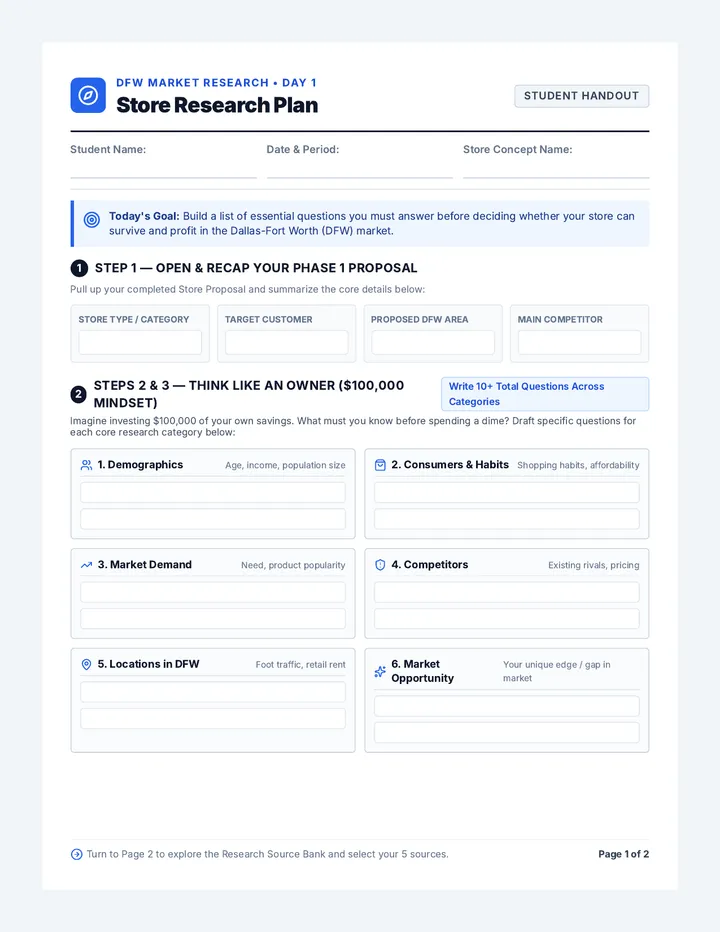
Market Research Plan Handout

Market Research Plan Handout

A clear two-page guided notes handout for students to map out their DFW store research questions, comprehensive credible source bank, and Phase 2 project milestones.

SB

Shanna Brady

Energy Crisis Rubric

Energy Crisis Rubric

A professional 5-point rubric for evaluating an essay on the economic impacts of the 2026 Iran War oil shortage. It breaks down 100 total points across six categories including claim quality, economic concepts, impact analysis, research, organization, and mechanics.

SB

Shanna Brady

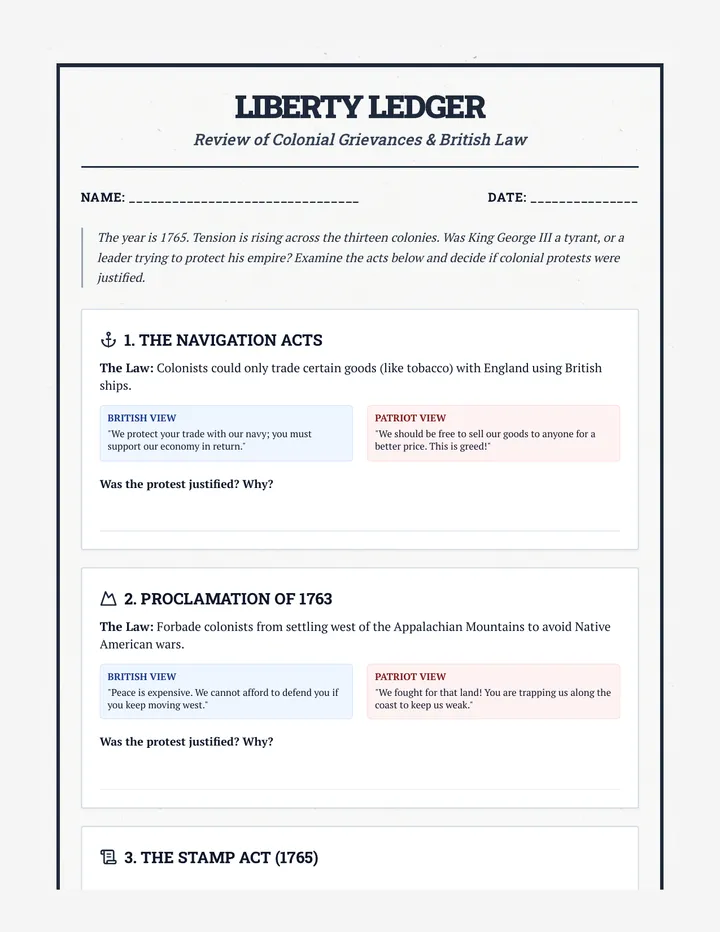
Liberty Ledger Assignment

Liberty Ledger Assignment

A two-sided homework assignment reviewing the Navigation Acts, Proclamation of 1763, and the Stamp Act. It prompts students to evaluate both British and Patriot perspectives to determine if colonial protests were justified. Margins have been significantly reduced for better print utilization on standard paper.

EK

Emily Kemnitz

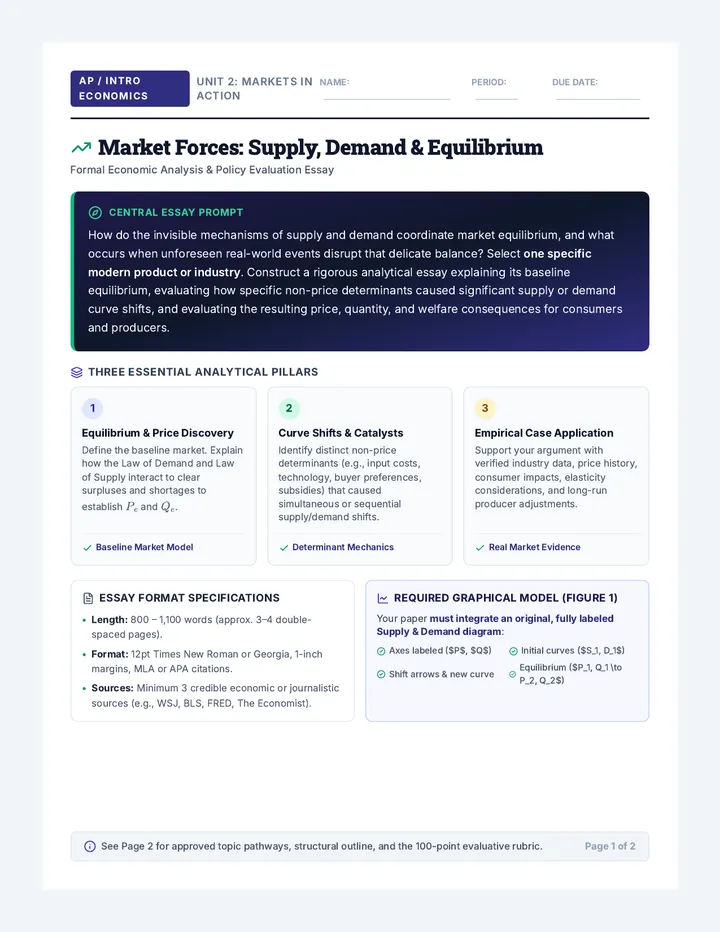
Market Forces Essay Assignment

Market Forces Essay Assignment

A comprehensive economics essay assignment guide challenging students to analyze market equilibrium, supply and demand shifts, and real-world market shocks, complete with structural guidelines and a detailed 100-point rubric.

LS

LeVar St Germain

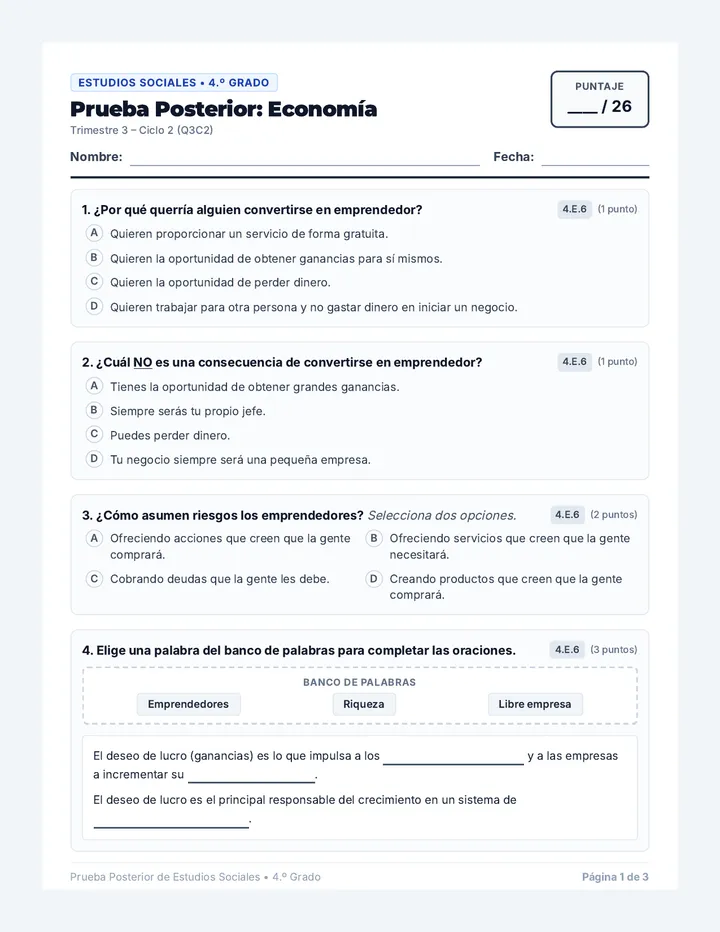
Indiana Economics Test

Indiana Economics Test

Una evaluación completa de ciencias sociales de cuarto grado traducida al español sobre economía, emprendimiento, oferta y demanda, historia del dinero y servicios públicos, diseñada en 3 páginas para impresión.

A

Amy.Hacker

Sequences

Economics Essentials Facilitation Guide

Economics Essentials Packet

A 7-day remediation packet for 12th-grade economics focusing on fundamental concepts like scarcity, supply and demand, economic systems, and international trade, scaffolded for accessibility.

CE

Chelsea Elliott

29
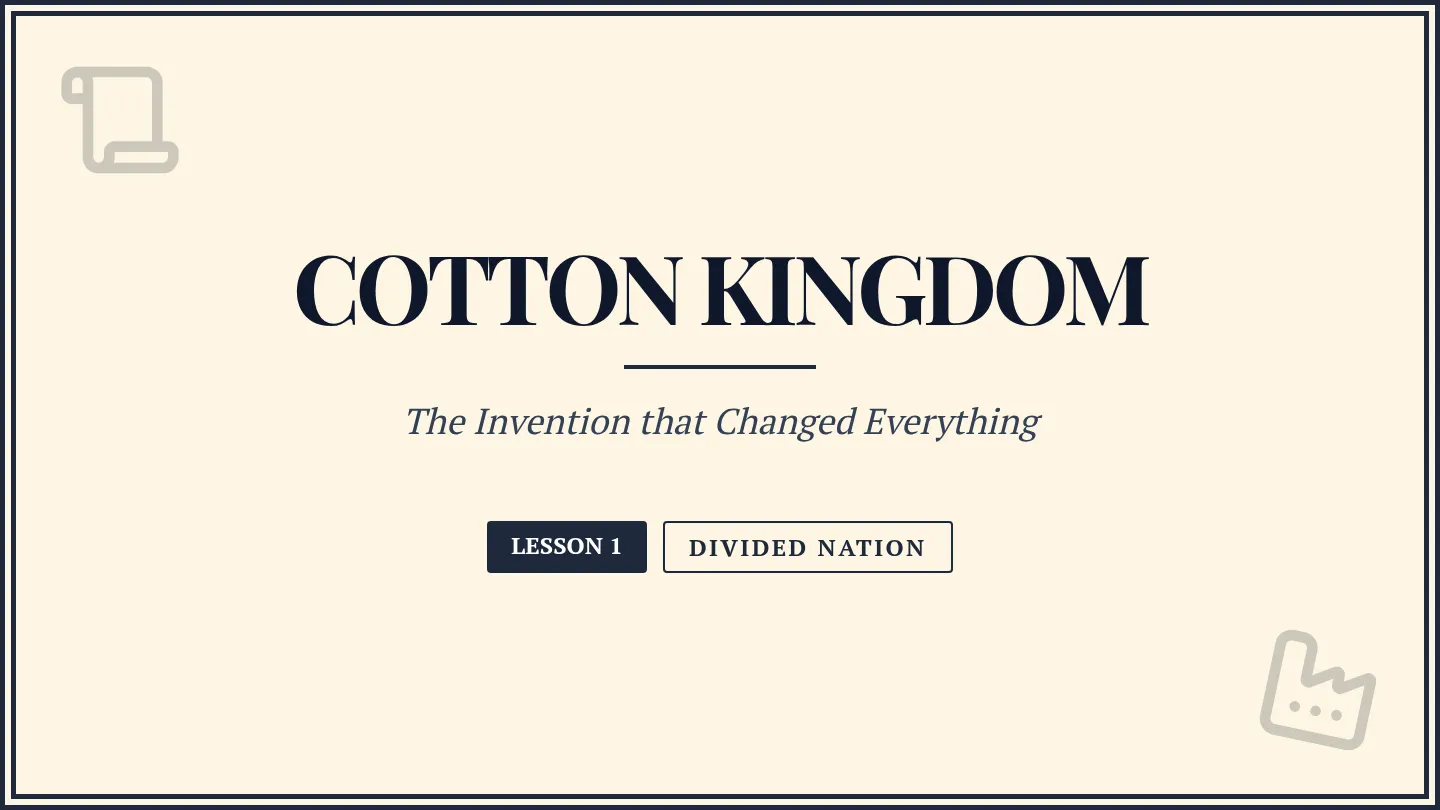
Cotton Kingdom Slides

Divided Nation

A 4-part exploration of the deep-seated tensions and pivotal events that led the United States to the brink of the Civil War, focusing on economic shifts, legislative compromises, and political flashpoints.

IA

Isabella Adkins

9
Mobilization Intro Slides

Global Conflict WWII

A comprehensive 2-day unit covering World War II for 11th Grade US History, aligned with TEKS. It focuses on the transition from isolationism to total war, the home front experience, major turning points in both the European and Pacific theaters, and the strategic decisions that ended the conflict.

BB

Bridgette Burdick

17
Rocky Ridges Slides

Northeast Navigator

A 5-lesson sequence exploring the geography, climate, resources, culture, and states of the Northeast region of the United States. Students will engage with reading passages, comprehension activities, and a states-and-capitals matching game.

NP

Natalie Pelletier

15
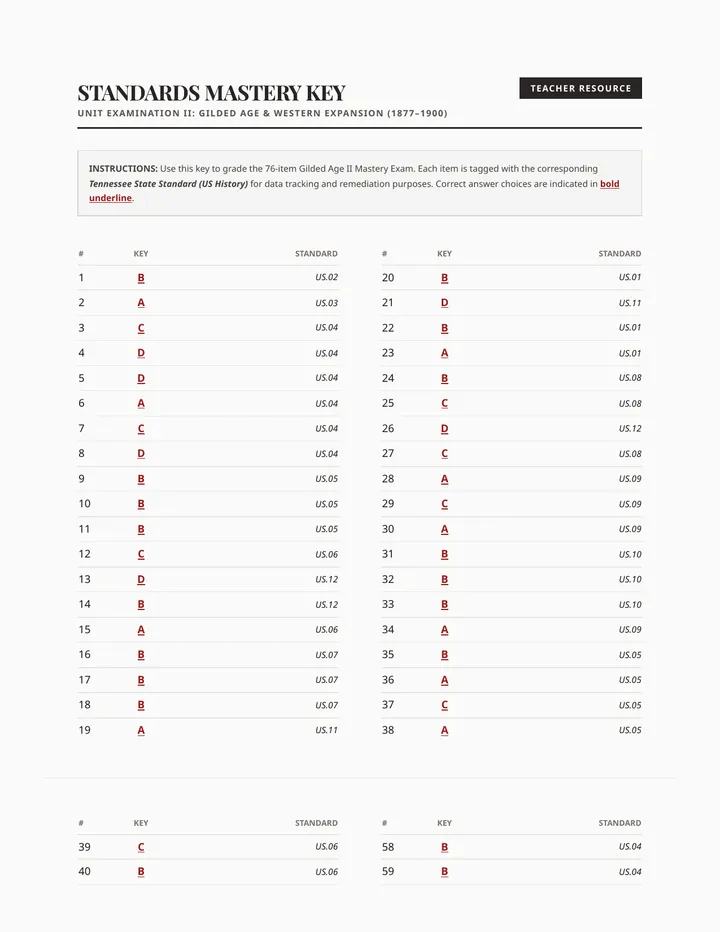
Gilded Age II Standards Key

Modern America Mastery

A comprehensive curriculum sequence covering late 19th and early 20th-century American history, focusing on economic transformation, Western expansion, global imperialism, and the impact of the Great War.

A

Andrew

29
Speculation Slides

Economic Collapse Sequence

This sequence immerses students in the economic mechanisms that led to the Great Depression, focusing on speculation, market failure, banking panics, and global contraction. Students move beyond memorizing dates to analyzing systemic failures through simulations, primary source analysis, and causal mapping.

12

Lessons

History Sprint Pacing Guide

STAAR History Sprint

A comprehensive pacing guide and activity resource designed to cover the remaining 11th Grade US History TEKS before the STAAR test on April 16th. This lesson provides a day-by-day calendar for A/B block schedules and high-engagement activities for each remaining historical era.

BB

Bridgette Burdick

51
Modern Era Reader Part 1

The Modern Ledger

A comprehensive exploration of the 1990s through the modern day, covering technological shifts, political milestones, military conflicts, and cultural evolution in the United States.

CE

Chelsea Elliott

20
Jersey Creator Activity

World Stage Kickoff

A 45-minute lesson for 10th-grade ELL students exploring the history and global impact of the FIFA World Cup through reading, narrative analysis, and creative design.

KB

Kathleen Basoco

5
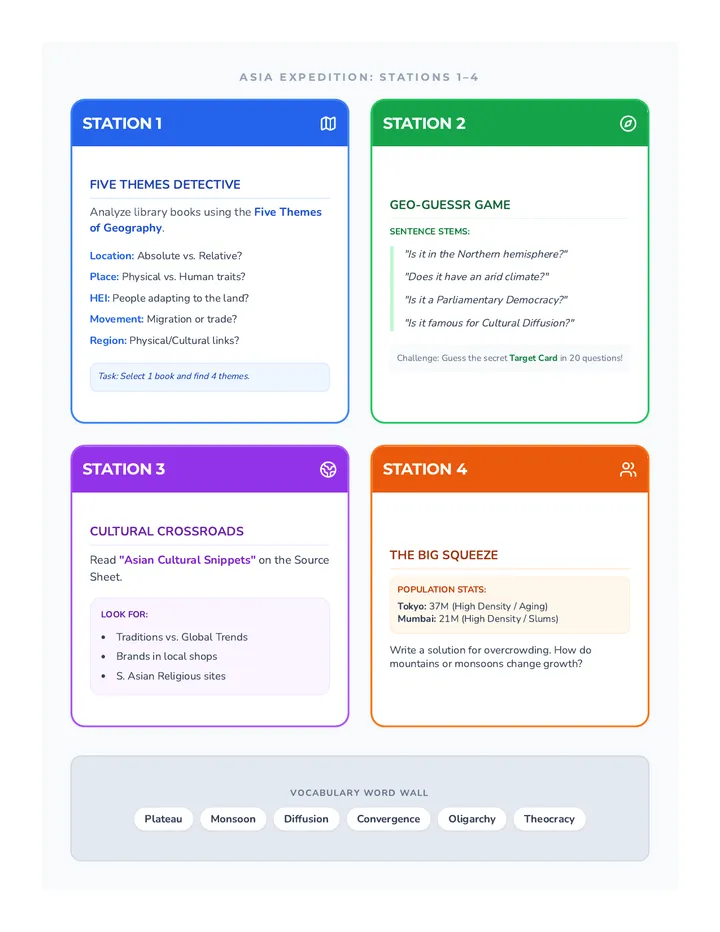
Asia Expedition Task Cards Resource

Asia Expedition Stations

A set of five interactive learning stations focused on the physical and cultural geography of Asia, including population challenges, globalization, and natural disasters. Students practice reading, writing, listening, and speaking skills while analyzing the five themes of geography.

JR

Jessica Ross

4
PEGS Illustrated Wall Posters

PEGS Social Studies Framework

A comprehensive lesson plan and visual asset kit introducing the PEGS (Political, Economic, Geographic, Social) framework for social studies analysis. Includes vibrant illustrated wall posters, elegant minimalist binder inserts, educational slides, a student application worksheet, and a teacher's facilitation guide.

CE

Chelsea Elliott

5
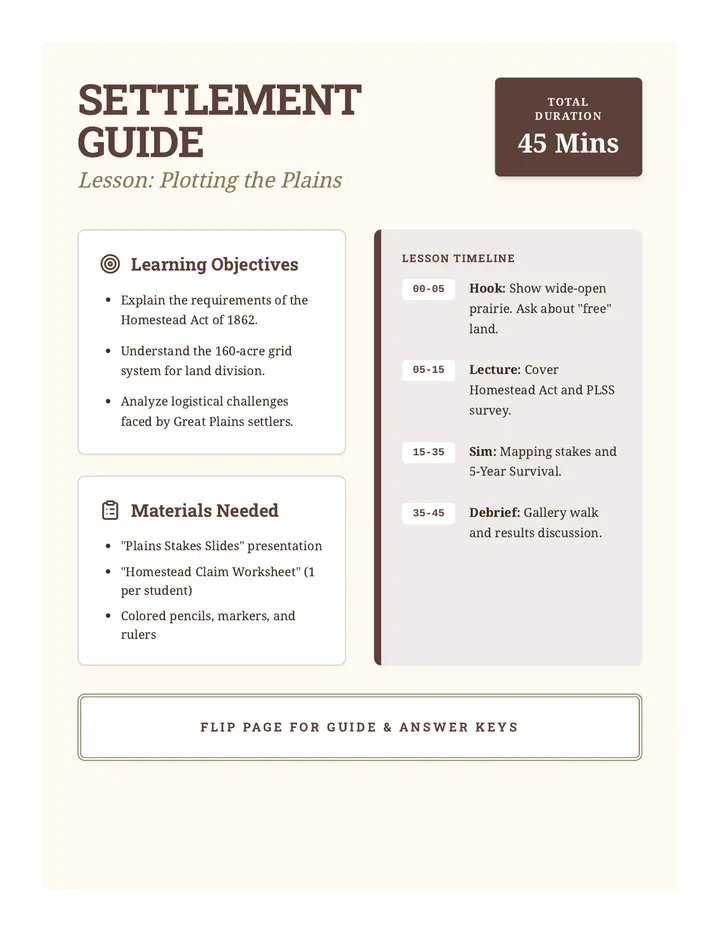
Settlement Guide Teacher Notes

Plotting the Plains

This lesson explores the Homestead Act of 1862 and the logistical realities of settling the American West, focusing on the grid system and survival challenges.

LB

Laurie Baron

3