Lenny.com
Explore
Create
ActivitiesNewMathEnglish Language ArtsScience & EngineeringSocial StudiesGlobal LanguagesHealth & Physical EducationSpecial EducationCounseling & Life SkillsArts & CreativityESL
Lenny.com
Lenny.com
Explore
Create
ActivitiesNewMathEnglish Language ArtsScience & EngineeringSocial StudiesGlobal LanguagesHealth & Physical EducationSpecial EducationCounseling & Life SkillsArts & CreativityESL
Lenny.com
Lenny.com

Solutions

Lenny for EducatorsLenny for SchoolsLenny for Districts

Product

ExploreSign inCreateSupportAbout

Resources

Getting startedMTSS Acceleration Program

© 2026 Lenny Learning Inc.

TermsPrivacyAccessibility
LinkedInInstagramX
Lenny

Comparing Materials

Physical properties like hardness, flexibility, and transparency across various substances. Students evaluate material suitability for specific engineering or artistic purposes through systematic testing and classification.

Science & EngineeringLife ScienceLiving ThingsAnimalsPlantsBody SystemsTraitsAdaptationsCellsEcosystemsHeredityGenes to TraitsCell DivisionPhysicsComparing MaterialsShapes and PropertiesMagnetsMagnetismLightSoundLight and SoundMatterStates of MatterChanges of StateMixturesPhysical and Chemical ChangeHeating and CoolingHeat and Thermal EnergyEnergyForce and MotionElectrical CircuitsAtoms and MoleculesPeriodic TableMotion in One DimensionMotion in Two DimensionsScalars and VectorsForces and Laws of MotionCircular Motion and GravityMomentum and ImpulseWork, Energy, and PowerWavesElectromagnetic WavesGeometric OpticsElectricity and MagnetismSimple Harmonic MotionThermodynamicsNuclear PhysicsEarth Science & AstronomyWeatherWater CycleRocks and MineralsFossilsEarth's FeaturesEarth's ResourcesEarth's StructureWeather and ClimateEarth EventsFossils and Geologic TimePlate TectonicsHuman ImpactsAstronomyChemistryUnits and MeasurementAtomic StructurePeriodic TrendsChemical BondingNomenclatureMolecular StructureIntermolecular ForcesThe MoleStoichiometryProperties of GasesSolutionsChemical ReactionsBalancing EquationsEnergy ChangesRates of ReactionsEquilibriumAcids and BasesQuantum ModelBiologyClassificationCell StructureThe Chemistry of LifeBiomoleculesCellular TransportCell EnergyCell Growth and DivisionDNAProtein SynthesisMeiosis and Sexual ReproductionPatterns of InheritanceMulticellular OrganismsEvolutionEcologyBiodiversityComputer ScienceAlgorithms and Computational ThinkingProgramming LanguagesComputing SystemsNetworks and InternetData AnalysisCybersecurityAI and Machine LearningSoftware Design and DevelopmentBlockchainEngineering & AIDesigning ExperimentsEngineering PracticesDesign ThinkingEngineering Design ProcessMechanical EngineeringElectrical EngineeringMaterials and StructuresCAD and 3D DesignRoboticsArtificial Intelligence BasicsVibe CodingMachine LearningAI Ethics and SocietySystems ThinkingEntrepreneurship & InnovationEntrepreneurial MindsetBusiness Idea DevelopmentBusiness Plan BasicsMarketing & Customer DiscoveryFinancial Management for Startups

Videos

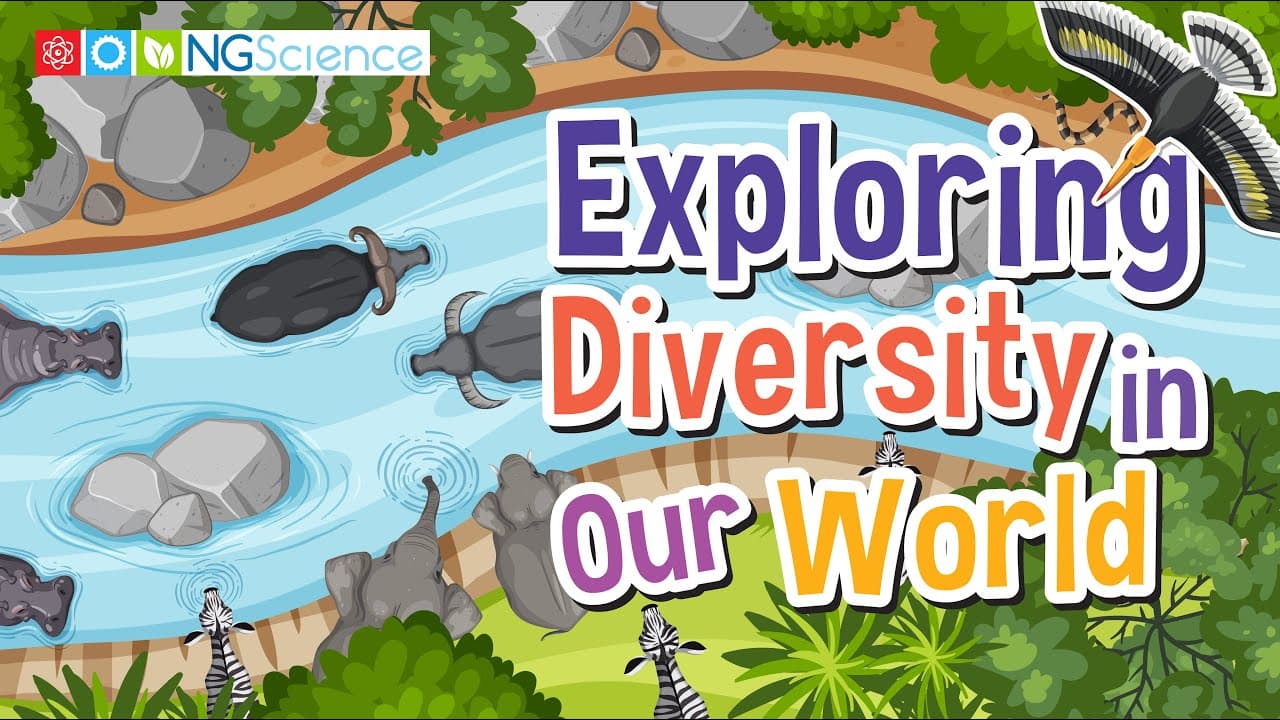
Classifying Living and Non-Living Things in Our World

Classifying Living and Non-Living Things in Our World

This educational video introduces students to the vast diversity of the world around them, focusing on the fundamental distinction between living and non-living things. Through high-quality footage of nature and human-made environments, viewers are taken on a visual journey that explores plants, animals, fungi, and microorganisms, contrasting them with non-living elements like rocks, water, and air. The narrative explains that while these categories differ, they are deeply interconnected, as living organisms rely on non-living elements to survive. The video covers key scientific themes including biological classification, the basic needs of living organisms (food, water, air, reproduction, growth), and the properties of non-living materials (wood, metal, plastic, etc.). It introduces the concept of classifying objects based on similarities and differences to make sense of the world's complexity. Additionally, it touches on material science by describing properties like strength, flexibility, and buoyancy. For educators, this video serves as an excellent anchor for units on biology, environmental science, or matter. It provides clear visual examples that help students practice observation and classification skills. The content naturally leads to lessons on sorting living vs. non-living items, investigating material properties, or discussing environmental stewardship, making it a versatile tool for early elementary science curriculums.
Next Generation ScienceNext Generation Science

4mins 20s

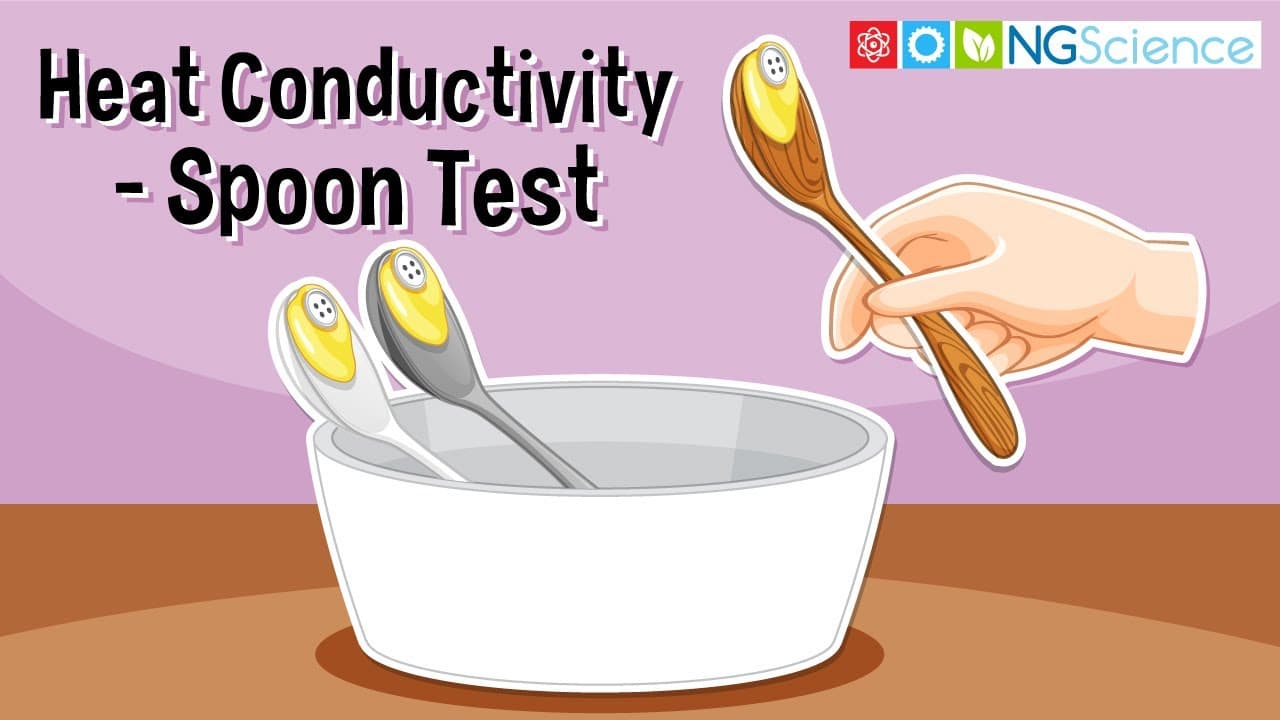
How Different Materials Conduct Heat

How Different Materials Conduct Heat

This educational video provides a clear, hands-on demonstration of heat conductivity using a simple comparative experiment. The video investigates how thermal energy travels differently through three distinct materials: metal, wood, and plastic. By placing spoons made of these materials into hot water, viewers observe which material conducts heat most effectively to melt a piece of margarine holding a button in place.

Next Generation ScienceNext Generation Science

2mins 37s

Testing Which Metals Are Magnetic

Testing Which Metals Are Magnetic

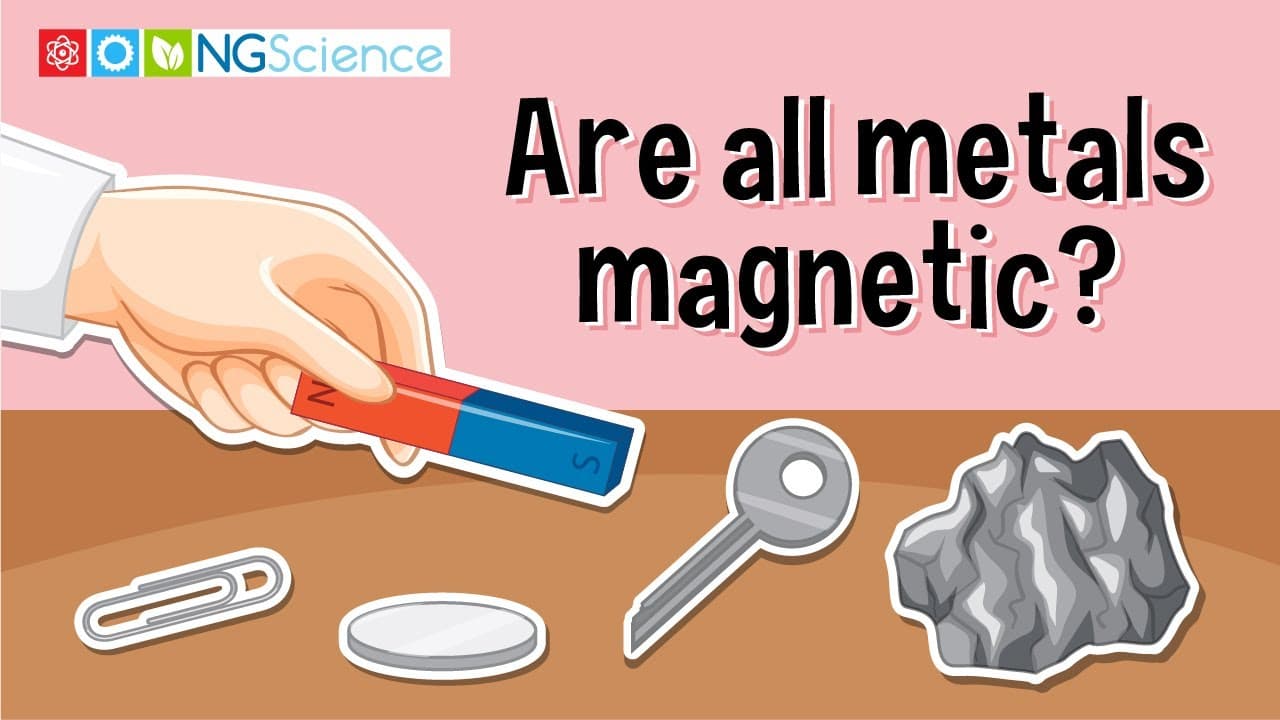
This concise science demonstration investigates the relationship between magnets and various metal objects to determine which materials possess magnetic properties. Through a clear, step-by-step experiment, the narrator tests common household items—like keys, coins, and safety pins—against a U-shaped magnet. The video explicitly tests the hypothesis that "all metals are magnetic" by showing that while all the test objects are metallic, only some interact with the magnet. The core themes explore the physical properties of matter, specifically magnetism and material composition. It introduces the fundamental scientific concept that magnetism is a property specific to certain metals (ferromagnetic materials) rather than a general property of all metals. The video concludes by identifying specific elements—iron, nickel, and cobalt—that are magnetic, contrasting them with non-magnetic metals like aluminum, copper, and silver. For educators, this video serves as an excellent hook or demonstration for units on physical science and properties of matter. It directly addresses the common student misconception that magnets stick to all metals. The clear visual evidence of the key and coin failing to stick provides a memorable "discrepant event" that sparks inquiry. It lays the groundwork for understanding material composition and classification, making it valuable for early elementary science curriculums.
Next Generation ScienceNext Generation Science

1min 53s

Sink or Float: Testing Common Objects

Sink or Float: Testing Common Objects

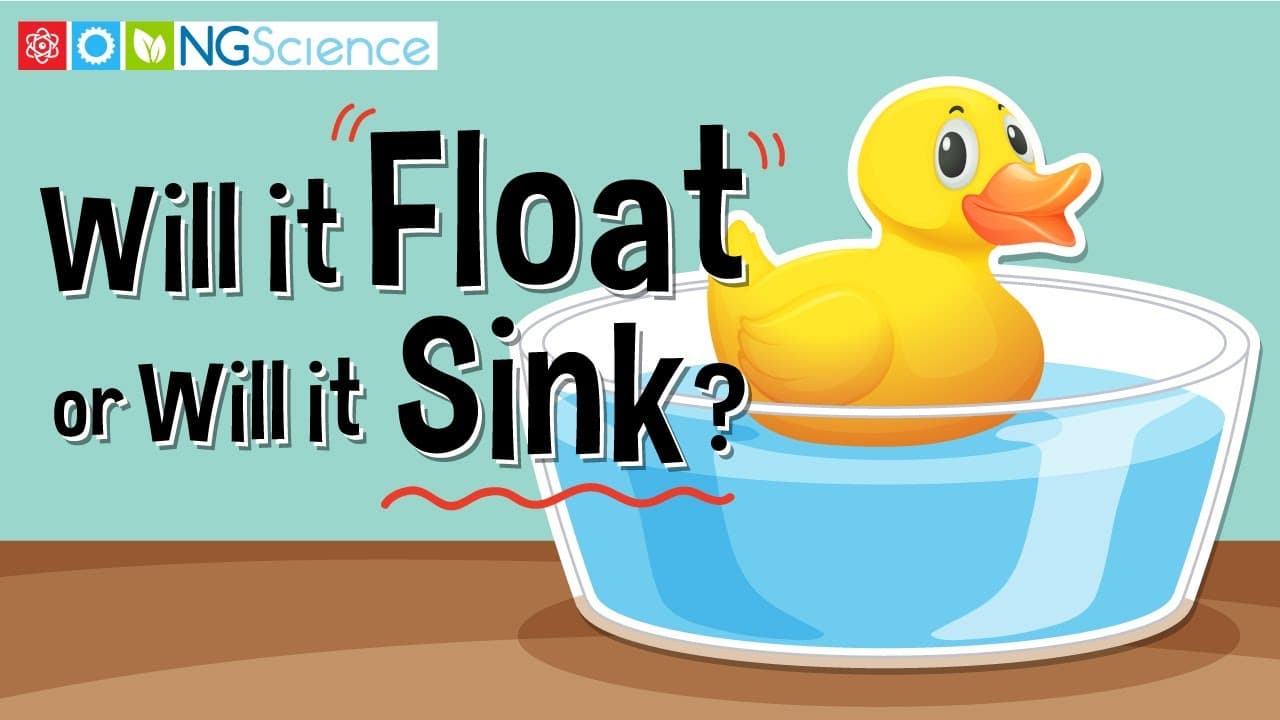
This engaging science video conducts a classic "Sink or Float" experiment, testing eleven common household objects to see how they interact with water. Using a clear tank and blue-tinted water for high visibility, the video systematically introduces an object, demonstrates dropping it into the water, and clearly labels the result as either "Sink" or "Float." The consistent pacing and clear visual cues make it an excellent resource for young learners to practice observation and prediction skills. The video explores key themes of buoyancy, density (at an introductory level), and material properties. It contrasts materials that typically sink, such as metal (lead ball, safety pin, paper clip) and dense rubber, with materials that float, like wood and certain plastics. It also implicitly addresses the concept that size does not determine buoyancy, as small heavy items sink while larger light items like the wooden block float. For educators, this video serves as a perfect digital demonstration to anchor a physical science unit on properties of matter. It allows teachers to pause before each drop to solicit student predictions, turning a passive viewing experience into an interactive game. It can be used to introduce the scientific method (predict, observe, record), prompt discussions about why certain materials float while others sink, or serve as a hook before a hands-on classroom water table activity.

Next Generation ScienceNext Generation Science

3mins 35s

Comparing Heat Conductivity: Metal vs. Glass Experiment

Comparing Heat Conductivity: Metal vs. Glass Experiment

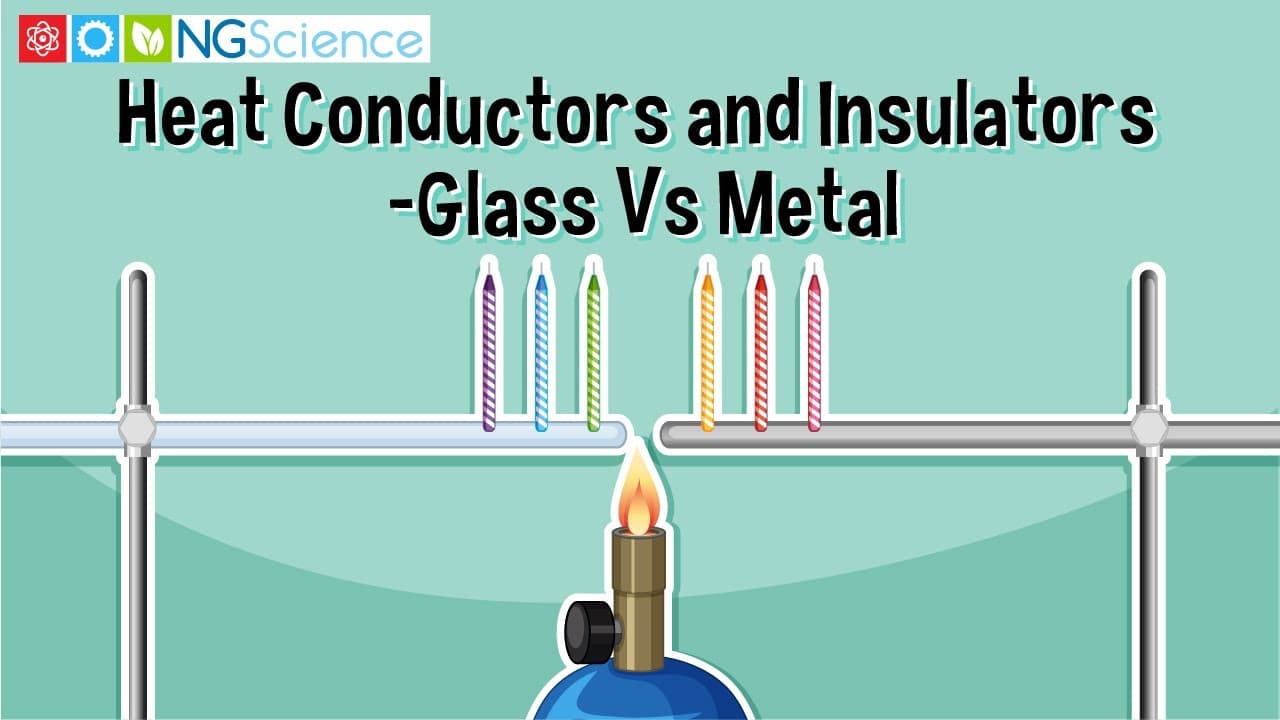
This concise science demonstration visualizes the concept of thermal conductivity by comparing how heat travels through metal versus glass. Set against a high-contrast background, the video features a clear experiment where candles are attached to metal and glass rods using wax. As a central heat source is applied, viewers can observe the progressive melting of the wax on the metal rod, demonstrating how heat energy transfers through conductive materials over time. The video introduces key physics vocabulary including thermal energy, conductors, insulators, and heat transfer. It explicitly addresses the direction of heat flow (from hot to cold) and provides a side-by-side comparison that makes the abstract concept of material properties concrete for young learners. The distinct visual result—candles falling off the metal rod while staying put on the glass rod—serves as immediate, observable evidence. Teachers can use this video to anchor lessons on energy transfer, material science, or the scientific method. It provides an excellent phenomenon for students to observe, predict, and explain. The clear setup allows for easy replication in a lab setting, or serves as a safe virtual alternative for classrooms without access to Bunsen burners. It naturally leads into discussions about why we use specific materials for cooking pans versus handles, or building insulation.

Next Generation ScienceNext Generation Science

2mins 15s

How Light Energy Travels and Interacts with Matter

How Light Energy Travels and Interacts with Matter

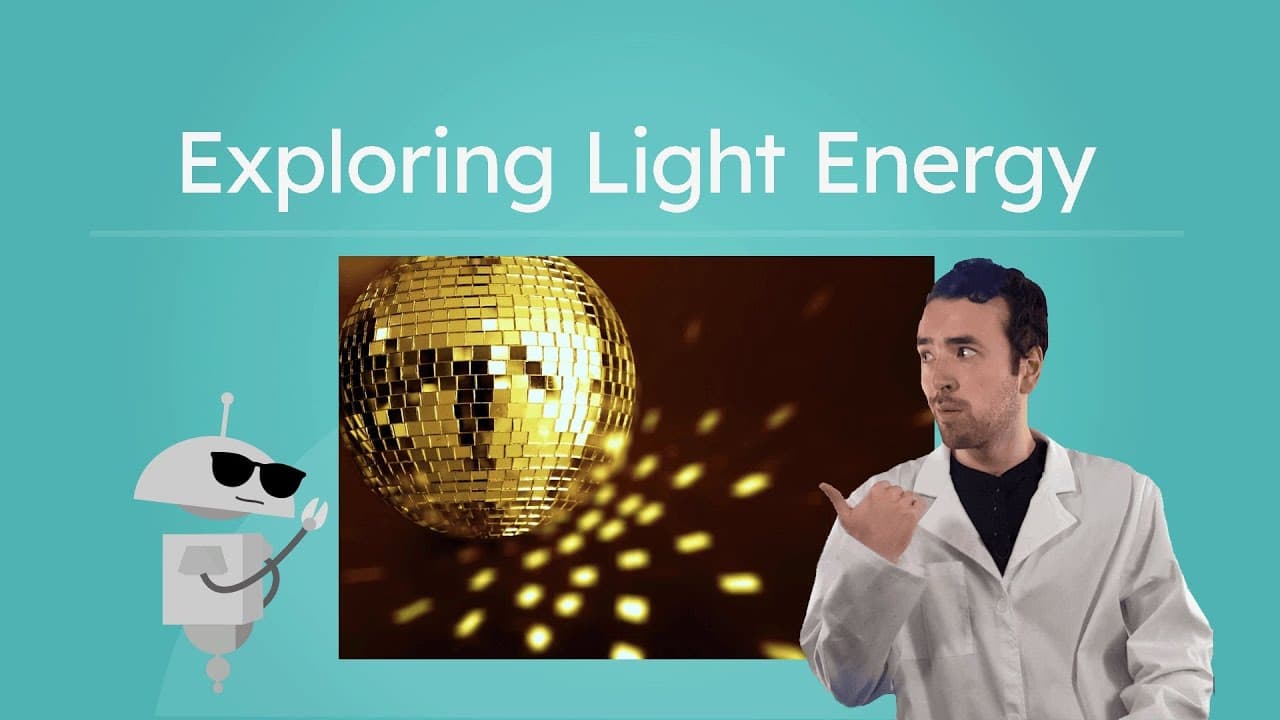
This engaging educational video introduces students to the fundamental concepts of light energy, explaining its nature, speed, and how it interacts with the material world. The lesson begins by defining light as a form of energy that travels in straight lines called rays, highlighting the Sun as our primary source and illustrating the immense speed at which light travels through space. Through clear visual examples and energetic narration, the host breaks down complex behaviors of light including reflection and refraction. The video dives deep into how we perceive our environment, demonstrating that sight is actually the result of light bouncing off objects and entering our eyes. It categorizes materials based on how they transmit light, defining key vocabulary such as transparent, translucent, and opaque with relatable real-world examples like windows, sunglasses, and walls. The concept of refraction is also explored, explaining optical illusions like a "broken" straw in water and how corrective lenses work. Teachers can utilize this video as a comprehensive introduction to optics and light energy for elementary and middle school science curriculums. The content effectively bridges the gap between abstract physical concepts and observable phenomena, making it an excellent launchpad for hands-on experiments involving mirrors, lenses, and shadow play. The clear definitions and "pause and think" moments provide natural breaks for classroom discussion and formative assessment.
Miacademy & MiaPrep Learning ChannelMiacademy & MiaPrep Learning Channel

8mins 8s

Materials

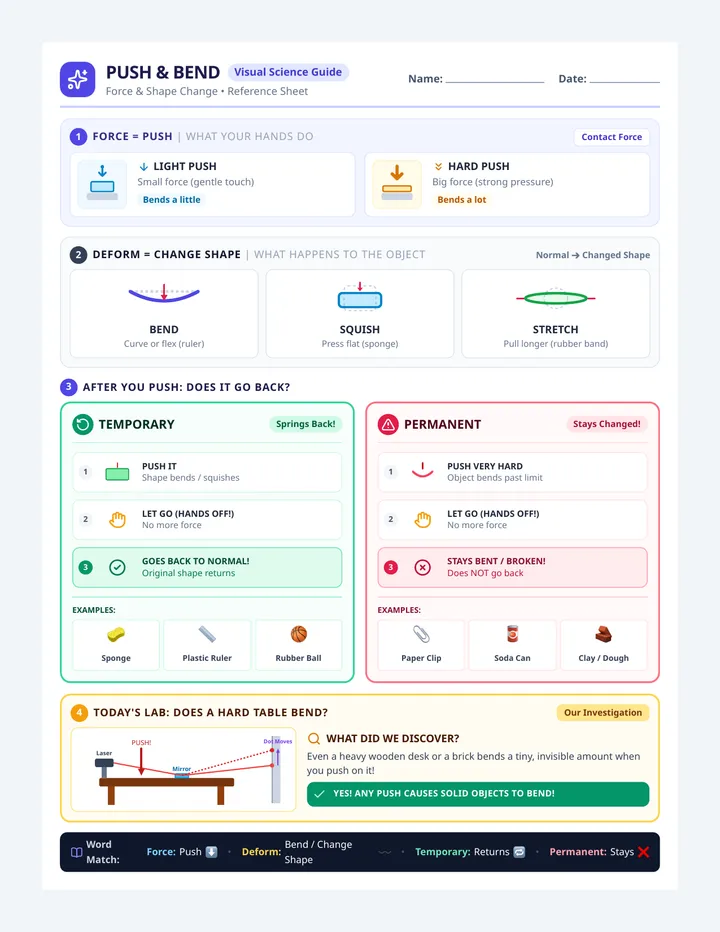
Push and Bend Reference Sheet

Push and Bend Reference Sheet

A dual-language (English and Spanish) visual reference sheet designed for WIDA Level 1 English language learners exploring contact forces and material deformation. Features step-by-step illustrated sequences, clear cognates, and the laser-and-mirror tabletop investigation.

N

nebouchard

Magnetic Pull Anchor Chart

Magnetic Pull Anchor Chart

An Upper Elementary science anchor chart poster comparing magnetic and non-magnetic everyday objects, featuring key ferromagnetic metals (iron, steel, nickel, cobalt), common non-magnetic metals (aluminum, copper), non-metals, and misconception alerts.

RM

Rosalyn Mcrae

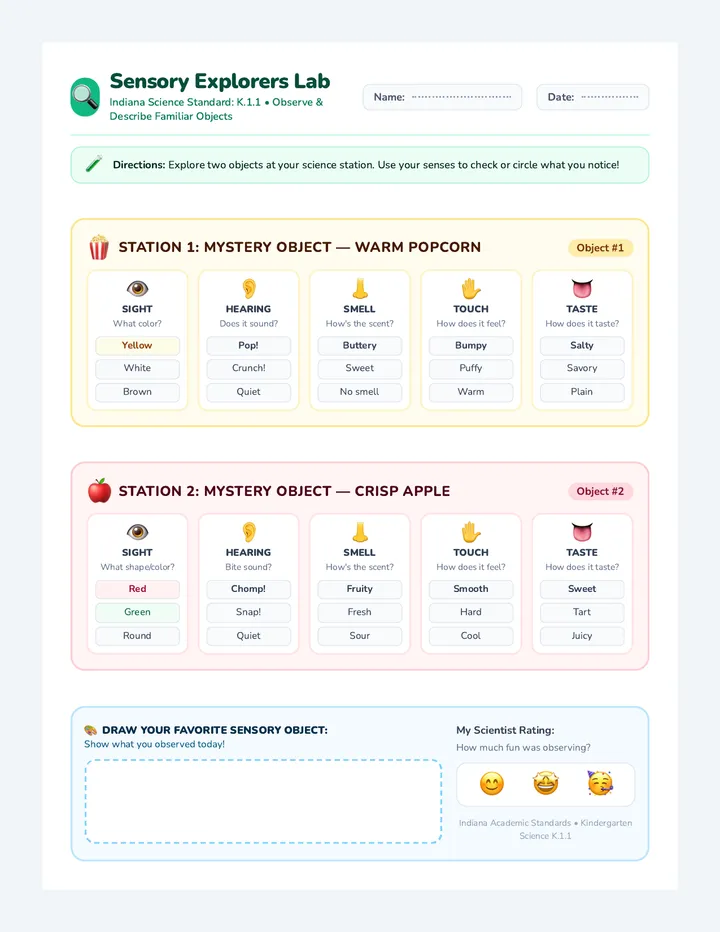
Sensory Explorers Activity Sheet

Sensory Explorers Activity Sheet

A kindergarten science activity sheet aligned with Indiana Academic Standards K.1.1 and K.1.2. Students use their five senses to investigate, describe, and sort familiar objects through hands-on guided sensory stations and an observation scavenger hunt.

S

Stacey.Oden

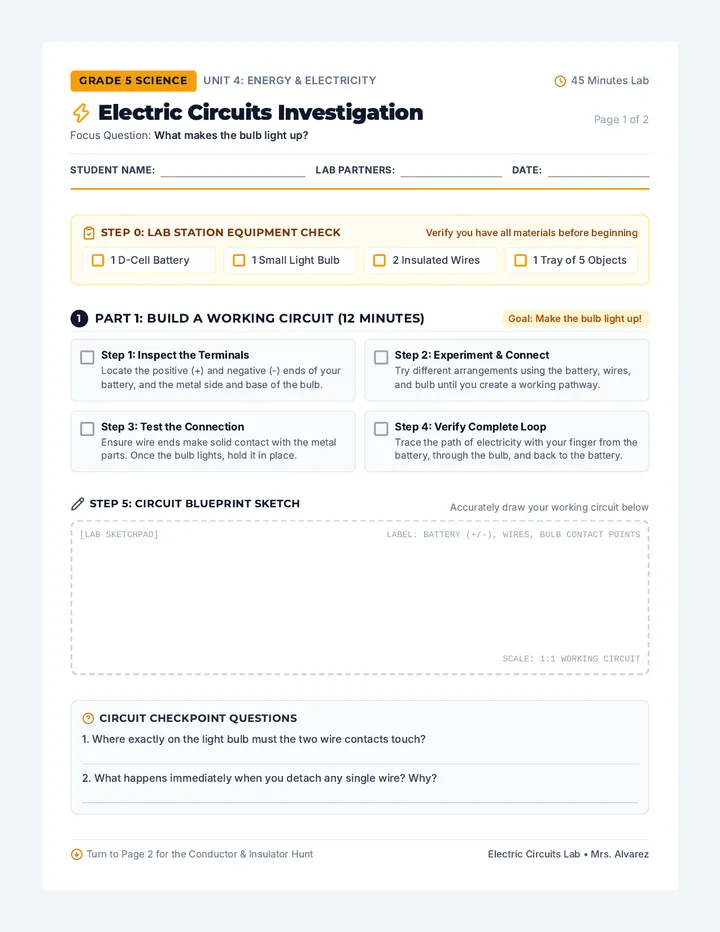
Circuit Sparks Activity Guide

Circuit Sparks Activity Guide

A printable two-page Grade 5 science activity guide and checklist that adapts the electric circuits lesson into clear numbered investigation steps, apparatus checklists, a circuit diagram sketchpad, a conductor testing table, and an exit reflection.

Sequences

Straight Shooters Slides

Light Speed

A comprehensive 5-lesson unit for 4th graders exploring the properties of light energy, including how it travels, reflects, refracts, and interacts with different materials.

NP

Natalie Pelletier

20
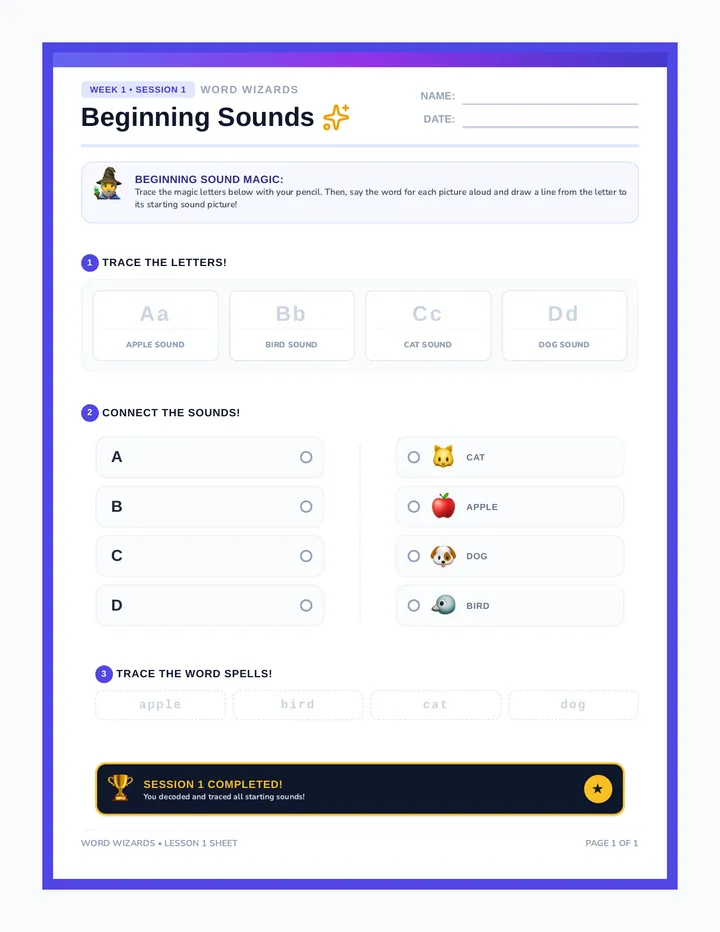
Beginning Sounds Worksheet

Word Wizards

An engaging, high-impact 4-week literacy skills program for young learners. Features highly visual, fun printable worksheets focusing on beginning letter sounds, CVC phonics blending, sight word reading, and short stories.

Z

ziad

18
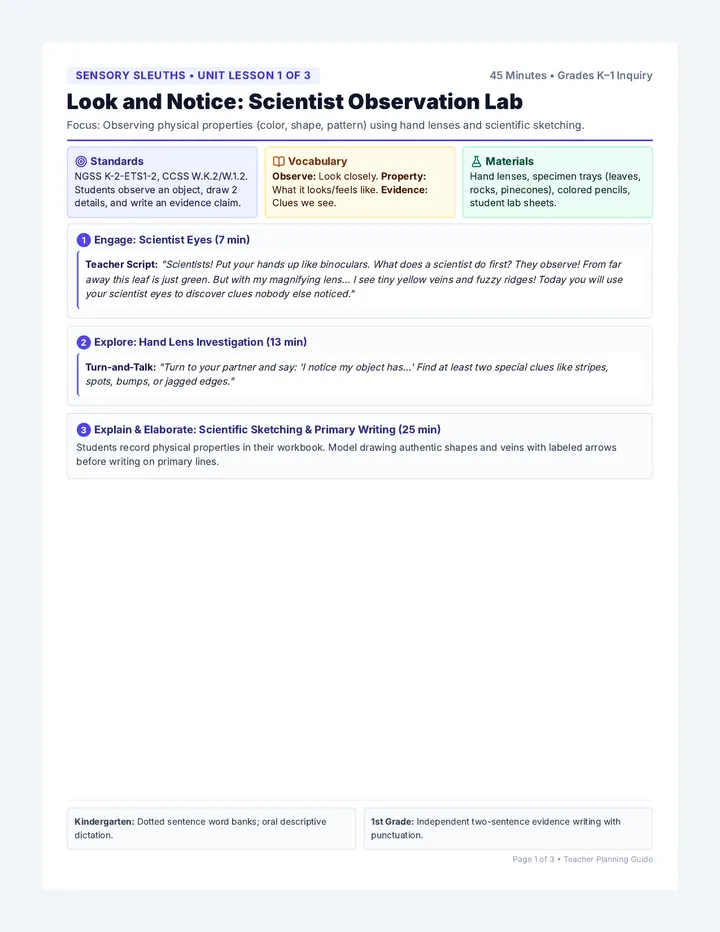
Sensory Teacher Guide

Wonder Lab Science

A comprehensive K-1 inquiry curriculum organized into unified multi-page unit booklets: Sensory Sleuths and Weather Detectives. Includes complete scripted teacher lesson guides, standard student investigation workbooks with primary handwriting lines, and adapted hand-over-hand workbooks for nonverbal learners.

K

kaitlyn.kingman

6
Bottle Magic Teacher Guide

Sensory Explorers

A four-day immersive sensory science sequence for K-3 students, exploring different materials, textures, and chemical mixtures through hands-on creation and observation.

VJ

Vicky Jaime

14
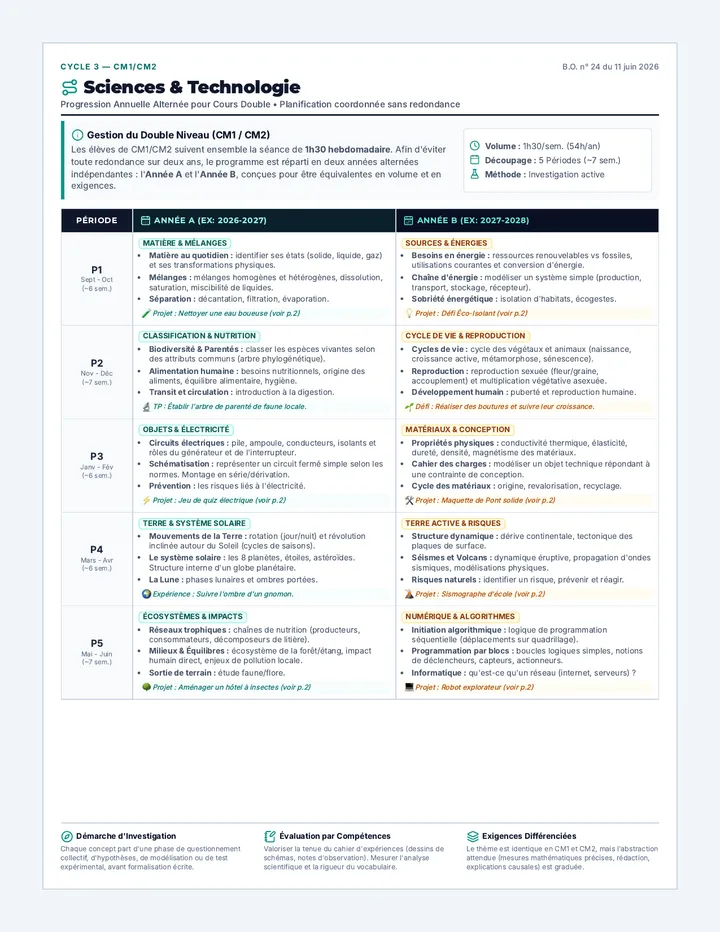
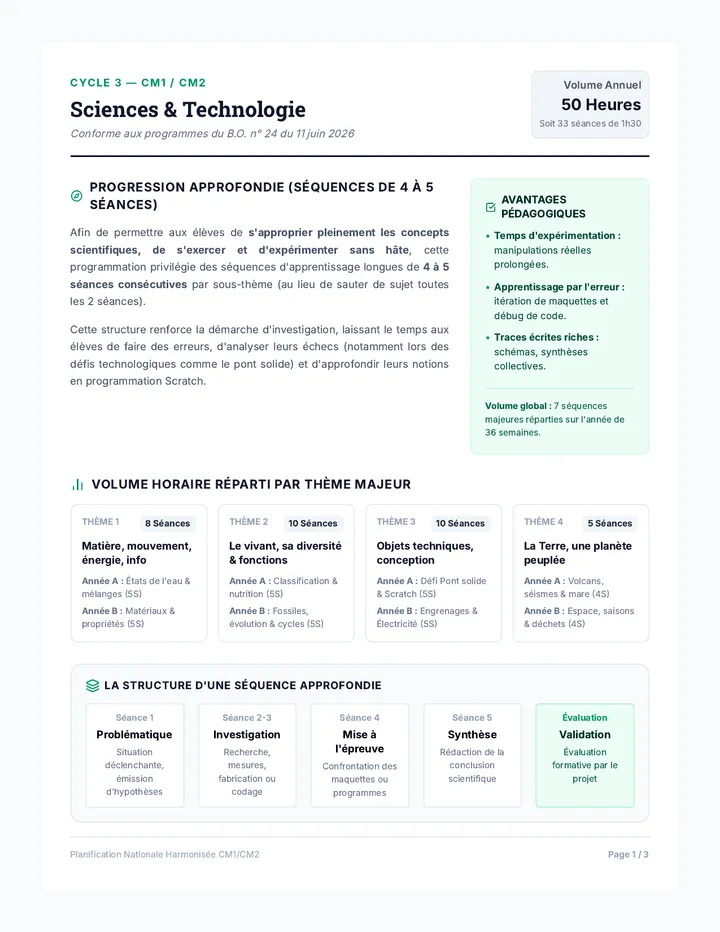
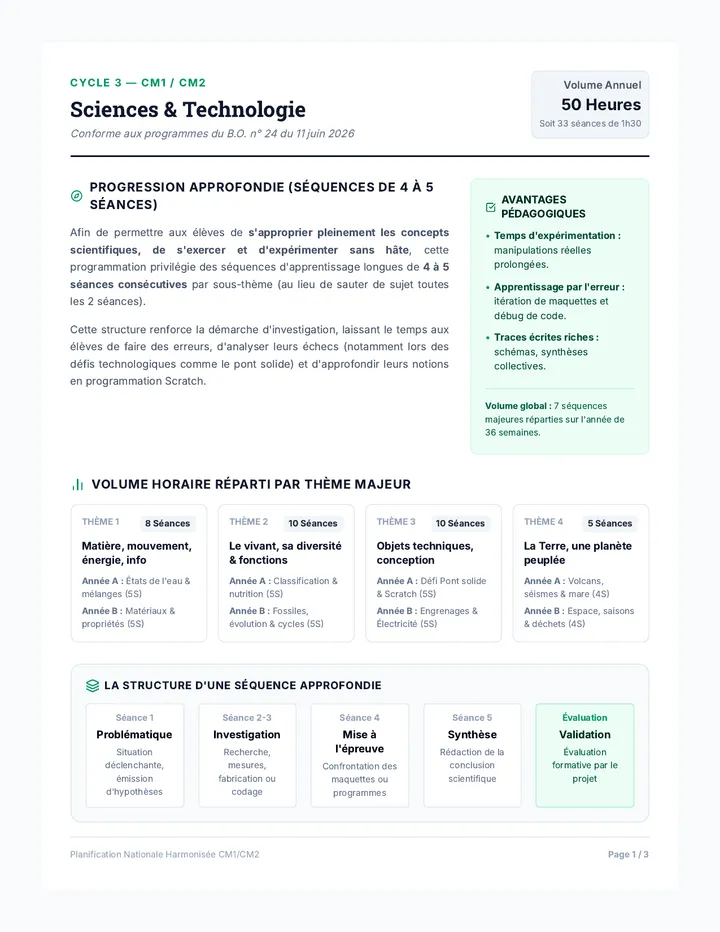
Progression Annuelle Document

Sciences et Technologie CM1 CM2

Progression annuelle de Sciences et Technologie pour double-niveau CM1/CM2, structurée selon le BO de juin 2026, alternant Année A et Année B.

LP

LAURENT PERCHE

1
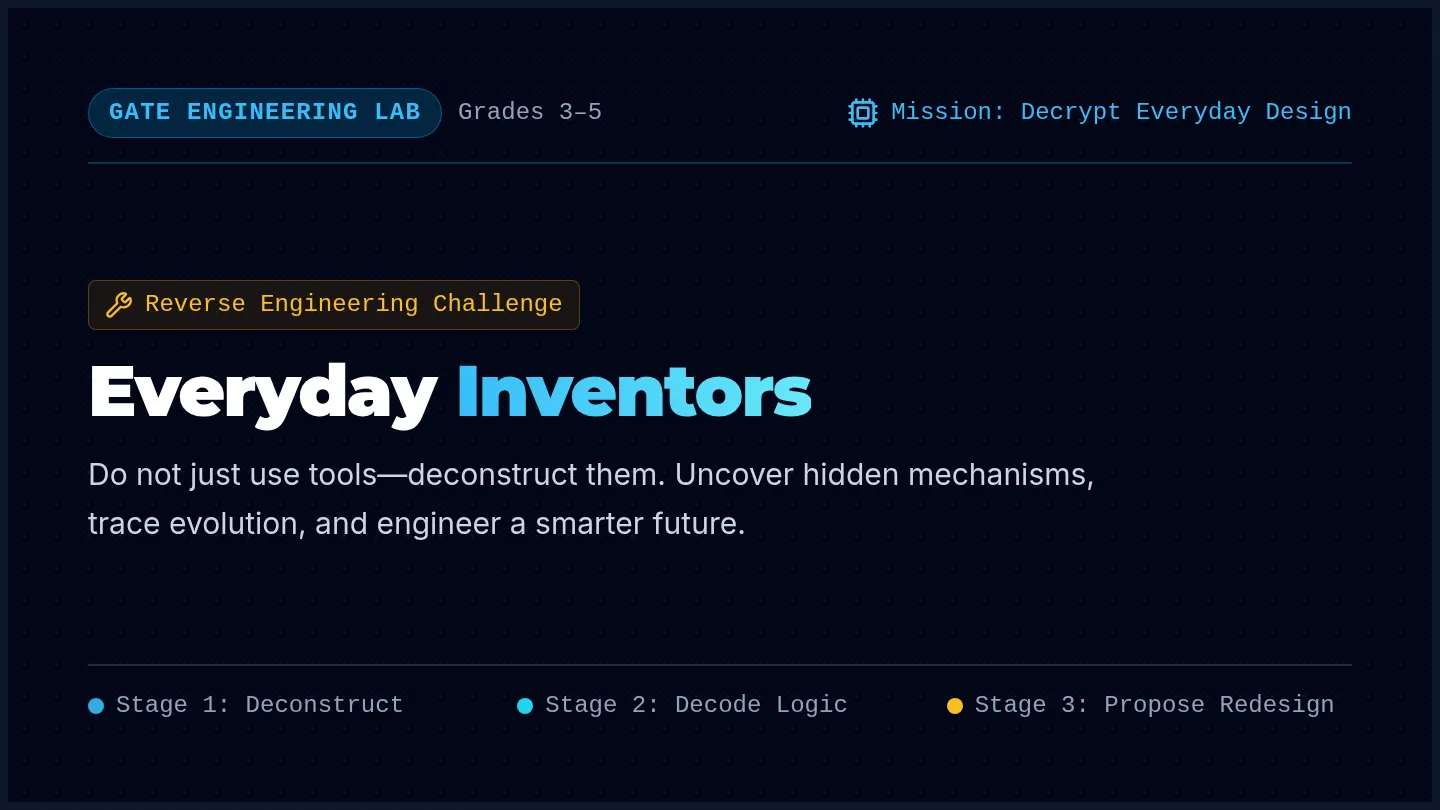
Reverse Engineering Launch Slides

Everyday Inventors

An intensive GATE reverse engineering sequence for grades 3 to 5 where students deconstruct common objects, analyze their structural logic through depth and complexity lenses, and engineer next-generation improvements.

VS

Vivian Sellwood

4

Lessons

Tableau Progression Annuelle Sciences CM

Progression Sciences CM1 CM2

Outil de planification annuelle et de progression pour l'enseignement des sciences et technologies en classe de CM1/CM2, conforme au BO de juin 2026. Ce guide propose une répartition claire des volumes horaires et des thèmes entre l'année A et l'année B pour éviter les redondances dans les classes à double niveau.

LP

LAURENT PERCHE

40
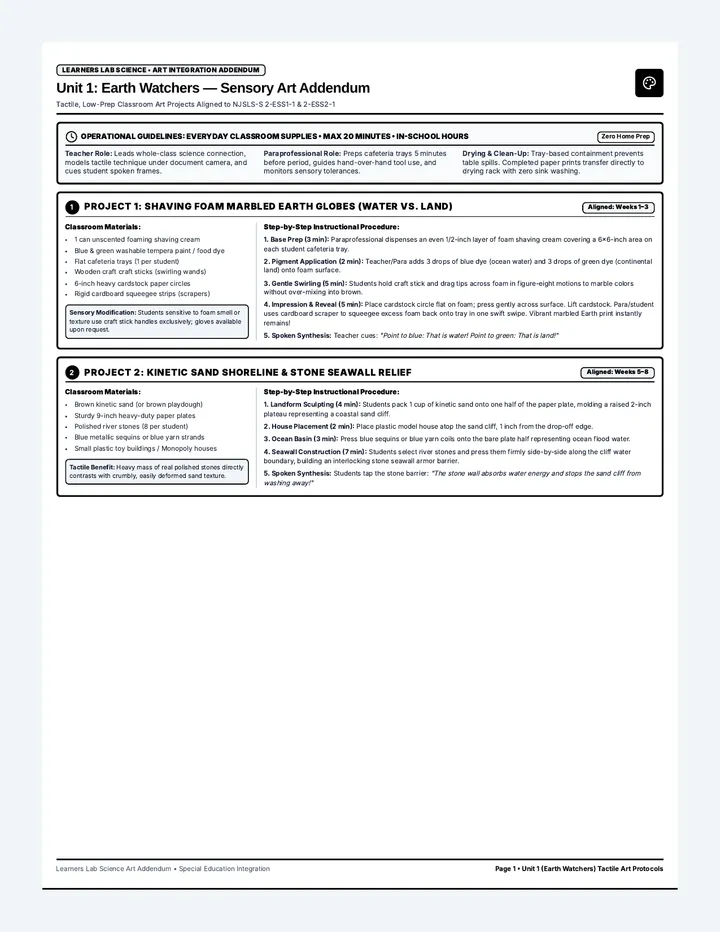
Learners Lab Science Art Addendum

Learners Lab Science

An adapted special education science curriculum framework aligning NJSLS-S standards across grades 2-4 with functional access points, 25-minute multi-sensory inquiry lessons, and rigorous tiered expression.

JE

jenn edwards

21
Shadow Detectives Slides

Shadow Sleuths

A comprehensive first-grade science exploration on light and shadows. Students investigate how light travels, how opaque objects block light to create shadows, how the sun's position changes shadow length and direction, and how to create shadow puppets.

JE

Joselynn Escobar

4
Leprechaun Lab Slides

Leprechaun Lab

Students design and build a STEM leprechaun trap inspired by 'How to Catch a Leprechaun', focusing on multi-step directions and problem-solving through the engineering design process.

E

erodems

5
Matter Masters Frayer Packet

Matter Foundations Lab

An introductory physical science lesson exploring foundational matter concepts including atoms, elements, properties, and states of matter through multi-modal vocabulary organizers and differentiated supports.

PL

Patrick l

7
Tableau Progression Annuelle Sciences CM

Progression Sciences CM1 CM2

Outil de planification annuelle et de progression pour l'enseignement des sciences et technologies en classe de CM1/CM2, conforme au BO de juin 2026. Ce guide propose une répartition claire des volumes horaires et des thèmes entre l'année A et l'année B pour éviter les redondances dans les classes à double niveau.

L

Laurent

11