Original People Reading Passage
Indigenous Peoples Studies | Social Studies & Reading
Name: Date:
Culture, Community, & Lifeways
The Lenape: "The Original People"
Discovering the traditions, family clans, seasonal rhythms, and homes of the Delaware people.
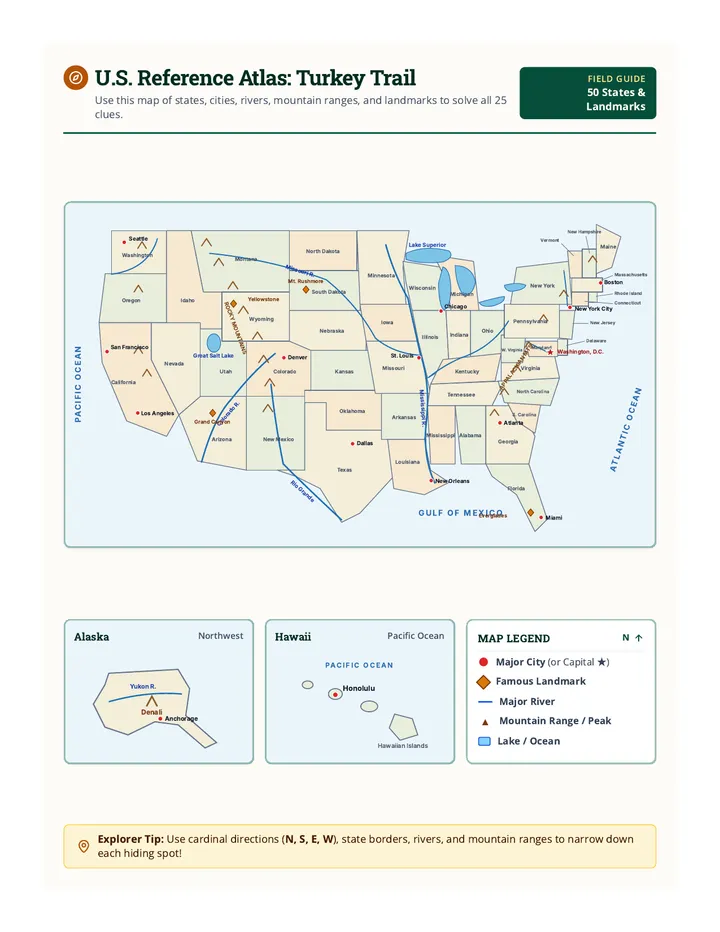
Long before European settlers arrived, the eastern woodlands were home to the Lenni-Lenape (pronounced leh-NAH-pay), meaning "true people" or "original people." Europeans later gave them the name Delaware after Lord De La Warr. Their ancestral homeland, known as Lenapehoking, covered present-day New Jersey, eastern Pennsylvania, northern Delaware, and southeastern New York. The Lenape lived in close relation with the land, honoring animals, plants, and rivers as relatives.
Clans & Family Kinship
Lenape society was matrilineal: kinship, clan membership, and property passed through mothers. When married, husbands moved into the wife's clan household.
Three Principal Clans:
- Turtle (Púkuwànku): Wisdom and the earth.
- Wolf (Tùkwsìt): Hunting and community strength.
- Turkey (Pùlè): Agriculture, harvest, and peace.
Homes: Wigwams & Longhouses
Homes were constructed using curved wooden saplings covered with sheets of bark (chestnut or elm) and woven woven mats, designed to withstand rain and winter snow:
Wigwam (Wikuwam): Rounded, dome-shaped single-family lodges easy to heat with a central firepit.
Longhouse: Large rectangular buildings up to 60 feet long holding several extended families belonging to the mother's clan.
Seasonal Foodways: The Three Sisters & Woodland Resources
Spring Planting
Women cultivated the Three Sisters (corn, beans, squash). Corn stalks gave beans a trellis to climb; beans added nitrogen to nourish soil; prickly squash leaves shaded ground to keep weeds down and conserve water.
Summer Rhythms
Communities gathered wild berries, greens, and roots. Men and youths fished rivers using dugout cedar canoes, spear points, and woven reed traps for shad and sturgeon, gathering oysters and clams along coastal estuaries.
Autumn & Winter
Men hunted deer, bear, and wild turkey for meat, hides, and sinew. Women dried venison, smoked fish, and stored shelled maize in underground woven storage pits to ensure food security during freezing winter months.
Part 1: Daily Life, Clans, and Ecology Page 1 of 2
The Lenape: Traditions, Indiana Legacy, & Review Page 2 of 2
Language, Wampum, & Art
The Lenape spoke Algonquian dialects: Munsee in the north and Unami in the south. Oral storytelling taught morals and creation histories. Artisans crafted wampum belts from purple and white quahog clam shells, used as historical archives, pledges of peace, and sacred treaties.
The Delaware in Indiana (1790s–1820)
Displaced westward by colonial treaties, the Lenape formed major settlements along the White River (Wapihani) in central Indiana during the 1790s. Cities like Anderson and Muncie honor Lenape leaders. Following the 1818 Treaty of St. Mary's, the Lenape were forced further west to Kansas and Oklahoma.
Reading Comprehension & Reflection
1. Why is traditional Lenape society characterized as matrilineal?
A Only men were permitted to govern and lead tribal councils.
B Clan membership, heritage, and household identity passed through mothers.
C Families dismantled and relocated their wigwams every single week.
D Each village was ruled strictly by military officers from neighboring regions.
2. Identify the crops known as the "Three Sisters" and explain how their companionship supported plant growth:
3. Contrast a wigwam and a longhouse. How did they differ in shape, size, and occupancy?
4. Historical Connection: What role did the White River (Wapihani) play in Delaware Lenape history, and what reminders of their presence exist in Indiana today?
Delaware Nation Heritage & Contemporary Communities Answer questions in complete, clear sentences.