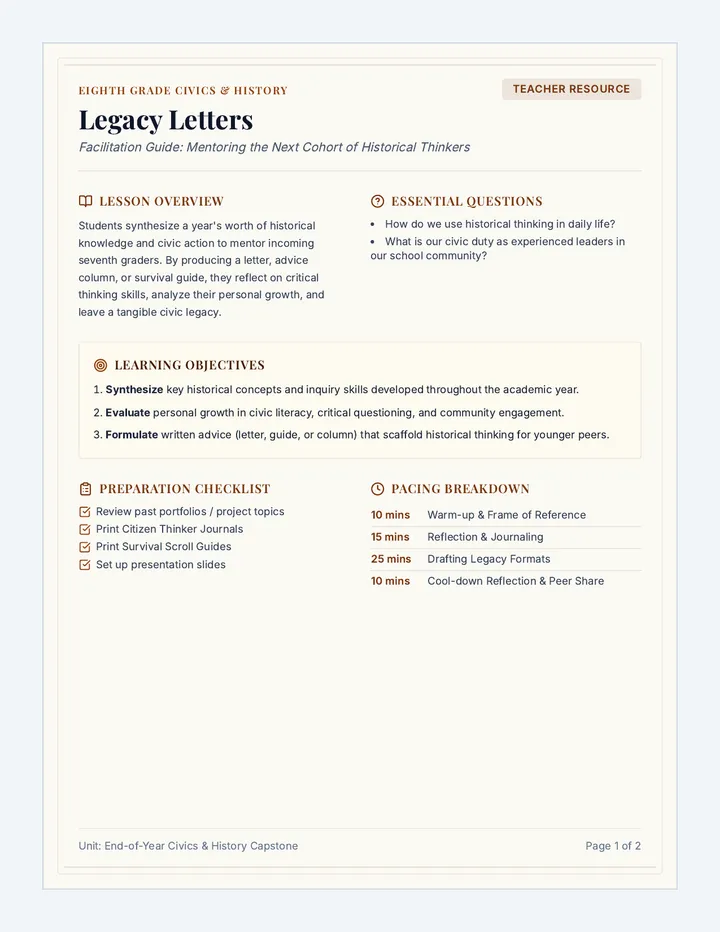
A comprehensive, 2-page teacher facilitation guide for the Legacy Letters lesson, detailing lesson objectives, pacing, step-by-step instructions, and rubric guidelines for eighth-grade historical and civic reflection.
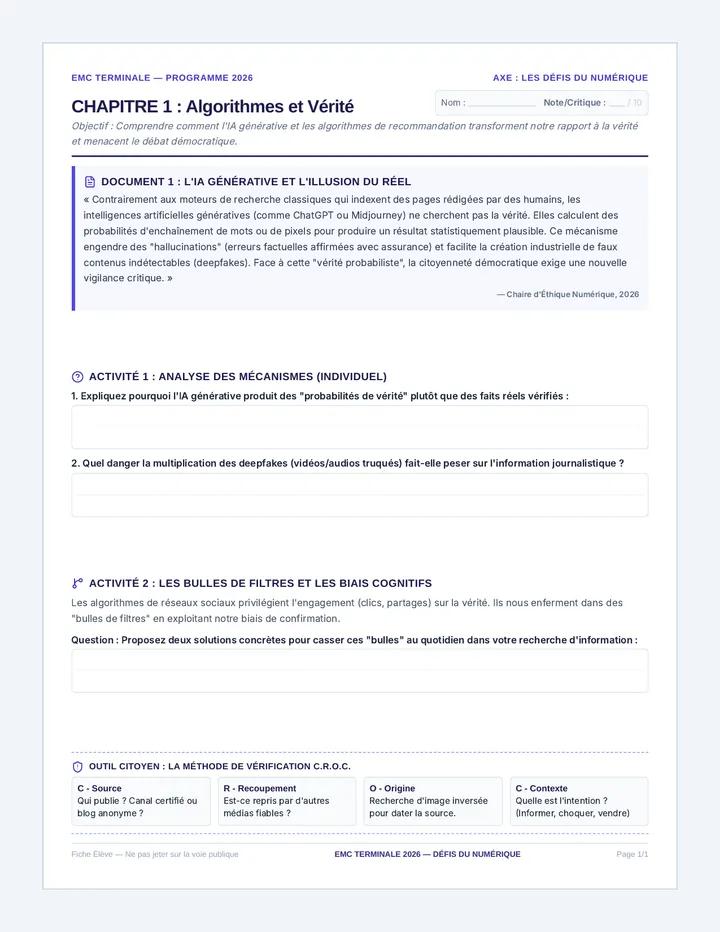
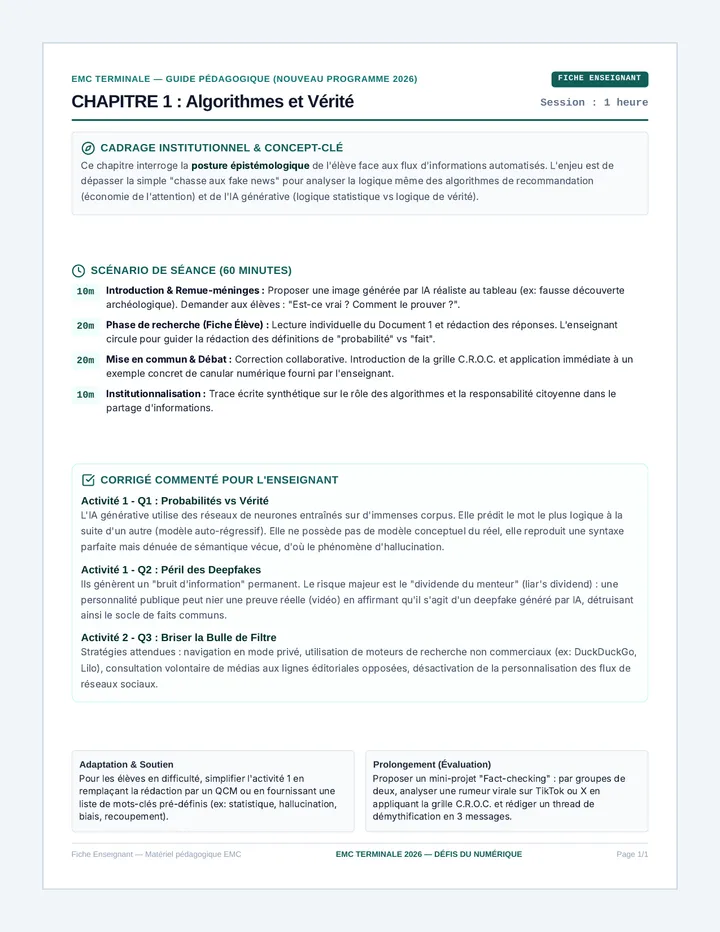
Une séquence complète d'activités clés en main d'Éducation Morale et Civique (EMC) pour la classe de Terminale, conforme au nouveau programme 2026. Elle se concentre sur les défis du numérique : intelligence artificielle, désinformation, espace public numérique et souveraineté technologique.
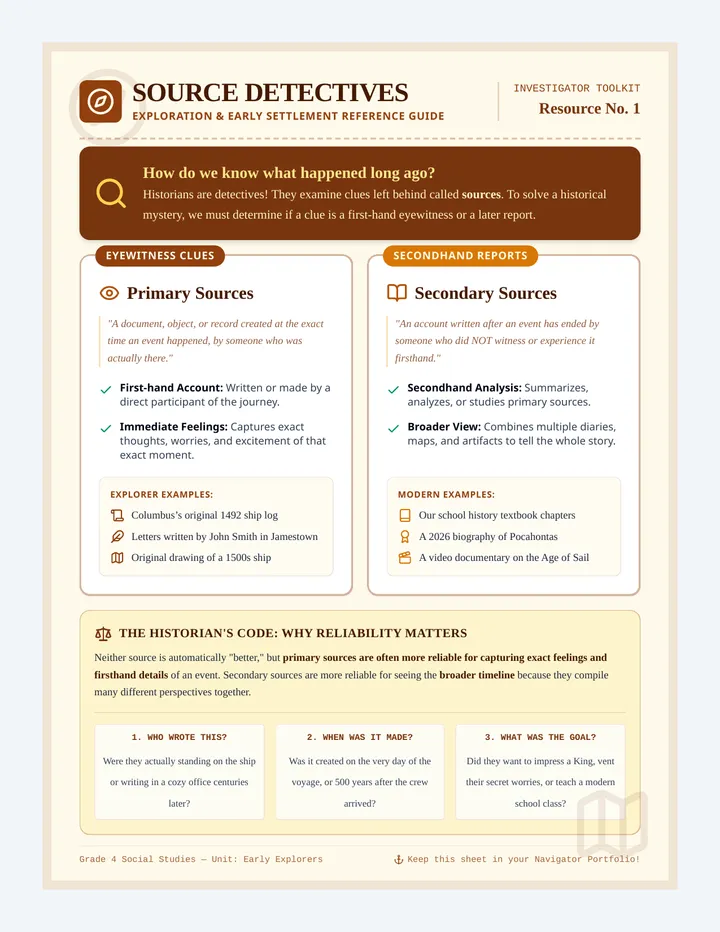
A comprehensive 4th-grade social studies lesson on distinguishing primary and secondary sources. Set in the historical context of Early Exploration and Settlement, students analyze explorer logs, firsthand letters, and modern biographies to evaluate historical reliability and bias.
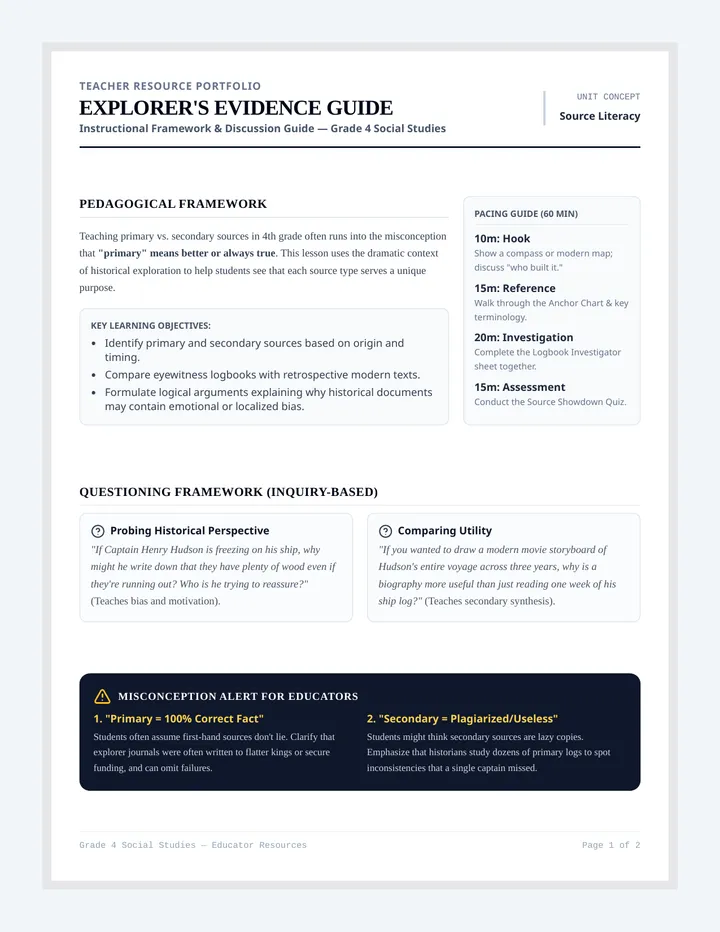
A comprehensive 2-page teacher facilitation guide containing historical background information, pedagogical tips for 4th-grade social studies instruction, discussion questions, and exact answer keys for the study guide packet.
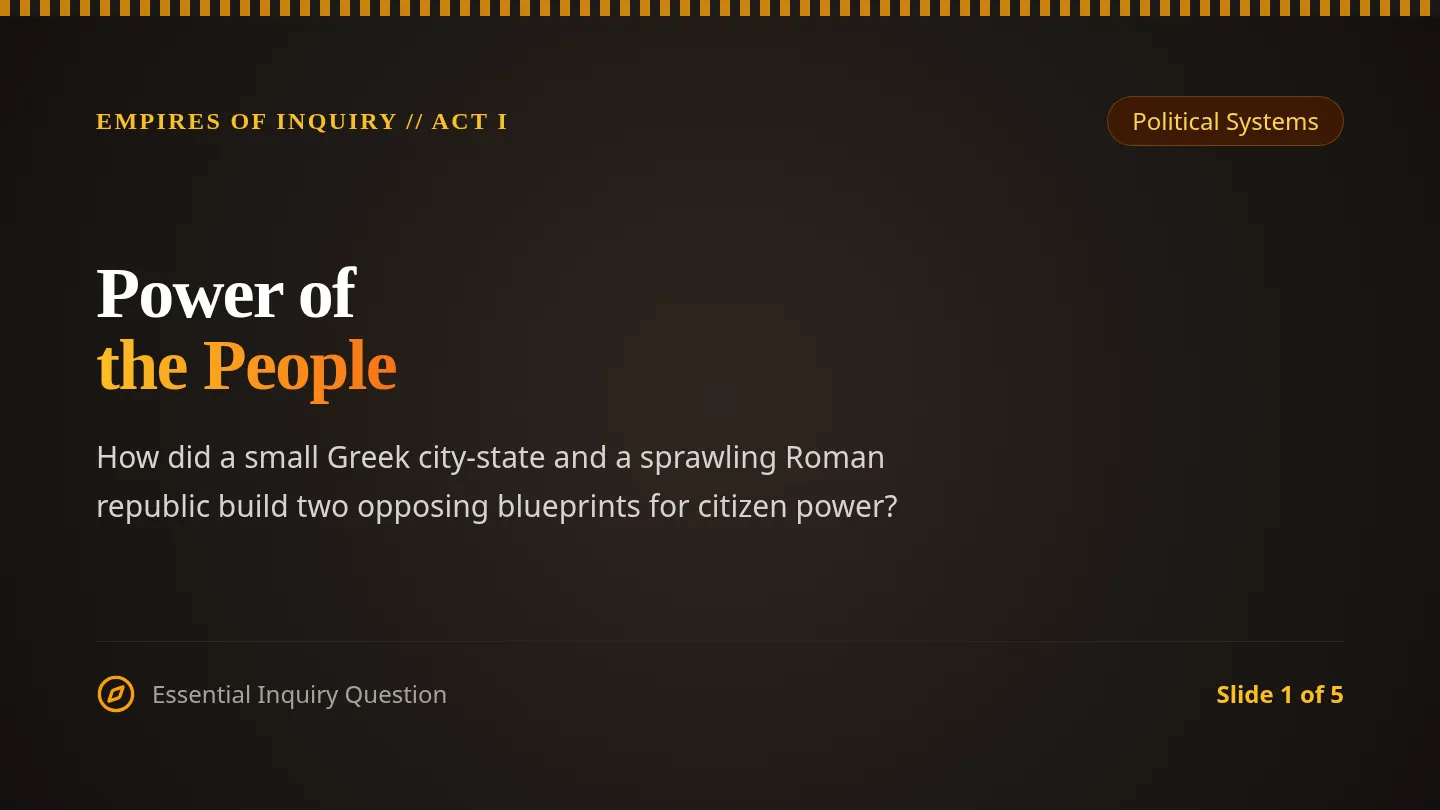
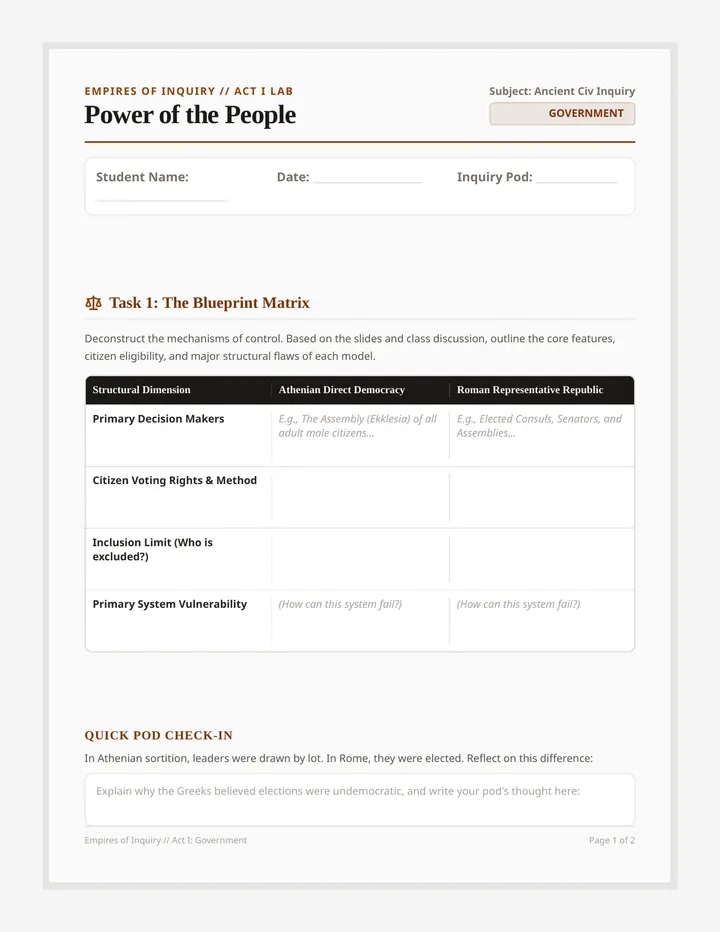
An inquiry-driven social studies sequence investigating Ancient Greece and Rome across four core pillars: government, philosophy, trade, and engineering. Students engage with primary sources, architectural achievements, and ethical dilemmas to construct arguments about classical legacies.
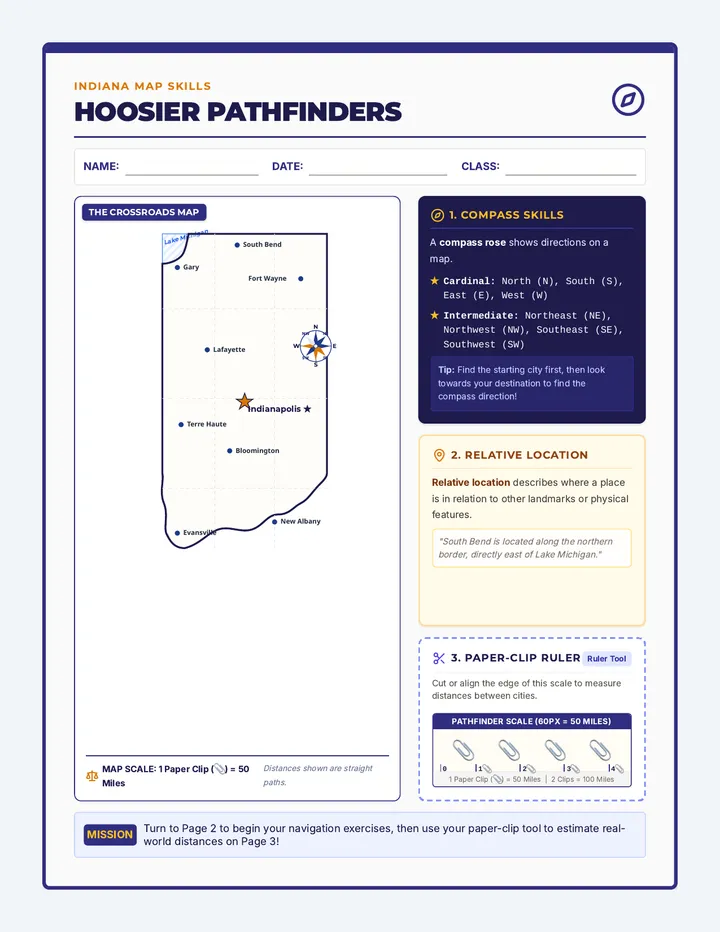
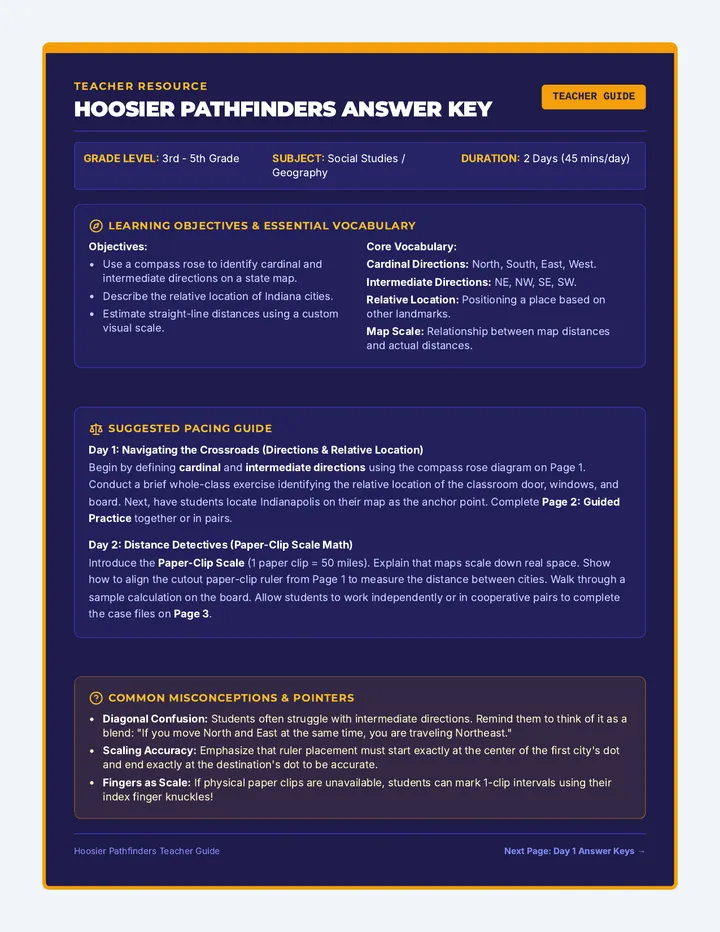
A comprehensive 2-day lesson on cardinal directions, relative location, and map skills using a customized map of Indiana. Students learn to navigate using a compass rose and estimate distances using a novel visual paper-clip scale.
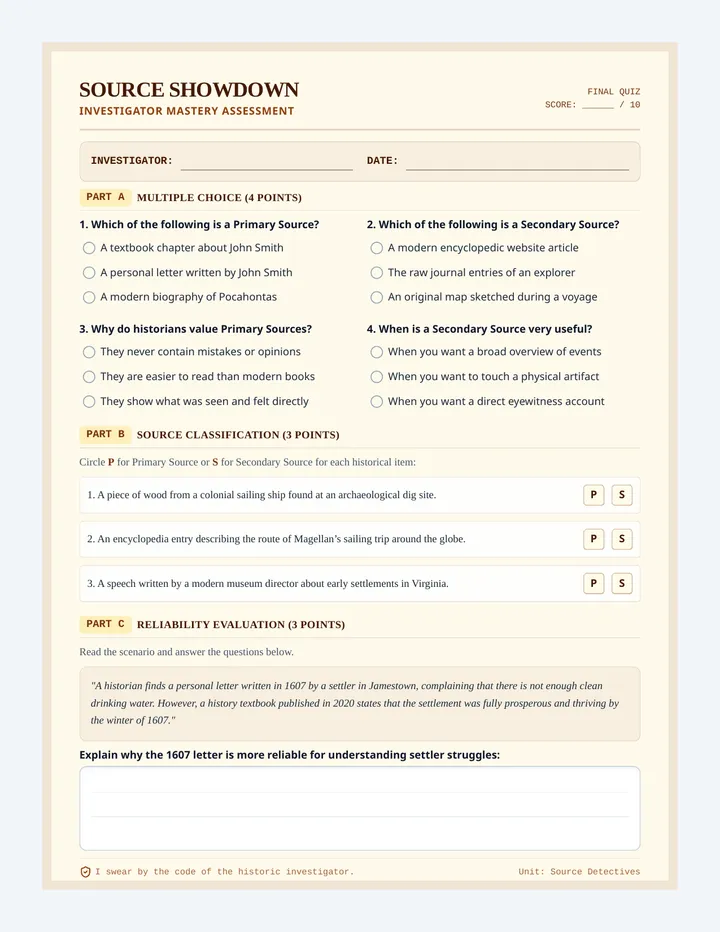
A 1-page assessment/quiz to evaluate 4th-grade student understanding of primary vs. secondary sources, incorporating multiple choice, classification, and short response questions on historical reliability.
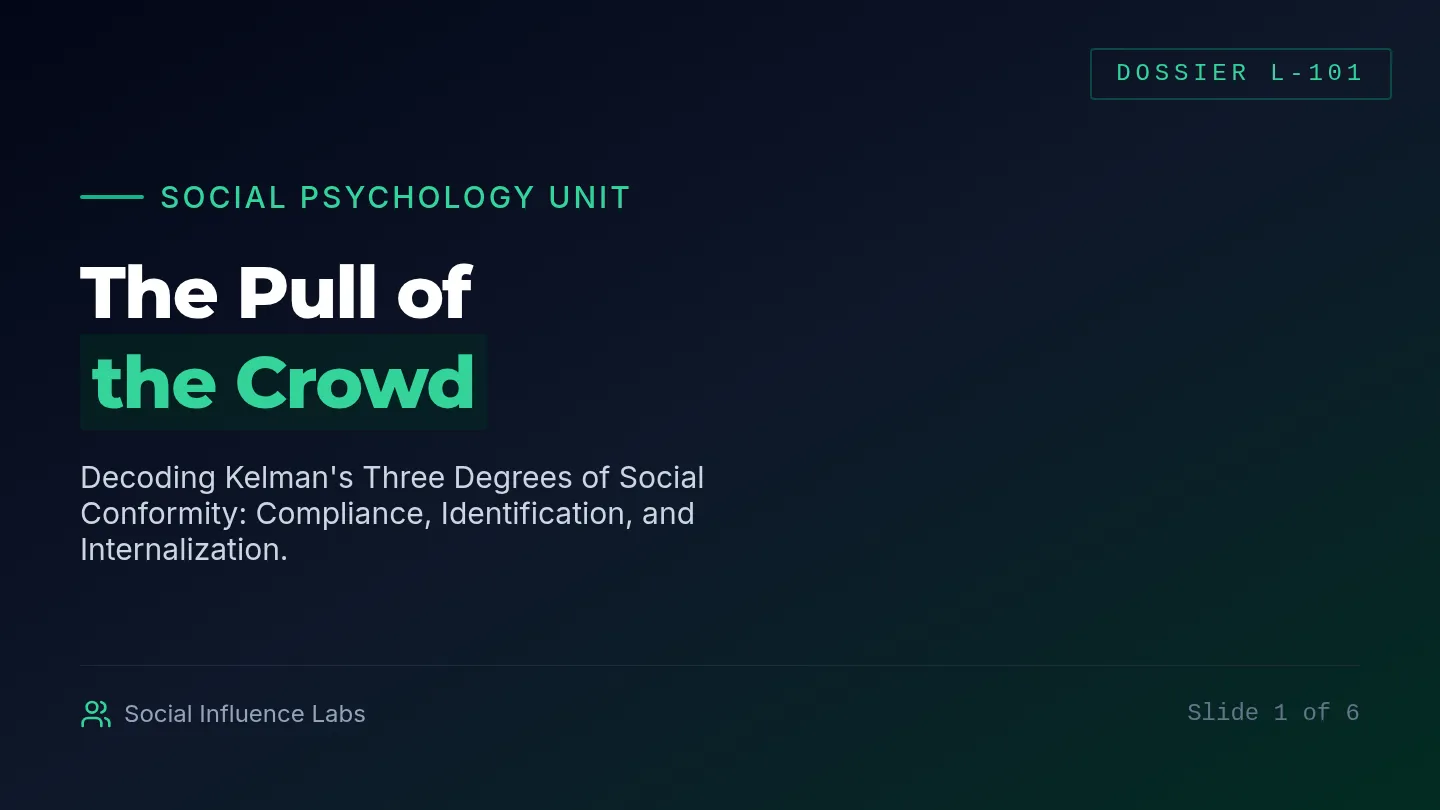
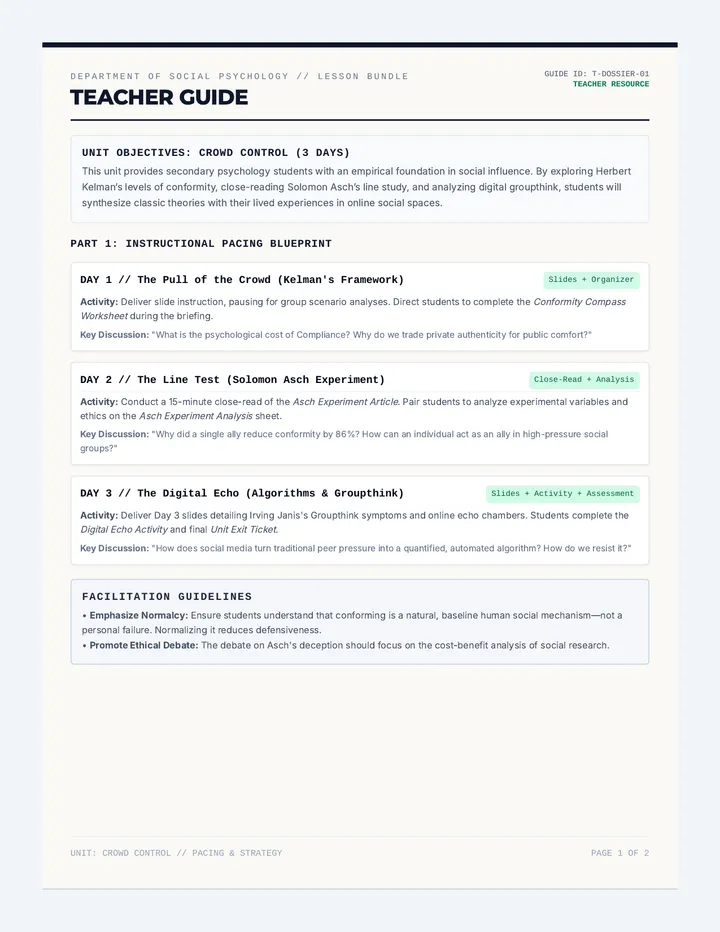
A three-day social psychology sequence exploring conformity, groupthink, and social influence. Students analyze foundational experiments, compare compliance versus internalization, and dissect modern digital peer pressure and media dynamics.
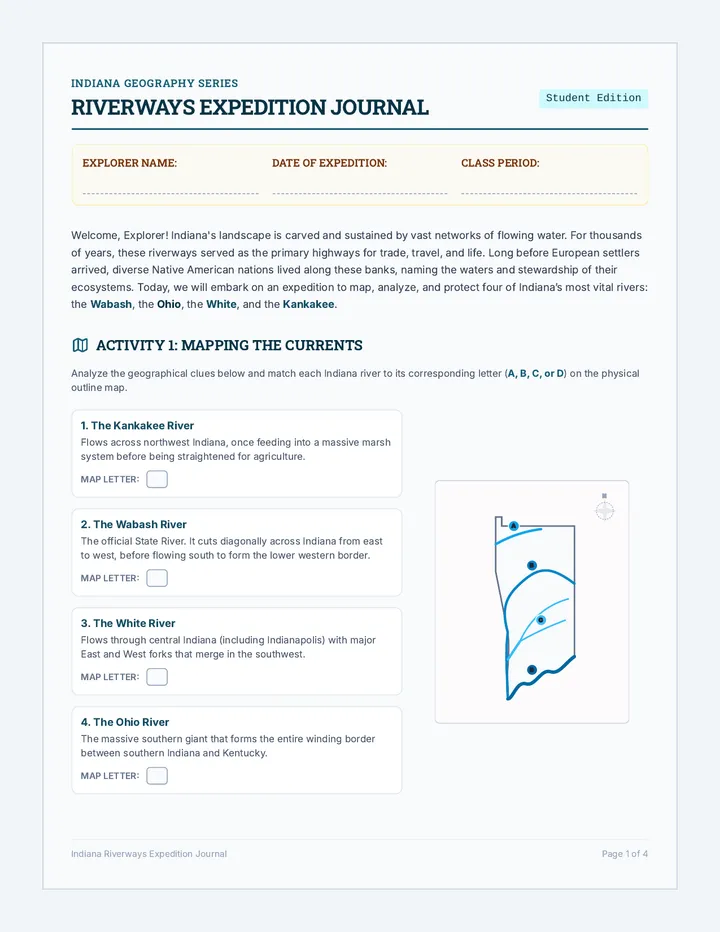
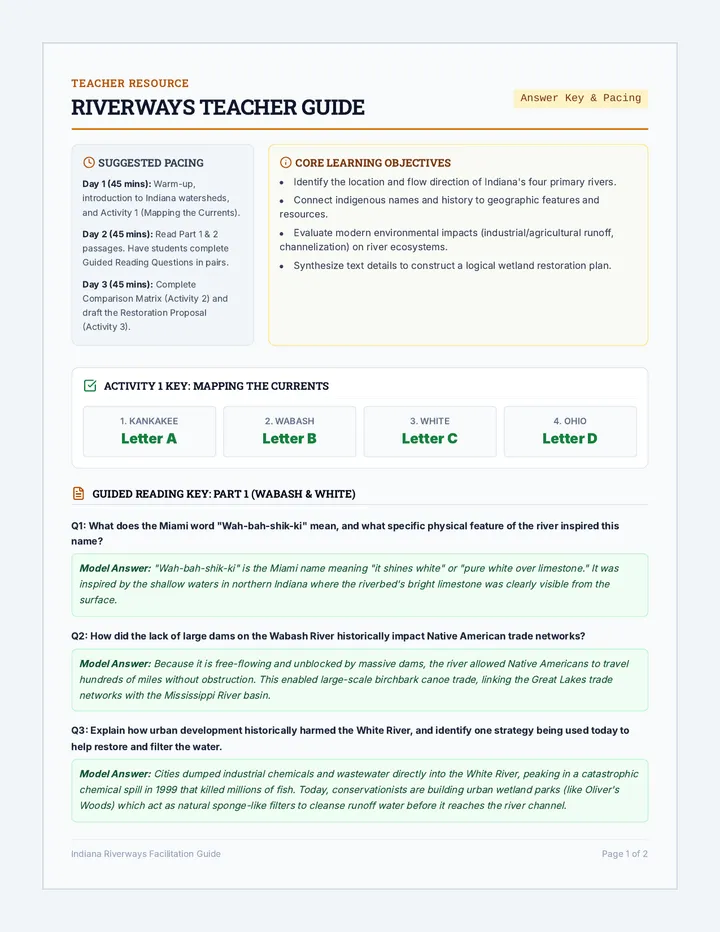
A comprehensive study of Indiana's four major rivers: the Wabash, Ohio, White, and Kankakee. Students explore their historical significance to Native Americans, their ecological roles, and modern conservation efforts through reading passages, mapping, and a comparative study guide.
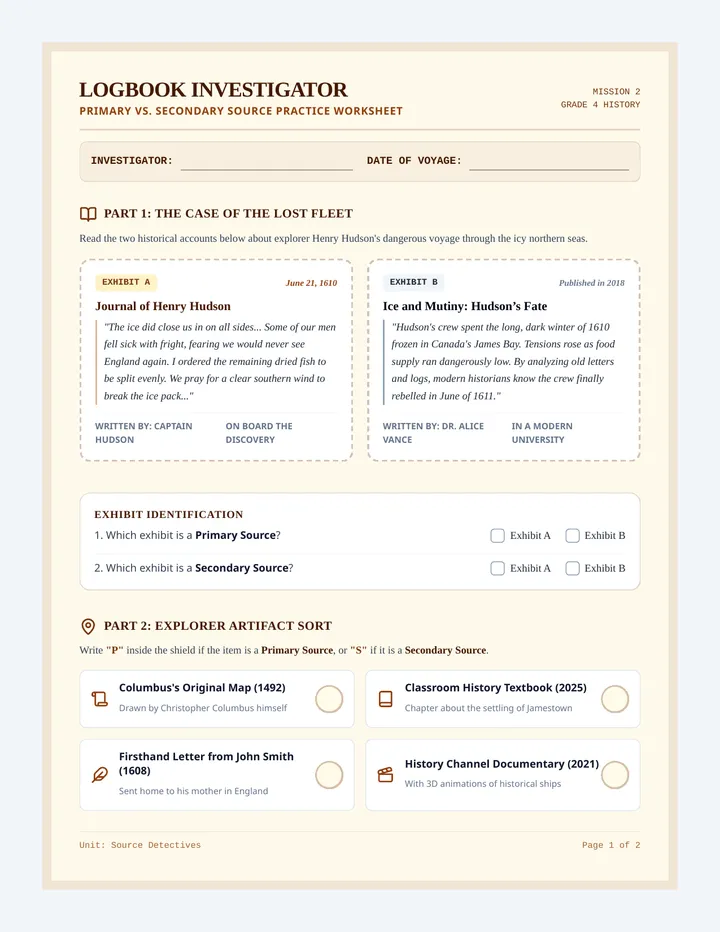
A 2-page historical analysis worksheet featuring real explorer ship logs (primary) and modern biographies (secondary). Students practice sorting sources and write reflective evaluations on reliability.
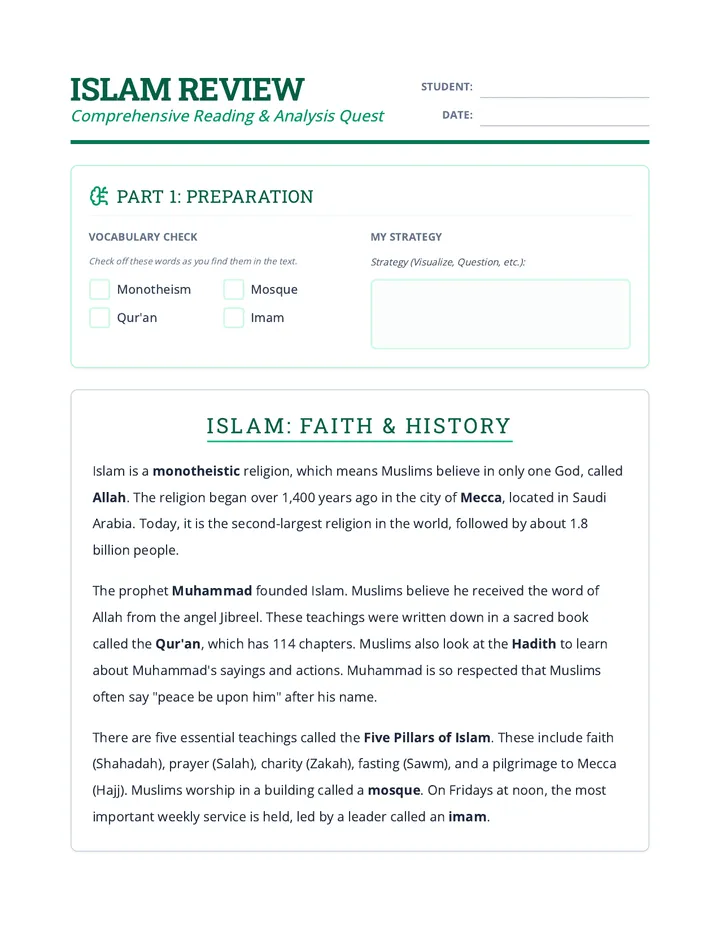
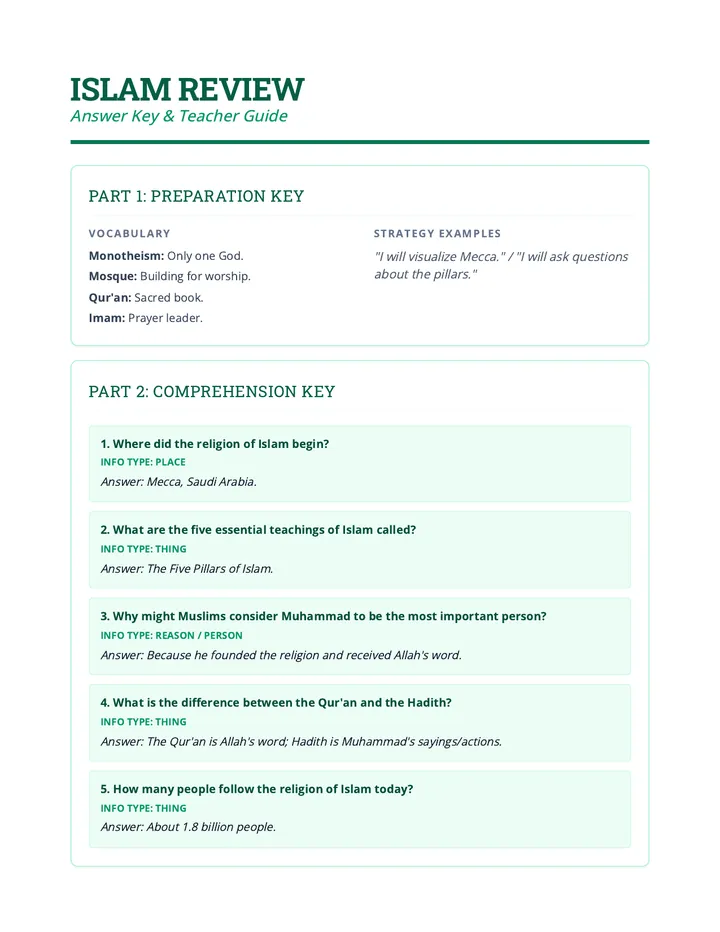
A comparative and deep-dive review sequence exploring foundational teachings, sacred texts, and cultural practices of major world religions.
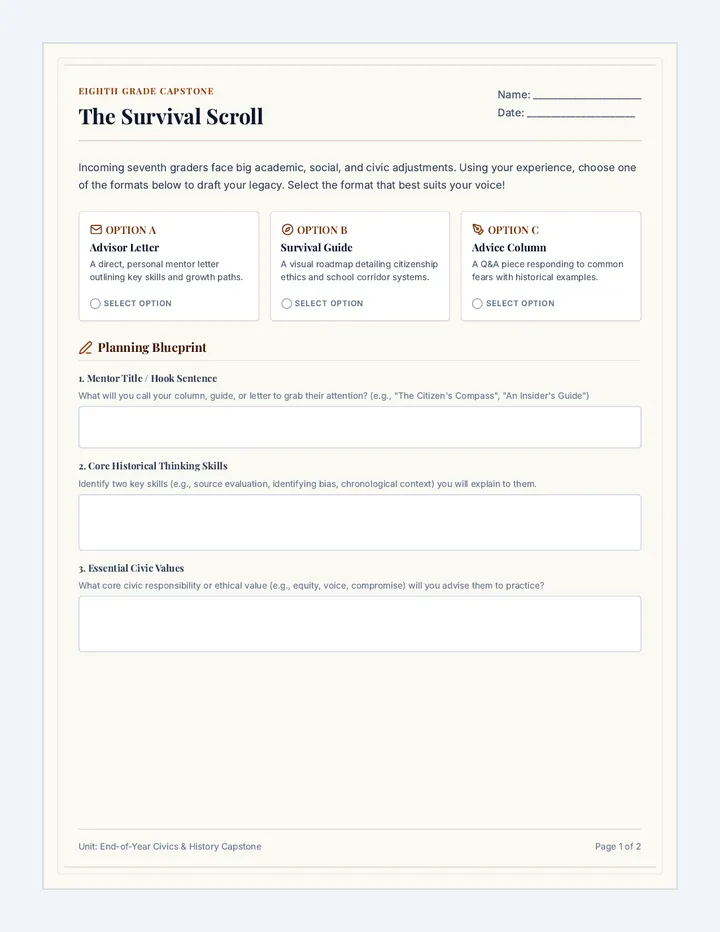
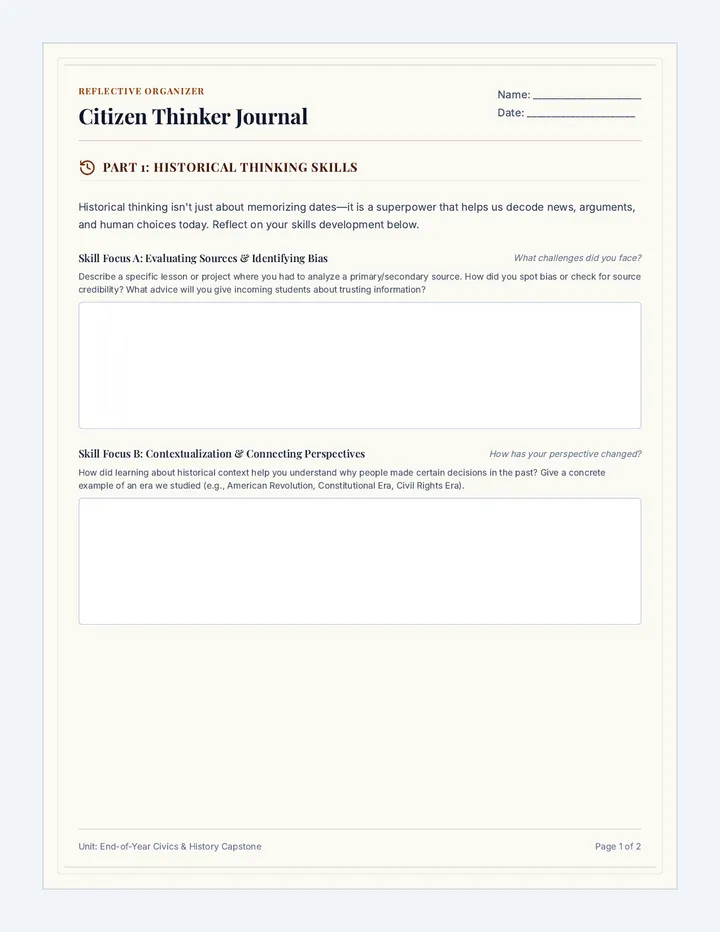
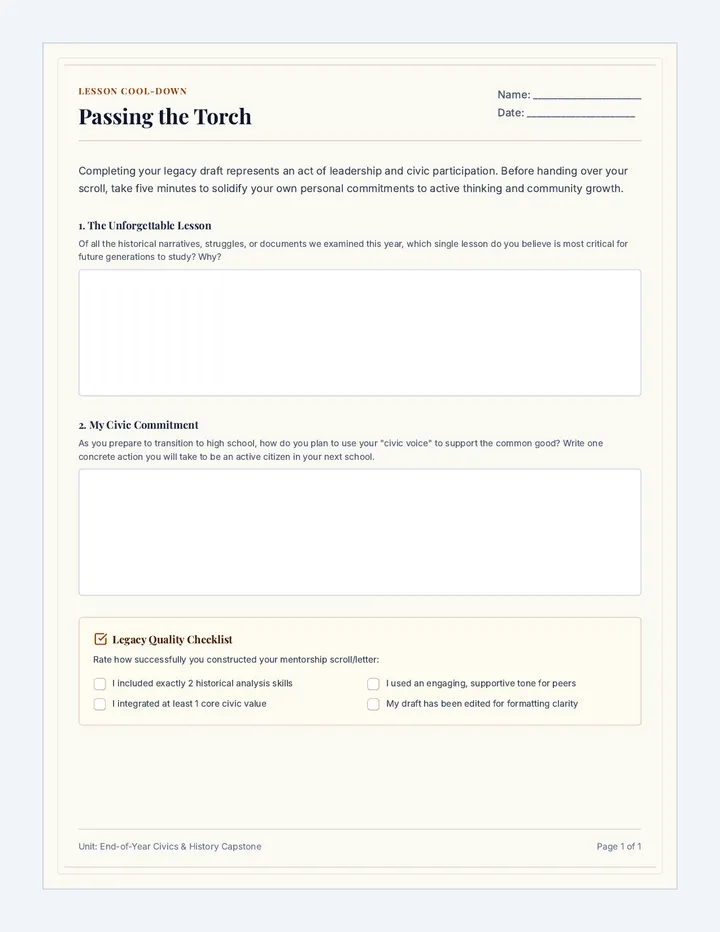
A reflection-based history and civics lesson where eighth-grade students synthesize their year-long learning to craft legacy letters, survival guides, or advice columns for incoming seventh graders. Students reflect on historical thinking skills and civic responsibilities to mentor the next cohort.