A three-day social psychology sequence exploring conformity, groupthink, and social influence. Students analyze foundational experiments, compare compliance versus internalization, and dissect modern digital peer pressure and media dynamics.
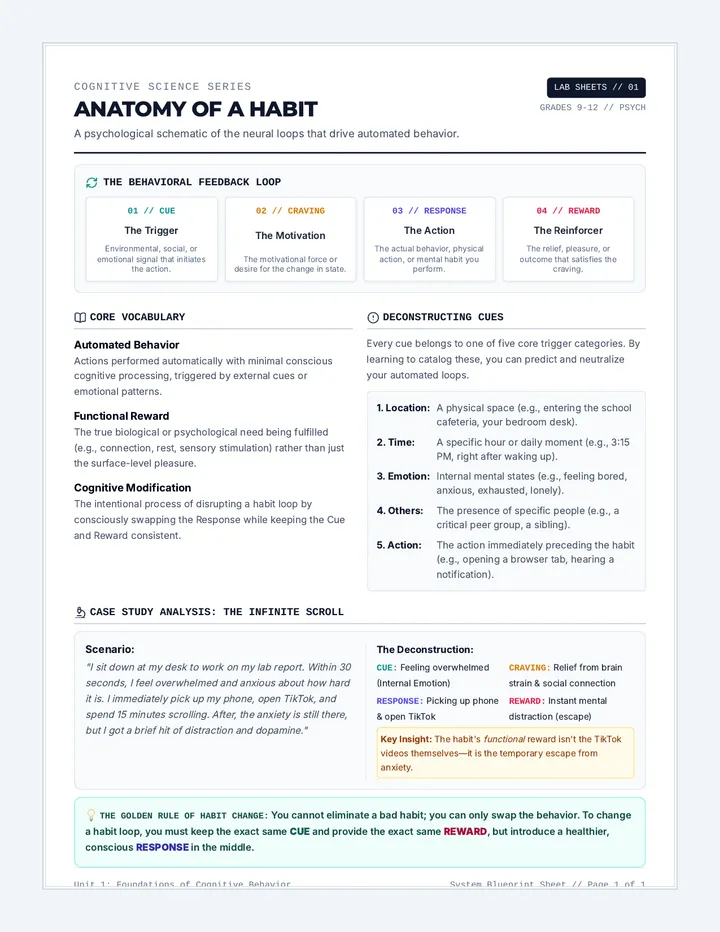
A three-part cognitive psychology series designed for Grades 9-12. Students learn the science of automation, explore how to isolate triggers and cravings, redesign unhelpful routines, and restructure their environments to make habit modification effortless.
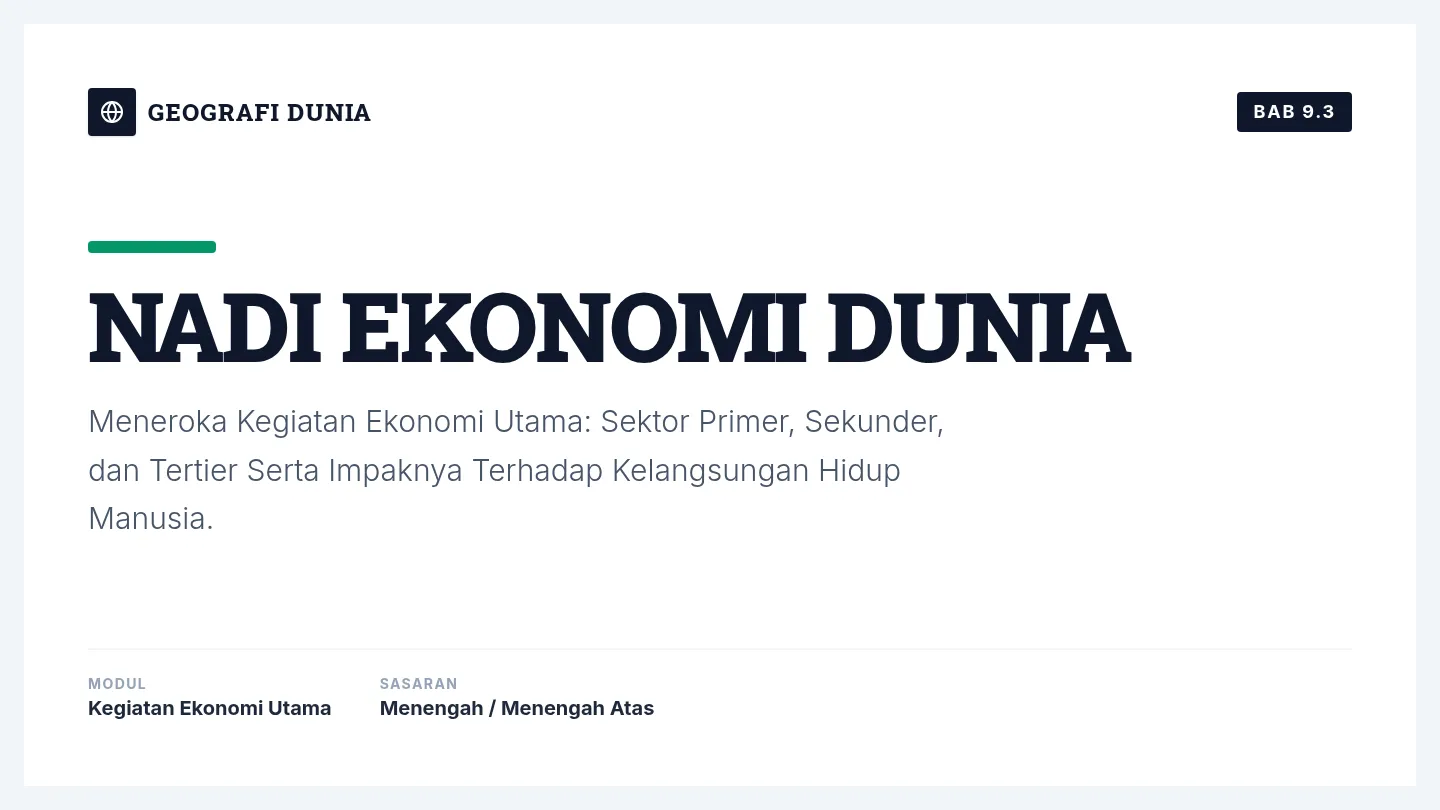
Satu slot pengajaran interaktif mengenai kegiatan ekonomi utama di dunia termasuk primer, sekunder, dan tertier. Slaid ini membimbing murid memahami impak sektor ekonomi kepada manusia dan negara melalui aktiviti perbincangan dan tiket keluar.
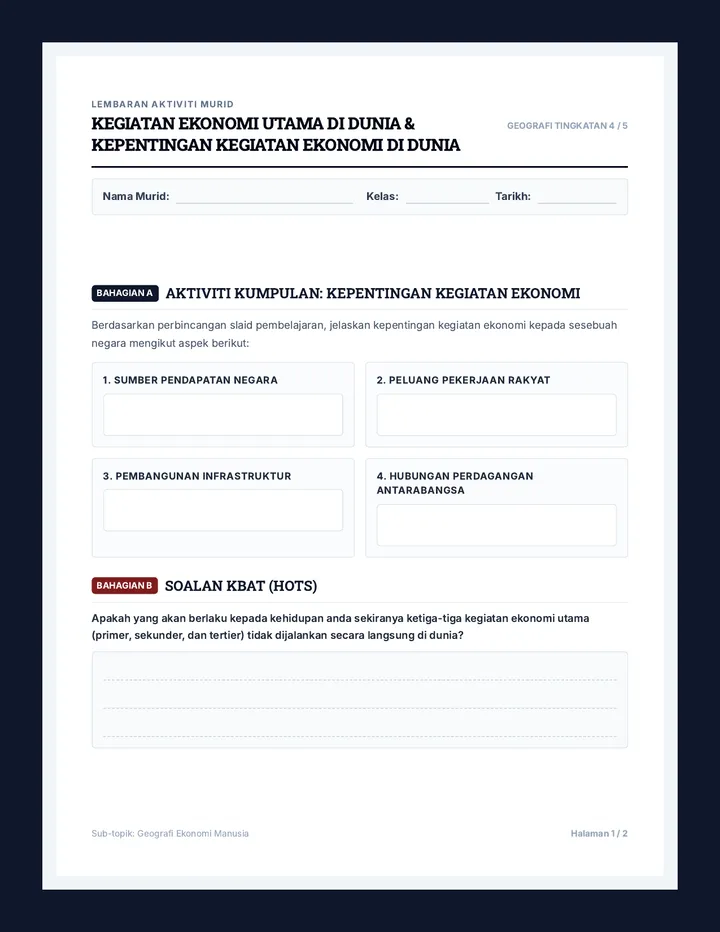
Lembaran kerja bercetak dua muka surat bertemakan Minimalist Academic. Mengandungi ruang catatan Aktiviti Kumpulan, soalan KBAT, dan templat Tiket Keluar (Exit Ticket) yang sepadan dengan slaid pengajaran.
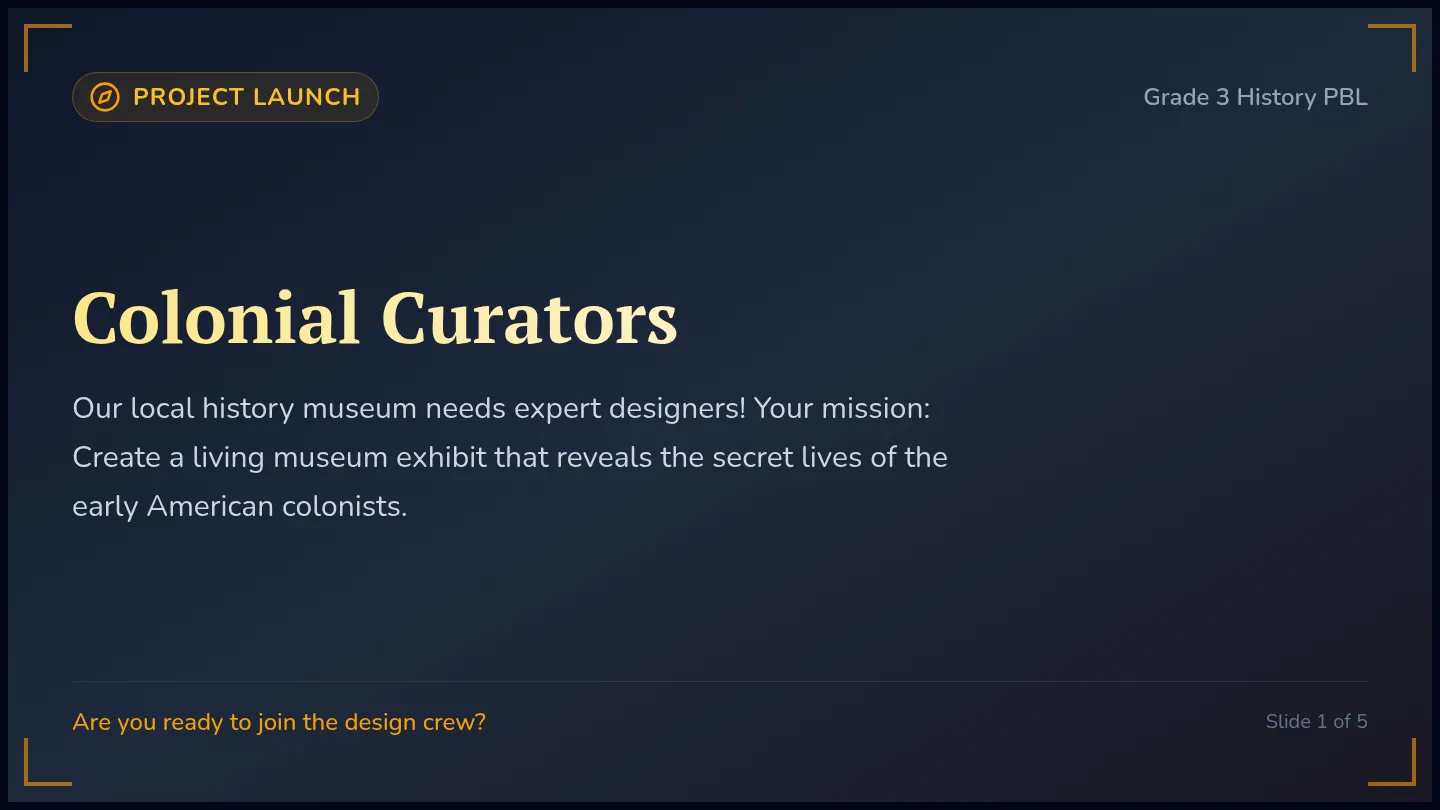
An immersive 3rd-grade Project-Based Learning unit where students act as museum curators to design and exhibit a living history museum, answering the driving question: How did where colonist lived shape how they lived?
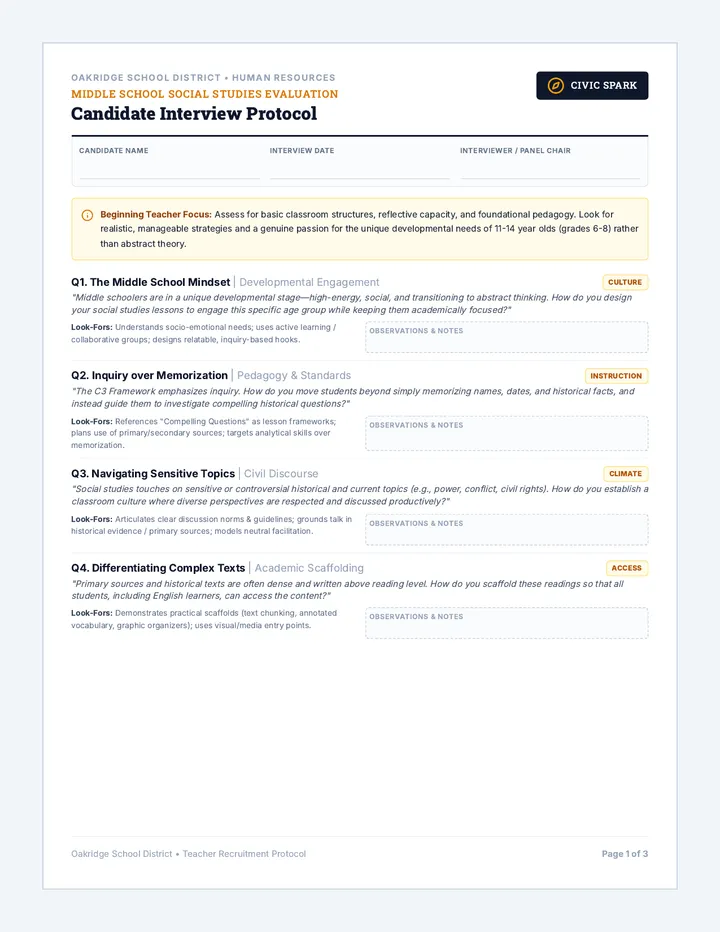
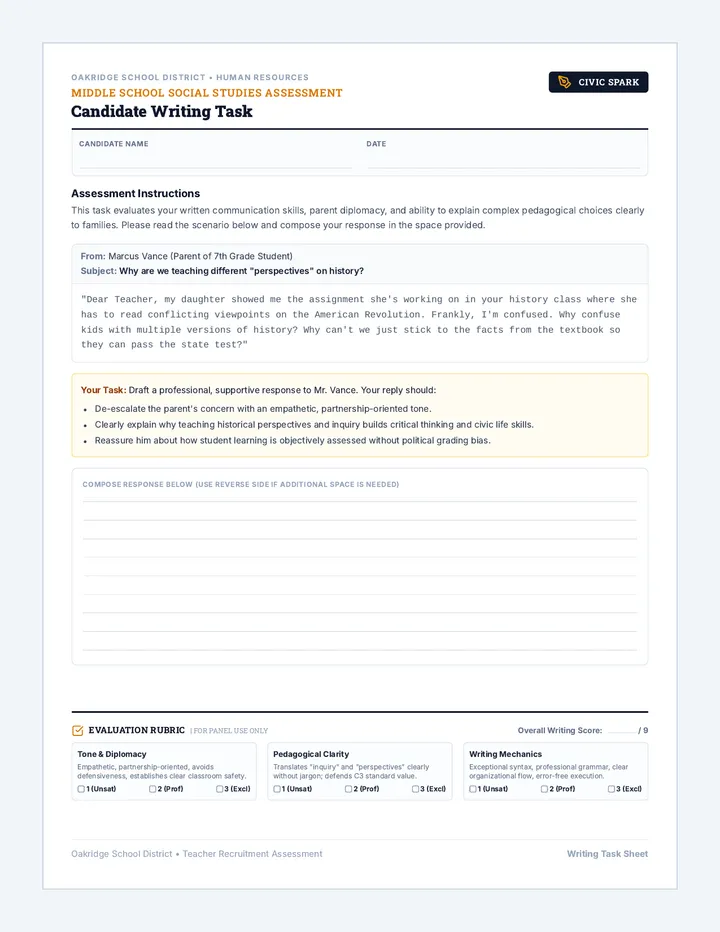
A high-quality evaluation system designed for secondary school administrators to screen, interview, and assess Middle School Social Studies teaching candidates. This lesson contains a comprehensive 10-question interview protocol and a standalone candidate writing prompt.
Slaid pengajaran interaktif bertemakan Minimalist Academic mengenai kegiatan ekonomi utama di dunia serta kepentingan kegiatan ekonomi. Mengandungi maklumat sektor ekonomi primer, sekunder, dan tertier serta objektif pembelajaran dan aktiviti pengukuhan murid.
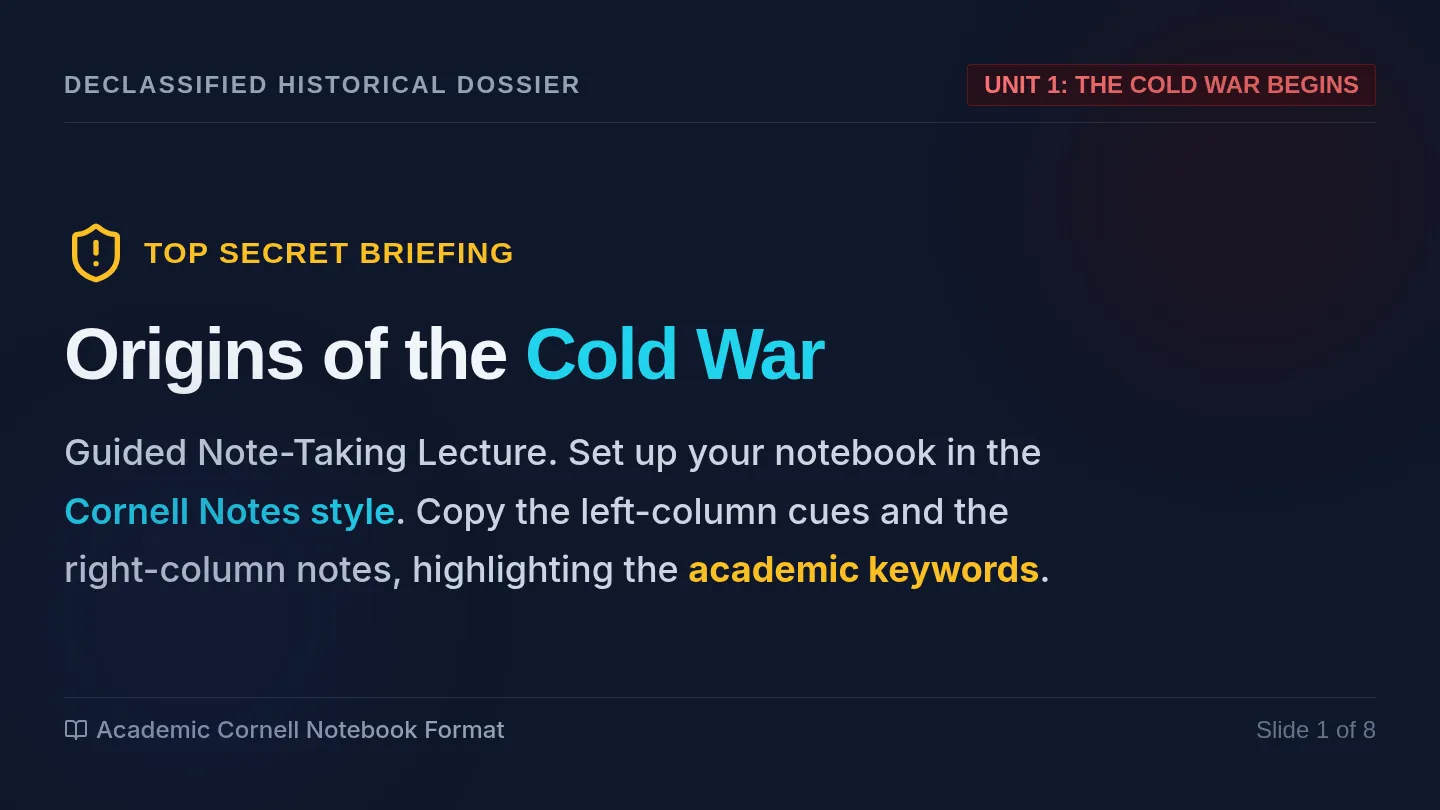
Create a multi-lesson sequence covering the Cold War, focusing on origins, global expansion, and domestic impacts.
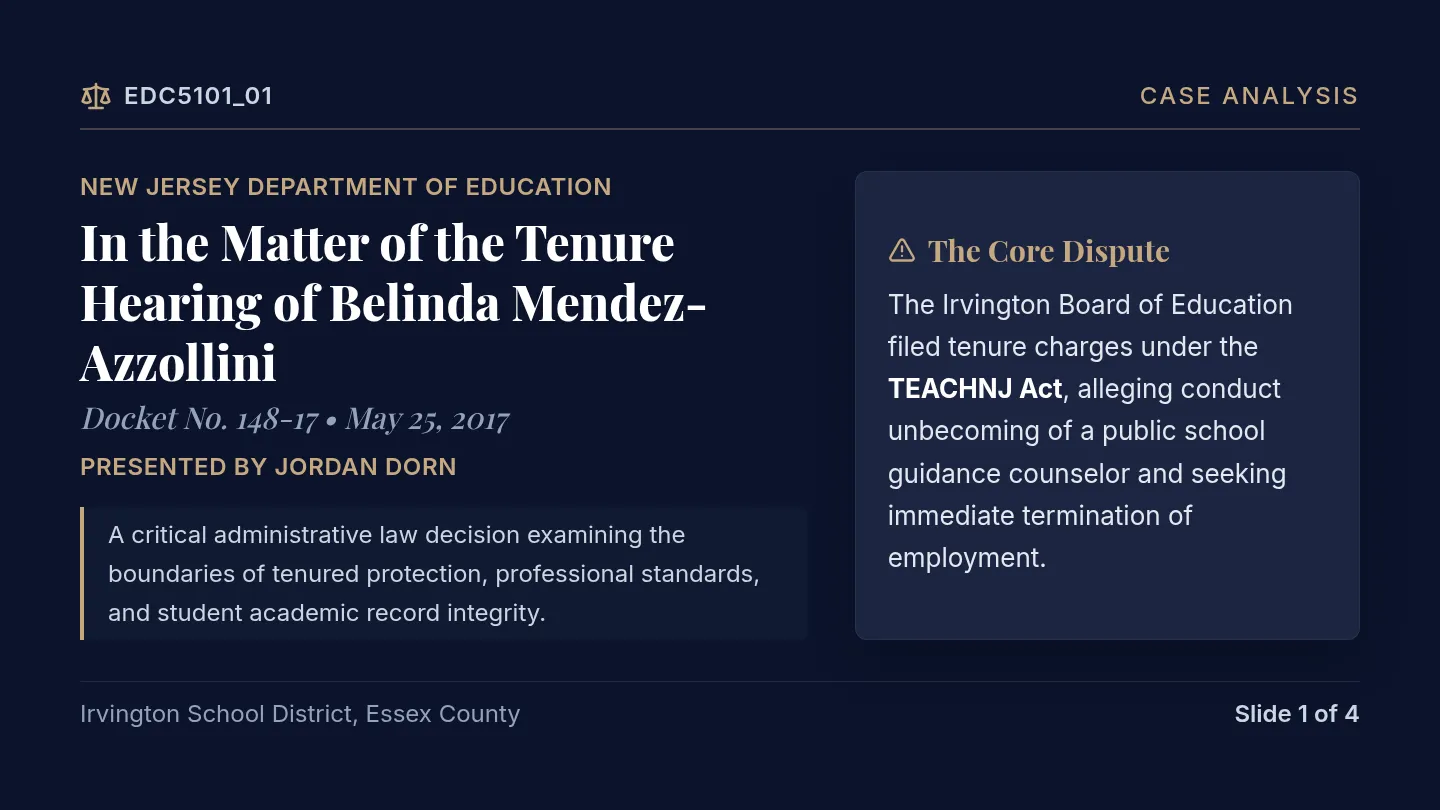
A graduate-level legal case analysis lesson centered on school law, administrative hearings, and educational accountability. The lesson evaluates the legal standards for tenured employee dismissal through the lens of a landmark 2017 New Jersey Department of Education decision.
An applicant-facing writing assessment tool designed to evaluate a teaching candidate's written communication, professional diplomacy, and pedagogical philosophy. It features an authentic parent scenario regarding historical inquiry and multiple perspectives, with a lined response area and an administrator grading rubric on a single printable page.
A comprehensive unit on child development from birth through age 18, focusing on physical, cognitive, and social-emotional growth across early childhood, middle childhood, and adolescence.
Lesson 8 of the Habit Architects unit. Students learn how to design personal reward structures and periodic tracking audits to maintain long-term habit health and recover quickly from routine disruptions.
An administrator-facing interview protocol designed for principals to evaluate beginning Middle School Social Studies teachers. It includes 10 highly targeted pedagogy and culture questions, clear novice teacher look-fors, an evaluation matrix, and recommendation sign-off across a clean 3-page print layout.