Globe Detective Worksheet
Globe Detective
Grade 4
Junior Explorer Guide to the Five Themes of Geography
Name:
Date:
Teacher:
Page: 1 of 2
Geographer's Clue: Geographers use 5 big questions to explore how people and places connect!
1 Match the Theme to Its Question
Write the matching letter (A–E) in each blank
1. Location
Letter:
2. Place
Letter:
3. Human-Environment
Letter:
4. Movement
Letter:
5. Region
Letter:
A. How do people, goods, and ideas travel from place to place?
B. What makes a whole area similar or share common features?
C. Where is it? (Exact spot or near other places)
D. How do people and nature help or change each other?
E. What is it like there? (Nature, buildings, and culture)
2 Theme 1: Location • Where on Earth Is It?
Absolute (A) vs. Relative (R)
Absolute Location: An exact spot (like your street address or map coordinates).
Relative Location: Where a place is compared to other places (using directions like near, next to, or north of).
Write A for Absolute Location or R for Relative Location:
1. The library is right across the street from the town park.
Type:
2. The school's address is 450 Maple Avenue, Springfield.
Type:
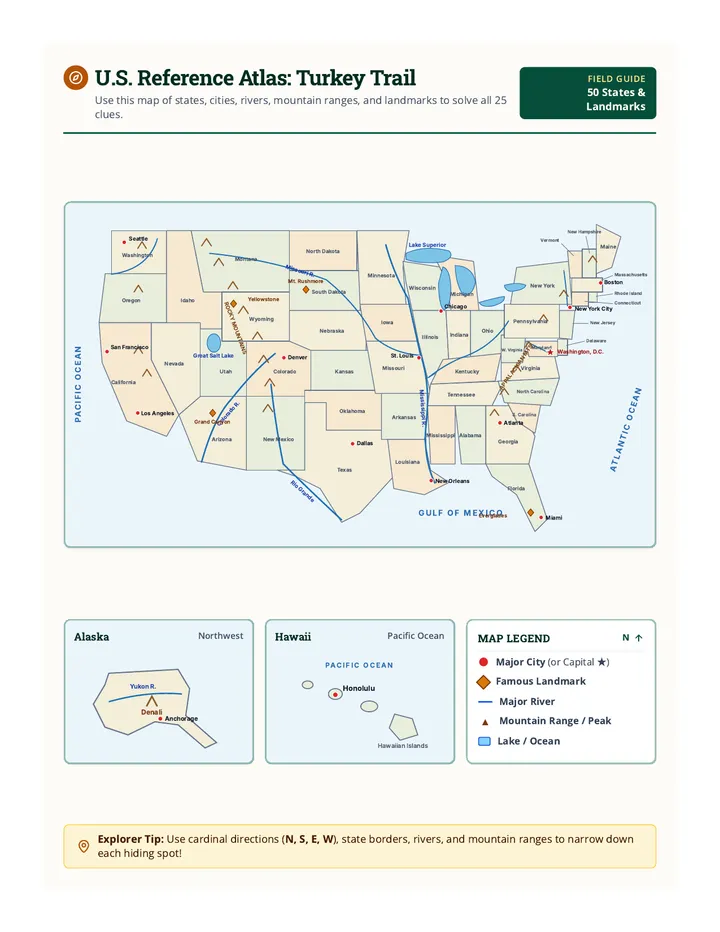
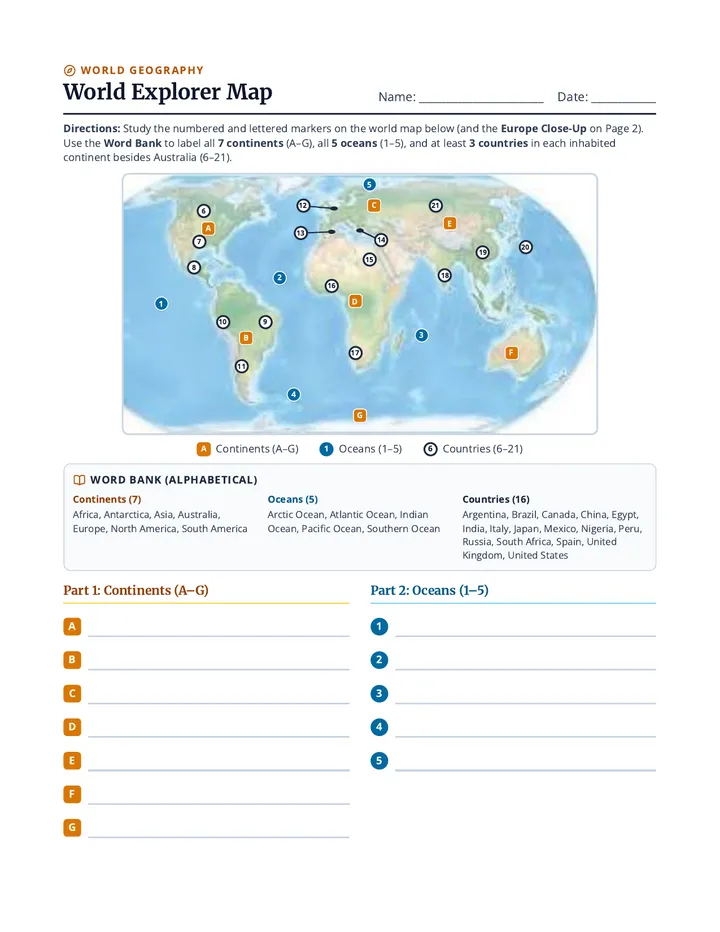
3. Canada is located north of the United States.
Type:
Detective Challenge: Give the relative location of your favorite spot in school (use words like next to, down the hall, or near):
3 Theme 2: Place • What Is It Like There?
Nature vs. People
"Aloha from Hawaii! This island state has warm sunny beaches, tall green volcanoes, and tropical rain forests. People who live here build wooden bridges across streams, enjoy eating fresh pineapple, play the ukulele, and greet visitors with colorful flower leis."
Find features from the story above and write them into the chart:
Physical Features (Made by Nature)
Human Features (Made by People)
Five Themes of Geography • 4th Grade Social Studies Turn the page for Themes 3, 4, & 5 →
Globe Detective • Page 2 | How People & Places Connect
Student Name:
4 Theme 3: Human-Environment Interaction
Depend • Modify • Adapt
People interact with nature in 3 main ways. Read each definition, then write one example you see in everyday life:
1. Depend
Need nature to live: We depend on fresh water to drink, rich soil for food, and clean air to breathe.
Your Example of Depend:
2. Modify
Change nature: People build roads through hills, clear fields for farming, or build bridges over rivers.
Your Example of Modify:
3. Adapt
Change ourselves: We wear warm coats in snowy winters, carry umbrellas in the rain, or turn on fans in summer.
Your Example of Adapt:
5 Theme 4: Movement • People, Goods, & Ideas
How Things Travel
Decide what is moving in each real-life story. Write People, Goods, or Ideas in the box:
Story 1: Big refrigerated trucks drive boxes of fresh oranges from orchards in Florida to grocery stores in New York.
What moved?
Story 2: A 4th-grade student rides the yellow school bus across town every morning to get to school.
What moved?
Story 3: A grandmother sends an email with a secret family cookie recipe to her grandchildren who live in another state.
What moved?
6 Theme 5: Region • What Places Have in Common
Grouping Places Together
A region is an area of land that shares similar features, like weather, landforms, or ways of living.
Natural Regions: Places that share the same land or weather (e.g., The Rocky Mountains, The Great Plains, The Desert Southwest).
Human Regions: Places grouped by state borders, languages, or towns (e.g., New England, your school district, your state).
Junior Geographer Detective Mission: Think about where you live!
What is one region your town belongs to? (State, weather region, or area):
What is one feature everyone in your region shares?
Junior Geographer Badge Checklist:
I can explain: Location • Place • HEI • Movement • Region
Mission Status:
○ Ready! ○ Mastered!