Lenny.com
Explore
Create
ActivitiesNewMathEnglish Language ArtsScience & EngineeringSocial StudiesGlobal LanguagesHealth & Physical EducationSpecial EducationCounseling & Life SkillsArts & CreativityESL
Lenny.com
Lenny.com
Explore
Create
ActivitiesNewMathEnglish Language ArtsScience & EngineeringSocial StudiesGlobal LanguagesHealth & Physical EducationSpecial EducationCounseling & Life SkillsArts & CreativityESL
Lenny.com
Lenny.com

Solutions

Lenny for EducatorsLenny for SchoolsLenny for Districts

Product

ExploreSign inCreateSupportAbout

Resources

Getting startedMTSS Acceleration Program

© 2026 Lenny Learning Inc.

TermsPrivacyAccessibility
LinkedInInstagramX
Lenny
Social StudiesSocial Studies PracticesLocation WordsMapsOrder EventsChronology and CausationEvaluating SourcesHistorical ThinkingGeography, Humans, & the EnvironmentAmerican Symbols and LandmarksCitiesStatesState CapitalsRegions of the United StatesGeographic SkillsPhysical GeographyHuman GeographyRegional GeographyGeography of AfricaGeography of AsiaGeography of EuropeGeography of OceaniaGeography of the AmericasSociety and Environment of EuropeSociety and Environment of AsiaSociety and Environment of The AmericasSociety and Environment of the Middle EastSociety and Environment of AfricaHistoryPrehistoryComparing Ancient River CivilizationsAncient MesopotamiaAncient Egypt and KushAncient South AsiaEarly ChinaGreeceRome and the Byzantine EmpireAncient World HistoryNative Peoples of North AmericaNative Peoples of Mesoamerica and South AmericaAfrican EmpiresMedieval AsiaMedieval EuropeThe Silk RoadMedieval HistoryIslamic EmpiresWorld ReligionsRenaissance PeriodAge of ExplorationThe Thirteen ColoniesThe American RevolutionUS History Early RepublicFounding of the United StatesUS History AntebellumUS Civil WarReconstruction PeriodThe Gilded AgeUS ImperialismWorld ImperialismWorld War IUS History 1920sGreat DepressionWorld War IIThe Cold WarUS History 1950-60sUS History 1960s-70sWorld History 20th CenturyContemporary US HistoryContemporary World HistoryHolidaysCivics and GovernmentCitizenshipGovernment FoundationsThe ConstitutionUS ConstitutionExecutive BranchLegislative BranchJudicial BranchState and LocalPolitical ParticipationPublic PolicyPolitical SystemsPower and AuthoritySocial MovementsDefining DevianceTheories of DevianceCrime and Criminal JusticeEconomicsBasic Economic PrinciplesSupply and DemandWhat is MoneyEconomic FundamentalsMicroeconomicsMacroeconomicsBanking and FinanceEconomic SystemsGlobal EconomicsCorporations and PowerThe Changing WorkplaceUnemployment and LaborClass and InequalitySocial MobilityGlobal InequalityPsychologyHistory of PsychologyPsychology as a ScienceBrain and Nervous SystemNeuroscience and BehaviorGenetics and BehaviorSleep and ConsciousnessSensory ProcessesPerceptual OrganizationClassical ConditioningOperant ConditioningObservational LearningCognitive LearningMemory ProcessesThinking and Problem SolvingLanguage and CognitionTheories of MotivationStress and CopingPrenatal and Infant DevelopmentChildhood DevelopmentAdolescent DevelopmentAdulthood and AgingSelf and IdentitySocial CognitionSocial InfluenceAttraction and RelationshipsGroup BehaviorPrejudice and DiscriminationAnxiety and Mood DisordersClinical PsychologyForensic PsychologyPhilosophy & EthicsIntroduction to PhilosophyMajor Philosophers & IdeasMind and Body ProblemFree Will vs DeterminismEthics & MoralityReligion & PhilosophyPolitical Philosophy

Urban Revolution Dilemma

A 45-minute ancient history simulation where 6th graders rank V. Gordon Childe's 10 characteristics of civilization and confront the unforeseen consequences of neglecting critical societal pillars during historic crises.

AAAdam Amster

Urban Revolution Dilemma

A 45-minute ancient history simulation where 6th graders rank V. Gordon Childe's 10 characteristics of civilization and confront the unforeseen consequences of neglecting critical societal pillars during historic crises.

AAAdam Amster

✓ SURVIVED

If you funded #3 Surplus Food OR #7 Science & Math (Irrigation):

Granaries feed the hungry or canals redirect water. 0 points lost!

✗ CRISIS!

If you neglected BOTH #3 and #7 (0 tokens):

Mass starvation and bread riots! Lose 3 Stability Points.

Log your outcome on Page 2 of your Dossier under Crisis A!


Crisis Event 2 Year 32 in Your City

The Highland Raider Siege

Nomadic steppe warriors surround your valley. Meanwhile, two wealthy family clans refuse to send their sons to defend the outer gate, claiming it isn't their problem.

✓ DEFENDED

If you funded #4 Laws/Gov OR #5 Monumental Walls OR #10 Civic Identity:

Stone battlements hold or unified citizens rally as one. 0 points lost!

✗ BREACHED!

If you neglected #4, #5, AND #10 (0 tokens on all three):

Clans flee, walls collapse, raiders loot the city. Lose 3 Stability Points.

Log your outcome on Page 2 of your Dossier under Crisis B!


Crisis Event 3 Year 50 in Your City

The Great Grain Swindle

A foreign trading guild accuses your royal palace of stealing 10,000 bushels of grain. They threaten to cut off all bronze imports and declare war unless you pay immediately!

✓ RESOLVED

If you funded #6 Writing & Records OR #2 Specialized Scribes:

Baked clay tablets prove the grain was delivered. Trade continues! 0 points lost.

✗ BOYCOTT!

If you neglected BOTH #6 and #2 (0 tokens):

No records exist to prove innocence. Trade halts! Lose 3 Stability Points.

Log your outcome on Page 2 of your Dossier under Crisis C!


Debrief & Synthesis V. Gordon Childe’s Core Discovery

Civilization is an Interconnected Web

Gordon Childe did not create a random checklist. Each characteristic depends directly on the others:

Surplus Food

Allows people to specialize in crafts, science, and leadership rather than farming.

Writing & Math

Tracks taxes and seasons so the surplus does not rot or get stolen.

Civic Law

Keeps thousands of strangers living together peacefully inside stone walls.

Final Reflection: Which neglected trait almost destroyed your civilization?

Specialization:

Civic Identity: Feeling loyal to a shared city and set of laws, not just blood relatives.

Facilitation Notes

Crisis Simulation Guide & Troubleshooting

Teacher Reference

Crisis 1: The Drought (Year 15) Checks: Food Surplus (#3) & Science (#7)

Teacher Script: "The skies turn to brass. No rain falls in the highlands. Your river shrinks to muddy puddles. If you spent your tokens on massive city walls, can your soldiers eat stone bricks?"

Core Lesson: Agriculture is the foundational engine. Without surplus food, every other pillar (specialization, armies, arts) collapses immediately.

Crisis 2: The Raider Siege (Year 32) Checks: Government (#4), Walls (#5), Civic Identity (#10)

Teacher Script: "Hostile riders surround your city. Clan A says: 'Our family lives on the north side, so why should we protect the south gate?' Without shared laws and civic loyalty, a city is just a bunch of strangers waiting to run away."

Core Lesson: Physical walls require social unity. Childe stressed that civilization replaced tribal kinship with state-level citizenship.

Crisis 3: The Grain Swindle (Year 50) Checks: Writing & Records (#6) & Specialized Scribes (#2)

Teacher Script: "A merchant guild claims you stole their grain. Without written clay receipts or trained scribes, it’s your word against theirs. Trade routes shut down. You have no bronze to make tools!"

Core Lesson: Complex economies cannot run on human memory alone. Writing was invented for accounting, not poetry.

Common 6th Grade Misconceptions

"Walls protect against everything." Students often max out Monumental Architecture (#5) while starving because they ignored Surplus Food (#3).

"Writing is just for school or stories." Students learn that ancient writing began as an essential administrative tool for taxing and trading grain.

Scaffolding (IEP / ELL)

Pair students with a peer partner. Pre-highlight the crisis condition keywords on Page 2 ("If you invested in #3..."). Allow verbal justification for Box 2.

Extension Challenge

Ask advanced students: "Did the Nile River make Egypt less vulnerable to Crisis 1 than Sumer in Mesopotamia? Which civilization had natural stone vs. mudbrick walls?"

Formative Assessment Rubric (Page 2 Reflection)

Exemplary (Proficient+) Explains clearly how neglected traits caused vulnerability and cites the link between surplus, writing, or government.

Developing (Approaching) Identifies which trait was neglected and lost points, but struggles to explain why traits depend on one another.

Needs Support Only lists point totals without explaining historical cause-and-effect or interdependence.
You might also like

Island Realm Teacher Guide

Sunrise Realm

A comprehensive 4-day middle school social studies unit exploring Ancient and Medieval Japan from geography and Shinto through the Heian Golden Age, feudal samurai society, and the Mongol invasions to Tokugawa isolation.

DB

Danielle Burham

10
European Economy Lesson Plan

European Economic Quest

A comprehensive 45-60 minute sixth-grade lesson exploring European economic systems, voluntary trade barriers, and factors driving economic growth across the United Kingdom, Germany, and Russia. Students analyze the three fundamental economic questions, plot nations on the economic continuum, evaluate trade policies, and connect investments in capital to gross domestic product.

Lenny Avatar
Lenny
4
Economy Teacher Key

Economy Teacher Key

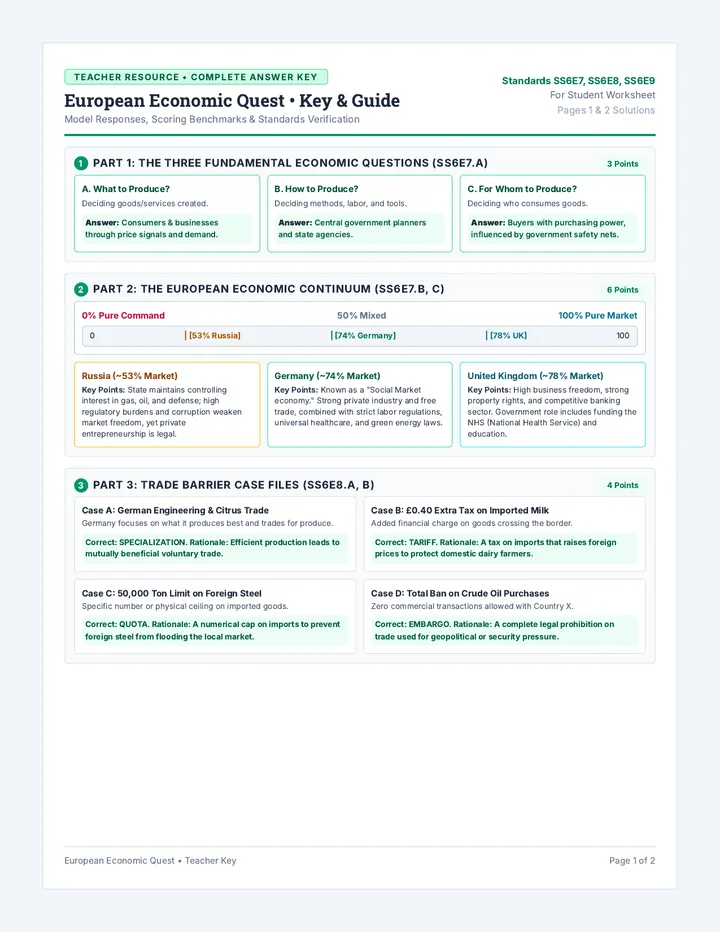
A comprehensive 2-page teacher answer key, scoring guide, and model response rubric for the European Economic Quest student investigation worksheet.

Lenny Avatar
Lenny
Business Blueprint Slides

Market Makers

A hands-on introductory curriculum that equips students with foundational business acumen and marketing savvy through practical entrepreneurial challenges, financial basics, and campaign design.

D

despinoza

9
Brand Blueprint Slides

Brand Identity Blueprint

A comprehensive high school unit covering Utah Digital Marketing Strand 1: the marketing mix, market segmentation, buyer personas, branding identity, and style guides.

M

Mike.Hale

7
Economy Investigation Worksheet

Economy Investigation Worksheet

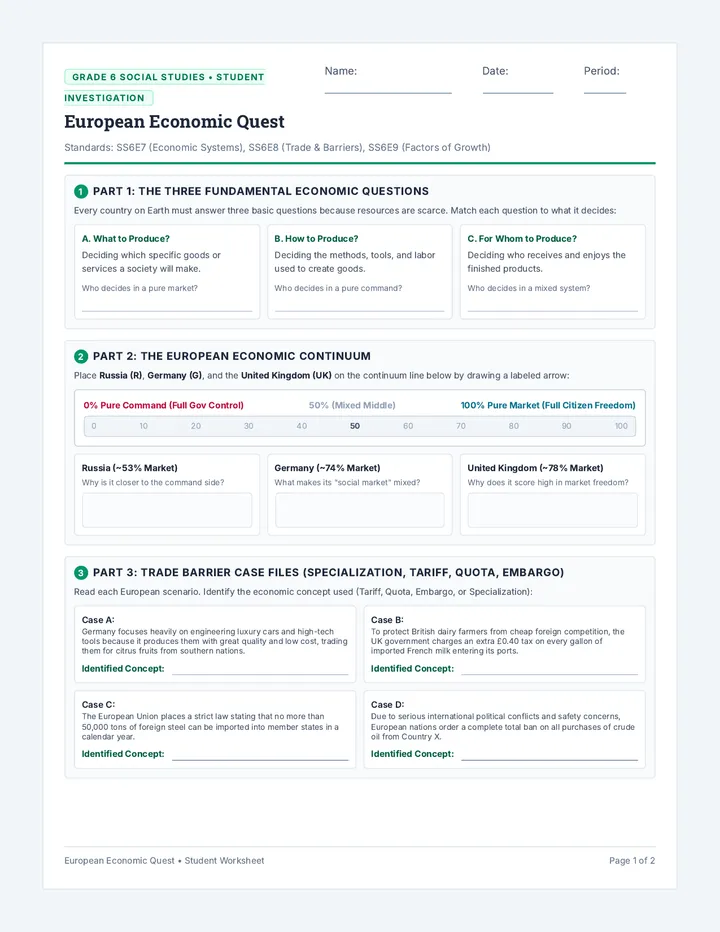
A 2-page print-ready student investigation worksheet and guided notes covering the three economic questions, continuum placement of the UK, Germany, and Russia, trade barrier scenario analysis, and factors of GDP growth.

Lenny Avatar
Lenny
Hemisphere Hunt Slides

Continent Quest

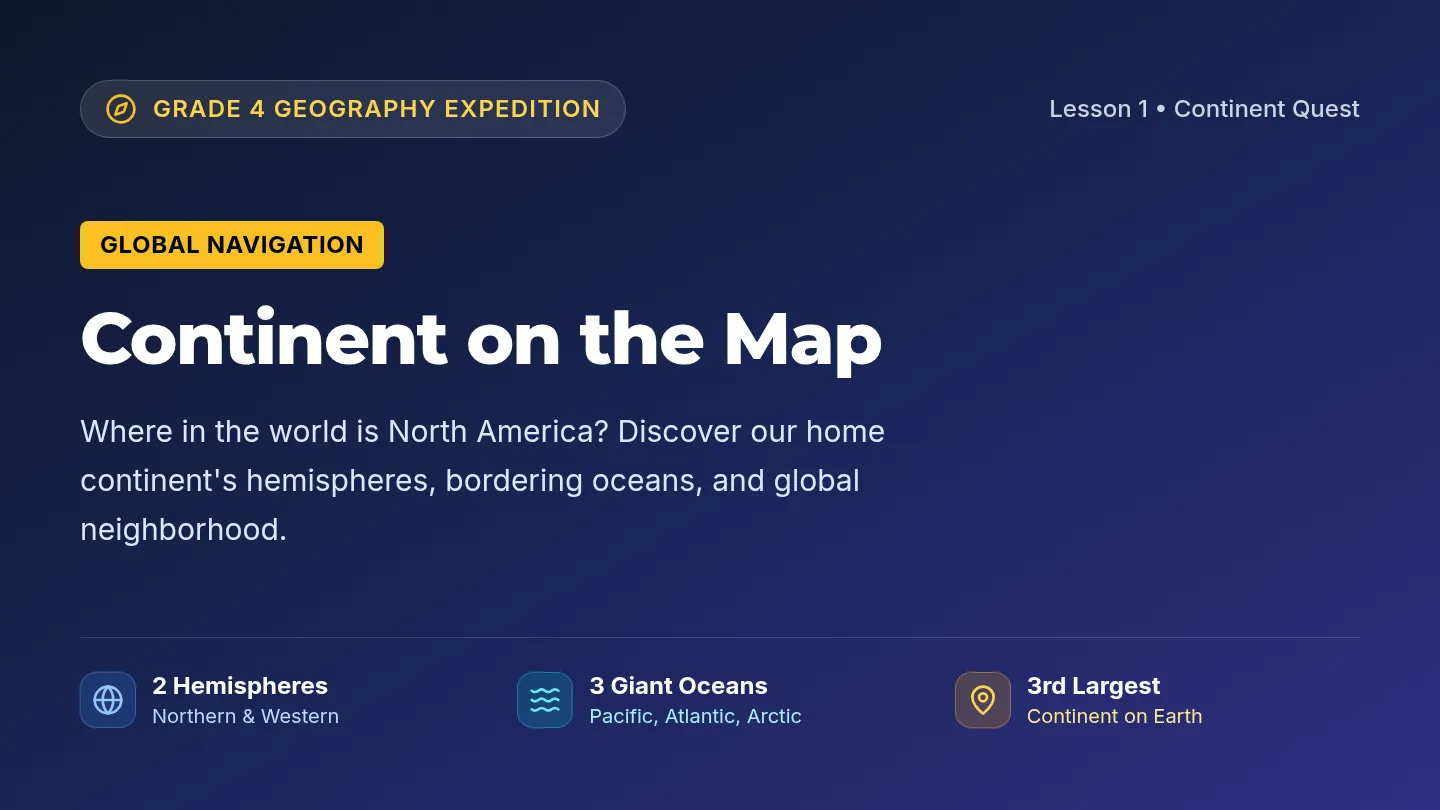
A 4th-grade geography sequence introducing students to North America through map navigation, regional comparisons, and landform exploration. Students investigate hemisphere locations, the three major nations, and iconic geographic features across the continent.

E

ehdunn

9
Idaho Trail Trek Map Activity

Idaho Trail Trek

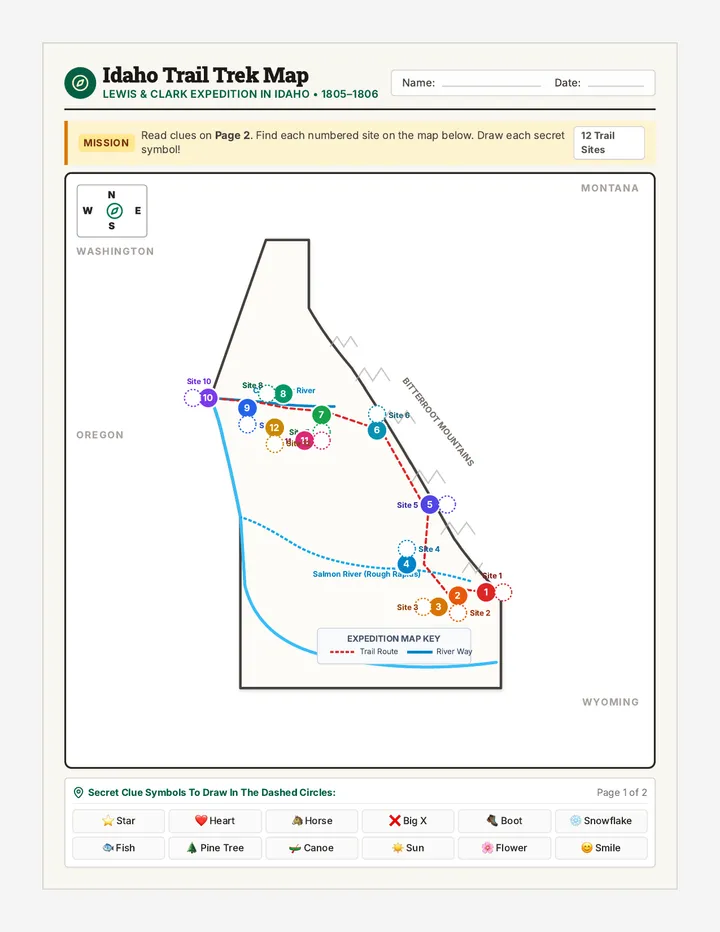
An interactive historical geography lesson introducing 2nd-grade students to the Lewis and Clark expedition in Idaho through decodable map reading and spatial clues. Students trace historical landmarks, practice beginner map skills, and decode short factual clues.

AR

Alexander Rhea

2
European Economy Slides

European Economy Slides

An engaging 6-slide visual presentation for Grade 6 social studies comparing economic systems on the mixed continuum, illustrating trade barriers and currency exchange in Europe, and examining the four factors of economic growth across the UK, Germany, and Russia.

Lenny Avatar
Lenny
Camera Tricks Slides

Pixel Sleuths

A 3-part media literacy unit for middle school students on analyzing visual media, spotting manipulated photos, and verifying online sources using lateral reading.

Lenny Avatar
Lenny
9
Retail Makeover Challenge Packet

Retail Rescue

A high-energy, hands-on retail strategy and visual merchandising simulation where student teams audit a struggling clothing boutique, align the 4 Ps, redesign the store layout, and deliver a consultant pitch.

J

Jennifer.Leber

4
European Economy Lesson Plan

European Economy Lesson Plan

A comprehensive teacher lesson plan and facilitation guide for a 45-60 minute 6th-grade social studies lesson on European economic systems, trade barriers, and factors of economic growth. It includes standards alignment, pacing, scaffolding, discussion stems, and common misconceptions.

Lenny Avatar
Lenny