Lenny.com
Explore
Create
ActivitiesNewMathEnglish Language ArtsScience & EngineeringSocial StudiesGlobal LanguagesHealth & Physical EducationSpecial EducationCounseling & Life SkillsArts & CreativityESL
Lenny.com
Lenny.com
Explore
Create
ActivitiesNewMathEnglish Language ArtsScience & EngineeringSocial StudiesGlobal LanguagesHealth & Physical EducationSpecial EducationCounseling & Life SkillsArts & CreativityESL
Lenny.com
Lenny.com

Solutions

Lenny for EducatorsLenny for SchoolsLenny for Districts

Product

ExploreSign inCreateSupportAbout

Resources

Getting startedMTSS Acceleration Program

© 2026 Lenny Learning Inc.

TermsPrivacyAccessibility
LinkedInInstagramX
Lenny
Social StudiesSocial Studies PracticesLocation WordsMapsOrder EventsChronology and CausationEvaluating SourcesHistorical ThinkingGeography, Humans, & the EnvironmentAmerican Symbols and LandmarksCitiesStatesState CapitalsRegions of the United StatesGeographic SkillsPhysical GeographyHuman GeographyRegional GeographyGeography of AfricaGeography of AsiaGeography of EuropeGeography of OceaniaGeography of the AmericasSociety and Environment of EuropeSociety and Environment of AsiaSociety and Environment of The AmericasSociety and Environment of the Middle EastSociety and Environment of AfricaHistoryPrehistoryComparing Ancient River CivilizationsAncient MesopotamiaAncient Egypt and KushAncient South AsiaEarly ChinaGreeceRome and the Byzantine EmpireAncient World HistoryNative Peoples of North AmericaNative Peoples of Mesoamerica and South AmericaAfrican EmpiresMedieval AsiaMedieval EuropeThe Silk RoadMedieval HistoryIslamic EmpiresWorld ReligionsRenaissance PeriodAge of ExplorationThe Thirteen ColoniesThe American RevolutionUS History Early RepublicFounding of the United StatesUS History AntebellumUS Civil WarReconstruction PeriodThe Gilded AgeUS ImperialismWorld ImperialismWorld War IUS History 1920sGreat DepressionWorld War IIThe Cold WarUS History 1950-60sUS History 1960s-70sWorld History 20th CenturyContemporary US HistoryContemporary World HistoryHolidaysCivics and GovernmentCitizenshipGovernment FoundationsThe ConstitutionUS ConstitutionExecutive BranchLegislative BranchJudicial BranchState and LocalPolitical ParticipationPublic PolicyPolitical SystemsPower and AuthoritySocial MovementsDefining DevianceTheories of DevianceCrime and Criminal JusticeEconomicsBasic Economic PrinciplesSupply and DemandWhat is MoneyEconomic FundamentalsMicroeconomicsMacroeconomicsBanking and FinanceEconomic SystemsGlobal EconomicsCorporations and PowerThe Changing WorkplaceUnemployment and LaborClass and InequalitySocial MobilityGlobal InequalityPsychologyHistory of PsychologyPsychology as a ScienceBrain and Nervous SystemNeuroscience and BehaviorGenetics and BehaviorSleep and ConsciousnessSensory ProcessesPerceptual OrganizationClassical ConditioningOperant ConditioningObservational LearningCognitive LearningMemory ProcessesThinking and Problem SolvingLanguage and CognitionTheories of MotivationStress and CopingPrenatal and Infant DevelopmentChildhood DevelopmentAdolescent DevelopmentAdulthood and AgingSelf and IdentitySocial CognitionSocial InfluenceAttraction and RelationshipsGroup BehaviorPrejudice and DiscriminationAnxiety and Mood DisordersClinical PsychologyForensic PsychologyPhilosophy & EthicsIntroduction to PhilosophyMajor Philosophers & IdeasMind and Body ProblemFree Will vs DeterminismEthics & MoralityReligion & PhilosophyPolitical Philosophy

Sun Roads Empire

A secondary history lesson investigating how Inca spiritual cosmology, the Qhapaq Ñan road network, and the mita labor system drove rapid imperial expansion, followed by an examination of how internal succession conflict and Spanish arrival triggered the empire's fall.

Sun Roads Empire

A secondary history lesson investigating how Inca spiritual cosmology, the Qhapaq Ñan road network, and the mita labor system drove rapid imperial expansion, followed by an examination of how internal succession conflict and Spanish arrival triggered the empire's fall.

Point of View: Imperial Spanish justify ambush on religious grounds.

Source C: Felipe Guaman Poma de Ayala (Andean Chronicler, c. 1615)

"Atahualpa said: 'Give me the book so it speaks to me.' He put it to his ear and said: 'Why doesn't it speak? It says nothing to me.' And he cast it away. Then Pizarro shouted to his cavalry hidden in the halls. The Inca lords came unarmed in peace, honoring a guest. The Spaniards butchered them like sheep; horses trampled their bodies, and their cries filled the plaza."

Point of View: Indigenous nobleman highlights betrayal and cultural divide.

3. Contrast Sources B and C. How does Atahualpa's interaction with the Bible reveal a profound cultural misunderstanding, and how did the Spaniards exploit this moment?

PART 4

Historical Synthesis & Argumentation

Analytical Prompt:

Historians debate whether Tawantinsuyu fell primarily due to internal Andean fractures (civil war between Huáscar and Atahualpa, smallpox epidemic, disaffected provinces) or external Spanish military advantages (cavalry shock, steel weapons, indigenous alliances).

Construct a claim arguing which factor was decisive. Support your thesis with at least two specific pieces of historical evidence from this lesson.

Sun Roads Empire Investigation • Student Handout Page 2 of 2

Worksheet Answer Key & Differentiation

TEACHER KEY

Part 1 Key: Spiritual Cosmology (Source A Analysis) Score: 4/4 Points

Exemplar Response: The Sapa Inca claimed direct descent from Inti (the Sun), elevating political obedience into a divine religious obligation. Conquered peoples saw their sacred idols moved to the Coricancha in Cusco, which simultaneously honored their local deities while holding them as spiritual hostages ensuring state loyalty. In return, the emperor promised divine solar protection and material aid during crises.

Part 2 Key: Infrastructure & Mita Labor Reciprocity Score: 4/4 Points

Exemplar Response: Unlike European taxation based on coin or agricultural confiscation, the mita taxed time and labor. Ordinary farmers maintained terraced farms and roads in shifts. In exchange, the state assumed responsibility for worker sustenance during projects and distributed stockpiled grains and wool from qullqas when frost or drought wiped out local crops. This mutual insurance cemented loyalty.

Part 3 Key: Cajamarca Accounts (Sources B & C) Score: 4/4 Points

Exemplar Response: In Andean culture, sacred knowledge was oral, visual, and woven into quipus. When Valverde handed Atahualpa a written codex, the Inca expected an object of speech or spiritual power; holding it to his ear revealed no voice, leading him to toss it down. The Spanish opportunistically framed this lack of comprehension as blasphemy, giving religious justification to unleash concealed cavalry and cannon fire on unarmed attendants.

Part 4 Key: Historical Synthesis Argumentation Score: 6/6 Points

Exemplar Claim A (Internal Crisis): "The rapid collapse was primarily driven by internal vulnerabilities: the Eurasian smallpox wave killed Emperor Huayna Capac, sparking a bloody civil war between Atahualpa and Huáscar that fractured military command and alienated provincial ethnic groups who willingly allied with Pizarro."
Exemplar Claim B (External Advantage): "External technological asymmetry was decisive: Spanish steel armor, equestrian shock tactics, and psychological weapons neutralized numerical superiority, allowing 168 men to decapitate the centralized Inca command structure in a single afternoon."

Common Student Misconceptions

Misconception: "Pizarro conquered 10 million Incas with only 168 men alone."
Correction: Emphasize tens of thousands of indigenous allies (Huancas, Chachapoyas, Cañaris) who joined the Spanish to overthrow Inca imperial domination.

Differentiation Strategies

Support: Provide sentence frames for Part 4 ("Although Spanish technology created shock, the primary reason was... because...").
Extension: Have advanced students evaluate how split inheritance contributed to imperial instability.

Sun Roads Empire • Educator Instructional Guide Page 2 of 2

You might also like

Business Blueprint Slides

Market Makers

A hands-on introductory curriculum that equips students with foundational business acumen and marketing savvy through practical entrepreneurial challenges, financial basics, and campaign design.

D

despinoza

9
Retail Makeover Challenge Packet

Retail Rescue

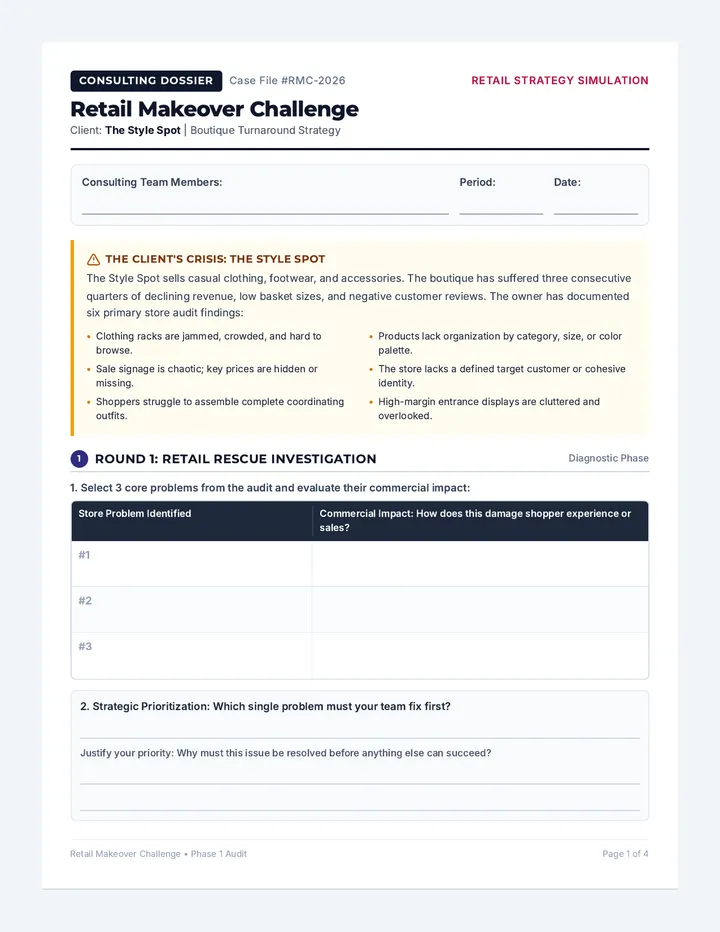
A high-energy, hands-on retail strategy and visual merchandising simulation where student teams audit a struggling clothing boutique, align the 4 Ps, redesign the store layout, and deliver a consultant pitch.

J

Jennifer.Leber

4
Dawn of Humanity Worksheet

Dawn of Humanity Worksheet

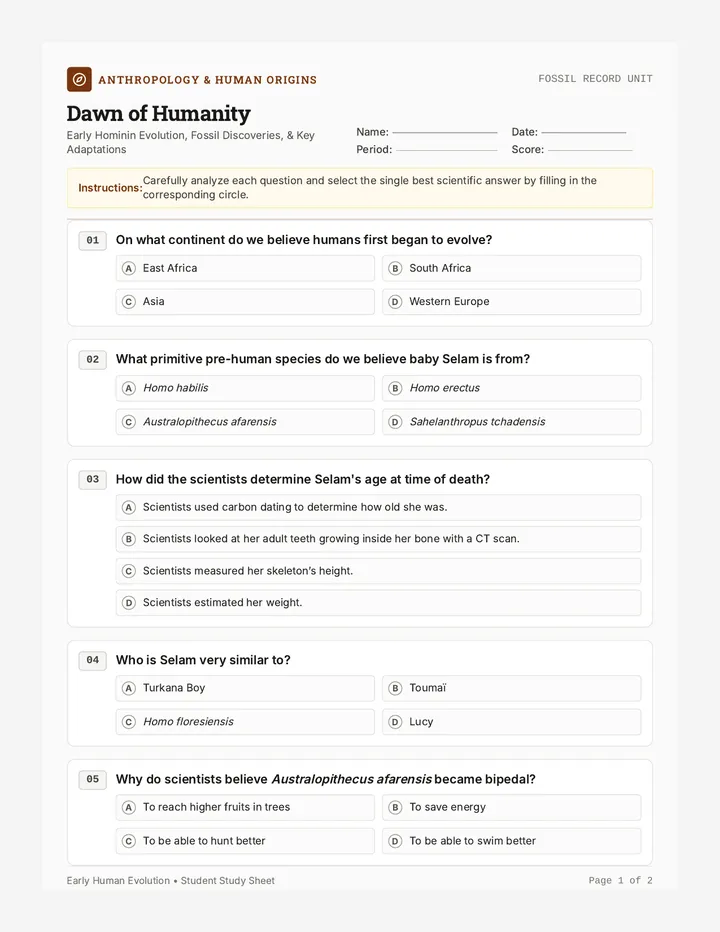
A comprehensive two-page student worksheet exploring early hominin evolution, fossil discoveries like Selam and Toumai, bipedalism, brain maturation, and primitive toolmaking.

AA

Adam Amster

Hemisphere Hunt Slides

Continent Quest

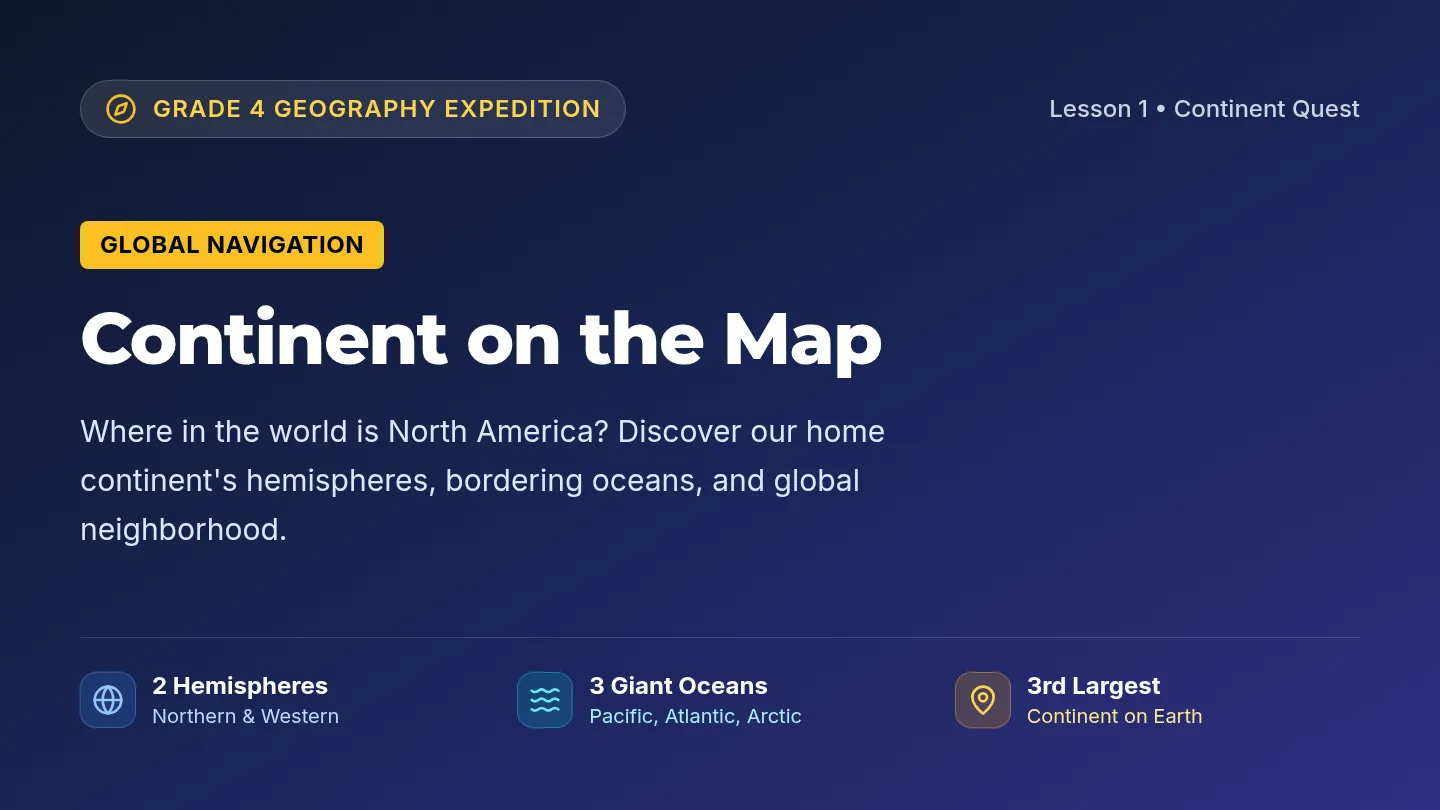
A 4th-grade geography sequence introducing students to North America through map navigation, regional comparisons, and landform exploration. Students investigate hemisphere locations, the three major nations, and iconic geographic features across the continent.

E

ehdunn

9
US and Canada Guided Notes

US Canada Vocab

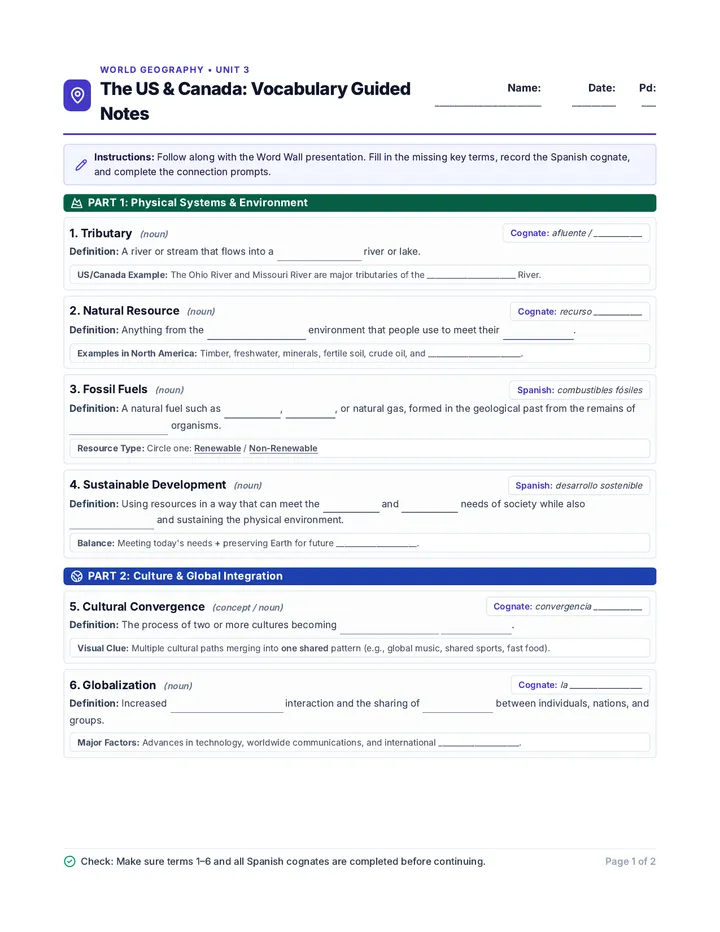
A vocabulary mastery lesson for Unit 3 covering physical systems, culture, demographics, and global economics of the United States and Canada.

BJ

Brandon Jones

2
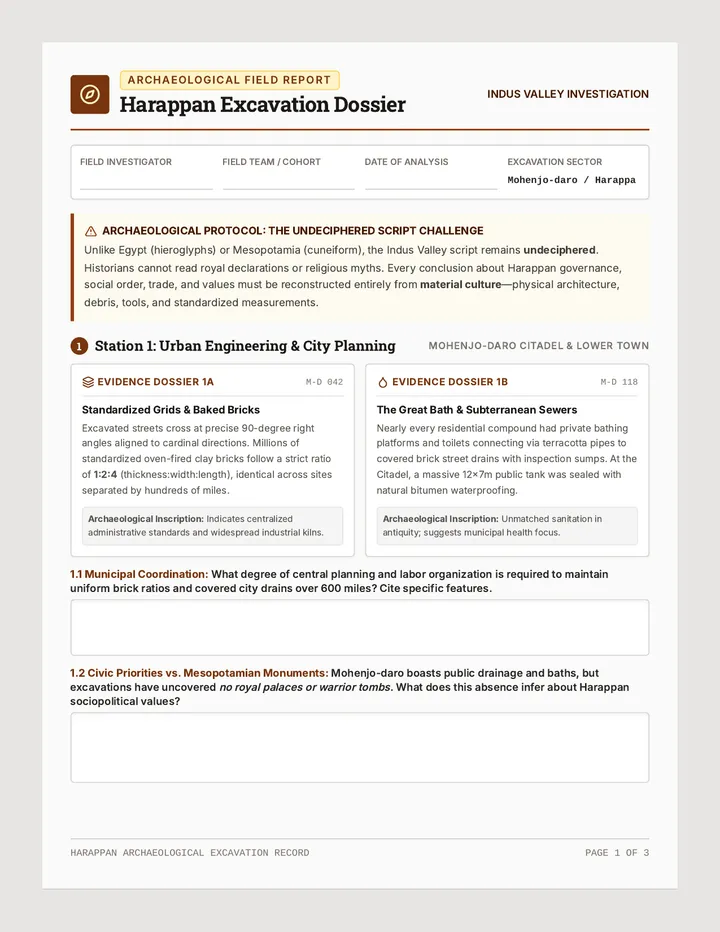
Harappan Excavation Dossier Activity

Harappan Excavation Dossier Activity

A rigorous three-page archaeological field investigation activity for ninth-grade world history. Students analyze primary archaeological evidence from the Indus Valley Civilization—including urban grid planning and drainage, iconic material artifacts, and maritime trade networks—to construct evidence-based historical claims about an undeciphered ancient society.

E

ebakke

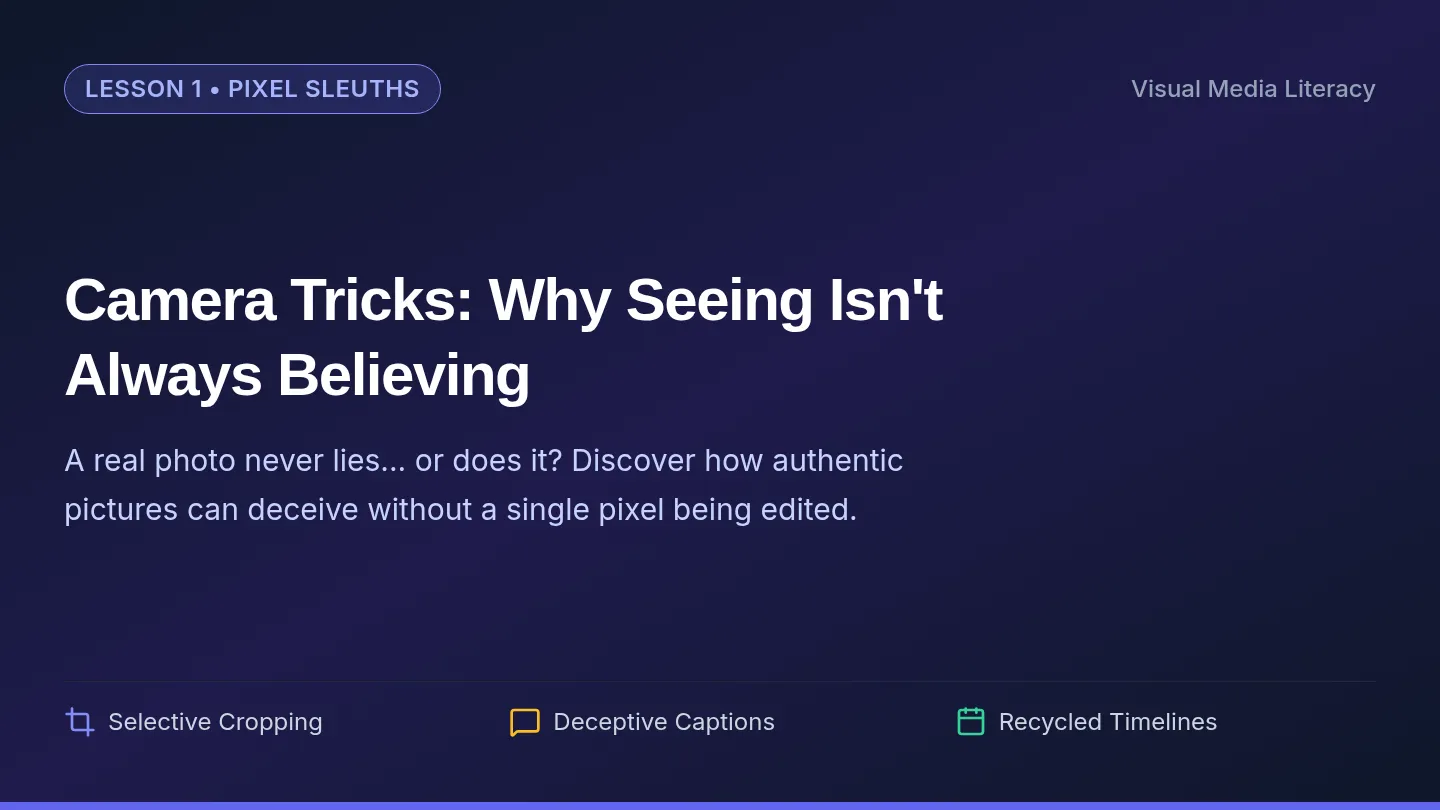
Camera Tricks Slides

Pixel Sleuths

A 3-part media literacy unit for middle school students on analyzing visual media, spotting manipulated photos, and verifying online sources using lateral reading.

Lenny Avatar
Lenny
9
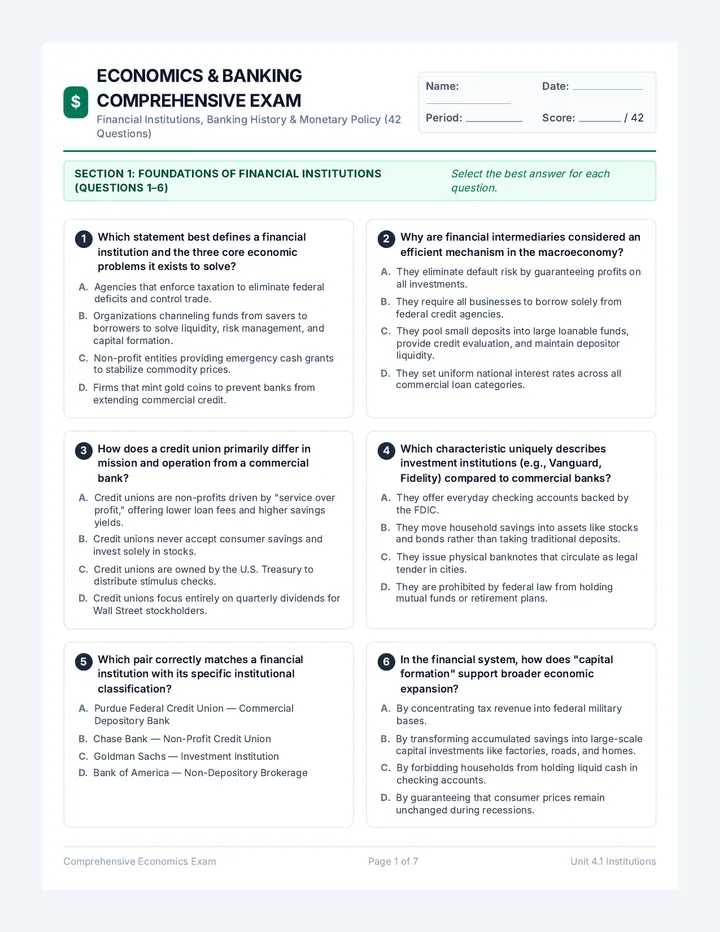
Money Machine Question Bank

Money and Banking

A comprehensive assessment unit covering financial institutions, the history of U.S. banking, and Federal Reserve monetary policy. Includes an exhaustive 42-question student multiple-choice exam and a companion 7-page teacher answer key with detailed rationales, distractor analyses, and lecture slide cross-references.

SM

Shawn McMahon

2
Learning Celebration Flyer

Learning Celebration Flyer

A vibrant promotional flyer announcing Parent-Teacher Conferences and Celebration of Learning, highlighting early dismissal times and the Sophomore Class dinner fundraiser with meal deal pricing.

J

jlehman

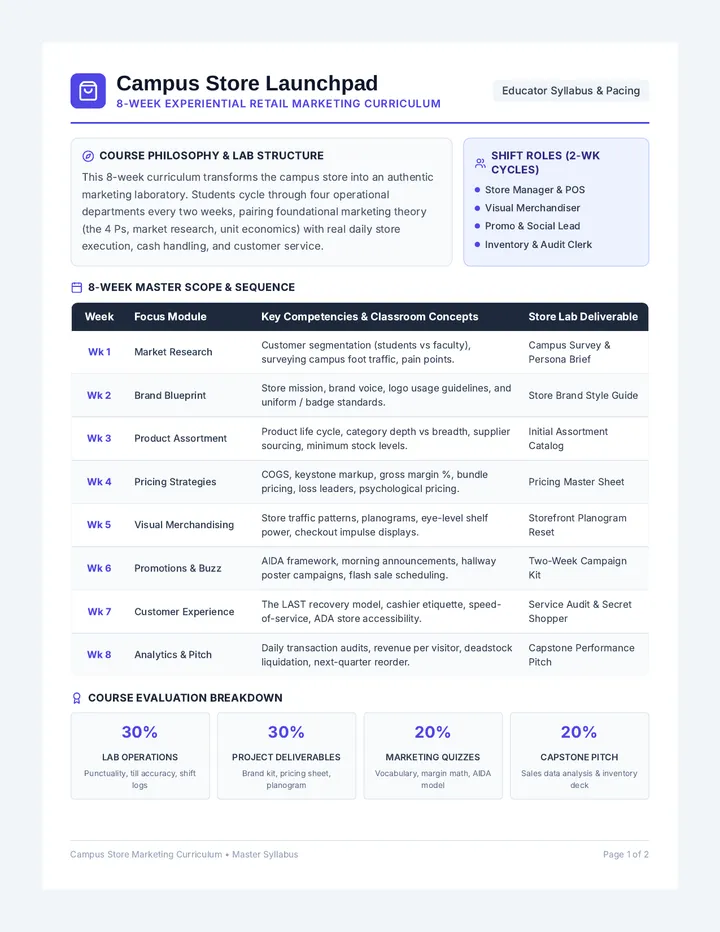
Store Master Syllabus Guide

Campus Store Launchpad

An eight-week experiential introduction to marketing centered around operating and scaling a campus retail store. Students master brand positioning, assortment strategy, pricing mechanics, visual merchandising, and sales analytics through authentic store management.

D

despinoza

8
Curriculum Alignment Case Handout

Curriculum Alignment Prep

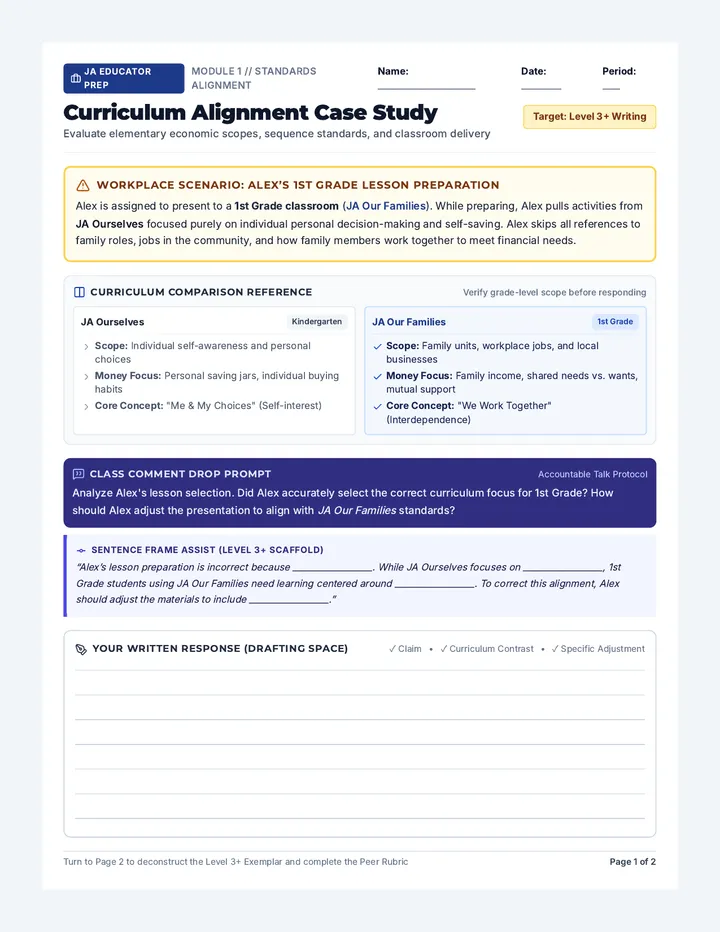
A professional development and instructional coaching lesson for educators and volunteers analyzing Junior Achievement curriculum alignment, grade-level scope shifts, and analytical peer evaluation.

Lenny Avatar
Lenny
2
Consultant Pitch Rubric

Consultant Pitch Rubric

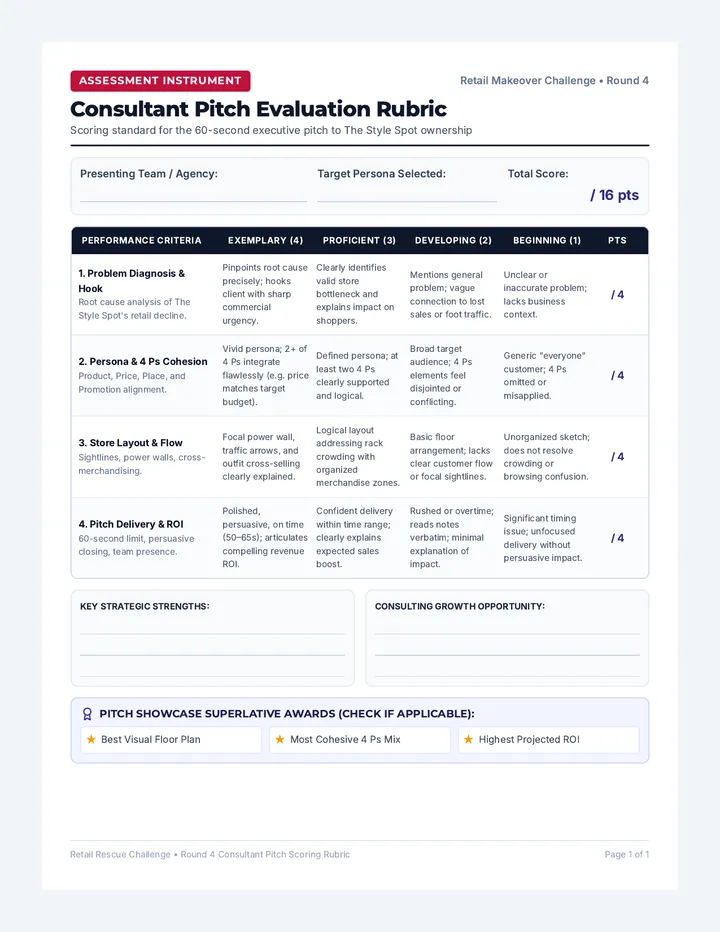
A 1-page standardized evaluation rubric and scoring sheet for grading the 60-second Retail Makeover consultant pitches, featuring 4 criteria benchmarks, feedback notes, and award categories.

J

Jennifer.Leber