Lenny.com
Explore
Create
ActivitiesNewMathEnglish Language ArtsScience & EngineeringSocial StudiesGlobal LanguagesHealth & Physical EducationSpecial EducationCounseling & Life SkillsArts & CreativityESL
Lenny.com
Lenny.com
Explore
Create
ActivitiesNewMathEnglish Language ArtsScience & EngineeringSocial StudiesGlobal LanguagesHealth & Physical EducationSpecial EducationCounseling & Life SkillsArts & CreativityESL
Lenny.com
Lenny.com

Solutions

Lenny for EducatorsLenny for SchoolsLenny for Districts

Product

ExploreSign inCreateSupportAbout

Resources

Getting startedMTSS Acceleration Program

© 2026 Lenny Learning Inc.

TermsPrivacyAccessibility
LinkedInInstagramX
Lenny
Social StudiesSocial Studies PracticesLocation WordsMapsOrder EventsChronology and CausationEvaluating SourcesHistorical ThinkingGeography, Humans, & the EnvironmentAmerican Symbols and LandmarksCitiesStatesState CapitalsRegions of the United StatesGeographic SkillsPhysical GeographyHuman GeographyRegional GeographyGeography of AfricaGeography of AsiaGeography of EuropeGeography of OceaniaGeography of the AmericasSociety and Environment of EuropeSociety and Environment of AsiaSociety and Environment of The AmericasSociety and Environment of the Middle EastSociety and Environment of AfricaHistoryPrehistoryComparing Ancient River CivilizationsAncient MesopotamiaAncient Egypt and KushAncient South AsiaEarly ChinaGreeceRome and the Byzantine EmpireAncient World HistoryNative Peoples of North AmericaNative Peoples of Mesoamerica and South AmericaAfrican EmpiresMedieval AsiaMedieval EuropeThe Silk RoadMedieval HistoryIslamic EmpiresWorld ReligionsRenaissance PeriodAge of ExplorationThe Thirteen ColoniesThe American RevolutionUS History Early RepublicFounding of the United StatesUS History AntebellumUS Civil WarReconstruction PeriodThe Gilded AgeUS ImperialismWorld ImperialismWorld War IUS History 1920sGreat DepressionWorld War IIThe Cold WarUS History 1950-60sUS History 1960s-70sWorld History 20th CenturyContemporary US HistoryContemporary World HistoryHolidaysCivics and GovernmentCitizenshipGovernment FoundationsThe ConstitutionUS ConstitutionExecutive BranchLegislative BranchJudicial BranchState and LocalPolitical ParticipationPublic PolicyPolitical SystemsPower and AuthoritySocial MovementsDefining DevianceTheories of DevianceCrime and Criminal JusticeEconomicsBasic Economic PrinciplesSupply and DemandWhat is MoneyEconomic FundamentalsMicroeconomicsMacroeconomicsBanking and FinanceEconomic SystemsGlobal EconomicsCorporations and PowerThe Changing WorkplaceUnemployment and LaborClass and InequalitySocial MobilityGlobal InequalityPsychologyHistory of PsychologyPsychology as a ScienceBrain and Nervous SystemNeuroscience and BehaviorGenetics and BehaviorSleep and ConsciousnessSensory ProcessesPerceptual OrganizationClassical ConditioningOperant ConditioningObservational LearningCognitive LearningMemory ProcessesThinking and Problem SolvingLanguage and CognitionTheories of MotivationStress and CopingPrenatal and Infant DevelopmentChildhood DevelopmentAdolescent DevelopmentAdulthood and AgingSelf and IdentitySocial CognitionSocial InfluenceAttraction and RelationshipsGroup BehaviorPrejudice and DiscriminationAnxiety and Mood DisordersClinical PsychologyForensic PsychologyPhilosophy & EthicsIntroduction to PhilosophyMajor Philosophers & IdeasMind and Body ProblemFree Will vs DeterminismEthics & MoralityReligion & PhilosophyPolitical Philosophy

Revolutionary Road

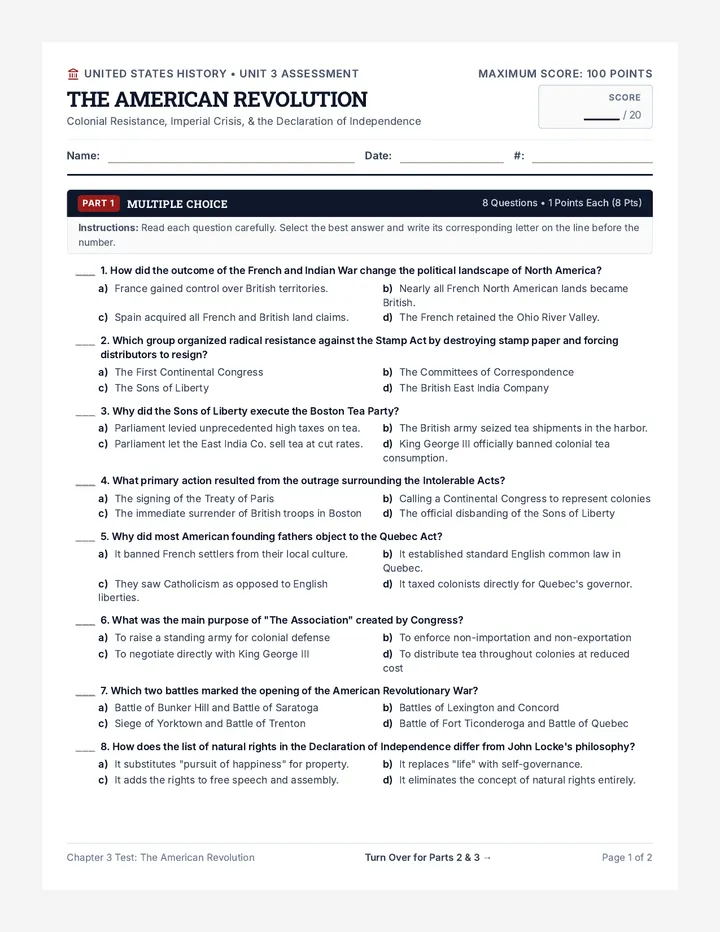
A comprehensive unit assessment module exploring the political, economic, and ideological catalysts of the American Revolution. Includes a print-ready two-page student examination and an in-depth educator scoring guide with rubrics and historical benchmarks.

DRDaniel Rodriguez

Revolutionary Road

A comprehensive unit assessment module exploring the political, economic, and ideological catalysts of the American Revolution. Includes a print-ready two-page student examination and an in-depth educator scoring guide with rubrics and historical benchmarks.

DRDaniel Rodriguez

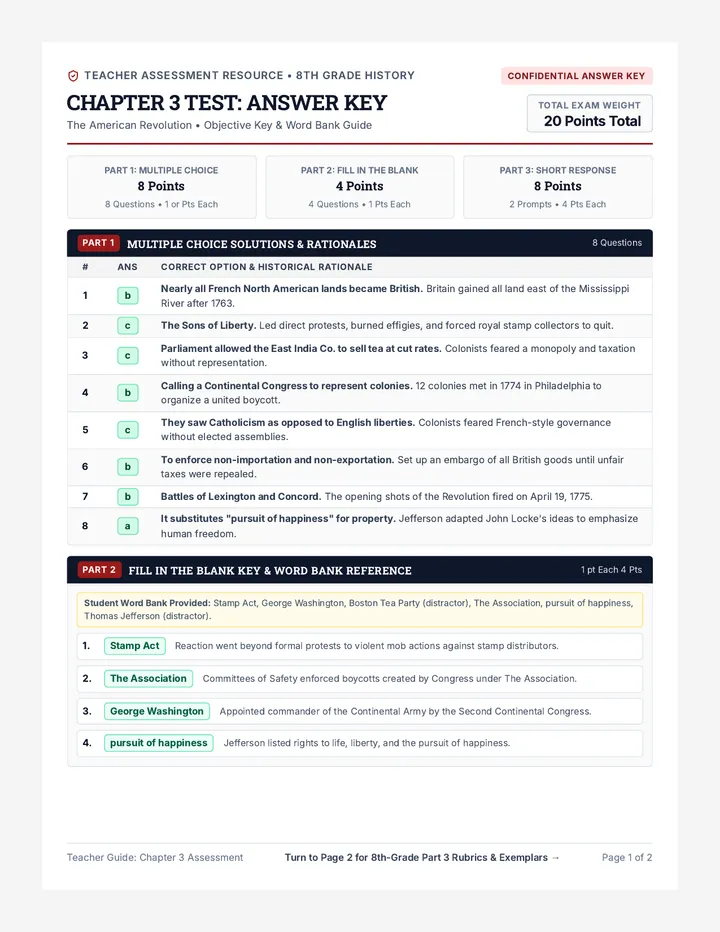
The Association Committees of Safety enforced boycotts created by Congress under The Association.

George Washington Appointed commander of the Continental Army by the Second Continental Congress.

pursuit of happiness Jefferson listed rights to life, liberty, and the pursuit of happiness.

Teacher Guide: Chapter 3 Assessment Turn to Page 2 for 8th-Grade Part 3 Rubrics & Exemplars → Page 1 of 2

Part 3: 8th-Grade Short Response Rubric & Model Answers Scoring Guidelines • 4 Points Per Prompt

Middle School Writing Rubric (4 Points Each)

Exemplary (4 Pts)

Answers both parts clearly; gives 2+ accurate historical facts; 3–5 complete sentences.

Proficient (3 Pts)

Answers both parts; includes at least 1 accurate fact; minor lack of detail or brief phrasing.

Developing (2 Pts)

Only answers one part of prompt; relies on general statements without specific evidence.

Minimal (1 Pts)

Incomplete; off-topic; demonstrates little to no historical understanding of the unit.

Prompt 1: Colonial Protests and Boycotts (20 Pts)

8th-Grade Benchmark

What to Look For: (1) Names at least two protest methods (e.g., mob attacks, burning effigies, tarring tax collectors, Boston Tea Party, boycotting British tea/clothes). (2) Explains how Committees of Safety enforced boycotts (e.g., checked merchant shops, posted names of rule-breakers, threatened or pressured people who bought British goods).

8th-Grade Model Student Answer:

"Colonists protested British taxes in several ways. Groups like the Sons of Liberty held violent street protests, hung fake dolls of tax collectors in trees, and dumped British tea into Boston Harbor during the Boston Tea Party. Colonists also agreed to boycott British goods by refusing to buy British cloth and tea. To make sure everyone followed the boycott, local Committees of Safety inspected shops and published the names of merchants who kept selling British items. They used peer pressure and threats so no one broke the rules."

Prompt 2: Natural Rights and the Purpose of Government (20 Pts)

8th-Grade Benchmark

What to Look For: (1) Explains why Jefferson used "pursuit of happiness" instead of "property" (e.g., happiness applies to all people, not just wealthy landowners; freedom to live a good life; avoiding fights over owning property/enslaved people). (2) Identifies the main job of government according to the Declaration (to protect people's natural rights, and that government gets its power from the consent of the people).

8th-Grade Model Student Answer:

"Thomas Jefferson likely changed 'property' to 'the pursuit of happiness' because he wanted the rights to sound broader and include every person's chance to live a good and fulfilling life, not just people who owned land. According to the Declaration of Independence, the main job of government is to protect people's natural rights to life, liberty, and happiness. If a government fails to protect these rights and abuses its power, the people have the right to change or replace it."

Teacher Guide: Chapter 3 Assessment End of Answer Key & Scoring Guide Page 2 of 2

You might also like

Business Blueprint Slides

Market Makers

A hands-on introductory curriculum that equips students with foundational business acumen and marketing savvy through practical entrepreneurial challenges, financial basics, and campaign design.

D

despinoza

9
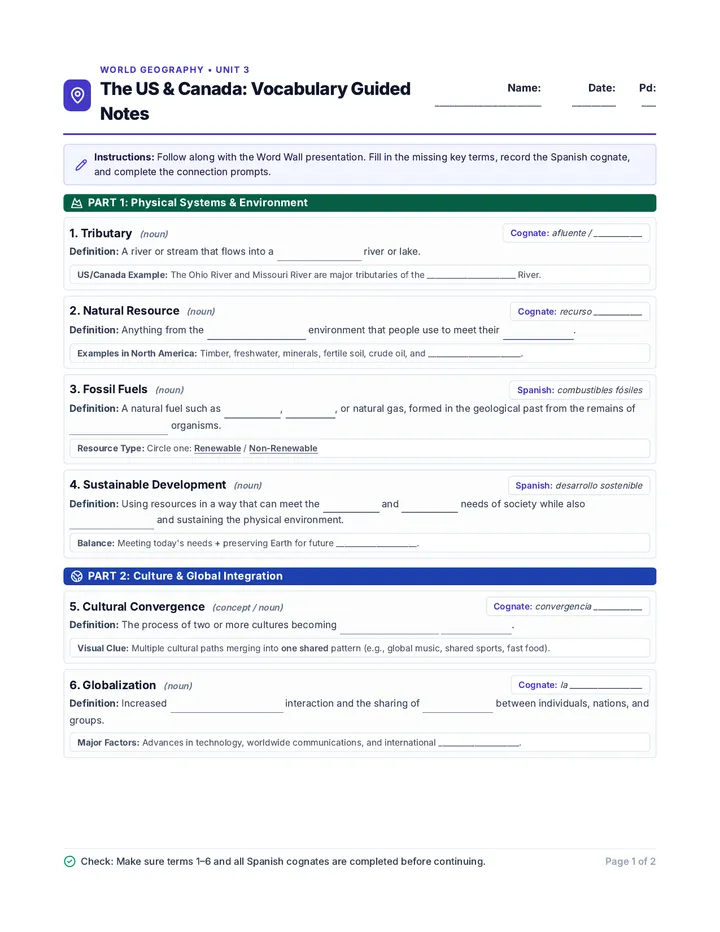
US and Canada Guided Notes

US Canada Vocab

A vocabulary mastery lesson for Unit 3 covering physical systems, culture, demographics, and global economics of the United States and Canada.

BJ

Brandon Jones

2
Revolution Test Key

Revolution Test Key

A comprehensive two-page teacher answer key and analytical scoring guide aligned to the 8th-grade American Revolution assessment. Includes word bank notes, objective solutions, rubrics, and age-appropriate model responses.

DR

Daniel Rodriguez

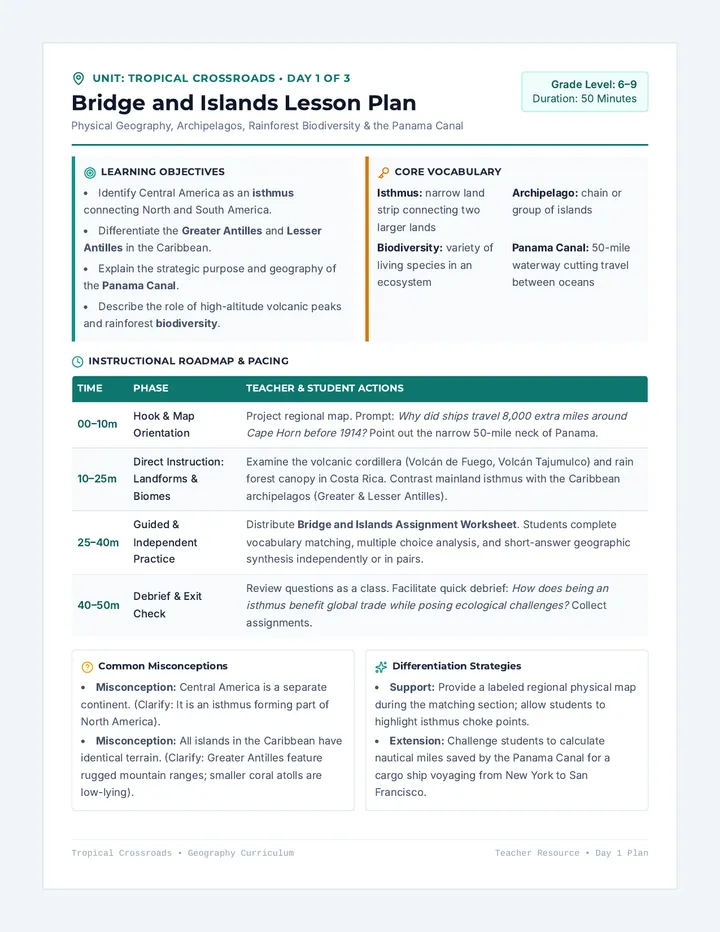
Bridge and Islands Lesson Plan

Tropical Crossroads

A comprehensive 3-day middle/high school geography unit examining Central America and the Caribbean, covering physical geography, natural hazards, and human-environment interactions.

D

dcampbell

9
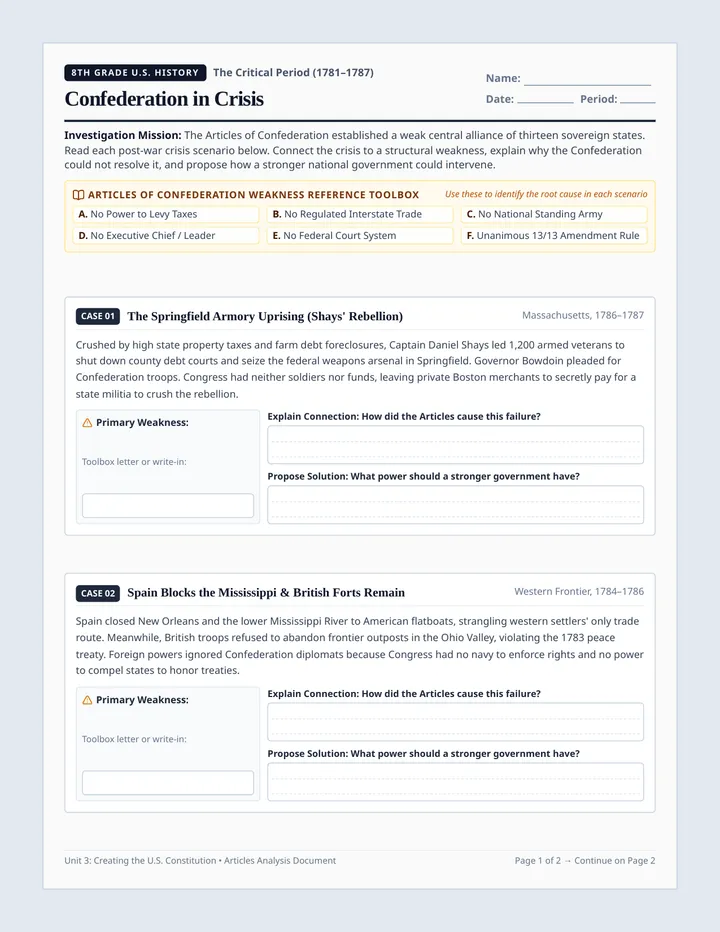
Confederation Crisis Worksheet

Confederation Crisis

An 8th-grade U.S. history lesson investigating how the structural failures of the Articles of Confederation sparked post-Revolution crises and prompted the 1787 Constitutional Convention. Students examine real historical cases, identify governing flaws, and evaluate constitutional solutions.

K

Kristine.Hosler

2
Revolution Unit Test

Revolution Unit Test

An accessible, print-ready two-page unit assessment on the American Revolution tailored for 8th graders. Features an objective section, a fill-in-the-blank vocabulary bank, and scaffolded critical thinking prompts with ruled response areas.

DR

Daniel Rodriguez

Monsoon Seas Map Cards

Monsoon Seas

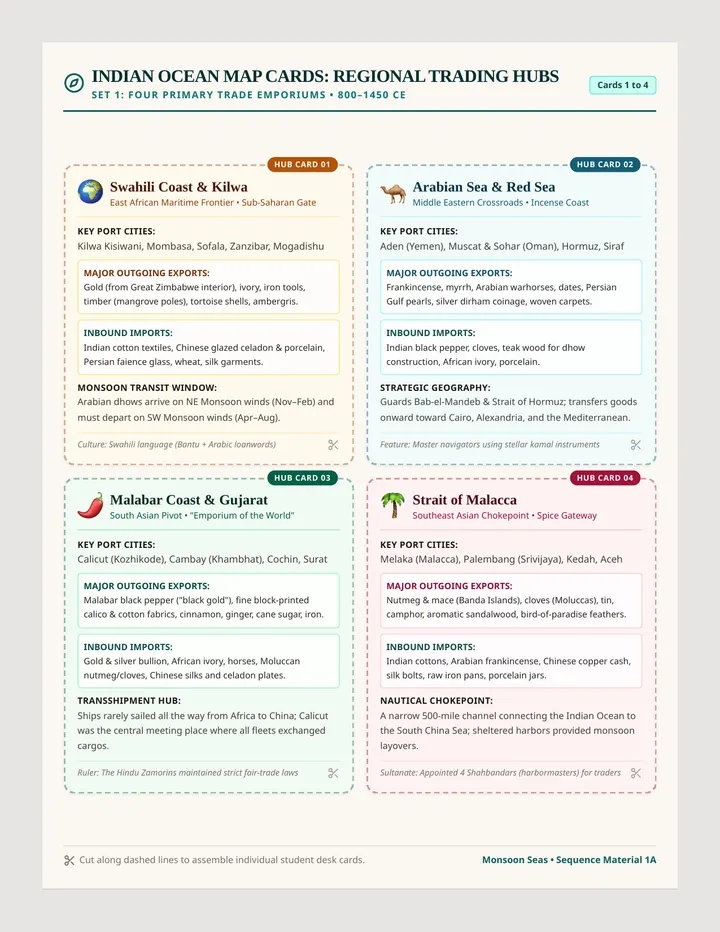
A multi-day inquiry sequence investigating the ancient and medieval Indian Ocean maritime trade network linking East Africa, the Arabian Peninsula, India, and Southeast Asia. Students analyze physical geography, seasonal monsoon winds, commercial commodities, and cross-cultural diffusion.

Lenny Avatar
Lenny
4
Winter Siege Lesson Plan

Breaching Bexar

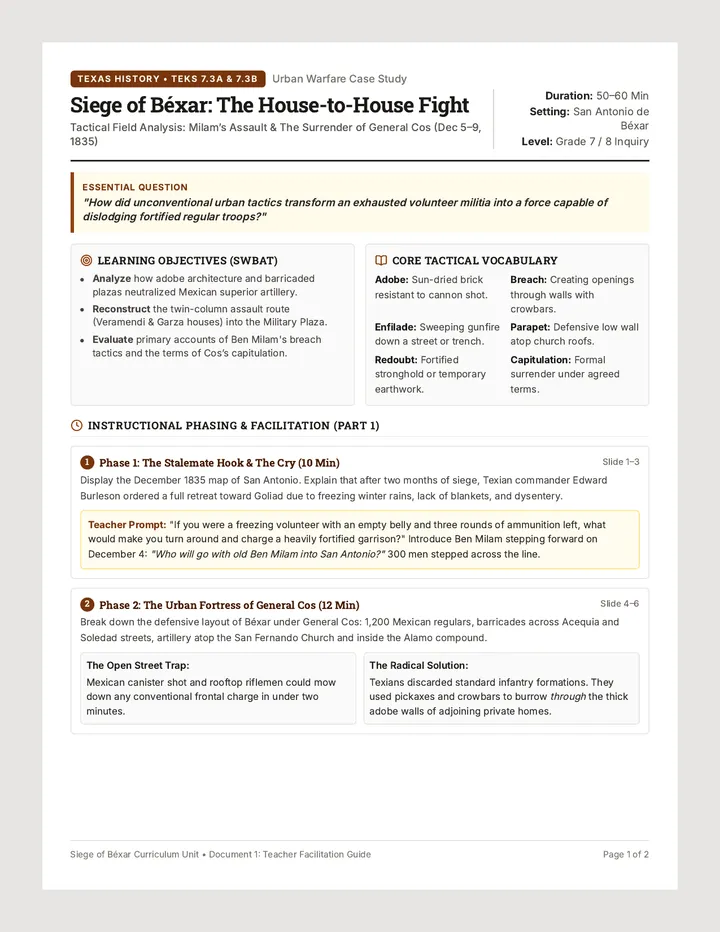
A rigorous 8th-grade Texas History inquiry examining the December 1835 Siege of Béxar, where Texian volunteers led by Ben Milam executed house-to-house urban warfare to dislodge General Martín Perfecto de Cos's Mexican forces from San Antonio. Students analyze tactical primary sources, engineer breaches through adobe walls, and evaluate the strategic aftermath leading up to the Alamo.

FM

Felicia Monk

4
Commander Strategy Lesson Plan

Washingtons Revolution

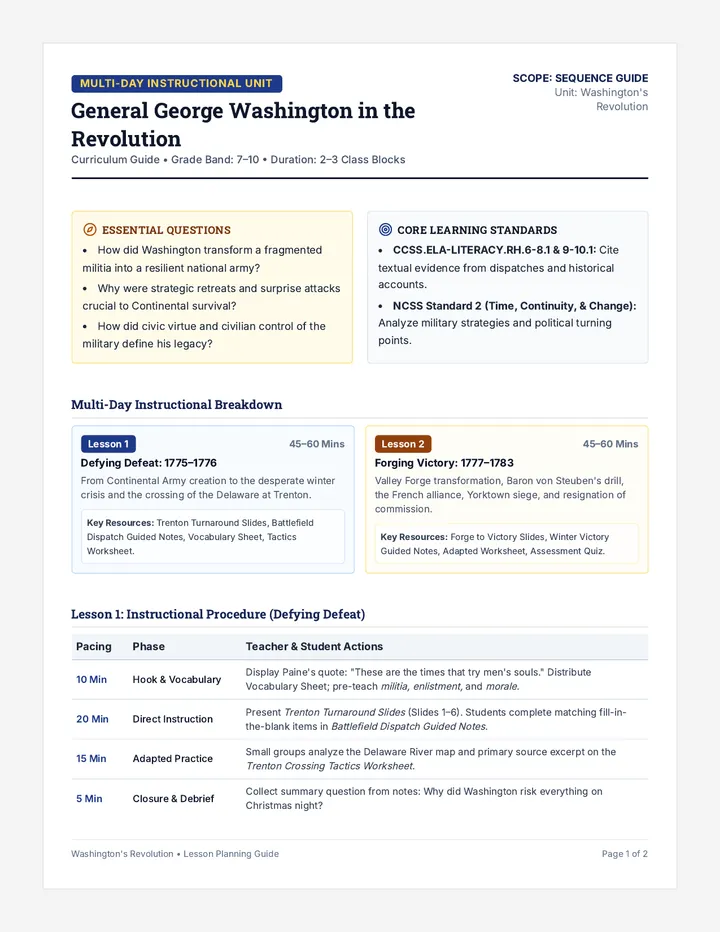
A two-part multi-day instructional sequence examining George Washington's military leadership, strategic resilience, and crucial turning points during the American Revolutionary War.

CP

Christian Page

5
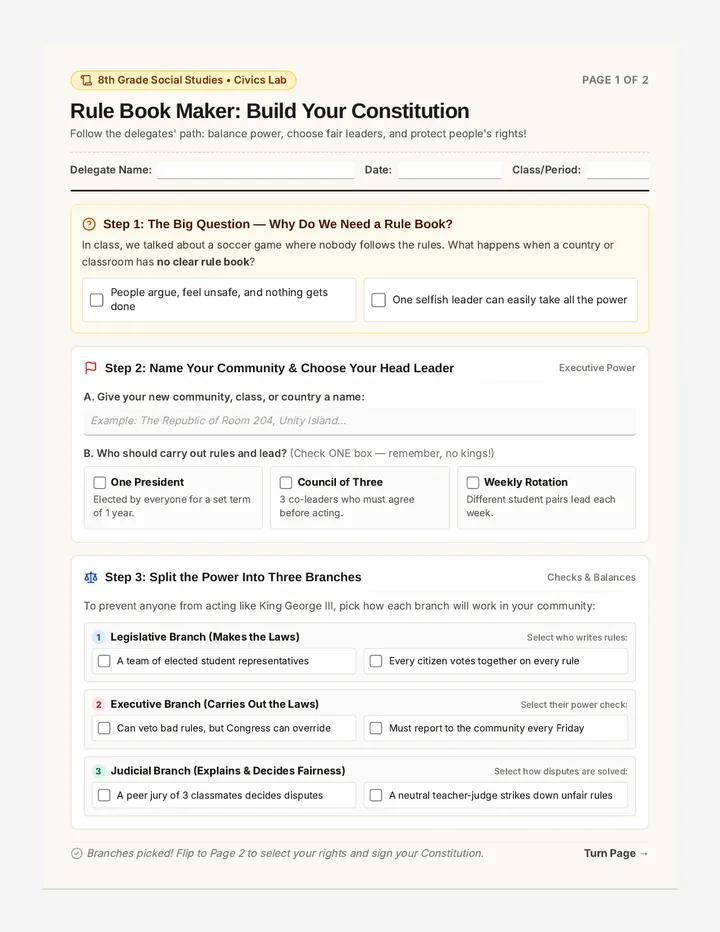
Rule Book Maker Worksheet

Constitution Rule Book

An 8th-grade civics lesson introducing the U.S. Constitution as America's foundational rule book, exploring the failure of the Articles of Confederation, the Philadelphia Convention, and the three-branch system of government.

KS

Kathleen Suther

3
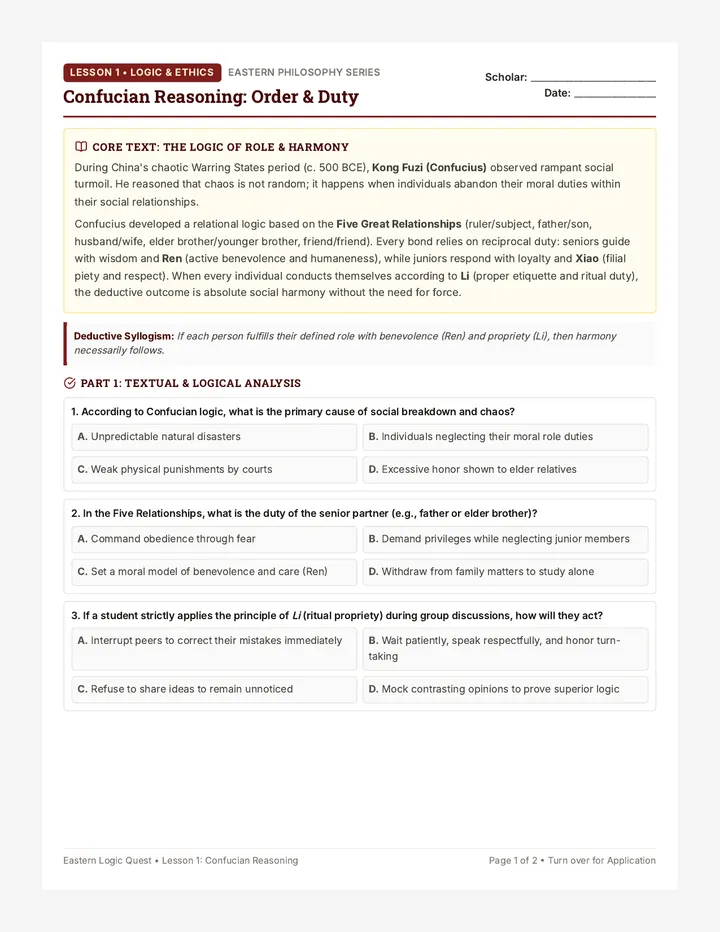
Confucian Reasoning Worksheet

Eastern Logic Quest

A two-part homeschool logic and philosophy sequence exploring ancient Eastern frameworks. Middle schoolers analyze core reasoning in Confucianism and Buddhism through textual analysis, scenario classification, and original dilemma writing.

DB

Danielle Burham

4
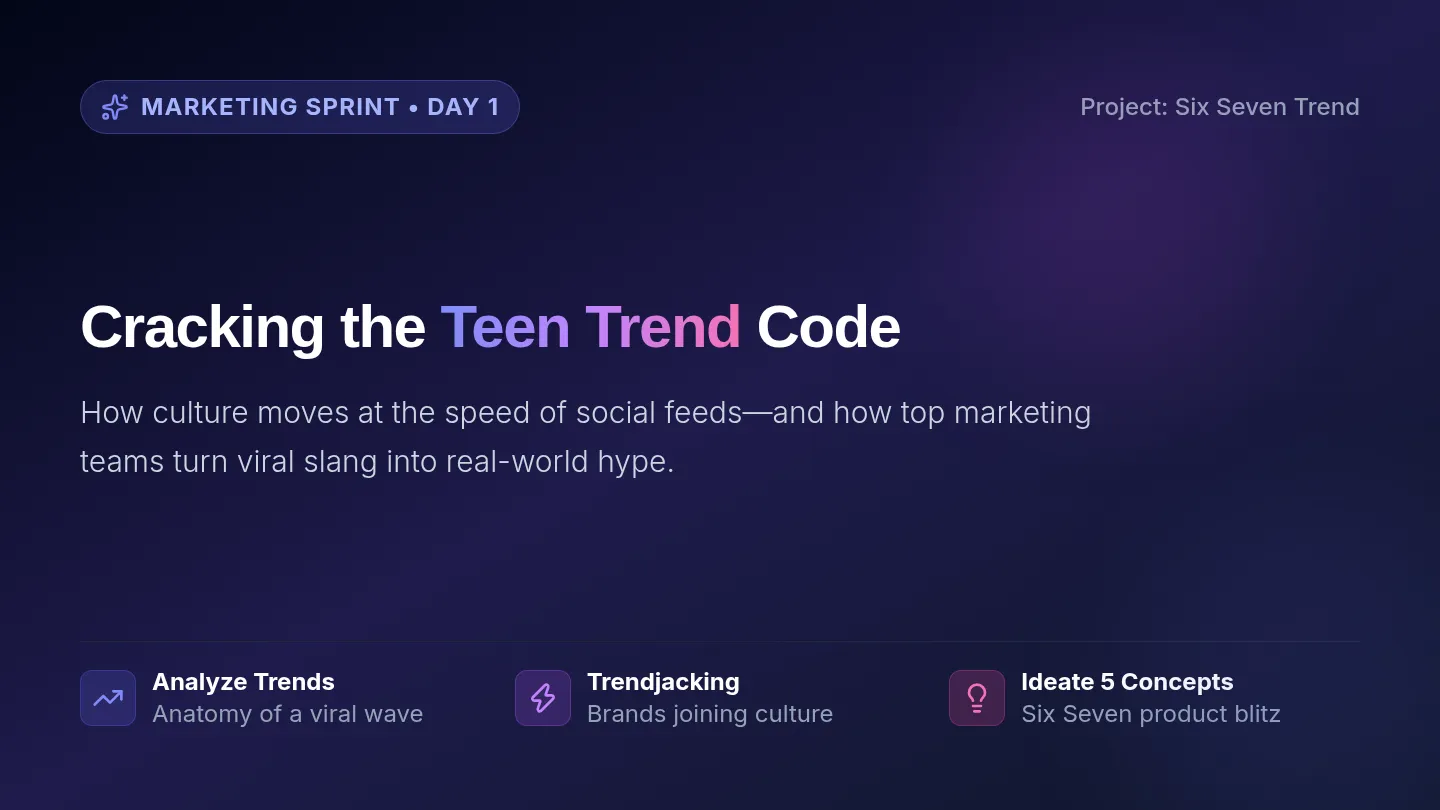
Viral Waves Slides

Trend Jackers

A three-part marketing project sequence where middle and high school students analyze viral teen culture, conceptualize an original product capitalizing on the Six Seven trend, and pitch a complete creative ad campaign.

Lenny Avatar
Lenny
6