Lenny.com
Explore
Create
ActivitiesNewMathEnglish Language ArtsScience & EngineeringSocial StudiesGlobal LanguagesHealth & Physical EducationSpecial EducationCounseling & Life SkillsArts & CreativityESL
Lenny.com
Lenny.com
Explore
Create
ActivitiesNewMathEnglish Language ArtsScience & EngineeringSocial StudiesGlobal LanguagesHealth & Physical EducationSpecial EducationCounseling & Life SkillsArts & CreativityESL
Lenny.com
Lenny.com

Solutions

Lenny for EducatorsLenny for SchoolsLenny for Districts

Product

ExploreSign inCreateSupportAbout

Resources

Getting startedMTSS Acceleration Program

© 2026 Lenny Learning Inc.

TermsPrivacyAccessibility
LinkedInInstagramX
Lenny
Social StudiesSocial Studies PracticesLocation WordsMapsOrder EventsChronology and CausationEvaluating SourcesHistorical ThinkingGeography, Humans, & the EnvironmentAmerican Symbols and LandmarksCitiesStatesState CapitalsRegions of the United StatesGeographic SkillsPhysical GeographyHuman GeographyRegional GeographyGeography of AfricaGeography of AsiaGeography of EuropeGeography of OceaniaGeography of the AmericasSociety and Environment of EuropeSociety and Environment of AsiaSociety and Environment of The AmericasSociety and Environment of the Middle EastSociety and Environment of AfricaHistoryPrehistoryComparing Ancient River CivilizationsAncient MesopotamiaAncient Egypt and KushAncient South AsiaEarly ChinaGreeceRome and the Byzantine EmpireAncient World HistoryNative Peoples of North AmericaNative Peoples of Mesoamerica and South AmericaAfrican EmpiresMedieval AsiaMedieval EuropeThe Silk RoadMedieval HistoryIslamic EmpiresWorld ReligionsRenaissance PeriodAge of ExplorationThe Thirteen ColoniesThe American RevolutionUS History Early RepublicFounding of the United StatesUS History AntebellumUS Civil WarReconstruction PeriodThe Gilded AgeUS ImperialismWorld ImperialismWorld War IUS History 1920sGreat DepressionWorld War IIThe Cold WarUS History 1950-60sUS History 1960s-70sWorld History 20th CenturyContemporary US HistoryContemporary World HistoryHolidaysCivics and GovernmentCitizenshipGovernment FoundationsThe ConstitutionUS ConstitutionExecutive BranchLegislative BranchJudicial BranchState and LocalPolitical ParticipationPublic PolicyPolitical SystemsPower and AuthoritySocial MovementsDefining DevianceTheories of DevianceCrime and Criminal JusticeEconomicsBasic Economic PrinciplesSupply and DemandWhat is MoneyEconomic FundamentalsMicroeconomicsMacroeconomicsBanking and FinanceEconomic SystemsGlobal EconomicsCorporations and PowerThe Changing WorkplaceUnemployment and LaborClass and InequalitySocial MobilityGlobal InequalityPsychologyHistory of PsychologyPsychology as a ScienceBrain and Nervous SystemNeuroscience and BehaviorGenetics and BehaviorSleep and ConsciousnessSensory ProcessesPerceptual OrganizationClassical ConditioningOperant ConditioningObservational LearningCognitive LearningMemory ProcessesThinking and Problem SolvingLanguage and CognitionTheories of MotivationStress and CopingPrenatal and Infant DevelopmentChildhood DevelopmentAdolescent DevelopmentAdulthood and AgingSelf and IdentitySocial CognitionSocial InfluenceAttraction and RelationshipsGroup BehaviorPrejudice and DiscriminationAnxiety and Mood DisordersClinical PsychologyForensic PsychologyPhilosophy & EthicsIntroduction to PhilosophyMajor Philosophers & IdeasMind and Body ProblemFree Will vs DeterminismEthics & MoralityReligion & PhilosophyPolitical Philosophy

Breaching Bexar

A rigorous 8th-grade Texas History inquiry examining the December 1835 Siege of Béxar, where Texian volunteers led by Ben Milam executed house-to-house urban warfare to dislodge General Martín Perfecto de Cos's Mexican forces from San Antonio. Students analyze tactical primary sources, engineer breaches through adobe walls, and evaluate the strategic aftermath leading up to the Alamo.

FMFelicia Monk

Step 1

Punch Outer Wall

Under cover of darkness, squads drove crowbars through back walls away from street sightlines.

Step 2

Clear Room by Room

Texian riflemen eliminated rooftop defenders through ceiling openings and small loop-holes.

Step 3

Tunnel Forward

Pioneers chiseled through adjacent walls to advance toward the Main Plaza without stepping on streets.

A blueprint for urban close-quarters combat created on the fly. Slide 5


The Twin Assault Columns

December 5–6, 1835

Column 1: Ben Milam

Acequia Street

Milam led approximately 160 men along the western ditch (Acequia Street) and captured the stone Veramendi House, establishing an anchor position 100 yards from Main Plaza.

Key Objective: Flank Mexican plaza fortifications from the northwest.

Column 2: Frank Johnson

Soledad Street

Johnson led 140 men down Soledad Street and stormed the Garza House, giving the Texians a stronghold directly northeast of the Mexican artillery line.

Key Objective: Suppress rooftop cannons and establish crossfire into the plaza.

Both strongholds were secured within hours; the grinding house-to-house war began. Slide 6


Eyewitness to the Combat

Voices from the Adobe Walls

Texian Volunteer Account

"We dug through the walls with crowbars, the dust and smoke almost suffocating us. Whenever an opening was made, our riflemen would shoot through the breach before any soldier could counterattack."

— Volunteer Journal, Dec 1835

Mexican Officer Report

"The enemy advances invisible to our cannon. They do not cross the streets; they crawl through the dwellings of the citizens, appearing in our rear where no defense was planned."

— Dispatches to Cos’s Staff

Mexican artillery was neutralized because targets were inside solid stone walls. Slide 7


The Fall of Ben Milam

December 7, 1835

The Fatal Shot

While stepping into the courtyard of the Veramendi Palace, Ben Milam was struck in the head by a Mexican sharpshooter firing from the tower of San Fernando Church.

Rather than retreating, the enraged volunteers elected Frank W. Johnson supreme commander and redoubled their attack, pushing through the Navarro house directly into the plaza.

December 8: The Priestly House Falls

On the night of December 8, Texians stormed the Priest’s House directly bordering Main Plaza. Mexican troops on the roof abandoned their posts under point-blank rifle fire.

Cos’s forces were completely outflanked inside their own city.

Milam became the first prominent martyr of the Texas Revolution. Slide 8


Cos Capitulates

December 9–10, 1835

1. Alamo Retreat

Cos pulled his remaining soldiers across the river into the Alamo. Cut off from food and water, morale shattered and his cavalry fled southward.

2. The White Flag

At dawn on December 9, Cos raised a white flag over the Alamo. Formal terms of surrender were signed on December 10, 1835.

3. Generous Terms

Cos and his 1,100 troops were paroled on their honor never to oppose the Constitution of 1824 and permitted to march south of the Rio Grande.

Every Mexican soldier had been cleared from Texas soil. Or so they thought. Slide 9


The Victory That Set a Trap

Historical Consequences

Texian Overconfidence

Believing the war was won, most volunteers went home for winter. Fewer than 100 men were left to guard San Antonio and the Alamo mission.

Santa Anna’s Vow

Cos was Antonio López de Santa Anna’s brother-in-law. Humiliated by the surrender, Santa Anna mobilized a ruthless 6,000-man army to march northward.

Discussion Synthesis

"Did winning the Siege of Béxar in December make the tragedy of the Alamo inevitable in March?"

Breaching Béxar Inquiry • Wrap-up and Cool-Down Transition Slide 10

Siege of Béxar Primary Source Investigation • Document 2 Page 1 of 2

Source Evidence: Mexican Reaction & Capitulation Breaching Béxar Investigation

Source B: Eyewitness Samuel Maverick

Veramendi House

"On the morning of the 7th, Colonel Milam, while passing through the yard of the Veramendi house to confer with Johnson, was instantly killed by a rifle ball through his head from the church tower. The men were wild with fury. We redoubled our efforts, cutting through the stone walls into the Navarro house and then storming the Priest’s house directly commanding the Plaza."

Source C: Mexican Military Dispatch

Béxar Garrison

"The rebels do not present battle in line of skirmish. They burrow through the stone and mud brick like moles. Our artillery sweeps empty avenues while their deadly fire strikes our parapets from within the town’s own bedchambers. The troops are terrified; water and provisions are exhausted; the cavalry has fled."

Source D: Capitulation Agreement between General Cos and General Burleson

Signed Dec 11, 1835

Article 1: That General Cos and his officers have permission to retire with their arms and private property into the interior of the Republic under their parole of honor that they will not in any way oppose the Federal Constitution of 1824.

Article 4: That the Mexican forces leave behind all public property, all guns, small arms, ammunition, and provisions in San Antonio and the fortress of the Alamo for the Texian army.

Article 9: The sick and wounded of the Mexican army shall be treated with all humanity and provided medical assistance by the Texians.

2. Source Comparison: Contrast the perspective of the Texian fighters (Source A/B) with the Mexican officers (Source C). What psychological effect did this style of fighting have on the defending garrison?

3. Historical Consequence: Examine Source D. Why did the Texians offer such generous surrender terms to Cos? What dangerous assumption did Texian volunteers make following this surrender?

Siege of Béxar Primary Source Investigation • Document 2 Page 2 of 2

You might also like

Business Blueprint Slides

Market Makers

A hands-on introductory curriculum that equips students with foundational business acumen and marketing savvy through practical entrepreneurial challenges, financial basics, and campaign design.

D

despinoza

9
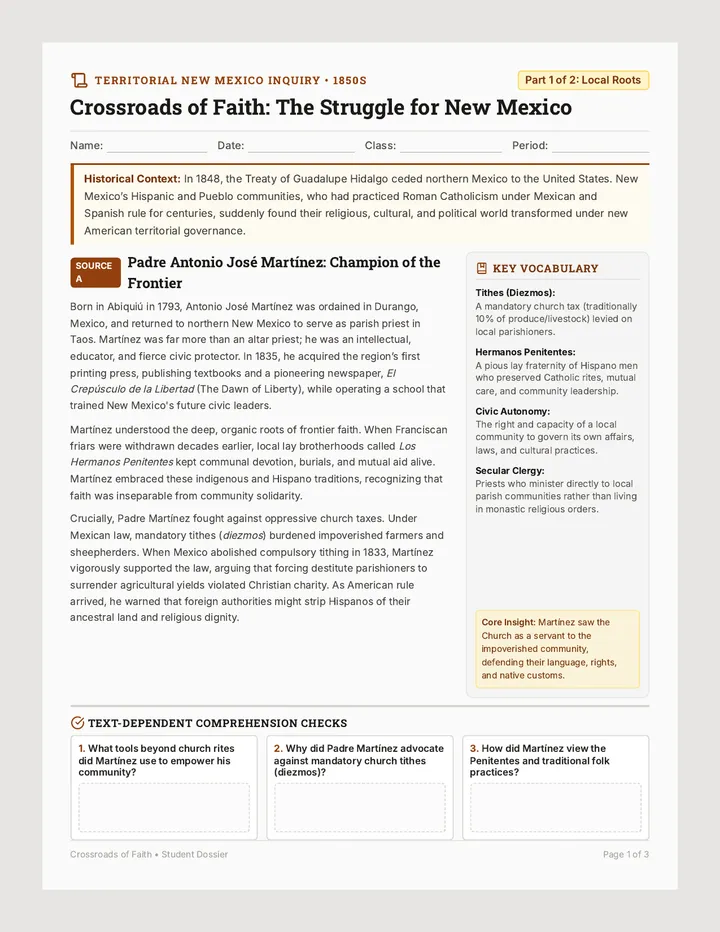
Faith and Frontier Reading Guide

Crossroads of Faith

An inquiry-based high school history lesson examining the clash between Padre Antonio José Martínez and Archbishop Jean-Baptiste Lamy in territorial New Mexico following the Mexican-American War. Students analyze primary and secondary source perspectives, master academic vocabulary, and evaluate competing visions of cultural identity, religious authority, and civic power.

Lenny Avatar
Lenny
3
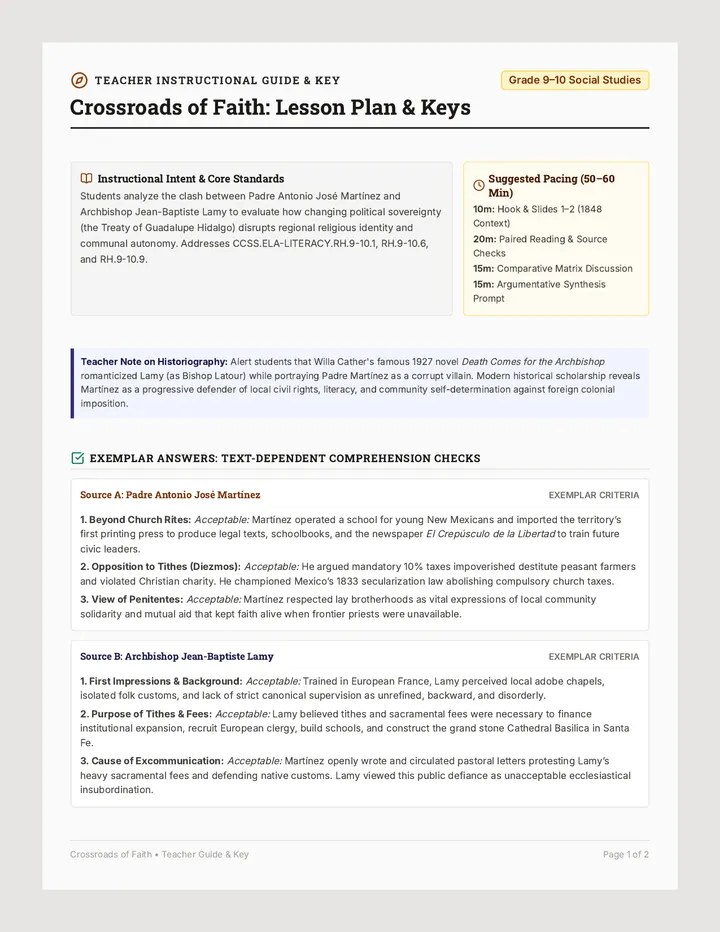
Crossroads Teacher Guide

Crossroads Teacher Guide

A comprehensive two-page teacher instructional guide and complete answer key for the Crossroads of Faith lesson. Features historical context on New Mexico's territorial transition, a 50-90 minute pacing framework, exemplar answers for all text-dependent comprehension questions, a completed comparative matrix, a model high-scoring synthesis argument, and differentiation supports.

Lenny Avatar
Lenny
Hemisphere Hunt Slides

Continent Quest

A 4th-grade geography sequence introducing students to North America through map navigation, regional comparisons, and landform exploration. Students investigate hemisphere locations, the three major nations, and iconic geographic features across the continent.

E

ehdunn

9
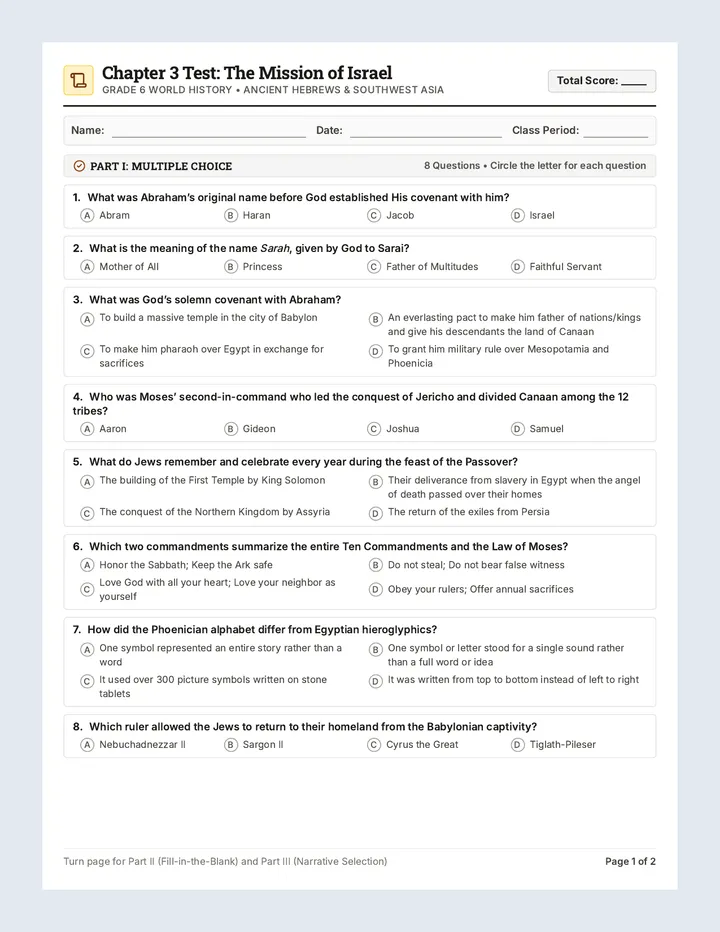
Israel Mission Test

Mission of Israel

A 6th grade world history unit covering the history of ancient Israel, including Abraham's covenant, the Exodus, the United and Divided Kingdoms, and the Babylonian captivity.

DR

Daniel Rodriguez

2
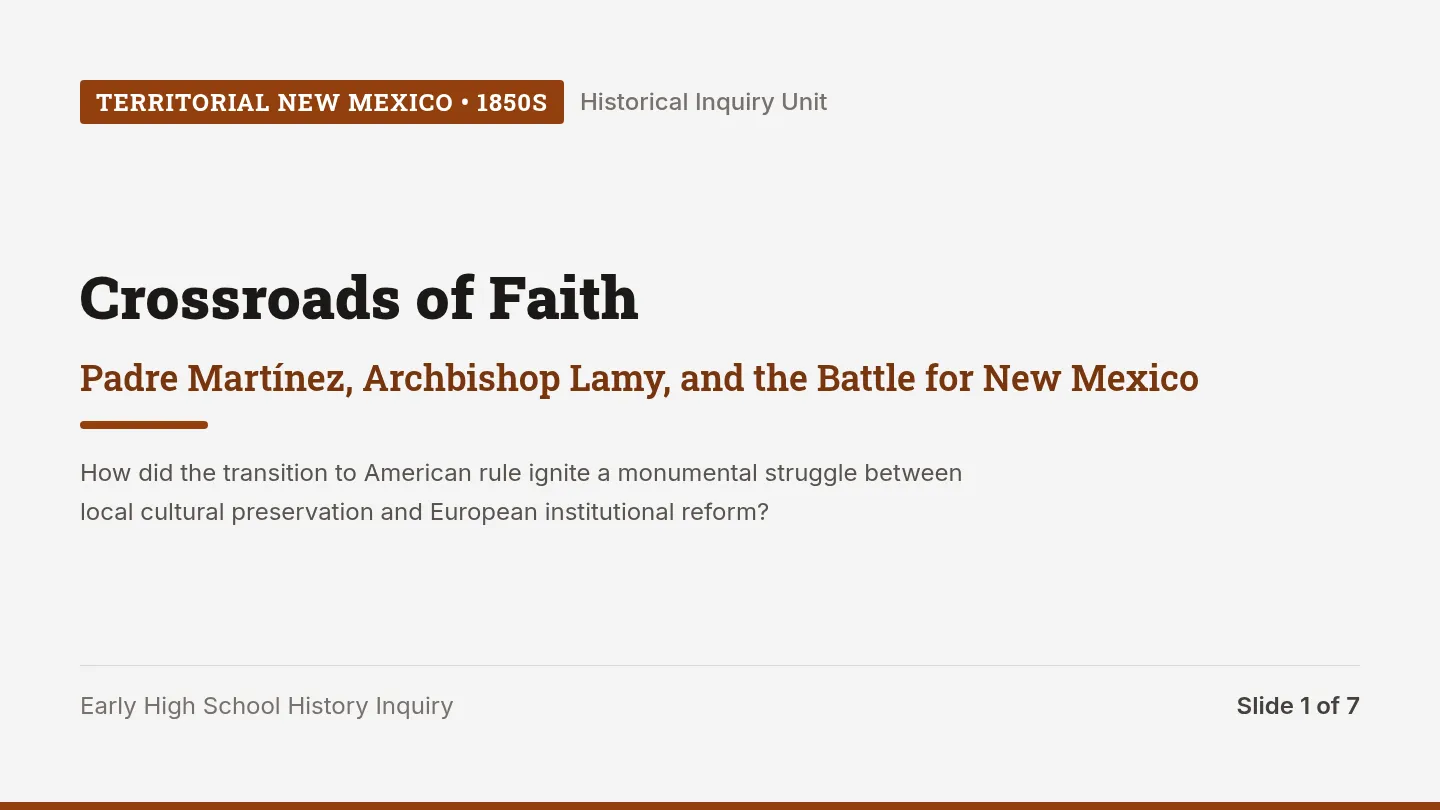
Crossroads of Faith Slides

Crossroads of Faith Slides

A seven-slide presentation deck contextualizing territorial New Mexico in the 1850s, highlighting the Treaty of Guadalupe Hidalgo, contrasting the biographies and philosophies of Padre Antonio José Martínez and Archbishop Jean-Baptiste Lamy, and guiding whole-class analysis of the clash between local autonomy and hierarchical authority.

Lenny Avatar
Lenny
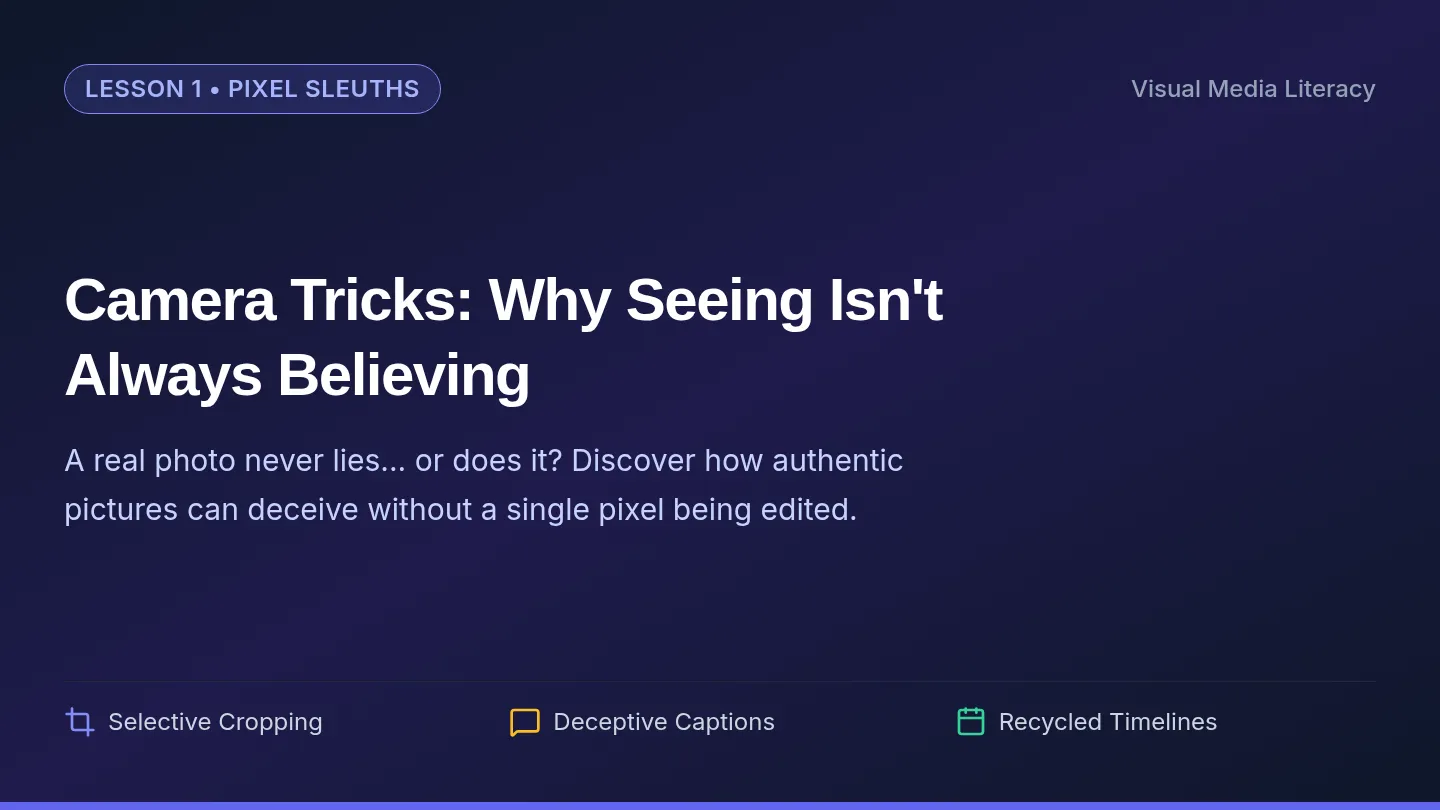
Camera Tricks Slides

Pixel Sleuths

A 3-part media literacy unit for middle school students on analyzing visual media, spotting manipulated photos, and verifying online sources using lateral reading.

Lenny Avatar
Lenny
9
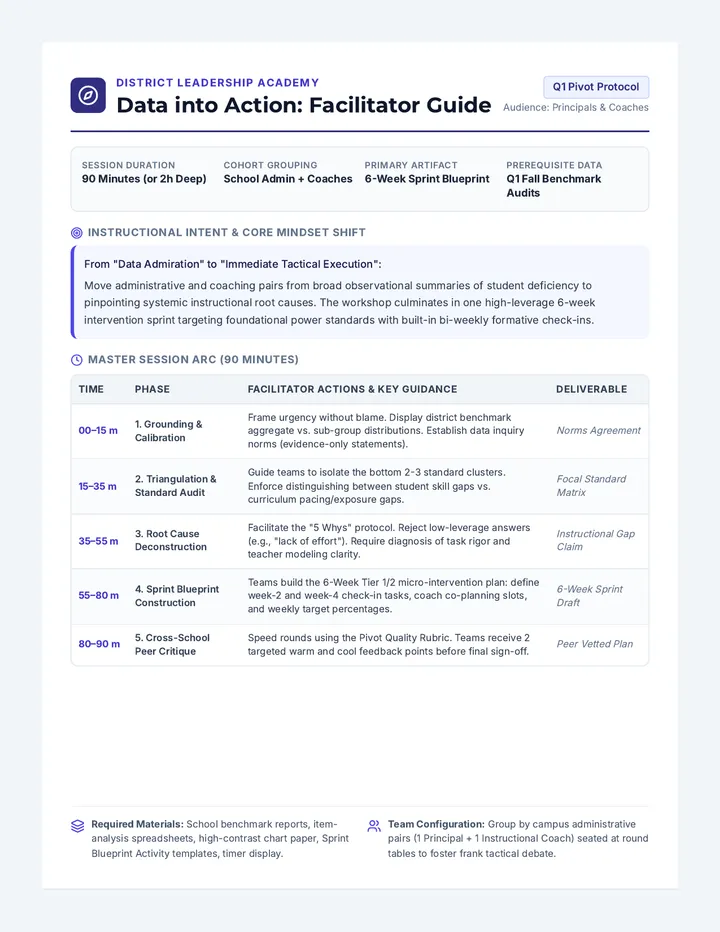
Data Pivot Facilitator Guide

Data into Action

A high-impact leadership workshop for principals and instructional coaches to interrogate fall benchmark data, isolate systemic learning gaps, and construct targeted six-week intervention sprints across grade spans.

H

henrys

4
Faith and Frontier Reading Guide

Faith and Frontier Reading Guide

A three-page student reading dossier and inquiry analysis comparing Padre Antonio José Martínez and Archbishop Jean-Baptiste Lamy. Includes grade-level adapted texts based on territorial New Mexico history, side glossaries of tier-2 and tier-3 academic vocabulary, text-dependent comprehension questions, a comparative synthesis matrix, and a structured argumentative writing prompt.

Lenny Avatar
Lenny
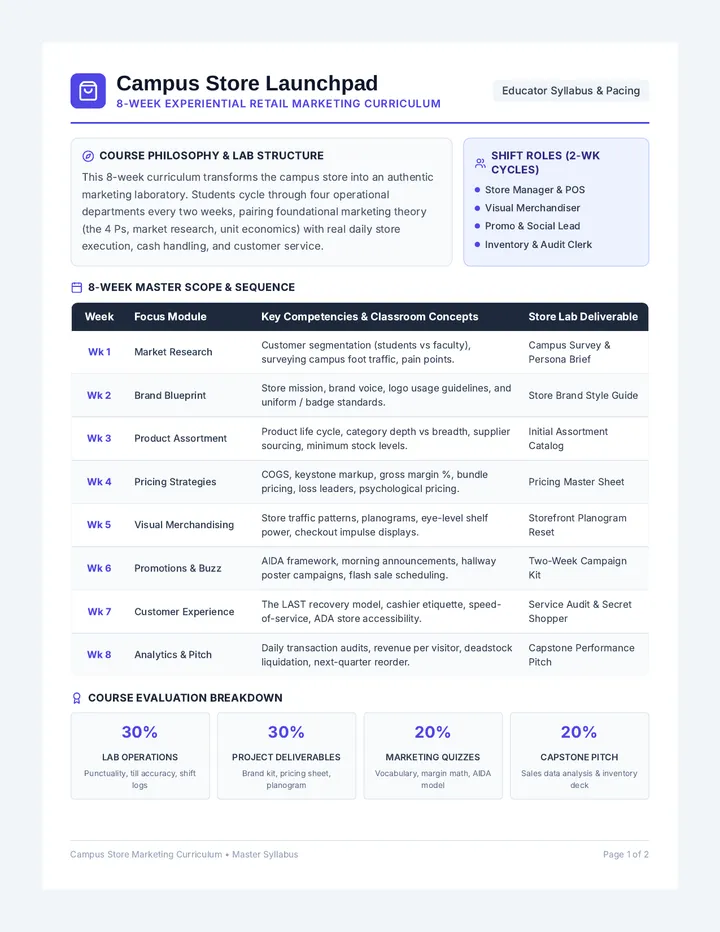
Store Master Syllabus Guide

Campus Store Launchpad

An eight-week experiential introduction to marketing centered around operating and scaling a campus retail store. Students master brand positioning, assortment strategy, pricing mechanics, visual merchandising, and sales analytics through authentic store management.

D

despinoza

8
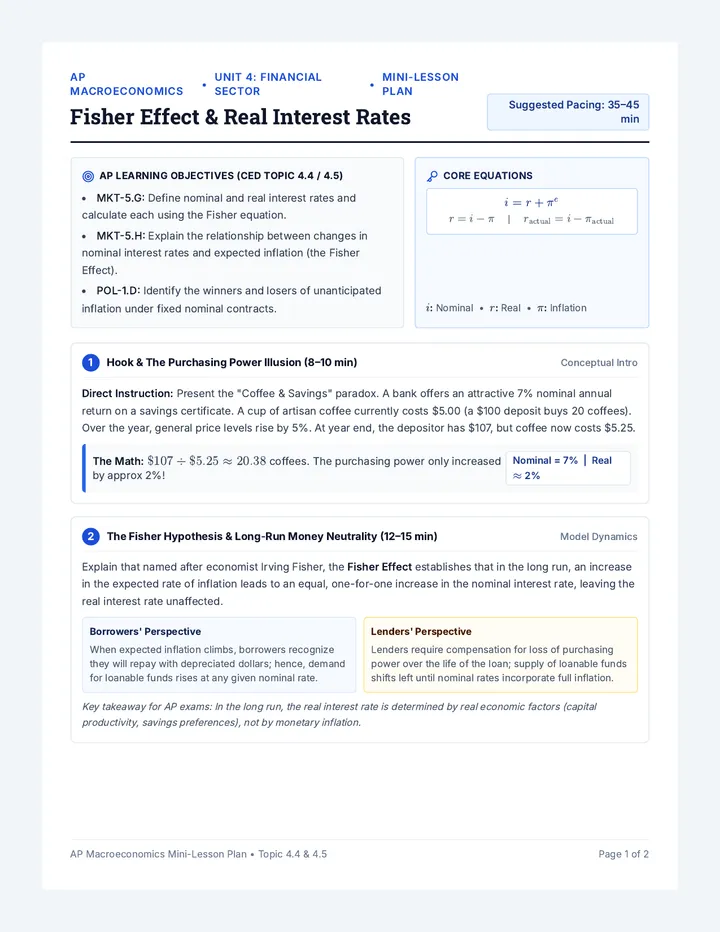
Fisher Effect Lesson Plan

Fisher Effect Decoded

A comprehensive AP Macroeconomics mini-lesson focused on the Fisher Effect, exploring nominal and real interest rates, expected inflation, and borrower-lender payoff shifts.

J

Jacob.Hunt

3
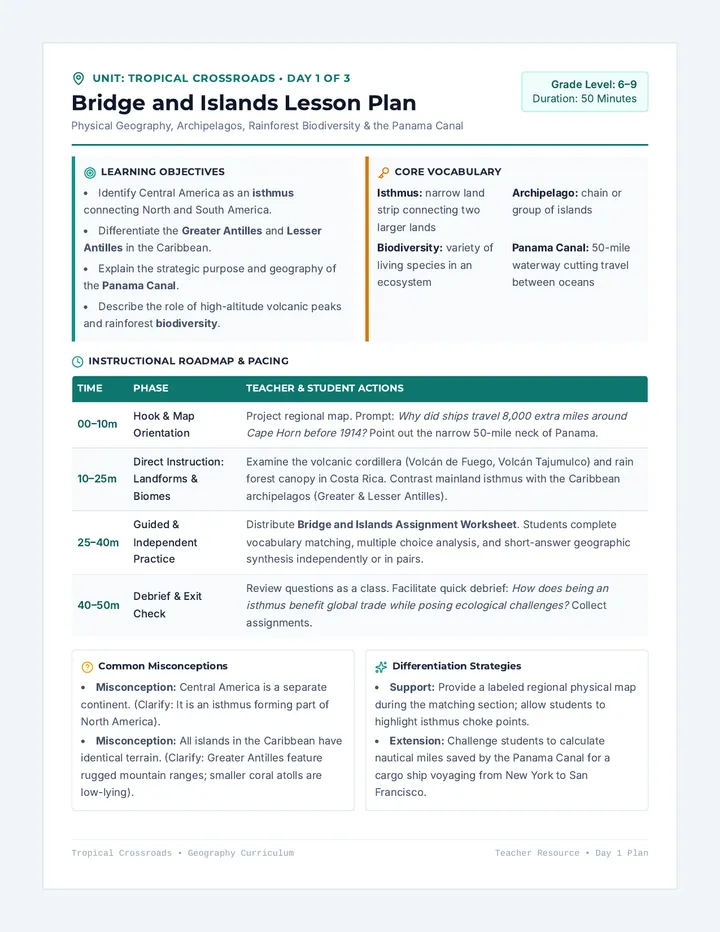
Bridge and Islands Lesson Plan

Tropical Crossroads

A comprehensive 3-day middle/high school geography unit examining Central America and the Caribbean, covering physical geography, natural hazards, and human-environment interactions.

D

dcampbell

9