Power Balance Teacher Guide Power Balance
Teacher Instructional Guide
Subject
U.S. Gov
Learning Objective
Students will analyze the constitutional relationship between Federal and State power by examining the historical context and modern applications of the 2nd and 3rd Amendments, specifically regarding military force and domestic policing.
Lesson Timeline (45 Minutes)
00-05: Hook & Hook
Define Federalism and discuss the concept of shared sovereignty.
05-20: Video Viewing & Analysis
Watch "Second and Third Amendments" with specific focus on state vs. federal forces.
20-40: Power Play Scenarios
Small group analysis of hypothetical emergency scenarios.
40-45: Reflection
Exit ticket/Journaling on the Founding Fathers' distrust of standing armies.
Materials Checklist
Power Balance Slides
Power Play Scenarios Handout
Sovereignty Journal Prompts
YouTube: "Second and Third Amendments"
Instructional Steps
Step 1: The Hook (5 min)
Display the definition of Federalism . Ask students: "Who is in charge of your safety during a hurricane—the President or the Governor?" Use this to transition into how the 2nd and 3rd Amendments define these boundaries.
Step 2: Video Analysis (15 min)
Queue the video to the specific timestamps. Pause after each to discuss:
03:50-04:20: National Guard vs. State Defense Forces. Ask: Why does the National Guard have a "dual role"? Why would a state want its own defense force?06:33: Local vs. Federal Police. Discuss the 3rd Amendment's modern connection to domestic policing and the avoidance of a "federal police force."
Step 3: Scenario Analysis (20 min)
Distribute the Power Play Scenarios . Students should work in pairs to identify which level of government/force responds to each situation. Focus on the justification —why is one force more appropriate than another based on the Constitution?
Step 4: Reflection (5 min)
Display the journal prompt. Emphasize the historical context of the "Standing Army"—the fear that a central military could be used against the states or the citizens themselves.
Key Discussion Questions
"How does the 2nd Amendment's 'well-regulated militia' clause change our understanding of state power vs. federal control?"
"If the 3rd Amendment is rarely cited in court today, why is its principle of 'civilian over military' still vital to our democracy?"
"In what specific ways does a standing federal army differ from a local police department?"
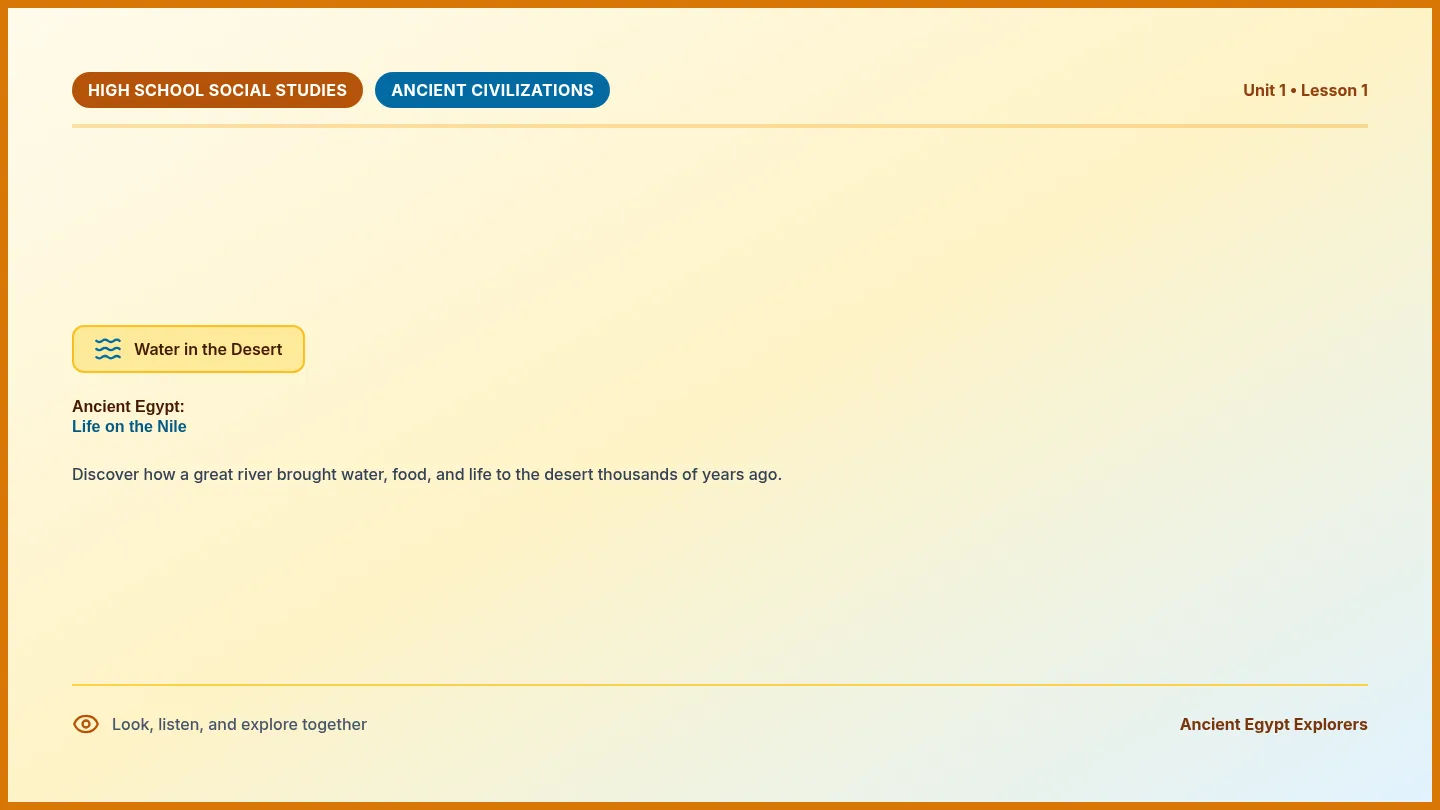
Power Balance Slides Constitutional Blueprint
Power Balance
The 2nd & 3rd Amendments and the Divide Between Federal & State Authority
SCALE: SOVEREIGNTY 1:1
The Hook
Federalism
The constitutional division of power between a central government and regional governments (like states).
"Who handles a natural disaster?
Video Analysis
Watch & Respond
Focus Point 1 (03:50)
The distinction between the National Guard and State Defense Forces .
Focus Point 2 (06:33)
Why the US avoids a "Federal Police Force" and how it links to the 3rd Amendment .
Embedded media
Activity: Power Play
Case Study Analysis
The Teams
Work in pairs. You are Constitutional Advisors to the Governor and the President.
The Task
Review 4 scenarios. Determine if the response should be Local, State, or Federal.
The Rule
You must justify your choice using principles from the 2nd and 3rd Amendments.
Reflection
"Why did the Founding Fathers distrust a standing federal army?"
Consider:
"The Quartering of Troops" grievances in the Declaration of Independence.
Consider:
The idea of a 'Well Regulated Militia' as a check on central power.
Power Play Scenarios Handout PROJECT: FED-STATE-1791
Power Play Scenarios
Strategic Constitutional Assessment
Operative Name
Date
Mission Parameters
Analyze each hypothetical emergency scenario below. Your objective is to determine which level of government holds the primary authority to respond and which specific force (Local Police, National Guard, State Defense Force, or Federal Army) is the appropriate tool. Justify your decision using principles from the 2nd and 3rd Amendments.
01
The Coastal Surge
A massive hurricane has devastated the coast of Florida. Communications are down, and local emergency services are overwhelmed by debris removal and search-and-rescue operations. The Governor needs thousands of boots on the ground for logistical support but does not want to surrender control to the federal government.
Primary Authority (Local/State/Federal)
Responding Force
Constitutional Justification (Ref: 2nd/3rd Amend Principles)
02
The Border Dispute
A neighboring nation has officially declared war on the United States and has begun a mechanized ground invasion through a remote section of the Montana border. The local sheriff’s office is outgunned and lacks the heavy equipment needed to repel a foreign military force.
Primary Authority (Local/State/Federal)
Responding Force
Constitutional Justification
03
The Civil Unrest
A controversial court ruling in a major city has sparked widespread riots. Several city blocks are burning, and looting is rampant. The local police chief has asked the Governor for help. The Governor is considering mobilizing the National Guard, but the President is threatening to send in the U.S. Army's 82nd Airborne Division to "restore order" immediately.
Primary Authority (Local/State/Federal)
Responding Force
Constitutional Justification
04
The Neighborhood Crisis
During a period of heightened national security tension, the federal government wants to station 20 soldiers in a private apartment complex that overlooks a critical bridge to monitor for terrorist activity. The apartment owners refuse, but the government argues it is a matter of national survival.
Primary Authority (Local/State/Federal)
Responding Force
Constitutional Justification
Sovereignty Journal Prompts Sovereignty Journal
Reflection on Federal Power & Military Authority
Section ID
Student Name
Date
Choose Your Prompt
Select one of the three prompts below to explore in your reflection. Focus on connecting the historical concerns of the Founding Fathers to the modern structure of American government.
Prompt A: The Standing Army Fear
The Founding Fathers deeply distrusted a standing federal army during peacetime. Based on what you learned about the 2nd and 3rd Amendments, why did they view a central military as a threat to state sovereignty, and how do we see that distrust reflected in our laws today?
Prompt B: Policing the Republic
The video mentions that the United States does not have a "Federal Police Force." Connect this to the principle of the 3rd Amendment. Why is the separation of military and domestic policing critical to a free society?
Prompt C: The Dual-Role Dilemma
The National Guard has a "dual role" serving both the Governor and the President. In a moment of crisis, how does this structure protect the balance of power between states and the federal government?
Response Area
End of Reflection • Sovereignty Project 1791