Viral Reformation Lesson Plan Historical Media Lab Grade 10: World History & Media
Viral Reformation
How a local theological dispute became the world's first viral media campaign.
Essential Inquiry
How did the mechanical speed of the printing press interact with the networks of 16th-century Europe to create the first "viral loop"? In what ways do Gutenberg pamphlets mirror modern social media algorithms?
Duration: 60 Minutes
Grouping: Pairs / Small Groups
Materials: Slides, Reading, Activity, Cards
Learning Objectives
Analyze how the printing press transformed the speed and reach of regional communication in 1517.Compare the mechanics of Protestant woodblocks and pamphlets to contemporary viral visual media (memes, feeds).Deconstruct historical primary sources to evaluate media bias, call-to-action techniques, and echo-chamber effects.
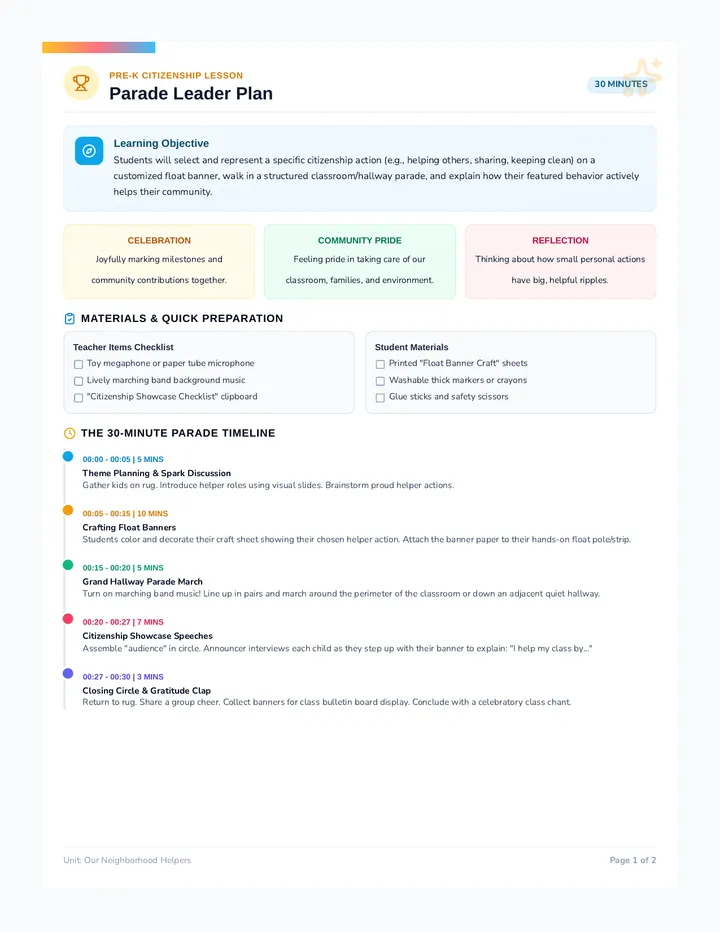
Pacing & Facilitation Guide: Phase 1
00-12m The Hook
The 1517 Newsfeed Challenge
Project Slide 2 (The Social Feed). Do not reveal it's from 1517. Ask: "What makes something go viral today?" Transition to the concept of the Gutenberg Printing Press. Introduce the thesis: Martin Luther was the world's first viral content creator.
12-25m Concept
Direct Instruction: Media Networks & Printing Press
Deliver visual lecture using the **Press to Feed Slides**. Focus on the mechanics of print: woodblocks (memes), vernacular German (localization), rapid reproduction (retweeting). Introduce key vocabulary: colporteur , vernacular , viral loop .
25-35m Reading
Textual Excavation: Woodblock Tweets
Distribute the **Woodblock Tweets Reading**. Lead a close-reading of the text. Have students highlight evidence of "network catalysts" (factors that sped up distribution) in one color, and "rhetorical triggers" (emotional/sensationalist content) in another.
Unit: Media, Power, & Rebellion Page 1 of 2
Instructional Blueprint Grade 10: World History & Media
Viral Reformation: Part II
Pacing & Facilitation Guide: Phase 2
35-50m Activity
Application: Going Viral 1517 Activity
Students complete the **Going Viral 1517 Activity Sheet**. They map Luther’s Ninety-Five Theses onto a modern "Reformation Campaign Strategy" sheet. They translate heavy theological text into bold headlines, woodblock drawings (memes), and design a distribution system using historical "influencers" (colporteurs, merchants).
50-57m Debate
Structured Dialogue: Echo Chamber Cards
Distribute the **Echo Chambers Discussion Cards**. Students form circles of 4 and respond to prompts mapping historical polarization to modern echo chambers. Monitor discussions to ensure students tie claims back to the primary concepts in the reading.
57-60m Exit
Debrief & Synthesis Prompt
Collect students' finished campaigns or ask them to write down one core similarity and one core difference between the Protestant woodblock campaign and current social algorithms.
Pedagogical Tips & Pitfall Warnings
Focus on Medium over Doctrine:
Students often get bogged down in Protestant vs. Catholic theological debates. Guide them back to **media mechanisms**: how did print speed, language translation, and catchy woodcuts allow ideas to spread regardless of theological nuance?
The Myth of the Solo Actor:
Deconstruct the myth that Luther did this single-handedly. Highlight that unauthorized printers, traveling merchants, and localized distributors acted like "reposting" algorithms, carrying his texts throughout Europe.
CCSS.ELA-LITERACY.RH.9-10.7: Integrate quantitative or technical analysis with qualitative explanations of print/digital media.
Key Assessment Check: Evaluate the "Going Viral 1517" sheet for clear synthesis of historical networks (merchants, printing hubs) and emotional messaging.
Unit: Media, Power, & Rebellion Page 2 of 2
Press to Feed Slides Historical Media Lab World History & Media Studies
1517 vs. Present
Press to Feed:
The Viral Reformation
How Martin Luther hijacked Europe's first mechanical network to launch the world's first viral media war.
Gutenberg's Algorithm
Slide 1 / 6
Section 1: The Parallel Press to Feed
The Woodblock Print (1517) Historical
Broadsheets and octavo pamphlets were cheap, heavily illustrated sheets passed hand-to-hand in taverns, markets, and town squares. They were highly visual, designed to provoke emotion instantly.
Passed by hand = Reciprocal Shares
The Social Post (2026) Digital
Feeds deliver compressed, eye-catching visual blocks designed to trigger rapid engagement, emotional sharing, and algorithmic ranking to dominate digital town squares.
Algorithm boost = Infinite Duplication
How do we define "viral" across 500 years? Slide 2 / 6
Section 2: The Media Engine The Gutenberg Machine
The Printing Press: The First Cloud Server
Before Gutenberg, copying a single Bible took months of manual scribing in remote monasteries. Gutenberg's movable metal type automated content production.
3,000+ Copies of a single tract in days
95% Cost reduction per page of print
Hardware Architecture
Movable Type: Reusable letters = infinite re-rendering of feeds.Rag Paper: Cheaper than parchment, allowing massive print runs.Vernacular: Printing in German (the local dialect) instead of Latin.
Technology doesn't change human nature—it scales it. Slide 3 / 6
Section 3: Anatomy of a Meme 16th-Century Visuals
WOODBLOCK PROPAGANDA
"The Pope as a Seven-Headed Beast"
Illustration from Lucas Cranach's Workshop (1521)
Woodblocks as 16th-Century Memes
Over 90% of the European population was illiterate in 1517. Luther utilized bold, satirical, and highly offensive woodblock illustrations to communicate complex political ideas.
Visual Storytelling: Instantly understandable icons without reading text.Humor & Satire: Portrayed opponents as beasts, demons, or thieves.Rapid Remixing: Printers quickly copied and altered woodcuts.
Why was visual media essential for a viral Reformation? Slide 4 / 6
Woodblock Tweets Reading Source Dossier // 1517
Woodblock Tweets
How Gutenberg's metal type created the first viral network loop.
Student Reading Focus: Media Studies
Name: ___________________________
Date: _______________
Network Lexicon
Vernacular (n.) The everyday language spoken by people in a specific region (e.g., German, rather than Latin).Colporteur (n.) A traveling peddler who distributed books, tracts, and pamphlets to remote villages.Viral Loop (n.) A mechanism where an audience consumes content and immediately copies or distributes it to others, fueling exponential growth.
The Media Translation
1517 Print Shop: Unregulated, greedy printers copying booklets to sell for quick copper coins.
Modern Feed: Unregulated platform algorithms boosting sensational posts to harvest advertising clicks.
I. The Door was Just the Draft Box
On October 31, 1517, a Catholic monk named Martin Luther nailed his Ninety-Five Theses to the church door in Wittenberg, Germany. He did not write them to start a revolution. He wrote them in academic Latin, hoping to invite other local professors to a quiet debate about the church's sale of indulgences (documents pardoning sins for money). In modern terms, Luther’s door posting was a draft box—an essay meant for a tiny, elite peer group.
II. The Unlicensed Retweeters
Within days, students translated Luther's Latin text into German. Local printers immediately saw profit. Because there were no copyright laws in the 16th century, any printing shop could copy a manuscript without permission.
Printers reformatted the heavy text into cheap, light, 8-page booklets called **pamphlets**. Because they were small, they took only days to press and cost mere pennies. Peddlers called **colporteurs** packed their bags with hundreds of copies, selling them at markets, tavern doorsteps, and trading crossroads. Luther's critique "went viral"—reproduced and retweeted across Europe before the Roman Catholic authorities even knew a post had been made.
III. Woodblocks: Memes for the Masses
Most Europeans in 1517 could not read. To capture this massive offline audience, Luther's network relied on satirical **woodblocks**. Artist workshops, like Lucas Cranach’s, carved graphic, provocative cartoons into wooden blocks, inked them, and pressed them onto broadsheets.
These illustrations depicted the Pope as a multi-headed monster or a greedy tax collector. These visual "memes" bypassed the reading barrier entirely, provoking immediate laughter, rage, or political solidarity among the illiterate peasant population.
Going Viral 1517 Activity Media Strategy Lab
Going Viral: 1517
Design your own print-shop campaign to spark a continental reformation.
Student Worksheet Wittenberg Edition
Name: ___________________________
Date: _______________
Mission: You are a media designer in a 1517 printing press shop. A local monk has written a theological debate in Latin. Your job is to make it go viral among ordinary, everyday people. Fill out each campaign phase below.
1 Audience & Demographics
Who is your primary target audience? Check one box and explain your choice below.
Peasant Farmers
Town Merchants
Why this target audience?
2 Headline Translation
Translate this dense Latin point into a bold, sensational German headline (vernacular).
"The Pope's indulgences do not wash away sins; only divine grace provides salvation."
Your German Headline:
3 Woodblock "Meme" Design
Most of your audience cannot read. In the white box below, sketch or describe a high-impact, metaphorical visual caricature (e.g., portraying your opponents as greedy wolves or cartoon monsters).
DRAWING CANVAS (or describe the visual metaphor in detail here)
4 Network Distribution Mapping
Select which physical "nodes" you will target to spread your pamphlets. Choose two options and write a brief rationale.
Taverns & Inns
Weekly Market Fairs
Trade Crossroads
How will your selected physical spaces amplify your message to surrounding regions?
Unit: Media, Power, & Rebellion Page 1 of 1
Echo Chambers Discussion Cards Socratic Dialogue Kit Reformation & Media Studies
Echo Chamber Debate Cards
Cut along the dotted lines. In groups of 4, take turns drawing a card to lead a 5-minute collaborative discussion.
Card 1 // Distribution
The Walking Algorithms
In 1517, peddlers (colporteurs) and merchants carried booklets from village to village based on customer interest. If a pamphlet sold well, they copied it more; if it didn't, it died out.
1. How does the economic decision of a 1517 peddler mirror the math of a modern app algorithm?
2. Who acts as the "algorithm" in your own personal social media feeds?
Card 2 // Propaganda
Visual Gatekeeping
Before print, the Catholic Church was the primary gatekeeper of visual art and scripture. The explosion of unlicensed woodblock prints bypassed the Church entirely, putting visual narratives into the hands of ordinary people.
1. How did removing a "gatekeeper" allow alternative, sometimes dangerous, ideas to flourish?
2. What are the pros and cons of having zero media gatekeepers today?
Card 3 // Psychology
Outrage Optimization
Many 1517 pamphlets did not contain deep theology. They contained vulgar personal insults, exaggerated rumors, and alarming calls-to-action to spark fear and emotional alignment.
1. Why does sensational, angry, or insulting content spread faster than calm debate?
2. How can we consciously design digital spaces that do not optimize for human outrage?
Card 4 // Polarization
The Echo Chamber
As cities aligned with Luther, they banned pro-Catholic texts. Catholic regions banned Lutheran pamphlets in response. The resulting "echo chambers" prevented communication and fueled religious warfare across Europe.
1. In what ways did 16th-century physical media bans create the world's first bubble-networks?
2. What actions can a modern citizen take to step out of their own digital echo chambers?
Debate Rules of Engagement
Rule 1: Ground Claims. Support your answers with evidence from the "Woodblock Tweets" reading passage or presentation.
Rule 2: Active Back-channel. Each student must write down at least one key insight from their partner's response.
Rule 3: Bridge the Gap. Always connect the historical 1517 print dynamic to a real modern network parallel (e.g. TikTok, Reddit).
Unit: Media, Power, & Rebellion Page 1 of 1