Harvest Words Worksheet Name:
Date:
Harvest Words Worksheet
Part 1: Read the Story of the First Harvest Feast
A Hard Winter and a Shared Harvest
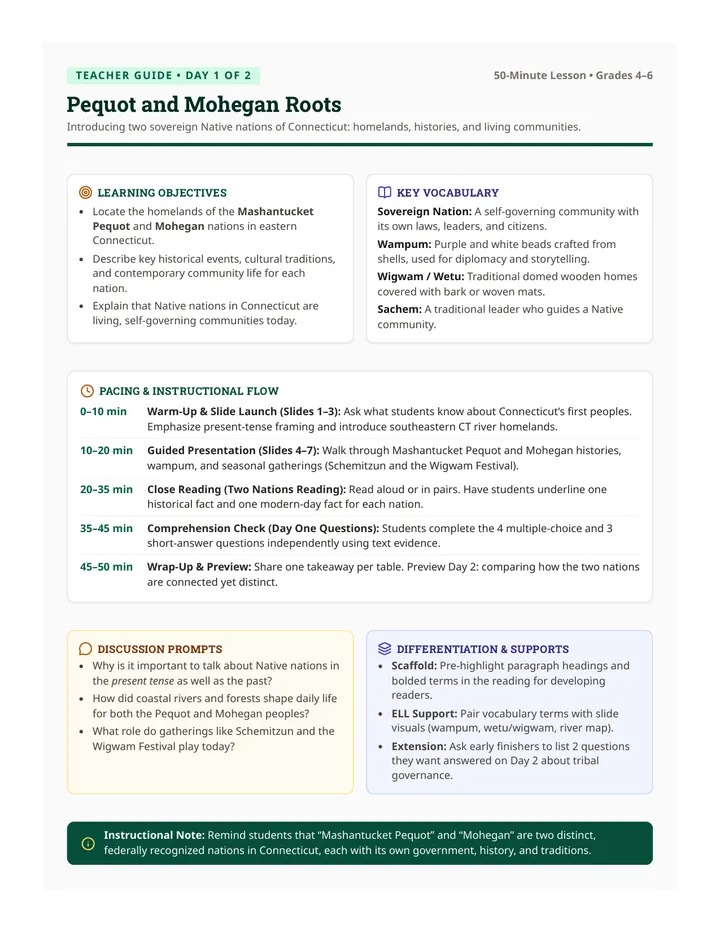
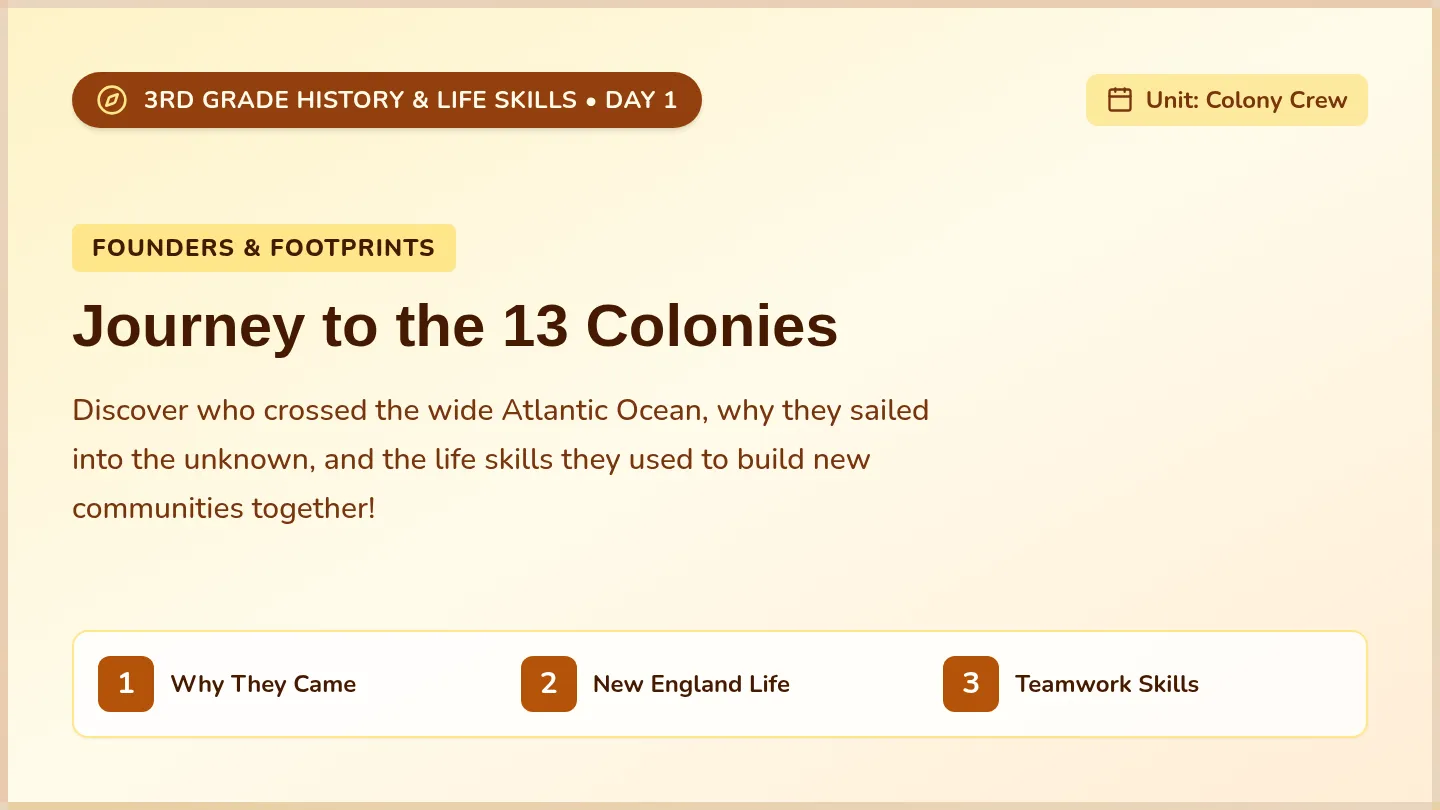
In September 1620, a group of people called the Pilgrims left England on a wooden ship named the Mayflower . They were voyaging across the Atlantic Ocean to find a new home where they could practice their religion freely. After 66 days at sea, they landed in North America and built a small settlement called Plymouth.
The first winter was freezing and very difficult. The Pilgrims did not have enough food or warm houses. Fortunately, the Wampanoag people already lived in that region. Their leader, Massasoit, made a peace treaty with the Pilgrims.
A Wampanoag man named Tisquantum (also called Squanto) spoke English and helped the newcomers. He taught them how to plant corn using fish as fertilizer, where to catch eels, and how to survive in the forest.
By autumn 1621, the Pilgrims had a big harvest of corn, squash, and beans. To celebrate, they held a three-day feast . Massasoit and about 90 Wampanoag guests joined them, bringing deer and other food to share. Today, we remember this spirit of gratitude and sharing every November.
Quick Reading Check
1. Why did the Pilgrims leave England on the Mayflower ?
A. To look for gold and silver
B. To practice their religion freely
C. To visit friends in Plymouth
D. To learn how to sail ships
2. How did Tisquantum (Squanto) help the Pilgrims?
3. How long did the 1621 harvest celebration last?
Part 2: Thanksgiving Vocabulary Builder
Use the bold words from the story to complete the activities below.
Page 2
Word Bank
Pilgrims
voyage
settlement
treaty
survive
harvest
feast
gratitude
A. Match the Word to Its Meaning
Write the letter of the matching definition on each blank line.
1. harvest
2. treaty
3. voyage
4. settlement
5. gratitude
A. A feeling of being thankful
B. A long trip, especially by sea
C. Gathering ripe crops from the fields
D. A new town or village built by newcomers
E. A formal peace agreement between groups
B. Complete the Sentences
Choose the best word from the Word Bank to finish each sentence.
1. The sailed across the ocean on the Mayflower .
2. The Wampanoag taught the newcomers how to the cold winter.
3. Everyone brought delicious food to share at the three-day .
4. We show when we say thank you for our food and family.
C. Picture It!
Pick one word from the Word Bank. Write it on the line, draw a quick picture of it, and use it in your own sentence.
Word:
My Sentence:
Mayflower Timeline Activity Name:
Date:
Mayflower Timeline Activity
Follow the events from 1620 to today!
Key Dates in Thanksgiving History
Sept 1620
The Mayflower sets sail from England with 102 passengers looking for a new home.
Nov 1620
The ship reaches Cape Cod. Passengers sign the Mayflower Compact , a plan for fair rules.
Winter 1620
The Pilgrims build Plymouth Colony during a freezing winter with very little food.
Spring 1621
Massasoit and Tisquantum meet the Pilgrims. Tisquantum teaches them to grow corn and fish.
Autumn 1621
The Pilgrims and Wampanoag share a three-day harvest feast with corn, deer, and fowl.
Oct 1863
President Abraham Lincoln makes Thanksgiving an official national holiday every November.
Activity 1: Put History in Order
Number the events from 1 (happened first) to 5 (happened last).
Tisquantum teaches the Pilgrims how to plant corn using fish.
President Abraham Lincoln makes Thanksgiving a national holiday.
The Mayflower leaves England and sails across the Atlantic Ocean.
The Pilgrims and Wampanoag celebrate a three-day harvest feast.
Passengers sign the Mayflower Compact when they reach Cape Cod.
Activity 2: History Detective
Use the timeline on Page 1 to answer the questions below.
Page 2
1. Why was the Mayflower Compact important for the Pilgrims?
2. How many years passed between the 1621 feast and Abraham Lincoln's 1863 holiday? Show your math!
Answer:
3. What caused the Pilgrims to have a much better harvest in Autumn 1621 than in Winter 1620?
Activity 3: Sketch the Story
Draw a picture in each box to show three big moments from the timeline, then write a short caption underneath.
1. Sailing (1620)
2. Learning (Spring 1621)
3. Sharing (Autumn 1621)
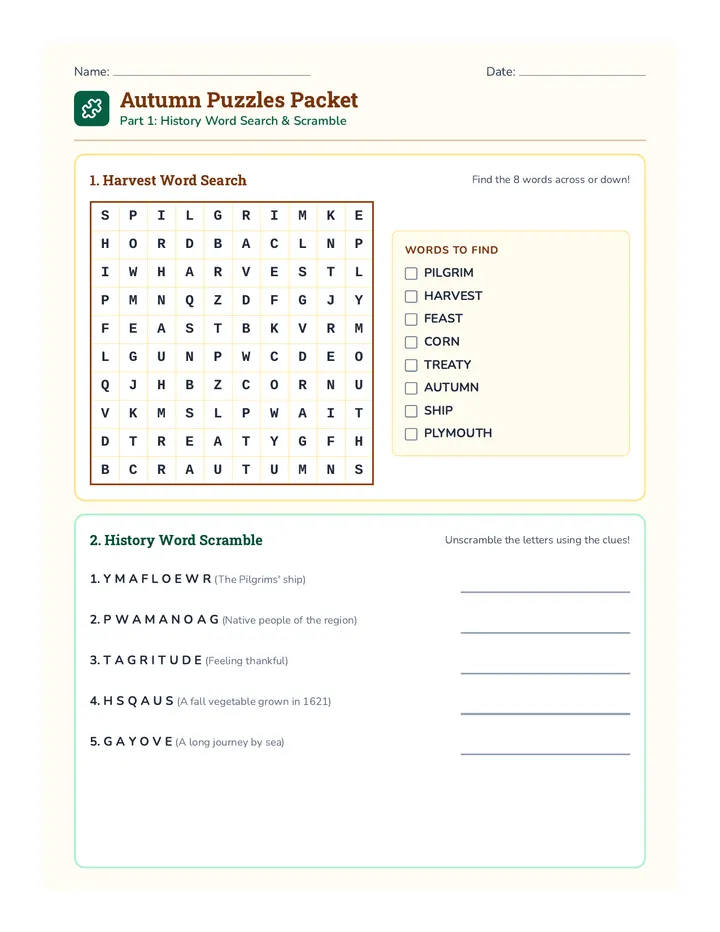
Autumn Puzzles Packet Name:
Date:
Autumn Puzzles Packet
Part 1: History Word Search & Scramble
1. Harvest Word Search
Find the 8 words across or down!
Words to Find
PILGRIM
HARVEST
FEAST
CORN
TREATY
AUTUMN
SHIP
PLYMOUTH
2. History Word Scramble
Unscramble the letters using the clues!
1. Y M A F L O E W R (The Pilgrims' ship)
2. P W A M A N O A G (Native people of the region)
3. T A G R I T U D E (Feeling thankful)
4. H S Q A U S (A fall vegetable grown in 1621)
5. G A Y O V E (A long journey by sea)
Part 2: Then & Now History Activities
Compare the 1621 harvest feast with how people celebrate today.
Page 2
3. Compare 1621 and Today
Write one or two details in each blank box to compare life then and now.
Topic
In 1621 (Then)
Today (Now)
Foods Eaten
How People Travel
Cooking & Homes
4. Classroom Gratitude Reflection
Just like people in 1621 celebrated a good harvest, write three things you are thankful for this year and draw a picture of one of them.
One way I can show kindness or share with others:
My Gratitude Drawing
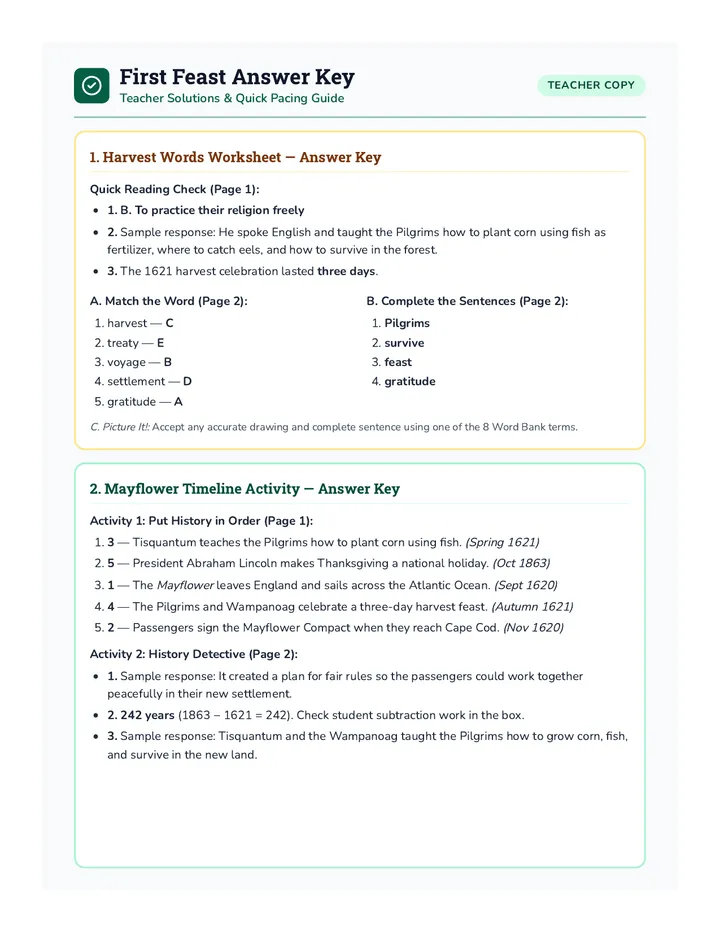
First Feast Answer Key First Feast Answer Key
Teacher Solutions & Quick Pacing Guide
Teacher Copy
1. Harvest Words Worksheet — Answer Key
Quick Reading Check (Page 1):
1. B. To practice their religion freely 2. Sample response: He spoke English and taught the Pilgrims how to plant corn using fish as fertilizer, where to catch eels, and how to survive in the forest.3. The 1621 harvest celebration lasted three days .
A. Match the Word (Page 2):
harvest — C
treaty — E
voyage — B
settlement — D
gratitude — A
B. Complete the Sentences (Page 2):
Pilgrims survive feast gratitude
C. Picture It!: Accept any accurate drawing and complete sentence using one of the 8 Word Bank terms.
2. Mayflower Timeline Activity — Answer Key
Activity 1: Put History in Order (Page 1):
3 — Tisquantum teaches the Pilgrims how to plant corn using fish. (Spring 1621) 5 — President Abraham Lincoln makes Thanksgiving a national holiday. (Oct 1863) 1 — The Mayflower leaves England and sails across the Atlantic Ocean. (Sept 1620) 4 — The Pilgrims and Wampanoag celebrate a three-day harvest feast. (Autumn 1621) 2 — Passengers sign the Mayflower Compact when they reach Cape Cod. (Nov 1620)
Activity 2: History Detective (Page 2):
1. Sample response: It created a plan for fair rules so the passengers could work together peacefully in their new settlement.2. 242 years (1863 − 1621 = 242). Check student subtraction work in the box.3. Sample response: Tisquantum and the Wampanoag taught the Pilgrims how to grow corn, fish, and survive in the new land.
3. Autumn Puzzles Packet — Answer Key & Tips
Page 2
1. Harvest Word Search Locations:
PILGRIM: Row 1, across (cols 2–8)HARVEST: Row 3, across (cols 3–9)FEAST: Row 5, across (cols 1–5)CORN: Row 7, across (cols 6–9)TREATY: Row 9, across (cols 2–7)AUTUMN: Row 10, across (cols 4–9)SHIP: Column 1, down (rows 1–4)PLYMOUTH: Column 10, down (rows 2–9)
2. History Word Scramble:
Y M A F L O E W R → MAYFLOWER
P W A M A N O A G → WAMPANOAG
T A G R I T U D E → GRATITUDE
H S Q A U S → SQUASH
G A Y O V E → VOYAGE
3. Compare 1621 and Today (Sample Answers):
Foods Eaten: 1621: Corn, squash, beans, deer, wild fowl, fish. Today: Turkey, mashed potatoes, pumpkin pie, cranberry sauce, family dishes.How People Travel: 1621: Wooden sailing ships, walking. Today: Cars, airplanes, trains, buses.Cooking & Homes: 1621: Open fires, wooden cottages/wetus. Today: Stoves, ovens, microwaves, modern houses.
Classroom Facilitation & Pacing (3rd Grade)
Suggested Pacing (3 Mini-Sessions, 30–40 min each):
Day 1 — Harvest Words Worksheet: Read the passage aloud together, pausing to define bolded vocabulary words in context. Have partners complete the matching and fill-in-the-blank sections.Day 2 — Mayflower Timeline Activity: Walk through the six timeline dates on the board. Students can work independently on ordering events, then pair up for the 1863 − 1621 math problem.Day 3 — Autumn Puzzles Packet: Great for centers or early finishers! Wrap up with a whole-class share-out of the "Classroom Gratitude Reflection" responses.
Historical Note for Discussion: Remind students that the Wampanoag people already had thriving communities, farming practices, and traditions long before 1620, and that Thanksgiving became a national U.S. holiday much later in 1863.