Lenny.com
Explore
Create
ActivitiesNewMathEnglish Language ArtsScience & EngineeringSocial StudiesGlobal LanguagesHealth & Physical EducationSpecial EducationCounseling & Life SkillsArts & CreativityESL
Lenny.com
Lenny.com
Explore
Create
ActivitiesNewMathEnglish Language ArtsScience & EngineeringSocial StudiesGlobal LanguagesHealth & Physical EducationSpecial EducationCounseling & Life SkillsArts & CreativityESL
Lenny.com
Lenny.com

Solutions

Lenny for EducatorsLenny for SchoolsLenny for Districts

Product

ExploreSign inCreateSupportAbout

Resources

Getting startedMTSS Acceleration Program

Newsletters

School Funding Newsletter

© 2026 Lenny Learning Inc.

TermsPrivacyAccessibility
LinkedInInstagramX
Lenny

Sensory Processes

Mechanisms of vision, audition, and the chemical senses alongside signal detection theory and sensory adaptation. Examines the biological conversion of physical stimuli into neural impulses.

Social StudiesSocial Studies PracticesLocation WordsMapsOrder EventsChronology and CausationEvaluating SourcesHistorical ThinkingGeography, Humans, & the EnvironmentAmerican Symbols and LandmarksCitiesStatesState CapitalsRegions of the United StatesGeographic SkillsPhysical GeographyHuman GeographyRegional GeographyGeography of AfricaGeography of AsiaGeography of EuropeGeography of OceaniaGeography of the AmericasSociety and Environment of EuropeSociety and Environment of AsiaSociety and Environment of The AmericasSociety and Environment of the Middle EastSociety and Environment of AfricaHistoryPrehistoryComparing Ancient River CivilizationsAncient MesopotamiaAncient Egypt and KushAncient South AsiaEarly ChinaGreeceRome and the Byzantine EmpireAncient World HistoryNative Peoples of North AmericaNative Peoples of Mesoamerica and South AmericaAfrican EmpiresMedieval AsiaMedieval EuropeThe Silk RoadMedieval HistoryIslamic EmpiresWorld ReligionsRenaissance PeriodAge of ExplorationThe Thirteen ColoniesThe American RevolutionUS History Early RepublicFounding of the United StatesUS History AntebellumUS Civil WarReconstruction PeriodThe Gilded AgeUS ImperialismWorld ImperialismWorld War IUS History 1920sGreat DepressionWorld War IIThe Cold WarUS History 1950-60sUS History 1960s-70sWorld History 20th CenturyContemporary US HistoryContemporary World HistoryHolidaysCivics and GovernmentCitizenshipGovernment FoundationsThe ConstitutionUS ConstitutionExecutive BranchLegislative BranchJudicial BranchState and LocalPolitical ParticipationPublic PolicyPolitical SystemsPower and AuthoritySocial MovementsDefining DevianceTheories of DevianceCrime and Criminal JusticeEconomicsBasic Economic PrinciplesSupply and DemandWhat is MoneyEconomic FundamentalsMicroeconomicsMacroeconomicsBanking and FinanceEconomic SystemsGlobal EconomicsCorporations and PowerThe Changing WorkplaceUnemployment and LaborClass and InequalitySocial MobilityGlobal InequalityPsychologyHistory of PsychologyPsychology as a ScienceBrain and Nervous SystemNeuroscience and BehaviorGenetics and BehaviorSleep and ConsciousnessSensory ProcessesPerceptual OrganizationClassical ConditioningOperant ConditioningObservational LearningCognitive LearningMemory ProcessesThinking and Problem SolvingLanguage and CognitionTheories of MotivationStress and CopingPrenatal and Infant DevelopmentChildhood DevelopmentAdolescent DevelopmentAdulthood and AgingSelf and IdentitySocial CognitionSocial InfluenceAttraction and RelationshipsGroup BehaviorPrejudice and DiscriminationAnxiety and Mood DisordersClinical PsychologyForensic PsychologyPhilosophy & EthicsIntroduction to PhilosophyMajor Philosophers & IdeasMind and Body ProblemFree Will vs DeterminismEthics & MoralityReligion & PhilosophyPolitical Philosophy

Videos

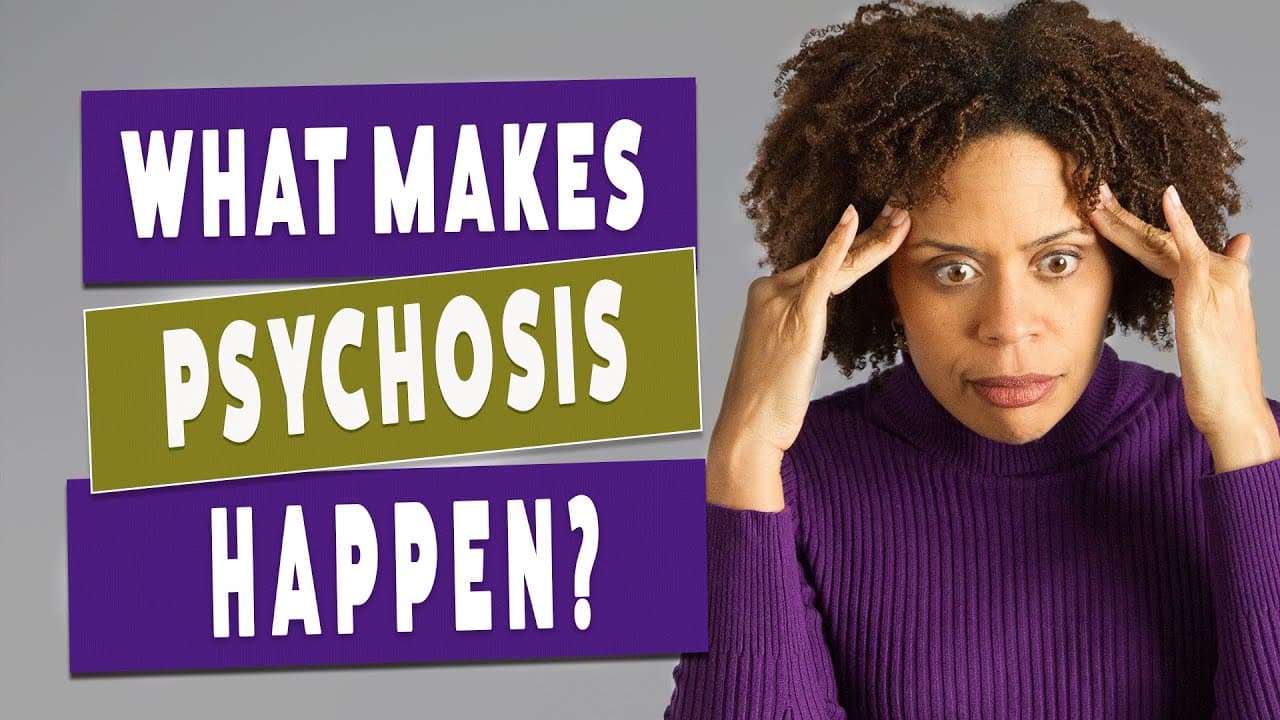
Not Real, But Feels Real: Demystifying Psychosis & Delusions

Not Real, But Feels Real: Demystifying Psychosis & Delusions

A clear, clinical, yet accessible breakdown of psychosis, distinguishing between its two main components: hallucinations and delusions. Dr. Tracey Marks, a psychiatrist, systematically explains the five types of hallucinations (auditory, visual, olfactory, tactile, and gustatory) and clarifies the difference between a true hallucination and a sensory misperception. She then categorizes various types of delusions, including persecutory, referential, grandiose, and somatic delusions. The video explores the diverse causes of psychosis, moving beyond just psychiatric illnesses like schizophrenia to include medical conditions, seizures, medication side effects (like steroid psychosis), and substance use. This broadens the viewer's understanding of mental health symptoms as having potentially physiological origins. For educators, this resource provides a foundational vocabulary for psychology, health, and biology classrooms. It demystifies terms often used loosely in pop culture, offering a medical perspective that reduces stigma and encourages scientific understanding of how the brain perceives reality.
Dr. Tracey MarksDr. Tracey Marks

5mins 58s

Sequences

Neural Foundations Slides

Synaptic Circuits

A comprehensive introductory psychology sequence for university students, exploring the biological, cognitive, and social foundations of human behavior through a lens of scientific inquiry and critical analysis.

KM

Kyaw Min Oo

15
Growth Blueprint Slides

Analyzing Prenatal Growth and Infant Milestones

This sequence guides students through the biological and psychological progression of human life from conception to toddlerhood, analyzing prenatal stages, environmental risks, neonatal reflexes, milestones, and attachment theories.

15
Brain Blueprint Teacher Guide

Mind Explorers

A foundational university-level psychology curriculum covering biological bases, cognitive processes, behavioral theories, and social dynamics. This sequence provides a rigorous introduction to the scientific study of the human mind and behavior.

10
Inclusion Architect Teacher Guide

Neurodiversity and Civil Rights

A High School Civics lesson focused on neurodiversity as a civil rights and workforce inclusion issue, featuring a design-thinking activity to create inclusive environments.

4
Wave Mechanics Slides

Vision Lab

A comprehensive high school psychology sequence exploring the biological and physical foundations of vision. Students trace light from its physical properties through the anatomy of the eye to the complex neural processing of color and images.

14
Gateway of Sensation Slides

Sensing the World

A comprehensive unit exploring the limits of human sensory systems through psychophysics, threshold testing, Weber's Law, Signal Detection Theory, and sensory adaptation. Students engage in lab-style experiments and simulations to understand how physical stimuli are transformed into psychological experiences.

13

Lessons

Senses in Service Slides

Senses in Service

This lesson explores the Gurmat perspective on the five senses, moving from sensory bondage to spiritual mastery through the teachings found in the 'Slave to the Senses' discourse.

SJ

Satvinder Juss

5
Perception Lab Worksheet

Reality Check Review

A comprehensive review of sensation and perception concepts, featuring scenario-based application, definition matching, and visual demonstrations of perceptual illusions.

MM

Michele Magee

4
Perception Lab Worksheet

Reality Check Review

A review of sensation and perception modules, focusing on Gestalt principles in design and real-world scenarios.

MM

Michele Magee

3
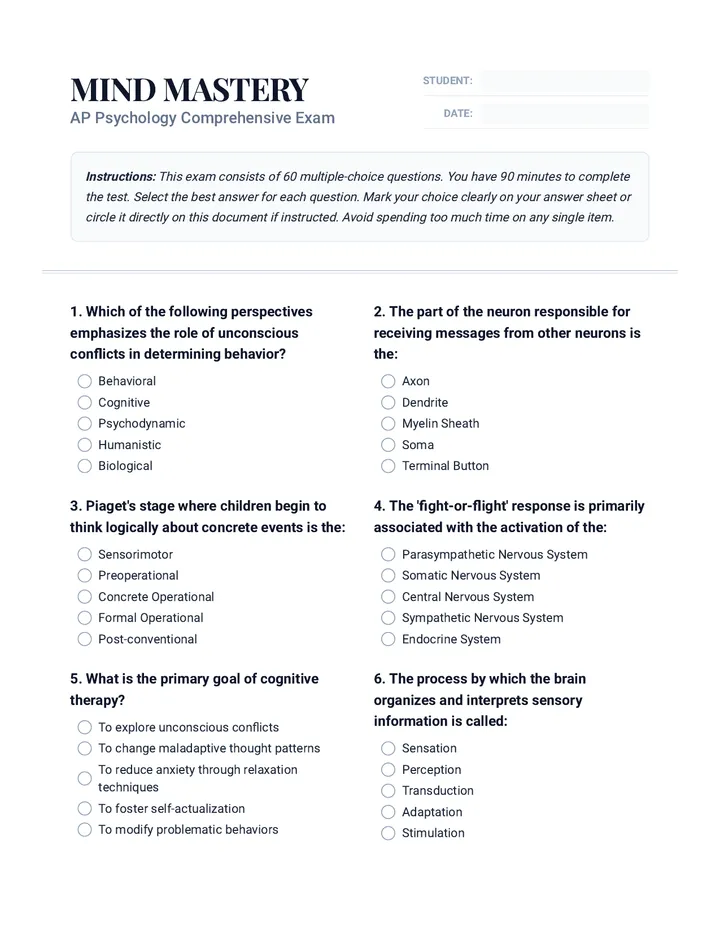
Mind Mastery Exam Test

Mind Mastery Exam

A comprehensive 90-minute assessment covering the breadth of the AP Psychology curriculum, including a 60-question multiple-choice exam, a post-exam reflection, and a detailed study guide for review.

DL

Dr. Lisa Lamb

8
Reality Check Slides

Reality Check

A high school psychology lesson focusing on the clinical definitions of psychosis, distinguishing between sensory hallucinations and fixed false beliefs (delusions). Students analyze case studies to apply their knowledge of specific clinical categories.

4
Neural Glitch Slides

Neural Glitches

A lesson for AP/Undergraduate Psychology exploring the neural basis of psychosis, distinguishing between psychiatric hallucinations and neurological sensory misperceptions. Students map hallucinations to specific brain regions and analyze the diagnostic implications of different sensory modalities.

3