Lenny.com
Explore
Create
ActivitiesNewMathEnglish Language ArtsScience & EngineeringSocial StudiesGlobal LanguagesHealth & Physical EducationSpecial EducationCounseling & Life SkillsArts & CreativityESL
Lenny.com
Lenny.com
Explore
Create
ActivitiesNewMathEnglish Language ArtsScience & EngineeringSocial StudiesGlobal LanguagesHealth & Physical EducationSpecial EducationCounseling & Life SkillsArts & CreativityESL
Lenny.com
Lenny.com

Solutions

Lenny for EducatorsLenny for SchoolsLenny for Districts

Product

ExploreSign inCreateSupportAbout

Resources

Getting startedMTSS Acceleration Program

© 2026 Lenny Learning Inc.

TermsPrivacyAccessibility
LinkedInInstagramX
Lenny

Cognitive Learning

Internal mental processes including memory, attention, and problem-solving. Examines how individuals acquire, process, and store information through schema development and metacognition.

Social StudiesSocial Studies PracticesLocation WordsMapsOrder EventsChronology and CausationEvaluating SourcesHistorical ThinkingGeography, Humans, & the EnvironmentAmerican Symbols and LandmarksCitiesStatesState CapitalsRegions of the United StatesGeographic SkillsPhysical GeographyHuman GeographyRegional GeographyGeography of AfricaGeography of AsiaGeography of EuropeGeography of OceaniaGeography of the AmericasSociety and Environment of EuropeSociety and Environment of AsiaSociety and Environment of The AmericasSociety and Environment of the Middle EastSociety and Environment of AfricaHistoryPrehistoryComparing Ancient River CivilizationsAncient MesopotamiaAncient Egypt and KushAncient South AsiaEarly ChinaGreeceRome and the Byzantine EmpireAncient World HistoryNative Peoples of North AmericaNative Peoples of Mesoamerica and South AmericaAfrican EmpiresMedieval AsiaMedieval EuropeThe Silk RoadMedieval HistoryIslamic EmpiresWorld ReligionsRenaissance PeriodAge of ExplorationThe Thirteen ColoniesThe American RevolutionUS History Early RepublicFounding of the United StatesUS History AntebellumUS Civil WarReconstruction PeriodThe Gilded AgeUS ImperialismWorld ImperialismWorld War IUS History 1920sGreat DepressionWorld War IIThe Cold WarUS History 1950-60sUS History 1960s-70sWorld History 20th CenturyContemporary US HistoryContemporary World HistoryHolidaysCivics and GovernmentCitizenshipGovernment FoundationsThe ConstitutionUS ConstitutionExecutive BranchLegislative BranchJudicial BranchState and LocalPolitical ParticipationPublic PolicyPolitical SystemsPower and AuthoritySocial MovementsDefining DevianceTheories of DevianceCrime and Criminal JusticeEconomicsBasic Economic PrinciplesSupply and DemandWhat is MoneyEconomic FundamentalsMicroeconomicsMacroeconomicsBanking and FinanceEconomic SystemsGlobal EconomicsCorporations and PowerThe Changing WorkplaceUnemployment and LaborClass and InequalitySocial MobilityGlobal InequalityPsychologyHistory of PsychologyPsychology as a ScienceBrain and Nervous SystemNeuroscience and BehaviorGenetics and BehaviorSleep and ConsciousnessSensory ProcessesPerceptual OrganizationClassical ConditioningOperant ConditioningObservational LearningCognitive LearningMemory ProcessesThinking and Problem SolvingLanguage and CognitionTheories of MotivationStress and CopingPrenatal and Infant DevelopmentChildhood DevelopmentAdolescent DevelopmentAdulthood and AgingSelf and IdentitySocial CognitionSocial InfluenceAttraction and RelationshipsGroup BehaviorPrejudice and DiscriminationAnxiety and Mood DisordersClinical PsychologyForensic PsychologyPhilosophy & EthicsIntroduction to PhilosophyMajor Philosophers & IdeasMind and Body ProblemFree Will vs DeterminismEthics & MoralityReligion & PhilosophyPolitical Philosophy

Materials

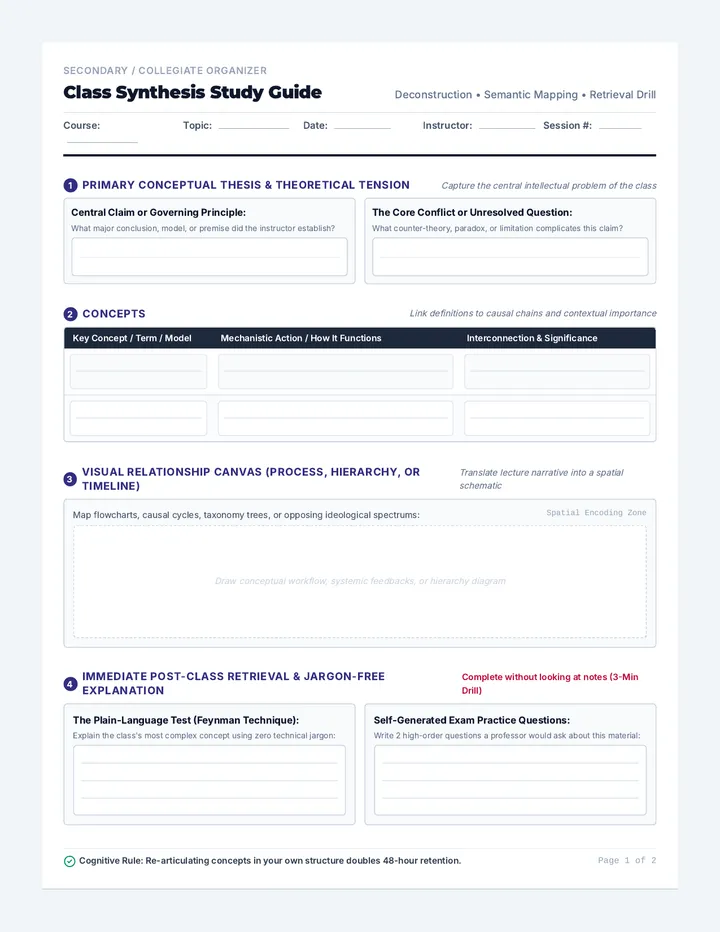
Class Synthesis Study Guide

Class Synthesis Study Guide

A comprehensive two-page collegiate and secondary study guide format to organize class notes, theoretical mechanisms, seminar debate contributions, discussion notes, and spaced study schedules with lined rulings in student writing sections.

TB

Tricia Biggers

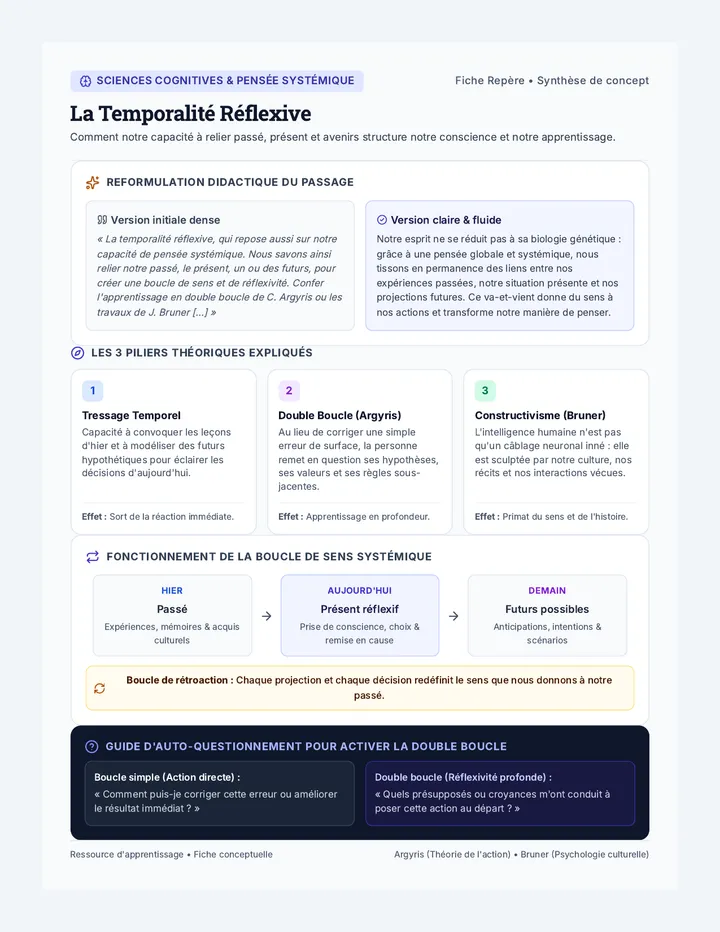
Boucle Reflexive Handout

Boucle Reflexive Handout

Fiche de synthèse et d'analyse clarifiant le concept de temporalité réflexive, de pensée systémique et les apports théoriques de Chris Argyris et Jerome Bruner.

S

stirn

Educational Philosophies Poster

Educational Philosophies Poster

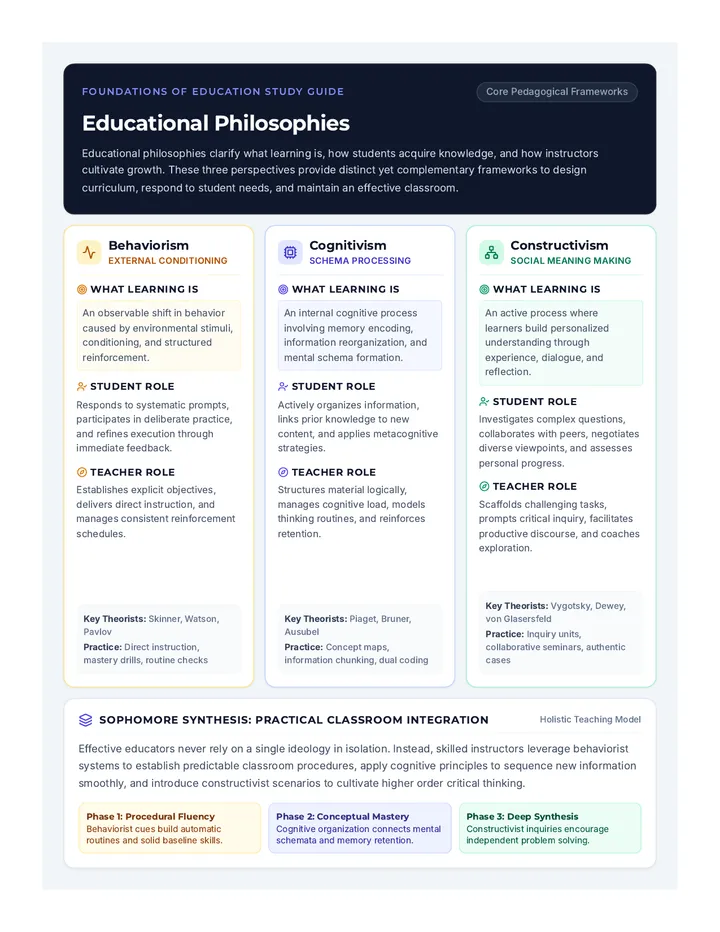
A streamlined collegiate poster synthesizing the three foundational educational philosophies for undergraduate education students. It outlines core learning mechanisms, student and instructor roles, and integrated classroom applications with all punctuation dashes removed.

Sequences

Anatomy of a Habit Guide & Vocabulary Sheet

Habit Architects

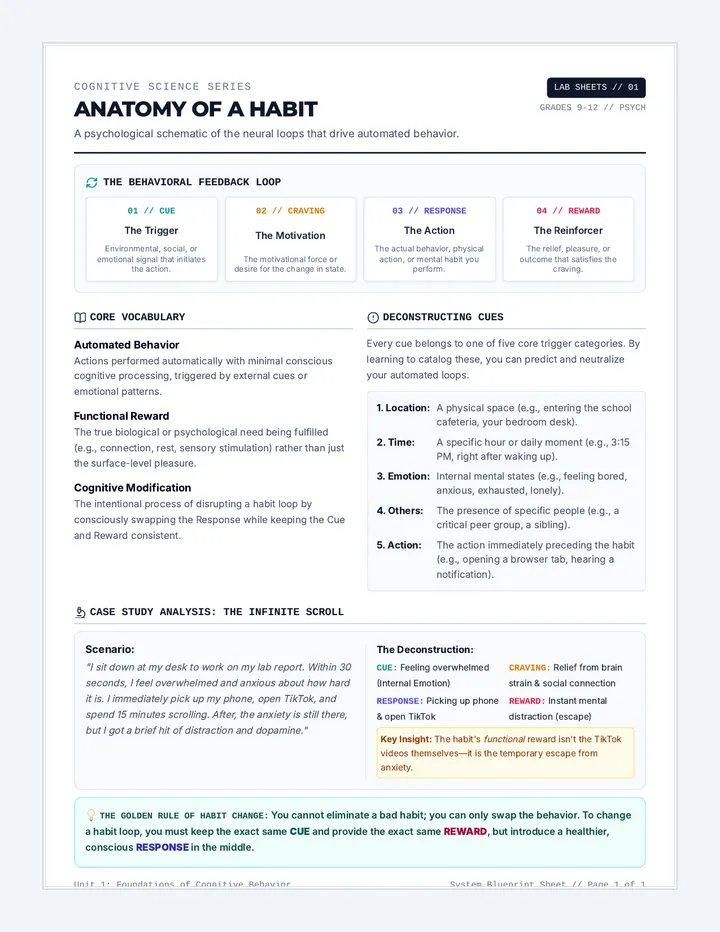
A three-part cognitive psychology series designed for Grades 9-12. Students learn the science of automation, explore how to isolate triggers and cravings, redesign unhelpful routines, and restructure their environments to make habit modification effortless.

DC

Diane Celona

19
Brain Blueprint Study Guide

Mind Mechanics Review

A comprehensive multi-day review sequence for psychology units on emotion, motivation, memory, and forgetting, featuring structured study aids, interactive challenges, and practice assessments.

MM

Michele Magee

6
Professional Presence Lesson Plan

Future Educators Academy

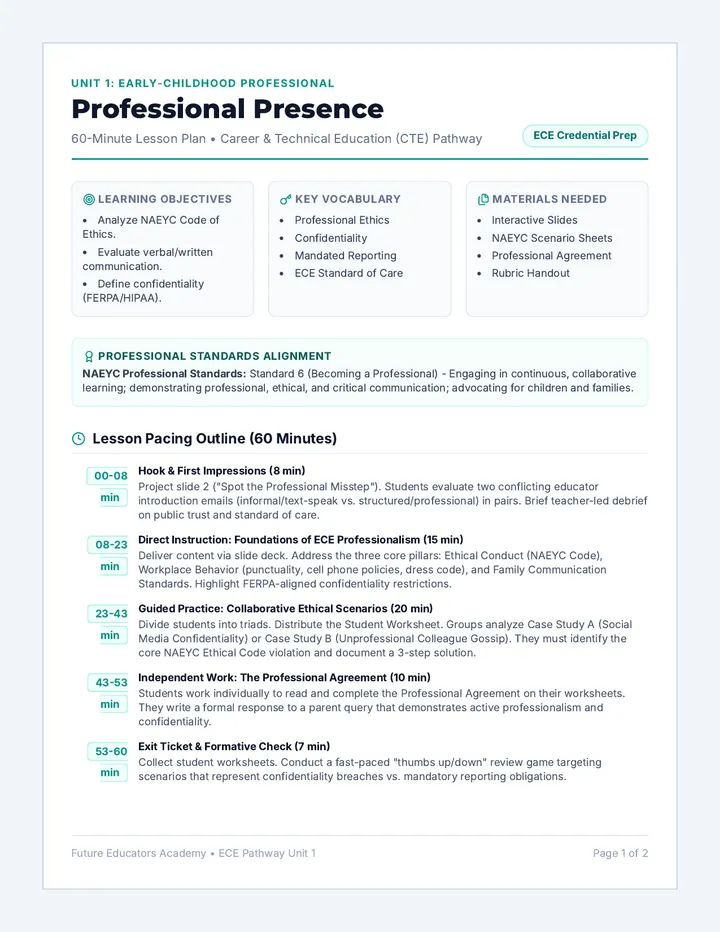
A comprehensive, 4-unit sequence designed for a CTE Career Pathway in Early Childhood Education. Each lesson equips high school/adult students with formal workplace preparation, industry-standard credentials, and professional habits.

JB

Jennifer Baley Gunn

20
Framing the Facts Slides

Media Mindset

A two-day intensive sequence for high school students to master media literacy skills, focusing on bias detection, fact-checking, and the analysis of political narratives in the modern digital age.

J

jtoomey

8
Stone Age Tech Slides

Paleolithic Evolution

A comprehensive 10th-grade history sequence exploring the cognitive and cultural evolution of Paleolithic humans through their tools, art, and rituals. Students analyze the transition from survival technology to symbolic expression and spiritual belief.

14
Reasoning Foundations Slides

Reasoning Mastery Course

A 12-lesson intensive course on reasoning and critical thinking, aligned with the 'Reasoning Skills Success' framework. This sequence covers everything from the distinction between reason and emotion to complex logical fallacies, statistical analysis, and deductive/inductive logic.

65

Lessons

Piaget Pro Teacher Guide

Cognitive Climb

A high school child development lesson using a jigsaw strategy to explore Piaget's four stages of cognitive development, featuring expert research and peer-to-peer teaching.

JB

Jennifer Baley Gunn

6
TikTok Influence Slides

Viral Influence

An exploration of TikTok's psychological and marketing influence, focusing on algorithmic power, social proof, and peer-driven trends through modeled annotation practices.

AR

Ashley Robbins

7
Cognitive Architects Slides

Cognitive Architects

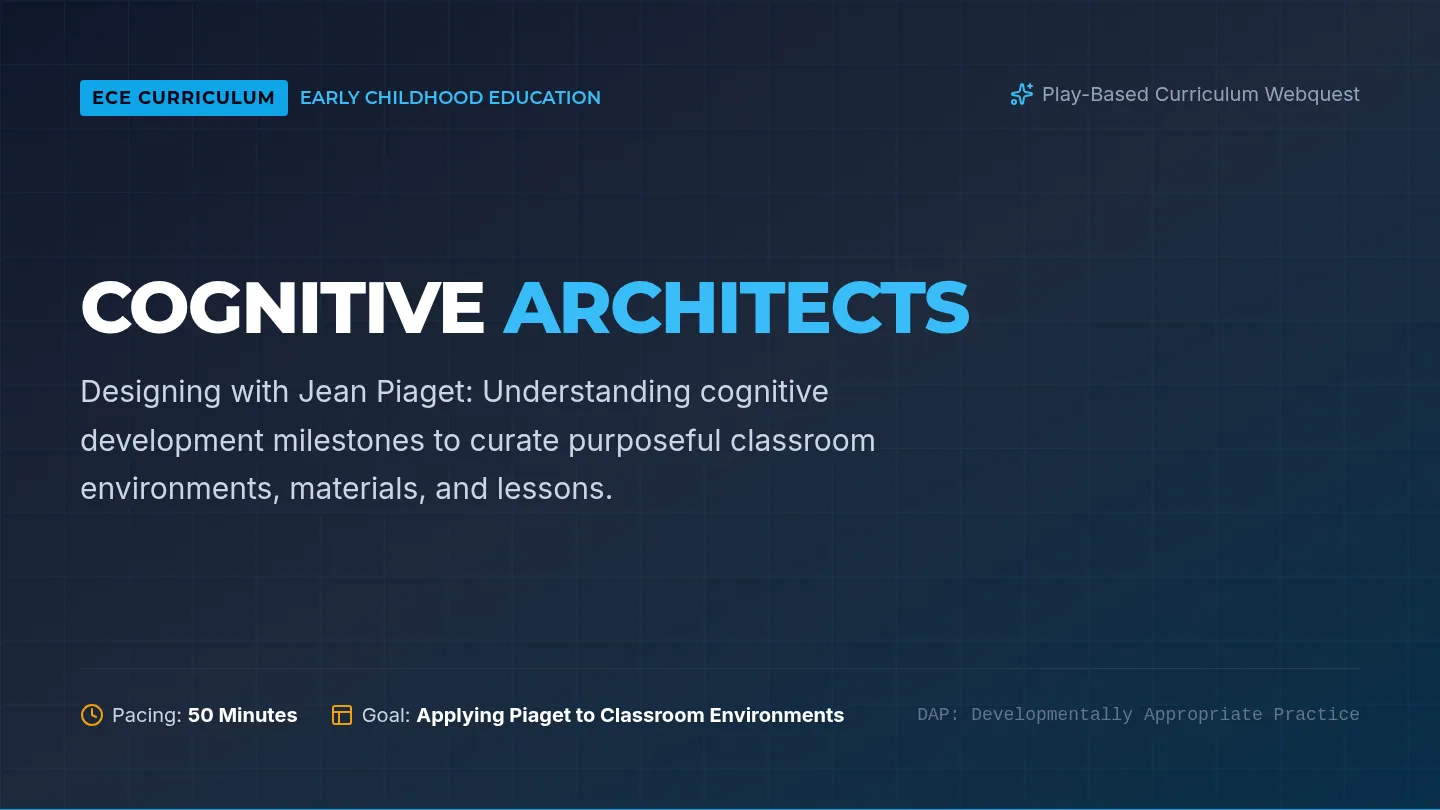
An active, group-based Early Childhood Education (ECE) Curriculum lesson built around Jean Piaget's Theory of Cognitive Development. ECE students work in collaborative squads to navigate a webquest, analyze developmental milestones, watch developmental experiments, and apply theoretical principles directly to designing play-based preschool curricula and choosing developmentally appropriate materials.

AL

Alex Levy

3
Memory Maze Worksheet

Memory and Forgetting Mechanics

A comprehensive look at why we remember and why we forget, covering the stages of memory, types of interference, and strategies for improving recall.

MM

Michele Magee

3
Senses in Service Slides

Senses in Service

This lesson explores the Gurmat perspective on the five senses, moving from sensory bondage to spiritual mastery through the teachings found in the 'Slave to the Senses' discourse.

SJ

Satvinder Juss

5
Testing Trap Comic

The Testing Trap

An exploration of the history, mechanics, and fairness of standardized testing through the lens of a neurodivergent student's experience. This lesson uses a retro-style comic to illustrate the disconnect between traditional testing and real-world intelligence.
J

JLaytner

3