Lenny.com
Explore
Create
ActivitiesNewMathEnglish Language ArtsScience & EngineeringSocial StudiesGlobal LanguagesHealth & Physical EducationSpecial EducationCounseling & Life SkillsArts & CreativityESL
Lenny.com
Lenny.com
Explore
Create
ActivitiesNewMathEnglish Language ArtsScience & EngineeringSocial StudiesGlobal LanguagesHealth & Physical EducationSpecial EducationCounseling & Life SkillsArts & CreativityESL
Lenny.com
Lenny.com

Solutions

Lenny for EducatorsLenny for SchoolsLenny for Districts

Product

ExploreSign inCreateSupportAbout

Resources

Getting startedMTSS Acceleration Program

© 2026 Lenny Learning Inc.

TermsPrivacyAccessibility
LinkedInInstagramX
Lenny

Society and Environment of The Americas

Geographical features, biodiversity, and human-environment interactions throughout North, Central, and South America. Analyzes how diverse ecosystems influence settlement patterns, economic activities, and cultural traditions.

Social StudiesSocial Studies PracticesLocation WordsMapsOrder EventsChronology and CausationEvaluating SourcesHistorical ThinkingGeography, Humans, & the EnvironmentAmerican Symbols and LandmarksCitiesStatesState CapitalsRegions of the United StatesGeographic SkillsPhysical GeographyHuman GeographyRegional GeographyGeography of AfricaGeography of AsiaGeography of EuropeGeography of OceaniaGeography of the AmericasSociety and Environment of EuropeSociety and Environment of AsiaSociety and Environment of The AmericasSociety and Environment of the Middle EastSociety and Environment of AfricaHistoryPrehistoryComparing Ancient River CivilizationsAncient MesopotamiaAncient Egypt and KushAncient South AsiaEarly ChinaGreeceRome and the Byzantine EmpireAncient World HistoryNative Peoples of North AmericaNative Peoples of Mesoamerica and South AmericaAfrican EmpiresMedieval AsiaMedieval EuropeThe Silk RoadMedieval HistoryIslamic EmpiresWorld ReligionsRenaissance PeriodAge of ExplorationThe Thirteen ColoniesThe American RevolutionUS History Early RepublicFounding of the United StatesUS History AntebellumUS Civil WarReconstruction PeriodThe Gilded AgeUS ImperialismWorld ImperialismWorld War IUS History 1920sGreat DepressionWorld War IIThe Cold WarUS History 1950-60sUS History 1960s-70sWorld History 20th CenturyContemporary US HistoryContemporary World HistoryHolidaysCivics and GovernmentCitizenshipGovernment FoundationsThe ConstitutionUS ConstitutionExecutive BranchLegislative BranchJudicial BranchState and LocalPolitical ParticipationPublic PolicyPolitical SystemsPower and AuthoritySocial MovementsDefining DevianceTheories of DevianceCrime and Criminal JusticeEconomicsBasic Economic PrinciplesSupply and DemandWhat is MoneyEconomic FundamentalsMicroeconomicsMacroeconomicsBanking and FinanceEconomic SystemsGlobal EconomicsCorporations and PowerThe Changing WorkplaceUnemployment and LaborClass and InequalitySocial MobilityGlobal InequalityPsychologyHistory of PsychologyPsychology as a ScienceBrain and Nervous SystemNeuroscience and BehaviorGenetics and BehaviorSleep and ConsciousnessSensory ProcessesPerceptual OrganizationClassical ConditioningOperant ConditioningObservational LearningCognitive LearningMemory ProcessesThinking and Problem SolvingLanguage and CognitionTheories of MotivationStress and CopingPrenatal and Infant DevelopmentChildhood DevelopmentAdolescent DevelopmentAdulthood and AgingSelf and IdentitySocial CognitionSocial InfluenceAttraction and RelationshipsGroup BehaviorPrejudice and DiscriminationAnxiety and Mood DisordersClinical PsychologyForensic PsychologyPhilosophy & EthicsIntroduction to PhilosophyMajor Philosophers & IdeasMind and Body ProblemFree Will vs DeterminismEthics & MoralityReligion & PhilosophyPolitical Philosophy

Videos

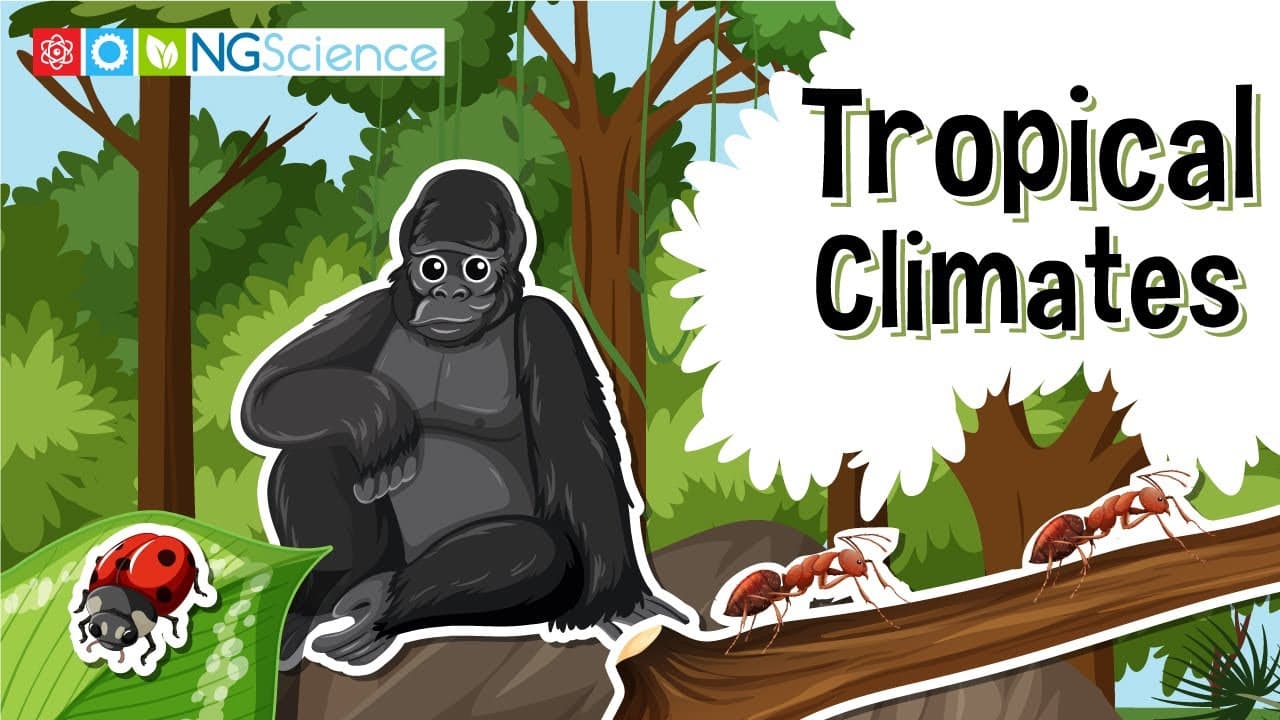
Exploring Tropical Climates and Rainforests

Exploring Tropical Climates and Rainforests

This educational video provides a comprehensive overview of tropical climates, also known as equatorial climates. It explains the geographical location of these zones near the equator, covering approximately one-third of Earth's land surface. The video details the defining characteristics of tropical climates, specifically their consistent high temperatures year-round and significant rainfall, distinguishing their two-season cycle (wet and dry) from the four-season cycle found in temperate regions. The content highlights major tropical rainforest regions including the Amazon Basin in Brazil, the Congo Basin in Africa, and forests throughout Southeast Asia. It emphasizes the incredible biodiversity of these habitats, noting that they are the most diverse land ecosystems on Earth and home to millions of plant and animal species, many of which remain undiscovered. The video features high-quality footage of various rainforest animals such as monkeys, colorful frogs, exotic birds, and insects. The final segment addresses the critical environmental issue of deforestation, showing powerful imagery of logging and land clearing for agriculture and infrastructure. It concludes with a conservation message, urging viewers to understand the importance of protecting these vital ecosystems to ensure the survival of their unique flora and fauna for future generations.

Next Generation ScienceNext Generation Science

2mins 26s

How Simón Bolívar Liberated South America

How Simón Bolívar Liberated South America

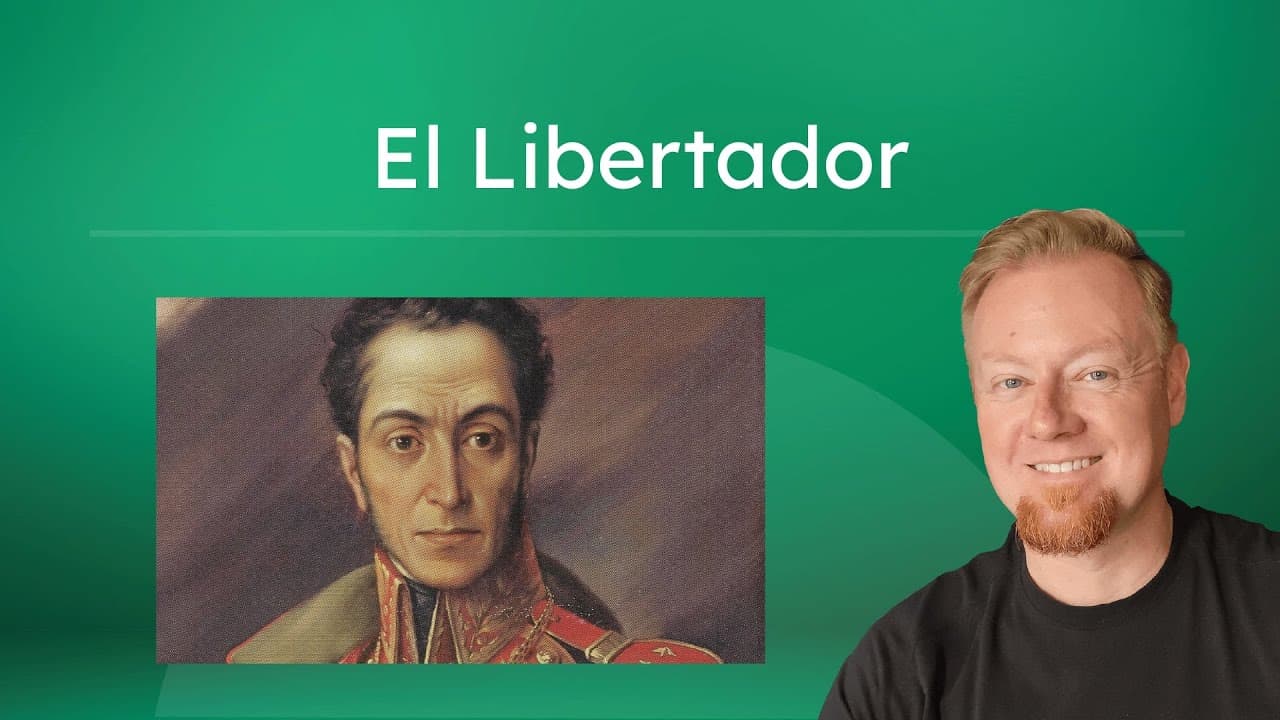
This educational video provides a comprehensive overview of the life and legacy of Simón Bolívar, known as 'The Liberator' of South America. It contextualizes his work within the broader Age of Revolutions, connecting the Latin American independence movements to the American, French, and Haitian revolutions. The narrative follows Bolívar's journey from a wealthy Venezuelan creole to a revolutionary leader who played a crucial role in liberating six nations from Spanish rule. The video explores key historical themes including the rigid colonial social hierarchy (the caste system) that fueled resentment among creoles and mixed-race populations, the impact of Enlightenment ideals, and the geopolitical catalyst of Napoleon's invasion of Spain. It delves into the military and political struggles Bolívar faced, his partnership with Haiti, and the rise and eventual collapse of his dream of a unified Gran Colombia. For educators, this resource serves as an excellent case study for understanding the complexities of post-colonial nation-building. It highlights how social inequality drives revolution and illustrates the difficulties of establishing stable governance in diverse territories. The video uses maps, diagrams, and reenactments to make complex political history accessible, making it valuable for World History units on revolutions, Latin American history, or political science discussions on leadership and governance.
Miacademy & MiaPrep Learning ChannelMiacademy & MiaPrep Learning Channel

11mins 15s

Reclaiming Sovereignty: The Land Back Movement Explained

Reclaiming Sovereignty: The Land Back Movement Explained

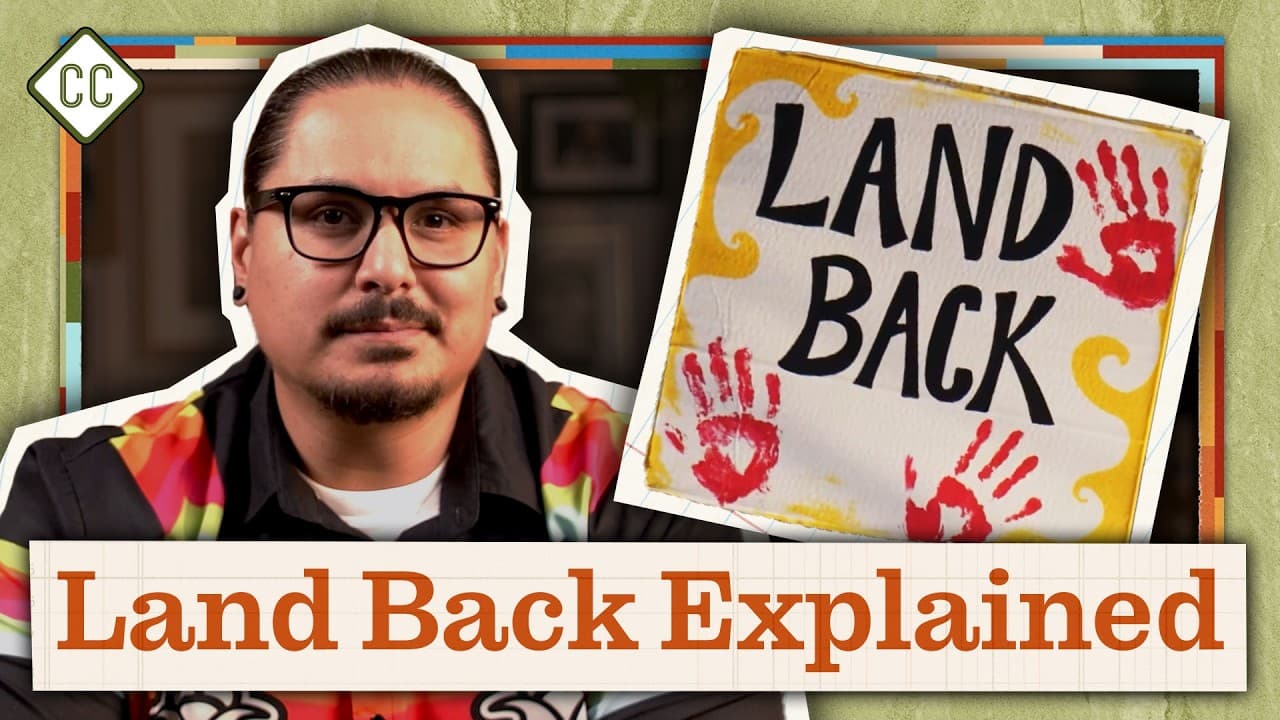
This episode of Crash Course Native American History explores the "Land Back" movement, a decentralized effort by Indigenous peoples to reclaim authority over stolen land and resources. Hosted by Che Jim, the video breaks down the concept beyond slogans and hashtags, defining it as a multifaceted approach to asserting tribal sovereignty. It examines various methods used to achieve these goals, ranging from legal battles and government settlements to voluntary "settler rent" and direct action protests like blockades.

CrashCourseCrashCourse

10mins 19s

How José de San Martín Led South America's Southern Liberation

How José de San Martín Led South America's Southern Liberation

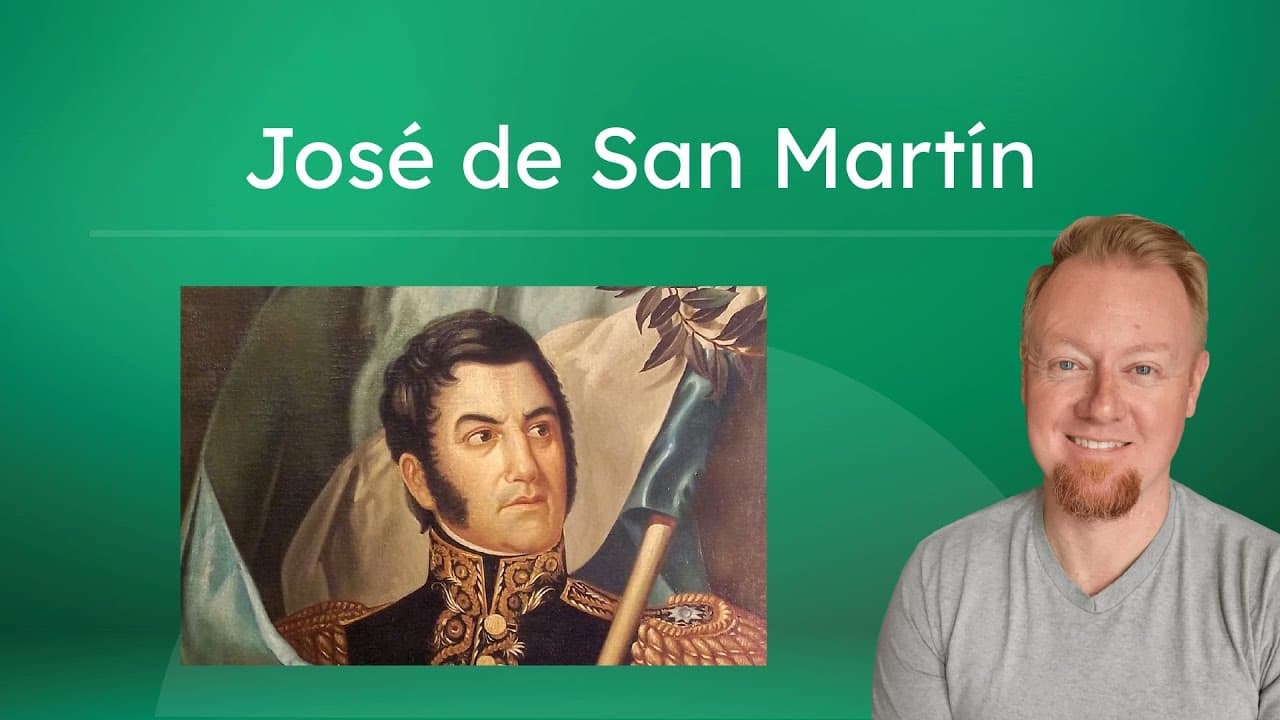
This educational video explores the history of the independence movements in southern South America, focusing specifically on the Rio de la Plata region and the campaigns of José de San Martín. It begins by establishing the context of Spanish colonial administration, explaining the system of Viceroyalties (Virreinatos) and the geopolitical tensions with Portugal that led to the creation of the Viceroyalty of the Rio de la Plata. The narrative covers early unrest, including the rebellion of Túpac Amaru II, and the external catalysts like the Napoleonic Wars that sparked the drive for independence. The video details the life and military achievements of José de San Martín, tracing his journey from a Spanish military officer to a revolutionary leader. It highlights his strategic genius in crossing the Andes to liberate Chile alongside Bernardo O'Higgins and his subsequent campaign to liberate Peru. The video also touches upon the famous meeting between San Martín and Simón Bolívar in Guayaquil, offering historical theories about their secret discussion regarding the future government of the newly independent nations. Ideally suited for middle and high school World History or Latin American Studies curricula, this video provides a clear framework for understanding the complexities of Latin American independence. It addresses the diverse causes of revolution, the challenges of nation-building, and the persistent social inequalities facing indigenous populations even after political liberation. Teachers can use this resource to discuss military strategy, political philosophy (monarchy vs. republic), and the lasting legacy of colonialism.

Miacademy & MiaPrep Learning ChannelMiacademy & MiaPrep Learning Channel

10mins 2s

Debunking Latin American Myths and Introducing Europe

Debunking Latin American Myths and Introducing Europe

This educational video serves as a bridge between two units of study: Latin America and Europe. It begins by reviewing and debunking four common misconceptions about Latin America, clarifying geographical and cultural facts regarding the definition of "America," the diversity of countries beyond Mexico, the variety of biomes beyond the rainforest, and the rich, distinct culinary traditions found throughout the region. This section reinforces prior learning and corrects stereotypical thinking. The second half of the video pivots to introducing the continent of Europe. It acknowledges common associations students might have—such as wars and medieval history—before challenging them to look deeper. The narrator introduces the geographic concept of "The Why of Where," explaining how Europe's specific location has historically supported agriculture, industry, and trade, making it a global powerhouse despite its relatively small size and lack of political unity. Teachers can use this video effectively as a review tool at the end of a Latin America unit or as a hook to launch a unit on Europe. It models critical thinking by explicitly identifying and dismantling stereotypes. The content provides excellent opportunities for discussions about human geography, the impact of location on economic development, and the importance of understanding cultural nuance beyond broad generalizations.

Miacademy & MiaPrep Learning ChannelMiacademy & MiaPrep Learning Channel

5mins 29s

How the Oregon Trail and Treaties Shaped the American West

How the Oregon Trail and Treaties Shaped the American West

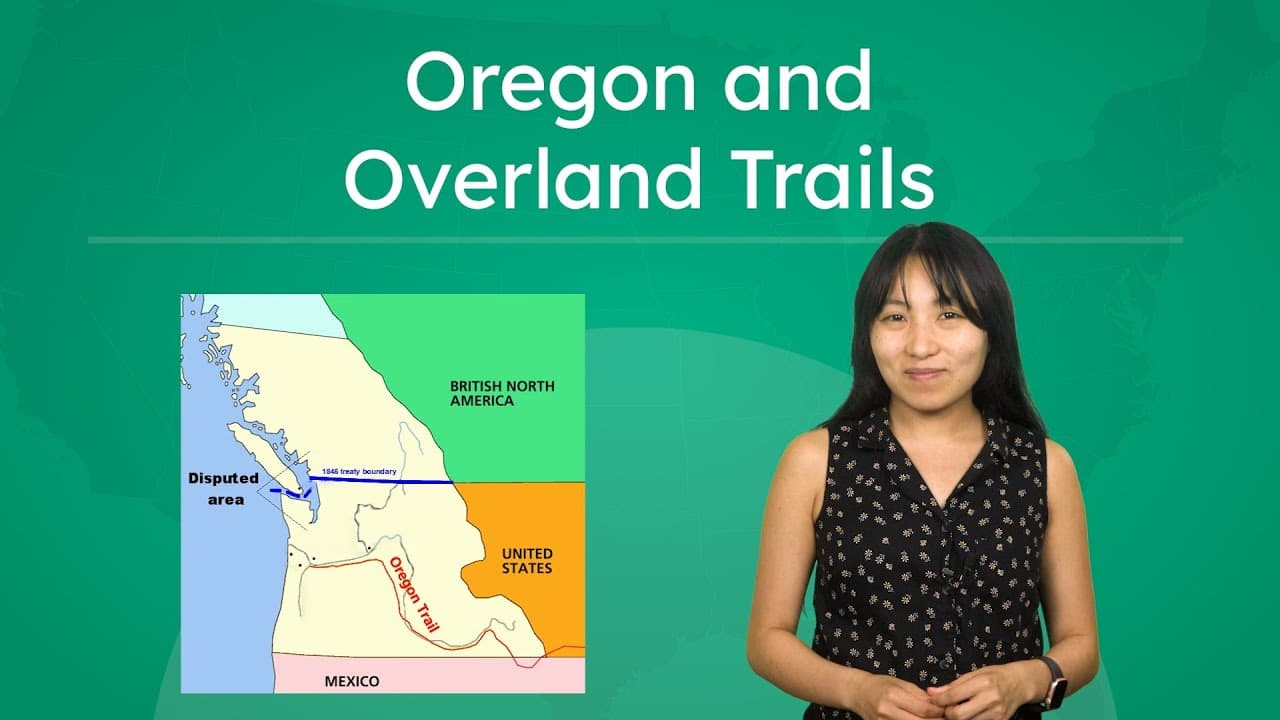
This educational video explores the history of United States expansion into the Oregon Country and the development of major overland trails during the mid-19th century. It details the progression from early exploration by Lewis and Clark to the economic activities of fur traders and mountain men, which paved the way for mass migration. The narrative explains the geopolitical tensions between the United States and Great Britain, culminating in the Oregon Treaty of 1846 which established the 49th parallel boundary. The video highlights the economic motivations behind westward expansion, specifically the lucrative beaver fur trade initiated by John Jacob Astor and the eventual allure of gold. It breaks down the specific routes travelers took—including the Oregon, California, Santa Fe, and Mormon trails—and connects these pathways to modern settlement patterns in the American West. Key historical figures like James K. Polk and his campaign slogan "54-40 or Fight" are discussed in the context of international diplomacy. Teachers can use this video to illustrate the concept of Manifest Destiny and the practical mechanics of how the American map was drawn. It provides excellent opportunities to discuss the intersection of economics, geography, and politics. The content is well-suited for explaining why specific cities like Salt Lake City and San Francisco developed where they did, and how natural geography and early trade routes shaped the political boundaries of the United States.

Miacademy & MiaPrep Learning ChannelMiacademy & MiaPrep Learning Channel

7mins 21s

Materials

Nomad Survival Bell Ringer Slides

Nomad Survival Bell Ringer Slides

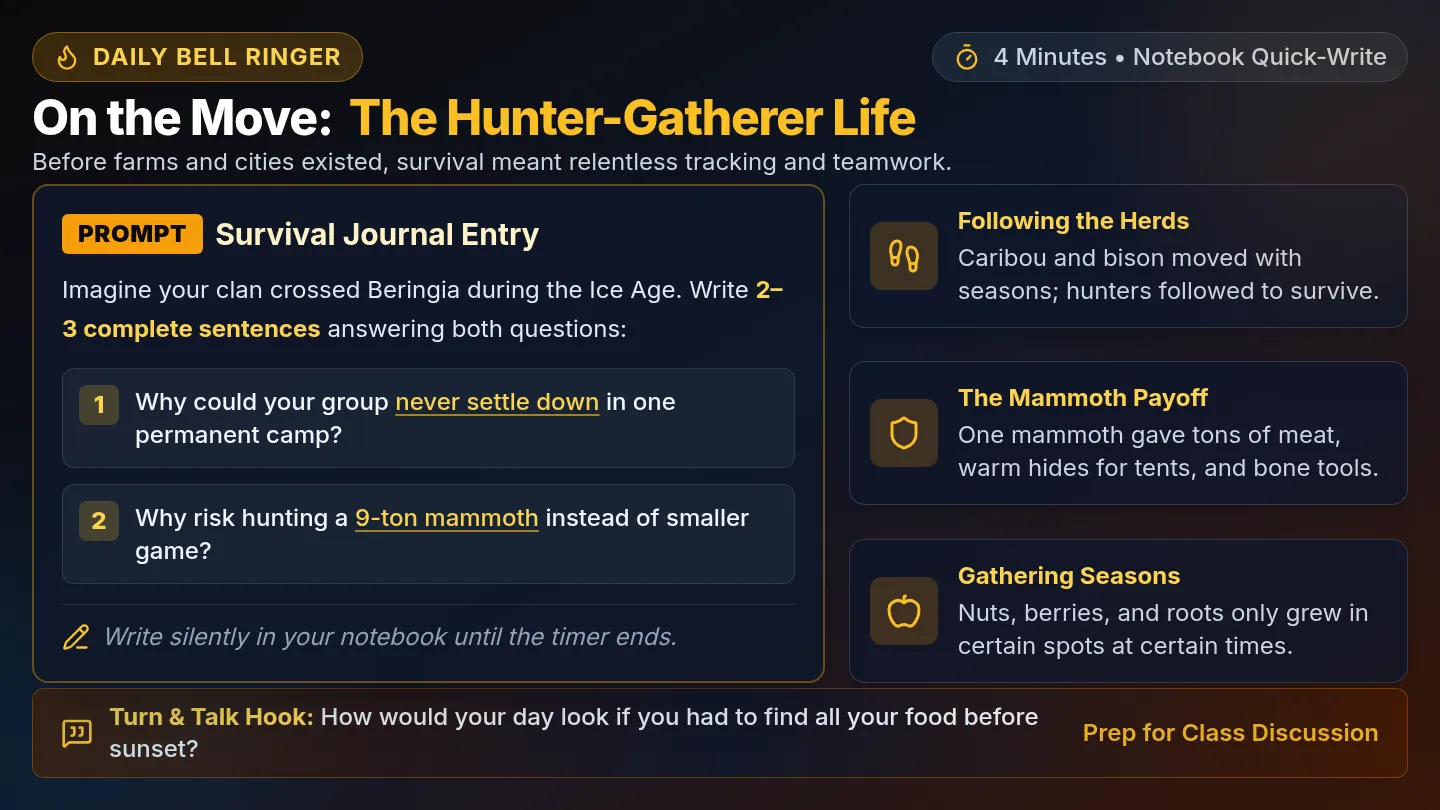
A 2-slide introductory deck for early American history featuring a nomadic survival bell ringer and a structured 'What We Will Learn' roadmap covering migration, megafauna hunting, and the agricultural revolution.

MA

Maria Avery

Ohio Geography Review Quiz

Ohio Geography Review Quiz

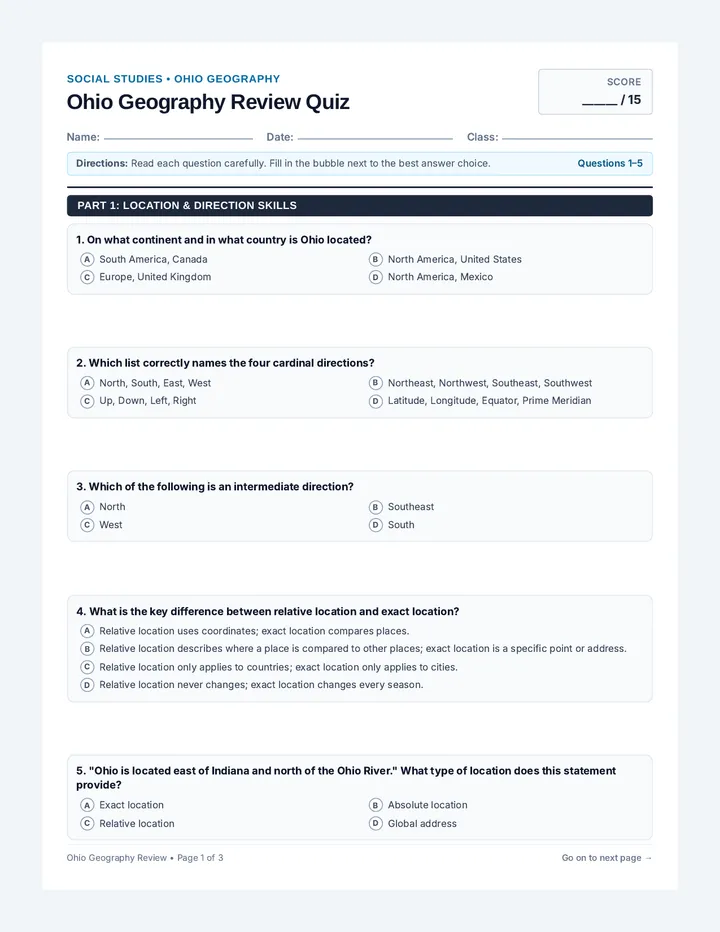
A comprehensive 15-question multiple-choice quiz reviewing Ohio's location, physical and human features, human-environment interaction, and geographic regions.

KM

Karah McAlister

Guatemala Discovery Slides

Guatemala Discovery Slides

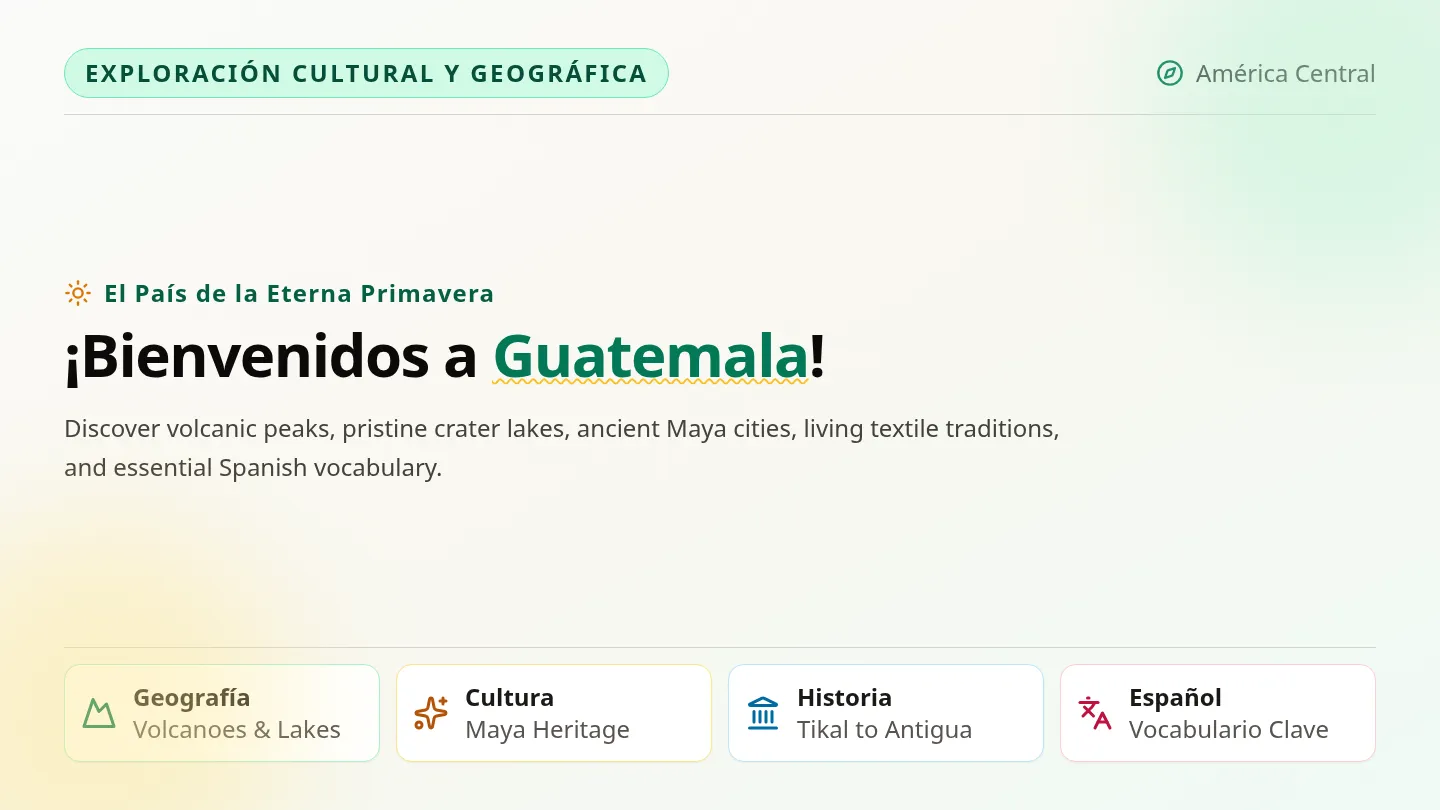
An expanded 11-slide presentation exploring Guatemala's geography, Maya heritage, historical milestones, sacred Maya symbols with ancestral words, and living traditions.

MI

Maria Ipina

World Celebrations Slides

World Celebrations Slides

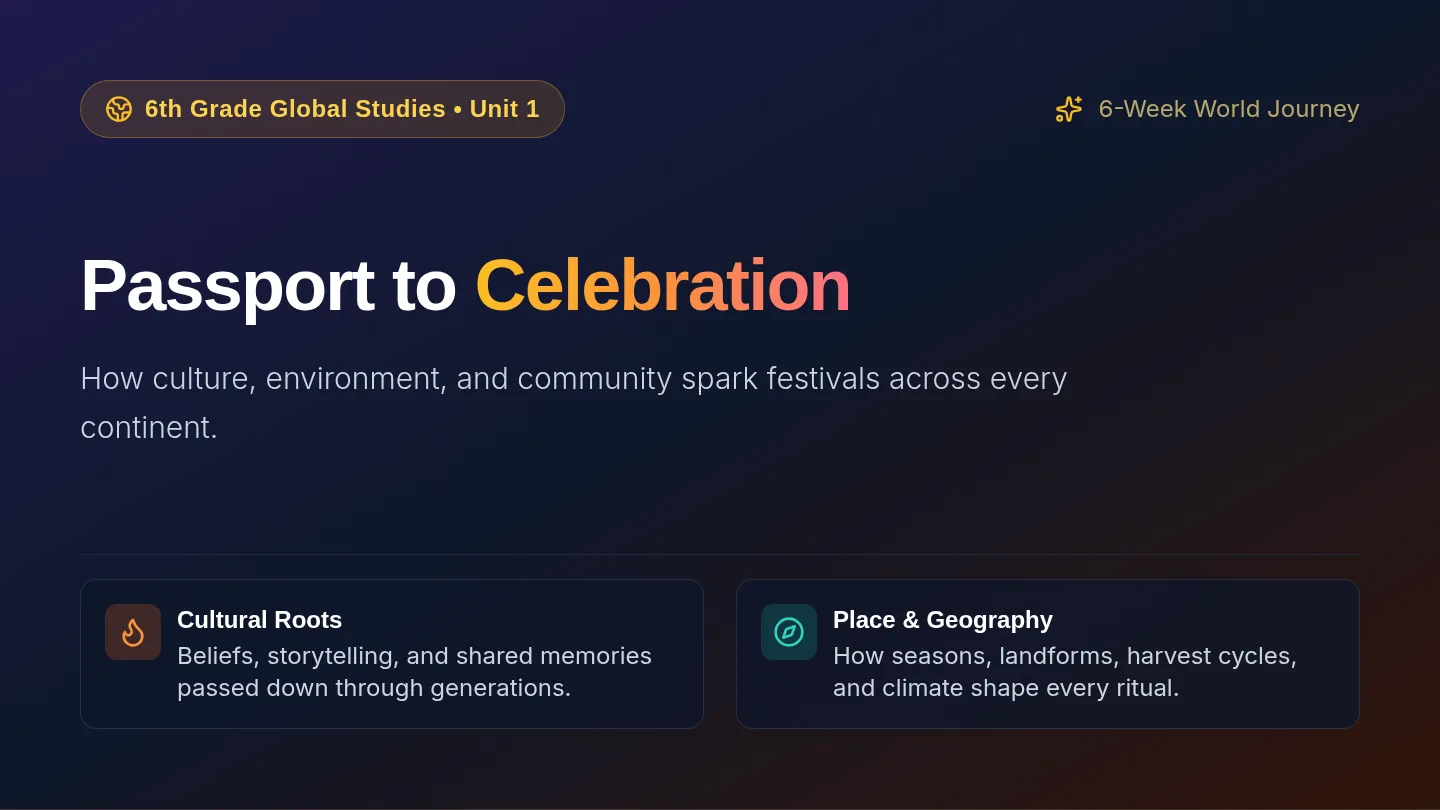
An engaging 8-slide classroom presentation for 6th grade introducing global festivals, exploring how cultural traditions, beliefs, and geographic environments shape celebrations worldwide.

J

Jojones

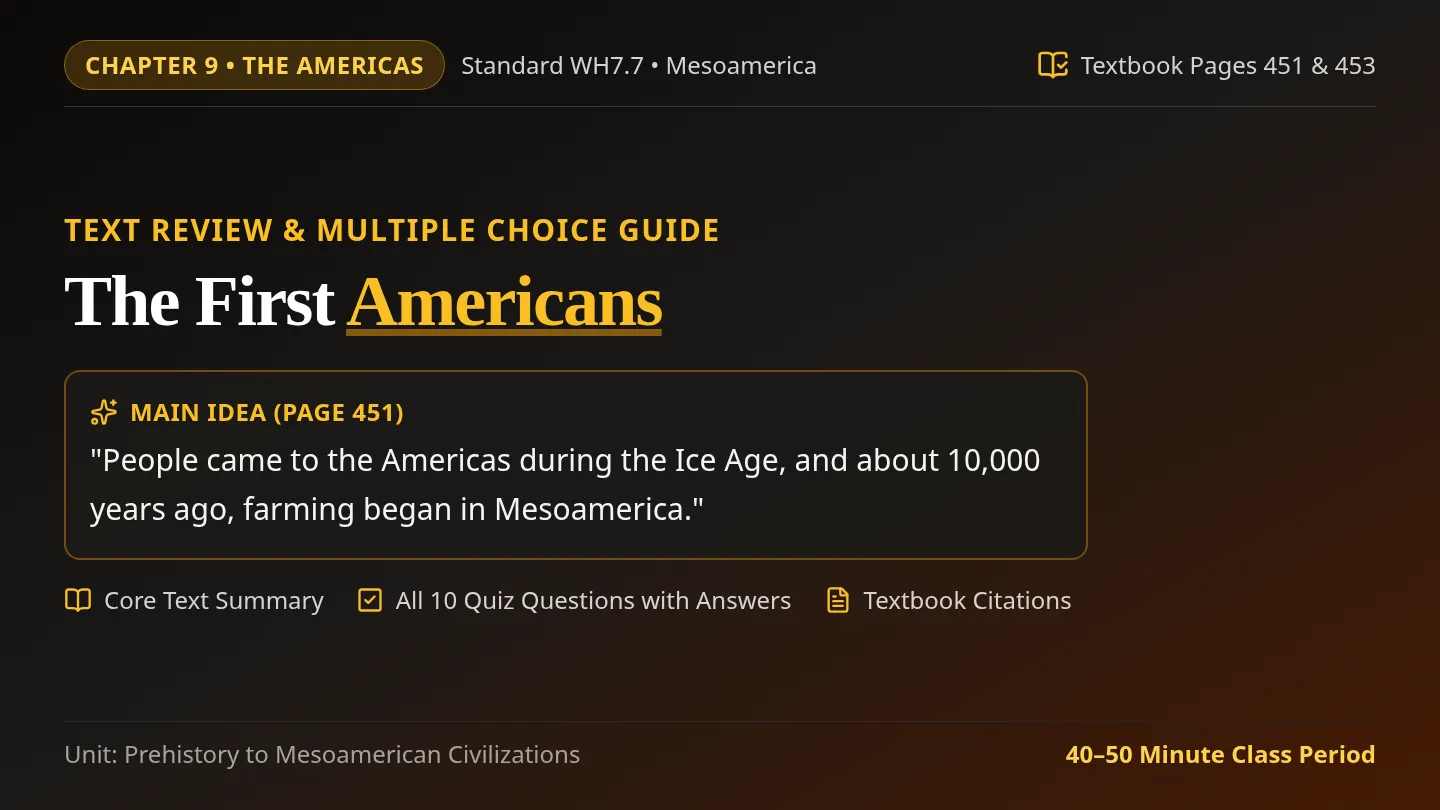
First Americans Review Slides

First Americans Review Slides

A complete 16-slide presentation for a 40–50 minute class reviewing 'The First Americans' (pp. 451 & 453) with key concepts, vocabulary, and dedicated review slides for all 10 worksheet multiple choice questions with revealed answers and textbook evidence.

MA

Maria Avery

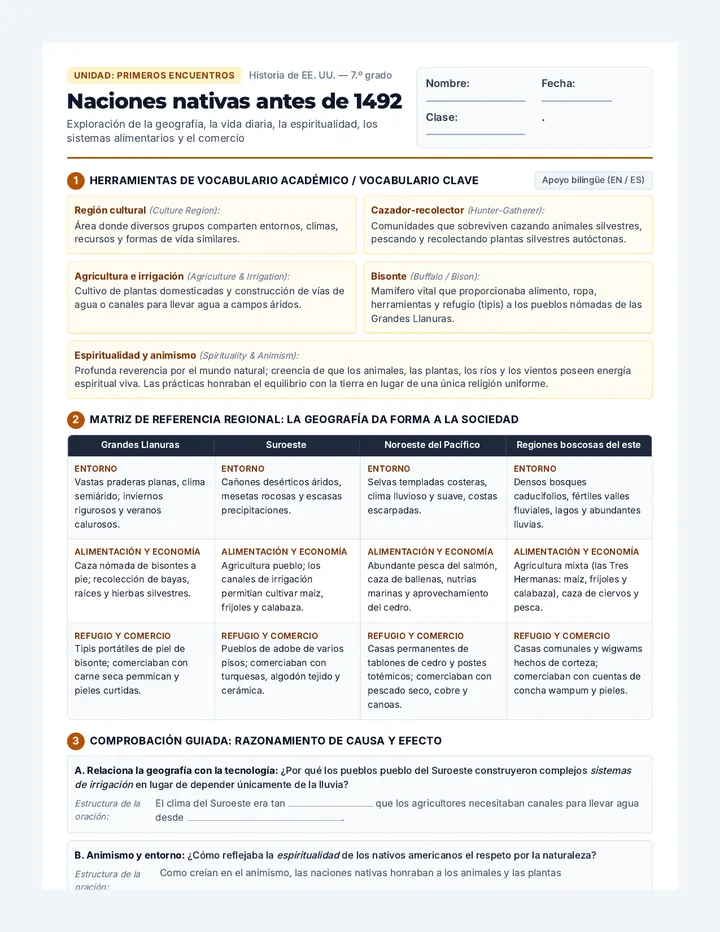
Native Nations Worksheet

Native Nations Worksheet

A scaffolded two-page 7th-grade US History worksheet exploring Native American culture regions, daily life, spirituality, hunting, agriculture, and trade before European contact, featuring bilingual vocabulary supports, guided notes, student-choice regional analysis, and an integrated exit ticket.

AN

Austin Nowak

Sequences

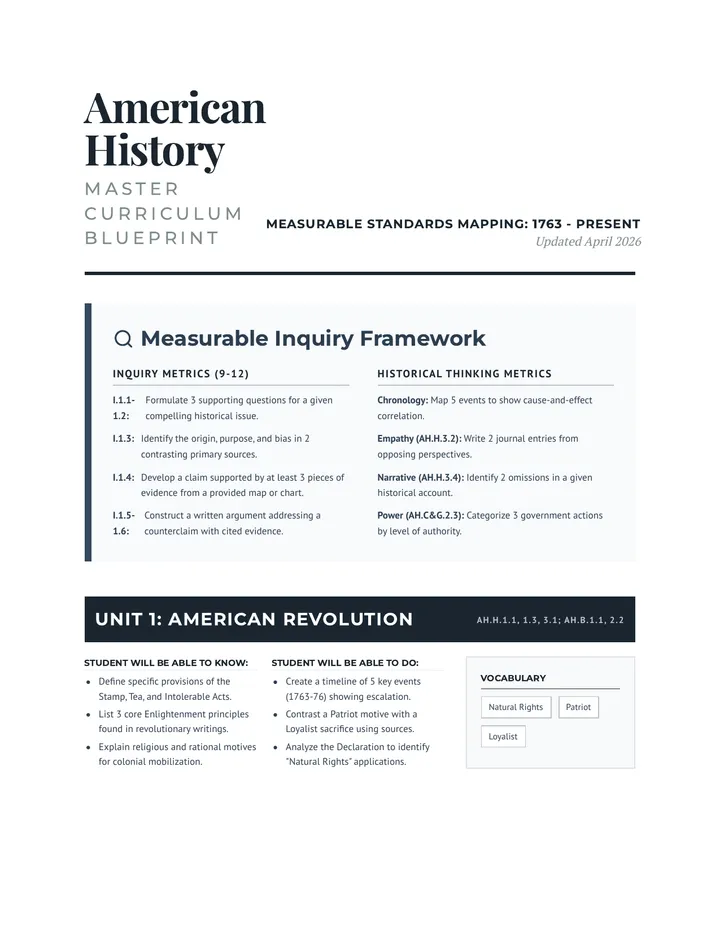
Curriculum Blueprint Document v2

History Horizon Sequence

A comprehensive high school curriculum plan for American History, covering 13 units from the American Revolution to the modern era, aligned with North Carolina Social Studies standards.

AK

Amity Kea

21
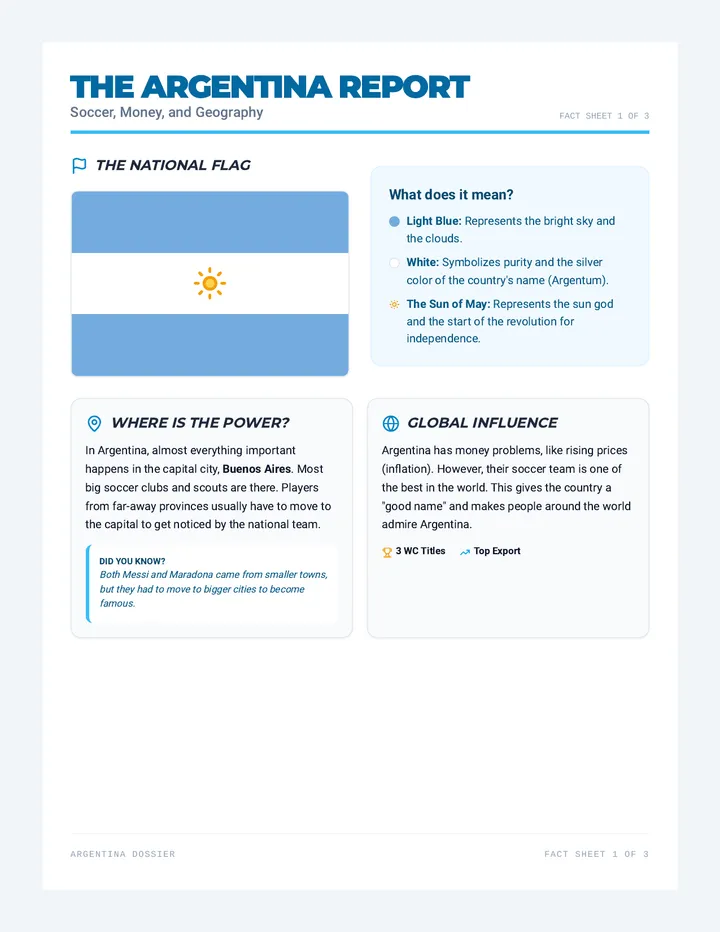
Albiceleste Dossier Packet

Pitch Power World Tour

A comparative study series exploring the geopolitics and economics of different nations through their national soccer teams.

AA

Adam Amster

25
Earth's Anatomy Slides

Global Landscapes Mastery

A global geography unit focusing on the identification and analysis of the Earth's diverse landscapes. Students will master map-reading skills including elevation, contour lines, and global physical regions to understand how geography shapes our world.

YP

Yovanna Plummer

27
Pacific Peaks Presentation

Western Trails Explorer

A comprehensive 5-lesson exploration of the West region of the United States, covering geography, climate, resources, culture, and states/capitals through reading passages and interactive activities.

NP

Natalie Pelletier

12
Canyon Lands Slides

Desert Wonders

A comprehensive 5-lesson unit exploring the unique geography, climate, natural resources, diverse cultures, and political boundaries of the Southwest region of the United States.

NP

Natalie Pelletier

16
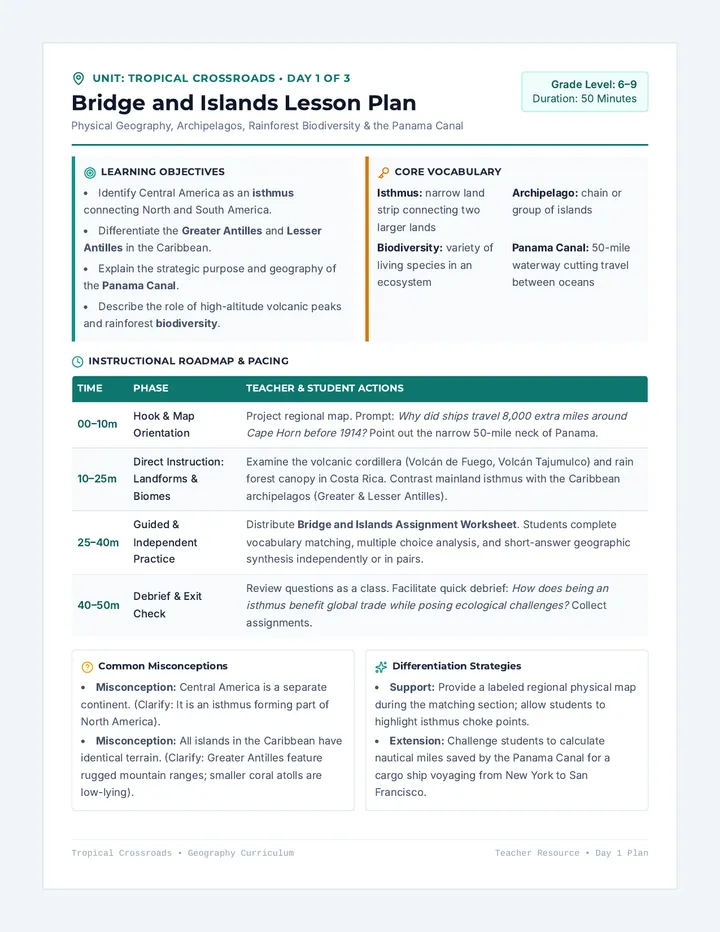
Bridge and Islands Lesson Plan

Tropical Crossroads

A comprehensive 3-day middle/high school geography unit examining Central America and the Caribbean, covering physical geography, natural hazards, and human-environment interactions.

D

dcampbell

9

Lessons

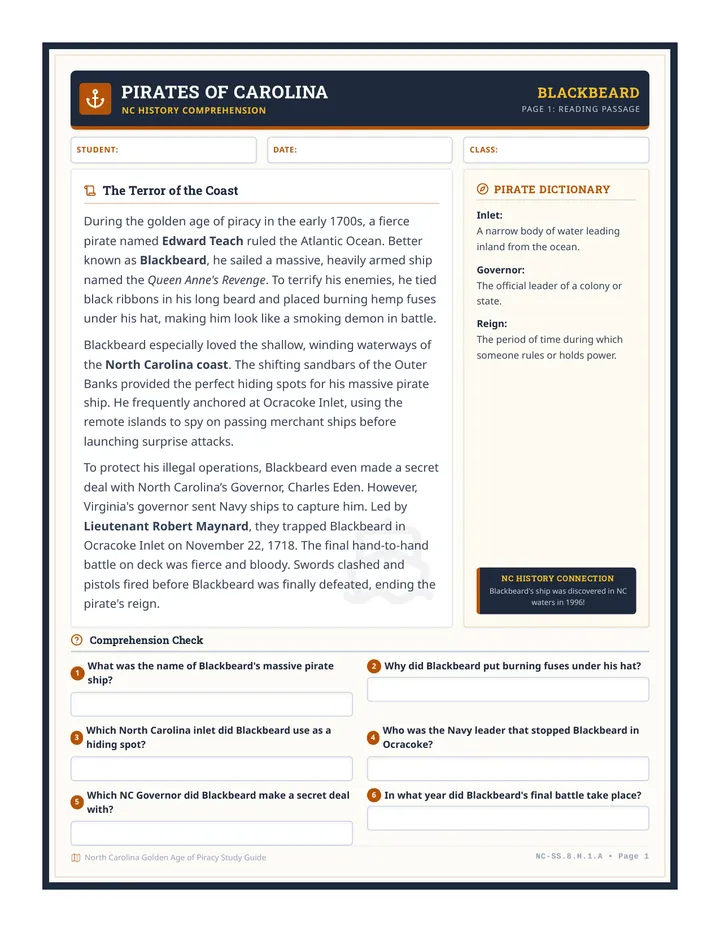
Blackbeard Legends Worksheet A

Pirates of Carolina

This lesson features differentiated reading comprehension worksheets about Blackbeard the Pirate along the North Carolina coast. Tailored for middle school special education students, it provides 2nd-grade and 5th-grade level texts in visually identical layouts to preserve student dignity.

KS

Kathleen Suther

11
Border Lines Activity

Harriet Tubman Escape

A lesson exploring Harriet Tubman's 1850 escape and the significance of the Mason-Dixon Line as a geographical and legal boundary in the pre-Civil War United States.

TL

Tanya Larson

46
Modern Era Reader Part 1

The Modern Ledger

A comprehensive exploration of the 1990s through the modern day, covering technological shifts, political milestones, military conflicts, and cultural evolution in the United States.

CE

Chelsea Elliott

20
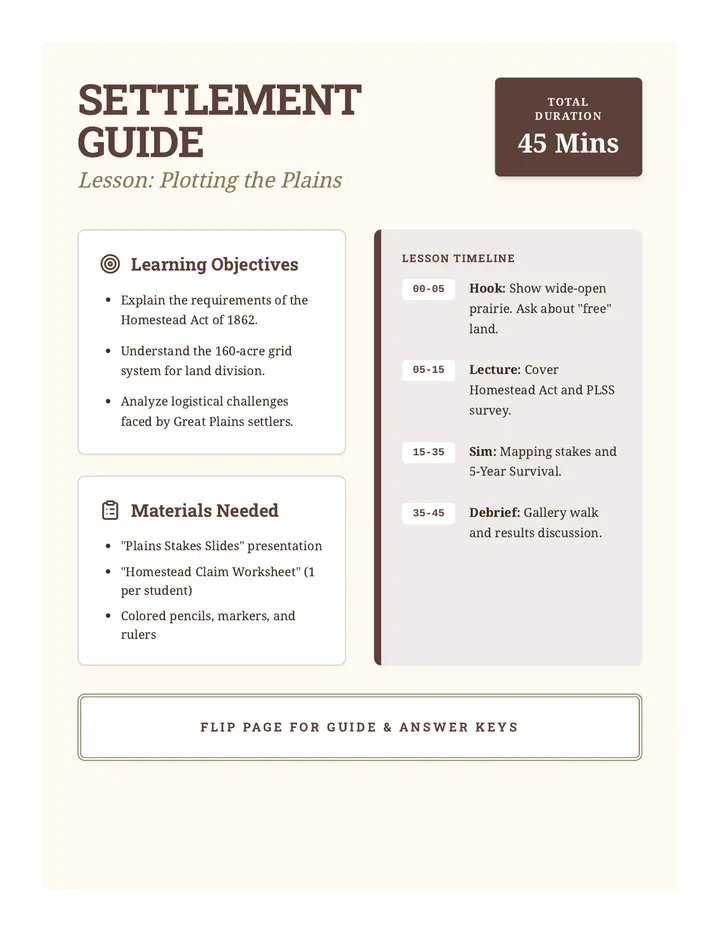
Settlement Guide Teacher Notes

Plotting the Plains

This lesson explores the Homestead Act of 1862 and the logistical realities of settling the American West, focusing on the grid system and survival challenges.

LB

Laurie Baron

3
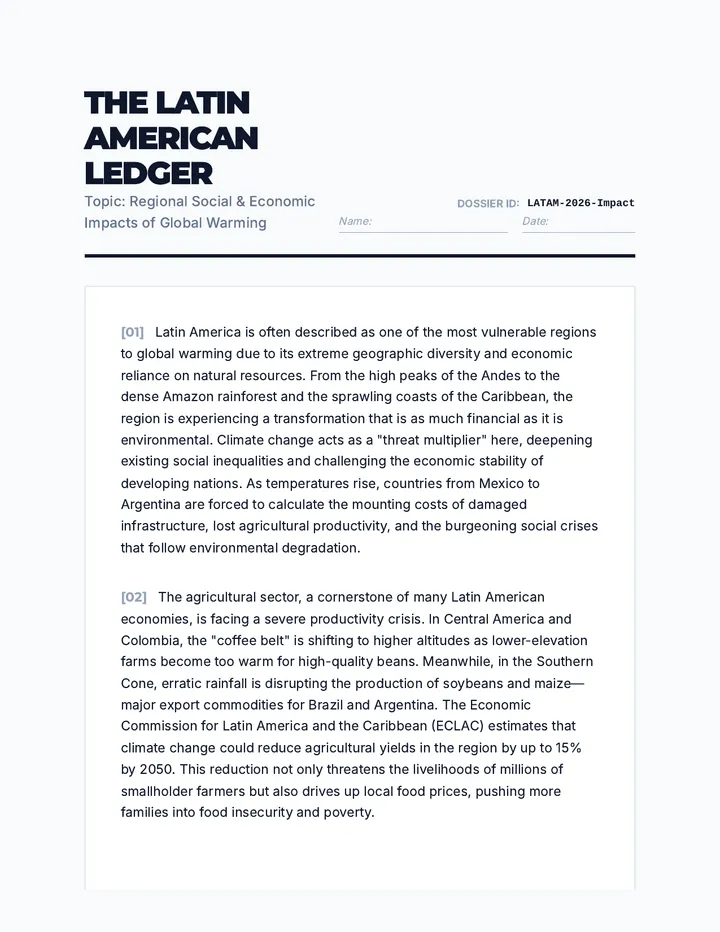
Latin American Ledger Reading

The Latin American Ledger Project

A regional investigation into the social and economic consequences of global warming in Latin America, focusing on human displacement, glacial melt in the Andes, and agricultural shifts. Students analyze a detailed text and construct a Claim-Evidence-Reasoning (CER) argument.

GJ

Gerardo Jimenez Ramirez

10
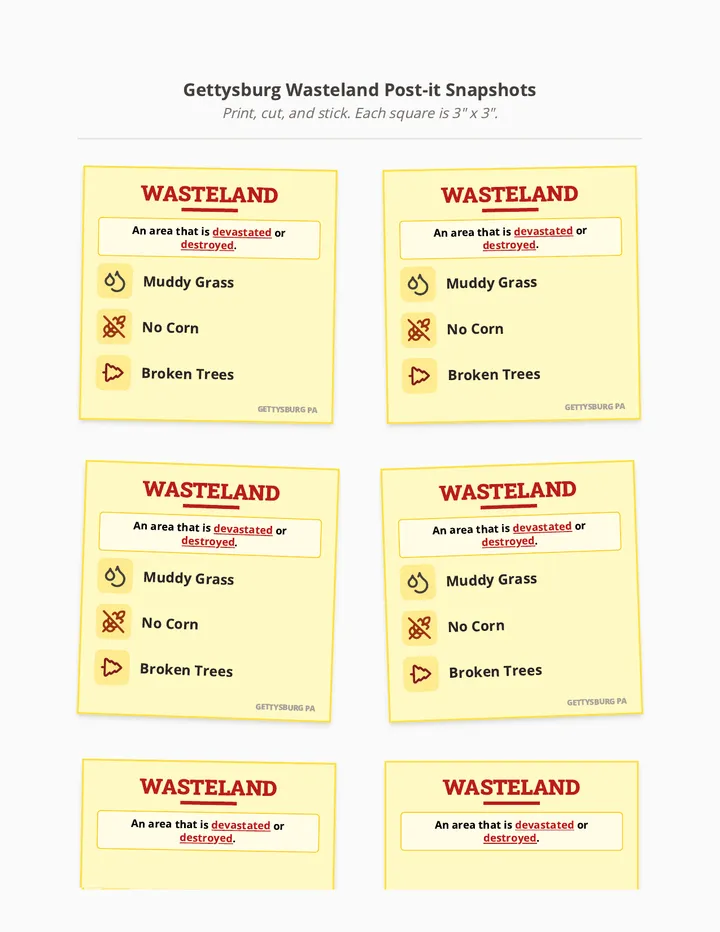
Wasteland Post-it Snapshots

Gettysburg Story Snapshots

This lesson provides visual 'snapshot' cards for key moments and figures of the Battle of Gettysburg, specifically focusing on the environmental impact (wasteland) and General Robert E. Lee's leadership.

TL

Tanya Larson

16