Lenny.com
Explore
Create
ActivitiesNewMathEnglish Language ArtsScience & EngineeringSocial StudiesGlobal LanguagesHealth & Physical EducationSpecial EducationCounseling & Life SkillsArts & CreativityESL
Lenny.com
Lenny.com
Explore
Create
ActivitiesNewMathEnglish Language ArtsScience & EngineeringSocial StudiesGlobal LanguagesHealth & Physical EducationSpecial EducationCounseling & Life SkillsArts & CreativityESL
Lenny.com
Social StudiesSocial Studies PracticesLocation WordsMapsOrder EventsChronology and CausationEvaluating SourcesHistorical ThinkingGeography, Humans, & the EnvironmentAmerican Symbols and LandmarksCitiesStatesState CapitalsRegions of the United StatesGeographic SkillsPhysical GeographyHuman GeographyRegional GeographyGeography of AfricaGeography of AsiaGeography of EuropeGeography of OceaniaGeography of the AmericasSociety and Environment of EuropeSociety and Environment of AsiaSociety and Environment of The AmericasSociety and Environment of the Middle EastSociety and Environment of AfricaHistoryPrehistoryComparing Ancient River CivilizationsAncient MesopotamiaAncient Egypt and KushAncient South AsiaEarly ChinaGreeceRome and the Byzantine EmpireAncient World HistoryNative Peoples of North AmericaNative Peoples of Mesoamerica and South AmericaAfrican EmpiresMedieval AsiaMedieval EuropeThe Silk RoadMedieval HistoryIslamic EmpiresWorld ReligionsRenaissance PeriodAge of ExplorationThe Thirteen ColoniesThe American RevolutionUS History Early RepublicFounding of the United StatesUS History AntebellumUS Civil WarReconstruction PeriodThe Gilded AgeUS ImperialismWorld ImperialismWorld War IUS History 1920sGreat DepressionWorld War IIThe Cold WarUS History 1950-60sUS History 1960s-70sWorld History 20th CenturyContemporary US HistoryContemporary World HistoryHolidaysCivics and GovernmentCitizenshipGovernment FoundationsThe ConstitutionUS ConstitutionExecutive BranchLegislative BranchJudicial BranchState and LocalPolitical ParticipationPublic PolicyPolitical SystemsPower and AuthoritySocial MovementsDefining DevianceTheories of DevianceCrime and Criminal JusticeEconomicsBasic Economic PrinciplesSupply and DemandWhat is MoneyEconomic FundamentalsMicroeconomicsMacroeconomicsBanking and FinanceEconomic SystemsGlobal EconomicsCorporations and PowerThe Changing WorkplaceUnemployment and LaborClass and InequalitySocial MobilityGlobal InequalityPsychologyHistory of PsychologyPsychology as a ScienceBrain and Nervous SystemNeuroscience and BehaviorGenetics and BehaviorSleep and ConsciousnessSensory ProcessesPerceptual OrganizationClassical ConditioningOperant ConditioningObservational LearningCognitive LearningMemory ProcessesThinking and Problem SolvingLanguage and CognitionTheories of MotivationStress and CopingPrenatal and Infant DevelopmentChildhood DevelopmentAdolescent DevelopmentAdulthood and AgingSelf and IdentitySocial CognitionSocial InfluenceAttraction and RelationshipsGroup BehaviorPrejudice and DiscriminationAnxiety and Mood DisordersClinical PsychologyForensic PsychologyPhilosophy & EthicsIntroduction to PhilosophyMajor Philosophers & IdeasMind and Body ProblemFree Will vs DeterminismEthics & MoralityReligion & PhilosophyPolitical Philosophy

The Changing Workplace

Impact of automation, remote work, and the gig economy on modern labor markets. Examines how technological shifts and globalization redefine career paths and workplace demographics.

Lenny.com

Solutions

Lenny for EducatorsLenny for SchoolsLenny for Districts

Product

ExploreSign inCreateSupportAbout

Resources

Getting startedMTSS Acceleration Program

Newsletters

School Funding Newsletter

© 2026 Lenny Learning Inc.

TermsPrivacyAccessibility
LinkedInInstagramX
Lenny

Videos

From the Wheel to the Web: How Technology Drives Globalization

From the Wheel to the Web: How Technology Drives Globalization

This video provides an engaging historical overview of how technology has driven globalization from ancient times to the present day. Hosted by an energetic narrator, the lesson breaks down technological progress into three main eras: early tools of connection like the wheel and compass, the "Age of Acceleration" featuring the telephone and airplane, and the modern Digital Web. Through these stages, the video illustrates how inventions have progressively shrunk the world, facilitating the rapid exchange of goods, people, and ideas. Key themes include the concept of globalization, cultural diffusion, and the societal impact of mass communication. The video uses specific historical examples—such as the Protestant Reformation fueled by the printing press and the Arab Spring organized via social media—to show how technology doesn't just change how we communicate, but fundamental aspects of culture, politics, and daily life. It also touches on modern concepts like global supply chains and the digital divide. For educators, this video is an excellent tool for Social Studies, Geography, and History classrooms. It effectively bridges the gap between ancient history and students' digital lives, making abstract concepts like "cultural diffusion" concrete through relatable examples like sushi and K-pop. The clear segmentation of the video allows teachers to pause and focus on specific technologies, while the built-in discussion questions provide ready-made opportunities for checking understanding and critical thinking.

Miacademy & MiaPrep Learning ChannelMiacademy & MiaPrep Learning Channel

11mins 12s

How Railroads Reshaped Time, Space, and Society

How Railroads Reshaped Time, Space, and Society

In this episode of Crash Course World History, John Green explores the Industrial Revolution through the specific lens of the railroad. Rather than focusing solely on the mechanics of steam engines, the video delves into the profound sociological and psychological shifts caused by rail travel, drawing heavily from Wolfgang Schivelbusch's book 'The Railway Journey'. It examines how railroads fundamentally altered human perceptions of time, space, and nature, introducing concepts like standard time zones and the 'annihilation of time and space.' The video investigates the cultural anxiety that accompanied this technological leap. It discusses how high-speed travel changed the way people looked at landscapes—turning detailed nature into a blur—and how it influenced social behaviors, such as reading on public transport to avoid conversation. The narrative also covers the medical history of 'railway spine,' a precursor to the diagnosis of traumatic neurosis, illustrating how new technologies often bring new fears and psychological categories. Ideally suited for high school history and sociology students, this video serves as a powerful tool for connecting past technological revolutions to current ones. By comparing the disruption of the railroad to the disruption of the internet and smartphones, John Green helps students understand that the anxiety surrounding rapid technological change is a recurring historical theme. It challenges the notion that all change equals progress, encouraging critical thinking about innovation.

CrashCourseCrashCourse

12mins 31s

How Offshoring Impacts the Global Supply Chain

How Offshoring Impacts the Global Supply Chain

This educational video provides a comprehensive introduction to the concept of offshoring within the context of the global supply chain. Hosted by a narrator named Justin, the video uses the relatable example of a sneaker company moving production to Vietnam to explain complex economic concepts. It breaks down the definitions of offshoring and multinational corporations (MNCs), distinguishing between manufacturing offshoring (moving factories) and service offshoring (moving customer support). The video specifically uses Apple as a case study to illustrate how different economic sectors (secondary, tertiary, quaternary) are distributed globally. The content explores the primary motivations behind offshoring, such as reducing labor costs, avoiding trade barriers like tariffs, navigating business regulations, and capitalizing on government incentives. It addresses the economic mechanics of why a company like Samsung might move production from China to Vietnam to bypass US tariffs. Furthermore, the video dives into the concept of economic interdependence, explaining how countries rely on one another for goods, services, and jobs. From a pedagogical standpoint, this video serves as an excellent stimulus for critical thinking about globalization. It presents a balanced view of the impacts of offshoring, weighing the benefits—lower consumer prices and job creation in developing nations—against the drawbacks—job losses in home countries, potential exploitation of workers, and environmental degradation. It encourages students to form their own opinions on corporate responsibility versus government regulation, making it ideal for units on geography, economics, and civics.
Miacademy & MiaPrep Learning ChannelMiacademy & MiaPrep Learning Channel

10mins 43s

Exploring the Four Sectors of the Global Economy

Exploring the Four Sectors of the Global Economy

This video provides a comprehensive overview of global economic activity, tracing the evolution of human work from the Stone Age to the modern information economy. It begins by establishing a historical context, explaining how early humans transitioned from hunter-gatherers to farmers, eventually leading to specialization and trade. The core of the video defines and categorizes the four major economic sectors: Primary (raw materials), Secondary (manufacturing), Tertiary (retail), and Quaternary (services and information), providing clear examples for each. Key themes include the classification of industries, the relationship between natural resources and economic sectors, and the metrics used to measure national development. The video explains the concepts of cottage industries versus commercial ventures and introduces economic indicators like Gross Domestic Product (GDP) and per capita income. It visualizes global data to differentiate between developing, emerging, and developed nations based on their dominant economic sectors. For educators, this resource is an excellent tool for Geography, Economics, and Social Studies classrooms. It offers built-in pause points for student reflection and practical application, such as identifying economic sectors within their immediate environment. The content effectively bridges history and modern economics, helping students understand how the products they use daily travel through a complex global supply chain and how a country's economic structure impacts its standard of living.

Miacademy & MiaPrep Learning ChannelMiacademy & MiaPrep Learning Channel

10mins 58s

How Gentrification Reshapes Cities: A San Francisco Case Study

How Gentrification Reshapes Cities: A San Francisco Case Study

This educational video explores the complex process of gentrification through the lens of San Francisco's Mission District. Hosted by an "urban planner in training," the video defines key geographic and economic concepts such as urban revitalization, suburban reversal, and tertiary versus quaternary economic activities. It explains the mechanics of how low-income neighborhoods attract investment, leading to renovation and modernization, but also rising costs of living.

Miacademy & MiaPrep Learning ChannelMiacademy & MiaPrep Learning Channel

10mins 53s

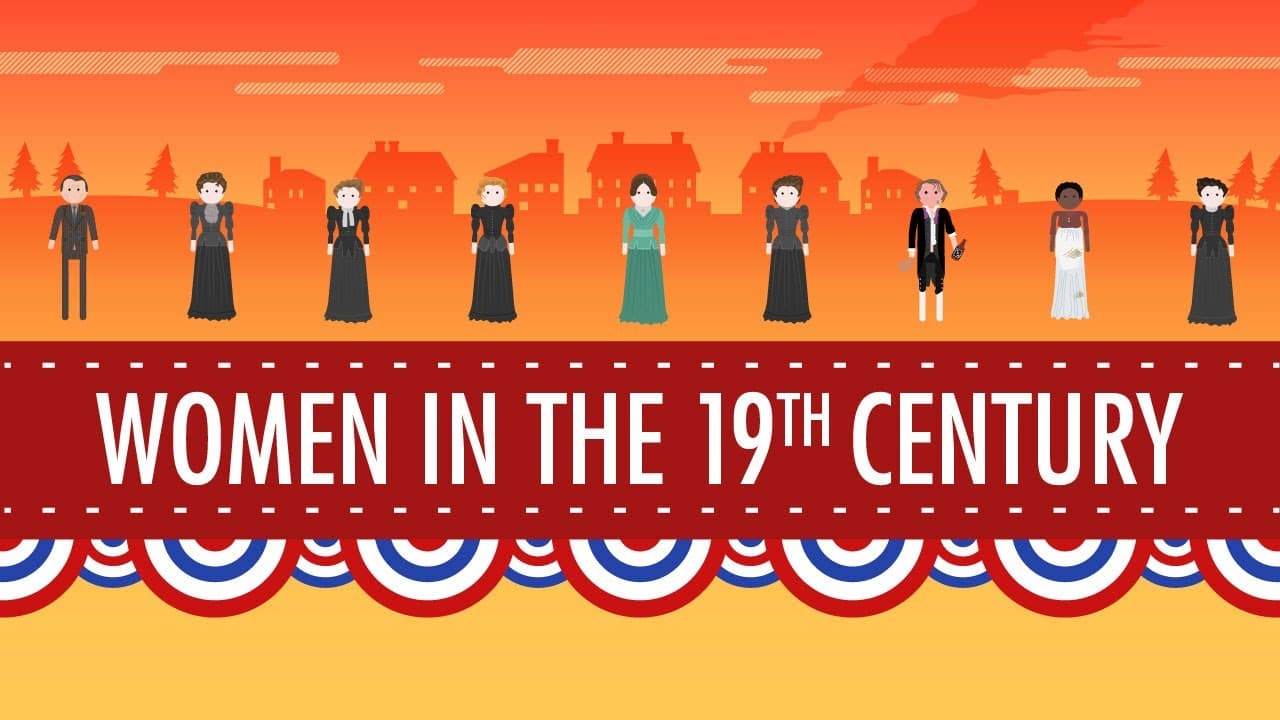
Women in the 19th Century: Reform and Rights

Women in the 19th Century: Reform and Rights

This fast-paced and informative history lesson explores the complex role of women in 19th-century United States history. Host John Green moves beyond the simple timeline of suffrage to examine the legal, social, and economic structures that defined women's lives, including the concepts of "coverture," "Republican Motherhood," and the "Cult of Domesticity." The video illustrates how American women, though legally barred from political participation, leveraged their perceived moral authority to drive massive social changes through reform movements like temperance and abolition. Key themes include the intersection of the abolitionist movement with the women's rights movement, the economic impact of the Market Revolution on gender roles, and the struggle against the legal doctrine of coverture. The video highlights key historical figures such as Elizabeth Cady Stanton, Lucretia Mott, Sojourner Truth, and the Grimké sisters, while explaining the strategic differences between various reform groups. For educators, this resource serves as an excellent synthesis of social history, connecting disparate events like the Seneca Falls Convention and the temperance movement into a cohesive narrative. It challenges students to understand historical agency, analyzing how disenfranchised groups found ways to exert political influence and reshape democratic institutions long before they secured the right to vote.

CrashCourseCrashCourse

13mins 11s

Materials

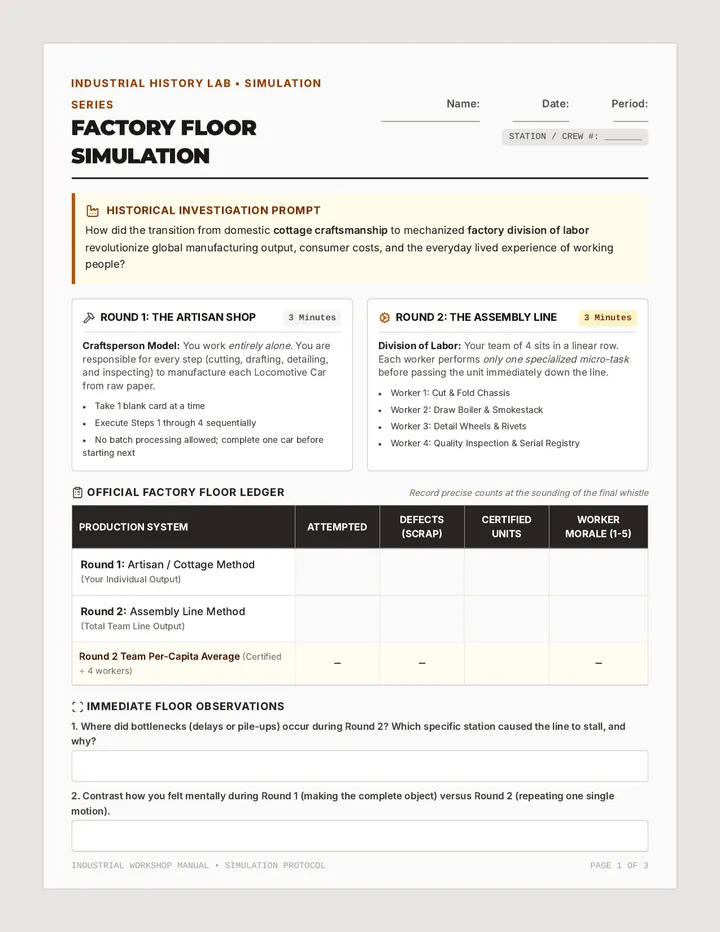
Factory Floor Simulation Activity

Factory Floor Simulation Activity

A comprehensive Industrial Revolution assembly line simulation featuring comparative production ledgers, standardized blueprint manufacturing specs, station role protocols, and historical debrief analysis.

TL

Tricia Lucie

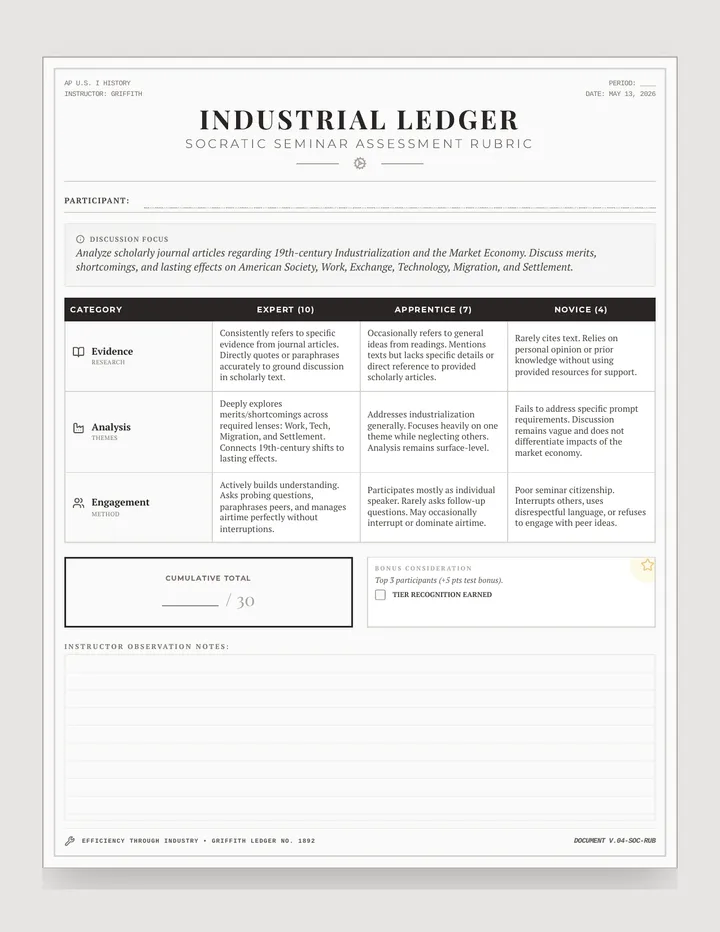
Industrial Ledger Rubric

Industrial Ledger Rubric

A professional 30-point Socratic Seminar rubric for AP US History, themed as a 19th-century industrial ledger. It evaluates textual evidence, thematic analysis of industrialization, and seminar facilitation across three performance levels.

JG

Joshua Griffith

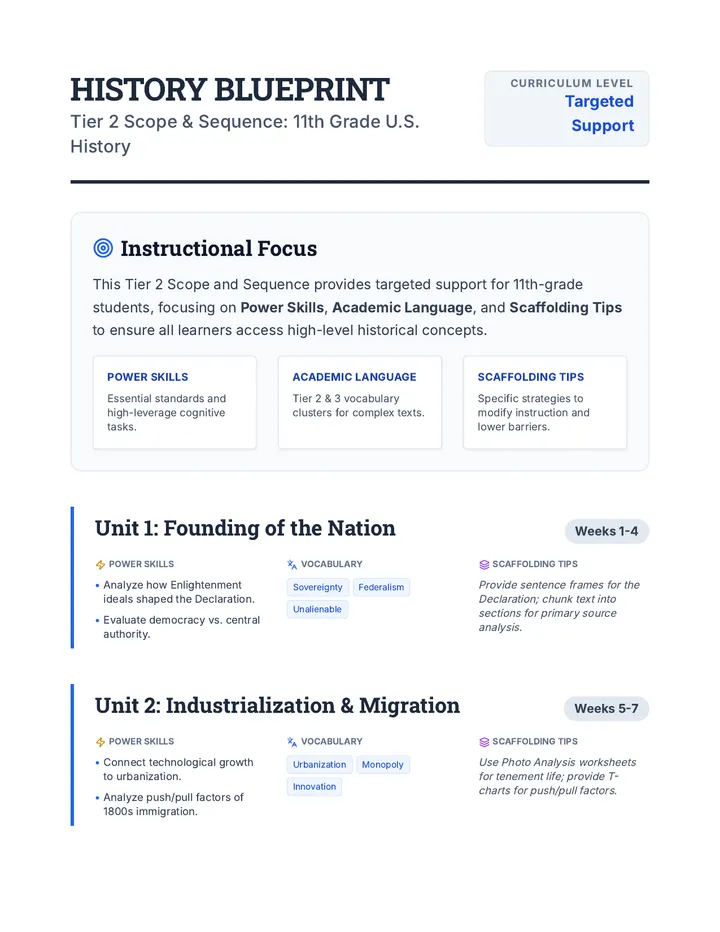
History Blueprint Scope and Sequence

History Blueprint Scope and Sequence

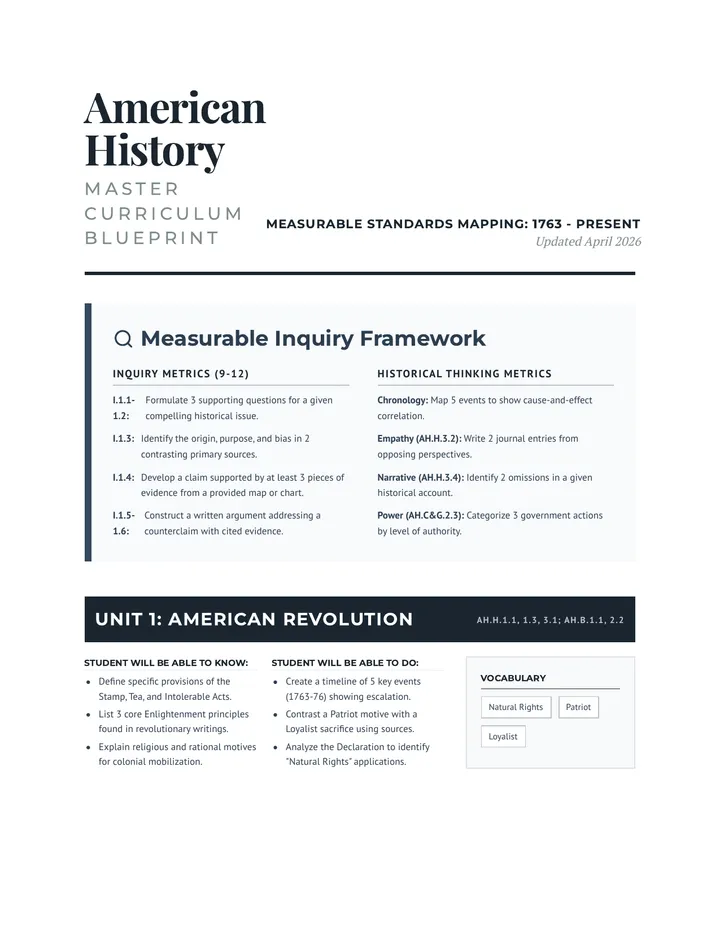
An updated Tier 2 Scope and Sequence for 11th Grade U.S. History, now including specific scaffolding tips for each unit alongside power skills and academic vocabulary. The layout is optimized for teacher reference with instructional strategies tailored for targeted support.

D

dfleisch

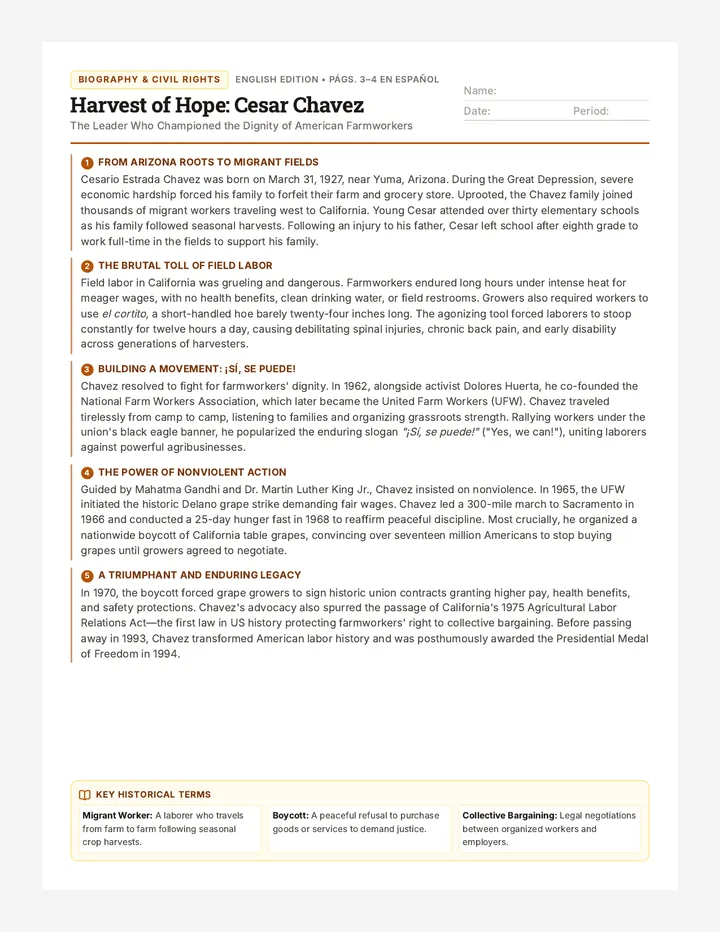
Harvest Hero Reading Worksheet

Harvest Hero Reading Worksheet

A comprehensive four-page bilingual reading comprehension worksheet on civil rights leader Cesar Chavez, providing a complete 5-paragraph passage, 6 multiple-choice questions, and written reflection in both English (Pages 1–2) and Spanish (Pages 3–4).

GJ

Gerardo Jimenez Ramirez

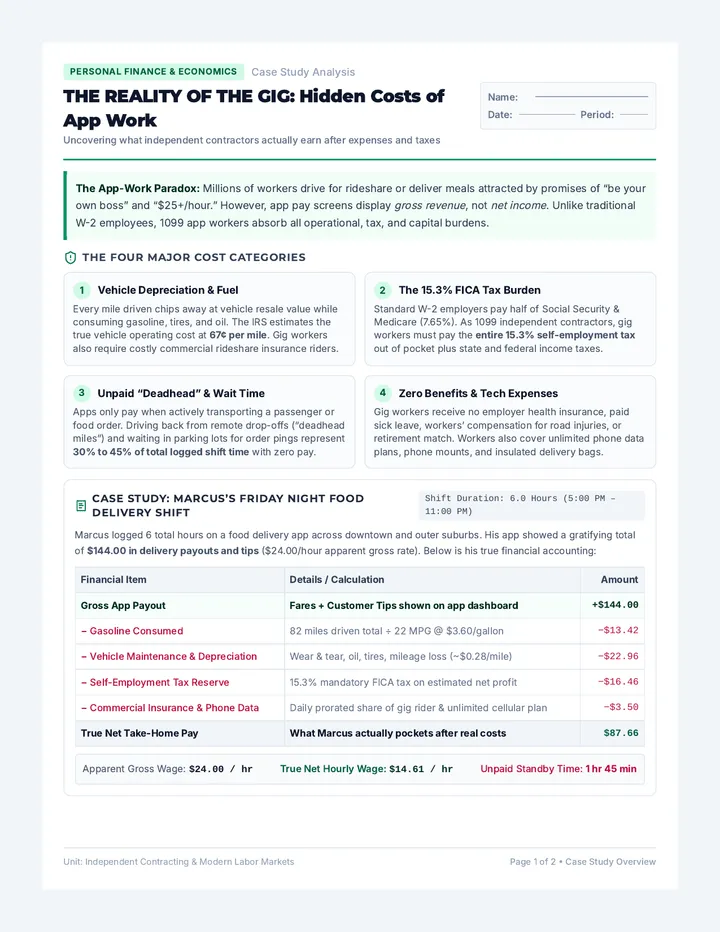
Gig Economy Costs Worksheet

Gig Economy Costs Worksheet

A two-page personal finance and labor economics worksheet analyzing the hidden costs of app-based gig work, featuring a shift financial case study, wage calculation exercise, and analytical response questions.

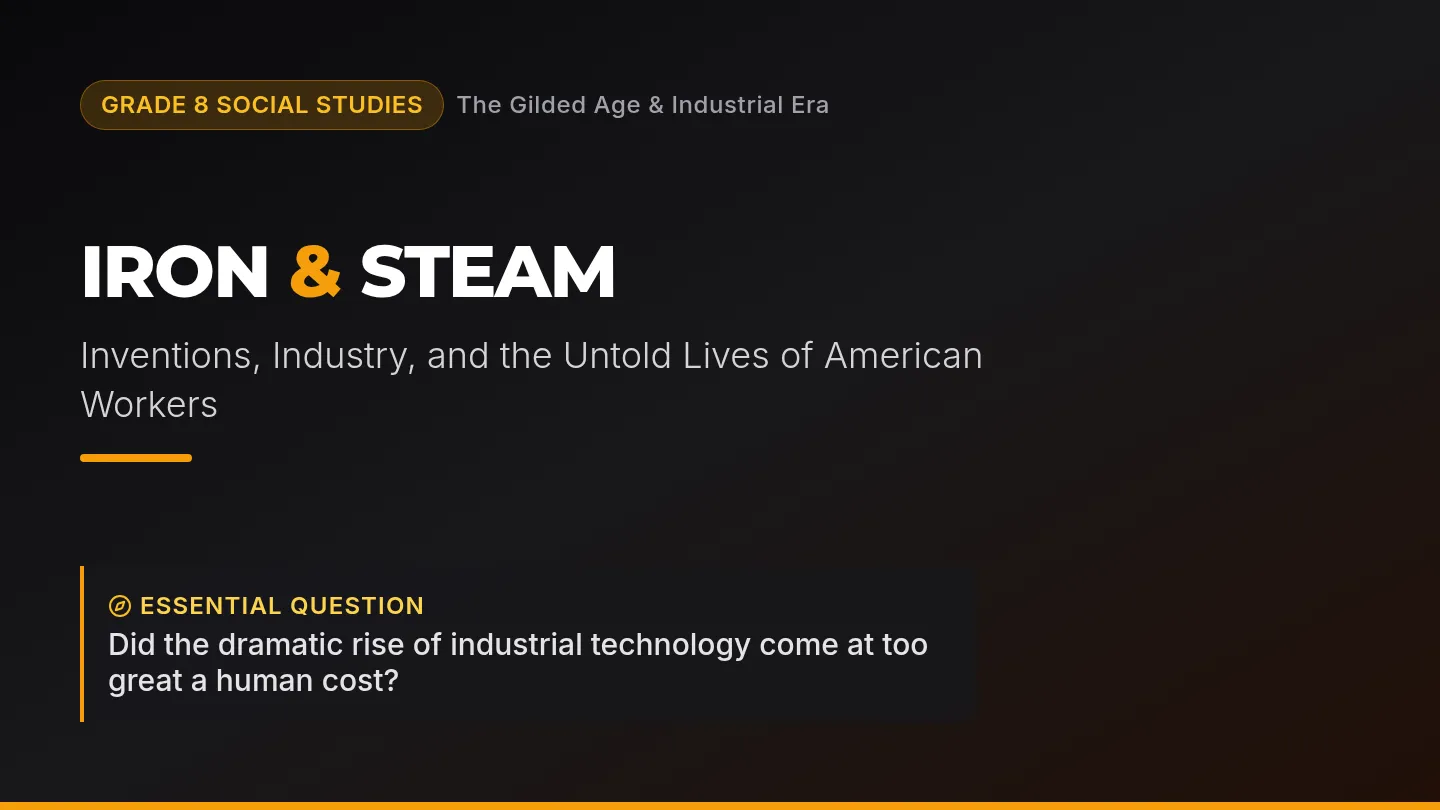
Iron and Steam Slides

Iron and Steam Slides

An engaging 7-slide presentation exploring the American Industrial Age for 8th-grade social studies, contrasting groundbreaking technological inventions with the grueling daily realities and labor struggles of factory workers.

Sequences

Unity Roadmap Teacher Guide

Unity and Growth

A modified Modern US History curriculum (Founding to Present) for Tier 2 and 3 special education students, based on Grade 11 Social Studies standards. Focuses on government, industrialization, world wars, and civil rights.

D

dfleisch

26
Reconstruction Reckoning Worksheet

Modern America

A comprehensive journey through United States history from the aftermath of the Civil War to the contemporary era, exploring the social, political, and economic shifts that shaped the modern nation.

DP

Darren Polamalu

18
Funding Foundation Checklist

Ethics Engine

A 5-week immersive ethics storyline following the evolution of a single nonprofit organization as it navigates a massive corporate grant, data ethics, policy clashes, and eventual sustainability crises.

DE

Dr. Erick Clinton Lear

11
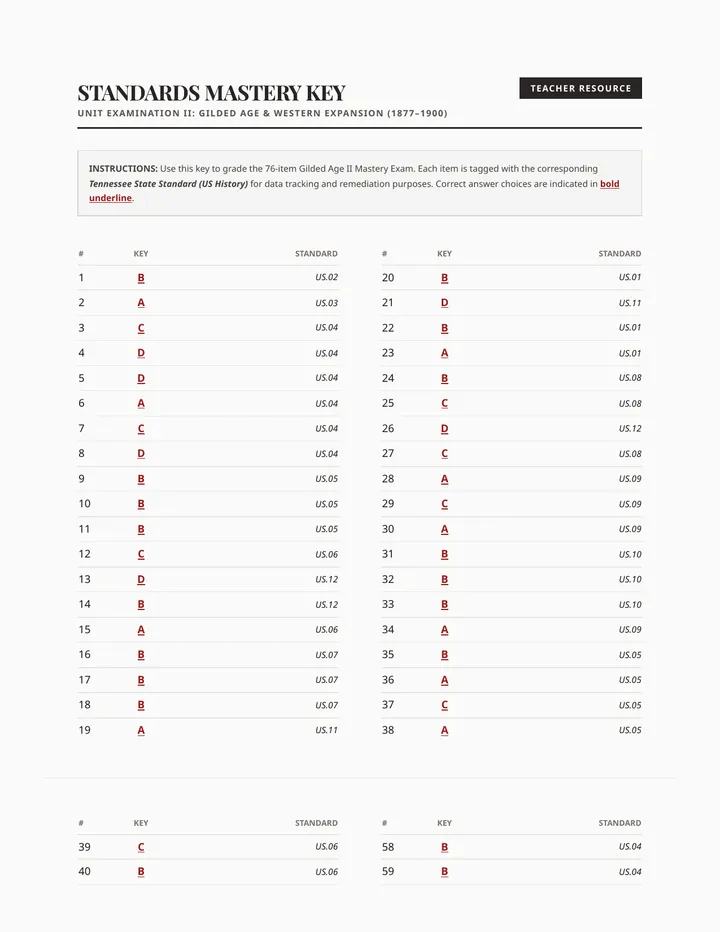
Gilded Age II Standards Key

Modern America Mastery

A comprehensive curriculum sequence covering late 19th and early 20th-century American history, focusing on economic transformation, Western expansion, global imperialism, and the impact of the Great War.

A

Andrew

29
Curriculum Blueprint Document v2

History Horizon Sequence

A comprehensive high school curriculum plan for American History, covering 13 units from the American Revolution to the modern era, aligned with North Carolina Social Studies standards.

AK

Amity Kea

21
Foundations Comprehension Quiz

The American Ledger USH Remediation

A 25-day intensive remediation program for 11th Grade US History students, focusing on the Cold War, Civil Rights, Vietnam, the Reagan Era, and contemporary history. Each day features a 'Ledger' reader with embedded annotations and a review worksheet, aligned with Texas TEKS standards.

CE

Chelsea Elliott

62

Lessons

History Sprint Pacing Guide

STAAR History Sprint

A comprehensive pacing guide and activity resource designed to cover the remaining 11th Grade US History TEKS before the STAAR test on April 16th. This lesson provides a day-by-day calendar for A/B block schedules and high-engagement activities for each remaining historical era.

BB

Bridgette Burdick

51
Border Lines Activity

Harriet Tubman Escape

A lesson exploring Harriet Tubman's 1850 escape and the significance of the Mason-Dixon Line as a geographical and legal boundary in the pre-Civil War United States.

TL

Tanya Larson

46
Modern Era Reader Part 1

The Modern Ledger

A comprehensive exploration of the 1990s through the modern day, covering technological shifts, political milestones, military conflicts, and cultural evolution in the United States.

CE

Chelsea Elliott

20
Asia Expedition Task Cards Resource

Asia Expedition Stations

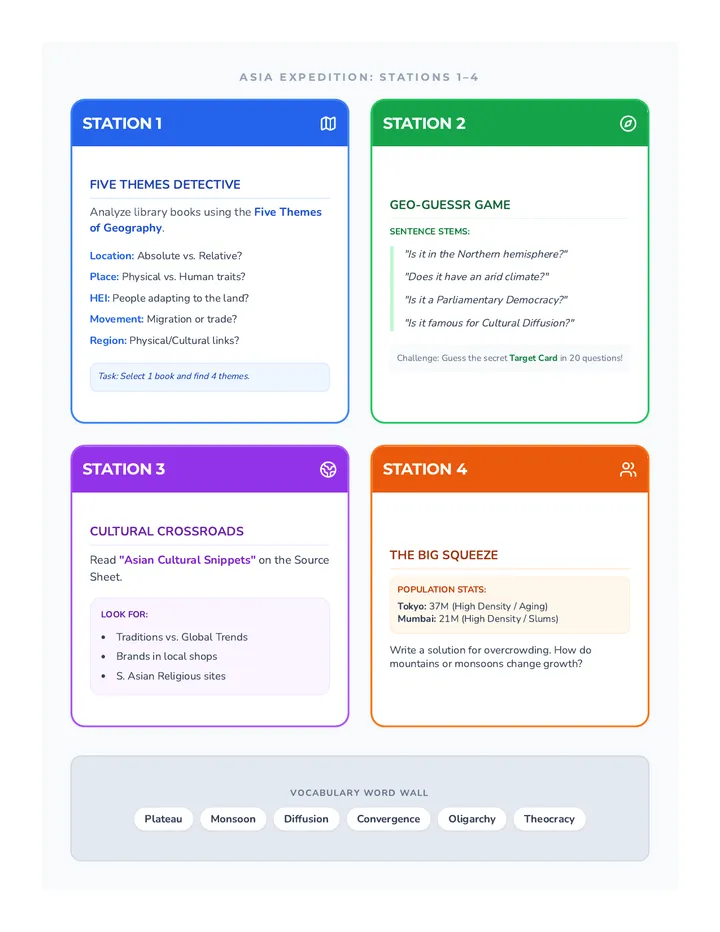
A set of five interactive learning stations focused on the physical and cultural geography of Asia, including population challenges, globalization, and natural disasters. Students practice reading, writing, listening, and speaking skills while analyzing the five themes of geography.

JR

Jessica Ross

4
Latin American Ledger Reading

The Latin American Ledger Project

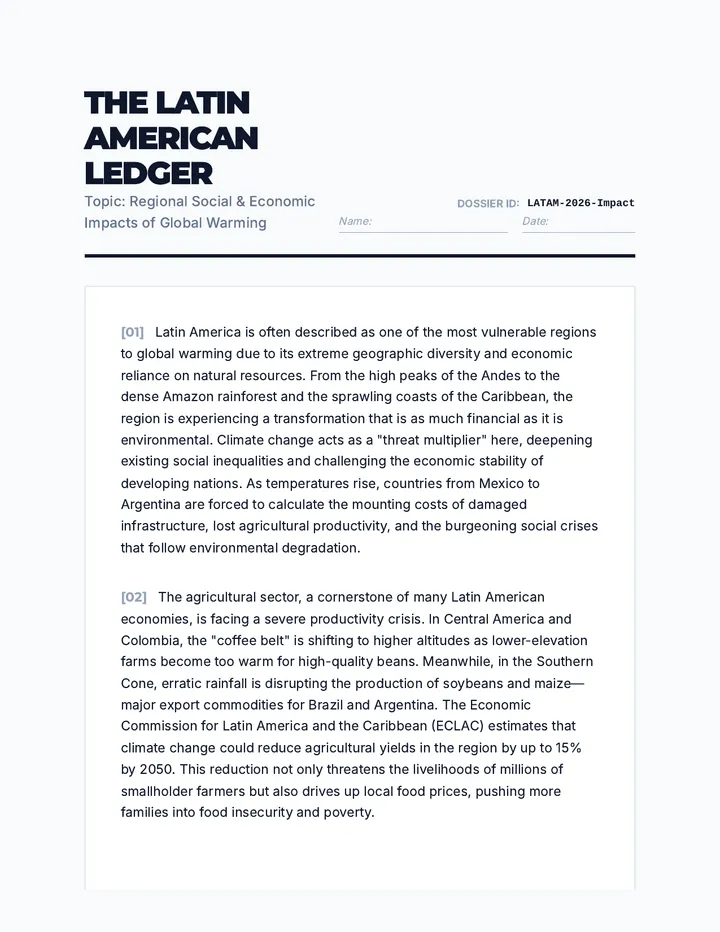
A regional investigation into the social and economic consequences of global warming in Latin America, focusing on human displacement, glacial melt in the Andes, and agricultural shifts. Students analyze a detailed text and construct a Claim-Evidence-Reasoning (CER) argument.

GJ

Gerardo Jimenez Ramirez

10
Mission Briefing Teacher Guide

Modern Era Missions

A 100-minute station-based lesson covering pivotal events from the 1970s to the modern era, including Stagflation, the Camp David Accords, Reaganomics, and the War on Terror. Students rotate through four 20-minute missions using primary sources, political cartoons, data mapping, and manipulatives to master STAAR-aligned content.

LF

Lindsey Foulks

9