Lenny.com
Explore
Create
ActivitiesNewMathEnglish Language ArtsScience & EngineeringSocial StudiesGlobal LanguagesHealth & Physical EducationSpecial EducationCounseling & Life SkillsArts & CreativityESL
Lenny.com
Lenny.com
Explore
Create
ActivitiesNewMathEnglish Language ArtsScience & EngineeringSocial StudiesGlobal LanguagesHealth & Physical EducationSpecial EducationCounseling & Life SkillsArts & CreativityESL
Lenny.com
Lenny.com

Solutions

Lenny for EducatorsLenny for SchoolsLenny for Districts

Product

ExploreSign inCreateSupportAbout

Resources

Getting startedMTSS Acceleration Program

Newsletters

School Funding Newsletter

© 2026 Lenny Learning Inc.

TermsPrivacyAccessibility
LinkedInInstagramX
Lenny

State and Local

Structures and functions of state, county, and municipal governments. Addresses the division of power between federal and subnational entities alongside the delivery of local public services.

Social StudiesSocial Studies PracticesLocation WordsMapsOrder EventsChronology and CausationEvaluating SourcesHistorical ThinkingGeography, Humans, & the EnvironmentAmerican Symbols and LandmarksCitiesStatesState CapitalsRegions of the United StatesGeographic SkillsPhysical GeographyHuman GeographyRegional GeographyGeography of AfricaGeography of AsiaGeography of EuropeGeography of OceaniaGeography of the AmericasSociety and Environment of EuropeSociety and Environment of AsiaSociety and Environment of The AmericasSociety and Environment of the Middle EastSociety and Environment of AfricaHistoryPrehistoryComparing Ancient River CivilizationsAncient MesopotamiaAncient Egypt and KushAncient South AsiaEarly ChinaGreeceRome and the Byzantine EmpireAncient World HistoryNative Peoples of North AmericaNative Peoples of Mesoamerica and South AmericaAfrican EmpiresMedieval AsiaMedieval EuropeThe Silk RoadMedieval HistoryIslamic EmpiresWorld ReligionsRenaissance PeriodAge of ExplorationThe Thirteen ColoniesThe American RevolutionUS History Early RepublicFounding of the United StatesUS History AntebellumUS Civil WarReconstruction PeriodThe Gilded AgeUS ImperialismWorld ImperialismWorld War IUS History 1920sGreat DepressionWorld War IIThe Cold WarUS History 1950-60sUS History 1960s-70sWorld History 20th CenturyContemporary US HistoryContemporary World HistoryHolidaysCivics and GovernmentCitizenshipGovernment FoundationsThe ConstitutionUS ConstitutionExecutive BranchLegislative BranchJudicial BranchState and LocalPolitical ParticipationPublic PolicyPolitical SystemsPower and AuthoritySocial MovementsDefining DevianceTheories of DevianceCrime and Criminal JusticeEconomicsBasic Economic PrinciplesSupply and DemandWhat is MoneyEconomic FundamentalsMicroeconomicsMacroeconomicsBanking and FinanceEconomic SystemsGlobal EconomicsCorporations and PowerThe Changing WorkplaceUnemployment and LaborClass and InequalitySocial MobilityGlobal InequalityPsychologyHistory of PsychologyPsychology as a ScienceBrain and Nervous SystemNeuroscience and BehaviorGenetics and BehaviorSleep and ConsciousnessSensory ProcessesPerceptual OrganizationClassical ConditioningOperant ConditioningObservational LearningCognitive LearningMemory ProcessesThinking and Problem SolvingLanguage and CognitionTheories of MotivationStress and CopingPrenatal and Infant DevelopmentChildhood DevelopmentAdolescent DevelopmentAdulthood and AgingSelf and IdentitySocial CognitionSocial InfluenceAttraction and RelationshipsGroup BehaviorPrejudice and DiscriminationAnxiety and Mood DisordersClinical PsychologyForensic PsychologyPhilosophy & EthicsIntroduction to PhilosophyMajor Philosophers & IdeasMind and Body ProblemFree Will vs DeterminismEthics & MoralityReligion & PhilosophyPolitical Philosophy

Videos

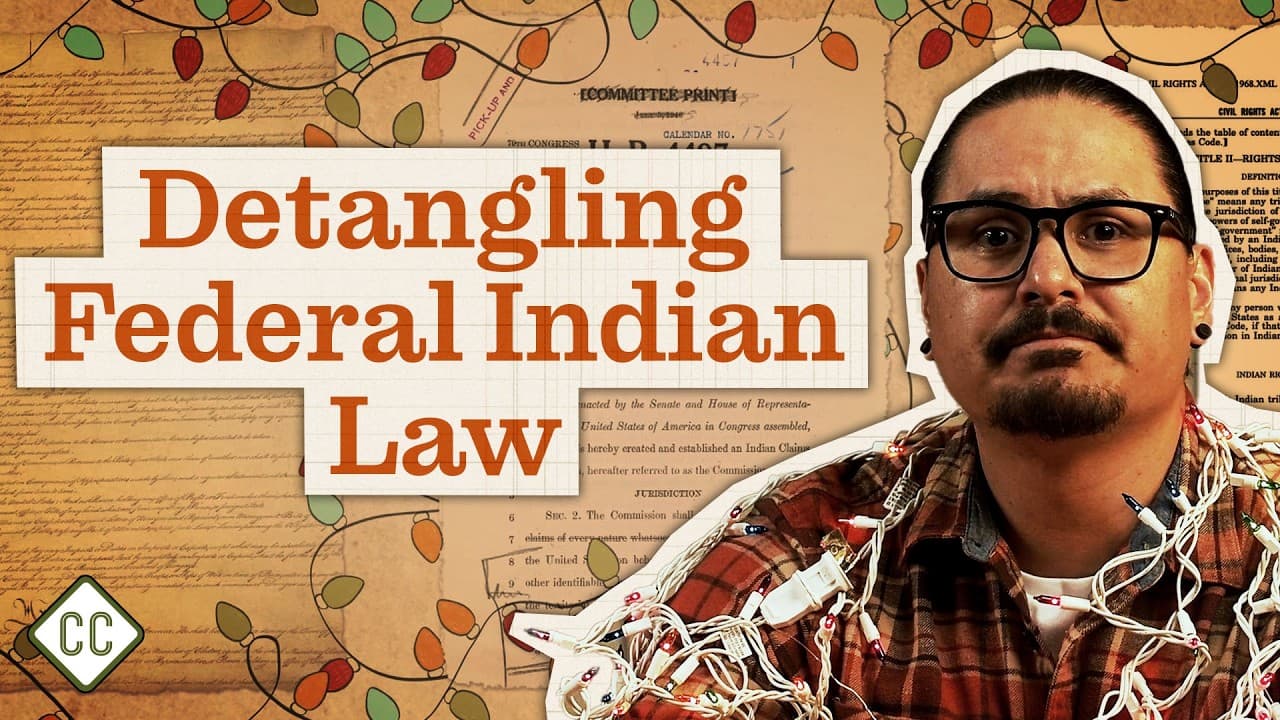
How Federal Indian Law Shapes Native Sovereignty

How Federal Indian Law Shapes Native Sovereignty

This episode of Crash Course Native American History tackles the incredibly complex and often confusing subject of Federal Indian Law. Host Che Jim explains that this isn't just a single set of rules, but a centuries-long accumulation of treaties, court cases, executive orders, and statutes that define the legal relationship between the United States government and Native nations. The video uses the metaphor of a tangled string of Christmas lights to visualize how messy and interconnected these legal precedents are, covering everything from international travel to criminal jurisdiction. The video explores three main levels of impact: the individual, the community, and the land. It provides concrete examples for each, such as the Haudenosaunee lacrosse team's struggle to travel on their own passports, the jurisdictional crisis contributing to the Missing and Murdered Indigenous Women (MMIW) epidemic, and the legal hurdles regarding land use and hunting rights. The concept of "Domestic Dependent Nations" is introduced to explain how tribes retain sovereignty while still being subject to U.S. federal power. For educators, this video is a vital resource for civics, government, and U.S. history classes. It moves beyond abstract definitions of sovereignty to show real-world consequences of legal technicalities. It addresses hard truths about systemic inequalities while also highlighting Indigenous resilience and legal victories, such as the restoration of hunting rights and the revival of traditional ecological practices like clam gardening to combat climate change.

CrashCourseCrashCourse

10mins 44s

Meeting the Librarian: Community Helpers Explained

Meeting the Librarian: Community Helpers Explained

In this engaging episode of Clubhouse Social Studies, Justin and his alien friend Plato introduce young learners to the important role of librarians as community helpers. Through a mix of animation, catchy music, and a simulated video call with a librarian named Jessica, the video explores the various functions of a public library beyond just housing books. Students learn how librarians create welcoming spaces, assist with research, facilitate community events, and provide access to technology. The video covers key themes such as community roles, the definition of research, and the diverse services libraries offer, including storytime, computer access, and special clubs. It specifically highlights how libraries serve as safe, inclusive hubs where people of all ages can learn and connect. The concept of 'research' is broken down into simple terms—"looking up information"—making it accessible for early elementary students. For educators, this video serves as an excellent introduction to a unit on community helpers or a preparatory tool before a class library visit. It provides a clear, friendly explanation of what students can expect from a librarian and models how to ask questions about a profession. The content naturally bridges social studies with literacy skills, encouraging students to view the library as a resource for both information and community engagement.

Miacademy & MiaPrep Learning ChannelMiacademy & MiaPrep Learning Channel

8mins 56s

Duties and Responsibilities of U.S. Citizens Explained

Duties and Responsibilities of U.S. Citizens Explained

This educational video provides a clear and structured breakdown of the obligations and voluntary actions that define United States citizenship. The narrator distinguishes between "duties"—mandatory actions required by law with legal consequences for non-compliance—and "responsibilities"—voluntary actions that contribute to the common good but are not legally enforced. The content is presented with clear visual aids, on-screen text, and real-world examples to help students differentiate between these two critical civic concepts. The video explores key themes of civic engagement, the legal system, and community participation. It details specific duties such as paying taxes, serving on a jury, registering for the Selective Service, and obeying laws. Conversely, it outlines responsibilities like voting in federal and local elections, staying informed about government issues, volunteering, and communicating with elected officials. A significant portion of the video emphasizes the importance of local government, encouraging students to look beyond just national politics. For educators, this video serves as an excellent foundational resource for Civics and Government units. It clarifies complex terms like "selective service" and "jury summons" while providing practical advice for young citizens, such as registering to vote upon turning eighteen. The video creates natural opportunities for classroom discussions about why certain actions are mandatory while others are voluntary, and how active participation shapes a democratic society.

Miacademy & MiaPrep Learning ChannelMiacademy & MiaPrep Learning Channel

9mins 48s

How Westward Expansion Divided America

How Westward Expansion Divided America

This educational video explores the complex history of Westward Expansion in the United States during the 19th century, linking the concept of Manifest Destiny to the eventual outbreak of the Civil War. It examines how the drive to settle the frontier was motivated by a desire for land, freedom, and the spread of democratic values, while simultaneously exposing deep hypocrisies regarding the treatment of Native Americans and the expansion of slavery. The narrator details the political mechanisms of statehood, such as the Northwest Ordinance, and explains how the addition of new territories upset the delicate balance of power in Congress. Key historical themes include the ideology of Manifest Destiny, the democratization of voting rights for white men, the forced removal of indigenous populations (Trail of Tears), and the economic entrenchment of slavery in the South. The video specifically highlights critical turning points like the Missouri Compromise of 1820 and the election of Abraham Lincoln, demonstrating how territorial growth fueled sectional tensions between the North and South. Ideally suited for middle and high school U.S. History curriculums, this video serves as an excellent primer on the causes of the Civil War. It encourages students to think critically about American values by contrasting the ideals of the Declaration of Independence with the realities of Indian Removal and slavery. Teachers can use the built-in guiding questions to facilitate class discussions on how geography shapes politics and how economic interests can drive social conflict.

Miacademy & MiaPrep Learning ChannelMiacademy & MiaPrep Learning Channel

11mins 23s

Roles and Responsibilities in the US Court System

Roles and Responsibilities in the US Court System

This educational video provides a comprehensive overview of the United States court system, focusing specifically on how citizens interact with the judiciary. It breaks down the origins of the court system from the Constitution and the Judiciary Act of 1789, while also reviewing key Constitutional Amendments that protect citizens' rights during legal proceedings. The video explains the different levels of courts—from local district courts to the Supreme Court—and categorizes the types of legal issues handled, including citations, misdemeanors, felonies, and civil cases. The content offers a detailed look at the specific roles individuals play within the courtroom, defining terms like defendant, plaintiff, prosecutor, defense attorney, juror, and witness. It explains the procedures associated with each role, such as arraignments, plea entries, jury selection, and the difference between bench and jury trials. Special attention is given to the responsibilities of jurors, including the requirement for unanimous verdicts in criminal cases, and the obligations of witnesses, such as responding to subpoenas and avoiding perjury. For educators, this video serves as an excellent foundational resource for civics and government units. It demystifies legal terminology and processes that students often hear about but may not fully understand. Teachers can use this video to prepare students for mock trial activities, to spark discussions about civic duty and the importance of jury service, or to help students understand the practical applications of the Bill of Rights in everyday life.
Miacademy & MiaPrep Learning ChannelMiacademy & MiaPrep Learning Channel

9mins 38s

How United States Elections and Voting Work

How United States Elections and Voting Work

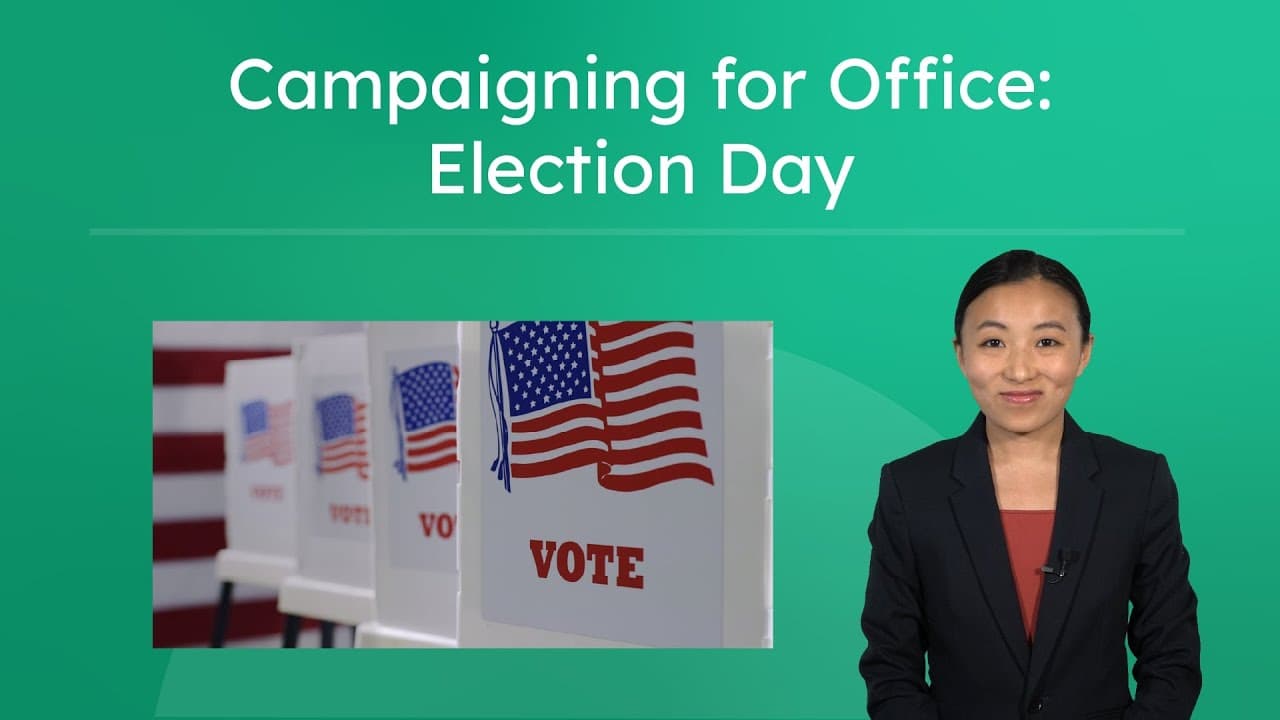
This educational video provides a comprehensive overview of the United States election system and voting process. Hosted by an engaging narrator, the lesson breaks down the complex machinery of democracy into understandable segments, covering the timing of federal elections, the differences between primary and general elections, and the various mechanisms of direct democracy like referendums and recalls. It emphasizes the importance of "down-ballot" local races which often have a more direct impact on daily life than national headlines suggest.

Miacademy & MiaPrep Learning ChannelMiacademy & MiaPrep Learning Channel

9mins 20s

Materials

Civics Class Syllabus

Civics Class Syllabus

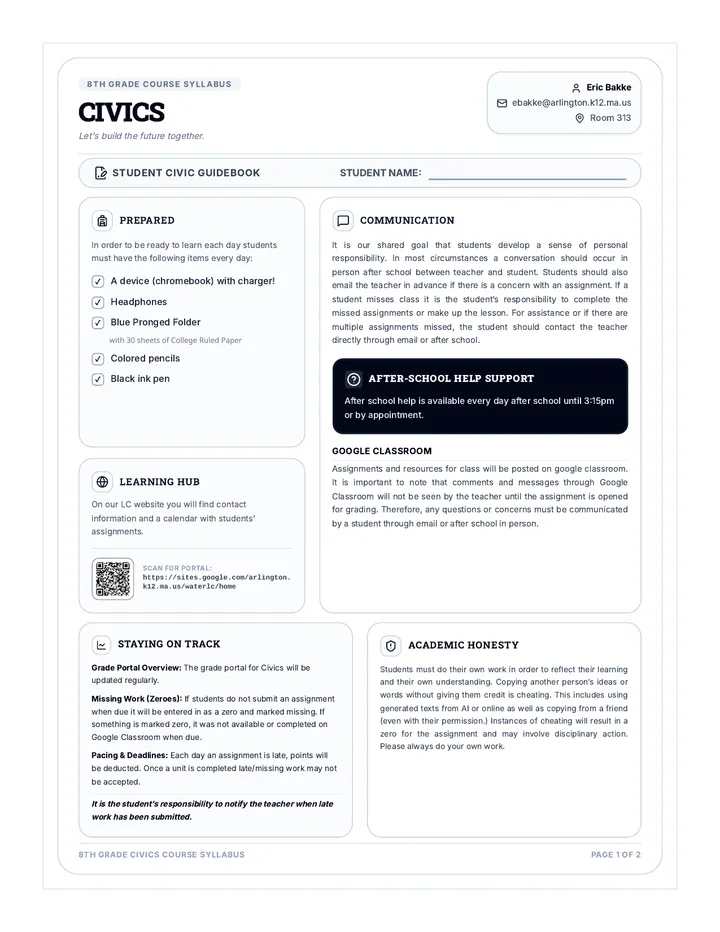
Civics Class Syllabus updated with an extra large QR code filling approximately half of the Digital Spaces container for maximum visibility and effortless scanning.

E

ebakke

Problem Solvers Graphic Organizer

Problem Solvers Graphic Organizer

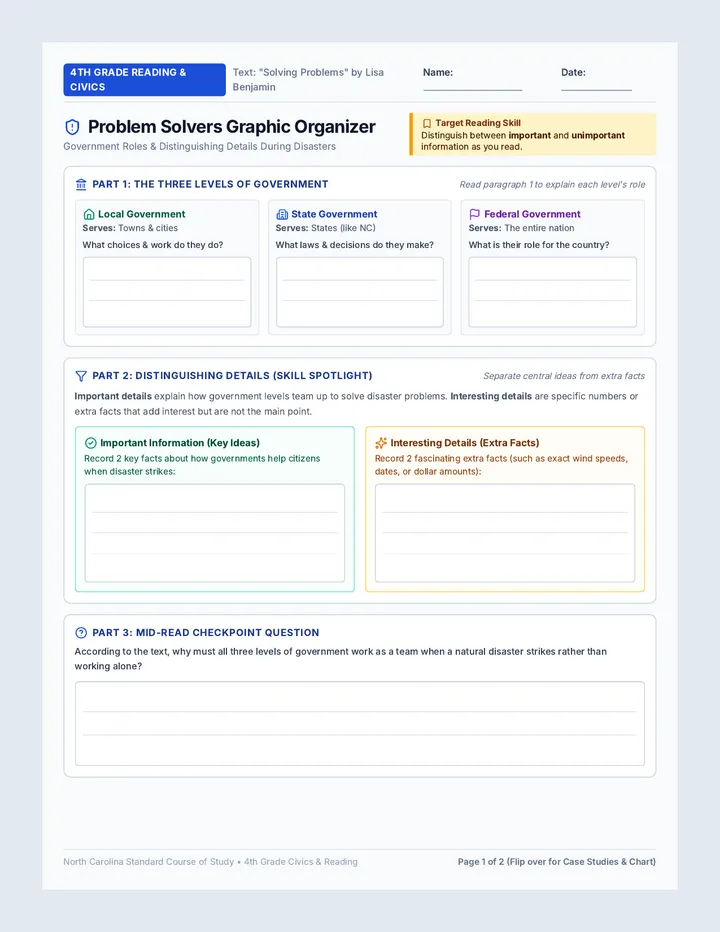
A revised print-ready, two-page during-reading graphic organizer for 4th-grade students in North Carolina. Features significantly expanded handwriting space, ruled writing lines, and clear prompts to analyze 'Solving Problems' by Lisa Benjamin.

JH

Jada Hazlett

Council Minutes Packet

Council Minutes Packet

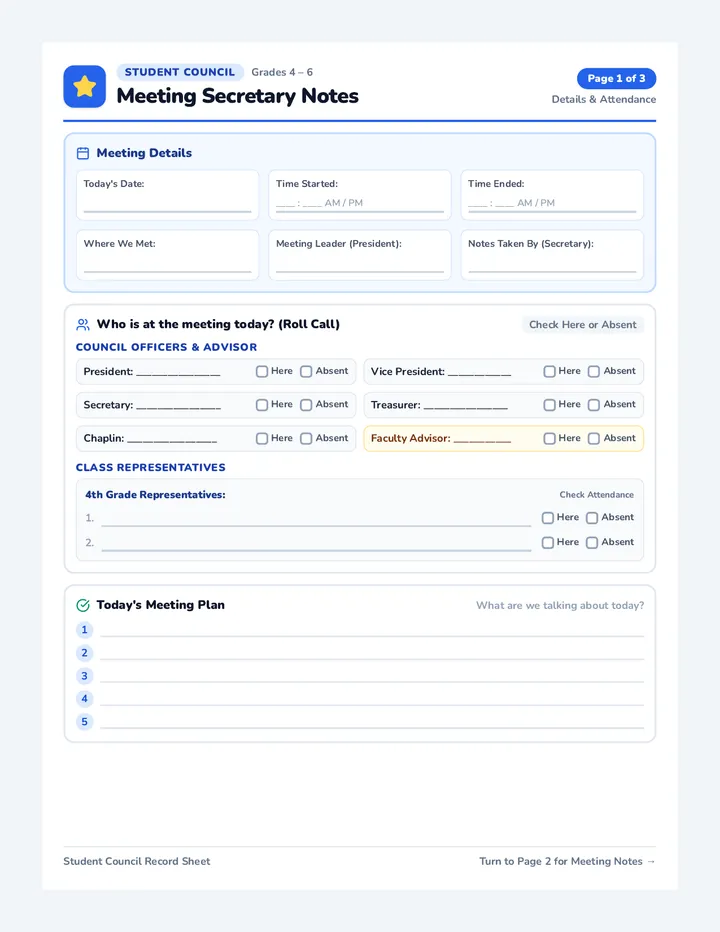
An elementary-friendly, three-page Student Council Meeting Record Packet designed for 4th-6th grade secretaries. Includes roll call with Chaplin, 2 dedicated lines for 4th grade class representatives, a 5-item meeting plan, 3 discussion topics, 3 vote tallies, an expanded 6-item to-do list, and dual sign-offs.

RJ

Rachel Johnston

Democracy Design Project Guide

Democracy Design Project Guide

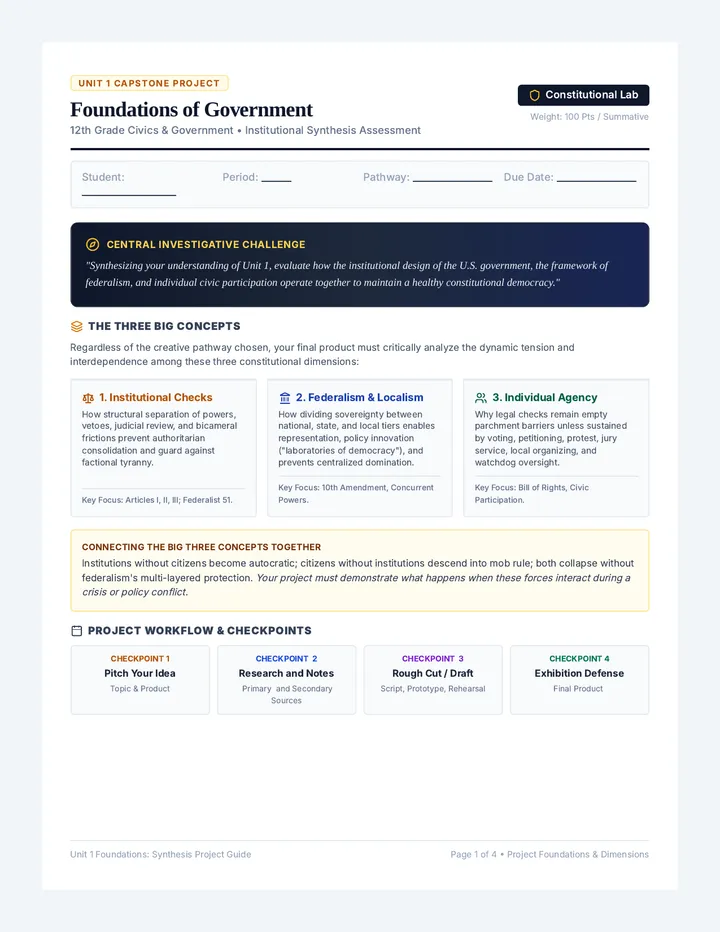
A comprehensive 4-page student project assignment guide for 12th-grade Civics and Government, detailing 5 creative project pathways (podcast, documentary, interview simulation, reader's theater drama, and board/card game), an analytical rubric across the three core constitutional dimensions, and a student planning blueprint.

JG

Joshua Griffith

Indiana Statehood Spanish Test

Indiana Statehood Spanish Test

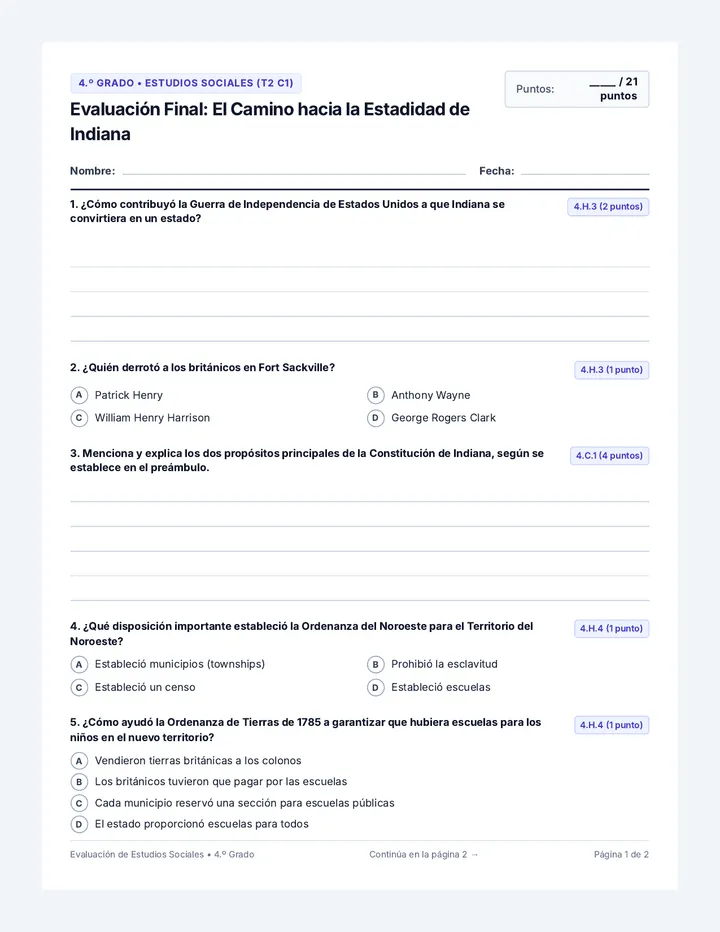
A Spanish translation of the 4th-grade social studies post-assessment on Indiana's journey to statehood, historical ordinances, and early governance. Includes 11 standards-aligned questions with designated response areas and clear multiple-choice options.

JS

Jennifer Swallow

Ballot Beacon Project Guide

Ballot Beacon Project Guide

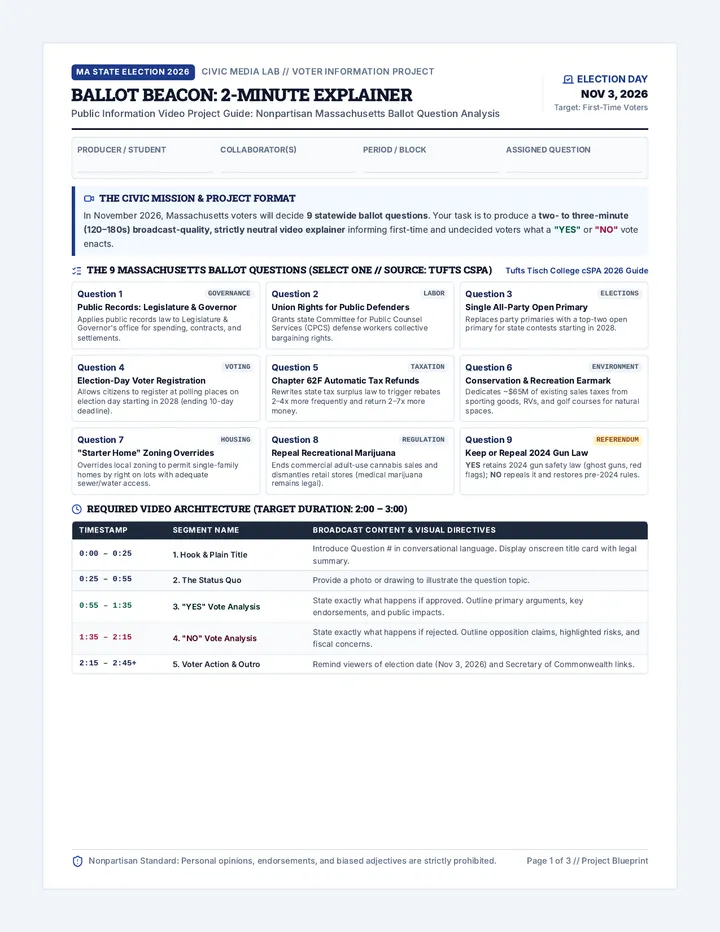
A comprehensive three-page guide for a Massachusetts 2026 ballot question explainer video project, fully updated with the official 9 ballot questions from the Tufts University Tisch College Center for State Policy Analysis (cSPA) 2026 guide. Includes directions, question menu, timed script blueprint, milestones, nonpartisan standards, submission checklist, and rubric.

K

kpitcher

Sequences

Cotton Kingdom Slides

Divided Nation

A 4-part exploration of the deep-seated tensions and pivotal events that led the United States to the brink of the Civil War, focusing on economic shifts, legislative compromises, and political flashpoints.

IA

Isabella Adkins

9
Master Plan Slides

Power Players

A 5-week unit exploring the foundations of the United States government, the three branches of power, and the responsibilities of citizenship, specifically tailored for 4th-grade learners in Illinois.

KC

Kady Carter

8
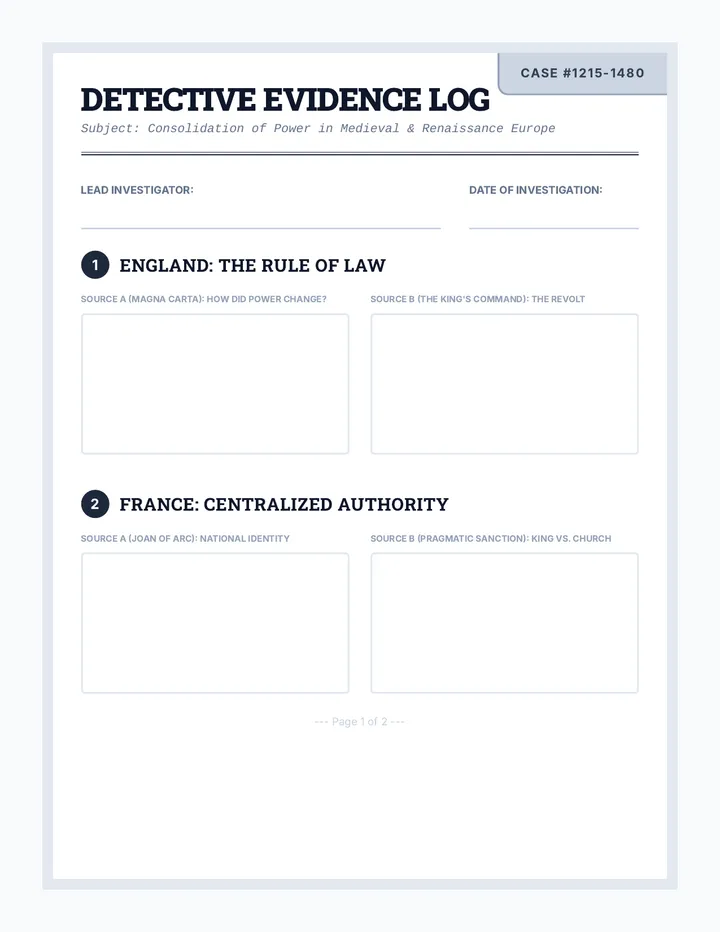
Detective Evidence Log Worksheet

Nation State Detectives

A comprehensive middle school history unit where students act as 'history detectives' to investigate the rise of nation-states in England, France, Spain, and Russia through primary source analysis.

HO

Helen O'Keefe

11
Reconstruction Reckoning Worksheet

Modern America

A comprehensive journey through United States history from the aftermath of the Civil War to the contemporary era, exploring the social, political, and economic shifts that shaped the modern nation.

DP

Darren Polamalu

18
Session 1 Intervention Teacher Guide

Civics Mastery Blueprint

A comprehensive 5-session intervention series targeting the top 25 most frequently missed civics exam questions with built-in scaffolds for multilingual learners and students with disabilities.

S

schrauthb

15
Legislative Leader Unit Guide

Capitol Insiders

A comprehensive one-week unit on the Legislative Branch tailored for Pennsylvania high school students. The unit covers the structure of the US Congress and the PA General Assembly, the law-making process, and the influence of interest groups, culminating in a simple, independent legislative proposal project.

M

morgan.mcgough

12

Lessons

History Sprint Pacing Guide

STAAR History Sprint

A comprehensive pacing guide and activity resource designed to cover the remaining 11th Grade US History TEKS before the STAAR test on April 16th. This lesson provides a day-by-day calendar for A/B block schedules and high-engagement activities for each remaining historical era.

BB

Bridgette Burdick

51
Border Lines Activity

Harriet Tubman Escape

A lesson exploring Harriet Tubman's 1850 escape and the significance of the Mason-Dixon Line as a geographical and legal boundary in the pre-Civil War United States.

TL

Tanya Larson

46
Modern Era Reader Part 1

The Modern Ledger

A comprehensive exploration of the 1990s through the modern day, covering technological shifts, political milestones, military conflicts, and cultural evolution in the United States.

CE

Chelsea Elliott

20
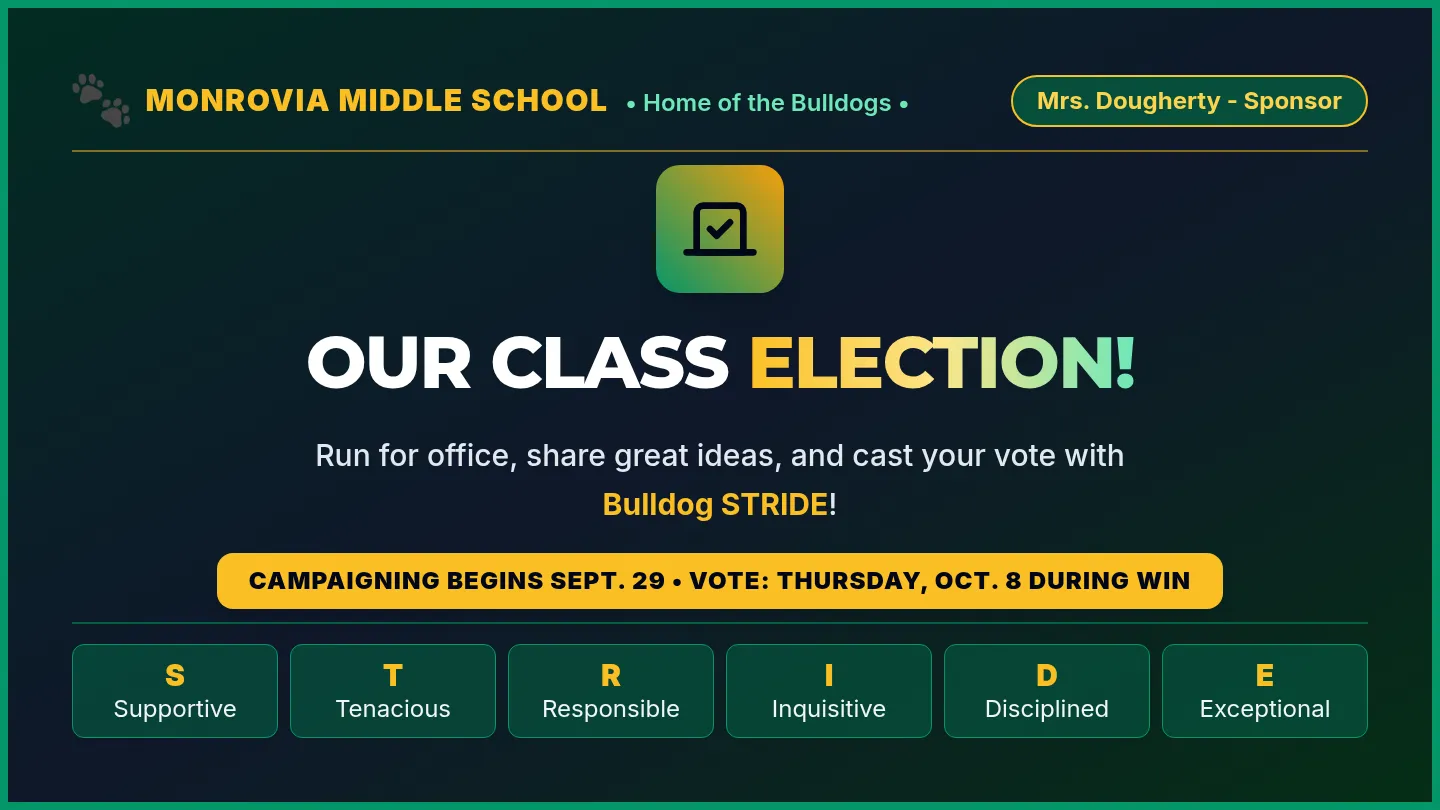
Ballot Blitz Slides

Ballot Blitz

A comprehensive classroom election simulation where students explore democratic principles, develop campaign platforms, and participate in a guided secret-ballot election.

AD

amee dougherty

6
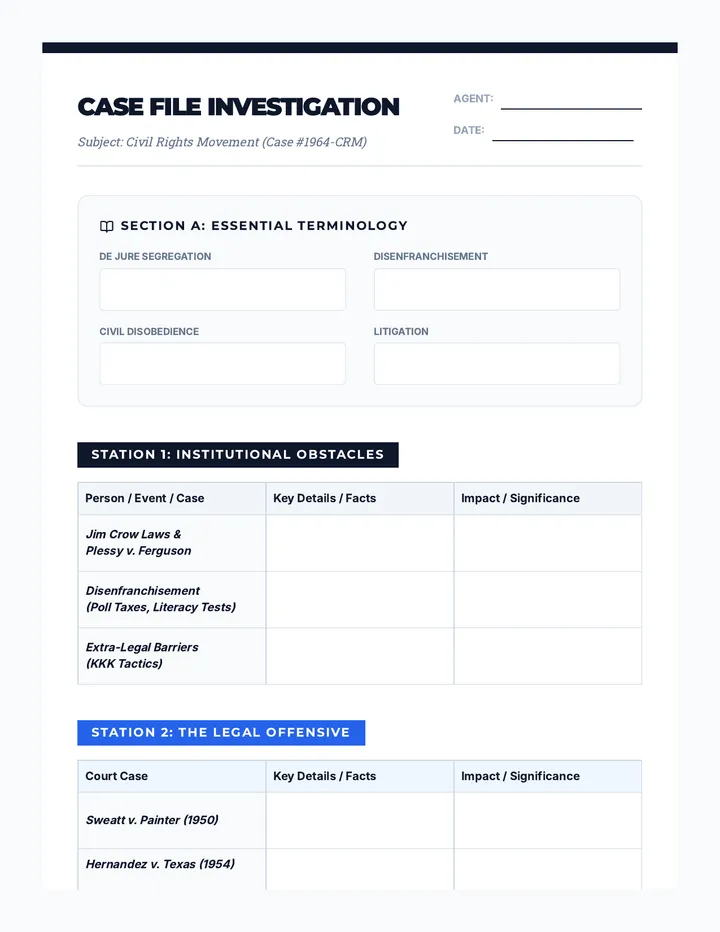
Justice Gallery Investigation Worksheet

Justice Gallery Case Files

A comprehensive lesson on the Civil Rights Movement featuring gallery stations and a guided investigation worksheet. Students analyze institutional obstacles, legal strategies, non-violent and militant tactics, and the expansion of the movement to other marginalized groups.

CE

Chelsea Elliott

25
Founding Fractures Lesson Script

Founding Fractures

A 45-60 minute lesson exploring the weaknesses of the Articles of Confederation, the impact of Shays' Rebellion, and the eventual call for a constitutional convention. The lesson uses high-engagement strategies like Think-Pair-Share and Stop-and-Jot to support all learners.

CE

Chelsea Elliott

10