Presidential Powers Study Guide
AP U.S. Gov & Civics Unit 2: Interactions Among Branches • Lesson 15
Presidential Powers & Congressional Checks
Complete one-page reference defining foundational clauses, enumerated roles, and inter-branch checks
Format Partner Quiz Sheet
Executive Powers & Clauses (Article II)
Take Care Clause
Art. II, § 3
Mandates that the president "shall take Care that the Laws be faithfully executed." Foundation for executive orders, agency oversight, and federal law enforcement.
Vesting Clause
Art. II, § 1, Cl. 1
Declares "The executive Power shall be vested in a President." Establishes the Unitary Executive and textual source of implied and inherent presidential powers.
Chief Legislator (Enumerated)
Art. I, § 7 & Art. II, § 3
Powers directly influencing the lawmaking process:
- Veto Power: Signs or vetoes bills passed by Congress (including pocket veto).
- State of the Union: Recommends legislative agenda to Congress.
- Convene Sessions: Calls emergency congressional sessions and adjourns deadlocked chambers.
Commander in Chief & Diplomat
Art. II, § 2 & § 3
Powers directing defense, military, and foreign policy:
- Commander in Chief: Civilian head of all U.S. armed forces and mobilized state militias.
- Treaty Power: Negotiates international treaties (subject to 2/3 Senate ratification).
- Diplomatic Recognition: Appoints ambassadors and receives foreign emissaries.
Chief Executive (Enumerated)
Art. II, § 2 & § 3
Powers directing federal administration and legal clemency:
- Department Oversight: Requires written opinions from department secretaries.
- Appointment Power: Nominates federal judges, cabinet heads, and agency directors.
- Pardons & Reprieves: Grants unconditional clemency for federal crimes (except impeachment).
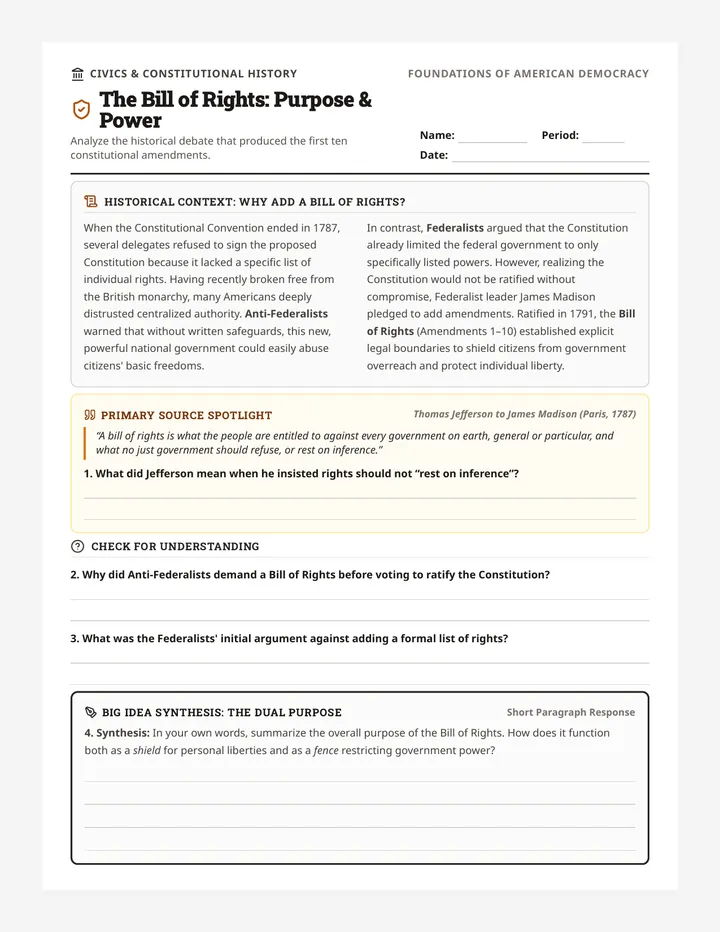
Congressional Checks (Article I)
Legislative Oversight
Implied Check
Supervision, monitoring, and investigation of executive branch agencies and policy implementation by congressional committees.
Tools: Committee hearings, subpoenas, sworn testimony, and GAO audits to prevent agency corruption.
Legislative Override
Art. I, § 7
The constitutional mechanism allowing Congress to enact a bill into federal law despite a presidential veto.
Threshold: Strict 2/3 supermajority in both House and Senate (historically <10% overridden).
Advice and Consent
Art. II, § 2
Exclusive constitutional power of the U.S. Senate to approve or reject presidential appointments and foreign treaties.
Votes: Simple majority (50%+1) for judges/cabinet; 2/3 supermajority for treaties.
Power of the Purse
Art. I, § 8 & § 9
Congress's exclusive authority to tax, borrow, and allocate spending. No federal funds may be spent without statutory appropriation.
Check: Can defund, cap, or attach spending conditions to executive branch programs.
Partner Quiz Protocol (03:00)
Timer: 3 Min
Part 1 (90s): Partner A Quizzes Partner B on the 5 executive powers & clauses without notes.
Part 2 (90s): Partner B Quizzes Partner A on the 4 congressional checks & voting thresholds.
AP U.S. Government & Politics • Unit 2: Interactions Among Branches One-Page Rapid Review Sheet