Lenny.com
Explore
Create
ActivitiesNewCurriculumNewMathEnglish Language ArtsScience & EngineeringSocial StudiesGlobal LanguagesHealth & Physical EducationSpecial EducationCounseling & Life SkillsArts & CreativityESL
Lenny.com
Lenny.com
Explore
Create
ActivitiesNewCurriculumNewMathEnglish Language ArtsScience & EngineeringSocial StudiesGlobal LanguagesHealth & Physical EducationSpecial EducationCounseling & Life SkillsArts & CreativityESL
Lenny.com
Lenny.com

Solutions

Lenny for EducatorsLenny for SchoolsLenny for Districts

Product

ExploreSign inCreateSupportAbout

Resources

Getting startedMTSS Acceleration Program

Newsletters

School Funding Newsletter

© 2026 Lenny Learning Inc.

TermsPrivacyAccessibility
LinkedInInstagramX
Lenny
Science & EngineeringLife ScienceLiving ThingsAnimalsPlantsBody SystemsTraitsAdaptationsCellsEcosystemsHeredityGenes to TraitsCell DivisionPhysicsComparing MaterialsShapes and PropertiesMagnetsMagnetismLightSoundLight and SoundMatterStates of MatterChanges of StateMixturesPhysical and Chemical ChangeHeating and CoolingHeat and Thermal EnergyEnergyForce and MotionElectrical CircuitsAtoms and MoleculesPeriodic TableMotion in One DimensionMotion in Two DimensionsScalars and VectorsForces and Laws of MotionCircular Motion and GravityMomentum and ImpulseWork, Energy, and PowerWavesElectromagnetic WavesGeometric OpticsElectricity and MagnetismSimple Harmonic MotionThermodynamicsNuclear PhysicsEarth Science & AstronomyWeatherWater CycleRocks and MineralsFossilsEarth's FeaturesEarth's ResourcesEarth's StructureWeather and ClimateEarth EventsFossils and Geologic TimePlate TectonicsHuman ImpactsAstronomyChemistryUnits and MeasurementAtomic StructurePeriodic TrendsChemical BondingNomenclatureMolecular StructureIntermolecular ForcesThe MoleStoichiometryProperties of GasesSolutionsChemical ReactionsBalancing EquationsEnergy ChangesRates of ReactionsEquilibriumAcids and BasesQuantum ModelBiologyClassificationCell StructureThe Chemistry of LifeBiomoleculesCellular TransportCell EnergyCell Growth and DivisionDNAProtein SynthesisMeiosis and Sexual ReproductionPatterns of InheritanceMulticellular OrganismsEvolutionEcologyBiodiversityComputer ScienceAlgorithms and Computational ThinkingProgramming LanguagesComputing SystemsNetworks and InternetData AnalysisCybersecurityAI and Machine LearningSoftware Design and DevelopmentBlockchainEngineering & AIDesigning ExperimentsEngineering PracticesDesign ThinkingEngineering Design ProcessMechanical EngineeringElectrical EngineeringMaterials and StructuresCAD and 3D DesignRoboticsArtificial Intelligence BasicsVibe CodingMachine LearningAI Ethics and SocietySystems ThinkingEntrepreneurship & InnovationEntrepreneurial MindsetBusiness Idea DevelopmentBusiness Plan BasicsMarketing & Customer DiscoveryFinancial Management for Startups

Oxygen Express Storytelling Worksheet

A two-page printable storytelling worksheet that guides students to write and illustrate an adventure narrative about a red blood cell delivering oxygen to body tissues and returning carbon dioxide. Page 1 provides mission briefing intel, a scientific vocabulary bank, and character development prompts, while Page 2 features four storyboard panels with drawing frames and ruled writing lines for the narrative journey.

MEMary Ellen Goodrow

You might also like

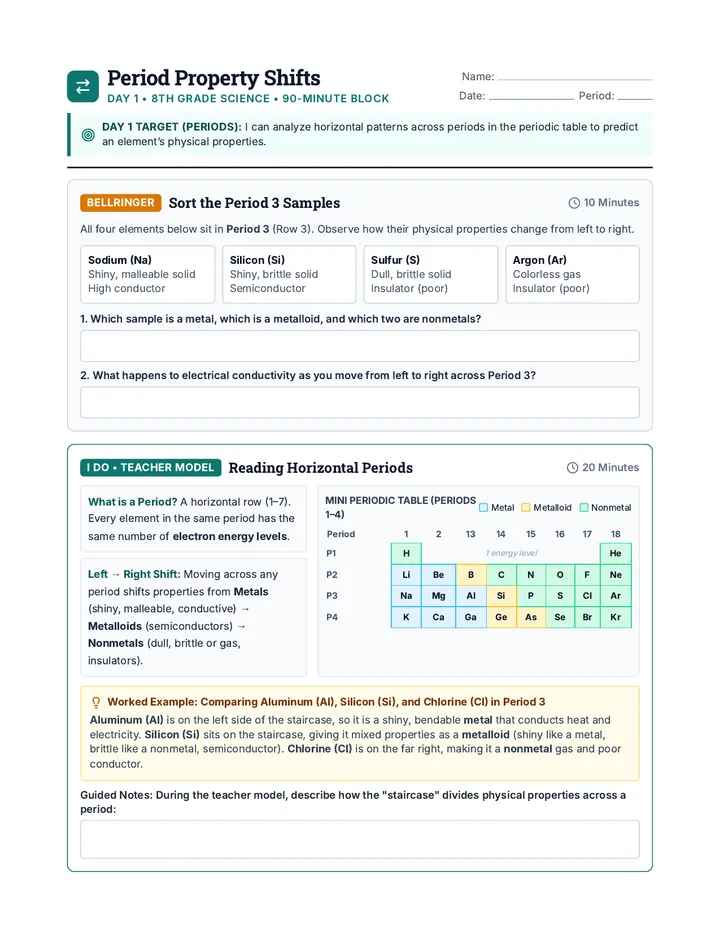
Period Property Shifts Worksheet

Periodic Pattern Detectives (12/01and02)

A two-day 8th grade science sequence (90 minutes per day) where students analyze periodic table patterns—focusing on horizontal periods on Day 1 and vertical groups on Day 2—to predict an element's physical properties and reactivity.

KV

Kristelyn Ventura

4
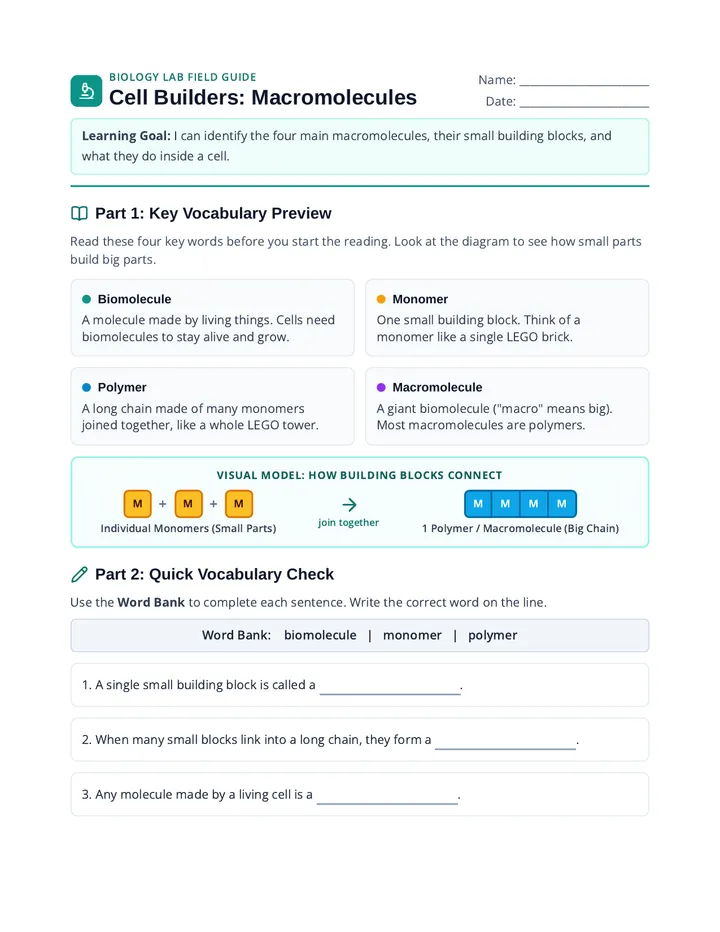
Cell Builders Reading Worksheet

Cell Building Blocks

A scaffolded biology reading lesson introducing the four major macromolecules, their monomers, and their roles in cells. Includes a student reading worksheet with visual diagrams and chunked comprehension questions alongside a concise answer key.

S

stewart

2
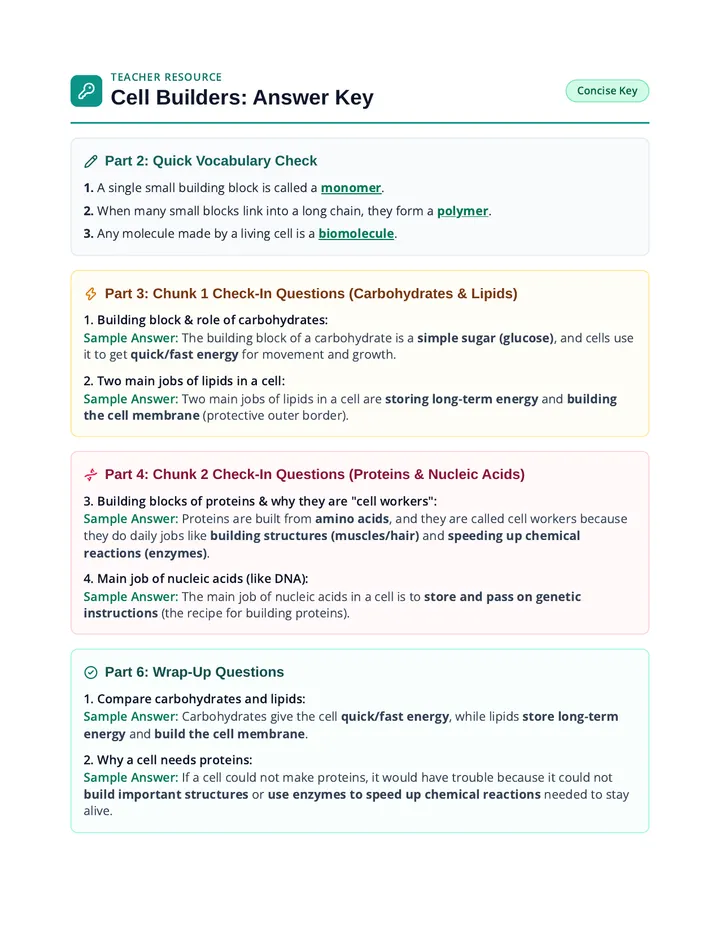
Cell Builders Answer Key

Cell Builders Answer Key

A concise 1-page teacher answer key for the Cell Builders Reading Worksheet, providing sample student responses for the vocabulary check, chunked reading check-ins, and wrap-up synthesis questions.

S

stewart

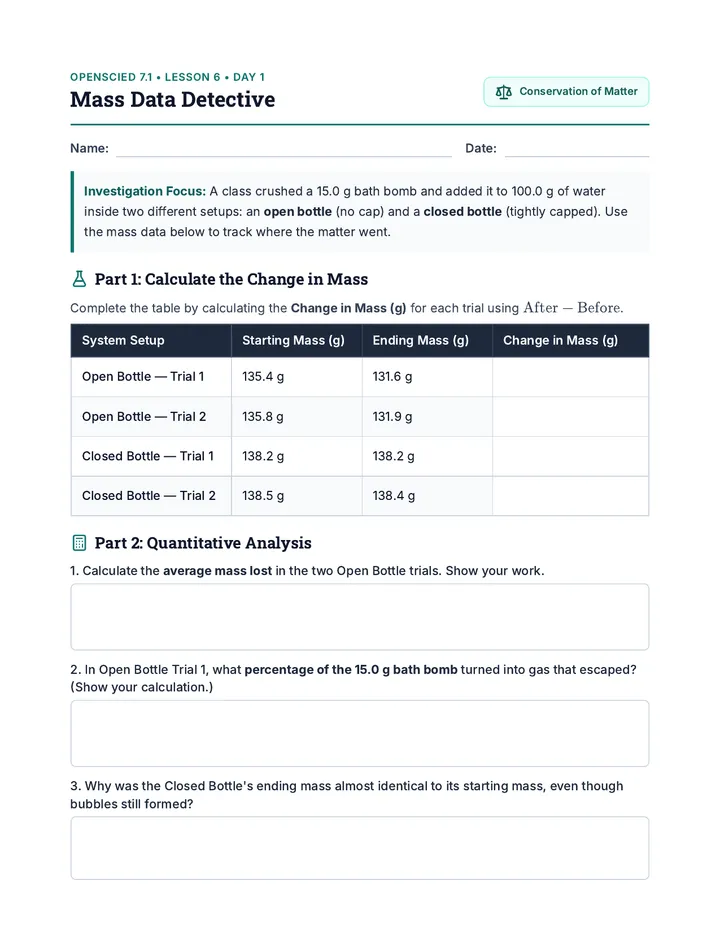
Mass Data Detective Worksheet

Particle Rearrangement Lab

A two-day instructional sequence for OpenSciEd 7.1 Lesson 6 connecting quantitative mass and gas data to particle rearrangement and conservation of matter during chemical reactions.

R

rnmurphy

4
Macromolecule Builders Slides

Life Building Blocks

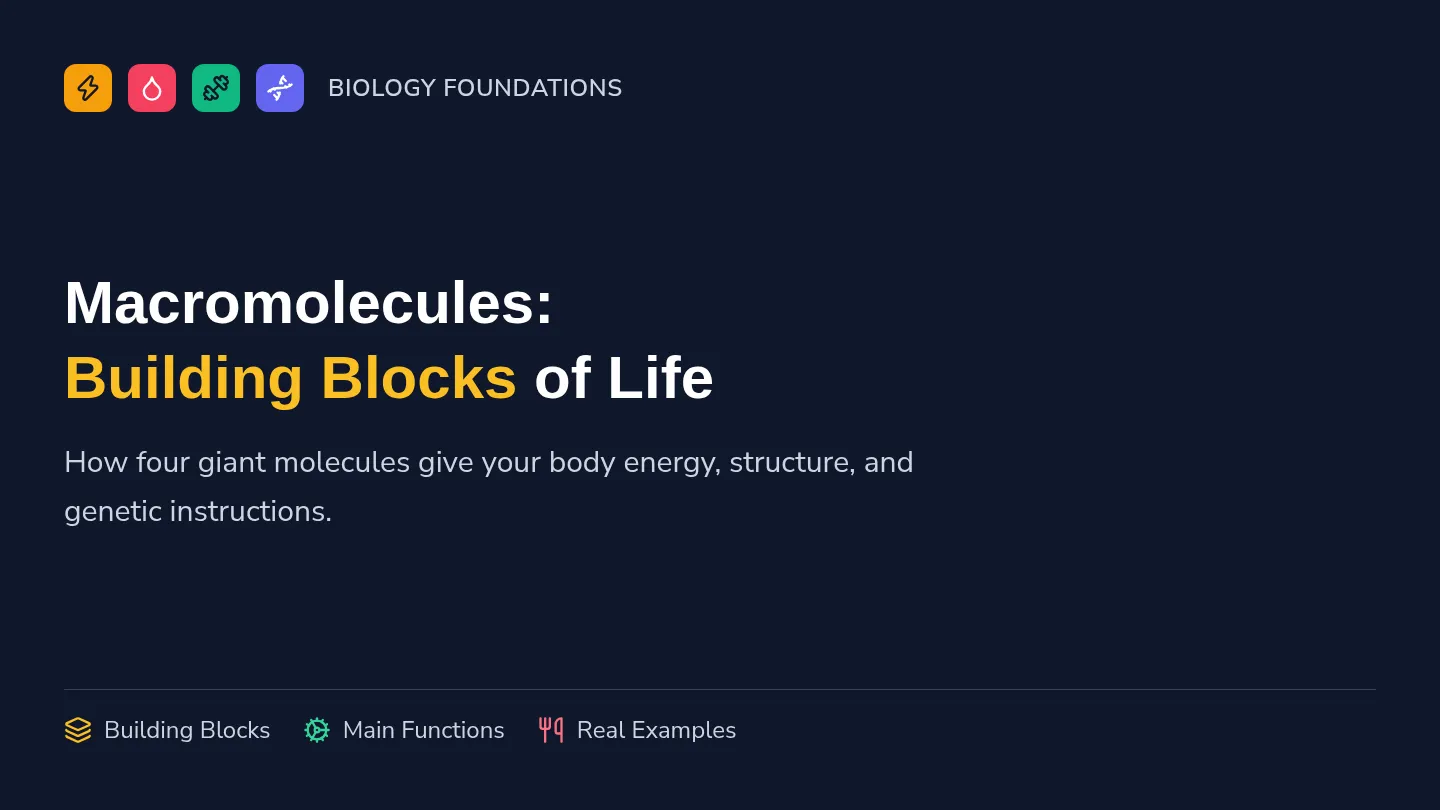
A visual, student-friendly lesson introducing the four biological macromolecules—carbohydrates, lipids, proteins, and nucleic acids—with a focus on their building blocks, functions, and everyday examples. Includes a classroom slideshow, a matching fill-in-the-blank guided notes chart with retrieval practice, and a teacher answer key.

S

stewart

3
Cell Builders Reading Worksheet

Cell Builders Reading Worksheet

A 4-page scaffolded reading worksheet on macromolecules, their building blocks, and their roles in cells. Features pre-taught vocabulary with a monomer-to-polymer diagram, simplified chunked reading passages with labeled visuals, a macromolecule comparison chart, and comprehension questions with sentence starters.

S

stewart

Particle Detectives Slides

Atom Rearrangers

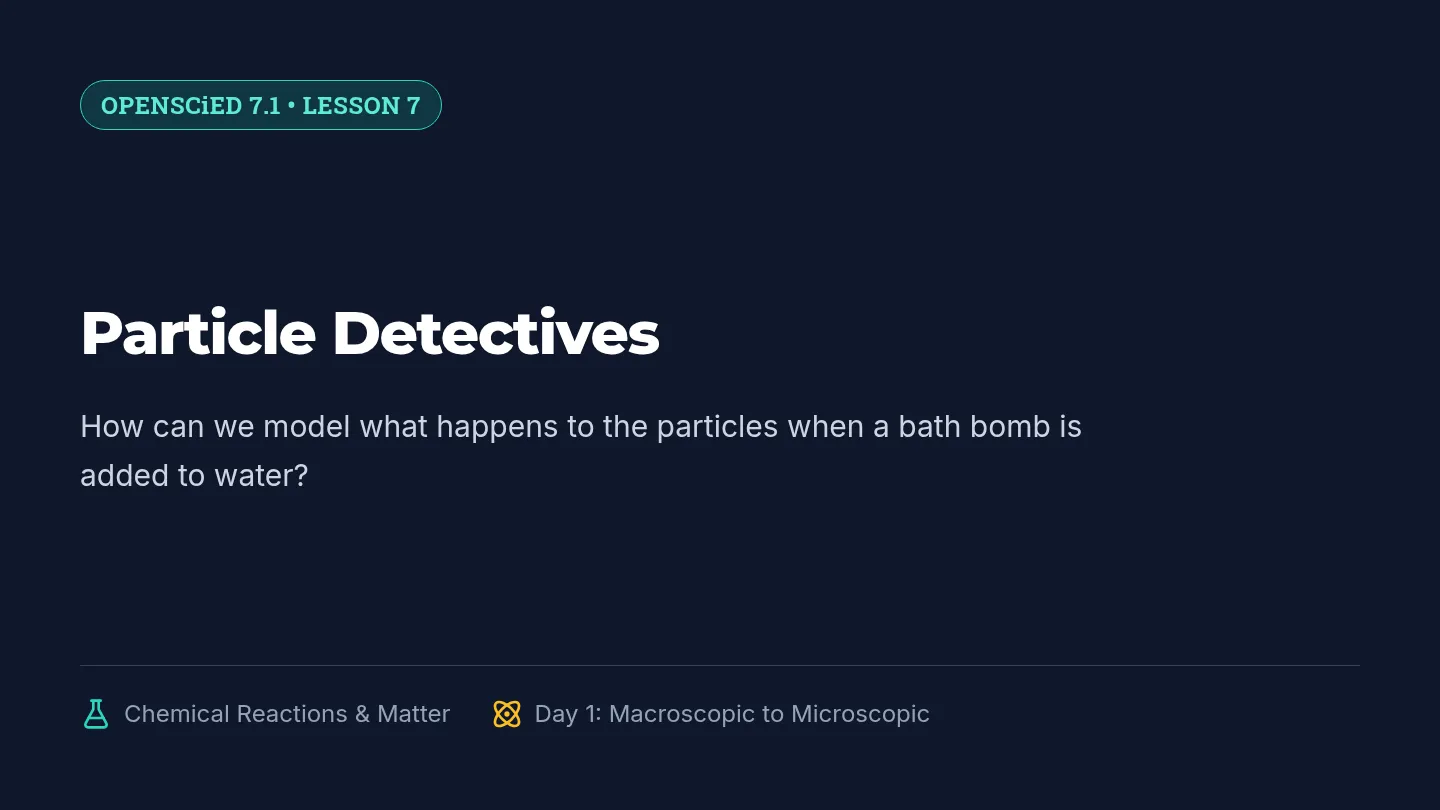
A 3-lesson 7th-grade science sequence centered on OpenSciEd Unit 7.1 Lesson 7. Students investigate how atoms rearrange during chemical reactions to form new substances while conserving mass.

R

rnmurphy

11
Falling Water Key Terms Guide

Falling Water and Sparks

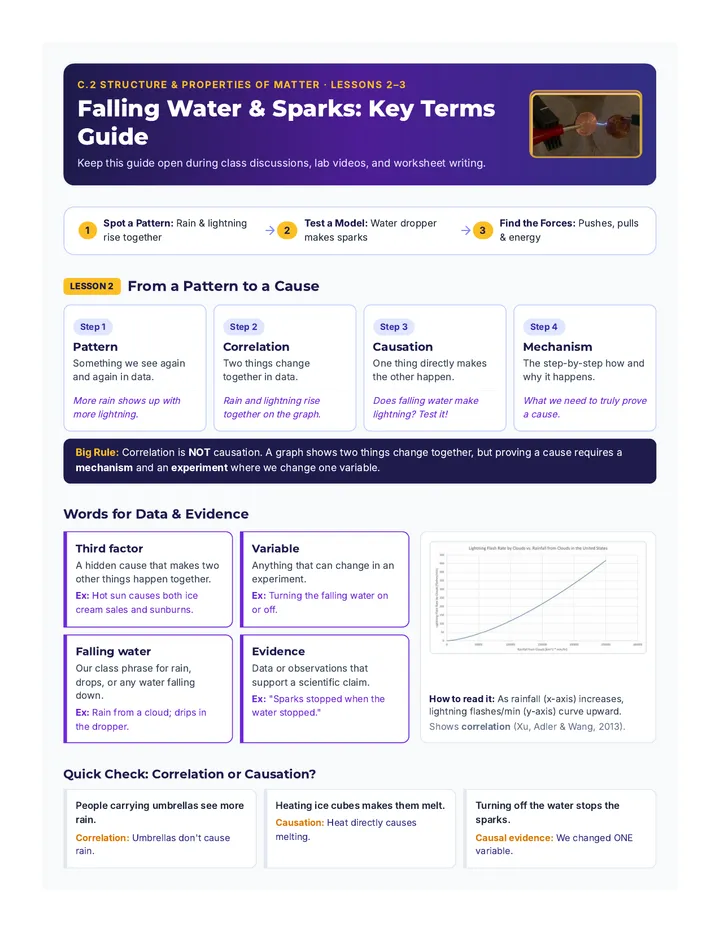
Students investigate whether falling water causes lightning by analyzing storm data, testing a small-scale water dropper physical model, and identifying non-contact forces and energy transfers. Includes a student-friendly Key Terms Guide and companion presentation aligned to NGSS HS-PS2-4 and HS-PS3-5.

AB

Aubrey Belle Ynot

2
Macromolecule Answer Key

Macromolecule Answer Key

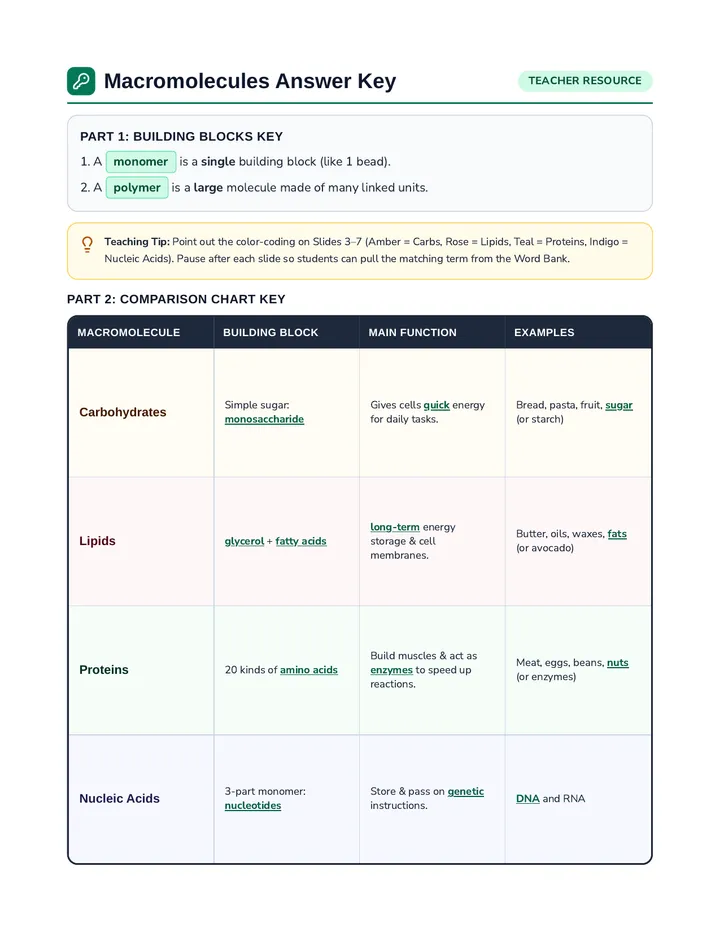
A 2-page teacher answer key matching the Macromolecule Guided Notes Chart and Knowledge Check. Provides completed fill-in-the-blank chart entries, multiple-choice answers, sample short-answer responses, and brief pacing tips.

S

stewart

Crucible Blade Lesson Plan

Iron and Basalt

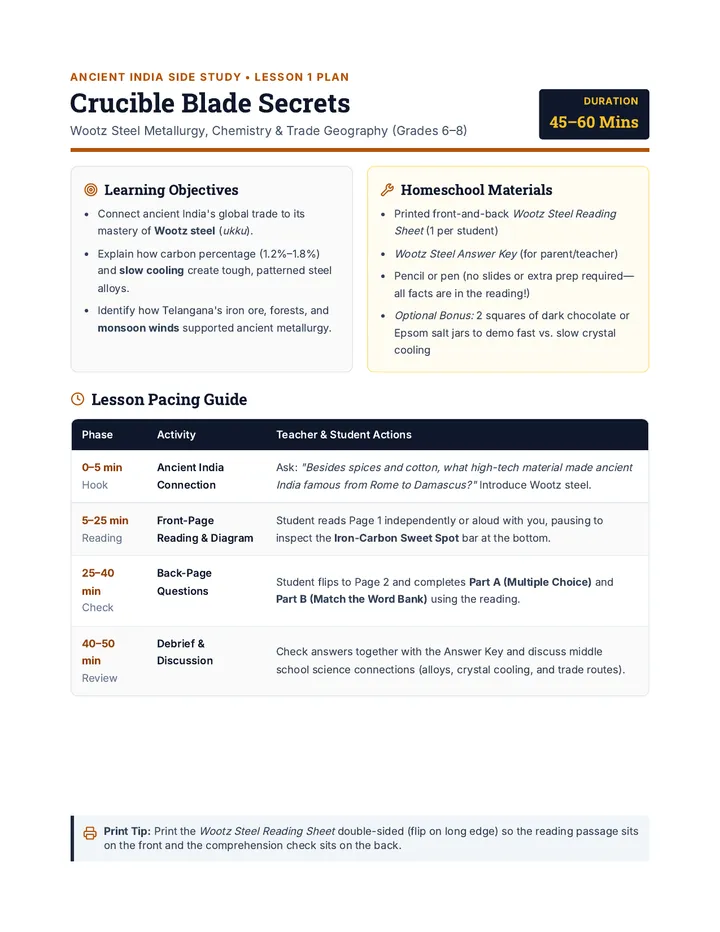
A two-lesson science and geography sequence for middle schoolers exploring South India's ancient Wootz steel metallurgy and the volcanic Deccan Plateau. Students investigate material science, crystal structures, volcanic geology, and monsoon geography through hands-on activities.

DB

Danielle Burham

6
Brilliant Minds Slides

Ingenious Nations

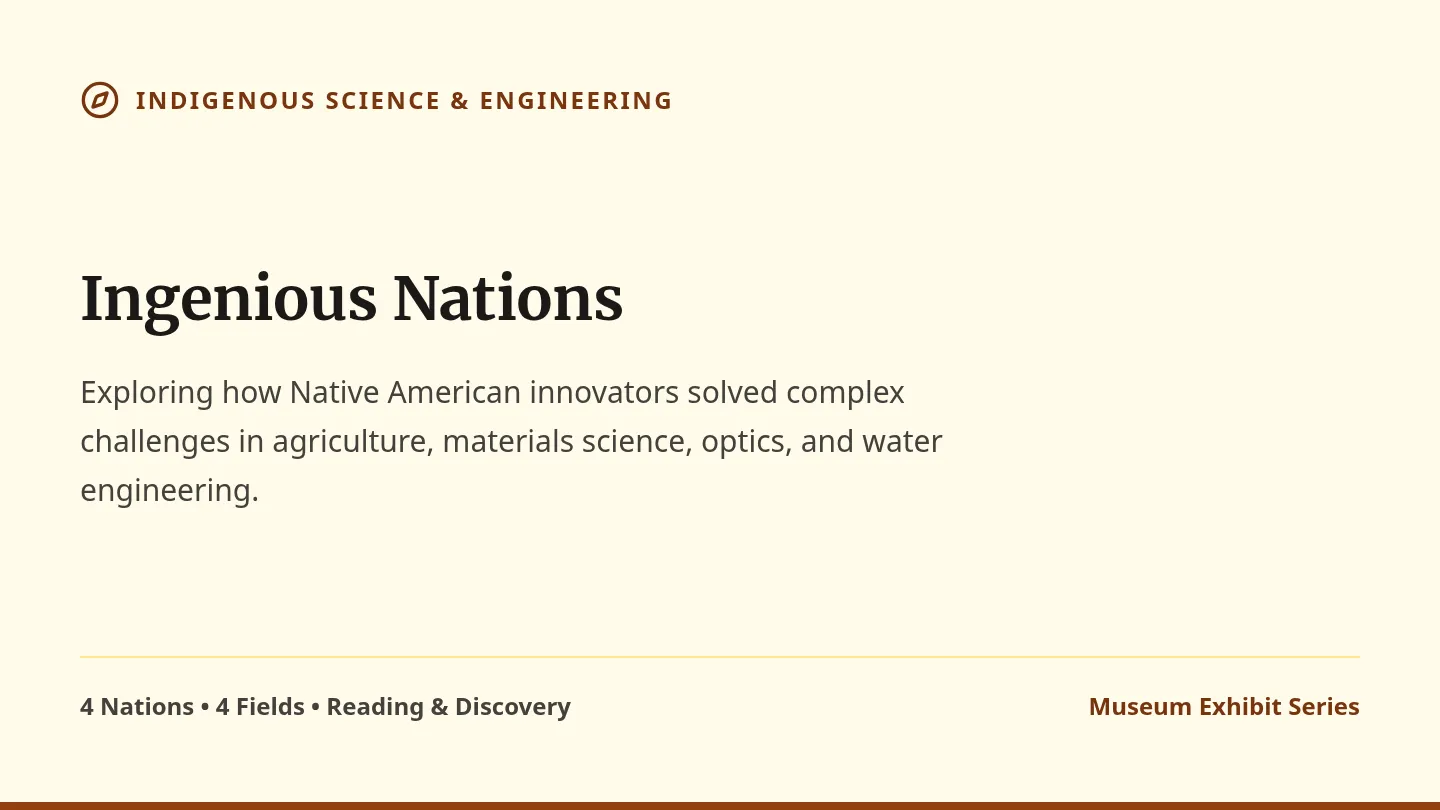
An interdisciplinary reading and STEM lesson exploring Indigenous innovations across four Native American nations and regions: Haudenosaunee companion planting, Haida and Tlingit steam-bent cedar engineering, Inupiat snow goggles, and Hohokam desert canal irrigation. Includes classroom slides, leveled reading passages, a vocabulary and comprehension worksheet, and an answer key.

G

garcial

4
Macromolecule Guided Notes Chart

Macromolecule Guided Notes Chart

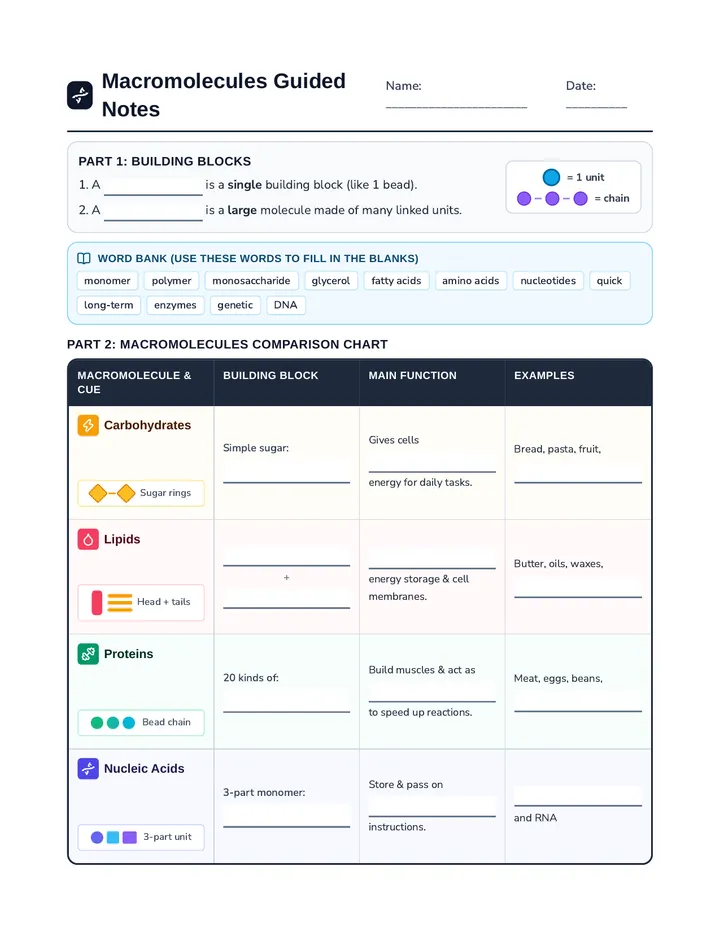
A 2-page printable guided notes chart and knowledge check aligned to the Macromolecule Builders Slides. Includes a word bank, visual monomer-polymer cues, fill-in-the-blank chart rows for all four macromolecules, and retrieval practice questions.

S

stewart