Lenny.com
Explore
Create
ActivitiesNewCurriculumNewMathEnglish Language ArtsScience & EngineeringSocial StudiesGlobal LanguagesHealth & Physical EducationSpecial EducationCounseling & Life SkillsArts & CreativityESL
Lenny.com
Lenny.com
Explore
Create
ActivitiesNewCurriculumNewMathEnglish Language ArtsScience & EngineeringSocial StudiesGlobal LanguagesHealth & Physical EducationSpecial EducationCounseling & Life SkillsArts & CreativityESL
Lenny.com
Lenny.com

Solutions

Lenny for EducatorsLenny for SchoolsLenny for Districts

Product

ExploreSign inCreateSupportAbout

Resources

Getting startedMTSS Acceleration Program

Newsletters

School Funding Newsletter

© 2026 Lenny Learning Inc.

TermsPrivacyAccessibility
LinkedInInstagramX
Lenny
Science & EngineeringLife ScienceLiving ThingsAnimalsPlantsBody SystemsTraitsAdaptationsCellsEcosystemsHeredityGenes to TraitsCell DivisionPhysicsComparing MaterialsShapes and PropertiesMagnetsMagnetismLightSoundLight and SoundMatterStates of MatterChanges of StateMixturesPhysical and Chemical ChangeHeating and CoolingHeat and Thermal EnergyEnergyForce and MotionElectrical CircuitsAtoms and MoleculesPeriodic TableMotion in One DimensionMotion in Two DimensionsScalars and VectorsForces and Laws of MotionCircular Motion and GravityMomentum and ImpulseWork, Energy, and PowerWavesElectromagnetic WavesGeometric OpticsElectricity and MagnetismSimple Harmonic MotionThermodynamicsNuclear PhysicsEarth Science & AstronomyWeatherWater CycleRocks and MineralsFossilsEarth's FeaturesEarth's ResourcesEarth's StructureWeather and ClimateEarth EventsFossils and Geologic TimePlate TectonicsHuman ImpactsAstronomyChemistryUnits and MeasurementAtomic StructurePeriodic TrendsChemical BondingNomenclatureMolecular StructureIntermolecular ForcesThe MoleStoichiometryProperties of GasesSolutionsChemical ReactionsBalancing EquationsEnergy ChangesRates of ReactionsEquilibriumAcids and BasesQuantum ModelBiologyClassificationCell StructureThe Chemistry of LifeBiomoleculesCellular TransportCell EnergyCell Growth and DivisionDNAProtein SynthesisMeiosis and Sexual ReproductionPatterns of InheritanceMulticellular OrganismsEvolutionEcologyBiodiversityComputer ScienceAlgorithms and Computational ThinkingProgramming LanguagesComputing SystemsNetworks and InternetData AnalysisCybersecurityAI and Machine LearningSoftware Design and DevelopmentBlockchainEngineering & AIDesigning ExperimentsEngineering PracticesDesign ThinkingEngineering Design ProcessMechanical EngineeringElectrical EngineeringMaterials and StructuresCAD and 3D DesignRoboticsArtificial Intelligence BasicsVibe CodingMachine LearningAI Ethics and SocietySystems ThinkingEntrepreneurship & InnovationEntrepreneurial MindsetBusiness Idea DevelopmentBusiness Plan BasicsMarketing & Customer DiscoveryFinancial Management for Startups

Energy Flow Lesson Plan

A single-page modular lesson plan for 5th grade science covering energy flow through food chains and food webs, structured with clearly divided sections for objectives, materials, pacing, assessment, and differentiation.

Energy Flow Lesson Plan

A single-page modular lesson plan for 5th grade science covering energy flow through food chains and food webs, structured with clearly divided sections for objectives, materials, pacing, assessment, and differentiation.

You might also like

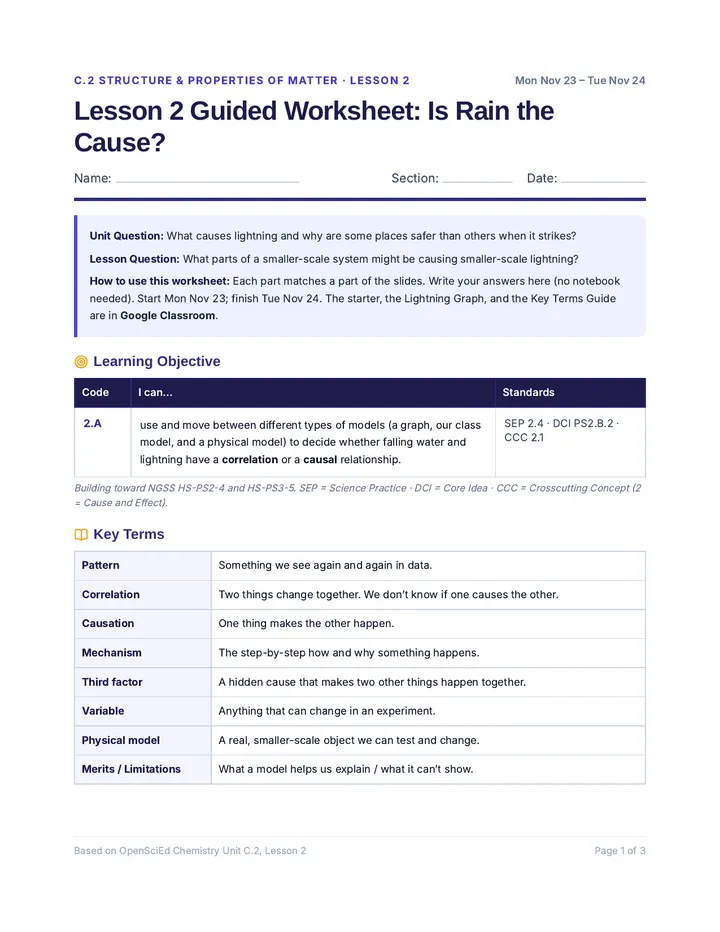
Is Rain Cause Worksheet

Falling Water and Sparks

A cohesive two-lesson chemistry sequence investigating what causes lightning using data analysis, physical models (the water dropper), and non-contact electric forces. Includes revised guided worksheets, lab entries, and an interactive-free presentation with embedded demonstration videos.

AB

Aubrey Belle Ynot

7
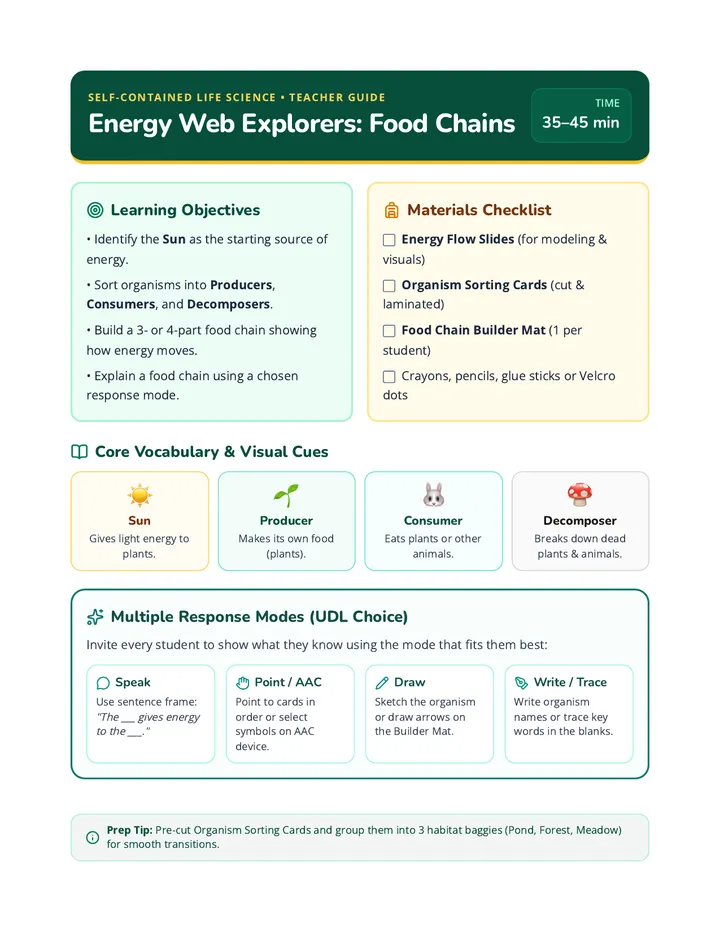
Food Chain Teacher Guide

Energy Web Explorers

A hands-on, UDL-aligned life science lesson on food chains designed for self-contained classrooms. Students explore how energy moves from the sun to producers, consumers, and decomposers using organism sorting cards and multiple response modes (speaking, pointing, drawing, or writing).

CF

Carissa Fenner

4
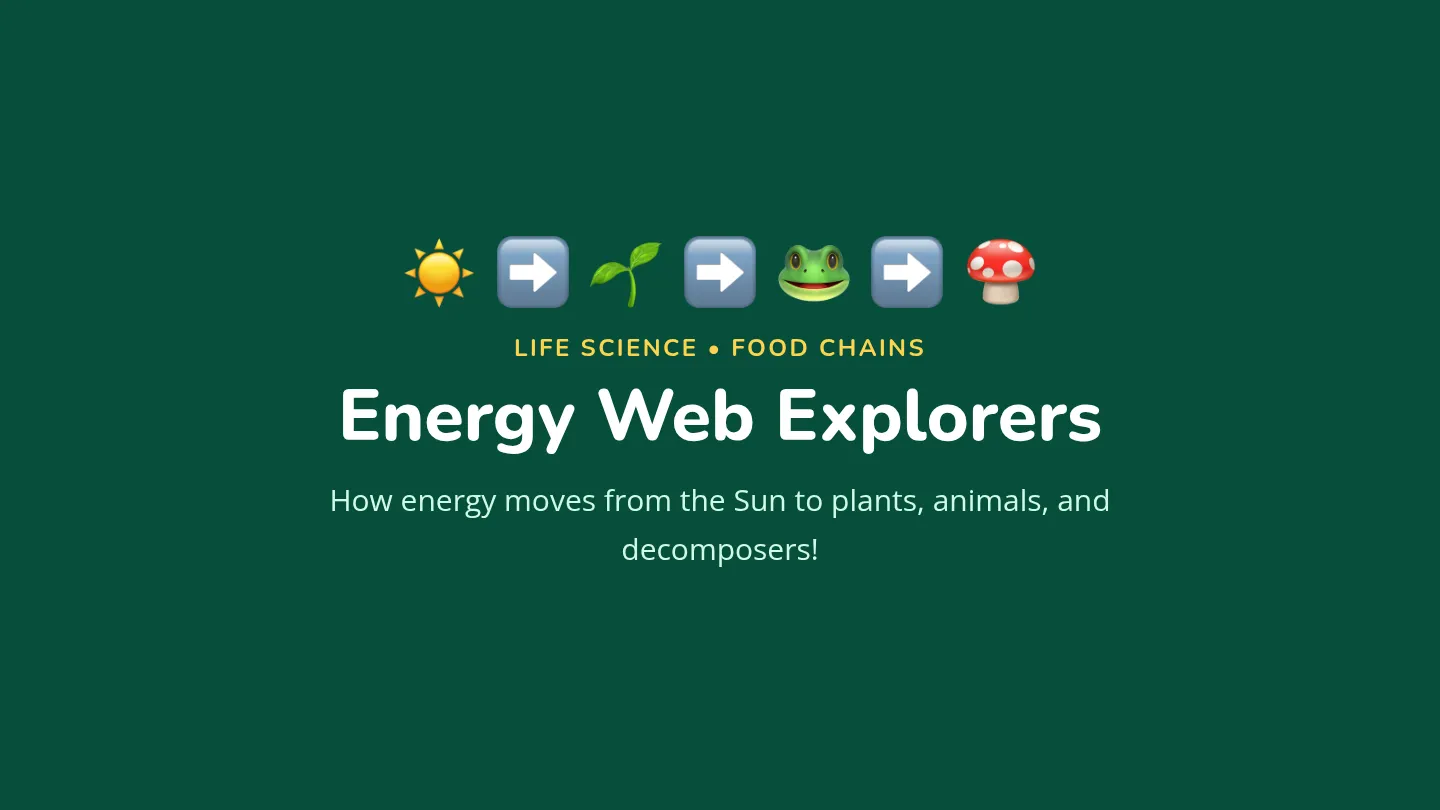
Energy Flow Slides

Energy Flow Slides

An 8-slide visual presentation for teaching food chains in a self-contained classroom, featuring large accessible text, clear emojis, guided Pond food chain modeling, and multiple response mode prompts.

CF

Carissa Fenner

Energy Launchpad Slides

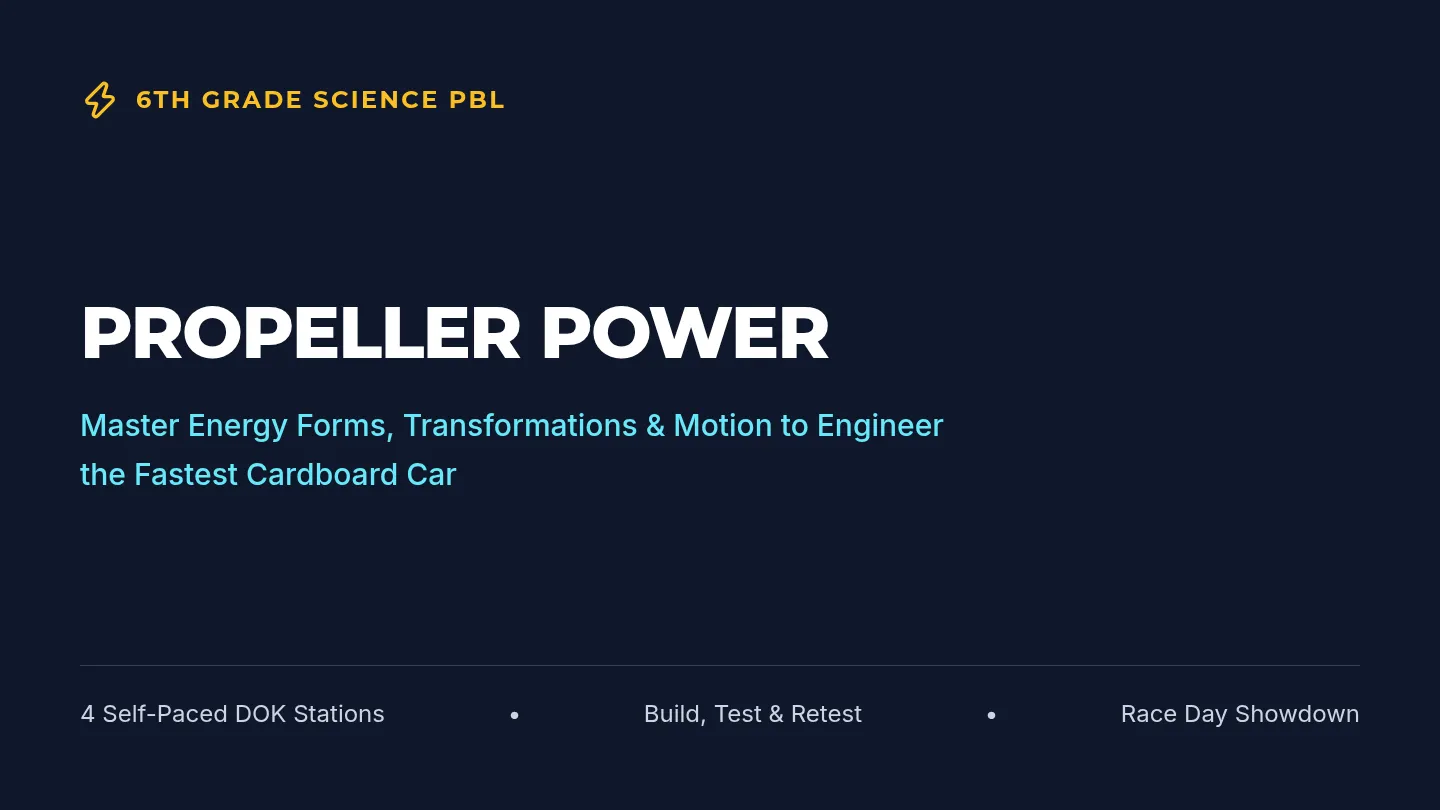
Propeller Power

A 12-to-14-day 6th-grade science PBL unit where students master energy forms, gravitational potential energy, kinetic energy, and energy transformations through four self-paced DOK stations before engineering and racing propeller-driven cardboard cars.

BM

Bryan Miller

9
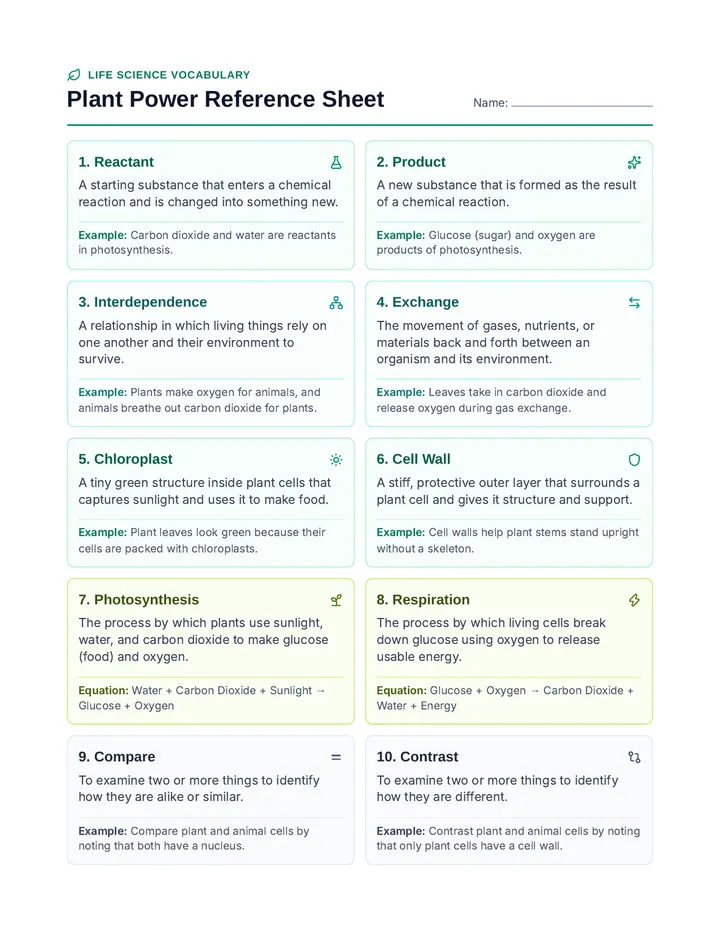
Plant Power Reference Sheet

Plant Power Vocabulary

A vocabulary lesson introducing ten essential life science terms covering plant cell structures, cellular energy processes, interdependence, and scientific comparison skills, paired with a practice quiz and answer key.

J

jrand

5
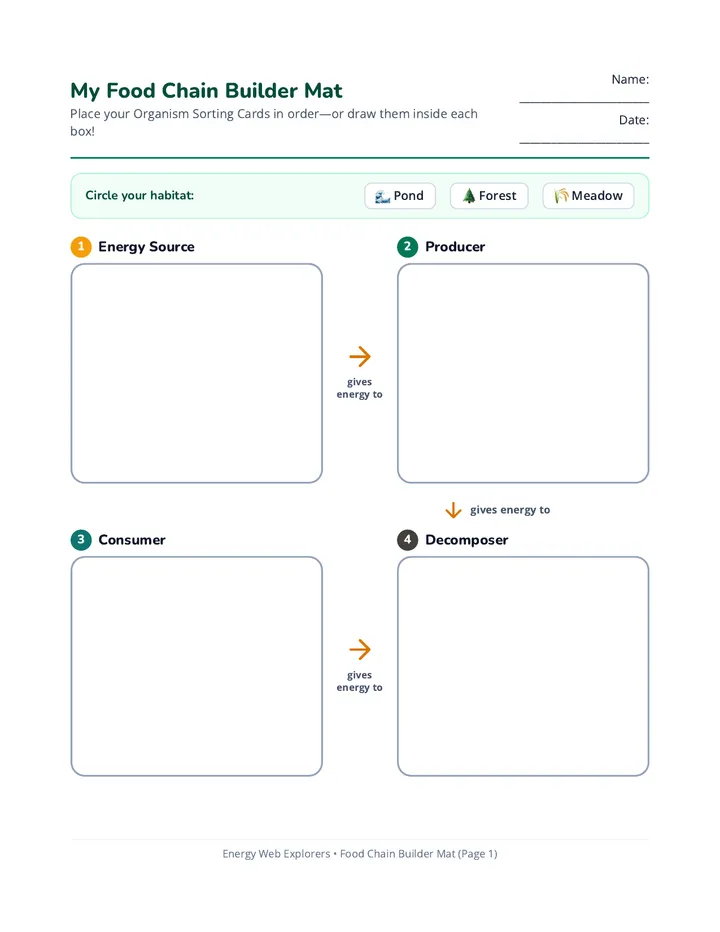
Food Chain Builder Mat

Food Chain Builder Mat

A 2-page student-facing Food Chain Builder Mat and Multiple Response Modes recording sheet, featuring large blank work boxes for placing sorting cards or drawing, a visual sentence strip for speaking/pointing, and handwriting lines.

CF

Carissa Fenner

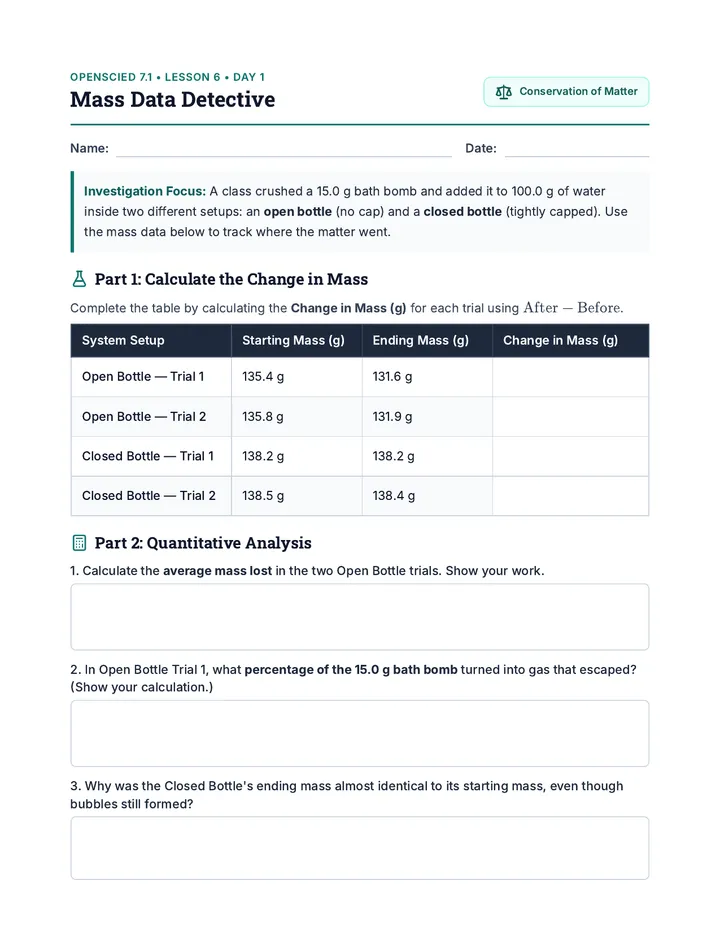
Mass Data Detective Worksheet

Particle Rearrangement Lab

A two-day instructional sequence for OpenSciEd 7.1 Lesson 6 connecting quantitative mass and gas data to particle rearrangement and conservation of matter during chemical reactions.

R

rnmurphy

4
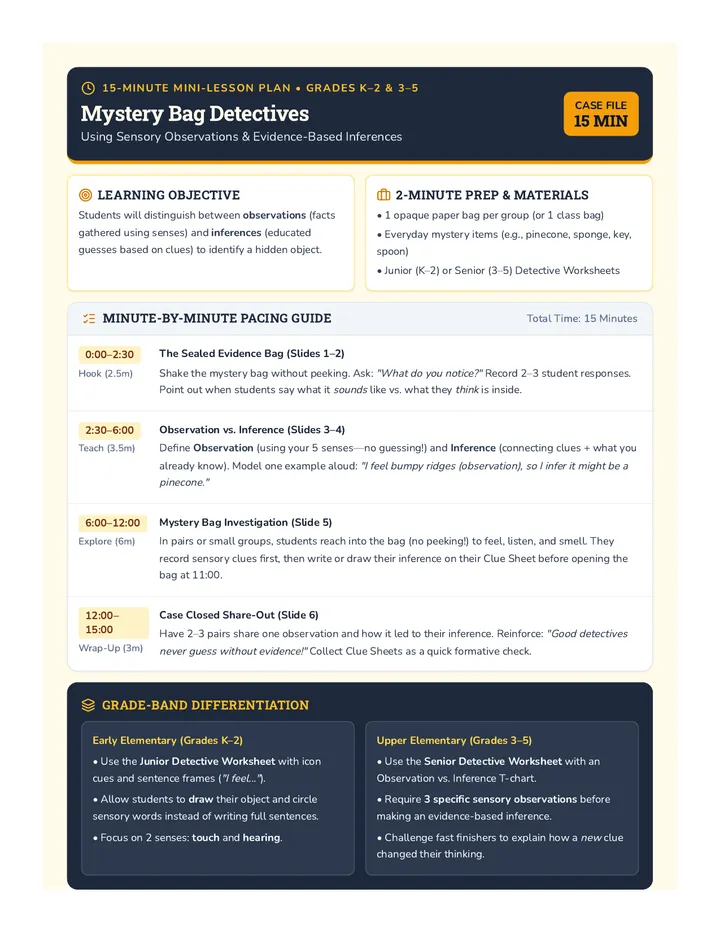
Mystery Bag Teacher Guide

Mystery Bag Detectives

A 15-minute cross-curricular mini-lesson where students act as detectives using sensory observations and evidence-based inferences to solve a mystery bag challenge. Includes differentiated student worksheets for Early Elementary (K-2) and Upper Elementary (3-5), a visual slide deck, and a minute-by-minute teacher guide.

Lenny Avatar
Lenny
4
Organism Sorting Cards

Organism Sorting Cards

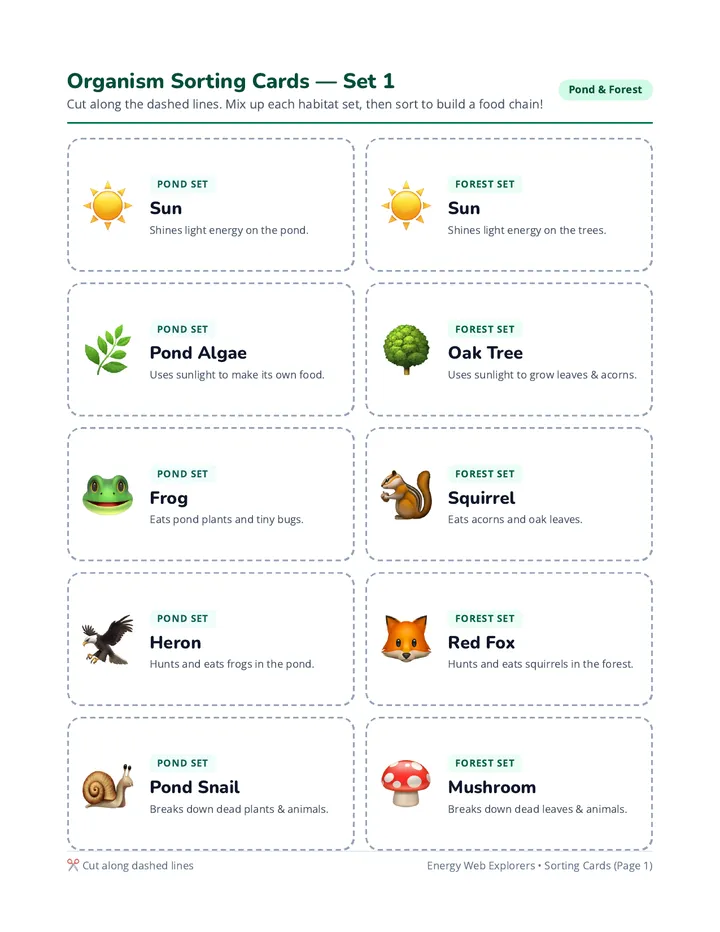
Printable hands-on organism sorting cards for Pond, Forest, and Meadow habitats, plus role label cards (Sun, Producer, Consumer, Decomposer) designed with large visuals and dashed cut lines for self-contained learners.

CF

Carissa Fenner

Particle Detectives Slides

Atom Rearrangers

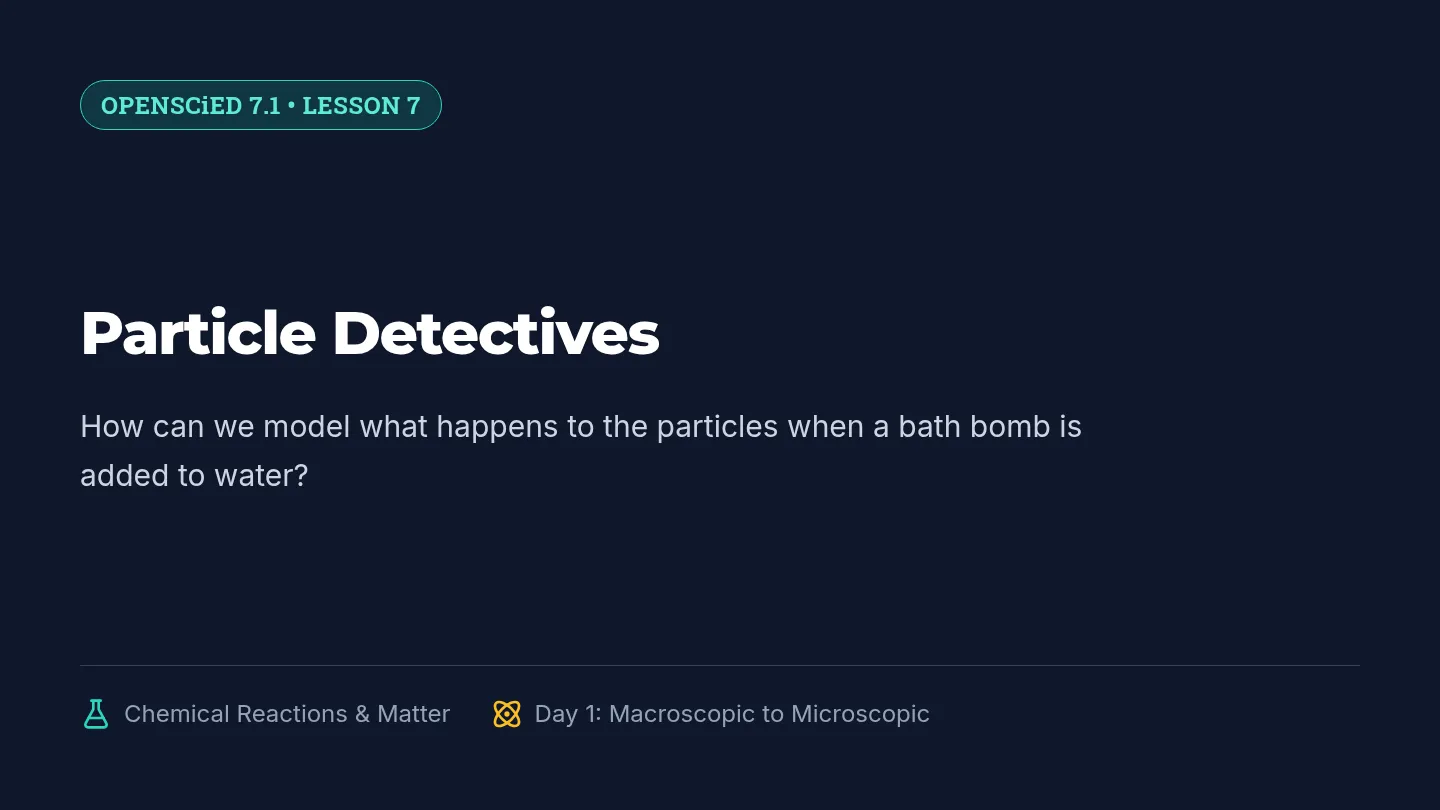
A 3-lesson 7th-grade science sequence centered on OpenSciEd Unit 7.1 Lesson 7. Students investigate how atoms rearrange during chemical reactions to form new substances while conserving mass.

R

rnmurphy

11
Gravity Force Attraction Reader

Forces and Motion

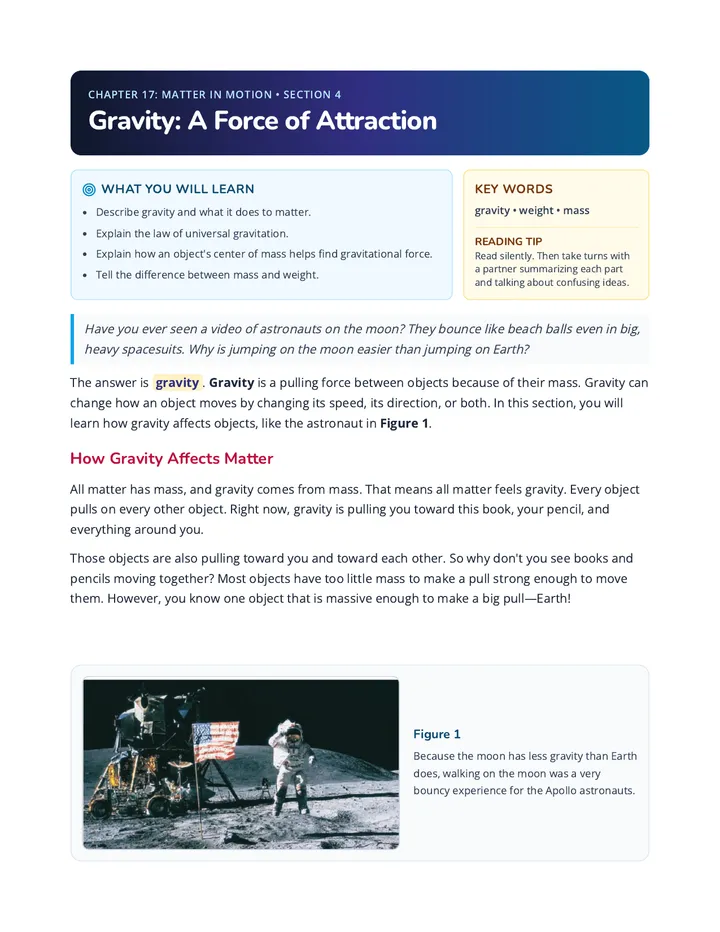
A seventh-grade science lesson set covering gravity as a force of attraction and how to interpret and create distance-time motion graphs.

CE

Cameron E. Hill

6
Food Chain Teacher Guide

Food Chain Teacher Guide

A teacher-ready 2-page lesson plan for self-contained life science on food chains, featuring clear objectives, materials checklist, step-by-step instructional pacing, UDL differentiation, and multiple response mode prompts (speaking, pointing, drawing, writing).

CF

Carissa Fenner