A 30-minute introductory lesson for 9th graders exploring the relevance of history, focusing on learning from the past, identity formation, and critical thinking.
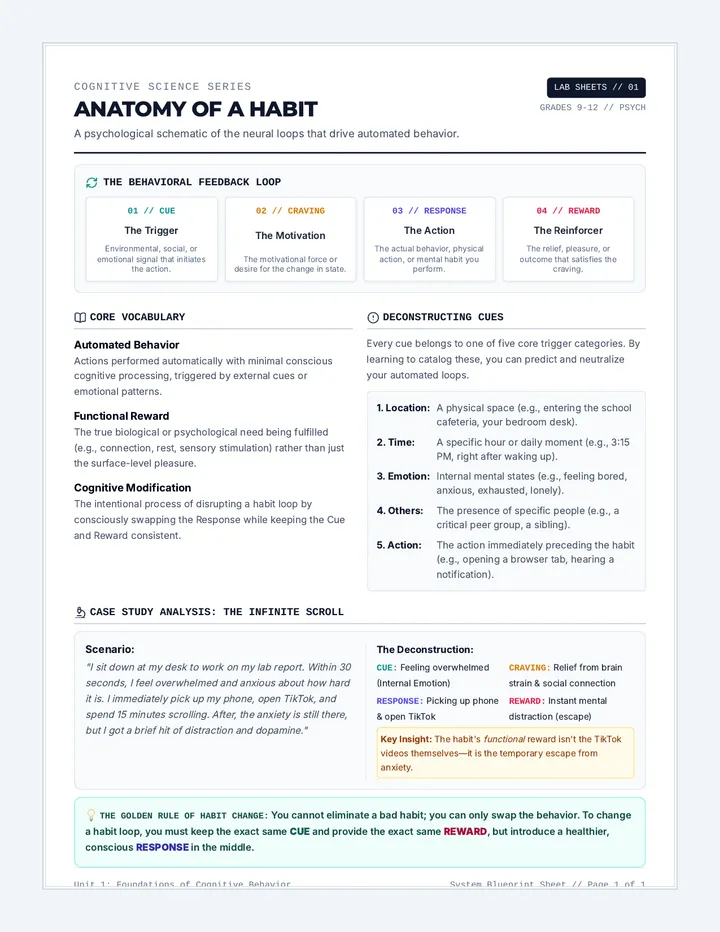
A three-part cognitive psychology series designed for Grades 9-12. Students learn the science of automation, explore how to isolate triggers and cravings, redesign unhelpful routines, and restructure their environments to make habit modification effortless.
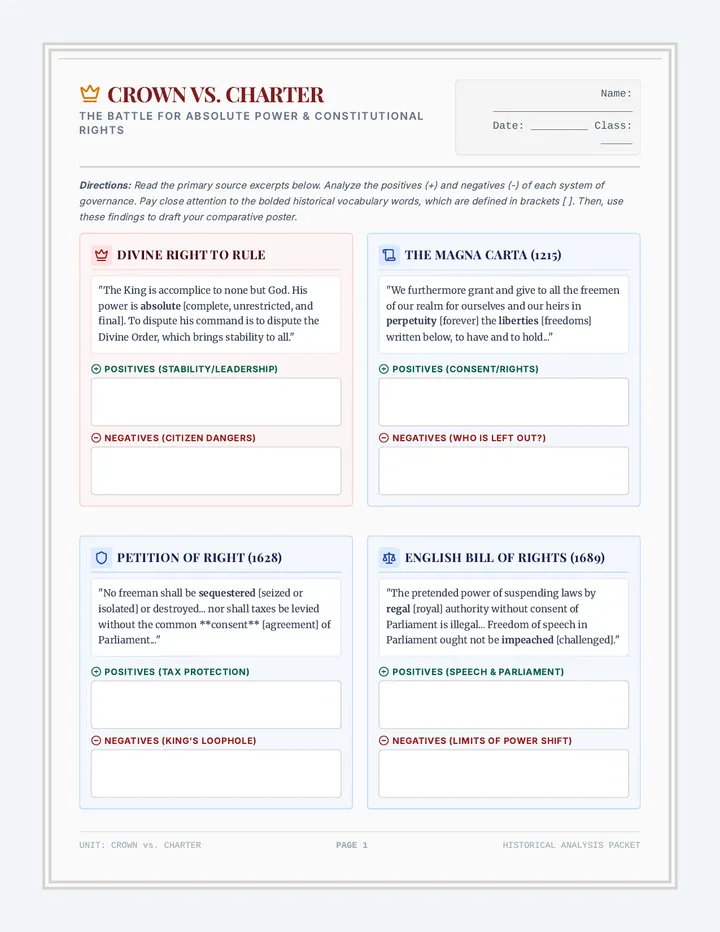
A lesson exploring the historic struggle between absolute royal authority (Divine Right to Rule) and the rise of constitutional law through key English documents. Students analyze the positives, negatives, and key concepts like consent of the governed, leading to a collaborative poster project.
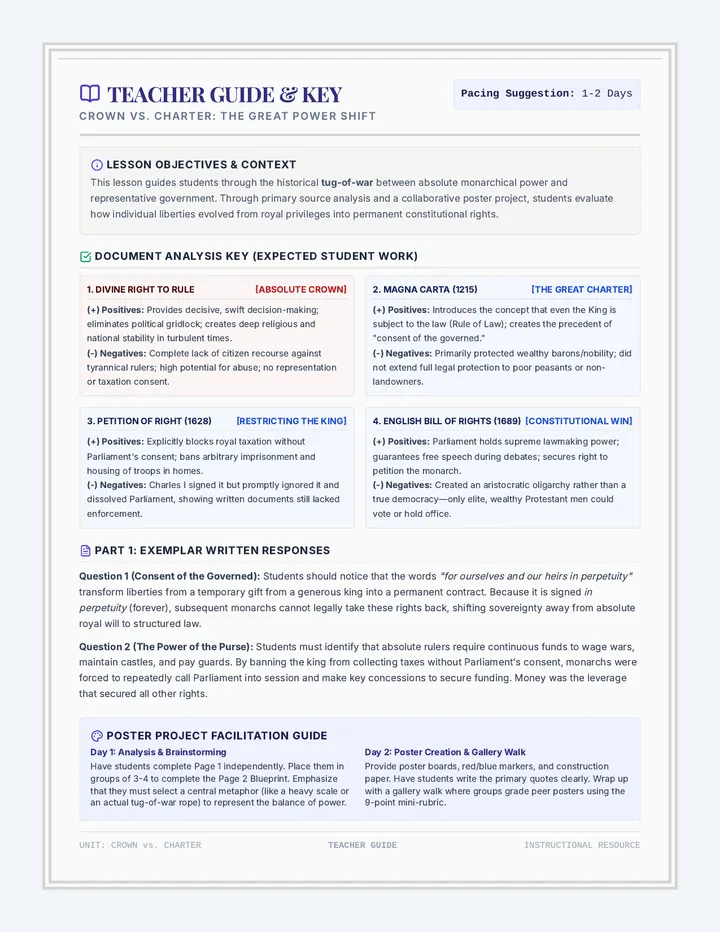
A comprehensive, 1-page teacher facilitation guide and answer key. It features pedagogical background, expected student responses for the positives and negatives of each document, exemplar answers for the critical analysis questions, and structural tips for launching the poster project.
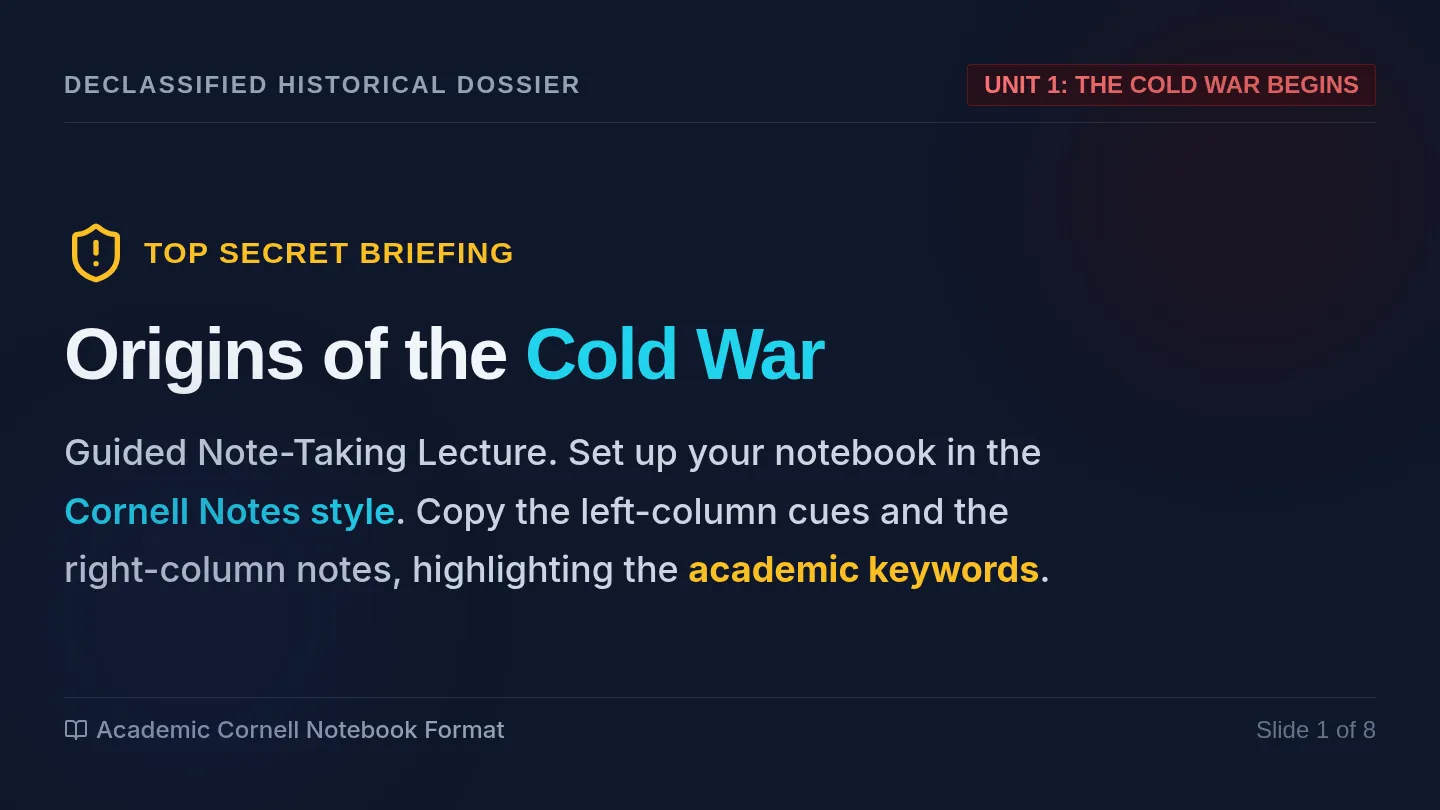
Create a multi-lesson sequence covering the Cold War, focusing on origins, global expansion, and domestic impacts.
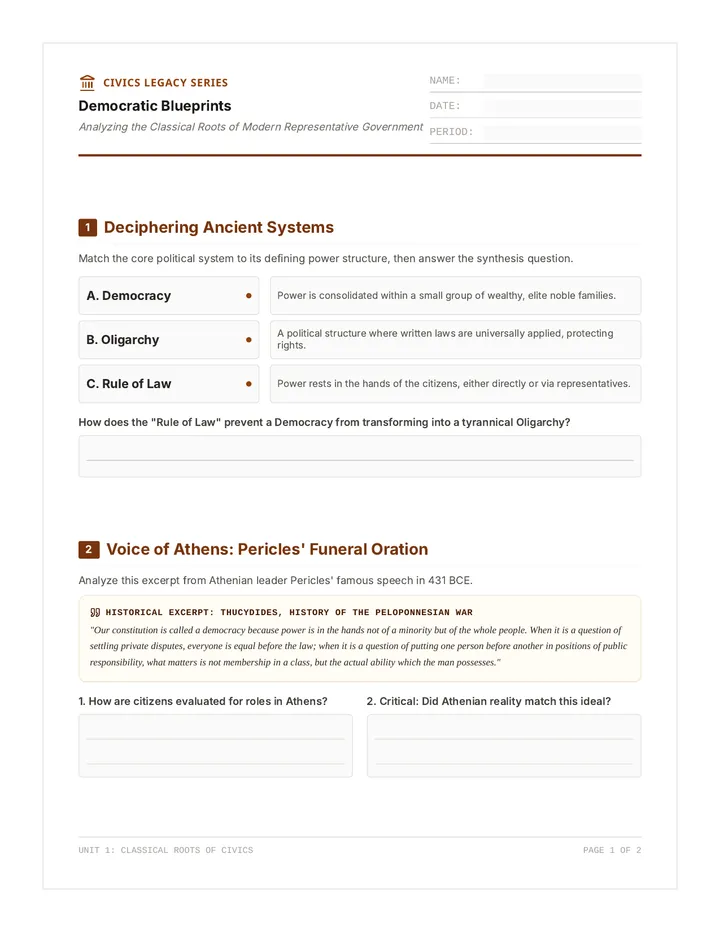
An immersive lesson examining how ancient Athens and Rome shaped the modern American government. Students will analyze primary sources (Pericles and the Twelve Tables), define key political terms (democracy, oligarchy, rule of law), and critically compare ancient exclusions with modern democratic values.
A visual, structured 2-page student worksheet and poster activity guide. It guides students through the positives and negatives of the Divine Right to Rule, the Magna Carta, the Petition of Right, and the English Bill of Rights with bolded vocabulary definitions, text-dependent analysis questions, a poster blueprint layout, and a grading rubric.
A comprehensive unit on child development from birth through age 18, focusing on physical, cognitive, and social-emotional growth across early childhood, middle childhood, and adolescence.
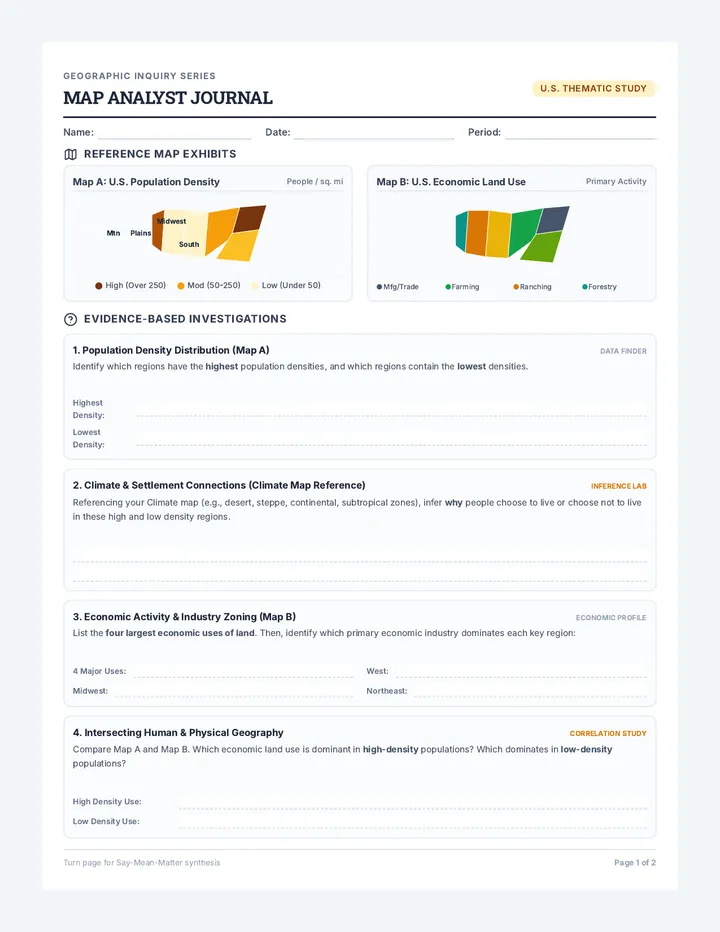
A geography lesson where students analyze thematic maps of the United States—including population density, land use, climate, and historical culture areas—and synthesize their findings using a Say-Mean-Matter graphic organizer.
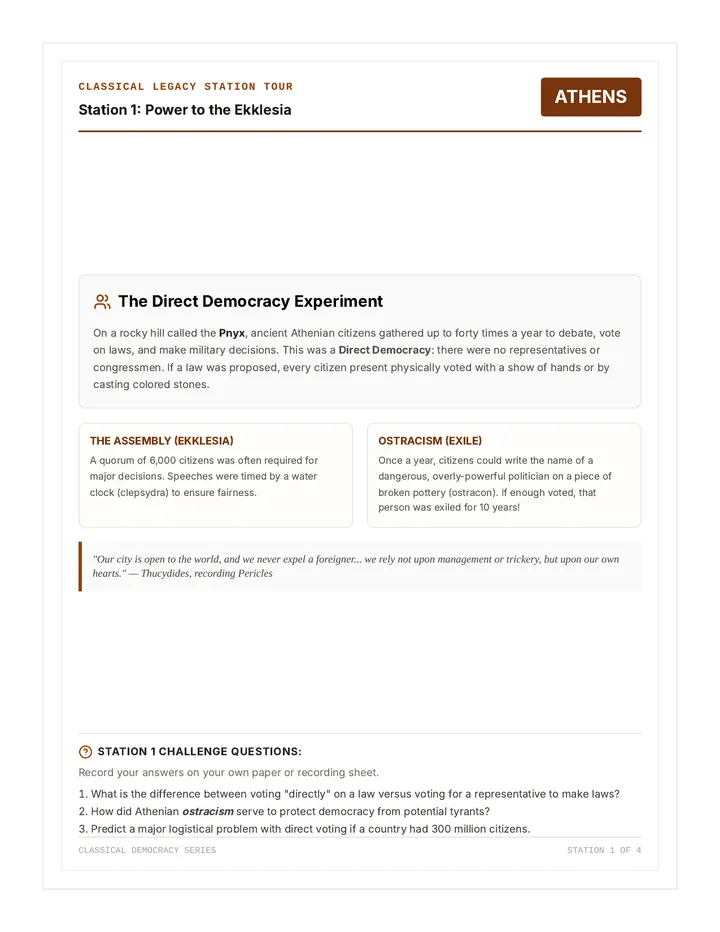
A 4-station classroom printable set focusing on Athenian direct democracy, Pericles' civic expectations, the Roman representative senate, and how the Twelve Tables mirror the modern US Constitution.
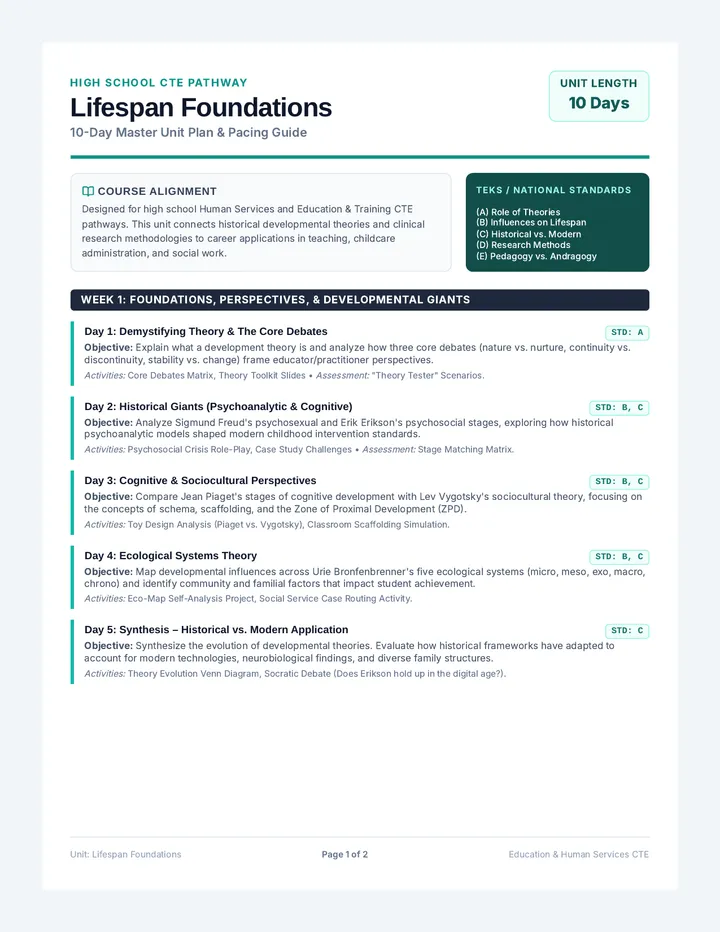
A comprehensive instructional sequence designed for high school CTE pathways in Education & Training and Human Services. The unit introduces students to the foundational theories, modern research methodologies, and instructional models (pedagogy vs. andragogy) that govern lifespan human development.
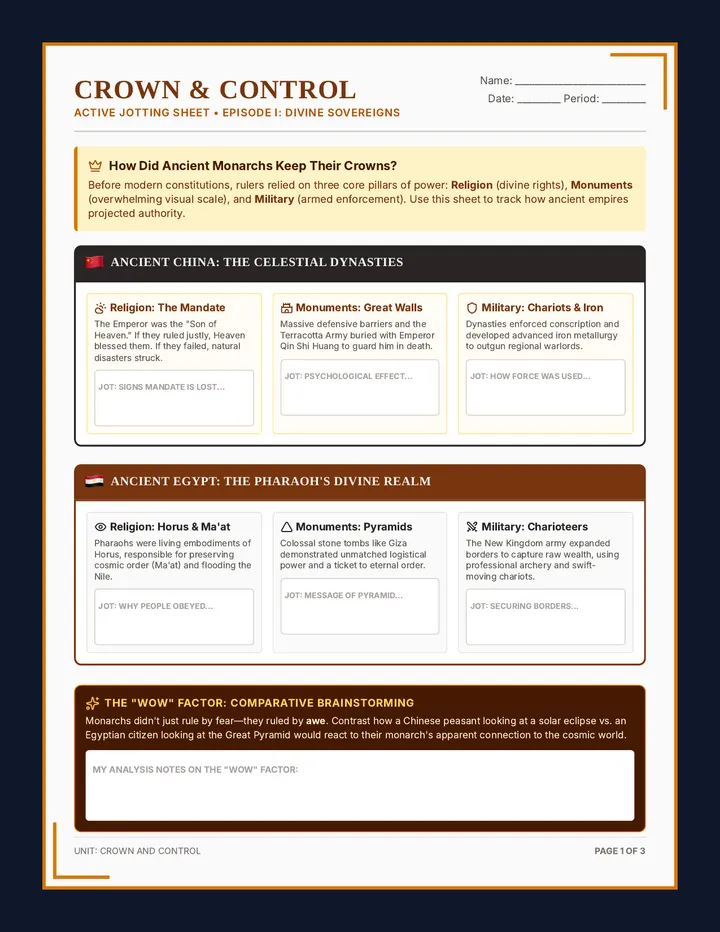
An interactive lesson tracing the history of monarchy from ancient civilizations (China, Egypt, Rome) to the modern era. Focuses on methods of control (religion, monuments, military), the pivotal shift of the Magna Carta, and how constitutional monarchies function today.
A primary-source worksheet analyzing excerpts from Pericles' Funeral Oration and the Roman Twelve Tables, with structured writing spaces for comparative analysis and vocabulary synthesis.