An undergraduate-level introduction to the three tiers of judicial scrutiny under the Equal Protection Clause, featuring a legislative drafting activity and video analysis.
A deep dive into Steven Spielberg's 'Lincoln', focusing on the political maneuvers behind the 13th Amendment and the historical figures involved.
A comprehensive exam and answer key based on the 2012 film 'Lincoln', focusing on the political maneuvers behind the 13th Amendment and the final days of the Civil War.
A comprehensive assessment and review of the film Lincoln, focusing on the 16th President's leadership, the ethical dilemmas of the 13th Amendment, and the political strategy of the Civil War era.
A lesson exploring the presidency of Herbert Hoover and his support for Civil Rights during the Harlem Renaissance, designed for middle school students needing accessible text.
This lesson explores the key components of LBJ's Great Society, specifically Medicare, urban renewal, and the War on Poverty, through direct instruction and primary source analysis.
A 30-minute exploration of the Space Race, focusing on the competition between the US and USSR, Operation Paperclip, and the resulting transformation of American education and industry.
An in-depth exploration of the movie 'Remember the Titans', focusing on the T.C. Williams High School football team's journey toward unity and the social challenges of integration.
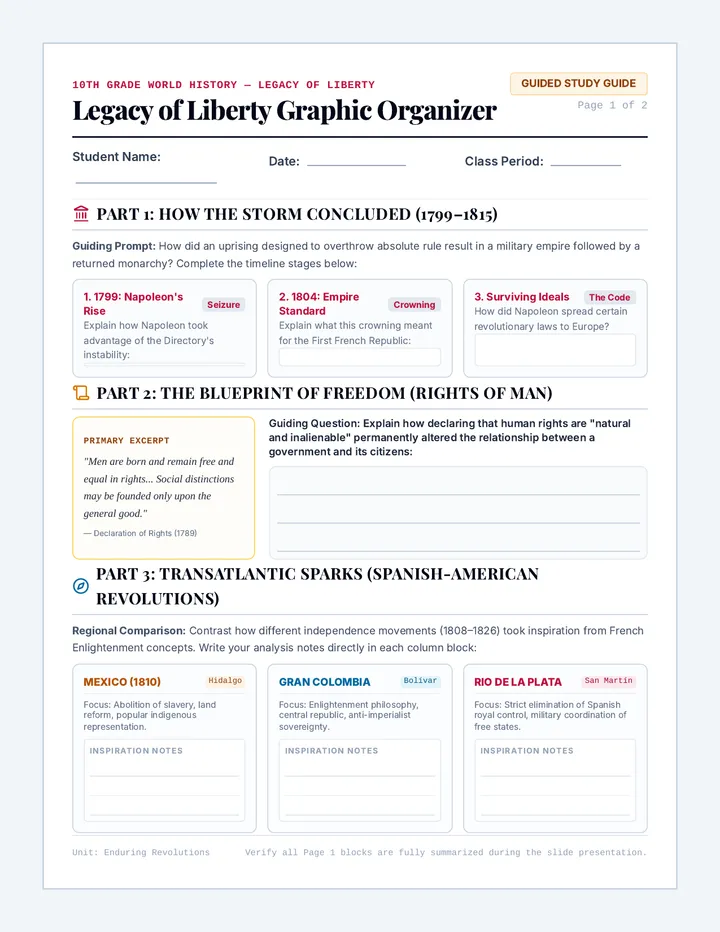
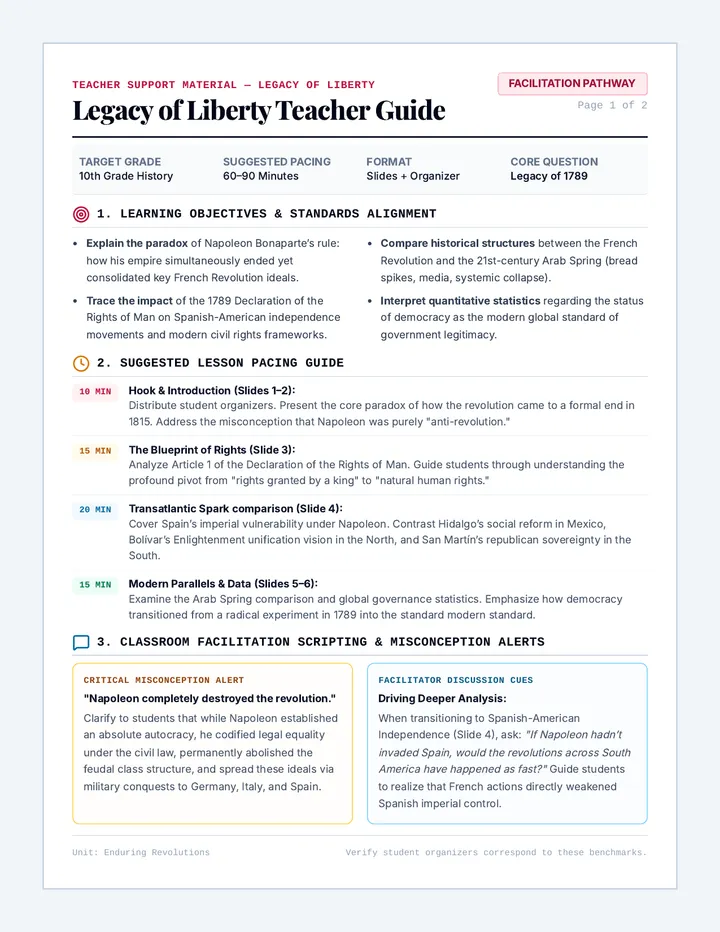
A look into the lives, systems, and vocabulary of the thirteen original American colonies.
An immersive gallery walk exploring the core beliefs and historical influences of Hinduism, Buddhism, Judaism, Christianity, Islam, and Taoism. Students rotate through visual stations to build a comparative understanding of global spiritual traditions.
This lesson compares the exclusionary nature of citizenship in Ancient Athens with the 1857 Dred Scott decision, exploring how legal standing and individual rights were historically denied based on birth and status.
This lesson explores the methods used by Benito Mussolini and Adolf Hitler to establish totalitarian regimes in Italy and Germany. Students will analyze tactics such as propaganda, terror, economic manipulation, and cults of personality to understand how 'total' control was achieved.
A comprehensive 35-minute lesson exploring the Cold War nuclear era, focusing on Tennessee State Standard US.69. Students will analyze the impact of atomic testing, civil defense strategies, and the logic of Mutual Assured Destruction.
A jigsaw activity where students become experts on specific facets of globalization—definitions, drivers/impacts, and economic consequences—before sharing their findings with peers to form a complete understanding of the topic.
An exploration of Ancient Roman religion, from the polytheistic pantheon and state rituals to the historical transition toward Christianity.
A high school lesson focused on developing empathy and critical thinking through respectful dialogue about social issues, identity, and community impact.
This lesson examines the ideological clash between Booker T. Washington and W.E.B. Du Bois regarding the best path for African American progress in the post-Reconstruction South. Students will perform a critical analysis of primary sources and compare their distinct strategies for civil rights, education, and social status.
A 1st-grade lesson focused on identifying past events and understanding what happened 'before' using storytelling and visual cues. Students act as 'Memory Detectives' to piece together sequences.
Integrating social empathy and neurobiological insights into systemic advocacy, policy development, and macro-level social change efforts.
Examining interbrain synchrony and its role in group dynamics, collective action, and building resilient community movements.
An exploration of the neural mechanisms of burnout and secondary traumatic stress, providing practitioners with evidence-based compassion interventions for recovery.
Bridging the gap between individual neurobiology and large-scale social systems, focusing on how neural processes inform macro social work interventions.
An introduction to the foundational concepts of social neuroscience, exploring how human brains are biologically wired for social interaction and systemic belonging.
Week 5 of the ethics storyline: The funder unexpectedly withdraws, leaving the organization in a sustainability crisis that forces a final decision on its future and ethical legacy.
Week 4 of the ethics storyline: The funder mandates a shift toward high-metric 'job training' programs, forcing the organization to defund its 'harm reduction' services for the most vulnerable.
Week 3 of the ethics storyline: A local policy change puts the organization's mission at direct odds with the funder's corporate interests, testing the organization's commitment to advocacy.