Lenny.com
Explore
Create
ActivitiesNewMathEnglish Language ArtsScience & EngineeringSocial StudiesGlobal LanguagesHealth & Physical EducationSpecial EducationCounseling & Life SkillsArts & CreativityESL
Lenny.com
Lenny.com
Explore
Create
ActivitiesNewMathEnglish Language ArtsScience & EngineeringSocial StudiesGlobal LanguagesHealth & Physical EducationSpecial EducationCounseling & Life SkillsArts & CreativityESL
Lenny.com
Lenny.com

Solutions

Lenny for EducatorsLenny for SchoolsLenny for Districts

Product

ExploreSign inCreateSupportAbout

Resources

Getting startedMTSS Acceleration Program

Newsletters

School Funding Newsletter

© 2026 Lenny Learning Inc.

TermsPrivacyAccessibility
LinkedInInstagramX
Lenny
Social StudiesSocial Studies PracticesLocation WordsMapsOrder EventsChronology and CausationEvaluating SourcesHistorical ThinkingGeography, Humans, & the EnvironmentAmerican Symbols and LandmarksCitiesStatesState CapitalsRegions of the United StatesGeographic SkillsPhysical GeographyHuman GeographyRegional GeographyGeography of AfricaGeography of AsiaGeography of EuropeGeography of OceaniaGeography of the AmericasSociety and Environment of EuropeSociety and Environment of AsiaSociety and Environment of The AmericasSociety and Environment of the Middle EastSociety and Environment of AfricaHistoryPrehistoryComparing Ancient River CivilizationsAncient MesopotamiaAncient Egypt and KushAncient South AsiaEarly ChinaGreeceRome and the Byzantine EmpireAncient World HistoryNative Peoples of North AmericaNative Peoples of Mesoamerica and South AmericaAfrican EmpiresMedieval AsiaMedieval EuropeThe Silk RoadMedieval HistoryIslamic EmpiresWorld ReligionsRenaissance PeriodAge of ExplorationThe Thirteen ColoniesThe American RevolutionUS History Early RepublicFounding of the United StatesUS History AntebellumUS Civil WarReconstruction PeriodThe Gilded AgeUS ImperialismWorld ImperialismWorld War IUS History 1920sGreat DepressionWorld War IIThe Cold WarUS History 1950-60sUS History 1960s-70sWorld History 20th CenturyContemporary US HistoryContemporary World HistoryHolidaysCivics and GovernmentCitizenshipGovernment FoundationsThe ConstitutionUS ConstitutionExecutive BranchLegislative BranchJudicial BranchState and LocalPolitical ParticipationPublic PolicyPolitical SystemsPower and AuthoritySocial MovementsDefining DevianceTheories of DevianceCrime and Criminal JusticeEconomicsBasic Economic PrinciplesSupply and DemandWhat is MoneyEconomic FundamentalsMicroeconomicsMacroeconomicsBanking and FinanceEconomic SystemsGlobal EconomicsCorporations and PowerThe Changing WorkplaceUnemployment and LaborClass and InequalitySocial MobilityGlobal InequalityPsychologyHistory of PsychologyPsychology as a ScienceBrain and Nervous SystemNeuroscience and BehaviorGenetics and BehaviorSleep and ConsciousnessSensory ProcessesPerceptual OrganizationClassical ConditioningOperant ConditioningObservational LearningCognitive LearningMemory ProcessesThinking and Problem SolvingLanguage and CognitionTheories of MotivationStress and CopingPrenatal and Infant DevelopmentChildhood DevelopmentAdolescent DevelopmentAdulthood and AgingSelf and IdentitySocial CognitionSocial InfluenceAttraction and RelationshipsGroup BehaviorPrejudice and DiscriminationAnxiety and Mood DisordersClinical PsychologyForensic PsychologyPhilosophy & EthicsIntroduction to PhilosophyMajor Philosophers & IdeasMind and Body ProblemFree Will vs DeterminismEthics & MoralityReligion & PhilosophyPolitical Philosophy

River Valley Builders

Students compare the four major river valley civilizations—Mesopotamia, Egypt, Indus Valley, and China—across environment, power and authority, and science and technology. Includes both a standard blank graphic organizer and a scaffolded guided chart with word banks and sentence-starter prompts for developing readers.

Eebakke

You might also like

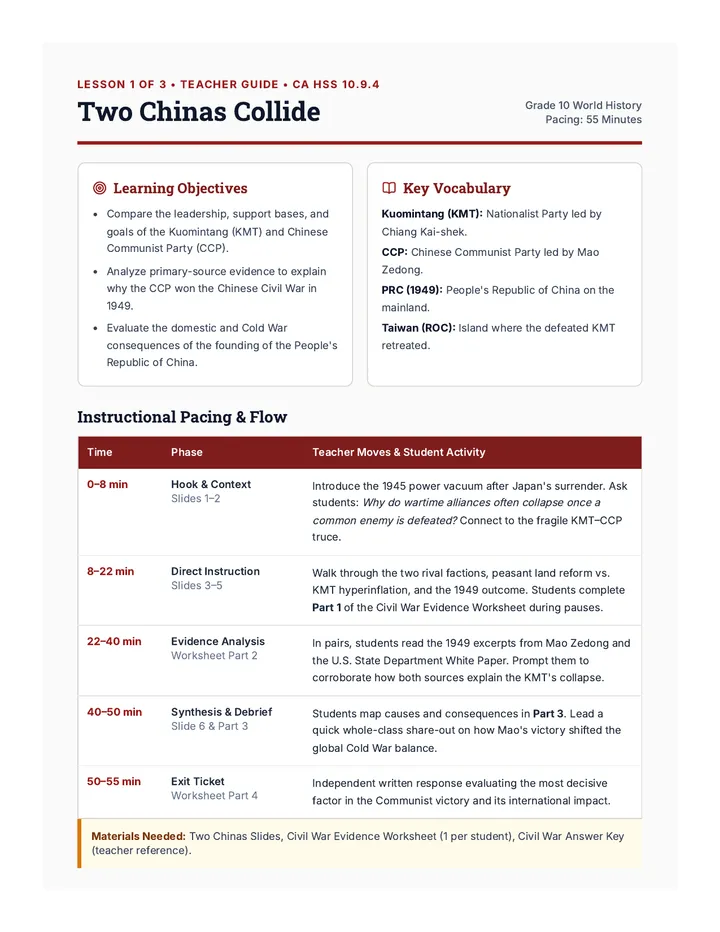
Two Chinas Lesson Plan

Red China Upheavals

A three-lesson Grade 10 World History sequence analyzing the Chinese Civil War, Mao Zedong's revolutionary campaigns, and post-Mao economic reforms culminating in the 1989 Tiananmen Square uprising (CA HSS 10.9.4). Students examine primary-source evidence, cause-and-effect relationships, and competing historical perspectives.

ST

Spencer Thomas

12
Soviet Collapse Slides

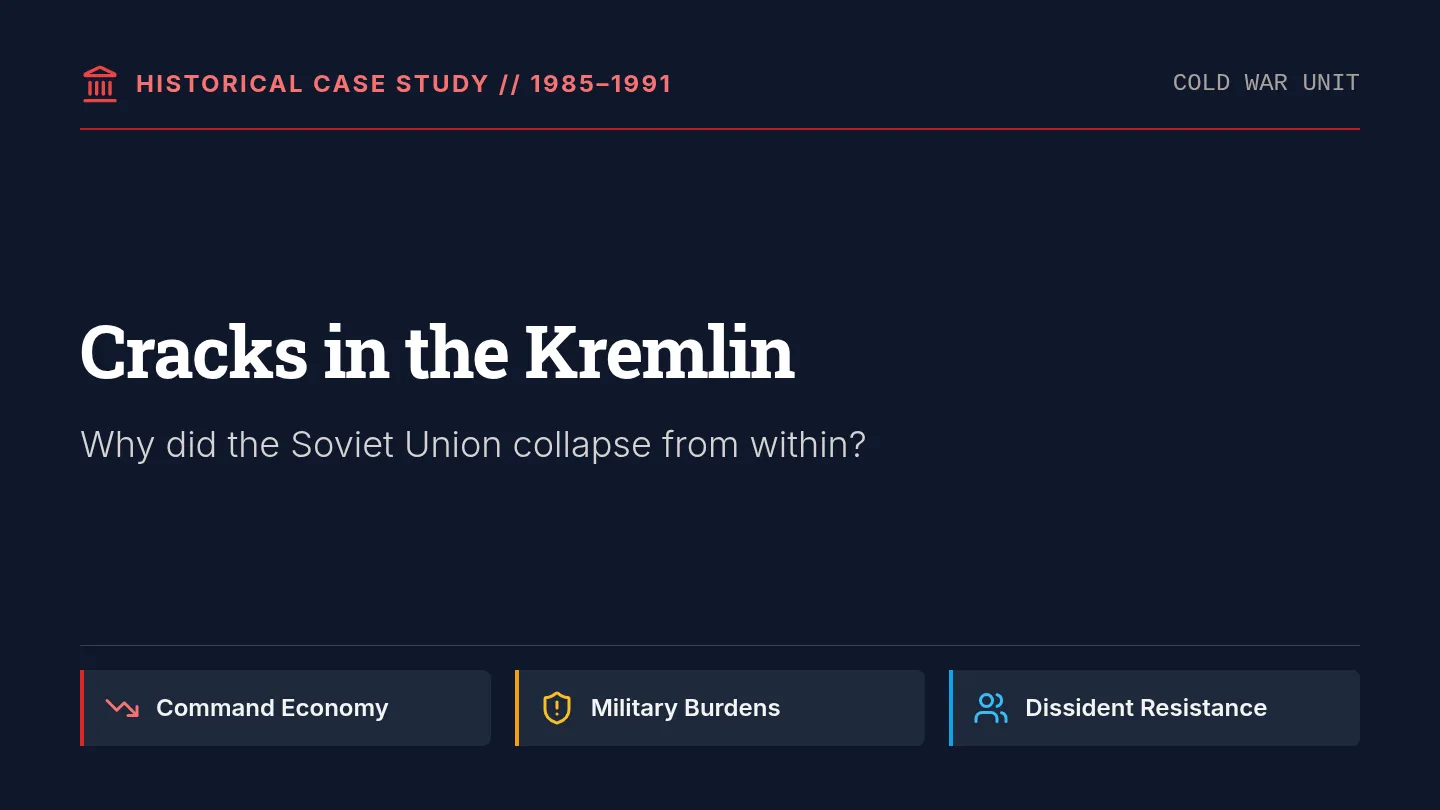
Cracks in the Kremlin

Students analyze the interconnected causes of the Soviet Union's collapse between 1985 and 1991, examining command economy failures, unsustainable military commitments, and growing dissident resistance across satellite states and non-Russian republics. Through a presentation, a declassified dossier investigation, and a summative assessment, students evaluate how internal stagnation and external pressures dismantled the USSR.

ST

Spencer Thomas

4
Map Navigator Retake Answer Key

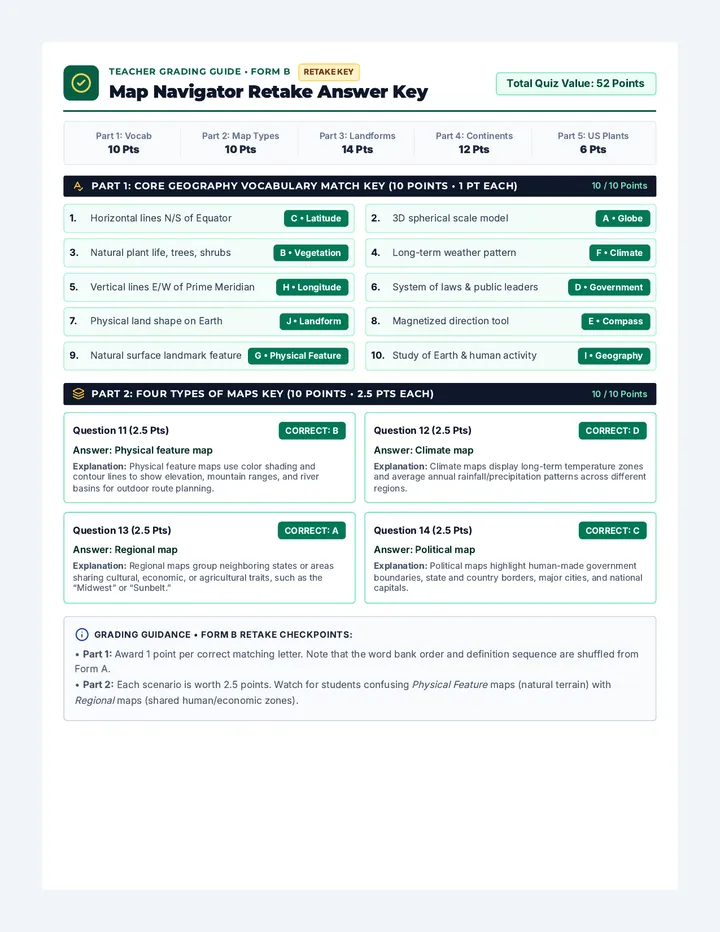
Map Navigator Retake Answer Key

A two-page teacher grading guide and answer key for the Map Navigator Retake Quiz (Form B), featuring complete solutions, explanations, a 52-point section breakdown, grading guidance, and a percentage grading scale, with Part 3 matching the original landform map numbering.

EM

Evangelia Moran

Case Launch Slides

Turning Point Detectives

A 6-day Grade 8 interdisciplinary inquiry project focused on the World War II decision to use the atomic bomb, integrating Wisconsin Social Studies standards (SS.Inq3–4, SS.Hist1–4) and NGSS/WSS Physical Science standards (MS-PS1, MS-PS2, MS-PS3, MS-PS4) with built-in accommodations for students with reading disabilities.

KD

Kristin Drake

7
New World Vocab Cards

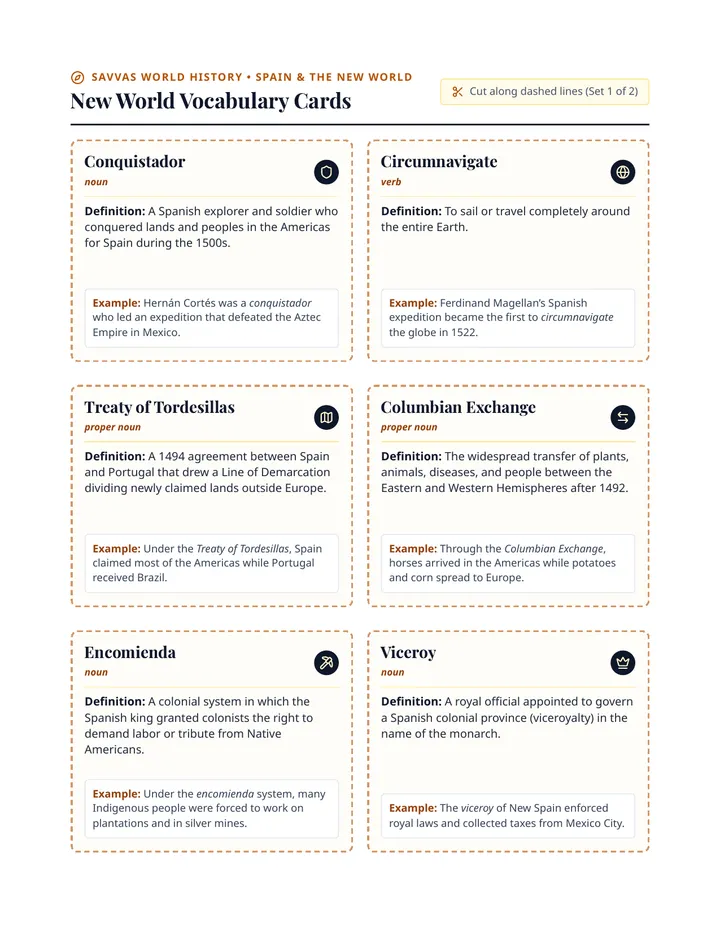
New World Lexicon

A Savvas World History vocabulary lesson focused on Spanish exploration, conquest, and colonization in the New World. Includes printable study flashcards, a two-page practice worksheet, and a teacher answer key.

AC

Audrey Cloud

3
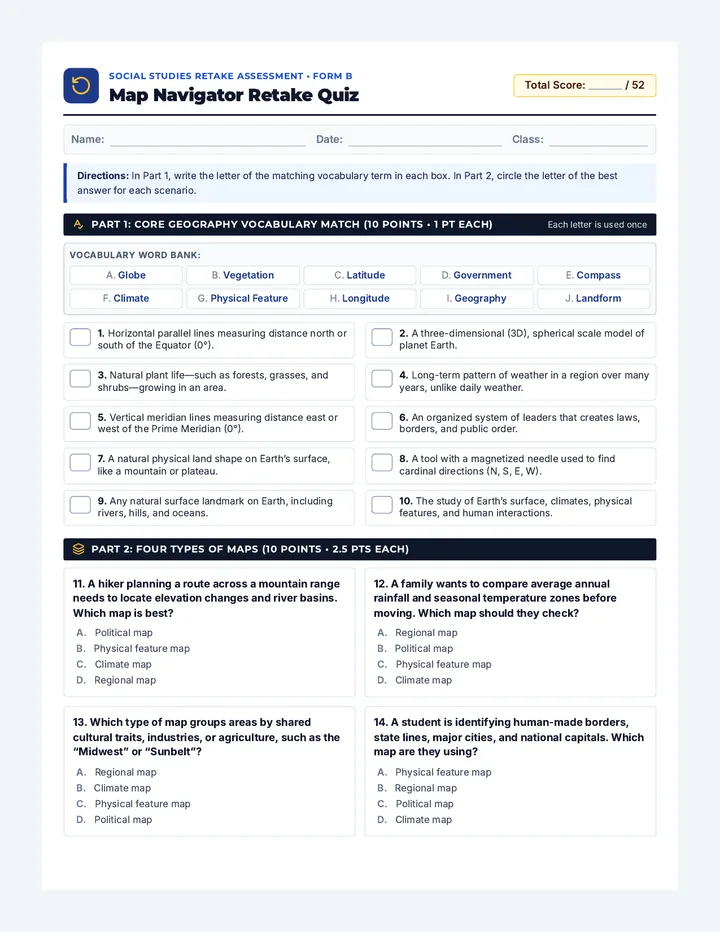
Map Navigator Retake Quiz

Map Navigator Retake Quiz

A three-page printable retake assessment (Form B) based on the Map Navigator Study Guide, featuring reordered and rephrased questions for vocabulary, map types, world continents and oceans, and U.S. vegetation regions, while keeping Part 3's 14-feature landform and water map identical to the original quiz.

EM

Evangelia Moran

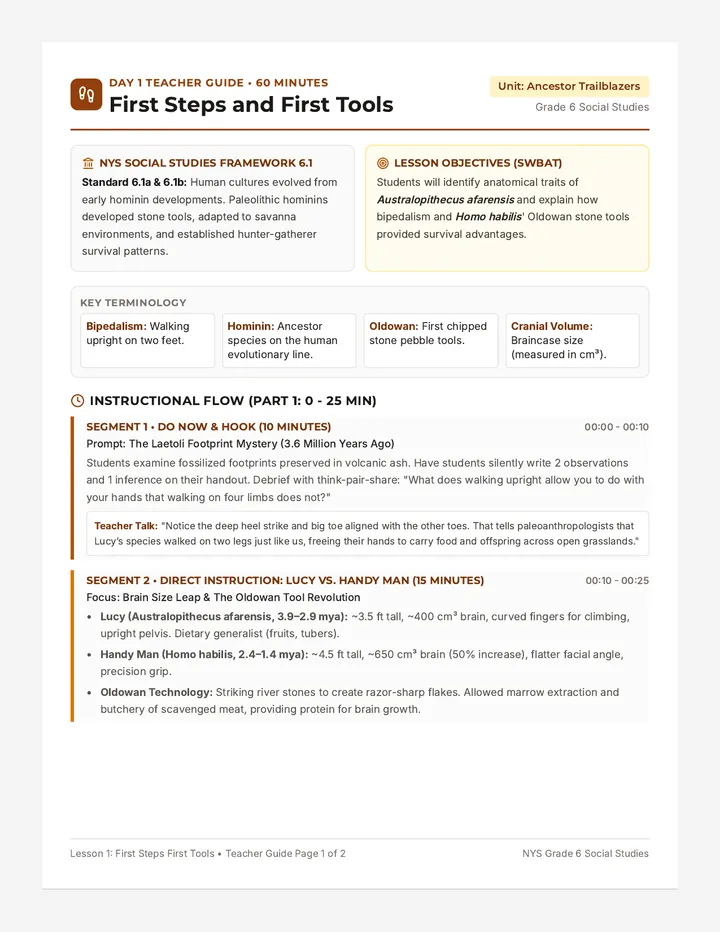
First Steps Lesson Plan

Ancestor Trailblazers

A 3-day 6th-grade social studies mini-unit exploring the five major human ancestors through fossil evidence, environmental adaptations, and material culture, aligned to NYS Framework Standard 6.1 and culminating in an ancestor trading card project.

A

awechsler

9
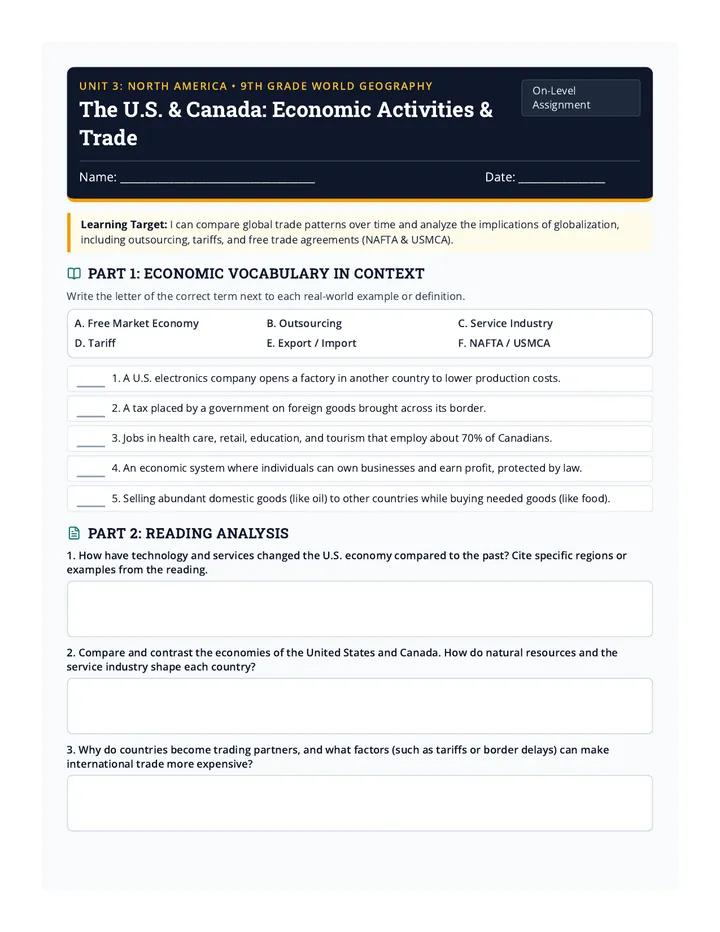
North American Trade Assignment

Trade Across Borders

Differentiated 9th-grade World Geography assignments on North American economic activities, world trade, outsourcing, tariffs, and NAFTA/USMCA. Includes three tailored versions: an on-level 9th-grade assignment, a SPED-accommodated guided worksheet, and an English Learner (ELL) language-supported worksheet.

JD

Jaiden Dawn Kennedy

4
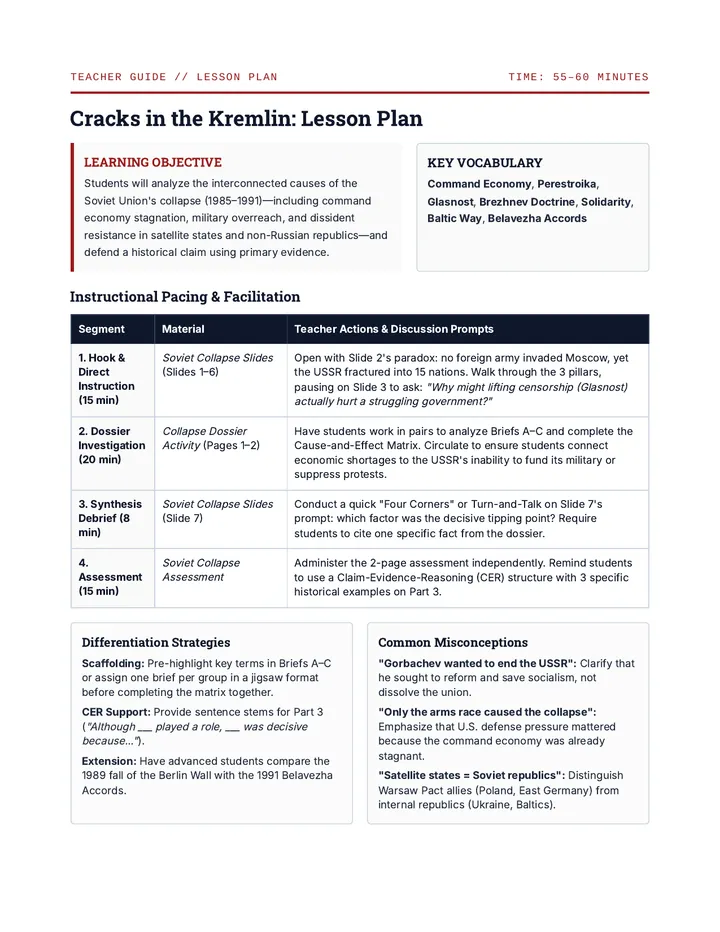
Kremlin Collapse Lesson Plan

Kremlin Collapse Lesson Plan

A 2-page teacher guide and lesson plan providing learning objectives, a 60-minute pacing guide, differentiation strategies, common misconceptions, and complete answer keys and rubrics for both the student dossier activity and summative assessment.

ST

Spencer Thomas

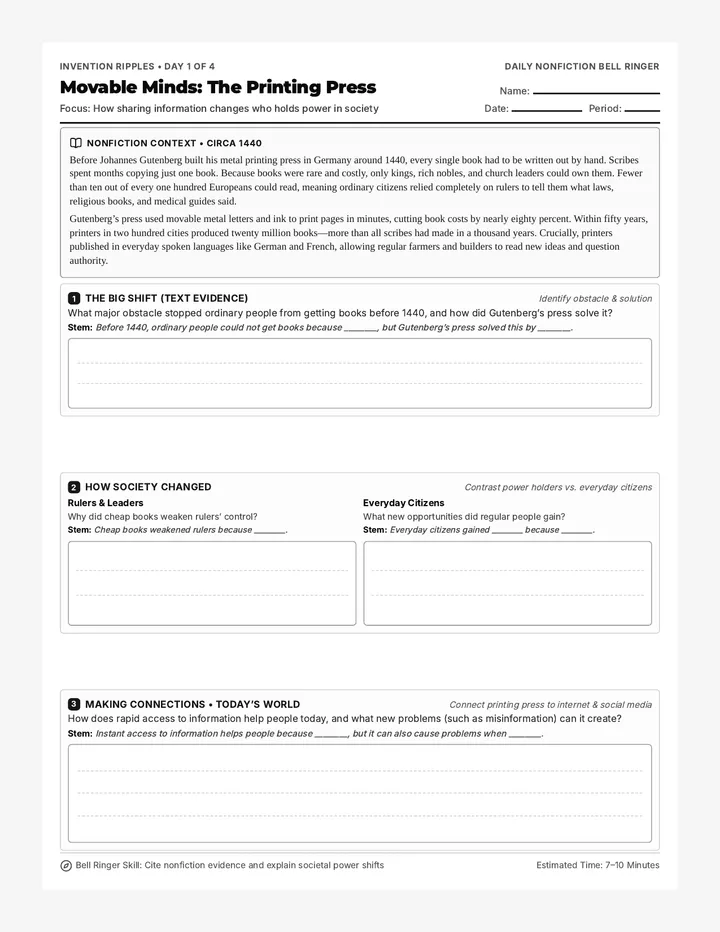
Movable Minds Bell Ringer

Invention Ripples

A four-part bell ringer series investigating how landmark inventions reshaped daily life, human equity, and societal progress.

CP

Camryn Pope

10
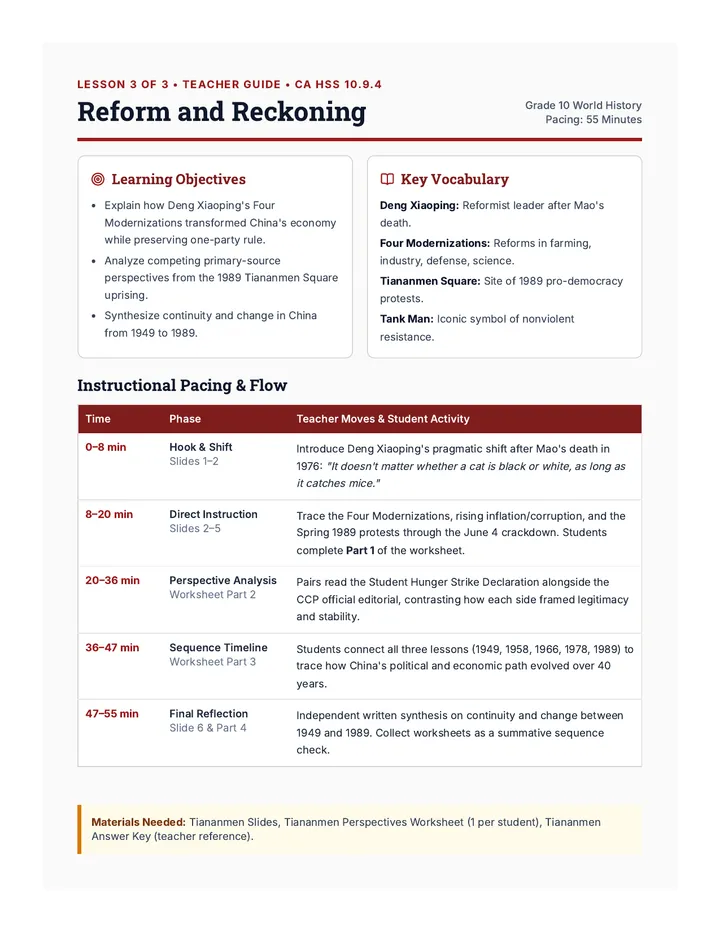
Tiananmen Lesson Plan

Reform and Reckoning

Students trace China's shift under Deng Xiaoping's economic reforms and analyze the causes, events, and global impact of the 1989 Tiananmen Square pro-democracy uprising.

ST

Spencer Thomas

4
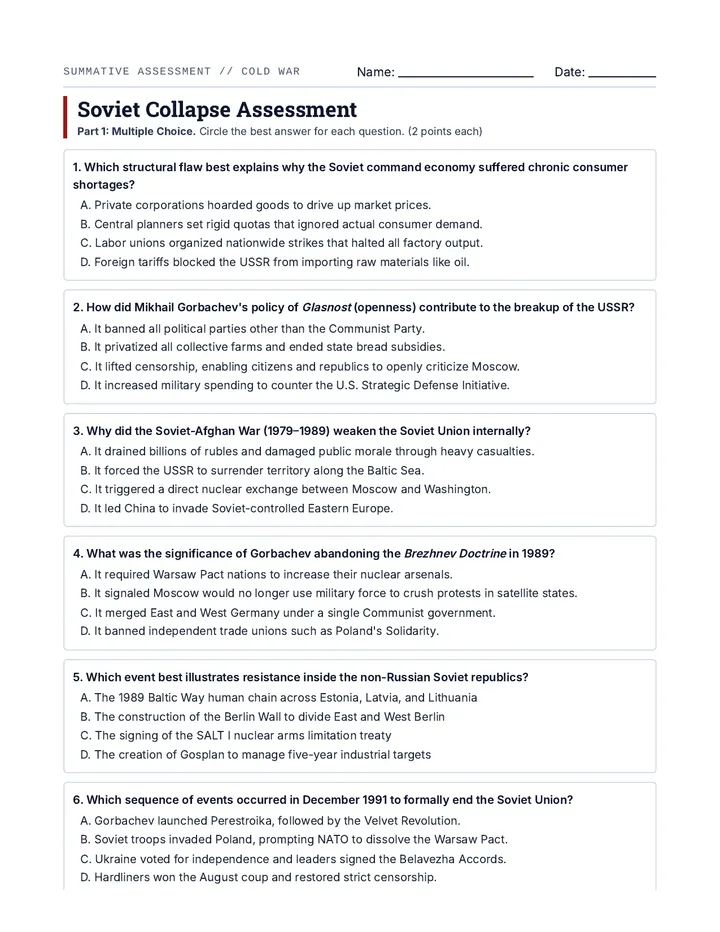
Soviet Collapse Assessment

Soviet Collapse Assessment

A 2-page summative assessment evaluating students' understanding of the Soviet Union's collapse, featuring six multiple-choice questions, an evidence-categorization section, and a Claim-Evidence-Reasoning (CER) constructed response.

ST

Spencer Thomas