Rebel Briefing Guide Rebel Briefing Guide
Teacher Facilitation: The Ethics of Compromise
Subject Civics / Gov
Lesson Objective
Students will analyze the role of compromise in achieving political stability by debating the Plan de Iguala . They will evaluate whether sacrificing radical ideals (like complete social restructuring) is a necessary cost for national independence.
The Case Study: Plan de Iguala (1821)
"The Three Guarantees: Religion (Catholicism), Independence (from Spain), and Union (equality between Europeans and Americans)."
The Compromise: Conservative General Iturbide joined forces with the revolutionary Guerrero.The Cost: Mexico became a monarchy (initially) and kept the Church's high status, delaying the radical social reforms sought by Morelos.
Pacing Guide
Warm-up 5m
Video Analysis 10m
Role-Play Debate 25m
Closure 5m
Key Vocabulary
Pragmatism Radicalism Plan de Iguala Sovereignty
Facilitation Pro-Tips
Warm-up Discussion
"Is it better to stick to your pure ideals and lose, or compromise with the enemy to win?"
Push students to define "winning." If you compromise your values to win, is it still the same victory? Use modern political examples (bipartisanship) if students struggle with the abstract concept.
Debate Setup
Split the room physically. Ensure the Radicals understand they are fighting for the legacy of Morelos (abolition of slavery, end of the caste system, secularism). Ensure the Pragmatists understand Iturbide's motivation: without his conservative army, the revolution would likely fail and the Spanish Crown would remain.
The Video Moment
Pause at 9:21 when the "Three Guarantees" appear. Ask: "Which of these guarantees appeals to a revolutionary? Which appeals to a conservative?" This sets the stage for the debate.
Discussion Prompting
For Radicals:
"If we accept a King now to get independence, will we ever truly be a Republic? Are we just trading a Spanish master for a Mexican one?"
For Pragmatists:
"Hidalgo and Morelos are dead. Their 'pure' way led to execution. Isn't some freedom better than no freedom at all?"
Revolutionary Compromise Slides Revolutionary Compromise
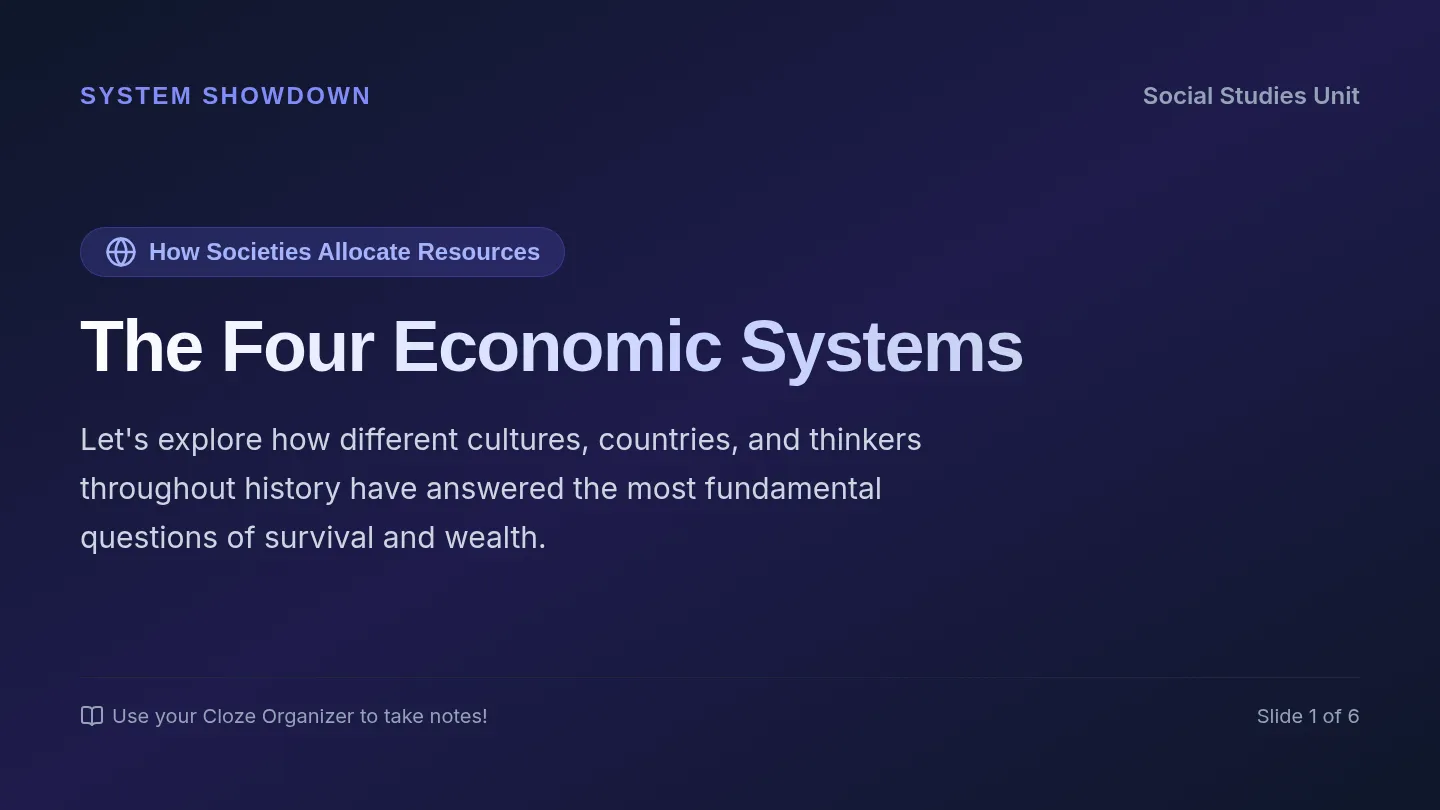
Idealism vs. Pragmatism in the Fight for Mexico
Warm-up Discussion
"Is it better to stick to your pure ideals and lose, or compromise with the enemy to win?"
Idealism
Upholding principles at any cost. No deals with the corrupt or the oppressive.
Pragmatism
Dealing with reality as it is. Making concessions to achieve the most important goal.
Video Analysis: The Path to 1821
Focus: Iturbide (8:46 - 9:45)
Embedded media
Look For:
Why did Iturbide change sides?
What were the "Three Guarantees"?
1821: The Unlikely Alliance
Vicente Guerrero
The Radical Successor
Fighting for social reform, racial equality, and a secular republic.
Agustín de Iturbide
The Conservative Pragmatist
Fighting to protect Criollo status and wealth from a liberal Spanish King.
The Plan de Iguala
An agreement to end the war. It achieved independence but preserved many colonial social structures to keep the elites happy.
The Three Guarantees
Religion
Roman Catholicism remains the exclusive official religion of Mexico.
Independence
Mexico becomes an Independent Monarchy (not yet a Republic).
Union
Equal rights for all inhabitants — but social hierarchies remained largely intact.
The Debate: Is this enough?
The Radicals
Followers of Morelos. You want total social change. You hate that Mexico will still have a King and that the Church still holds all the power.
"We didn't bleed for a Mexican King."
The Pragmatists
Supporters of Iturbide. You want the war to stop. You believe independence is the first step, and stability is more important than "perfect" ideals.
"An Empire today is better than a Colony tomorrow."
Goal: Argue whether the Plan de Iguala is a BETRAYAL or a VICTORY.
Reflection Journal
"Was the Mexican War of Independence a success if it started an Empire first?"
Think about:
The difference between political independence and social justice.
Whether Iturbide's empire was a necessary "bridge."
The legacy of Hidalgo and Morelos's radical vision.
Role-Play Dossier Cards Debate Dossier: 1821
Revolutionary Radicals vs. Imperial Pragmatists
The Radicals
Legacy of Hidalgo & Morelos
Core Philosophy
Independence is meaningless without social transformation . If we keep the same church, the same racial hierarchies, and simply swap a Spanish King for a Mexican Emperor, we haven't won a revolution—we've just changed the branding.
Talking Points
The Plan de Iguala protects the wealthy Criollo class while ignoring the Mestizo and Indigenous majority.
Making Catholicism the exclusive religion is an Enlightenment nightmare. Where is freedom of belief?
An "Independent Monarchy" is a contradiction. We want a Republic of equals!
Key Quote to Use:
"What is the use of being independent of Spain if we are still slaves to a King and a caste system?"
Radical Goals:
Abolition of slavery & race labels
Redistribution of land to peasants
Removal of Church political power
The Pragmatists
Supporters of Iturbide & The Plan
Core Philosophy
Eleven years of war has destroyed our country. Hidalgo and Morelos failed because they were too radical—they scared away the people who have the money and the soldiers. We have achieved Independence today by building a bridge for everyone.
Talking Points
Independence from Spain is the ultimate goal. Once we are free, we can debate the rest.
Without the Church and the Military , Mexico will collapse into chaos. We need stability.
The Plan de Iguala guarantees "Union"—treating all inhabitants as equals. This is progress!
Key Quote to Use:
"A imperfect peace is better than a perfect war. Independence is won at the table, not just the battlefield."
Pragmatist Goals:
Immediate end to fighting
Maintain support of the wealthy elites
Protect the Catholic faith as a unifier
How to Win the Debate
1. Research Find the weakness in the other side's plan.
2. Attack Challenge their definition of "Freedom."
3. Propose Explain why your path is the ONLY way forward.
Revolutionary Reflection Journal The Rebel's Reflection
A Journal of Revolutionary Thought
Citizen Name:
Date:
Final Reflection Prompt
"Was the Mexican War of Independence a success if it started an Empire first?"
Consider Independence
Spain was finally gone. Mexico had its own flag, its own leadership, and its own territory. Does the source of sovereignty matter as much as having sovereignty itself?
Consider The Republic
Hidalgo and Morelos fought for the poor, for the end of slavery, and for equality. Was the Empire of Iturbide a betrayal of their radical vision, or a necessary bridge to the future?
Reflect honestly. There is no right answer, only your perspective.
MS-HIST-MEX-REFL-01