Lenny.com
Explore
Create
ActivitiesNewMathEnglish Language ArtsScience & EngineeringSocial StudiesGlobal LanguagesHealth & Physical EducationSpecial EducationCounseling & Life SkillsArts & CreativityESL
Lenny.com
Lenny.com
Explore
Create
ActivitiesNewMathEnglish Language ArtsScience & EngineeringSocial StudiesGlobal LanguagesHealth & Physical EducationSpecial EducationCounseling & Life SkillsArts & CreativityESL
Lenny.com
Lenny.com

Solutions

Lenny for EducatorsLenny for SchoolsLenny for Districts

Product

ExploreSign inCreateSupportAbout

Resources

Getting startedMTSS Acceleration Program

Newsletters

School Funding Newsletter

© 2026 Lenny Learning Inc.

TermsPrivacyAccessibility
LinkedInInstagramX
Lenny
Science & EngineeringLife ScienceLiving ThingsAnimalsPlantsBody SystemsTraitsAdaptationsCellsEcosystemsHeredityGenes to TraitsCell DivisionPhysicsComparing MaterialsShapes and PropertiesMagnetsMagnetismLightSoundLight and SoundMatterStates of MatterChanges of StateMixturesPhysical and Chemical ChangeHeating and CoolingHeat and Thermal EnergyEnergyForce and MotionElectrical CircuitsAtoms and MoleculesPeriodic TableMotion in One DimensionMotion in Two DimensionsScalars and VectorsForces and Laws of MotionCircular Motion and GravityMomentum and ImpulseWork, Energy, and PowerWavesElectromagnetic WavesGeometric OpticsElectricity and MagnetismSimple Harmonic MotionThermodynamicsNuclear PhysicsEarth Science & AstronomyWeatherWater CycleRocks and MineralsFossilsEarth's FeaturesEarth's ResourcesEarth's StructureWeather and ClimateEarth EventsFossils and Geologic TimePlate TectonicsHuman ImpactsAstronomyChemistryUnits and MeasurementAtomic StructurePeriodic TrendsChemical BondingNomenclatureMolecular StructureIntermolecular ForcesThe MoleStoichiometryProperties of GasesSolutionsChemical ReactionsBalancing EquationsEnergy ChangesRates of ReactionsEquilibriumAcids and BasesQuantum ModelBiologyClassificationCell StructureThe Chemistry of LifeBiomoleculesCellular TransportCell EnergyCell Growth and DivisionDNAProtein SynthesisMeiosis and Sexual ReproductionPatterns of InheritanceMulticellular OrganismsEvolutionEcologyBiodiversityComputer ScienceAlgorithms and Computational ThinkingProgramming LanguagesComputing SystemsNetworks and InternetData AnalysisCybersecurityAI and Machine LearningSoftware Design and DevelopmentBlockchainEngineering & AIDesigning ExperimentsEngineering PracticesDesign ThinkingEngineering Design ProcessMechanical EngineeringElectrical EngineeringMaterials and StructuresCAD and 3D DesignRoboticsArtificial Intelligence BasicsVibe CodingMachine LearningAI Ethics and SocietySystems ThinkingEntrepreneurship & InnovationEntrepreneurial MindsetBusiness Idea DevelopmentBusiness Plan BasicsMarketing & Customer DiscoveryFinancial Management for Startups

Reef Architects

A comprehensive comprehension and science investigation companion for the book Oyster Matters: A Keystone Species Story by Lisa Connors. Covers estuarine ecology, keystone species dynamics, anatomical adaptations, and coastal restoration through targeted recall, vocabulary, and analytical thinking tasks.

EGEmily Gianni
(2) Heavy sediment and agricultural runoff
(3) Parasitic diseases

Oyster Matters Teacher Key • Page 1 of 2 Turn over for Part 3 & 4 Rubrics & Discussion Prompts →

Oyster Matters: Higher-Order Thinking & Rubrics

Part 3: 12 Pts (3 pts each) | Part 4: 5 Pts

5. The Keystone Analogy (3 pts) Metaphor: 1.5 pts | Collapse domino: 1.5 pts

Criteria: Students must connect the architectural metaphor to biological ecology. Just as the keystone holds an arch upright under pressure, oysters hold the estuarine ecosystem together. Without them, water turns turbid and green with algae, sunlight cannot reach bottom grasses, and nursery habitats vanish, causing fishery and biodiversity collapse.

6. Water Clarity & Eelgrass Domino Effect (3 pts) Filtration to sunlight: 1.5 pts | Grass to nursery: 1.5 pts

Criteria: By filtering out excess suspended phytoplankton and floating sediment, oysters clear the water column so sunlight can penetrate deeply. Submerged aquatic vegetation (eelgrass) requires sunlight for photosynthesis. Thriving grass beds provide crucial protective canopy where soft-shell blue crabs and juvenile fish evade predators and reproduce.

7. Living Breakwaters & Storm Defense (3 pts) Friction/wave energy: 1.5 pts | Coastal protection: 1.5 pts

Criteria: Unlike flat mud bottoms that allow high-energy storm waves to slam directly into coastlines, 3D oyster reefs act as submerged breakwaters. The rough calcium carbonate structures create friction, forcing waves to break offshore and dissipating wave energy. This protects fragile salt marshes from scouring and prevents flooding of human coastal communities.

8. Shell Recycling & Restoration (3 pts) Biological need: 1.5 pts | Spat survival: 1.5 pts

Criteria: Oyster shells are naturally high in calcium carbonate and emit chemical attractants signaling wild larvae to settle. Restoration teams age and clean shells, then place them in hatchery tanks with free-swimming larvae to create "spat-on-shell." Without returned shells, baby oysters have no firm foundation and perish in soft estuarine mud.

Part 4: Synthesis Key (5 Pts Total)

Full credit requires concrete science explanations

1. Water Filtration

Filters 50 gal/day of algae & silt; prevents algal blooms, clears water column, allows sunlight to fuel benthic plants.

2. Habitat Architecture

Forms living multi-layered reefs with millions of nooks; provides nursery, shelter, and feeding grounds for 300+ species.

3. Shoreline Defense

Acts as a living breakwater; dissipates up to 90% of wave energy, stabilizes sediments, and shields marshes and human communities.

Pedagogical Notes & Common Misconceptions

Misconception: "Oysters eat trash or toxins." Clarify that oysters ingest biological plankton and particulate matter. While they can sequester heavy metals and bacteria, they do not "consume trash" and heavily polluted oysters become toxic to humans.

Misconception: "Concrete sea walls are better." Highlight that concrete sea walls reflect wave energy, worsening erosion nearby, whereas oyster reefs grow upward with sea level rise and self-repair naturally.

Oyster Matters Teacher Key • Page 2 of 2 Classroom Ready Guide
You might also like

Kelp Web Slides

Kelp Forest Forensics

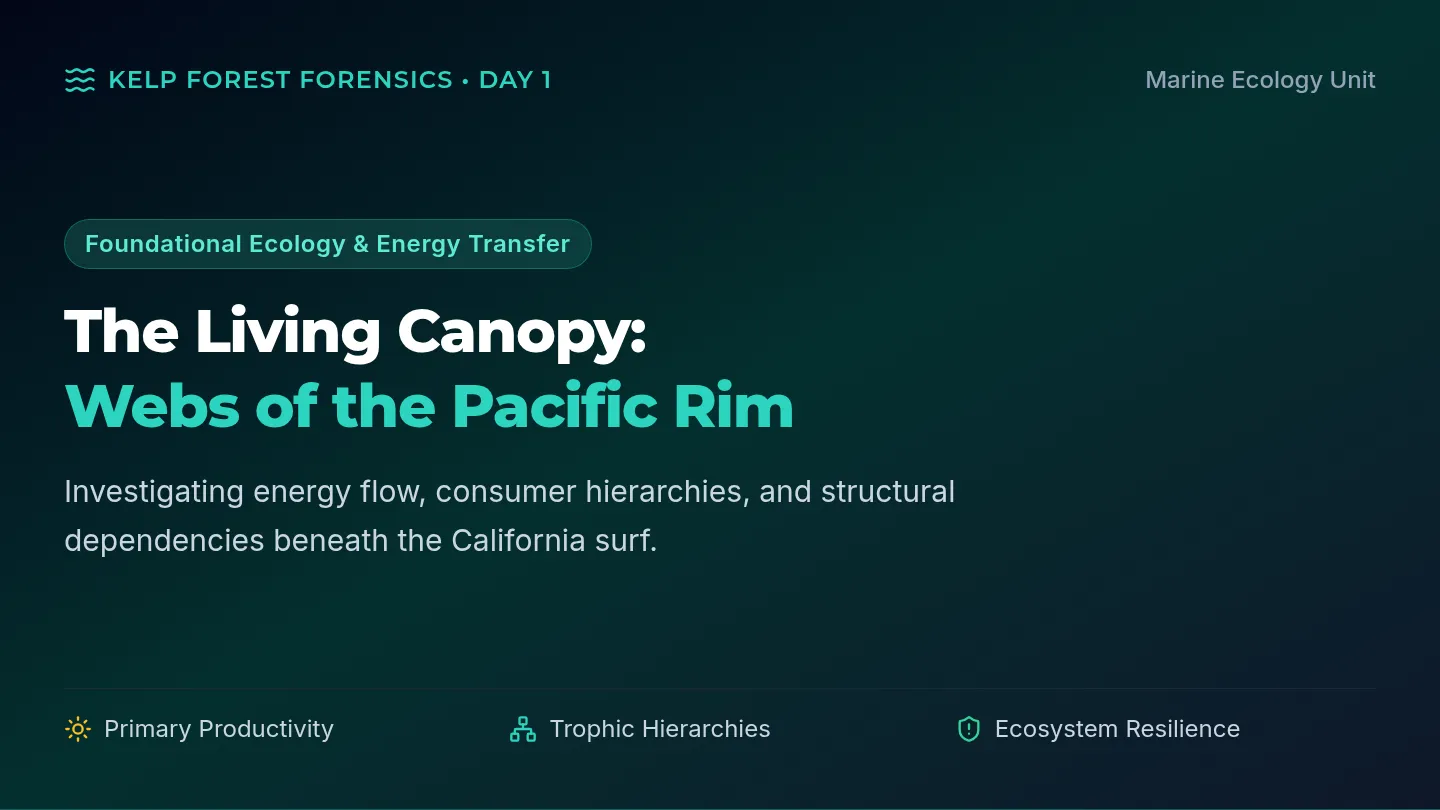
A comprehensive 3-day investigative life science sequence exploring trophic cascades, keystone species, and ecological balance in Pacific kelp forests. Students examine authentic ecological data to diagnose ecosystem collapse and design science-backed restoration policies.

SM

Samantha McBath

6
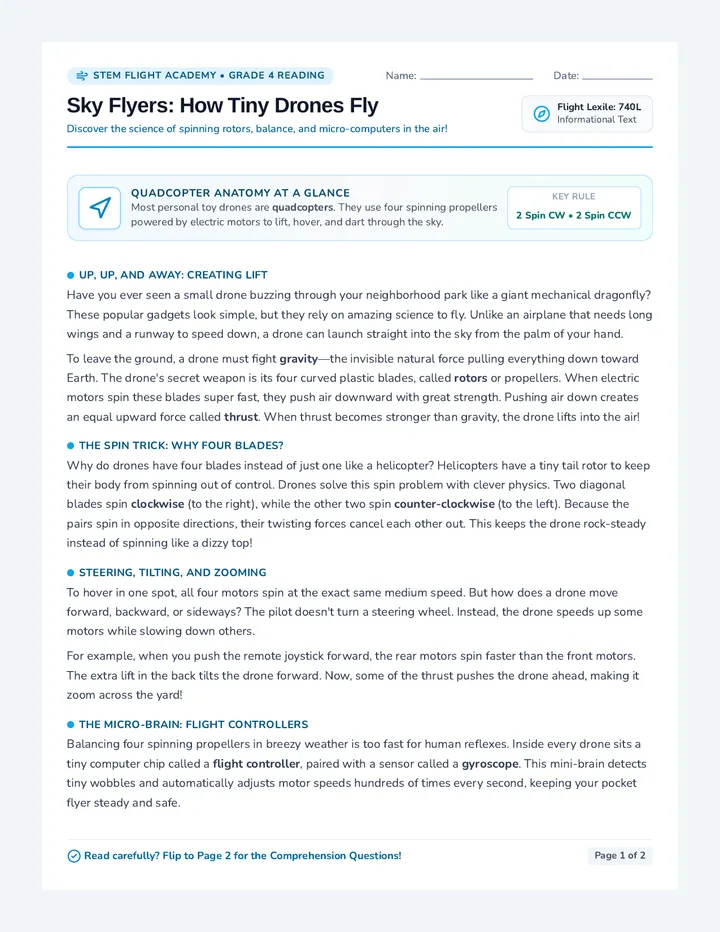
Sky Flyers Reading Passage

Drone Flight Dynamics

A 4th-grade STEM reading and science lesson exploring the physics, motor mechanics, and sensor technology behind personal quadcopter drones.

RH

Rachel Haydon

2
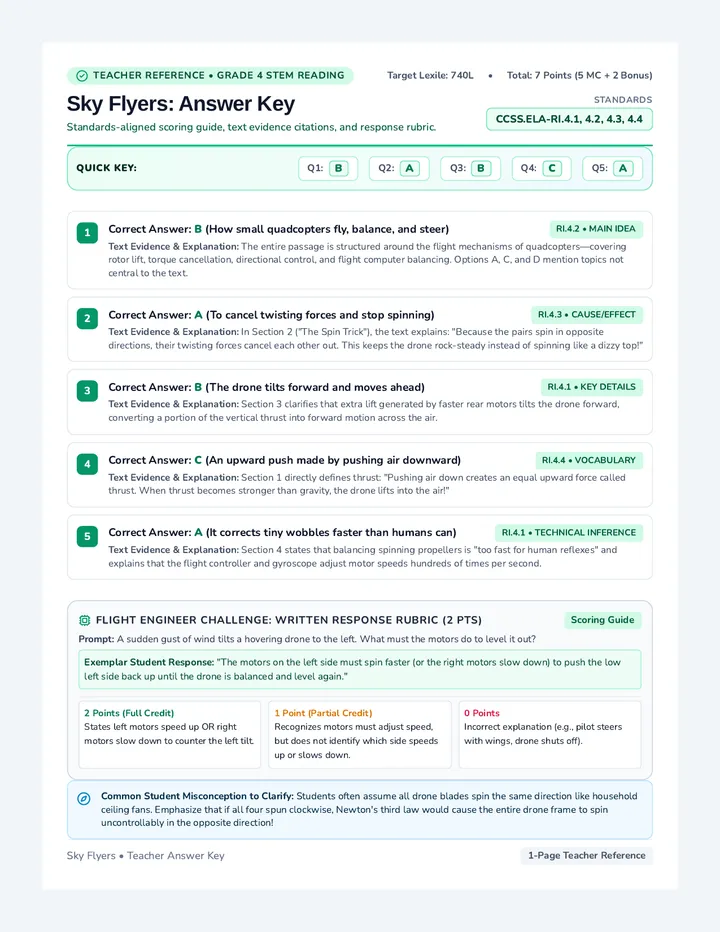
Sky Flyers Answer Key

Sky Flyers Answer Key

A teacher answer key and grading guide for the Sky Flyers drone reading passage, including an at-a-glance answer bar, question-by-question text evidence, standards alignment, a written response rubric, and common student misconceptions.

RH

Rachel Haydon

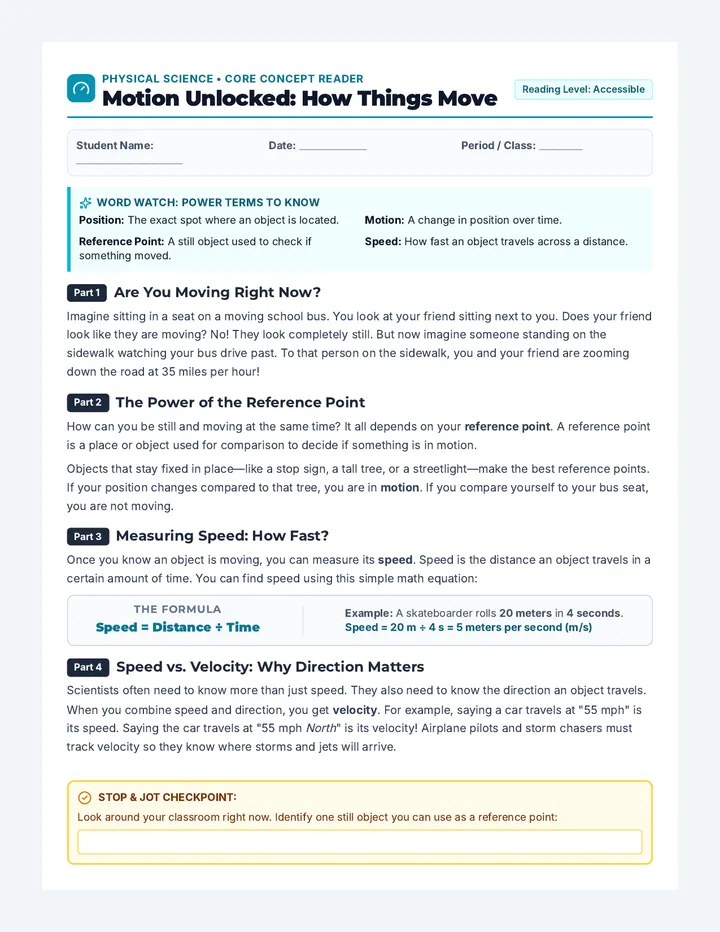
Motion Unlocked Reading Packet

Curriculum Unlocked

A sequence of high-interest, accessible 9th-grade reading lessons designed for students reading at a 5th-grade level across science and world history.

SH

Sarah Hunter

9
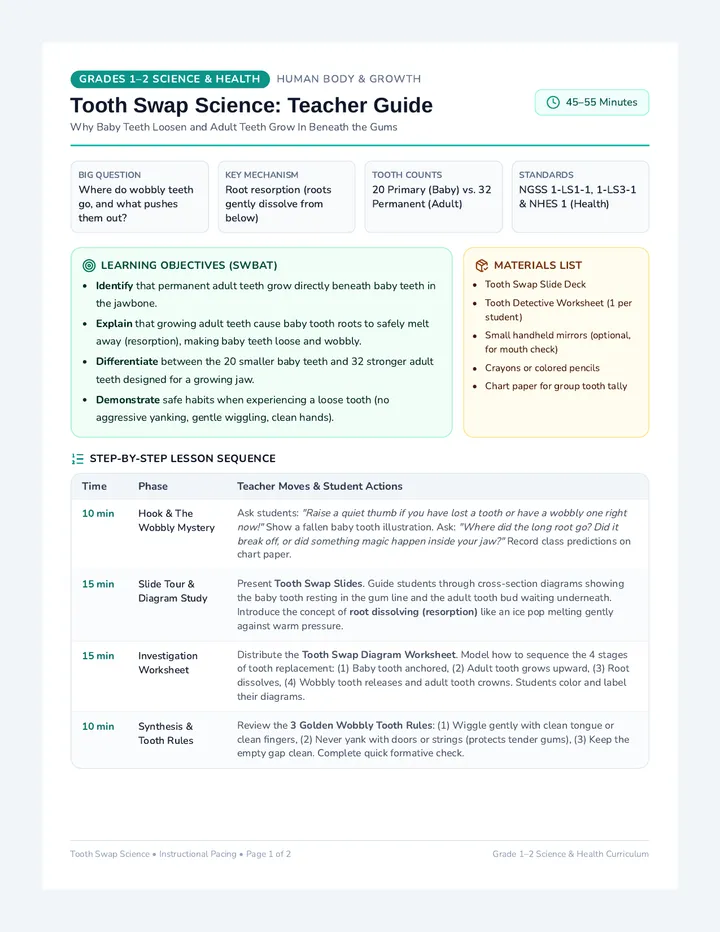
Tooth Swap Teacher Guide

Tooth Swap Science

An inquiry-based primary science lesson for Grades 1–2 exploring why baby teeth loosen and fall out as permanent adult teeth grow beneath the gums. Students examine tooth anatomy, root resorption, jaw growth, and oral health habits through clear diagrams and structured discussions.

A

asdfg

4
Sky Flyers Reading Passage

Sky Flyers Reading Passage

A 2-page 4th-grade student document featuring an informational text on quadcopter drone aerodynamics followed by 5 multiple-choice reading comprehension questions and an engineering response prompt.

RH

Rachel Haydon

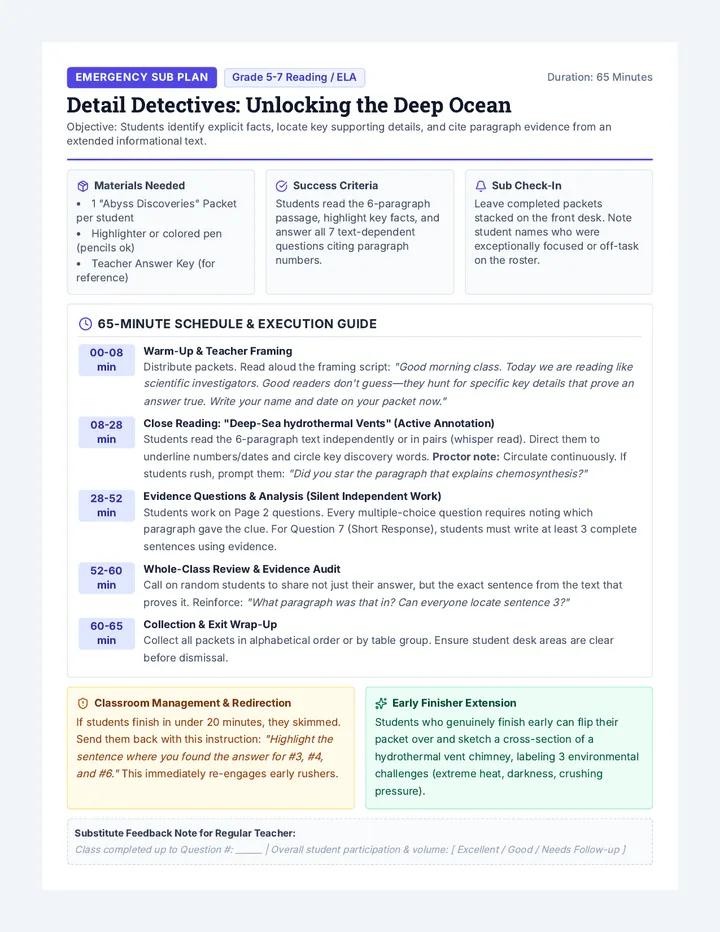
Detail Detectives Sub Plan

Sub Ready Reading

A comprehensive emergency substitute curriculum spanning core reading strategies, earth science weather systems, and middle school mathematics on ratios and rates. Features step-by-step substitute plans, student passages and worksheets with extensive practice problems, and full answer keys.

CP

Christian Page

16
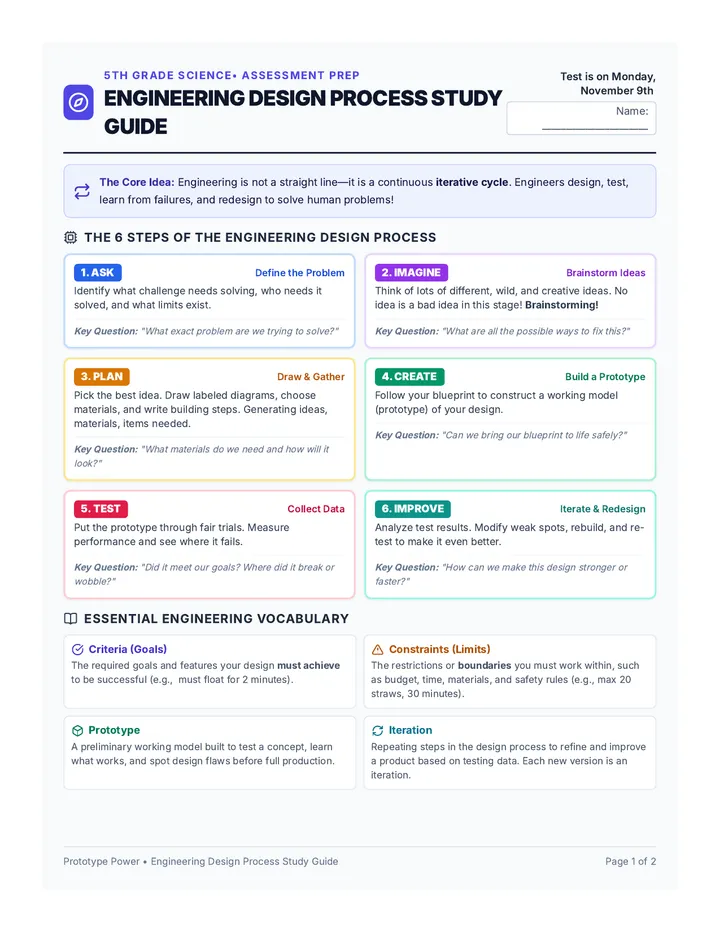
Engineering Design Process Review Sheet

Prototype Power

A comprehensive 5th-grade assessment bundle exploring the Engineering Design Process. Students master the iterative cycle of Asking, Imagining, Planning, Creating, Testing, and Improving through targeted review, authentic scenario evaluation, and structured reflection.

EM

Evangelia Moran

5
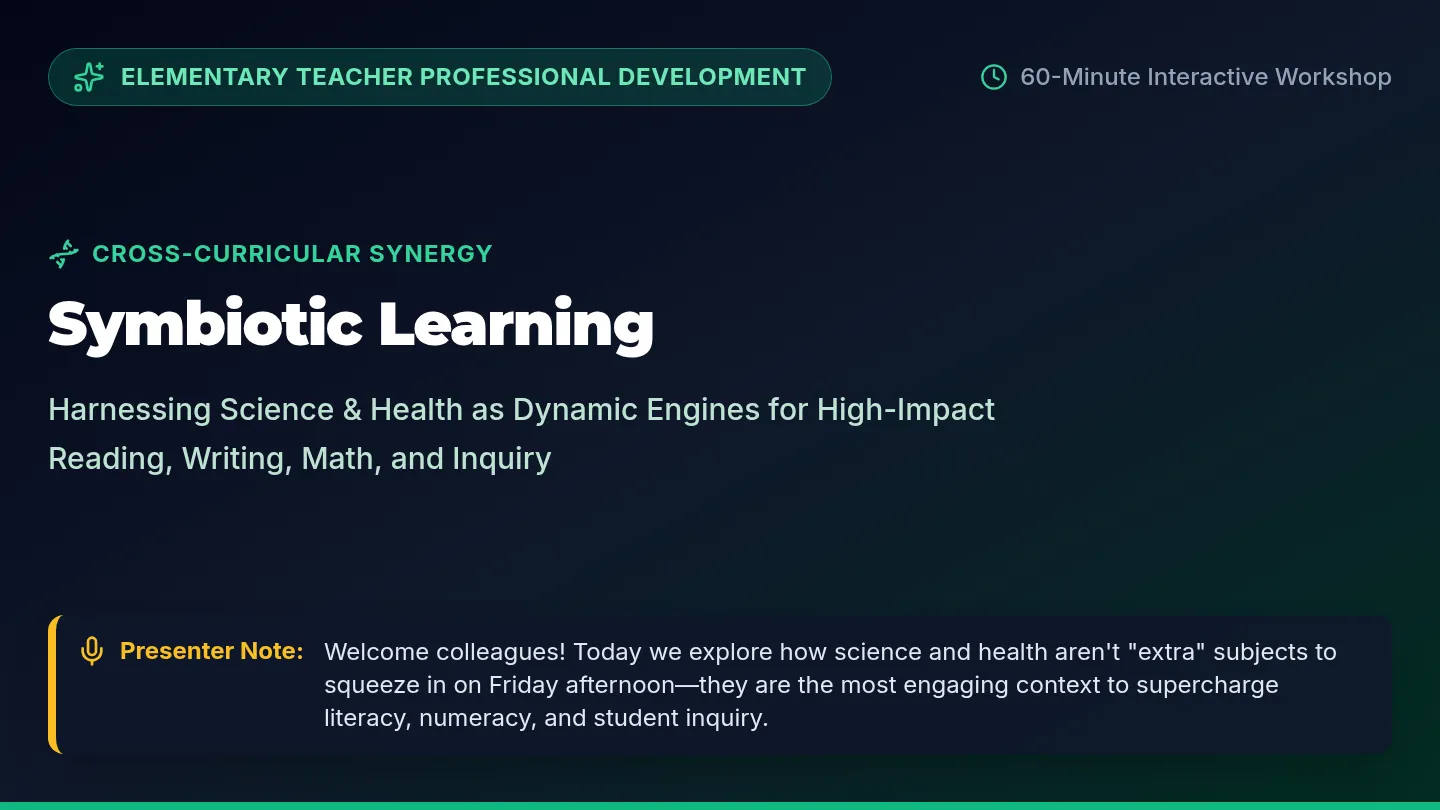
Symbiotic Learning Presentation Slides

Symbiotic Learning Presentation Slides

A 14-slide professional development presentation for elementary general education teachers demonstrating how to integrate engaging science and health phenomena across reading, writing, math, and social studies. It features explicit definitions, cognitive and motivational research, differentiation through thematic planning, three complete interdisciplinary unit blueprints, scholarly references, and comprehensive presenter notes on every slide.

JT

Jailene Torres

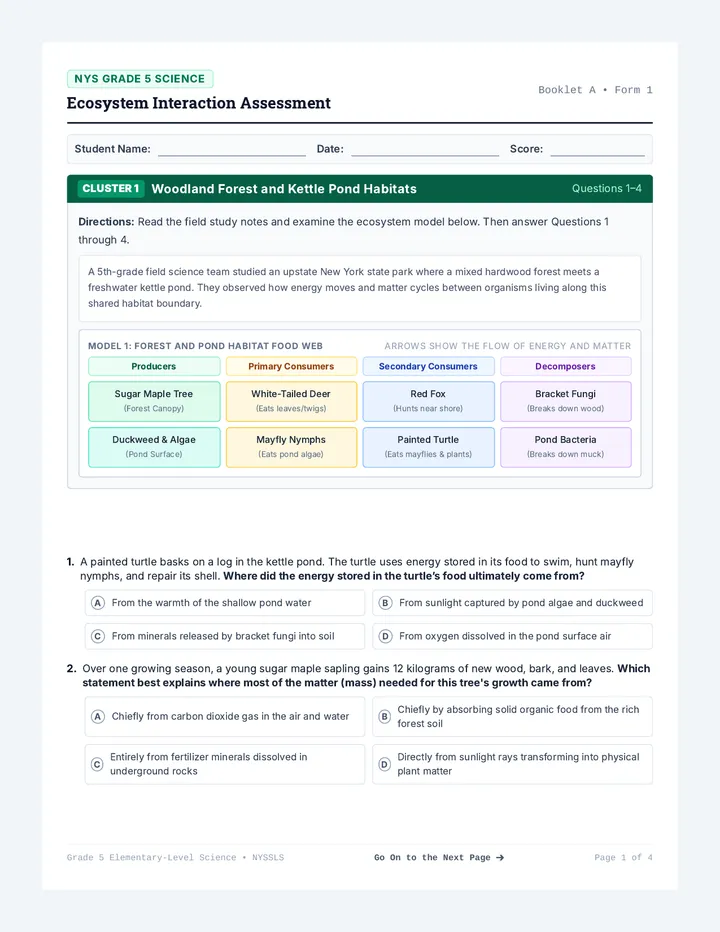
Ecosystem Clusters Student Assessment

Ecosystem Test Clusters

A standards-based Grade 5 NYSSLS science assessment featuring two parallel clusters comparing forest, pond, desert, and grassland ecosystems. Includes an authentic multi-page student test booklet and an educator scoring guide with rubrics.

Lenny Avatar
Lenny
2
Tooth Swap Worksheet Key

Tooth Swap Worksheet Key

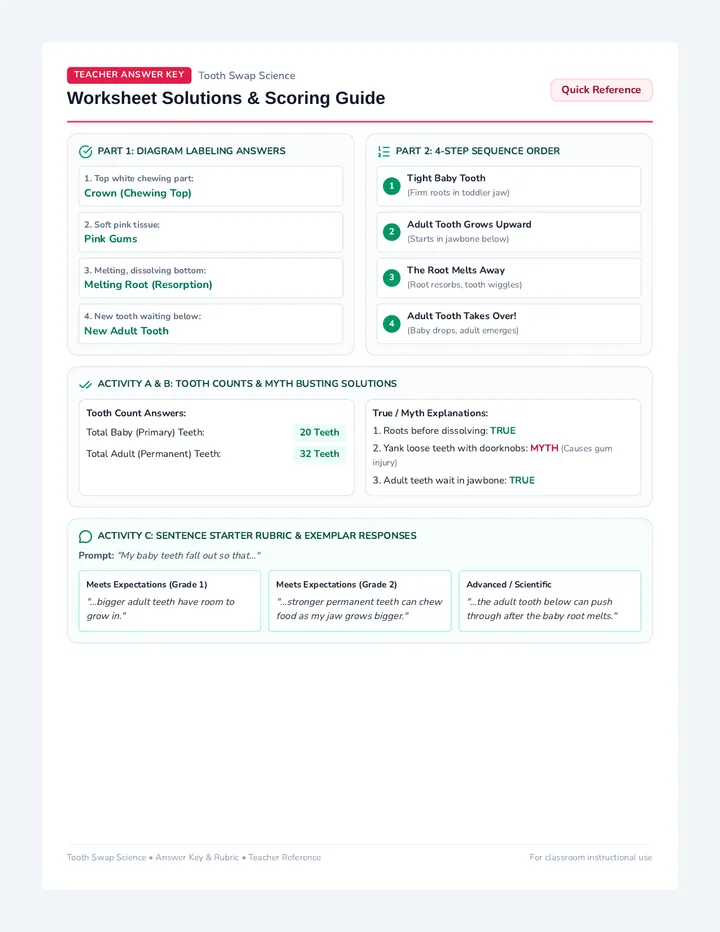
A 1-page teacher answer key and scoring guide for the Tooth Swap Diagram Worksheet. It provides labeled diagram solutions, 4-stage sequencing answers, tooth counts, and exemplar student reflection responses.

A

asdfg

Change Detective Demo Guide

Change Detective

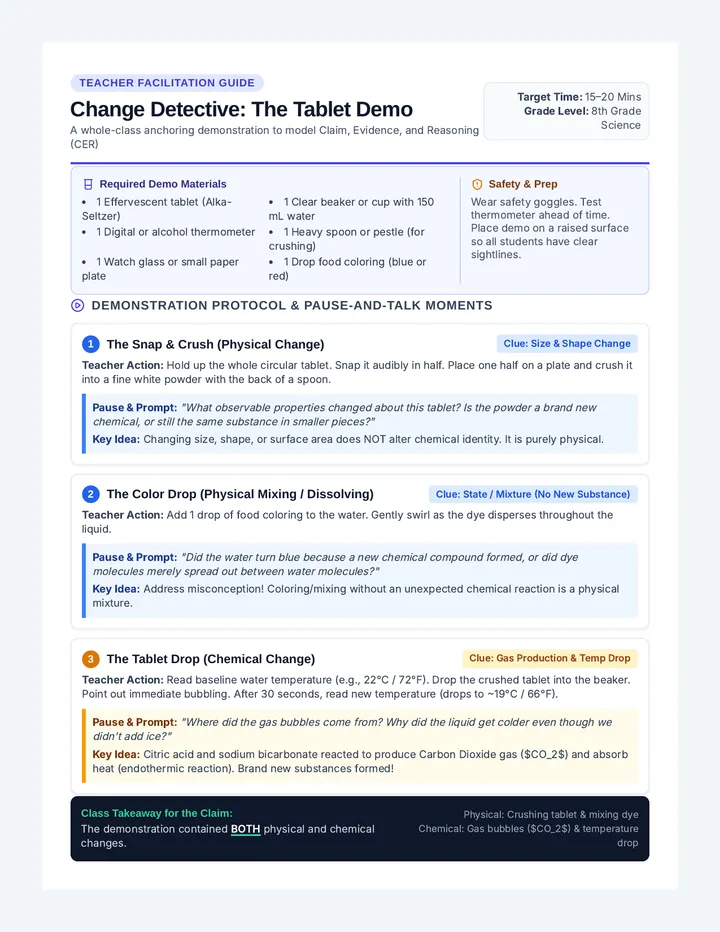
A targeted 8th-grade science lesson that models scientific CER (Claim, Evidence, Reasoning) writing through an engaging whole-class demonstration of physical and chemical changes.

SH

Sarah Hale

3