Symbiotic Learning Presentation Slides
Elementary Teacher Professional Development
60-Minute Interactive Workshop
Cross-Curricular Synergy
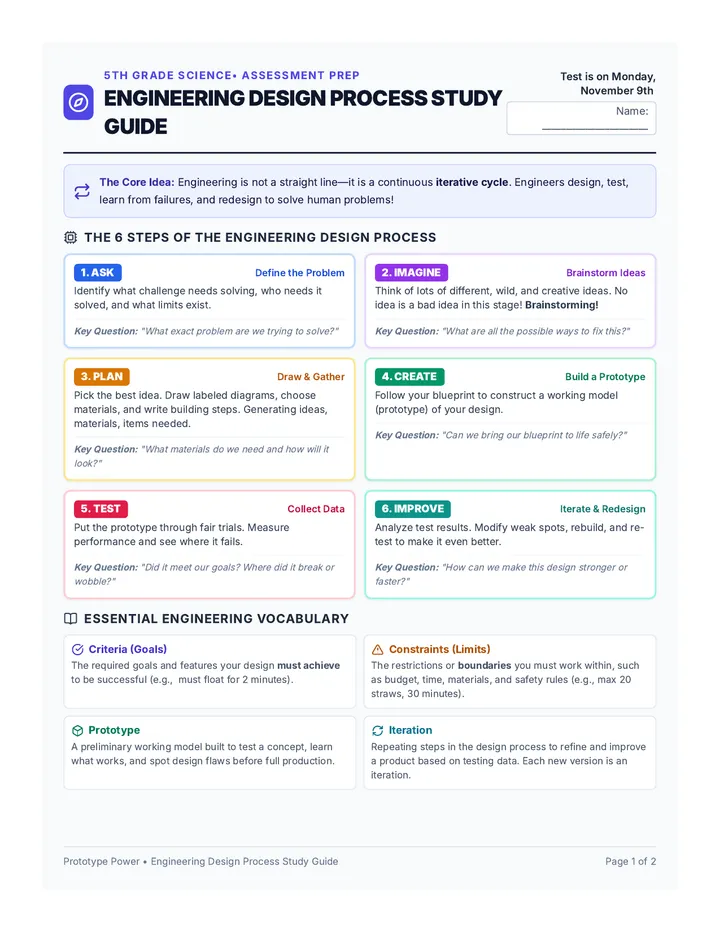
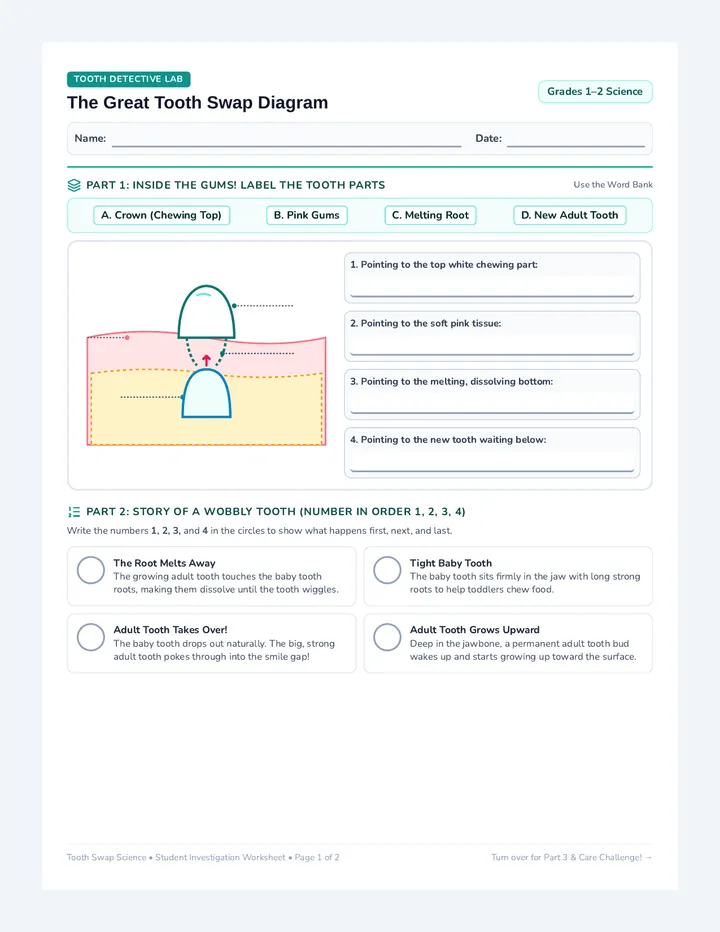
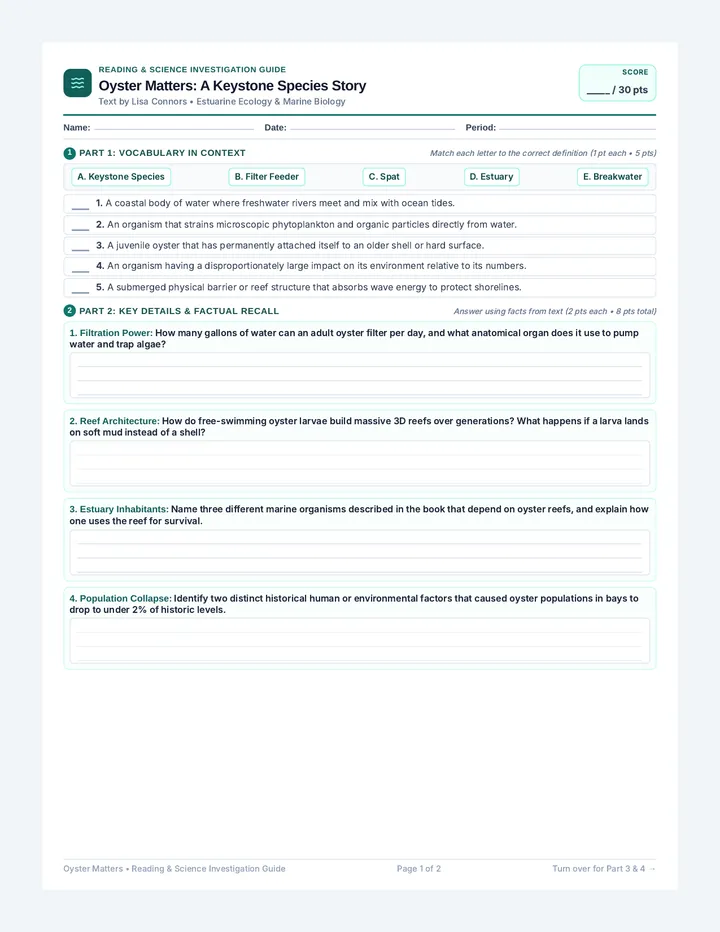
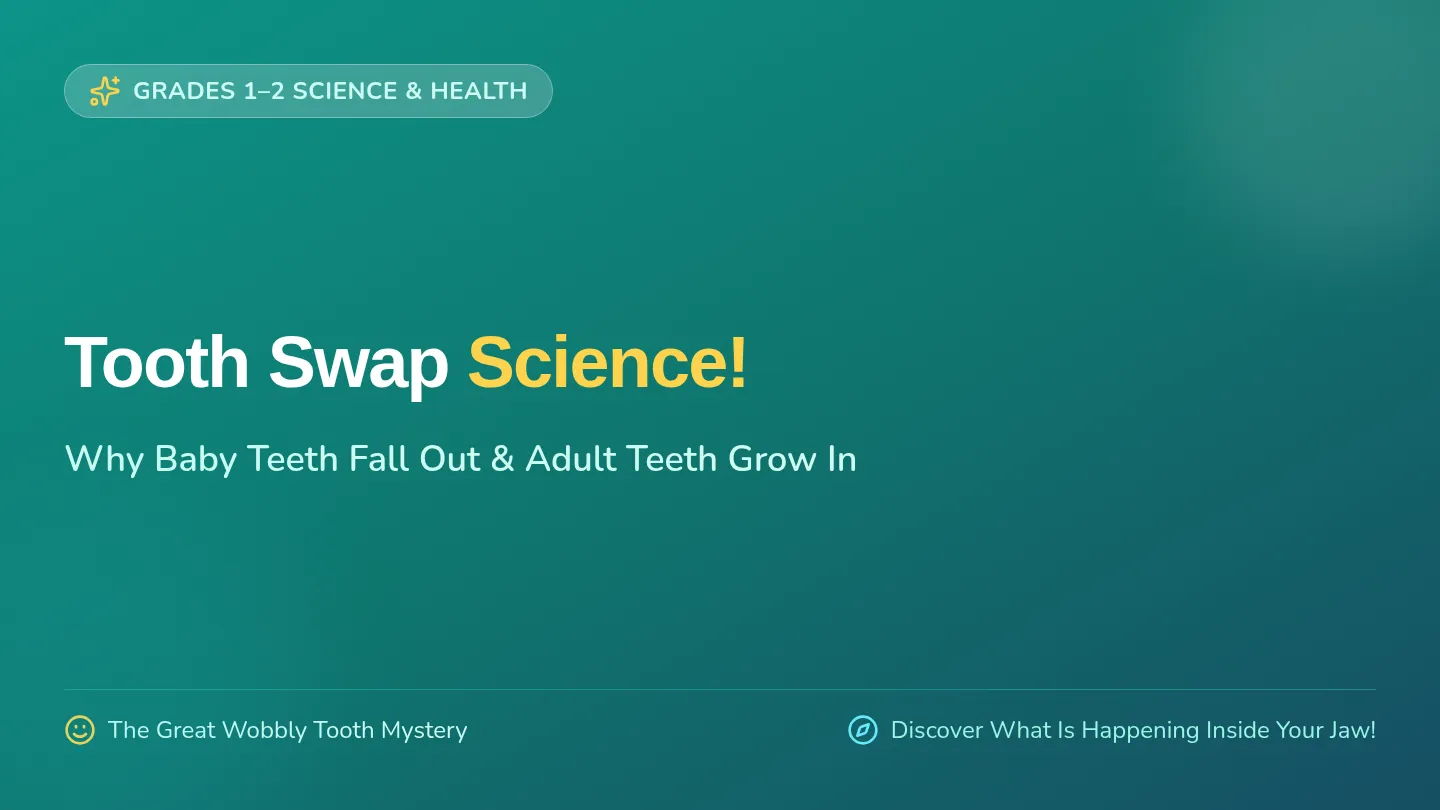
Symbiotic Learning
Harnessing Science & Health as Dynamic Engines for High-Impact Reading, Writing, Math, and Inquiry
Presenter Note:
Welcome colleagues! Today we explore how science and health aren't "extra" subjects to squeeze in on Friday afternoon—they are the most engaging context to supercharge literacy, numeracy, and student inquiry.
The Classroom Reality
The Scheduling Paradox: Time vs. Curiosity
Slide 02 / 14
The Siloed Schedule
Segmented blocks force reading and math to dominate 75% of instructional time, leaving science and health marginalized as isolated afterthoughts.
Result: Isolated skills, repetitive drills, and disconnected comprehension practice.
The Symbiotic Shift
Science and health phenomena become the rich, meaningful context through which students read informational text, write arguments, and solve authentic math problems.
Result: Accelerated skill acquisition powered by genuine real-world wonder.
Presenter Note:
Ask participants: "How often do you run out of time for science?" Emphasize that integration does not ask teachers to add more to their plates—it changes what is on the plate.
Core Conceptual Framework
What Is Cross-Curricular Instruction?
Slide 03 / 14
Formal Definition: An instructional approach that consciously connects knowledge, skills, and concepts across multiple academic disciplines around a central phenomenon, theme, or inquiry question.
Level 1: Multidisciplinary
Different subjects explore distinct aspects of a common theme separately during the day.
Example: Reading a plant story in ELA, measuring stems in math.
Level 2: Interdisciplinary
Core standards and cognitive skills from two or more subjects are intentionally blended.
Example: Writing scientific arguments supported by numerical evidence.
Level 3: Transdisciplinary
Inquiry transcends discipline boundaries to address real-world community challenges.
Example: Designing a school waste reduction initiative.
Presenter Note:
Highlight Drake & Reid's continuum. Cross-curricular instruction is not superficial thematic pairing (like coloring a leaf); it is rigorous alignment of standards that mutually reinforce each other.
Cognitive Science & Child Development
How Integration Enhances Student Learning
Slide 04 / 14
Neural Schemas
The brain retains knowledge through interconnected neural networks. Isolated facts decay quickly, whereas cross-disciplinary connections build durable long-term memory.
Skill Transfer
Practicing informational text comprehension and data graphing during tangible science investigations demonstrates how academic tools solve genuine problems.
Concrete Anchors
Elementary learners are in concrete operational stages. Physical phenomena provide immediate sensory anchors that demystify abstract mathematical and linguistic rules.
Presenter Note:
Remind teachers that reading comprehension depends heavily on background knowledge. By teaching science concepts, we directly elevate students' reading comprehension test capacity.
Engagement & Affective Growth
Catalyzing Student Motivation & Agency
Slide 05 / 14
Innate Curiosity
Children are born natural scientists. When lessons investigate living organisms, body systems, and weather events, students engage out of genuine wonder rather than compliance.
Authentic Purpose
Writing a persuasive letter about cafeteria nutrition or graphing local rainfall gives students an authentic audience, transforming writing and math into meaningful action tools.
Growth Mindset
Scientific experimentation reframes "getting the wrong answer" as discovering unexpected data. This lowers affective anxiety in math and reading tasks.
Presenter Note:
Connect to Guthrie's CORI research: reading engagement surges when children investigate living things. Ask teachers to reflect on the difference in enthusiasm between an isolated worksheet and a live experiment.
Universal Design for Learning (UDL)
Meeting Diverse Strengths, Needs, & Interests
Slide 06 / 14
Varied Entry Points
Students with reading difficulties access the core theme through tactile models, audio field logs, and visual diagrams, maintaining grade-level conceptual rigor without decoding barriers.
Unlocking Hidden Talents
A student struggling in formal grammar may excel at meticulous specimen sketching, pattern recognition in health data, or spatial reasoning in engineering builds.
Tiered Demonstrations
Thematic units offer multiple means of expression: oral podcasts, illustrated scientific journals, infographic posters, or guided data tables tailored to individual IEP/ELL goals.
Presenter Note:
Emphasize equity. In a traditional reading block, struggling readers feel constantly behind. In a thematic science investigation, their keen observations and problem-solving allow them to lead.
Multimodal Enhancement
Expanding the Modalities: Tech, Art, Music, Movement
Slide 07 / 14
Technology
Digital pulse sensors, time-lapse plant growth apps, micro-cameras, and collaborative data spreadsheets.
Visual Arts
Botanical watercolor sketches, anatomical clay models, color-coded food web collages, and data infographics.
Music & Audio
Rhythm tracks mirroring heartbeat BPMs, water cycle chants, soundwave acoustic jars, and science podcasts.
Kinesthetics
Physical modeling of digestive paths, human food chains, obstacle-course heart rate drills, and dance of the seasons.
Presenter Note:
Art and movement are not "brain breaks" detached from the curriculum; they are neurological anchors that encode complex vocabulary and mathematical proportions into permanent memory.
Instructional Blueprint 01
"Biome Explorers": Ecosystems, Math & Literacy
Slide 08 / 14
Anchor Science Phenomenon
Investigating local schoolyard micro-habitats, pollinator shifts, and food web equilibrium.
ELA Reading & Writing Integration
Analyzing informational texts on biodiversity; authoring field naturalist logs and cause-and-effect ecological essays.
Math & Measurement Integration
Calculating area and perimeter of habitat plots; gathering insect census counts; constructing comparative bar graphs.
Art & Movement Layer
Precision botanical watercolor sketches; full-class kinesthetic yarn web demonstrating trophic level collapse.
Presenter Note:
Highlight how this single unit covers CCSS Informational Text standards (RI.3.1, RI.3.7) and Math Measurement & Data standards (3.MD.B.3) simultaneously while building environmental stewardship.
Instructional Blueprint 02
"The Human Engine": Health, Fractions & Rhetoric
Slide 09 / 14
Anchor Health & Biology Phenomenon
How cardiovascular, muscular, and digestive systems convert nutrients into cellular energy and movement.
Math & Data Analytics
Calculating pulse rates (beats per minute ratios); computing nutritional fractions and daily hydration percentages.
ELA & Persuasive Writing
Deconstructing commercial food marketing claims; authoring persuasive public service scripts for school wellness.
Technology & Physical Movement
Logging pedometer step counts into digital charts; designing heart-rate interval obstacle courses in PE.
Presenter Note:
Kids are naturally obsessed with their own bodies. When calculating ratios uses their own resting vs. active heart rates, the math is immediate, personal, and unforgettable.
Instructional Blueprint 03
"Weather Watchers": Earth Systems & Civics
Slide 10 / 14
Anchor Earth Science Phenomenon
Atmospheric pressure, water cycle evaporation cycles, and regional severe weather patterns.
Social Studies & Civic Action
Investigating community emergency plans, historical regional flood impacts, and municipal disaster resilience.
Math & Data Modeling
Recording barometric pressure and precipitation logs; computing multi-day mean temperatures and line plots.
Oral Communication & Digital Media
Green-screen broadcast meteorologist reports; recording podcast safety advisories for primary grade peers.
Presenter Note:
Showcase how social studies and earth science intersect. Students become active civic agents by producing real emergency preparedness guides for their families and neighbors.
Practical Implementation
Four Steps to Launch Integrated Units
Slide 11 / 14
01
Select the Phenomenon
Choose a puzzling, observable science or health event that generates immediate "How?" and "Why?" questions.
02
Map Overlapping Standards
Identify priority ELA informational reading and Math measurement standards that naturally serve the investigation.
03
Layer Arts & Modalities
Embed physical movement, visual rendering, or digital tools to guarantee multimodal access for all learners.
04
Design Authentic Culmination
Cap the unit with an exhibition, school wellness fair, or community publication rather than an isolated test.
Presenter Note:
Reassure teachers: Start with one unit per semester. Do not attempt to integrate everything all year on day one. Master the four-step loop with one high-leverage science topic first.
Evaluating Student Growth
Authentic Cross-Disciplinary Assessment
Slide 12 / 14
Inquiry Portfolios
Student lab notebooks that trace hypothesis formulation, observational sketches, iterative writing revisions, and data graphs over time.
Unified Rubrics
Single assessment instruments that grade scientific concept mastery, mathematical calculation accuracy, and informational writing clarity in one task.
Exhibition Nights
Students defend findings to family and community audiences through interactive demonstrations, poster sessions, and digital presentations.
Presenter Note:
Integrated instruction demands integrated assessment. Grading one rich project with a single multidisciplinary rubric saves teacher grading time while providing richer diagnostic data.
Evidence Base
Scholarly Foundations & Research
Slide 13 / 14
Drake & Reid (2018)
Integrated curriculum for 21st century capabilities. APJER, 1(1), 31–50.
Evidence: Synthesizing concepts across domains develops superior cognitive problem-solving over siloed instruction.
Guthrie et al. (2004)
Concept-Oriented Reading Instruction (CORI). J. Educ. Psychol., 96(3), 403–423.
Evidence: Science-anchored reading produced significantly higher comprehension gains than reading-only curricula.
National Research Council (2014)
STEM Integration in K-12 Education. National Academies Press.
Evidence: Cross-disciplinary integration deepens conceptual mastery and interest in both STEM and language arts.
Presenter Note:
Highlight Guthrie's CORI findings: anchoring literacy in scientific phenomena yields higher reading scores than literacy alone, refuting concerns about "losing reading time."
Call to Action
Launching Your Symbiotic Classroom
Slide 14 / 14
Your Next 48 Hours
Review your upcoming reading or math unit. Identify one natural science or health connection you can embed as an inquiry anchor next week.
Focus: Connect one reading passage to an observable physical phenomenon.
Grade-Level Collaboration
Partner with a colleague to design a shared interdisciplinary rubric that evaluates both informative writing and scientific reasoning.
Resource: Grab the thematic planning templates in our shared workshop folder.
Presenter Note:
Close with enthusiasm: Invite each teacher to turn to a shoulder partner and commit to one cross-curricular touchpoint for the coming month. Thank everyone for their dedication to whole-child inquiry!