Lenny.com
Explore
Create
ActivitiesNewMathEnglish Language ArtsScience & EngineeringSocial StudiesGlobal LanguagesHealth & Physical EducationSpecial EducationCounseling & Life SkillsArts & CreativityESL
Lenny.com
Lenny.com
Explore
Create
ActivitiesNewMathEnglish Language ArtsScience & EngineeringSocial StudiesGlobal LanguagesHealth & Physical EducationSpecial EducationCounseling & Life SkillsArts & CreativityESL
Lenny.com
Lenny.com

Solutions

Lenny for EducatorsLenny for SchoolsLenny for Districts

Product

ExploreSign inCreateSupportAbout

Resources

Getting startedMTSS Acceleration Program

Newsletters

School Funding Newsletter

© 2026 Lenny Learning Inc.

TermsPrivacyAccessibility
LinkedInInstagramX
Lenny
Science & EngineeringLife ScienceLiving ThingsAnimalsPlantsBody SystemsTraitsAdaptationsCellsEcosystemsHeredityGenes to TraitsCell DivisionPhysicsComparing MaterialsShapes and PropertiesMagnetsMagnetismLightSoundLight and SoundMatterStates of MatterChanges of StateMixturesPhysical and Chemical ChangeHeating and CoolingHeat and Thermal EnergyEnergyForce and MotionElectrical CircuitsAtoms and MoleculesPeriodic TableMotion in One DimensionMotion in Two DimensionsScalars and VectorsForces and Laws of MotionCircular Motion and GravityMomentum and ImpulseWork, Energy, and PowerWavesElectromagnetic WavesGeometric OpticsElectricity and MagnetismSimple Harmonic MotionThermodynamicsNuclear PhysicsEarth Science & AstronomyWeatherWater CycleRocks and MineralsFossilsEarth's FeaturesEarth's ResourcesEarth's StructureWeather and ClimateEarth EventsFossils and Geologic TimePlate TectonicsHuman ImpactsAstronomyChemistryUnits and MeasurementAtomic StructurePeriodic TrendsChemical BondingNomenclatureMolecular StructureIntermolecular ForcesThe MoleStoichiometryProperties of GasesSolutionsChemical ReactionsBalancing EquationsEnergy ChangesRates of ReactionsEquilibriumAcids and BasesQuantum ModelBiologyClassificationCell StructureThe Chemistry of LifeBiomoleculesCellular TransportCell EnergyCell Growth and DivisionDNAProtein SynthesisMeiosis and Sexual ReproductionPatterns of InheritanceMulticellular OrganismsEvolutionEcologyBiodiversityComputer ScienceAlgorithms and Computational ThinkingProgramming LanguagesComputing SystemsNetworks and InternetData AnalysisCybersecurityAI and Machine LearningSoftware Design and DevelopmentBlockchainEngineering & AIDesigning ExperimentsEngineering PracticesDesign ThinkingEngineering Design ProcessMechanical EngineeringElectrical EngineeringMaterials and StructuresCAD and 3D DesignRoboticsArtificial Intelligence BasicsVibe CodingMachine LearningAI Ethics and SocietySystems ThinkingEntrepreneurship & InnovationEntrepreneurial MindsetBusiness Idea DevelopmentBusiness Plan BasicsMarketing & Customer DiscoveryFinancial Management for Startups

Change Detective

A targeted 8th-grade science lesson that models scientific CER (Claim, Evidence, Reasoning) writing through an engaging whole-class demonstration of physical and chemical changes.

SHSarah Hale

Change Detective

A targeted 8th-grade science lesson that models scientific CER (Claim, Evidence, Reasoning) writing through an engaging whole-class demonstration of physical and chemical changes.

SHSarah Hale
  • Data collected showed that the temperature changed from...
  • Reasoning Starters

    • This evidence proves my claim because...
    • Since a new substance was (or was not) produced...
    • Scientifically, when [evidence] occurs, it indicates...

    FORMULA Scientific Reasoning = General Science Rule + Direct Link to My Evidence

    Keep this page next to your lab notebook!

    Guided Practice

    Class Demo: The Tablet Mystery

    Follow along as your teacher performs the demonstration

    1 Demo Sensory Observations & Data

    Demo Phase What Did You Observe? (Sights, Sounds, Temperature) Suspected Change

    1. Snapping & Crushing

    Physical / Chemical?

    2. Food Coloring Drop

    Physical / Chemical?

    3. Tablet in Water

    Physical / Chemical?

    2 Building the Demonstration CER Step-by-Step

    Step A: State Your Claim (Check one box)

    Only Physical Change

    Only Chemical Change

    Both Physical & Chemical

    Step B: List Concrete Evidence (2 specific clues with details)

    Evidence for Physical Change:

    Evidence for Chemical Change:

    Step C: Reasoning (Explain WHY using the "Rule + Link" formula)

    3 Final CER Paragraph (Combine C + E + R into 4–6 Complete Sentences)

    Write neatly in complete sentences

    Station Rotations

    Mini-Lab Evidence Log: Stations 1–4

    Write your CER paragraph for each mini lab station

    1 Station 1 Name:

    Claim: Physical Chemical Both

    Clues Observed: [ ] Size[ ] Shape[ ] State[ ] Odor[ ] Color[ ] Temp[ ] Gas[ ] Precipitate

    2 Station 2 Name:

    Claim: Physical Chemical Both

    Clues Observed: [ ] Size[ ] Shape[ ] State[ ] Odor[ ] Color[ ] Temp[ ] Gas[ ] Precipitate

    3 Station 3 Name:

    Claim: Physical Chemical Both

    Clues Observed: [ ] Size[ ] Shape[ ] State[ ] Odor[ ] Color[ ] Temp[ ] Gas[ ] Precipitate

    4 Station 4 Name:

    Claim: Physical Chemical Both

    Clues Observed: [ ] Size[ ] Shape[ ] State[ ] Odor[ ] Color[ ] Temp[ ] Gas[ ] Precipitate

    Remember: Every paragraph must have Claim, Evidence (clues), and Reasoning (why). Page 3 of 4

    Station Rotations

    Mini-Lab Evidence Log: Stations 5–8

    Complete your remaining station investigations

    5 Station 5 Name:

    Claim: Physical Chemical Both

    Clues Observed: [ ] Size[ ] Shape[ ] State[ ] Odor[ ] Color[ ] Temp[ ] Gas[ ] Precipitate

    6 Station 6 Name:

    Claim: Physical Chemical Both

    Clues Observed: [ ] Size[ ] Shape[ ] State[ ] Odor[ ] Color[ ] Temp[ ] Gas[ ] Precipitate

    7 Station 7 Name:

    Claim: Physical Chemical Both

    Clues Observed: [ ] Size[ ] Shape[ ] State[ ] Odor[ ] Color[ ] Temp[ ] Gas[ ] Precipitate

    8 Station 8 Name:

    Claim: Physical Chemical Both

    Clues Observed: [ ] Size[ ] Shape[ ] State[ ] Odor[ ] Color[ ] Temp[ ] Gas[ ] Precipitate

    CER Paragraph Quality Checklist (Before Turning In)

    Clear Claim: Did I state physical, chemical, or both in the first sentence?

    Specific Evidence: Did I name at least 2 specific clues I saw or measured?

    Rule + Link Reasoning: Did I explain whether new substances formed at the atomic level?

    "C-Precise:" Check: Did you declare physical, chemical, or both?

    "R-Link:" Don't just repeat evidence—explain how it proves a new substance!

    Quick-Reference Cheat Sheet

    8-Station Mini-Lab Answer Key

    Suggested stations, correct claims, and observable evidence clues

    StationSetup / ActionClaimEvidence Clues & Key Reasoning
    Stn 1Tearing paper & crushing chalkPhysicalChange in size/shape only; no new substance or gas produced.
    Stn 2Baking soda + vinegar in cupChemicalRapid bubbling (gas production) & liquid cools down ($CO_2$ gas formed).
    Stn 3Ice melting under lampPhysicalState change (solid to liquid); water molecules ($H_2O$) remain unchanged.
    Stn 4Snapping a glow stickChemicalProduction of light (chemiluminescence) via chemical bond energy release.
    Stn 5Dissolving table salt in waterPhysicalDissolving/mixture; crystal dissolves but can be recovered by evaporation.
    Stn 6Steel wool soaked in vinegarChemicalRusting/oxidation: color changes to reddish-brown; temp rises (exothermic).
    Stn 7Warm milk + vinegar (curdling)ChemicalFormation of precipitate (solid protein curds form from two liquids); sour odor.
    Stn 8Lit birthday candle / waxBothPhysical: wax melting (phase change); Chemical: wick burning (flame, smoke, odor).

    Analytical CER Rubric (Per Station Paragraph)

    Component 4 - Exemplary 3 - Proficient 2 - Developing 1 - Beginning

    Claim (C) Precise, accurate declaration of physical, chemical, or both. Accurate claim with minor wording imprecision. Vague claim or misidentifies change. Missing claim or incorrect.

    Evidence (E) Cites 2+ specific, observable sensory/data clues (e.g. gas, temp, size). Cites at least 1 accurate clue with general description. Cites inaccurate or subjective clue ("it looked weird"). No evidence provided.

    Reasoning (R) Uses "Rule + Link": explains whether new substances formed at molecular level. Links evidence to claim, but omits full scientific rule. Just restates evidence without scientific reasoning. Reasoning is missing or illogical.

    Assessment Tip: Grade 2–3 stations in detail per student rather than all 8 to maintain quick turnaround. Change Detective Teacher Key
    You might also like

    Kelp Web Slides

    Kelp Forest Forensics

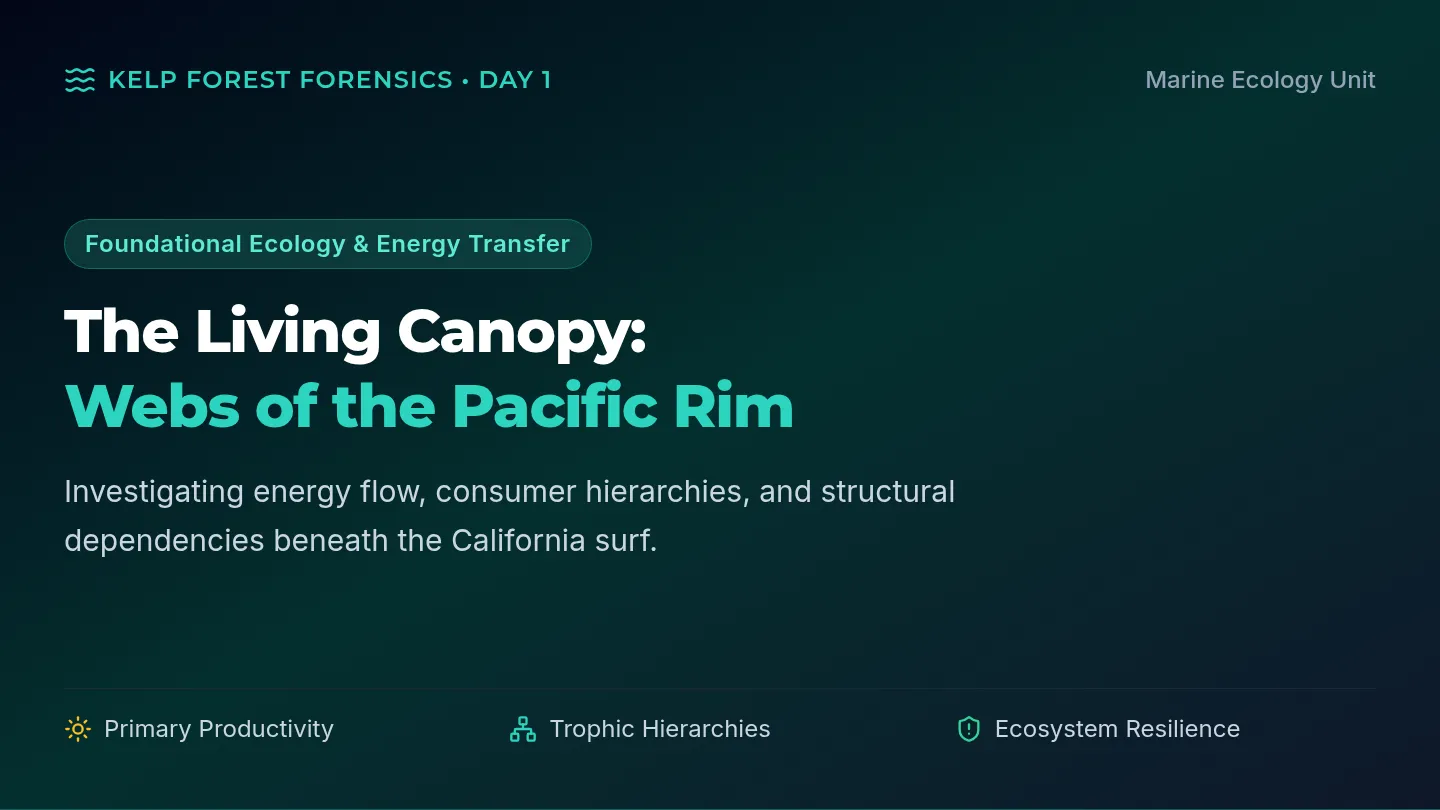
    A comprehensive 3-day investigative life science sequence exploring trophic cascades, keystone species, and ecological balance in Pacific kelp forests. Students examine authentic ecological data to diagnose ecosystem collapse and design science-backed restoration policies.

    SM

    Samantha McBath

    6
    Tooth Swap Teacher Guide

    Tooth Swap Science

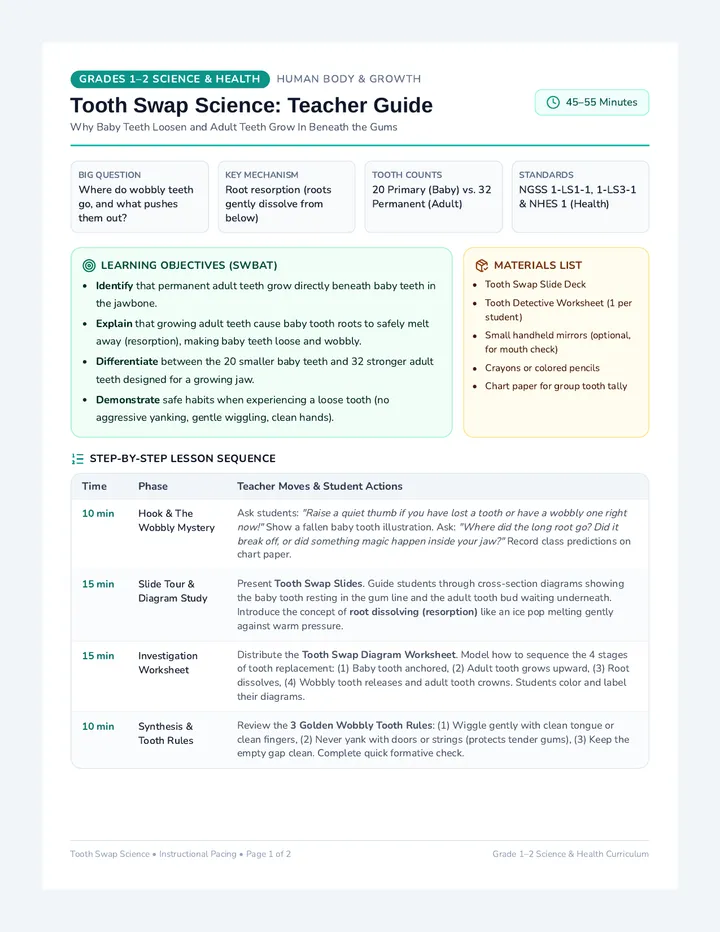
    An inquiry-based primary science lesson for Grades 1–2 exploring why baby teeth loosen and fall out as permanent adult teeth grow beneath the gums. Students examine tooth anatomy, root resorption, jaw growth, and oral health habits through clear diagrams and structured discussions.

    A

    asdfg

    4
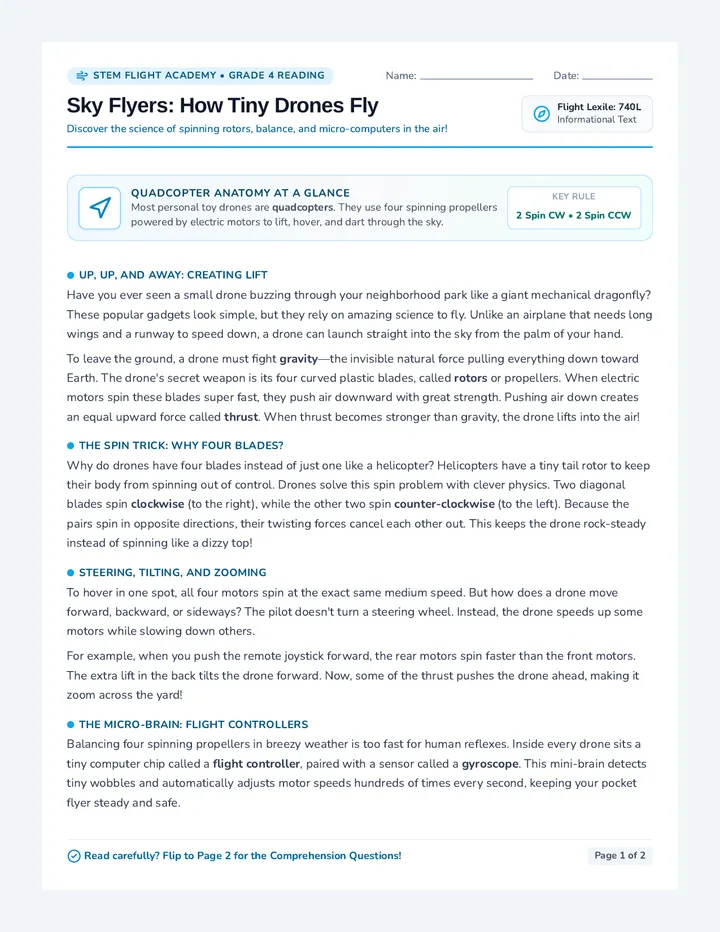
    Sky Flyers Reading Passage

    Sky Flyers Reading Passage

    A 3-page 4th-grade instructional resource including a 740L informational passage on how quadcopter drones work, a 5-question multiple choice reading assessment with a bonus engineering prompt, and a complete teacher answer key with text evidence and scoring rubric.

    RH

    Rachel Haydon

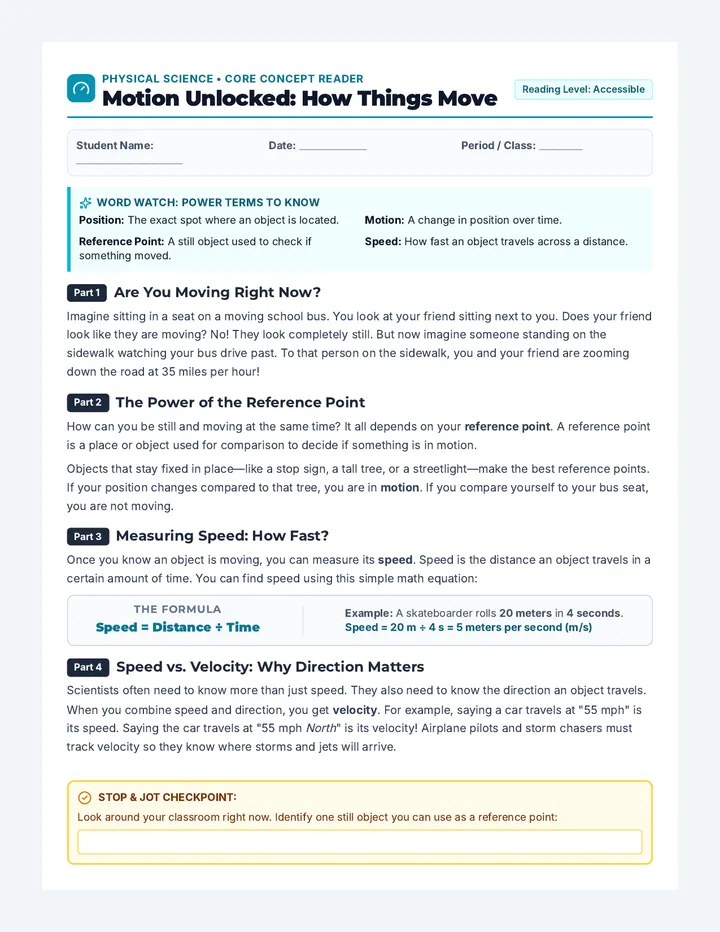
    Motion Unlocked Reading Packet

    Curriculum Unlocked

    A sequence of high-interest, accessible 9th-grade reading lessons designed for students reading at a 5th-grade level across science and world history.

    SH

    Sarah Hunter

    9
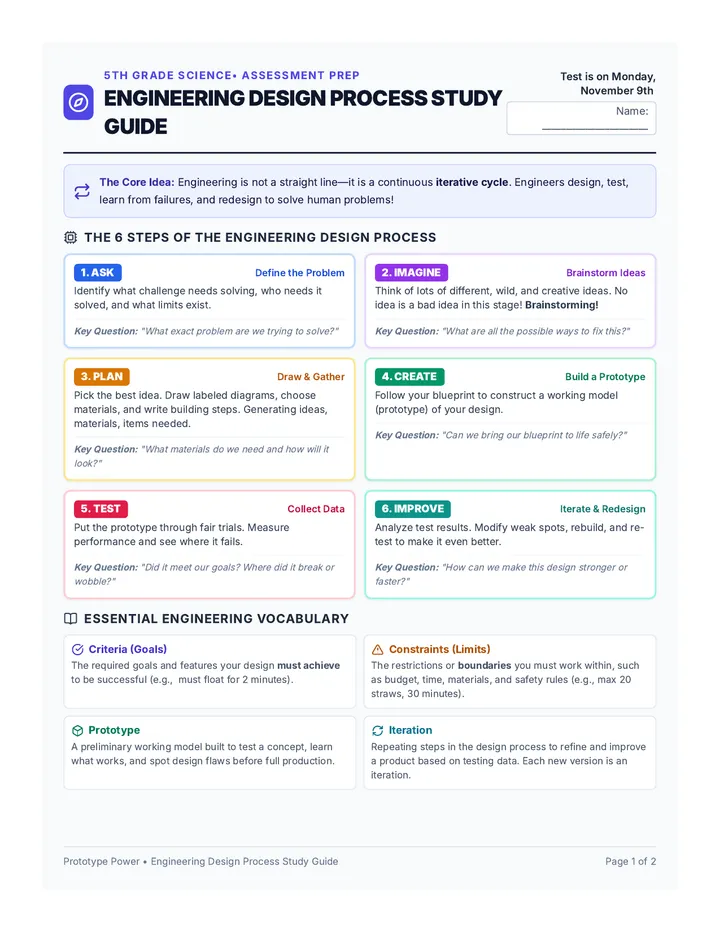
    Engineering Design Process Review Sheet

    Prototype Power

    A comprehensive 5th-grade assessment bundle exploring the Engineering Design Process. Students master the iterative cycle of Asking, Imagining, Planning, Creating, Testing, and Improving through targeted review, authentic scenario evaluation, and structured reflection.

    EM

    Evangelia Moran

    5
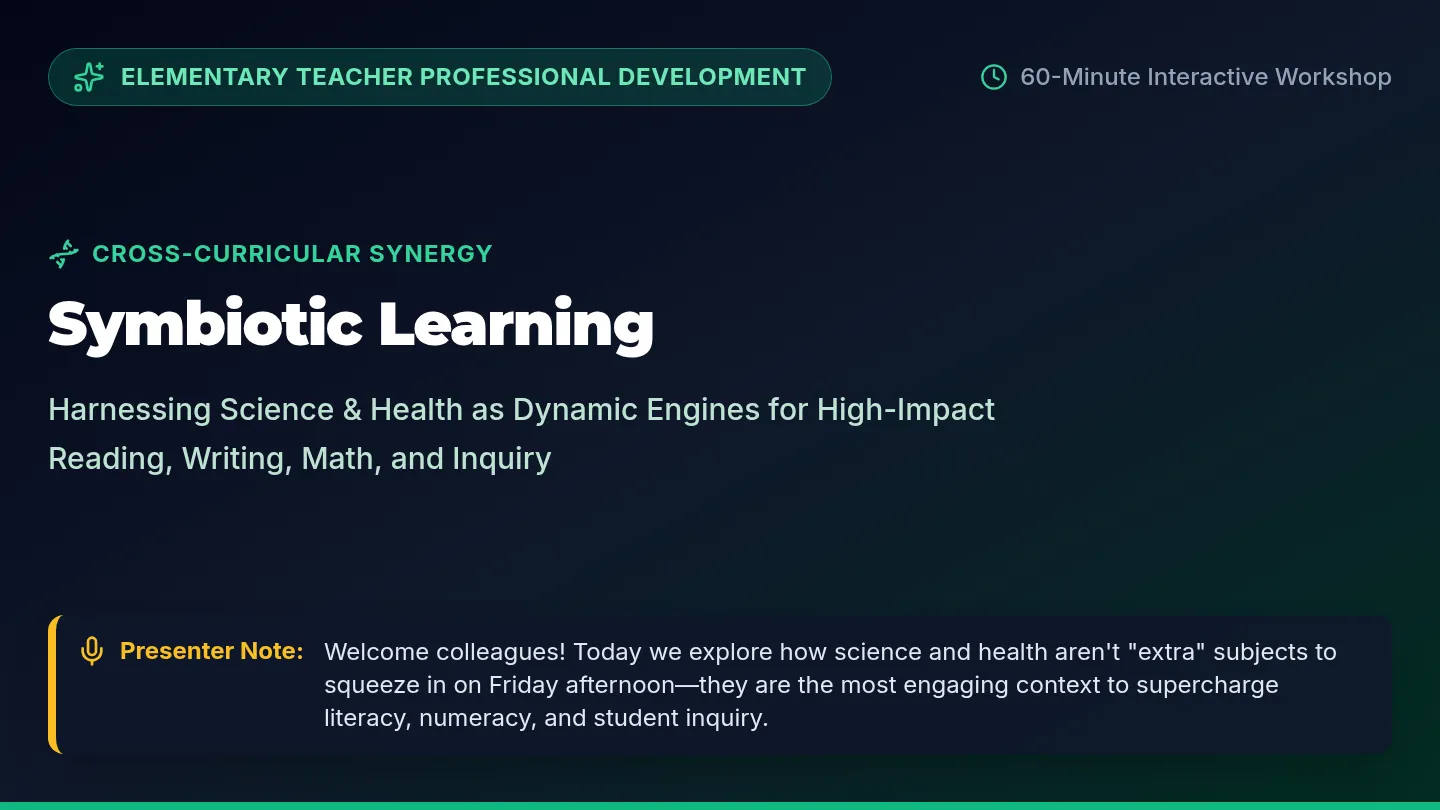
    Symbiotic Learning Presentation Slides

    Symbiotic Learning Presentation Slides

    A 14-slide professional development presentation for elementary general education teachers demonstrating how to integrate engaging science and health phenomena across reading, writing, math, and social studies. It features explicit definitions, cognitive and motivational research, differentiation through thematic planning, three complete interdisciplinary unit blueprints, scholarly references, and comprehensive presenter notes on every slide.

    JT

    Jailene Torres

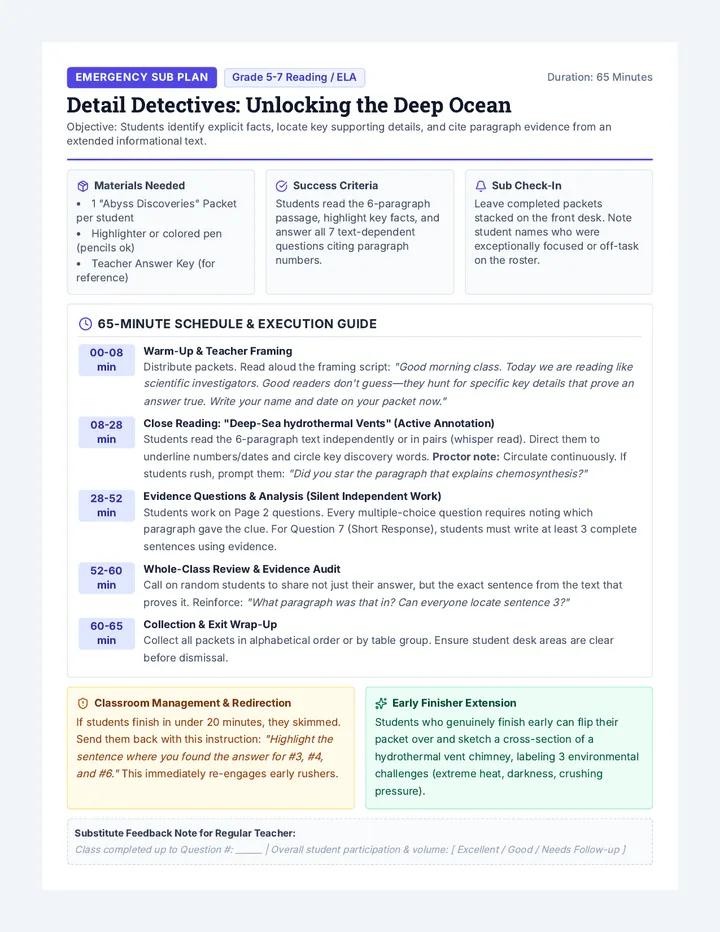
    Detail Detectives Sub Plan

    Sub Ready Reading

    A comprehensive emergency substitute curriculum spanning core reading strategies, earth science weather systems, and middle school mathematics on ratios and rates. Features step-by-step substitute plans, student passages and worksheets with extensive practice problems, and full answer keys.

    CP

    Christian Page

    16
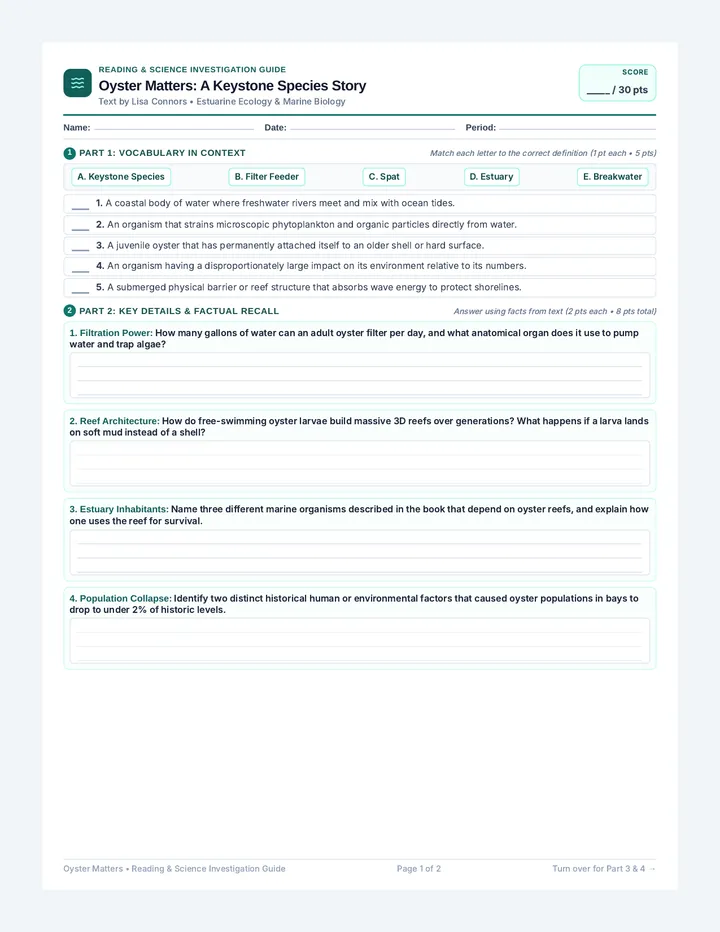
    Oyster Matters Question Worksheet

    Reef Architects

    A comprehensive comprehension and science investigation companion for the book Oyster Matters: A Keystone Species Story by Lisa Connors. Covers estuarine ecology, keystone species dynamics, anatomical adaptations, and coastal restoration through targeted recall, vocabulary, and analytical thinking tasks.

    EG

    Emily Gianni

    2
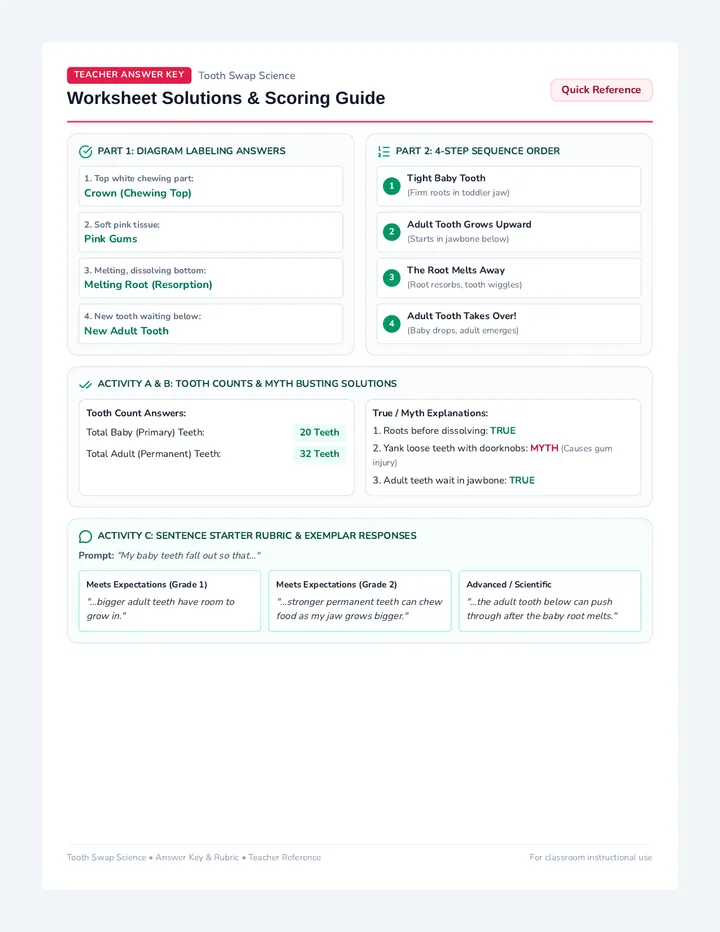
    Tooth Swap Worksheet Key

    Tooth Swap Worksheet Key

    A 1-page teacher answer key and scoring guide for the Tooth Swap Diagram Worksheet. It provides labeled diagram solutions, 4-stage sequencing answers, tooth counts, and exemplar student reflection responses.

    A

    asdfg

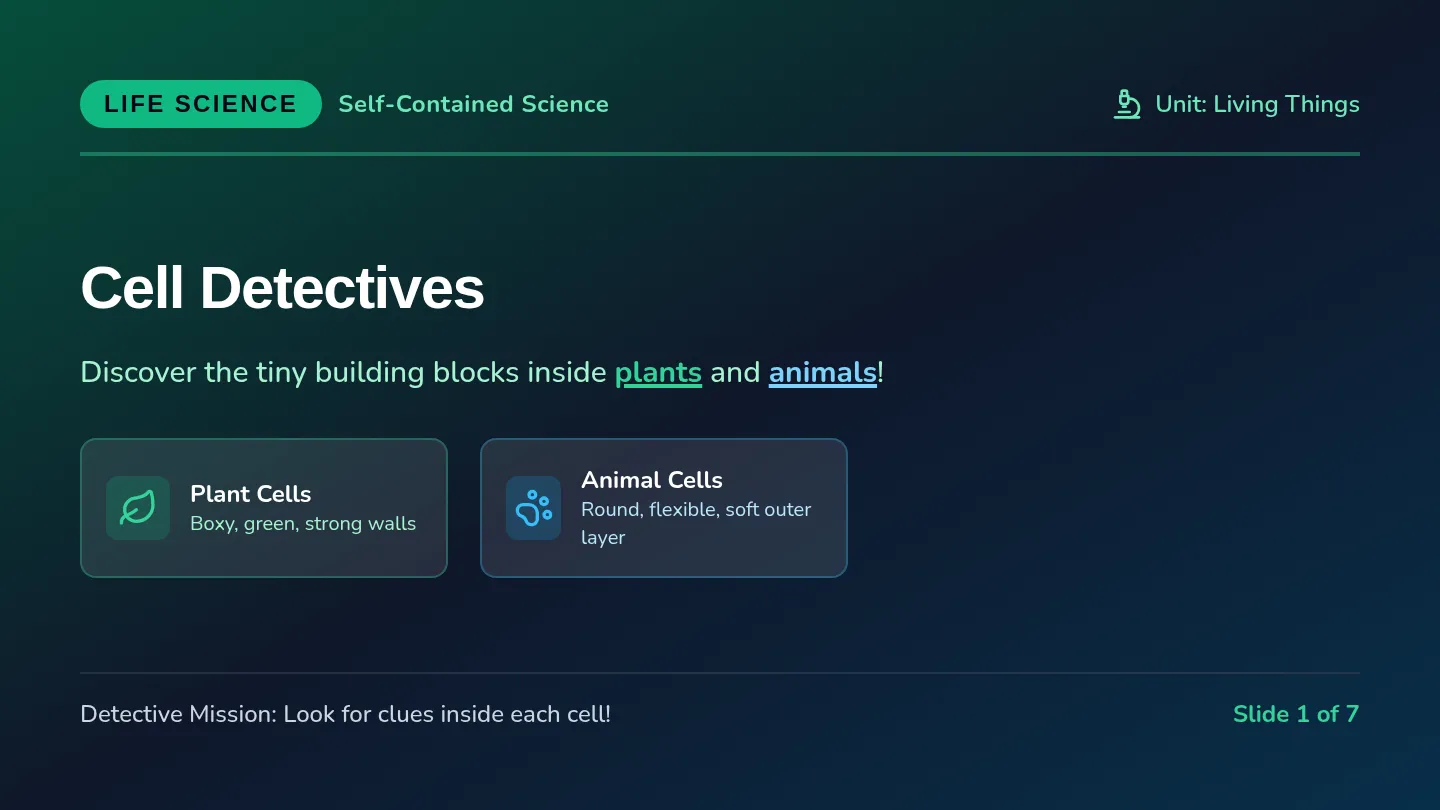
    Cell Detectives Slides

    Cell Explorers

    A foundational life science unit for self-contained learners exploring the microscopic world of cells, organelle jobs, and how specialized cells work in teams to build living things.

    CF

    Carissa Fenner

    8
    Ecosystem Clusters Student Assessment

    Ecosystem Test Clusters

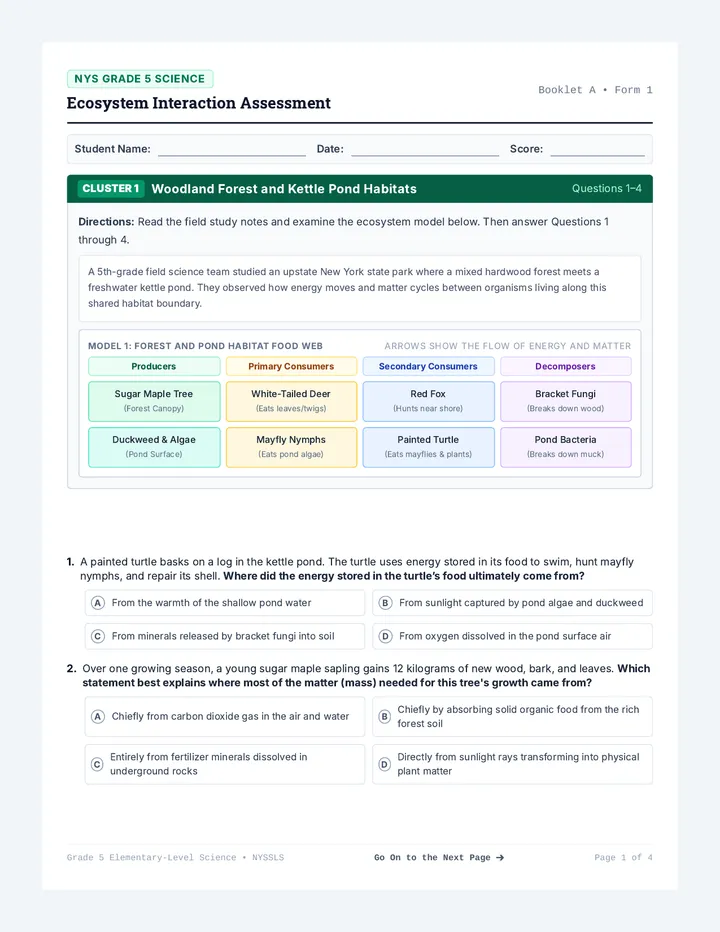
    A standards-based Grade 5 NYSSLS science assessment featuring two parallel clusters comparing forest, pond, desert, and grassland ecosystems. Includes an authentic multi-page student test booklet and an educator scoring guide with rubrics.

    Lenny Avatar
    Lenny
    2
    Tooth Swap Diagram Worksheet

    Tooth Swap Diagram Worksheet

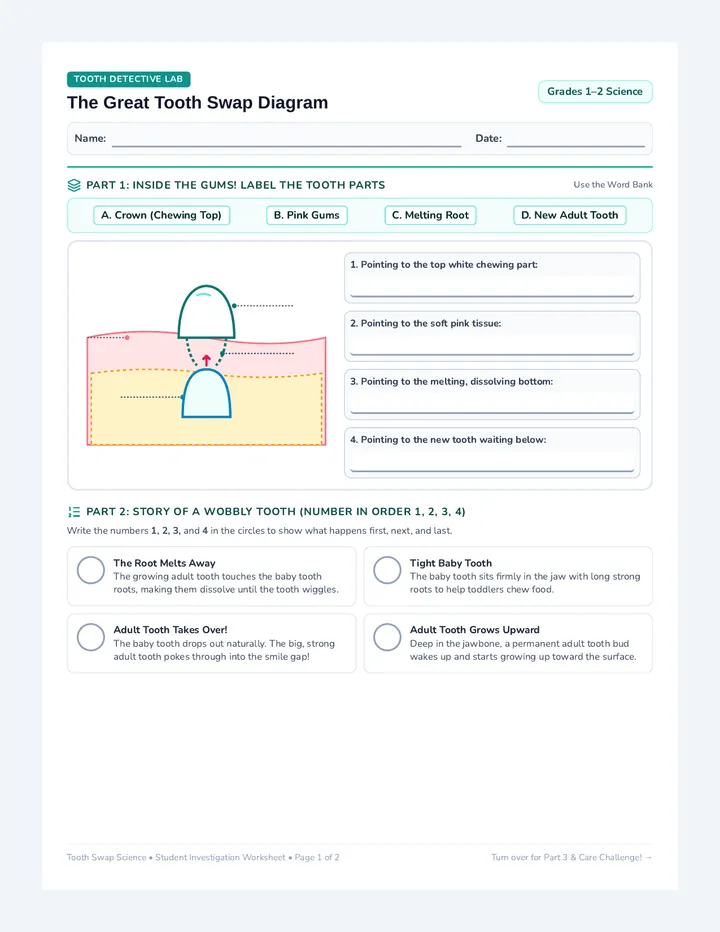
    A 2-page printable student worksheet for Grades 1–2 featuring a jaw cross-section diagram to label, a 4-step sequence activity on root resorption, a tooth-counting comparison (20 vs 32), and safe wobbly tooth health checks.

    A

    asdfg