Command Center Teacher Guide The Command Center Expansion
Teacher Facilitation Guide
High School
U.S. History / Government
Objective
Students will analyze historical expansions of presidential power through specific case studies to evaluate whether administrative strategies align with constitutional principles or represent executive overreach.
Materials Needed
Command Center Slides
Power Plays Research Guide
Executive Accountability Exit Ticket
Student Laptops/Tablets
Lesson Pacing
Time Phase Key Actions 5 min Warm-Up Quick poll: Is the President too powerful, too weak, or just right? Discuss initial impressions. 10 min Watch Video Watch Crash Course #14. Focus on "Administrative Strategies" (5:29-7:40). 25 min Jigsaw Activity Groups research specific case studies (Louisiana, Emancipation, Internment, Steel). 5 min Exit Ticket Debrief the core argument: Emergency Necessity vs. Democratic Accountability.
Discussion Prompts
During Video (Pause at 6:55):
"Is an Executive Order democratic? Why might a president prefer this over waiting for Congress to pass a law?"
Debrief Discussion:
"Does the 'necessity' of a situation (like a war) ever justify ignoring the Constitution? Who gets to decide when it's an emergency?"
Unit: Executive Power Page 1 of 2
Case Study Background & Key
1 Louisiana Purchase (1803) - Jefferson
Context: France offered to sell the territory for $15 million. Jefferson was a strict constructionist who believed the Constitution didn't explicitly grant the power to buy land.The Strategy: Treaty-making power was used as a workaround.Argument: Necessary for national security and agrarian expansion vs. overreach of presidential authority.
2 Emancipation Proclamation (1863) - Lincoln
Context: Civil War. Lincoln needed to weaken the Southern economy and labor force.The Strategy: Used "War Powers" and status as Commander-in-Chief.Argument: Moral and military necessity to preserve the Union vs. unilateral seizure of "property" (at the time) without legislative process.
3 Japanese Internment (1942) - FDR
Context: Pearl Harbor attack; WWII hysteria.The Strategy: Executive Order 9066.Argument: National security "military necessity" vs. catastrophic violation of 5th and 14th Amendment due process and civil liberties.
4 Steel Seizure (1952) - Truman
Context: Korean War. Steel workers went on strike. Truman feared loss of production would harm the war effort.The Strategy: Executive Order to seize private steel mills.Outcome: SCOTUS (Youngstown) ruled against Truman.Takeaway: A rare example of the Court limiting executive power; established a 3-tier framework for presidential authority.
Teacher Note on Jigsaw
Encourage students to use reliable sources (Oyez.org, National Archives, Constitutional Rights Foundation). Remind them that "necessary" and "overreach" are analytical conclusions—they must support their view with evidence from their research.
Unit: Executive Power Page 2 of 2
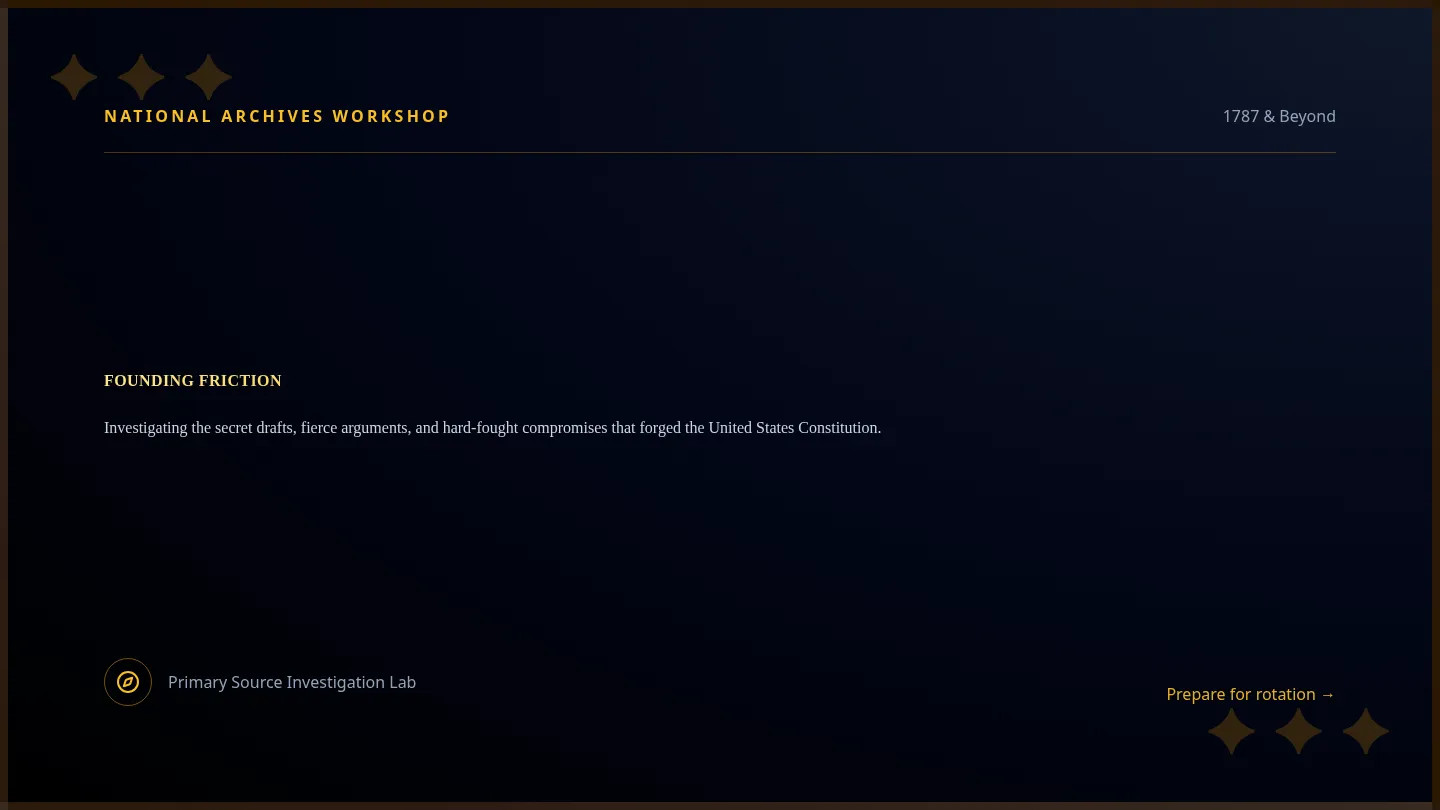
Command Center Slides The Command Center
Analyzing the Expansion of Presidential Power
Executive Branch Strategy
Warm-Up Poll
5 Minutes
In your opinion, the President of the United States currently has...
Too Much Power
Just Right
Too Little Power
Context: How Presidents Govern
We often think of "The President" as a single person, but they are the head of a massive Executive Bureaucracy.
Focus Questions:
What are "Administrative Strategies"?
How do Presidents govern without Congress?
Is this growth of power good or bad?
Instructional Video
CC Gov & Politics #14
Embedded media
The Executive Lexicon
Bully Pulpit
The president's use of prestige and visibility to guide or enthuse the American public.
Executive Order
A rule issued by the president that has the force of law without needing a vote from Congress.
Bureaucracy
The complex structure of offices, tasks, and rules used by all large-scale institutions.
Signing Statement
A written pronouncement issued by the President upon signing a bill into law, often explaining their interpretation.
Power Plays Jigsaw
25 Minutes
Divide into 4 groups. Each group investigates one historical "Power Play":
Louisiana Purchase
Jefferson (1803)
Emancipation Proclamation
Lincoln (1863)
Japanese Internment
FDR (1942)
Steel Seizure
Truman (1952)
Was it an overreach? Or was it necessary?
Closing Argument
Which argument for a strong executive do you agree with?
A. EMERGENCY NECESSITY
In times of crisis, we need a single leader who can act decisively and fast.
B. DEMOCRATIC ACCOUNTABILITY
The President is the center of attention and can be held directly responsible by the public.
Complete your Exit Ticket before leaving!
Power Plays Research Guide Power Plays
Executive Branch Research Guide
Name:
Date:
Research Mission
Your group has been assigned one historical event where a U.S. President exercised significant executive power. Use your computer/tablet to research the specific details of your case. You must be prepared to present your findings to the class.
Case 1
Louisiana Purchase
Case 2
Emancipation Proclamation
Case 3
Japanese Internment
Case 4
Steel Seizure Case
1. The Context: What was happening in the country that prompted this action?
2. The Action: What specific "Administrative Strategy" did the President use? (Executive order, treaty, etc.)
3. The Justification: What part of the Constitution or "inherent power" did the President claim allowed them to do this?
Argument: Why was it NECESSARY?
Argument: Why was it OVERREACH?
Final Verdict: Based on your research, was this a justified use of power? Why or why not?
Command Center Series Investigation Report #01
Executive Accountability Exit Ticket Executive Accountability
Exit Ticket
Name:
The video presented two major arguments for why a strong executive branch is beneficial. Which one do you find most convincing and why?
Argument 1: Emergency Necessity (The need for fast, decisive action in crises)
Argument 2: Democratic Accountability (The President is the most visible and easily held accountable)
Explain your reasoning using evidence from today's lesson:
Hand to teacher before leaving the command center
Executive Accountability
Exit Ticket
Name:
The video presented two major arguments for why a strong executive branch is beneficial. Which one do you find most convincing and why?
Argument 1: Emergency Necessity (The need for fast, decisive action in crises)
Argument 2: Democratic Accountability (The President is the most visible and easily held accountable)
Explain your reasoning using evidence from today's lesson:
Hand to teacher before leaving the command center