A comprehensive unit on North Carolina's history, geography, and government, featuring 3rd and 4th grade level resources with EOG-style assessments.
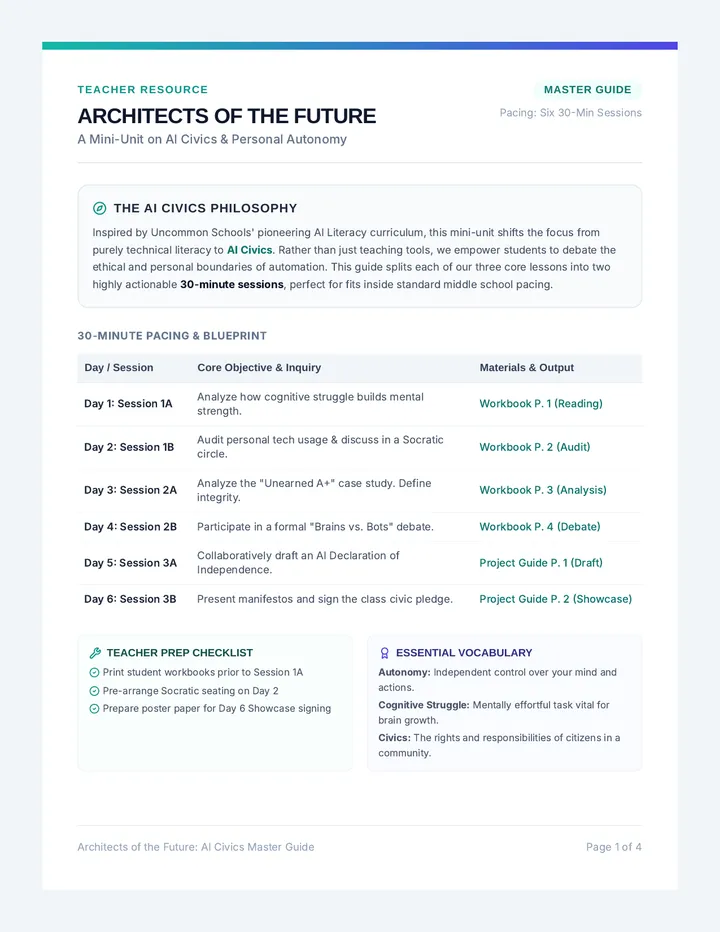
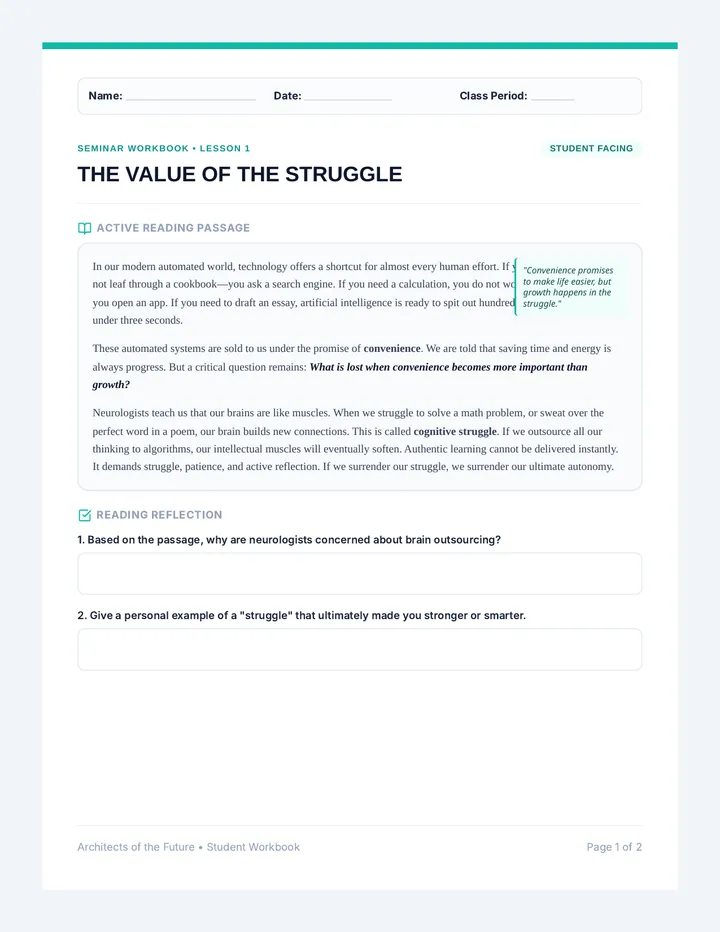
A middle school mini-unit on AI civics, empowering students to think critically about autonomy, convenience, and human potential. Inspired by Uncommon Schools' pioneering AI Literacy curriculum, students debate the role of technology and craft their own Civic Declarations.
A comprehensive lesson exploring how the Mexica migrated from Aztlán, settled in the Valley of Mexico, and leveraged geography, agriculture, and military strategies to build the Aztec Empire. This lesson includes interactive presentation slides, a graphic organizer worksheet for student analysis, and a detailed teacher facilitation guide.
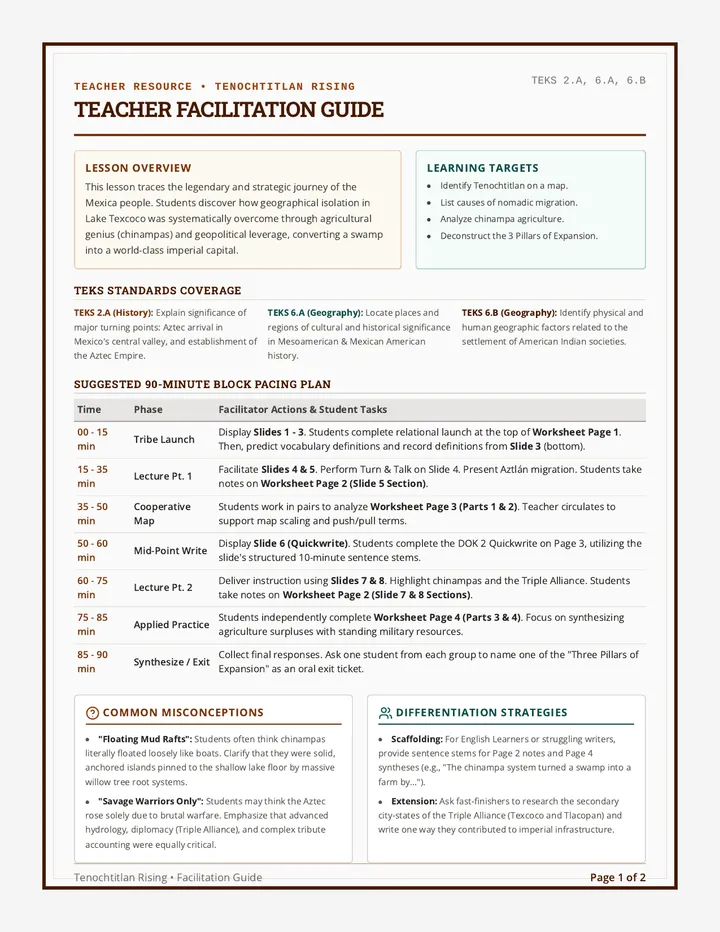
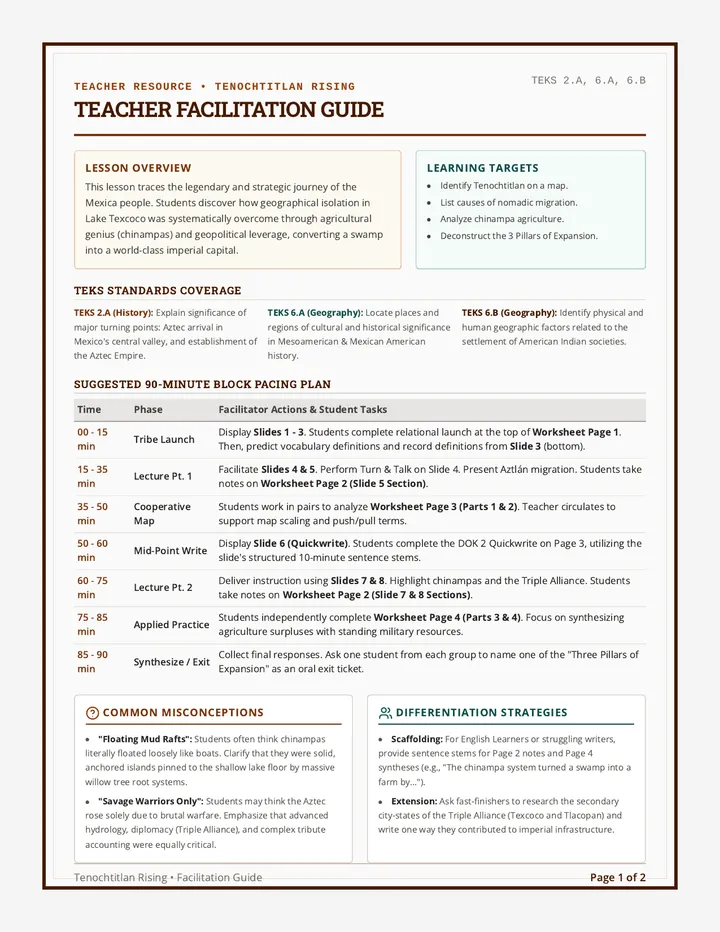
A two-page printable teacher facilitation guide detailing TEKS alignment, a minute-by-minute pacing plan, instructional strategies, common misconceptions, slide facilitation scripts, and a complete worksheet answer key (including the new vocabulary bell ringer page).
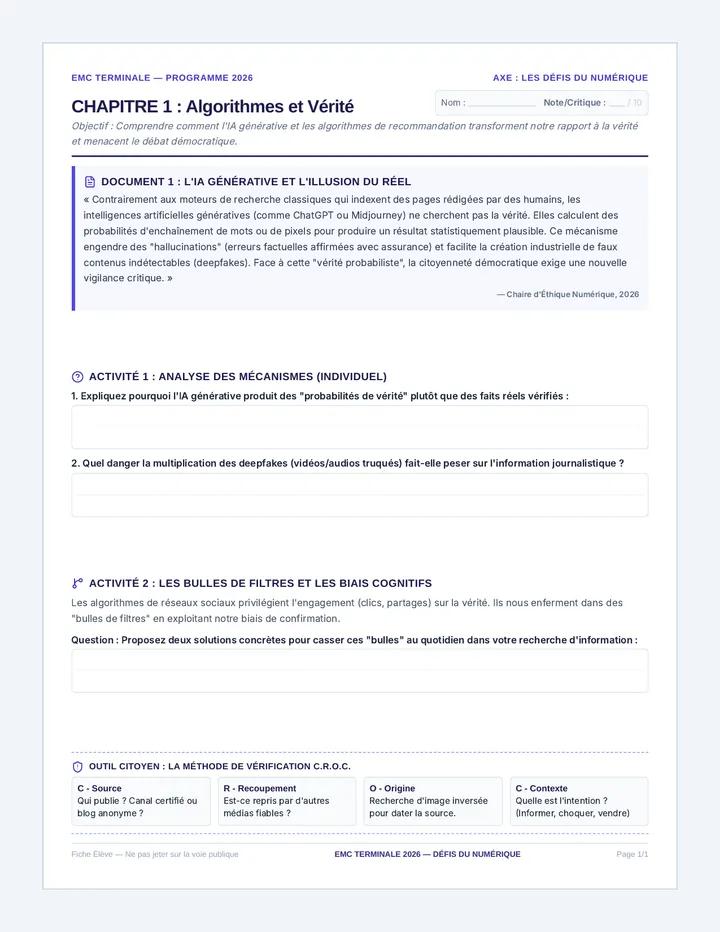
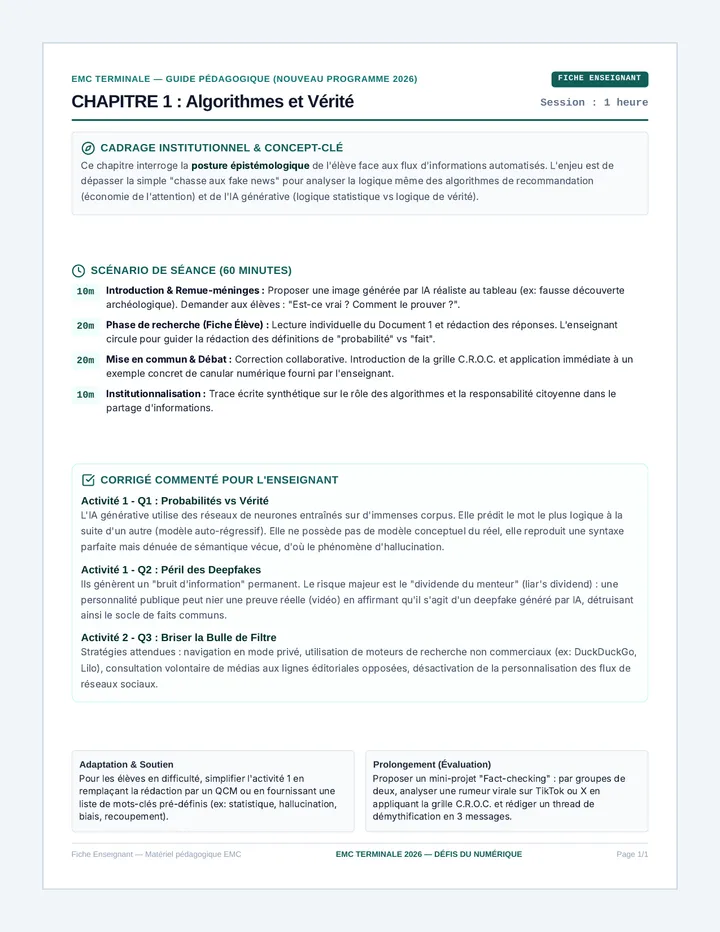
Une séquence complète d'activités clés en main d'Éducation Morale et Civique (EMC) pour la classe de Terminale, conforme au nouveau programme 2026. Elle se concentre sur les défis du numérique : intelligence artificielle, désinformation, espace public numérique et souveraineté technologique.
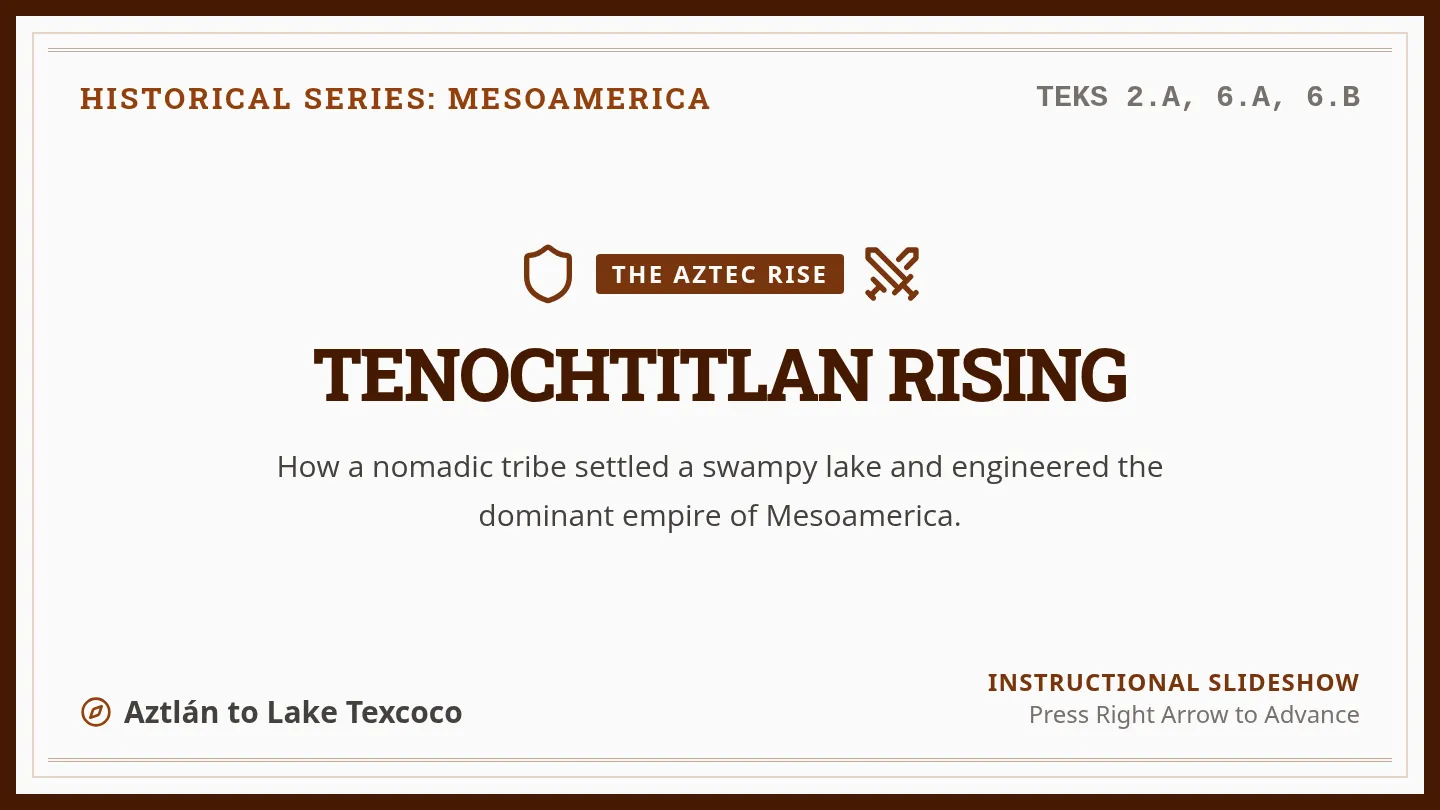
An 8-slide interactive instructional presentation for classroom use. Covers TODAY lesson goals, a shortened 5-word academic vocabulary bell ringer slide, the relational CKH tribe launch, migration from Aztlán, the founding of Tenochtitlan, a 10-minute quickwrite, chinampa agriculture, and the three pillars of imperial expansion. Employs a striking, highly visible Codex design with a 24px minimum font size.
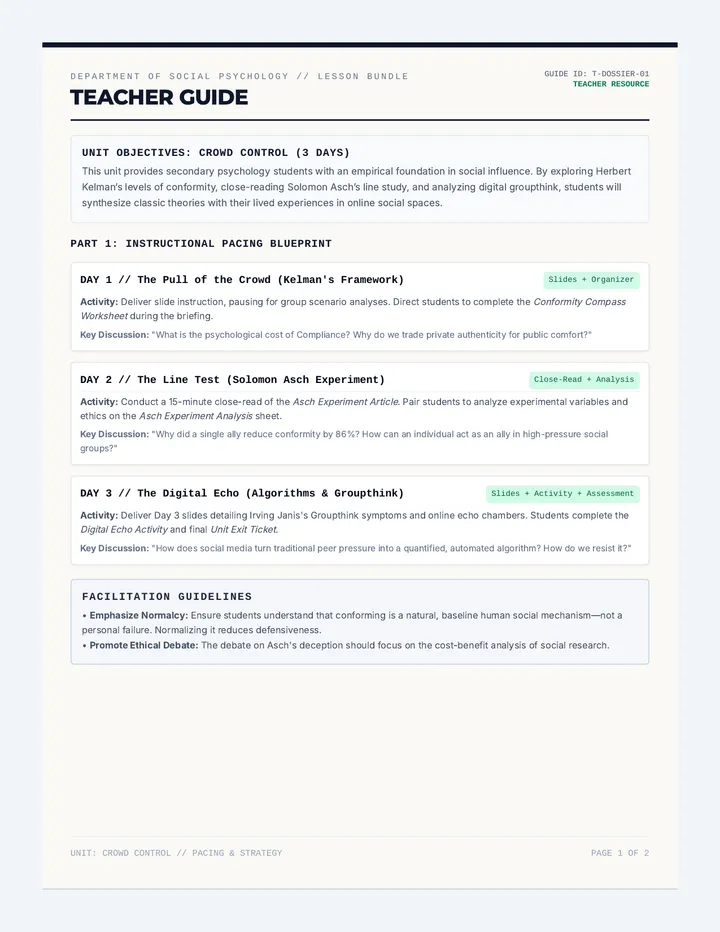
A three-day social psychology sequence exploring conformity, groupthink, and social influence. Students analyze foundational experiments, compare compliance versus internalization, and dissect modern digital peer pressure and media dynamics.
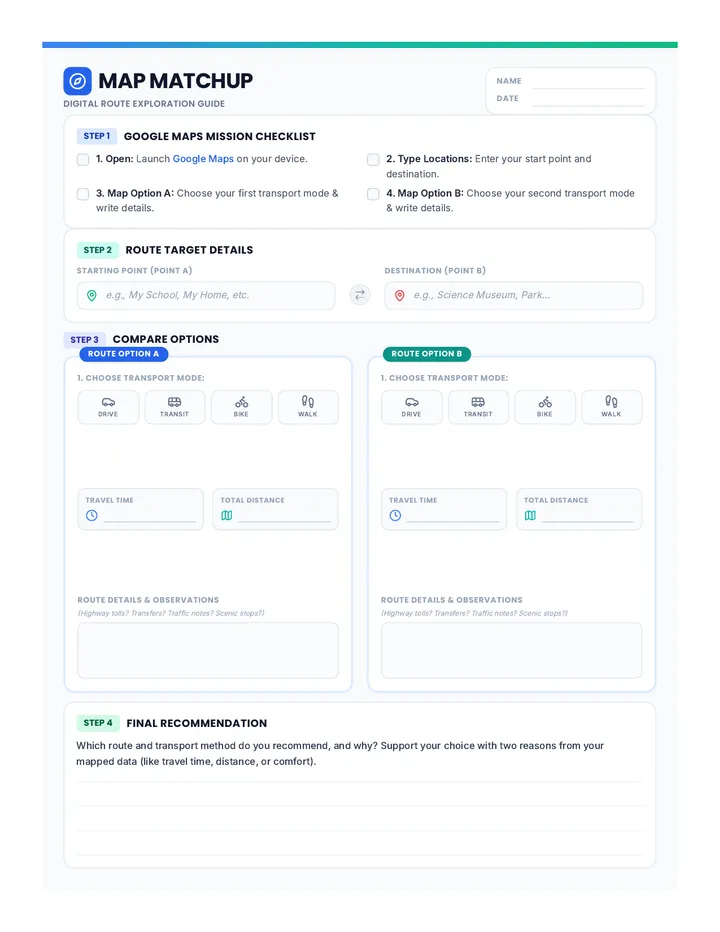
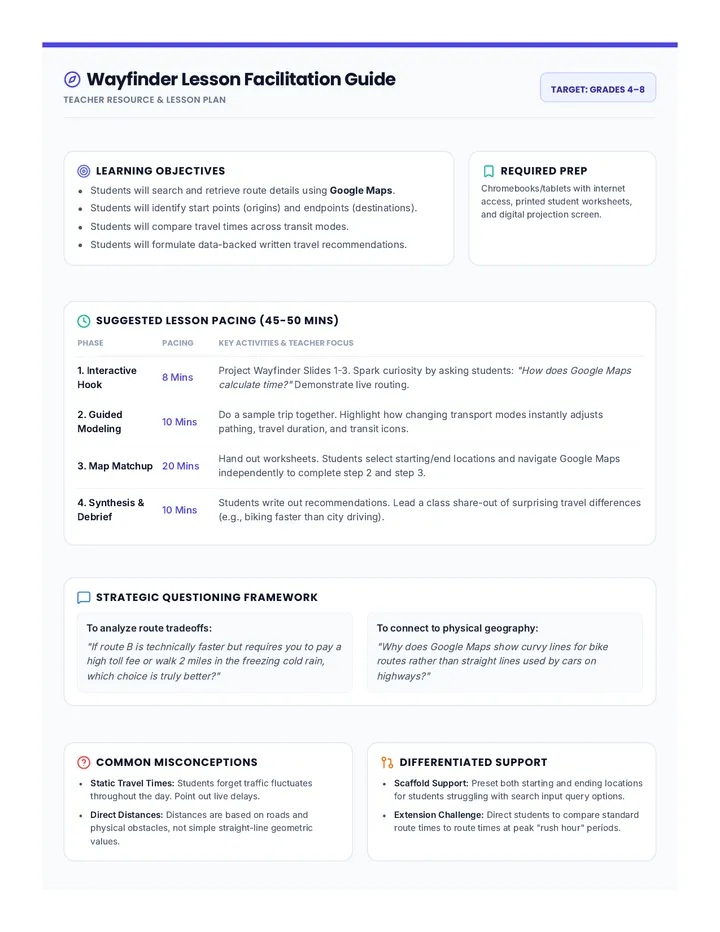
An introductory lesson on using digital mapping tools like Google Maps to plan routes, compare transportation options, and analyze travel times.
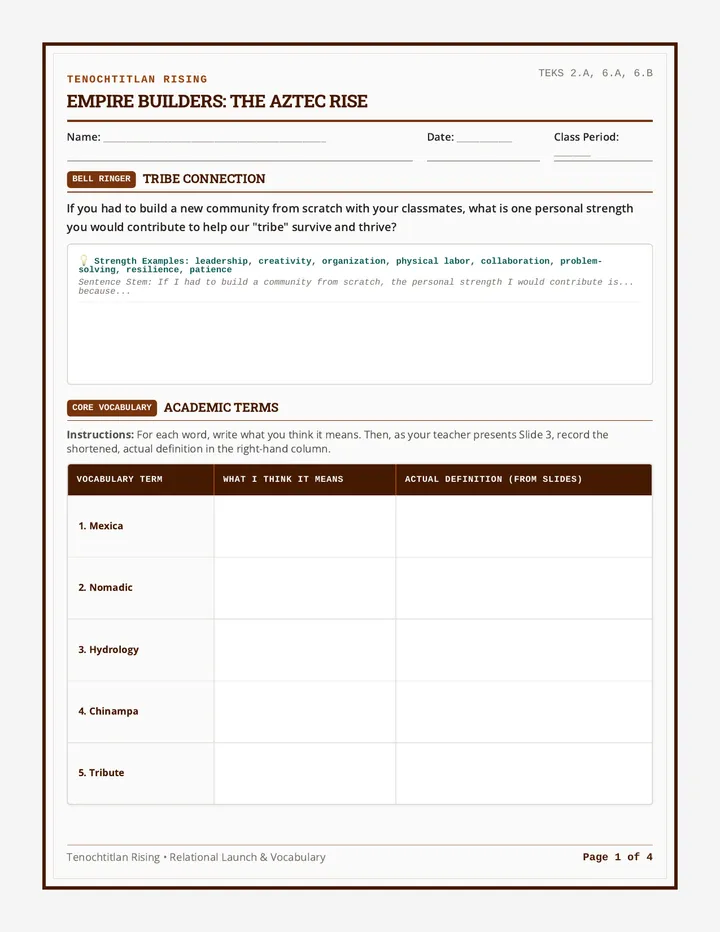
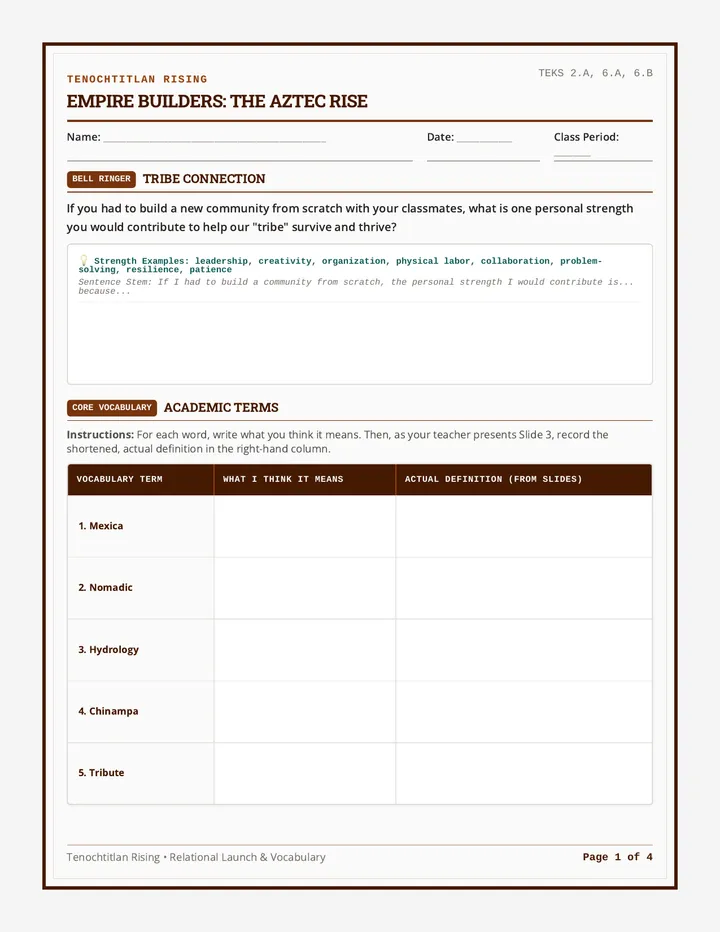
A four-page printable student packet featuring a top-placed relational CKH launch box on Page 1, followed by a larger Vocabulary Bell Ringer table, an interactive slide notes guide on Page 2, a migration graphic organizer and Lake Texcoco map analysis on Page 3, and a chinampa engineering diagram and expansion analysis chart on Page 4. All writing spaces are blank for freehand student input. Designed in an earthy, historical Codex style.
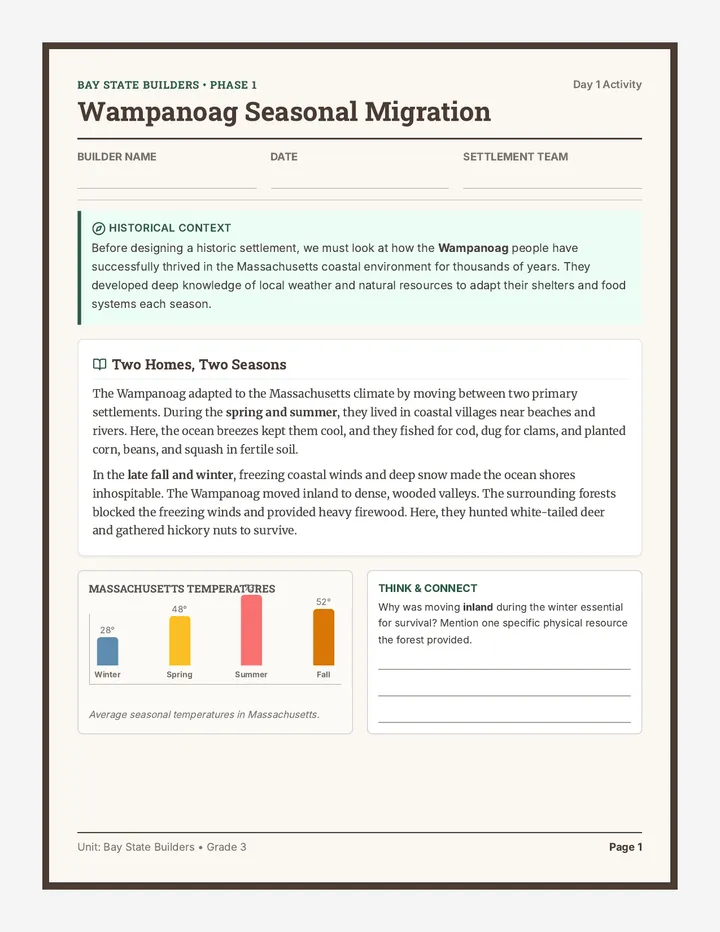
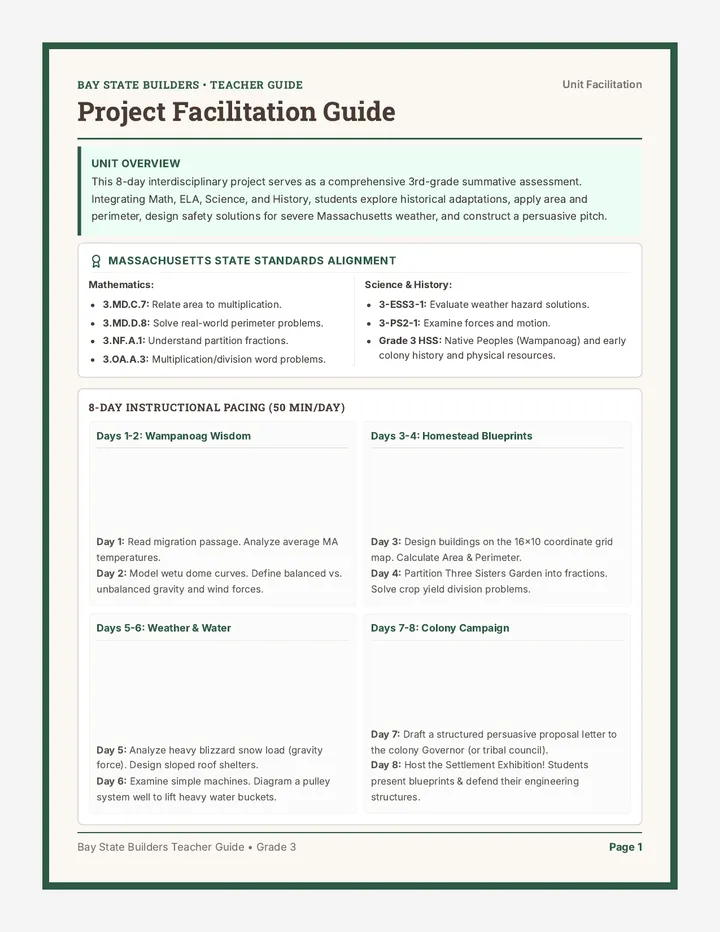
An 8-day interdisciplinary project where 3rd-grade students design a sustainable historical Massachusetts settlement. Integrating math, ELA, science, and social studies, students apply area, perimeter, fractions, weather science, Wampanoag adaptations, and persuasive writing.
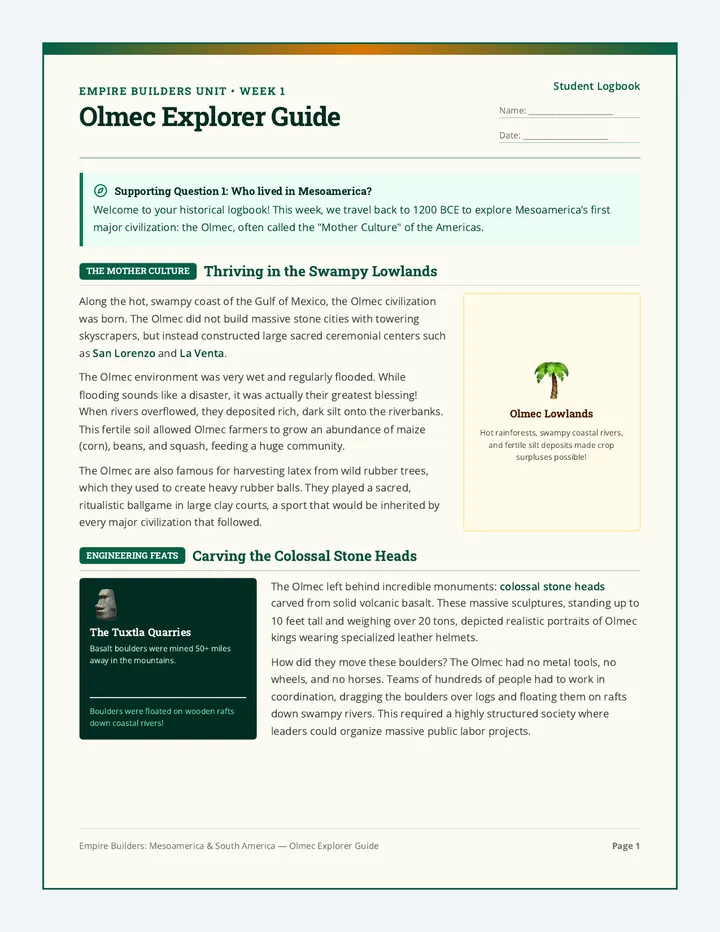
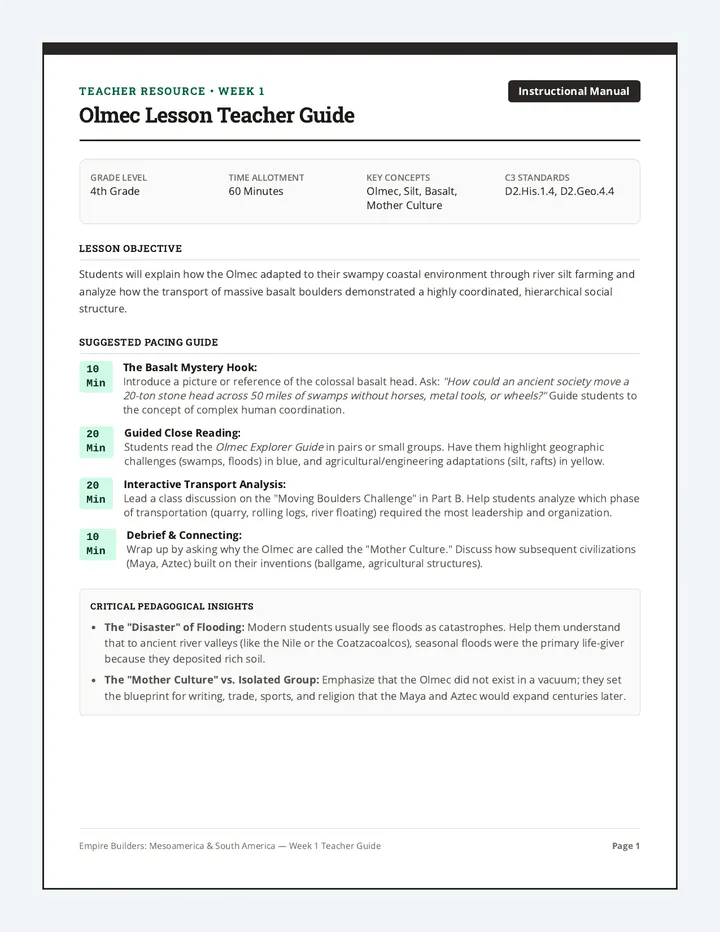
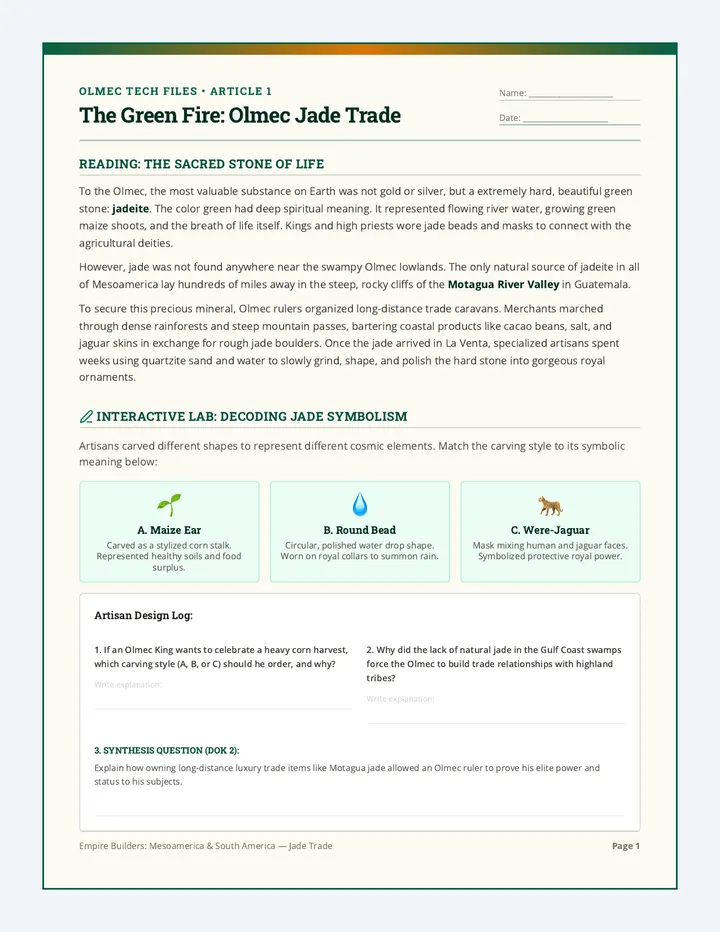
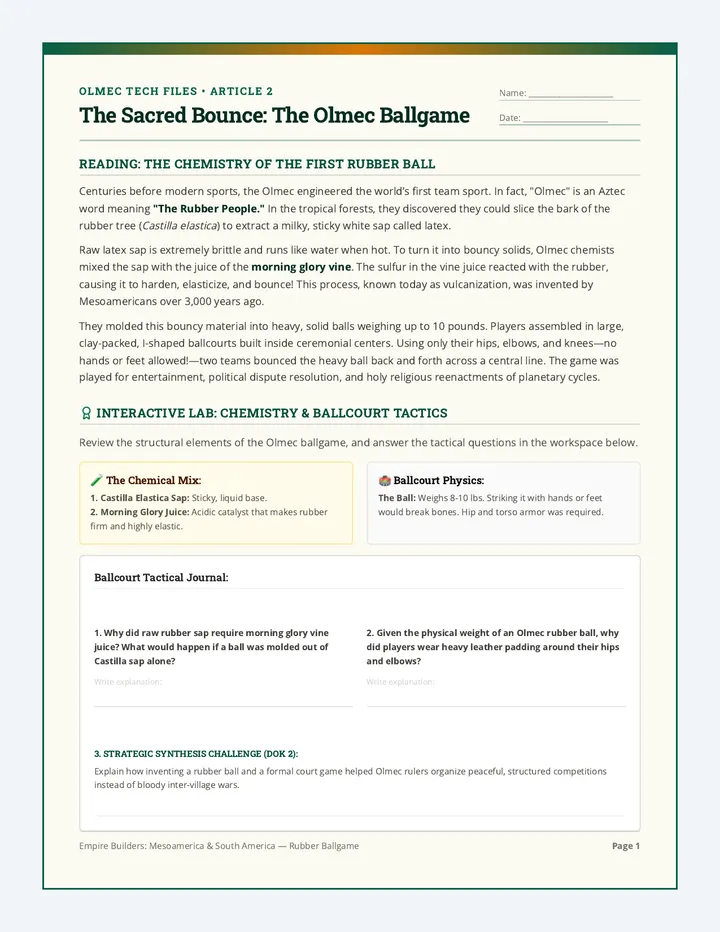
A comprehensive 4th-grade social studies unit where students analyze the Olmec, Maya, Aztec, and Inca civilizations. Through primary-source-style document analysis, geographical exploration, and civic action, students discover what made these empires successful and apply ancient engineering solutions to improve the modern City of Surprise.