Catalyst Clues Station Cards
01 Temp
Enzyme Basics
Enzyme Speed and Temperature
Station 1
Background Intel
Enzymes work best at a specific temperature. When it is too cold, enzymes move very slowly and do not work well. As the temperature warms up, enzymes speed up until they reach their optimum (perfect) temperature. If it gets too hot, the enzyme breaks down and loses its shape.
How Temperature Affects Enzyme Speed
Fastest Speed Medium Speed Stopped (0%) Temperature Enzyme Speed Cold Temperature Optimum (Best Temp) Hot Temperature
DOK 3 Challenge Prompt
A microscopic organism lives in hot springs at 80°C. Its enzymes work perfectly at this very high temperature. However, human enzymes stop working completely and break down if they get hotter than 45°C.
Your Task: Using the graph, explain how temperature changes affect how fast an enzyme works. Explain why the hot-spring organism's enzymes do not break down in the heat, while human enzymes do.
Unit: Intro to Enzymes Catalyst Clues Stations Record your answers on Page 1 of the Tracker
02 Fever
Environmental Effects
Too Hot to Helper
Station 2
Background Intel
Human cells function best at a steady body temperature of about 37°C. While a mild fever is a normal way for the body to fight off an infection, doctors become very concerned if a patient's temperature remains extremely high for an extended period.
Human Enzyme Speed vs. Temperature
Max Speed Stopped Temperature Enzyme Speed Freezing (0°C) Normal Body Temp (37°C) Extremely Hot
DOK 3 Challenge Prompt
When a human gets very sick, they might run a high fever of 104°F (40°C) or higher. Doctors get extremely worried if a patient's fever stays this high for too long.
Your Task: Why is an extremely high fever so dangerous to a human's survival? Use the concepts of "enzyme shape" and "breaking down (denaturing)" to explain what is happening inside the patient's cells based on the graph coordinates.
Unit: Intro to Enzymes Catalyst Clues Stations Record your answers on Page 1 of the Tracker
03 pH
Environmental Effects
Acidic Environments
Station 3
Background Intel
pH is a scale that measures how acidic an environment is. A low pH (1 to 3) is highly acidic, like stomach acid. A neutral pH (around 7) is safe and mild, like water or saliva. Different enzymes are shaped to work in different pH environments. If an enzyme goes to the wrong pH, it unravels and loses its shape!
Enzyme Speed vs. pH Environment
Max Speed Stopped pH Level (Acidic vs. Neutral) Enzyme Speed Pepsin (Stomach) → Solid Line Amylase (Mouth) → Dashed Line pH 2 (Stomach) pH 7 (Mouth Saliva) pH 12 (Basic)
DOK 3 Challenge Prompt
Salivary amylase is an enzyme in your mouth saliva (pH 7) that breaks down starch into sugar. When you swallow your food, that amylase travels down with it straight into your stomach, which is filled with strong stomach acid (pH 2).
Your Task: Using the graph curves (solid vs. dashed), predict whether salivary amylase will continue to digest starches inside your stomach. Explain what physically happens to the saliva amylase's "lock" shape when it plunges into the stomach acid.
Unit: Intro to Enzymes Catalyst Clues Stations Record your answers on Page 1 of the Tracker
04 Cycle
Enzyme Basics
The Untouchable Workers
Station 4
Background Intel
In chemical reactions, raw materials are used up to make products. For example, wood turns to ashes, or sugar is broken down. But enzymes are different: they are the workers. They grab the substrate, do the job, release the product, and then turn around and do it again. They are reusable and never get used up!
The Reusable Enzyme Catalytic Cycle
1. Active Site Ready Enz Substrate 2. Perfect Fit Binding Locked Complex 3. Chemical Reaction Products Released 4. Unchanged & Ready 100% REUSABLE!
DOK 3 Challenge Prompt
A glass of milk contains billions of lactose (milk sugar) molecules. However, your body only needs to produce a relatively tiny amount of the lactase enzyme to digest all of it.
Your Task: Explain using the cyclic visual model why our cells do not need to make one new enzyme for every single sugar molecule we swallow. Contrast the physical fates of "substrates" vs. "enzymes" by the end of a reaction.
Unit: Intro to Enzymes Catalyst Clues Stations Record your answers on Page 2 of the Tracker
05 pH
System Dynamics
Enzyme Speed and pH
Station 5
Background Intel
Just like temperature, enzymes are very sensitive to pH (how acidic or basic an environment is). Every enzyme has an optimum pH where it works best. If the pH is too acidic (like lemon juice) or too basic (like soap), the enzyme changes shape and stops working.
How pH Level Affects Enzyme Speed
Fastest Speed Medium Speed Stopped (0%) pH Level Enzyme Speed pH 3 (Very Acidic) pH 7 (Optimum / Best) pH 11 (Very Basic)
DOK 3 Challenge Prompt
A student mixes liver enzymes with a liquid at pH 3, pH 7, and pH 11. The enzyme only works at pH 7. The student says: "Since the enzyme did not work at pH 3 or pH 11, it is completely destroyed and permanently broken."
Your Task: Is the student correct? Explain what happens to the shape of an enzyme's active site "lock" when the pH is changed too much, and whether returning it to pH 7 can sometimes help it go back to normal.
Unit: Intro to Enzymes Catalyst Clues Stations Record your answers on Page 2 of the Tracker
06 Energy
Enzyme Helpers
The Energy Hill
Station 6
Background Intel
Chemical reactions need a small push of energy to start, like the energy needed to roll a heavy rock over a steep hill. This starting energy is called activation energy. Enzyme helpers make this reaction happen much faster by making the "energy hill" much smaller and easier to climb.
Starting a Chemical Reaction: The Energy Hill
More Energy Less Energy Reaction Progress (Time) Energy Level Without Enzyme (Big Hill) With Enzyme (Small Hill) Start Finish
DOK 3 Challenge Prompt
A bowl of sugar can sit on a kitchen table for years without breaking down. But inside your cells, your body breaks down sugar in a tiny fraction of a second to release energy for you to run and play.
Your Task: Explain why sugar breaks down so quickly inside your cells but sits forever on the table. Use the "energy hill" graph to explain how enzyme helpers make this possible.
Unit: Intro to Enzymes Catalyst Clues Stations Record your answers on Page 2 of the Tracker
Catalyst Clues Student Tracker
Active Learning Lab
Catalyst Clues Student Tracker
Part 1: Stations 1-3
Student Name:
Date:
Class Period:
Rotate through the enzyme investigation stations. Analyze the graphs and models, discuss the challenge prompts with your group, and write your answers in the boxes below.
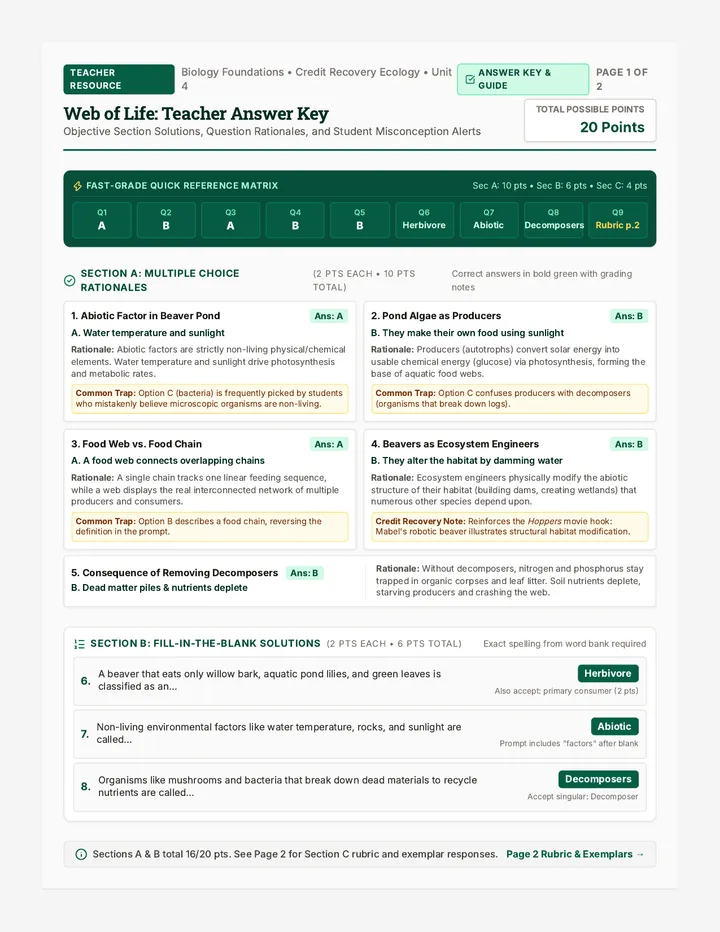
1 Station 1: Enzyme Speed and Temperature
Best Temp
1A. Explain how temperature changes affect how fast an enzyme works:
1B. Why doesn't the hot-spring organism's enzyme break down in the heat, while human enzymes do?
2 Station 2: Too Hot to Helper (Fever)
Fever Hazards
2A. Why is a high fever of 104°F (40°C) dangerous to human cells?
2B. What happens to a human enzyme's shape when it gets too hot? (Use the word "denaturing"):
3 Station 3: Acidic Environments (pH Curves)
Optimal pH Speeds
3A. Will salivary amylase function in stomach acid? Justify with curve coordinates:
3B. What physically happens to amylase's "lock" shape as it enters pH 2?
Unit: Intro to Enzymes Student Active Notebook Page 1 of 2
Active Learning Lab
Catalyst Clues Student Tracker
Part 2: Stations 4-6
Ensure all diagrams on the cards are referenced. Use key vocabulary: optimum, shape, substrate, active site, energy hill, and reusable.
4 Station 4: The Untouchable Workers (Reusable Cycle)
Catalytic Loop
4A. Why does the body only need a tiny amount of lactase to digest billions of sugars?
4B. Contrast the physical fates of the substrate vs. the enzyme at the end of the reaction:
5 Station 5: Enzyme Speed and pH (pH Sensitivity)
Optimum pH
5A. Is the student correct that catalase is permanently broken at pH 3 and pH 11? Explain what happens to the lock shape:
5B. What happens to the enzyme's shape when returned to pH 7? Compare this to hot temperature shifts:
6 Station 6: Activation Energy (The Energy Hill)
Energy Hill
6A. Why can a sugar bowl sit on a kitchen table for years without breaking down?
6B. How do enzyme helpers make chemical reactions happen so fast? (Use the "energy hill" concept):
Lab Self-Check:
All 6 Analyzed Complete Sentences DOK 3 Addressed
Unit: Intro to Enzymes Student Active Notebook Page 2 of 2