Machine Ledger Worksheet Machine Ledger Worksheet
Tammany Hall Case File #1873
Agent Name:
Date:
Part 1: The Trade-Off
"Would you rather have a guaranteed job and housing but no freedom to choose your leaders, or total freedom but struggle to find work and a place to live?"
My Choice & Reasoning:
Part 2: Political Machine T-Chart
Watch the video and record evidence of how political machines impacted cities during the Gilded Age.
Positive Impact
BENEFITS TO THE COMMUNITY
Negative Impact
CORRUPTION & HARM
Part 3: Final Judgment
Essential Question: Do the "ends" (the results) justify the "means" (the methods used) in politics?
Write a paragraph defending your stance using at least two pieces of evidence from the T-Chart above.
Debate Duel Cards Team Efficiency Cards
The Power of Results
The Job Creator
"New immigrants arrived with nothing. We didn't just give them a handshake; we gave them a shovel, a wage, and a future. Without the machine, who would have hired them?"
DEBATE POINT: Machines provided an essential social safety net that the official government failed to provide.
The Modern City
"Look at the bridges, the sewers, and the paved roads. While reformers were busy arguing about 'ethics' in city hall, we were actually building the infrastructure of a world-class city."
DEBATE POINT: The efficiency of the machine got massive public works projects finished quickly during rapid urban growth.
The Welcome Gate
"We helped thousands of Irish and Italian immigrants become citizens. We taught them the system, helped them find housing, and made them feel like they belonged in America."
DEBATE POINT: Machines helped integrate marginalized groups into American society faster than any other organization.
The Helping Hand
"When a family's tenement burned down, it wasn't a 'clean government' reformer who showed up with coal and food. It was the local ward boss."
DEBATE POINT: Personal loyalty and direct aid were more valuable to suffering citizens than abstract "democratic ideals."
Team Democracy Cards
The Power of Justice
The Great Theft
"Boss Tweed stole millions. The Tweed Courthouse cost $13 million—more than the U.S. paid for Alaska! That was taxpayers' money, stolen for personal gain."
DEBATE POINT: Corruption leads to massive waste and theft of public funds that could have been used for more schools or hospitals.
The Stolen Vote
"What is democracy if the votes don't count? 'Vote early and often' wasn't a joke—it was a crime. Ballot stuffing and intimidation make elections a sham."
DEBATE POINT: Political machines destroy the most fundamental right in a democracy: the fair and free vote.
The Price of Loyalty
"A job shouldn't cost you your conscience. Demanding a portion of a worker's paycheck as 'repayment' to the machine is extortion, not employment."
DEBATE POINT: Machines exploited the poor by making their survival dependent on political obedience and kickbacks.
Unqualified Power
"When you hire people based on who they know rather than what they know, you get a broken city. Corruption puts unqualified people in charge of our safety."
DEBATE POINT: Patronage (giving jobs to friends) leads to incompetence and bad government for all citizens.
Machine Politics Slides Machine Politics
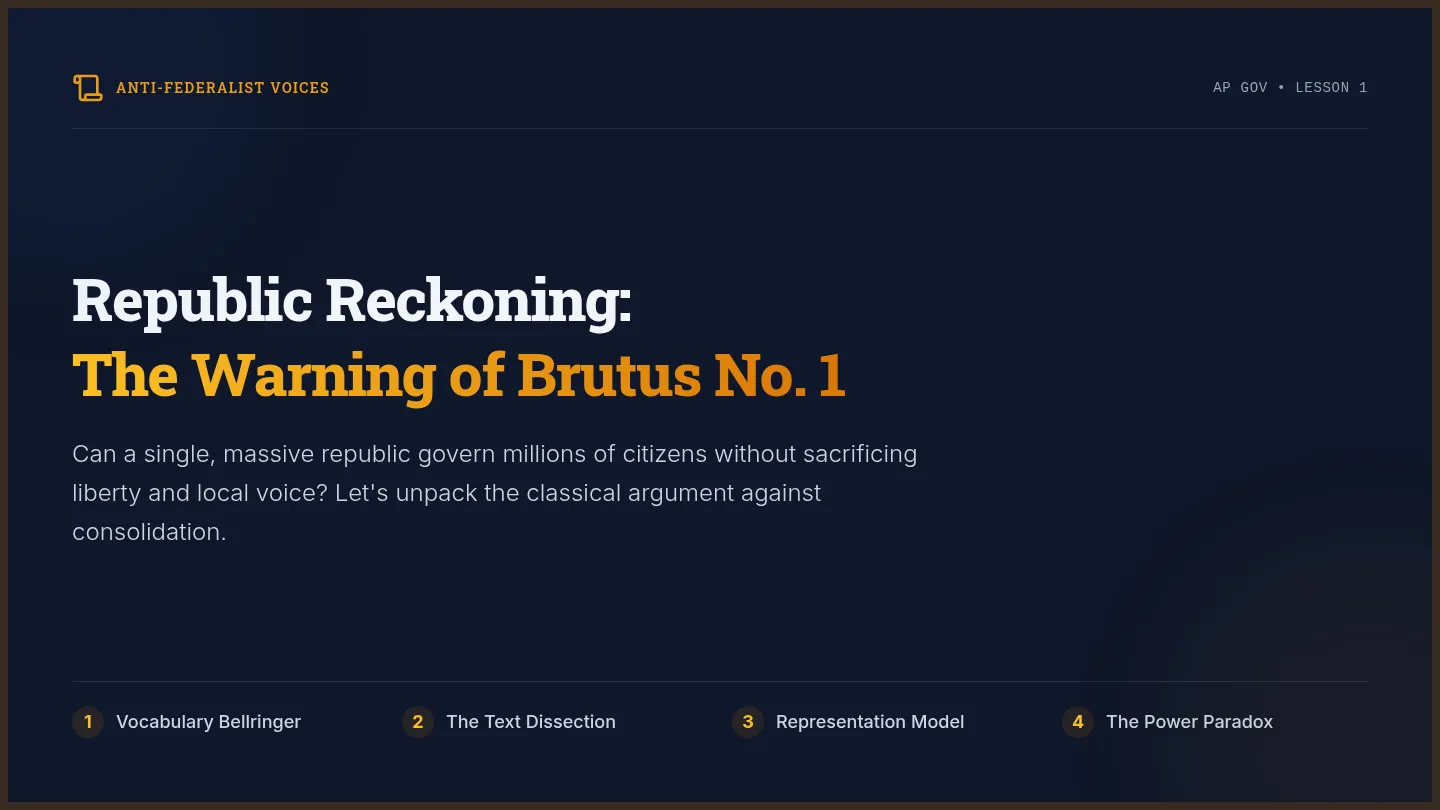
Efficiency vs. Ethics in the Gilded Age
Would You Rather...
Have a guaranteed job and home, but no freedom to choose your leaders?
Have total freedom and voting rights, but struggle to find work or a home?
Essential Question
How did political machines affect American politics and city life?
Key Vocabulary
Political Machine: An organization that controls a political party.Gilded Age: 1870-1900; rapid growth and massive corruption.
The "Transaction"
Machines provided Services (jobs, citizenship, help) in exchange for Votes (power).
The "Fair" Ground
Imagine an amusement park where the managers control everything: who wins the prizes, who skips the lines, and who gets the snacks.
"We'll give you cotton candy and front-of-line passes... as long as you cheer for us in the parade."
Investigation: The Machine in Action
Watch & Record in T-Chart
Embedded media
STOP AT 6:59
Political Machines on Trial
The Great Debate
Team Efficiency
Goal: Argue that machines were necessary to build cities and help the poor.
"The ends justify the means!"
Team Democracy
Goal: Argue that corruption destroys the country and steals from the people.
"The means matter!"
Use your Discussion Cards to build your opening statement!
"Do the ends justify the means in politics?"
Complete the final paragraph on your worksheet. Use evidence from today's evidence and debate.
Boss Tweed Teacher Guide Teacher Facilitation Guide
Lesson: Gilded Age Power Players
Grades 7-8
Lesson Objective
Students will evaluate the ethical impact of political machines during the Gilded Age by analyzing historical evidence of both community services and systemic corruption. They will culminate their learning by debating the prompt: "Do the ends justify the means in politics?"
Materials Needed
Machine Politics Slides
Machine Ledger Worksheets
Debate Duel Cards
YouTube Access (Video provided)
Instructional Sequence
00-05 min
Warm-up: The Ethical Dilemma
Display the "Would You Rather" slide. Have students write their choice on the Ledger Worksheet and briefly share with a partner. Focus on the trade-off between economic security and democratic rights.
05-20 min
Investigation: Video Analysis
Play the video from 0:00 to 6:59. Instruct students to populate their T-Chart with specific examples of "Positive" vs. "Negative" impacts. PAUSE at 6:59 before the Tammany Hall case study begins.
20-40 min
Main Activity: Debate Duel
Divide the class. Pass out the Debate Duel Cards. Allow 5 minutes for groups to draft a 30-second opening statement using their card evidence. Conduct a "Back-and-Forth" debate where each side gets to respond to one specific point from the other.
40-45 min
Closure: Final Judgment
Students write their final reflection paragraph on the worksheet. If time allows, share 2-3 contrasting viewpoints with the whole class.
T-Chart Reference (Answer Key)
Positive Impacts
Provided jobs and housing to city dwellers.
Improved infrastructure (bridges, sewers, public works).
Supported immigrants (food, fuel, citizenship).
Made cities more functional and beautiful.
Negative Impacts
Jobs only given for political loyalty.
Incompetent/unqualified people in government.
Election fraud (ballot stuffing, intimidation).
Stealing tax money through overcharging (kickbacks).
Teaching Tips & Differentiation
For Struggling Learners:
Allow students to draw an icon next to their debate points on their cards. Provide a sentence starter for the reflection: "I believe political machines were [good/bad] because even though they [positive action], they also [negative action]."
For Advanced Learners: