Neolithic Shift Venn Diagram
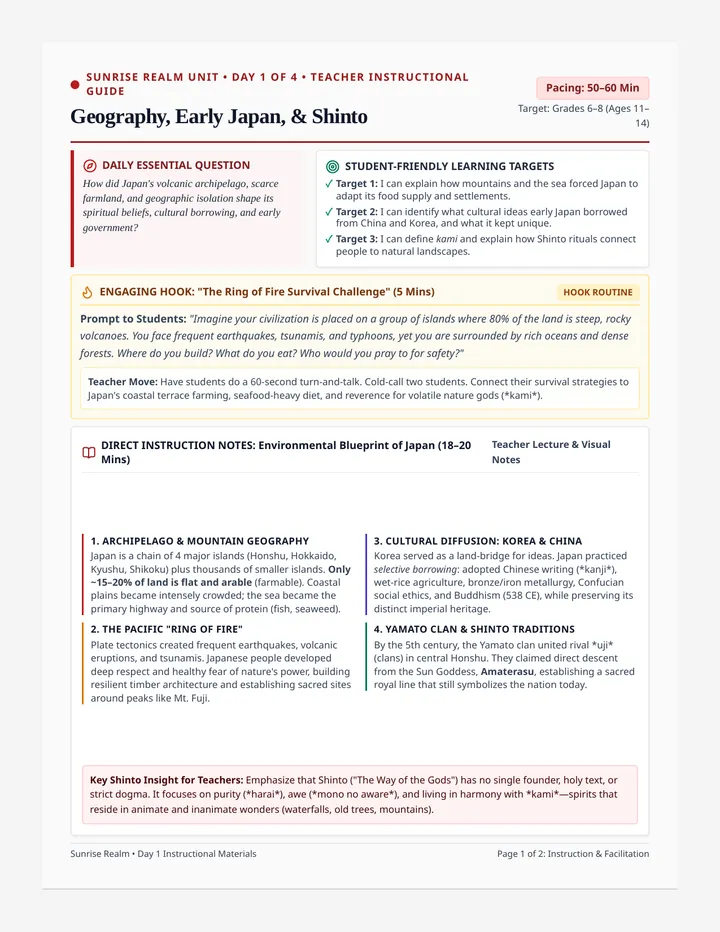
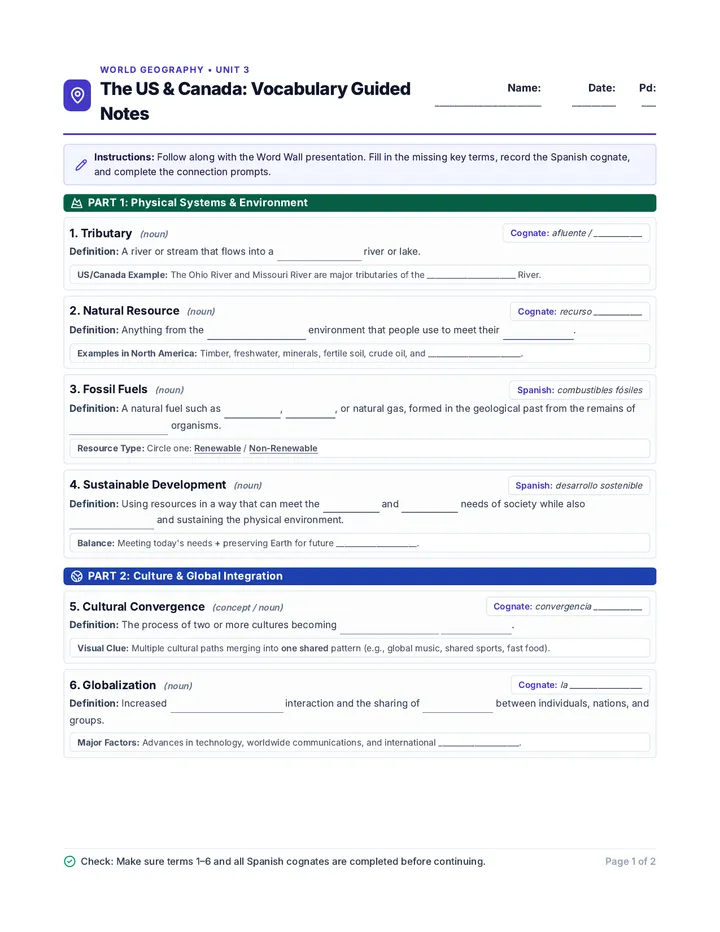
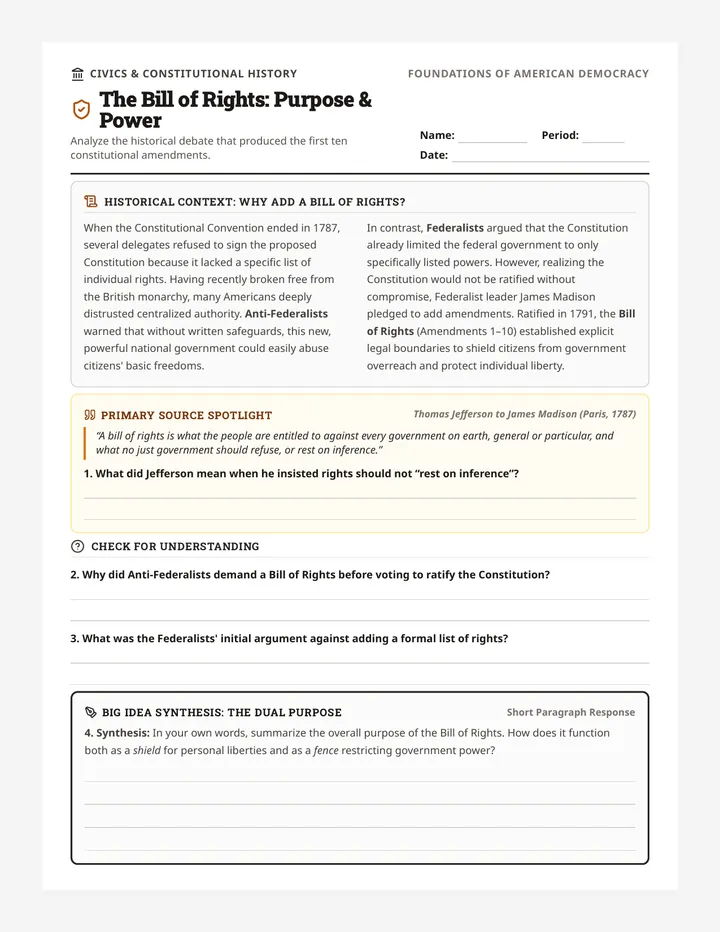
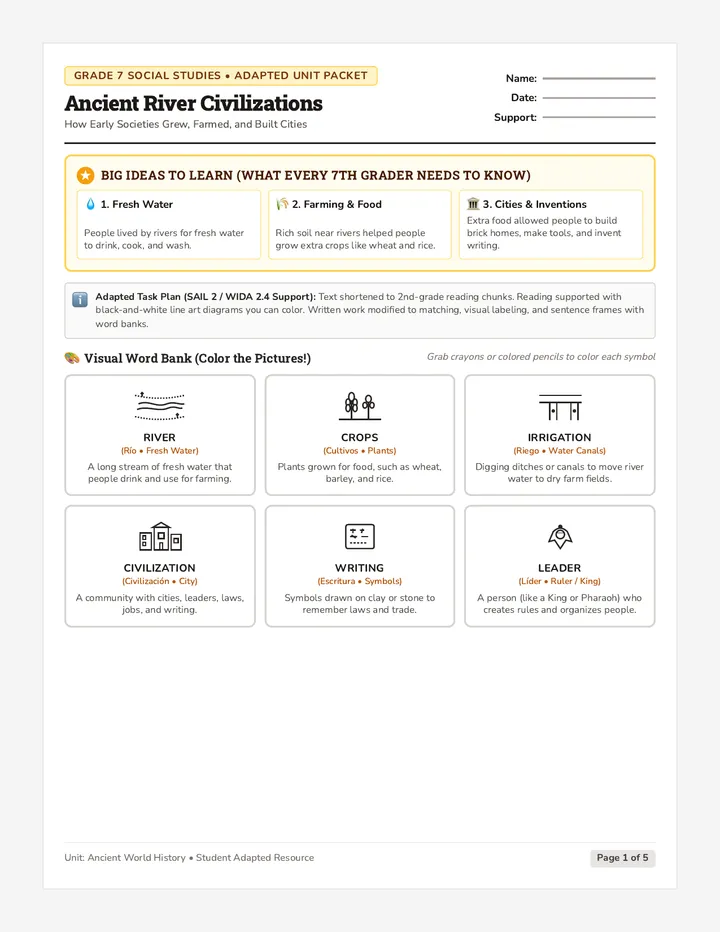
7th Grade Social Studies • ELL / SIOP Circular Venn Diagram Organizer
Name: Period:
Hunter-Gatherers vs. Early Farmers: Venn Diagram
Neolithic Revolution
Language Goal: Compare both groups using contrast words (but, while, unlike, both).
Read • Speak • Listen • Write
Hunter-Gatherers Paleolithic • Nomadic
- • Food: Hunted wild game; gathered wild roots & berries.
- • Movement: Nomads (moved to follow migrating animals).
- • Homes: Caves or temporary tents made of animal hides.
- • Tools: Simple chipped stones & bone spears.
- • Groups: Small bands (20–50); shared daily tasks equally.
Both Shared Adaptations
- • Needed food, water, & shelter.
- • Used fire for cooking & warmth.
- • Made tools from stone & bone.
- • Created art, music, & stories.
- • Lived cooperatively in groups.
Early Farmers Neolithic • Sedentary
- • Food: Grew crops (wheat) & tamed (domesticated) animals.
- • Movement: Settled in permanent villages year-round.
- • Homes: Mud-brick houses with grain storehouses.
- • Tools: Polished stone sickles, plows, & clay pottery.
- • Groups: Large villages; extra food (surplus); specialized jobs.
Sentence Stems: Compare Using the Venn Diagram
Speaking & Writing Practice
Level 1–2 (Beginning)
• Both groups used fire to cook.
• Hunter-gatherers were nomads, but farmers were settled.
Hint: Fill in with single words from word bank.
Level 3 (Developing)
• Unlike hunter-gatherers who searched for wild food, farmers had a food surplus.
• Both made tools, however farmers built permanent houses.
Hint: Combine two complete thoughts with "unlike" or "however".
Level 4 (Expanding)
• While foraging provided a varied diet, farming required long hours in fields.
• Farming supported larger villages; conversely, crowded towns led to more sickness.
Hint: Explain a historical cause or trade-off.
Content Words ("Bricks") • Meanings
Nomad: moves place to place
Domesticate: tame plants/animals
Settled: lives in one place
Surplus: extra food stored
Forage: hunt & gather wild food
Agriculture: farming crops
Comparing Words ("Mortar")
both → same / shared
but → difference
while → contrasts 2 facts
unlike → shows opposite
however → on other hand
instead of → in place of
Forager Farmer Reading Passage
7th Grade Social Studies • ELL Reading Neolithic Revolution
Name: Date:
From Wandering to Planting: The Big Shift
Reading Level: 7th Grade ELL
Active Reading Task: Look for signal words (both, but, while, however) that show similarities and differences!
Tip: Use the Venn diagram to help you read.
1. What Did Both Groups Share?
Long ago, before modern cities existed, all humans had the exact same basic needs. Both hunter-gatherers and early farmers needed clean water, nutritious food, and shelter to survive harsh weather. To stay warm and cook meat, both groups controlled fire. They also carved tools and weapons from stone, wood, and animal bones. Humans in both eras lived in cooperative groups, created cave art, told stories, and helped each other protect their families.
2. Life as a Hunter-Gatherer
During the Paleolithic Era, people survived by foraging. Men hunted wild animals and fished, while women and children gathered wild nuts, berries, and roots.
Because wild animals migrate with the seasons, hunter-gatherers were nomads. They did not build permanent houses. Instead, they slept in temporary caves or light tents made from animal hides. They lived in small clans of 20 to 50 people.
• Lifestyle: Moved often • Diet: Wild animals & plants
3. The First Farmers
Around 10,000 BCE, people made a revolutionary discovery: agriculture. Unlike foragers who chased wild food, farmers planted seeds and domesticated (tamed) animals like sheep and goats.
Because crops need daily care, farmers became settled. They built permanent mud-brick houses and formed villages. With an extra food surplus, some people became potters, toolmakers, or weavers.
• Lifestyle: Stayed in villages • Diet: Farmed crops & dairy
4. The Trade-Offs: Was Farming Better for Everyone?
The Agricultural Revolution completely changed human society, but it brought both advantages and new challenges. Farming produced reliable food to feed hundreds of villagers; however, farmers had to work from sunrise to sunset clearing fields and weeding crops. In contrast, hunter-gatherers had a more diverse diet and more free time, even though finding winter food was sometimes dangerous.
Check Your Understanding (Using Text Evidence)
7th Grade Language Practice
Part 1: Complete each sentence using a word from the box: [ Both • Unlike • But ]